Your cart is currently empty!
Author: Editor
-
CSI SUV – by Gloria Frym
I was taking a bath when the idea first occurred to me—the phone call which deprived me, forever I believe, of the good opinion of several friends. I have heard it said by others that they laughed so hard they wanted to do it themselves. Since I am not in possession of a great amount of free inventive powers, I always felt the need of some firm ground in the form of idea in my work. The same thing happened with this.
At the basis of it lay a story I had been greatly struck by just as three pit bulls in the dog park happened to rush by me, each yelping at the same pitch. In that remarkable moment I could watch the embodiment of a principle that had scarcely come to life but was just beginning to stir at the time, the principle which later received the name of ***.
Though very powerful, the impression this incident left on me was still rather vague. At first, I could not quite make out what the pits were after except one another.
I kept returning to the park to observe and listen to everything around me as though wishing to check the truth of my own impressions. I was worried by the following fact: not in one work of literature did I ever find as much as a hint at what I seemed to see everywhere. At the dog park, there was a woman who was endowed with an impressive nose for everything—namely, the ideas of our time. I told her what I was thinking of and what interested me so much and was astonished to hear the following remark:
Did you get this from something you saw in the movies? I said nothing.
These words produced such an effect on me that for several days I tried not to think of the idea I had in mind. However, at some point, it matured in my head. In order to sort the curds from the whey I accidentally returned a call from a dear friend. What was I after? An embodiment of the idea.
I pressed Send and when I did not hear her voice, I put the phone aside. Then I turned on the television. Nothing but crime shows on four of the few free channels left. I stretched out from a long day; my dear dog leapt onto the couch to sit beside me in order to be stroked. I was not entirely certain that this creature loved me for who I am or simply loved to be stroked and fed. Is that love? I wondered, further enlarging the sub-idea that was involved in this account. Also, my dog is not particularly affectionate and does not always run with others. Nor does she lick my face unless I should have some leftover meal or the scent of it besmirching my cheeks.
Sirens blared from the flat screen speakers, alerting my bitch’s ears, not to mention my own, and I summarily mistook the sound for 1)the emergency alert system at last in action; 2)medical aid rushing to the scene of a neighbor’s heart attack. The story on TV involved a dead body, a sharp-tongued detective, and a pert sarcastic set of female coroners who compete for excellence in their work as well as the attention of the same man.
She’s toast, the detective says, poking a campfire stick at the victim’s elbow.
She was burned like a marshmallow.
Ok, says one of the coroners, let’s do a work up. You never know the time of death with these sorts of SUVs.
No, you don’t, says the other coroner, removing her 5-inch heels to dump a pebble that had inadvertently crept its way into her arch.
What are you doing? screams the first pert coroner in concert with the detective. You’re occupying the crime scene with your crap.
What are you calling crap? And who is you? Who am I? Why?
A long silence ensued while the medics hoisted the charred body onto a stretcher.
Crispy, ya think? said one of the medics.
Lucky her lips are still intact, said the other.
Just as this pronouncement was made by the television medic, fire trucks pulled up to my house. I certainly had not asked for them. My landline phone rang. It was her, dear friend. Are you there? she yelled over crackling static. Am I where? I said. She seemed to not hear me.
After that it was all a blur. The television medic, the pert coroners, the sirens, the phone calls, the knocks on the door, the boyfriend, the girlfriends, the clerk in the mini-mart with whom I had exchanged ideas about capitalism. All rotating before me like a spinning globe. We heard what the police said, we feared, we rushed over because … .we love you, each said in their own voice, except all the voices became a chorus and the chorus stood by my couch and my dog barked a bark I had never heard before.
How utterly wonderful! I love you too, I said in the ensuing group hug.
Except that instantly the pedestal on which I stood among these dears had been destroyed chiefly by the chief medic combing through my home and discovering my cell phone, which was still blithely speaking to my friend who was standing right in front of me, not hearing it anymore, half-crazed at the thought that someone had put me on a spit and roasted all but my face.
Would they understand or forgive me? Not me, but my idea. The excuse of being an unloved child no longer held any caché among the best of them who had, well, let’s leave it at that. That it might have been an accident lingered in the minds of some of those present, except the boyfriend of my girlfriend who did not believe in accidents. They did not, have never got quite the right idea of what took place in the mind of a person, or of what exactly her joys and sorrows, her aims, successes and failures are. They do not, for instance, even suspect the pleasure that consists of castigating one’s self and one’s faults in the actions one commits. Now they seem quite sure that this was a little prank, even if the reality of life has been correctly and powerfully reproduced, even if this truth does not coincide with my own sympathies. In the words of Goethe, “if these are roses, they will bloom.”
Gloria Frym was born in Brooklyn. Her new collection of prose, THE TRUE PATRIOT, is just out from Spuyten Duyvil. Her recent books of poetry are The Stage Stop Motel and MIND OVER MATTER (BlazeVOX books, 2011). She is also the author of two short story collections—DISTANCE NO OBJECT (City Lights Publishers, 1999) and HOW I LEARNED (Coffee House Press, 1992). She teaches at California College of the Arts in the San Francisco Bay Area.
Photo courtesy of Will Langenberg. Visit the artist at willlangenberg.com.

-
The Snorer – Flash Fiction by Sophie Nunberg
Flash Fiction by Sophie Nunberg
He was insecure about the things he could not really control: his male pattern baldness, the red hair that grew only on his little toe, and his snoring.
He loved his wife, very much, and he hated how his droning nighttime noises kept her from rest and fantasy. She had tried waxy earplugs or playing their record player at night but the former was easily penetrated by his incessant noises and the latter kept their children awake.
His noises filled the room, ricocheting off of her vanity and his small bookshelf, pillaging the sleep that rested in her overly sensitive ears. Most mornings, when he finally awoke and saw the skin under her eyes irritated, swollen, his neck flushed red. He was always exceedingly apologetic, often bringing home flowers or small gifts. But it was difficult to compensate for the something he took from her each night.
They saw doctors, who took samples, weighed him and then examined his nose and lungs but never asked about anything other than allergies. Her next-door neighbor had told her, casserole cocked on her hip, about nasal strips that her husband has purchased during a business trip to Japan. His friends were no help. Hers gave diet recommendations over a card game or the pews of their church.
And though she loved him, too, very much, she had never known the depths of her love for uninterrupted rest, for sleep without caveats. Even when he slept on the couch, his snores vibrated in the floorboards, rattling her awake. For their seventh anniversary, he carpeted the entire house. But his noises scraped across the loops of soft fabric, always finding their way back to her.
Doctors gave her baby-blue chalky pills whose middles had been hollowed and whose results were hallowed. She slept but too heavily, too close to death.
She gave birth a couple of times and each time, for a while, things got better. She told him that lack of sleep was not overbearing when her deprivation had purpose.
But the purpose waned and their children grew and she could not bear the unrelenting reliability of his disturbances. She could not bear the solitude of night, their bedroom too dark for her to read, the world too abandoned, her company only his violent susurration. The world’s weight pressing down upon her but she could not push back.
When she left, she told him it was for another man, not a new bedroom, new mattress and delightfully quiet sleep.
Sophie Nunberg graduated from the University of Chicago in 2012. She lives in San Francisco and is the Communications & Content Manager for the anti-trafficking division of the Alameda District Attorney’s office. She previously interned for McSweeney’s. In her free time she manages and edits a music blog that currently has over 350,000 followers.
Image, Solar Eclipse III, courtesy of Superfamous.
-
Recovery
A Memoir by Jason A. Ney
This is a story of a VHS tape.
It’s not a story—not primarily, at least—about how, because I attended the same tiny Christian school from kindergarten through twelfth grade, I had limited options for making friends, but how by my junior year, five of us had found each other and settled into a mix of friendship and the occasional on-again, off-again romantic pairing, spending almost every weekend at one of our houses: watching movies at Christina’s, swimming at Candace’s, hanging out at Dan’s, sitting around a bonfire and falling asleep on the trampoline at Jon’s. Forming a bond we all thought would last forever.
It’s not about how, after high school, we scattered to different colleges in different parts of the country and then settled into our adult lives, or about how we all, to various degrees, still keep in contact with each other—with one exception.
But this is not a story about Christina. It’s not about how after she went to college, she left the faith in which we’d all been raised. It’s not about her slow but steady slide away from every one of us. It’s not about how she got pregnant out of wedlock by someone none of us knew and then bailed out of being one of Candace’s bridesmaids by cutting off all communication with her weeks before the wedding. It’s not about how she willed herself off the grid, deleting our voice mails, ignoring our e-mails, acting as if all those years, the thousands upon thousands of hours we spent together, were nothing more than a chapter of a book she wanted to tear from its spine and set ablaze.
It is, however, about why, four days after Christmas, I’m fidgeting in a car outside her parents’ house in the dark, ratcheting up the nerve to ring their doorbell and worrying about how this unannounced visit—my first contact with any member of her family in over a decade—will be received.
– – –
I grew up in the analog age of cassettes, VCRs, and theatres that projected 35mm film. By the time I hit my teens, our family’s home movies—recorded by a video camera so big, whoever used it had to mount it on either a shoulder or a tripod—took up two entire drawers of our entertainment center. Since the digital era of video-capturing cell phones, Facebook, Twitter, Instagram and selfies was still years away, I took all my pictures with a Canon point-and-shoot loaded with a roll of film that, once finished, I would give to my dad. He would take it to the one-hour photo lab in Boscov’s department store, and after the lab developed it, he would pick up my photos—24 or 36, depending on the size of the roll—and bring them back to me in a glossy paper envelope. I’d shuffle through them, keeping the pictures that had turned out well and throwing out the bad ones, the out-of-focus blobs I’d shot at the wrong F-stop or speed.
When capturing a moment on film or on tape, I budgeted my resources. Each roll of film cost money, and once I shot it, it was done—no “erase and retry” button, no ability to take dozens of the same moment and leisurely shuffle through them later to pick out the best version. Once a VHS tape was filled with two hours of footage, I had two options—keep it or tape over it. If I lost a roll of film, making duplicate prints became practically impossible. So compared to today, when a single smartphone can hold more HD video than the fifteen years of grainy footage in our entertainment center drawers, my rolls of film and VHS tapes seem dangerously ephemeral, their inherent frailty compounded by a rapid onslaught of technological advances that have made accessing their content—the touchstones of my adolescence—increasingly difficult.
These technological archaisms have forced me here. They are why I’m sitting in this driveway, debating whether or not to just go home and give up the search for a tape that might no longer even exist.
 Jason A. Ney holds a Ph.D. in English from the University of Denver. His work has also appeared in Noir City and Little Did She Know. He is currently writing a memoir about growing up in Christian fundamentalism.
 -

The Paper City
Flash Fiction by Rebecca Harrison
Our city was paper. It was warm. When the winds came, we heard the cathedrals tear. We saw the towers ripping. We tried to hold our walls to the ground, but the winds blew the city into pieces and carried them away. Some of the scraps fell at my feet and I put them in my pockets. When the winds had gone, I counted them. I kept them safe.
We followed the winds. We looked for pieces of our homes in the skies. I tried to remember the shapes of the city. I drew the towers and cathedrals on the paper scraps, so that I would know how to put the city back together.
We stopped searching. We live among brick and stone. I’ve watched the others forget, but I’ve kept the paper scraps. I listen for winds. I gather paper. I don’t know if the pieces are from my home.
Rebecca Harrison sneezes like Donald Duck and can be summoned by a cake signal in the sky. Her best friend is a dog who can count. Her stories have been published in Remarkable Doorways Magazine, The Fable Online, Maudlin House, 99 Pine Street, Rose Red Review, Axolotl Magazine, and elsewhere.
Image courtesy of LesEnfantsParis
-
Playing the Game
a short story by John Timm
The actuarial office is exactly 6.1 miles from the house via the 405 Freeway. When the 405 is backed up (it often is), the distance is 7.2 miles on surface streets. Travel time using either option is difficult to calculate with the same exactitude, given such random variables as traffic accidents and weather. Still, a pattern has developed over the past eighteen years that allows me to predict closely (within 45 seconds) where I will be at any given time once I leave my driveway at precisely 7:30 a.m. There are certain markers along the freeway that permit this: mile posts, billboards. exit ramps. Likewise, on the surface streets there are intersections and traffic signals, a Target, a Ross, a Michel’s, a Von’s, seventeen strip malls, nine fast food restaurants (including one that is presently closed) three car washes, a railroad crossing (which introduces a random variable into the equation) and a fire department (another random variable).
Today at 7:35 a.m., I am stopped at the corner of Sawtelle and Sepulveda, in the left driving lane, second car back from the stop light. At this hour, the light remains red for 25 seconds. It is .8 miles to the freeway entrance ramp. It requires a left turn, and experience has taught me to be prepared, hence my left lane position. The radio is tuned to its customary place on the dial, and I’m listening to Traffic and Weather on the Fives. Regularity and consistency have their comforts.
The car in front of me is familiar. California 6DMW935, a 2007 grey Honda Civic, purchased in Tulsa, Oklahoma. The lone occupant has a husband (or male companion), three children and two dogs. (This assumes that the family decals on the rear window belong to the driver, and if so, have been updated regularly). While I admit I’ve not done an actual calculation on paper, there is a high degree of probability I will follow this same vehicle three out of every eleven travel days.
To my right in the curb lane is the green and white Peerless Laundry Company van (PLC 1706). It’s slightly ahead of its usual daily pace, normally parked until 7:37 a.m. in the Pep Boys lot back at Sepulveda and Franklin.
At Sepulveda and Barman, I see Marvin in the curb lane, awaiting his opportunity (Marv would never call it his “chance”) to move into the left lane in order to make the same left turn as I onto the freeway. We exchange our ritual morning greeting, a quick flourish of the hand (my right, his left) as we focus intently on the road ahead. I am ninety-five percent confident that Marv and I will enter the freeway ramp in tandem at 7:39 a.m., exiting together, at 7:51 a.m. onto San Vicente Boulevard. With only one long block to go (.2 miles), we’ll be parked in our designated places (Row 3, stalls 15 and 16) two minutes thereafter and will enter the building at 7:53 a.m., as duly recorded by the Simplex Time Recorder. If the 7:35 a.m. radio traffic report demands an all-street routing, we will arrive at the lot with at 7:59 a.m. with just one minute to spare. Neither of us has ever arrived late.
Marv has been my co-worker for seventeen of the last eighteen years. We both joined the firm on our birthdays, a coincidence we often discuss, and since his birthday is exactly thirty days after mine, it’s easy to remember.
We take our daily lunch together in the cafeteria, as we have over these seventeen years, and it’s there we play the game, seated at our regular table. Marv and I agree in advance on the same entree in order to finish eating by the appointed starting time, 12:20 p.m.
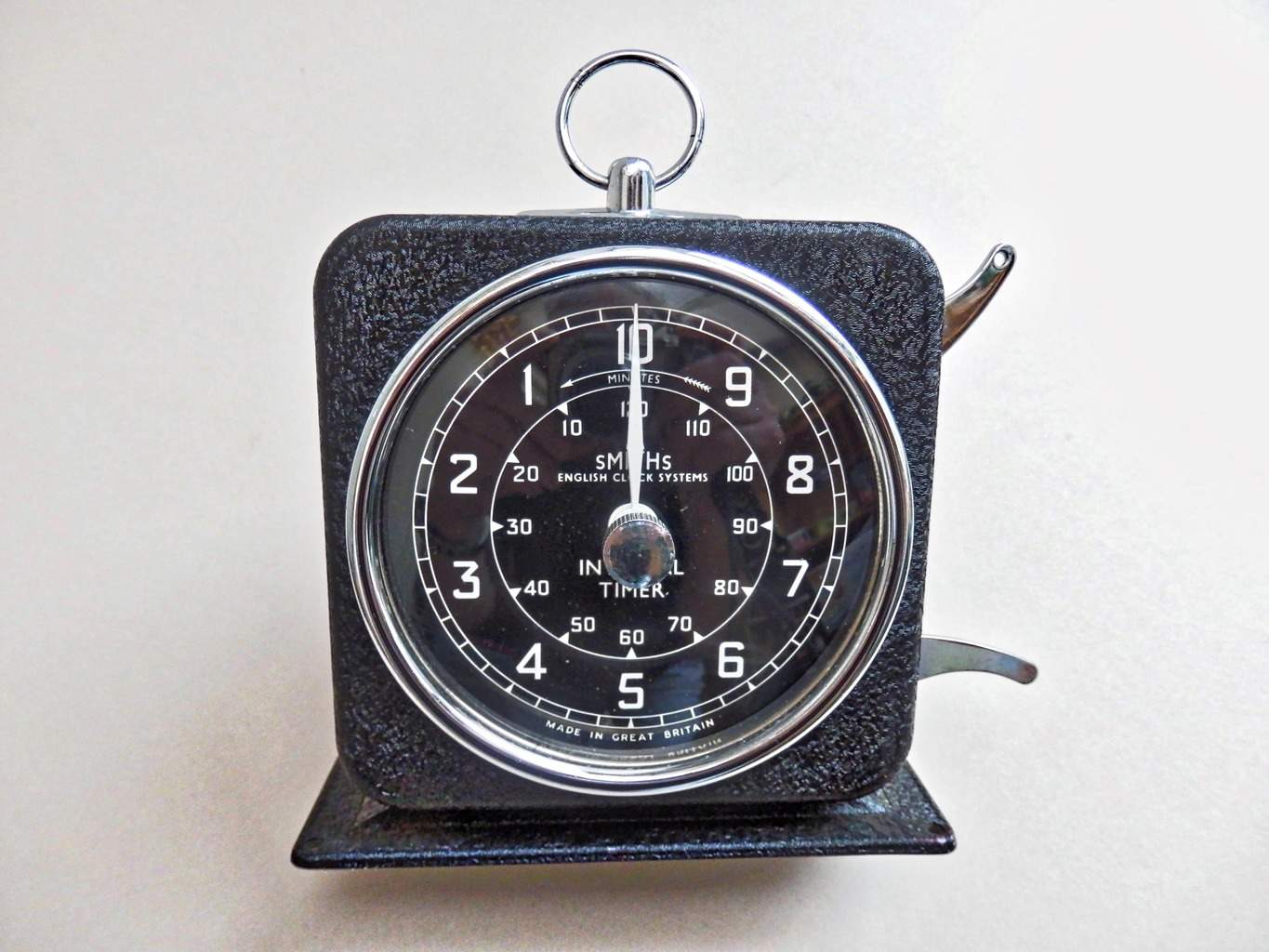
It’s a game of our own invention. We didn’t know what to call it at first, but on Marv’s second anniversary at the office (March 17, 1997) we gave it the name What If? I remember that moment as if it were yesterday. Here’s how we play. On alternate days, one of us is the guessmaster (the title was my idea). As guessmaster, we have to bring with us the name of an occupation, along with a job description, education and skill requirements, tools or devices employed and any licenses, if required. The guesser (I’ll give Marv credit for that one) has three minutes, no more, no less (we employ a digital timer), to come up with the exact name of the position. If he does, the guessmaster must buy lunch the following day. If not, the guesser must buy lunch the following day for the guessmaster. Simple game, simple rules. Over time, Marv and I stand virtually even, the tally swinging back and forth day to day, week to week, month to month. We often joke it’s the law of averages at work more than any special talent on the part ofeither of us.
But the game doesn’t end there. Officially it does, yes, but Marv and I spend the balance of the lunch hour (until 12:59 p.m.) discussing the relative merits and disadvantages of the position of the day.
Continue reading this story at Beacon.
John Timm teaches communications and foreign languages at a university in the Phoenix area. His work has appeared in Bartleby Snopes, Perspective Literary Magazine, Story Shack, 300 Days of Sun, Romance Notes, Luso-Brazilian Review and elsewhere.
Image courtesy of quicksandala, via morguefile.com.
-
Whose Hand?
Flash Fiction by Preston Gralla
He stood behind her, not daring to touch her shoulder. He took a breath. Reached out. Then stopped himself.
“Can I touch you?” he asked.
“Of course you can. Why would you think you need to ask me that?”
He pushed her hair aside, brassy blonde now so many decades after the soft gold of her youth. He touched her shoulder, felt it not just in the present, but through time: bony and taut as a 12-year-old, pillow-soft at 17 cradling their newborn son, full and firm in the voluptuousness of her thirties and forties, slowly losing muscle each decade beyond. Now the flesh beneath his hand was slack.
Whose hand was it? Whose shoulder?
“You need to get ready, Bob. They’ll be here soon. I told you. It’s nearly two o’clock.”
“That’s right,” he said. “I forgot.”
Who was coming? And why?
“No, Bob, she said gently. “Not in that. Dress in something more comfortable. Maybe sweatpants. And those special sneakers we bought you yesterday so you could walk more easily. You need to be dressed comfortably for them. Remember? I told you that before.”
Before? Had she told him that? When was before?
“That’s right. I forgot.”
He slowly dressed himself, pleased he could still do it. Out of his sight she packed his bags. She put them in the bathroom and would get them when the visitors arrived. She walked with him to the living room and they sat on the couch. He smiled uncertainly.
She’s beautiful. Who is she, again?
They waited together for the doorbell to ring.
Preston Gralla’s work has been awarded a Fiction Fellowship from the Massachusetts Cultural Council, and has won the Yudis Prize for fiction from Union College. Under Gralla’s editorship, PC/Computing was a finalist for General Excellence from the National Magazine Awards. He has published more than 40 books of non-fiction, which have been translated into 20 languages. Gralla’s work has been published in the Los Angeles Times, USA Today, the Dallas Morning News, and the Boston Globe Sunday Magazine, among others.
Did you enjoy this story? Please consider subscribing to Fiction Attic to help up us discover and promote more great writing.
-
Architecture of the Eye
Flash Fiction by Mitchell Grabois
1.
I wrote about nature, about parents and children and the terrible things they do to each other, about unemployment, poverty and humiliation. Now, every poem is a sonnet to sexual dysfunction and an ode to Viagra. There’s a new calm in the world. I’m a master of resignation. I might sound old but I’m not.
2.
Tums rules this dyspeptic universe. In other words: we can’t stomach the world. In other words: human nature is too much to take. Medical marijuana eases nausea. Acid reflux is one more aggravation. The acrobat on his unicycle balances a ten foot stack of dishes. I can make out a slice of pizza and a Ruben sandwich. He pedals backwards. He balances a ball on his nose. With his chin he eases a bottle of Tums from his shirt pocket. He tosses the bottle in the air. The tablets fly out like a spray of stars. All the constellations have stories. They all have something to complain about.
I wasn’t going to tell you, but I am suffering from stomach cancer. In the early days, friends would hear the news and say: I’m sorry, and I’d nearly shout at them: Don’t tell me you’re sorry. Tell Cancer you’re sorry. Because I’m going to kick Cancer’s ass, send him back to the Cancer Ward where he belongs, where he can lay on a bed naked and bleeding, and lick his wounds. That’s what I said in the early days, the Days of Hubris.
3.
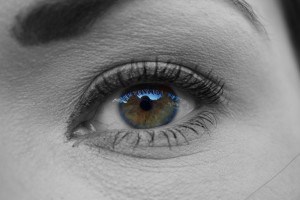
God engineered the Universe, a masterwork of physics, chemistry, mathematics and art. His earthly animal designs contain mind-boggling genetics. Consider the architecture of the eye. But He fails at communication. He’s a monster. When His children misbehave, all he can think to do is drown them all, like a future sex offender down at the riverbank with a burlap sack of new kittens.
He is worse than Frankenstein’s monster. His clumsiness knows no bounds. Still, He demands our love and obedience.
4.
I cannot stop looking at your photo in its digital frame that my aunt has set up in her parlor and is lit twenty-four hours a day, like an electric memorial candle. Your overmedicated blue eyes are bright as marbles. Under your blue denim shirt, your skin is energetic, as are your small pointy breasts.
The photo shifts to one of Odetta, the blues singer. She holds up her hand like a milagro. Then that photo dissolves. There you are again, freckles on your nose and under the illuminated marbles that are your eyes, your throat bony, your expression inscrutable.
I awake from a two-second nap. Here you are again, no more scrutable, making your known unknown. It’s time to boil the forceps, you used to say. Your eyes are so blue, they have sucked in the sky and left the world sunk in blackness.
Mitchell Krockmalnik Grabois has had over seven hundred of his poems and fictions appear in literary magazines in the U.S. and abroad. He has been nominated for the Pushcart Prize for work published in 2012, 2013, and 2014. His novel, Two-Headed Dog, based on his work as a clinical psychologist in a state hospital, is available for Kindle and Nook, or as a print edition. He lives in Denver.
Image: Eye by Dave MeierEnjoy all of our stories and support emerging writers by subscribing to Fiction Attic Press.
-

A Clear Shot
Flash Fiction by Andrew O’Kelley
Calvin felt an itch arise near his ankle and willed it away. Steady, purposeful movements, his father had insisted. That didn’t include scratching, toe-taping or picking your nose. The dry leaves ticked in the branches around his tree stand, twirling downward in a gentle wind. A tree can’t reach to scratch, so why should he. The sun had risen now above the ridge, the tall grass bending in the breeze. He studied the trail, the clearing, he’d get nothing today it seemed. But he’d wait.
He heard a soft knocking sound, lower, over the crest of the hill. Moving steadily, then faster, much faster. He scanned the grove of pine that hid the trailhead. A flash of blue. Then into the open field; a woman, running. The wooden bucket swinging wildly on its rope handle, her long dress buffeting, catching here and there on the dry brush. Her dark hair twisting across her face as she glanced back. No sound but the rapid draw of her breath. And then a movement. He almost missed it.
He almost missed it. Women will do that to you. His father had a lot to say about women, but Calvin had hoped to learn on his own. The Taylors, preacher Bob and his wife down the ridge, had two daughters just about grown. Probably one of that clan he guessed, but he was more concerned about the movement. Coming low through the tall grass, stalking. He’d only seen it once before, far off, but there was no mistaking the malevolent crawl of a big mountain cat. It moved like the shadow of a cloud; skimming across the valley, the color changing with the terrain, relentless as the wind. He raised the rifle, steady, purposeful, tracking the muscled blur. He had its speed, but it was keeping low in the grass and gaining on the blue flutter at the edge of his view. Closer. Now too close.
He had a clear shot. But only one. She would be caught, screaming. Screaming across the valley in the cool morning air. The big cat doing as big cats do. Or she could drop quietly in a soft gingham heap, the wide spring sky overhead. Peaceful.
Calvin squeezed the trigger. A steady, purposeful movement.
Andrew O’Kelley uses an old laptop to arrange words in the best order he can manage. Having tried similar feats with photography, wood working and guitar, his results may vary. He does all this in Minnesota. His stories have appeared in Emerge Literary Journal and Eastern Iowa Review.
-
The Electric Discharge Corona

photo courtesy of Tom Eversley @TomEversley Memoir by Anne-Marie Yerks
The things you don’t know about a house when you buy it: The leaks, the bugs, the dark and cold corners and warped walls. A stove that refuses to hit the right temperature, the driveway that isn’t shaped right, the too-loud clank of the mailbox door, a backyard too shady to grow vegetables. But the good things too: The porch with tall windows, the wood around the windows, the deep sills where the cat sleeps. Watching people stroll the sidewalk ? there are the dog-walkers, the power walkers, bottle deposit seekers, partiers, the carless, the insane. They go by as we look on from the enclosed porch of our ninety-four year old house of mysteries, the most compelling of which happened less than five years ago. A woman died here, and we don’t know why.
I don’t know why, but I know when. And I know who she was. Her name was Renee Galinyan, and she was 37 years old on her last day of life. She was in love with the man we bought the house from, and she liked belly dancing, comedy clubs, Renaissance festivals, and dogs. She was overweight, pretty and sparkly, with straight dark-brown hair and optimism shining from her brown eyes. An Armenian church prayed for her the week before she died, and a group of people from a medical lab donated $81.31 to the church in lieu of flowers for her memorial. Other people donated thousands. She had a tattoo on her shoulder ¾ one I didn’t look at closely because I dislike tattoos ¾ and, interestingly, an active account on MySpace. She had a brother not much older or younger than her, handsome in the way she was pretty, and a mother who liked the man she loved. All of this I learned from an Internet session of many hours. I combed search engines and Facebook profiles and photo albums, typing and retyping keywords into different combinations to learn more. Eventually, I had enough information that I could like Renee instead of fear her, but nowhere did I learn why she died. The final days, what were they like? Did she know it was coming, or was she still hoping for recovery?
With this question, the ghost made itself.
The Electric Discharge Corona won first place in the Fiction Attic Creative Nonfiction Contest and will appear in our forthcoming anthology, Modern American Essays. This is only an excerpt.
-

Urban – by Lila Dunlap
Smiling Whalecourtesy of © Carol Trammel | Dreamstime And then Urban plopped down in the seat next to me, filled it up with her rolls and rolls, tight in her tight T-shirt and tight black tights. I couldn’t see much of her then—I only dared to look out the corner of my eye at her rustling figure, and the theater was so dark… a few lights and colors flashed onto the crowd. Some blue sheen slid over her big face, over her cheeks, her wide chin, over her round lips and the head of a drip dripping juicy sucker that went entering, exiting, entering, exiting, glassy red in that strange dimness full of silent people breathing and clapping and eating and all staring.
Out of my left eye, I suddenly glimpsed a thick mahogany whale surface her mouth—and then disappear. Almost instantly, my throat jumped and hardened, closed up, and my hairline got hot hotter and damp. My attentions were now completely absent from the performance. I sweated and sweated and sweated; my eyes darted back and forth from the irrelevant stage to my new neighbor, whence I noticed a squash of a hand with long hard nails clutching a shiny plastic purse, like a dead animal in her lap—its teal waves were spotted with rough studs glittering and rhinestones writhing but Urban paid no mind!—just every once and a while during a squirm, readjusted the bag, but no, never looked down.
By then my throat was very tight indeed, and I was in dire straits to sit still. My legs and arms executed over/under weaving maneuvers but I pretended to not notice and assumed a nonchalant expression. I wanted so badly to appease the restless snakes, to stand up and stretch (I could have run a marathon), or at least stand and touch my toes, but, God, I couldn’t let my new friend notice me.
I closed my eyes (just for a moment; had to remain alert) and took a deep breath. I re-opened, looking straight ahead, limbs still calm, controlled, behaved. I even thought for a moment about the show and was able to catch a whiff of plotline or clever social commentary, but, oh, my thoughts weren’t to be reigned in so easily: had she seen me acting silly? Making such a goddamn dirty fool of myself? No, goodness I must stay still. All at once, one of the performers must have made a joke—she burst a harsh laugh (deep, too!). Wet beads flew; the whale emerged.