Your cart is currently empty!
Author: Editor
-
How to Start a Story
One of the questions I hear frequently from aspiring writers is, “How do I start a story?” Even seasoned writers have days when the story won’t come.
Talking to a reporter for Interview Magazine in 1995, Martin Amis said of novel-writing, “If I come up against a brick wall, I’ll just go and play snooker or something or sleep on it, and my subconscious will fix it for me.”
Good advice, for sure. But if snooker and the subconscious don’t do it for you, here are a few tips to get you going.
- You can begin “in medias res,” or in the middle of the action. When you’re telling a friend a story, you rarely begin with, “I was born in such-and-such hospital in such-and-such city.” Rather, you jump forward to the exciting part, the middle of the action of your own life. “I was standing in front of the old movie theater on Amsterdam Avenue when…”
- You can begin with a character in a strange or tense situation (Gregor Samsa wakes up as a cockroach in “The Metamorphosis”, Mersault is on trial for murder in “The Stranger”).
- You can begin with a line or two that describes the setting, then move on to who is in the setting, and why.
- You can begin with a writing prompt that takes you somewhere totally unexpected.
- You can begin with an inciting action: a man on vacation jumps off a cliff into the cold water below, and as he is jumping we see a large rock jutting up from the surface of the water.
- You can begin with a phrase, an image, a place, a memory, a character who demands to be heard.
- You can begin by withholding information. A great example of an opening paragraph that sets up tension by withholding information is Shirley Jackson’s classic short story, “The Lottery.” It begins with a sentence about the setting, then moves on to describe the townspeople gathering for an event. In the happiness of the opening paragraph, it is clear that something is about to happen; that something turns out to be quite terrible and dramatic.
A story can begin anywhere, but the most important thing about the beginning of a story is that it draw the reader in by introducing both character and conflict.
Want to learn more? Try Story Starters: A Workbook for Writers.
-
A Handful of Glorious Pages
 Are you a novelist, a short story writer, or both?
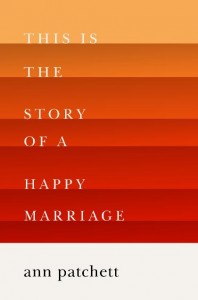
I’m currently reading Ann Patchett’s essay collection, This Is the Story of a Happy Marriage, which chronicles Patchett’s journey to becoming a writer. There are plenty of quotable passages in the book, but one of my favorite has to do with the short story form:
Love the short story for what it is: a handful of glorious pages that take you someplace you never knew you wanted to go.As both a novelist and a short story writer, I can tell you that I love the way stories happen: you write a sentence, and then another sentence, and a few weeks and twenty or so pages later, you have arrived at a totally unexpected destination.How does this differ from writing a novel? With a novel, while I don’t know exactly where I’m going or where and how the novel will end or what tangents it will take, I do usually begin with a general sense of direction. A sense of direction is important, because I know that a novel will require an investment of at least a couple of years. So I begin with a setting, a character, and a problem that needs to be solved or a question that begs to be answered.In my forthcoming novel, Golden State, for example, I began with two questions: 1) What would happen if California tried to secede from the nation in the present day? 2) What if the narrator’s estranged sister suddenly reappeared in her life? The novel was built from these questions, which married the personal with the political in a way that was very enjoyable to write and, I’ll admit, quite challenging to orchestrate.
With a short story, I feel more free, because I know my investment of time will be much shorter. I often don’t know what the problem is when I begin, or even who the major players are. I start instead with language–a series of words that present themselves in my brain and somehow compel me to follow them with other words.
Many novelists write only novels. Some short story writers write only stories. But the vast majority of published fiction writers do –or have done–some combination of both. Fiction writers frequently debut with a story collection, which is followed by a novel. One reason for this pattern, I believe, is that short stories tend to be the preferred form in graduate writing programs, so many writers come out of their MFA program with a story collection in near-publishable shape. After the writer gets a few good reviews and catches an agent’s eye with a story collection, he or she either a) decides that it would be fun to write a novel or b) concedes to the demands of the marketplace, which favors novels over story collections.
As for me, writing novels is my bread and butter, and I never feel quite whole unless I’m working on a book-length project. In fact, I can’t remember a time in the past twelve years when I wasn’t working on a book! But there is sustenance to be had in short stories too, and when I am feeling tired of my novel-in-progress, or antsy, or simply inspired in a different direction, I often begin a short story.
When you are feeling at wits’ end about your novel, I encourage you to set it aside for an hour or day or a week and begin a short story instead. It is possible that the writing of the story will push you back, joyfully, to your novel, and that you will abandon the story in short order for the bigger project. But it is also possible that you will sink blissfully into the freedom of the story, and that you will emerge, days or weeks later, with “a handful of glorious pages.”
As always, happy writing! Please join the conversation on twitter, stop by my facebook page, or read (and submit) good stories at Fiction Attic.
-
Before You Begin: (or How to Get Past Fear & Procrastination and Write Your Novel)
Anyone who tells you that writing a novel is easy has probably never written one. Here are the five most common statements I hear from people who are struggling to write a novel:
- I don’t know where to begin.
- I’ve written a few chapters, but I can’t figure out where to go from here.
- I have a great idea for a novel, but the idea of actually sitting down and writing it feels too daunting.
- I’ve heard you’re supposed to write an outline for your novel, so I did. Now what?
- I’ve actually written a novel before, but I put it away because it isn’t good enough to send out.
No magic formula.
If you find yourself nodding your head to any of these statements, I know what you’re going through. I’ve been there. The truth is, there’s no magic formula for writing a novel. Writing a novel comes with no guarantee of publication, of success, of sales, of an audience. But if you’re reading this, you probably know all that already. And I believe that you’ve already made up your mind about one thing: writing a novel is worth the time and effort, the headaches, the inevitable state of not knowing what will happen to the book into which you’ve poured your heart and soul.You don’t have to know where you’re going.Too often, novels don’t get written because writers think they have to know exactly where the novel is going before they begin. Most of the how-to books on novel writing will tell you to sit down and write an outline first, and start writing your novel later. My approach is the opposite. There actually will come a time to write an outline, but not until you’re deep into the book, with some key chapters and scenes already written.
Trust the writing that comes naturally.
So often, when working with private clients, I’ll praise a particular section of the book for its naturalness, for the fluidity of the writing and the complexity of the characters. Often, the surprised writer will say, “But that was one of the easiest chapters to write!”
Letting go of the inner tension
I think what’s happened in these sections is that the writer has let go of the inner tension of trying to make the passage fit into a predefined idea, and has, instead, written about what mattered to them in the story.
Forget you’re writing a novel.
So, if you’ve been holding back on your novel because it scared you, or because you got stuck, or because you simply didn’t know where to go, my primary advice would be to forget for a moment that you’re writing a novel.
Instead, begin here:
“I want to write this story because…”Follow that up with:
“I care about these characters because…”Then, see where it takes you! You might be surprised.
Ready to get started? Go to DAY 1.
-
Call for Submissions
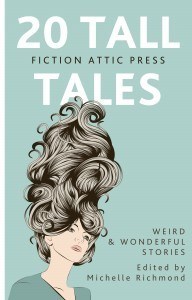 Fiction Attic Press is seeking submissions for our upcoming anthology, Tall Tales: Weird and Wonderful Stories From Fiction Attic Press.
If your story is strange and tantalizing, thought-provoking and mesmerizing, we’d love to read it! Think Julio Cortazar, Ursula LeGuin, Kelly Link, George Saunders, Ray Bradbury, Count Olaf…and you! We’re open to magical realism, fantasy, science fiction–anything that is tremendously well-written and deeply engaging, and strange.
Prizes:
The winning story will receive $100, publication as a single story ebook, and publication in the anthology.
19 additional stories will be be selected for publication in the anthology. The authors of these stories will receive both the print and digital editions of the book.
All entrants will receive a digital copy of the anthology. Authors will be paid $10 for stories published online.
Deadline: December 30, 2014
Submission fee: $7.00
-
The Exile
memoir by Soul Vang
MY WIFE AND I drove slowly down a plumeria-lined road, passing through a neighborhood of sixties and seventies bungalows. The road was narrow, edged by emerald grass shoulders and hedged by tall bushes.
As we reached the end of the lane, there was a large mango tree to our left. A gravel drive cut through the hedge next to the mango tree. The address on the mailbox by the gravel drive told us we had reached our destination.
At the end of the gravel drive, shadowed by trees and almost hidden by tall bushes, was a little bungalow.
“How does a Hmong man live here, hidden in this landscape, among strangers?” I asked my wife.
Read this memoir in its entirety with your free trial subscription to Fiction Attic Press.
-

Persephone
Flash fiction by Elizabeth Varadan
My mother returned to her parents in L. A. whenever things didn’t go well in her life. To sort things out, she would explain to me. In time, I grew used to these trips and thought of L. A. as the one home that never changed. There were the applesauce turnovers on the day of our welcome, followed, days later, by excited scenes that left my mother in tears, followed by our departure that left my grandmother in tears, until the next welcome home with turnovers.
My grandmother bought an abundance of pomegranates when they were in season, and through successive visits, I developed a taste for their tart sweetness.
The November I was fourteen, I was into Greek myths, particularly the story of Persephone. Carefully peeling away the pomegranates’ russet husks, I couldn’t help thinking about the deal Ceres worked out with the God of the Underworld—six months in each location; almost as bad as my mother’s yo-yo-ing life.
After I peeled off the thin membrane in each section, I’d spill the seeds into a little dish, where they glistened, like the tiny garnets in my grandmother’s earrings. And I wondered: did Ceres welcome her daughter home each time, only to make scenes that would chase her off again? Or did she cry hard enough each time Persephone departed with her husband to make sure she’d return?
And if I ran away from home, as I was considering, would my mother be able to find me? Ceres knew where Persephone was, but in my fantasy, I would bleach my hair, wear high heels, slather on lots of make-up, get a job in some city we hadn’t been, and then I would stay there. If I could sort out my life, maybe my mother could sort out hers.
I saw garnet earrings last week at a flea market. I almost bought them. Instead, I bought a pomegranate from the farmer’s market at the far end of the grounds, past all the junk stalls.
At home, eating the tangy seeds, I thought of Persephone and the weeping Ceres. I thought of my grandmother who never could let go of her children after the loss of her first two sons. I thought of my mother, the rebel daughter, who had caused my grandmother so much grief and then kept spoiling her own life so she had to come home again.
And I thought, too, of myself—my mother’s own wayward daughter whom she thought lost to her for so many years, until the long winter was over.
Elizabeth Varadan’s work has appeared in The Rockford Review, Word Riot, Art Times, Long Story Short, Flash Me Magazine, Epiphany, Melic Review, Whim’s Place, Laughter Loaf, Banyan Review, C-Oasis, and Notes Magazine.
-
How to Write & Pitch the Cross-Genre Novel – Part 1
by Michelle Richmond
(This article originally appeared in the July/August 2013 issue of Writer’s Digest Magazine.)
The term “genre fiction” traditionally refers to any novel that fits neatly into a prescribed category: science fiction, romance, mystery, Western. But the line between genre fiction and mainstream fiction becomes blurrier by the year, in part because readers have become more sophisticated, and in part because the publishing industry is expanding, finding new and ever more creative ways to reach audiences.
Just because a novel contains a murder doesn’t mean it will check the old boxes one used to expect from a mystery. Likewise, a man on a horse doesn’t automatically mean we’re in for a traditional Western. Kate Atkinson’s Case Histories and Cormac McCarthy’s celebrated apocalypse novel, The Road, come to mind. A thriller may be intensely character-driven, like Stewart O’Nan’s Songs for the Missing; and a novel that inhabits a richly imagined science fiction world may also be marketed as mainstream fiction, like Karen Thompson Walker’s The Age of Miracles.
M.J. Rose, internationally bestselling author of twelve novels and two nonfiction titles and founder of AuthorBuzz.com, knows what it means to face off against genre conventions. Her novels combine such diverse genres as romance, paranormal, and mystery, and are often also classified as historical fiction. Last year, Rose’s The Book of Lost Fragrances simultaneously made two best-of lists in very different genres: Amazon’s “Best Fantasy Novels” and Publishers Weekly’s “Best Mystery/Suspense.” But the success of Rose’s recent books belies a dilemma that she faced from the beginning of her writing career, and which she still confronts today. While reviewers and readers often praise the diversity of Rose’s books, that very diversity has been a headache in terms of publishing. “For years,” Rose says, “publishers told my agent that they loved my work but didn’t know how to market such cross-genre fiction.” If anything, she says, the cross-genre nature of her work made it harder to sell.
Literary agent Elizabeth Pomoda agrees. “Fiction in different genres is packaged and marketed differently and shelved on different bookstore shelves,” she says. “There’s no shelf for cross-genre fiction, so cross-genre fiction wouldn’t be the easiest way to start a career.” That said, the literary landscape is changing, and the gates are opening in ways no one could have predicted ten years ago. She notes that we are now living “in a bottom-up culture in which readers, not publishing conglomerates, are the gatekeepers, and word of mouth is replacing reviews.”
Julianna Baggott, bestselling author of nineteen books running the gamut from YA to poetry, knows a few things about genre-bending. The header logo on Baggott’s labyrinthine website reads, “Baggott, Asher, Bode,” the three names under which she writes. Baggott’s extraordinary career serves as proof that the challenges of crossing genre can also net huge rewards. “Switching from one genre to another is like hitting a release valve,” she says. “When one genre starts to feel limiting, another begins to look liberating.”
Baggott’s most recent novels, Pure and Fuse, are part of a science-fiction trilogy featuring young adult heroines whose stories will also appeal to adults. The worlds Baggott creates are fantastical, and the writing is as lyrical as it is suspenseful. Baggott encourages writers to take what they know from one genre and use it to their advantage in anything they write.
“Each genre has its own demands,” Baggott says, “and the lessons learned in one are often transferable to another. The impact of image and brevity honed in poetry are useful in the novel. The truth of essay helps with insights and epiphany in fiction. I call screenplays ‘plot poems,’ because both the poem and the screenplay must be able to bear up under the weight of so much white on the page, like a house buried under snow.”
This is part 1 of a 4-part series. Subscribe to my weekly writing and publishing tips to never miss a post.
-
How to Publish a Book – Online Publishing Class
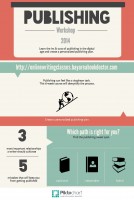
In this six-week course, you’ll learn the ins and outs of publishing in the digital age. What we’ll cover:
Traditional versus Independent Publishing: Learn the pros and cons of traditional and independent publishing, and decide which path is right for you.
Agents and Editors: What They Do and How to Find Them: Understand the role of the literary agent and the editor, as well as the relationship between the two. Discover how to find an agent, what terms to expect, and what red flags to watch out for.
The Path to Publication: Learn how you can improve your chances of getting your manuscript noticed by an agent or editor. Get my secret for building a publishing portfolio that will make your manuscript stand out.
Preparing Your Manuscript for Publication: Learn the 5 common mistakes that will keep your manuscript from getting a serious read. Understand the industry standards that are key to a professional manuscript presentation. Learn how to format your manuscript for independent ebook publishing.
The Money Trail: Learn the basics of advances and royalties. Understand what to look for in a traditional publishing contract, and how to get the best royalties for independently published work.
Understanding Copyright: Whether you choose to go the independent or traditional publishing route, copyright deeply affects your income stream. Learn how to protect your work from copyright infringement, and how to balance discoverability with copyright protection.
This course is intended for:
- Writers who are new to publishing
- Writers who have published independently but are interested in making the leap to traditional publishing
- Writers who are interested in having a hybrid career that includes both traditional and independent publishing
- Writers who have published in literary journals, magazines, or online but have not yet published a book
By the end of this course, you will have a clear idea of how to proceed with your manuscript. You will have created a personalized publishing plan to help you take your writing career to the next level.
Each week features a downloadable lecture, an assignment, and a discussion forum, where you can ask questions and post comments.
Go here to enroll in the publishing workshop.