Your cart is currently empty!
Author: Editor
-

The English Translation of the Story of the Hero Who Named Many Places
A short story by Will Kaufman
He named this place the Apple Grove of Hope for Love, because it was in this apple grove, as a youth, that he came upon a horse, a dappled grey, and befriended it. In that time the people of our land lived far apart, and often wandered. How else to find love than on a horse?
This hill the hero named Horse-Thrown Hill, because he could not ride over it without his horse throwing him. Sixteen times in the course of the hero’s many travels he was thrown. Sixteen times as he crossed our land, looking for his love. Perhaps he should have named it Stubborn Hero Hill, for he could have ridden around it. It is not a very large hill. But he always thought, maybe this time. He would be thrown still had his horse not died.
I have never owned a horse, though I have seen several. Wild horses, even. A small herd, chestnut and white in a stretch of grassy valley too far from the city to be worth developing, and too narrow to farm. Its name on the map is Narrow Valley. I witnessed the wild horses of Narrow Valley grazing by the freeway, the E-244. Such are the names given now.
Professor Padarak drove me down that road, in her rusted Lada, to interview a retired truck driver whose father had a reputation as a great storyteller. We brought tape recorders and notebooks and maps, and meant to recover old stories and old names. Professor Padarak and Aydas the Research Assistant, seeing in each landmark that presented itself outside the streaked windows of the Lada a space for an old name to be scrived.
The truck driver told us the stories his father told him, of the great hero who gave many names to the places in our land, and other stories, too. He spoke a patois of the old dialect and the new—though not like the kind taught in classrooms—and trucker-words. In English he knew “distance” and he knew “horse” from “horsepower.” Then he offered us the use of a cot next to his iron stove.
I considered the shack’s concrete floor. “I’ll sleep in the car,” I said.
“Don’t be daft,” said Professor Padarak. “You’ll freeze.”
And this is the Best Tree for Sitting Under, with its twisted roots that make beds and chairs, and its dense leaves that shelter and shade. The hero sat here many times on his travels, stopping even if he was not tired, just because it is so good a place to sit. While he sat he thought about finding his love, about finding a woman with whom he could name a place Home, and how they would have many children, and he would ask her to name each one, then he would name a place for each one. This was a sad thought, too, because he would not need his horse any longer, having found love, but he loved his horse. He had spent so long with his horse, and needed his horse, and his horse held all his hopes in the thunderous chambers of her heart. Would his hopes still be thunderous once he found love?
He could have named the tree Where Happy Thoughts Become Sad Thoughts, or Where Joy and Sadness Forget Why They Are Different, but that was not necessary. Sit for long enough and all things come and go, so being a place one could sit for a long time was a much better recommendation for the tree than any such nonsense.
So why didn’t the hero sit and wait for his love, if all things would come and go? When he thought that, he knew he had sat too long, and he leapt onto his horse, and after leaping one such day he meant to tell his horse how, even though she was a means to love, he loved her for herself, but he could not speak to the horse for he did not know the horse’s name.
So he said aloud that he would find someone to name his horse, and hoped his horse heard him, and understood.
And the University library was a kind and warm place, gentle in spite of the efforts of its builders to harden it with linoleum and fluorescent tubes and steel shelves. We surrounded ourselves with reference books and set about making all the truck driver’s words English words so we could publish in English…
(EXCERPT) Continue reading this story on Beacon.
Will Kaufman’s work has previously appeared in The Collagist, PANK, Unstuck, Lightspeed Magazine, McSweeney’s Internet Tendency, and a number of other journals. He received an MFA in Creative Writing from the University of Utah in 2010.
Image courtesy of Patrick Tomasso via unsplash
 This story will appear in the anthology 20 Tall Tales: Weird and Wonderful Stories. Go here to pre-order the ebook.
 -
How to Handle Winter
A Short Story by Melissa Gutierrez
The snowman was more that than anything else—a man who lived in the snow. He had a pelt like other yeti, certainly, but it wasn’t anything abhorrent in the least; soft, in fact, were one to get close enough to brush arms with him and feel the fine hairs graze across so light and thrill like marabou. He was a beast of course, but had the good fortune of being a northern one. The cold, and nightly grooming sessions, kept his hunting-sweat from building up and stinking. And lying on a bed of furs each night looking upwards for the ribboned polar glow kept his heart always at peace—with so many swirling colors overhead, bright even through the plastic ceiling skylight, how would one ever feel alone?
The snowman couldn’t really bear to hunt. He could stand the sight of blood but couldn’t find a way to really do the deed without getting any on his whitely-padded hands. He might have been a vegetarian were he any longer left of center, but he had a sense of order in things and kept on eating meat. He made a trek down from his snow-packed mountain pass to the little village general store once every couple weeks, picking up a crate of Kobe steaks and a couple whole king salmon that the owner set aside. The snowman kept a hothouse for the slew of vegetables and herbs he grew himself. He had built it off the cabin-cave like a giant sunroom, and spent the early mornings tending to the rows of home-grown produce, and the evenings sometimes doing canning or other kinds of preservation prep. When the sun came up, he skied.
“I see him, Dad, I see him!”
“See what?” the father asked, and hunkered down at the windowsill, his elbows up on it and folded like a bedtime prayer. The daughter held her posture similarly, but with binoculars between her hands. Her eyes were hidden, her face attached to the lenses, and the other lenses pressed right up against the windowpane, where frost had started gathering low near the sill below.
“The snowman,” she said, saying it like a secret.
“The snowman?” the father asked.
“The snowman,” she said, and set the binoculars down on the wooden ledge. She turned to face her father. “He is tall and white and furry, and he rides a set of skis.” Her lips were like two berries, olallie-b or huckle, and her eyelids blinked in mark of fact.
“One time,” the father said, and stroked her curly hair, “before we moved, your mother and I lived in the hills of a golden valley. Growing up we watched cattle and deer and boars and goats and kept a sharp eye out for mountain lions. One time when we were little—we grew up friends and neighbors—your mother said to me, ‘Look, there, a giraffe.’ She pointed towards a little bunch of trees, and I couldn’t see a giraffe. And she said, ‘No, the next patch, inside that little shadow.’ And I looked inside that little shadow on the hill and sure enough, there was a giraffe. She said to me, ‘It comes out every night.’ So every night we watched the shadow on the hill and every night the giraffe came out again. Then one day, your mother said, ‘Let’s go see where the giraffe lives.’ We put our best boots on and climbed all the way to the top of that hill, to the patch of trees where we saw the giraffe come every night. It was summertime and the grass was dry like straw, and our climbing up through it was so noisy, like rustling through plastic grocery bags.”
The little girl put her hands together and rubbed them to make noise. Her father smiled.
“Yes,” he said. “Almost like that. But not as soft.” He smiled, then continued on. “We had scissorweeds and thistles sticking all throughout our socks. Halfway up we had to stop and pull a tick out from behind her knee. I was a Boy Scout then and had brought a first aid kit with us just in case, so I was armed with tweezers.”
The daughter wrinkled up her nose.
“We got it out okay. Your mom was brave. Anyways, as we were trudging upwards towards the giraffe lair, the sun was almost setting. We could see him come out from just a little down the hill. He stood calmly, looking at us. He was going to wait for us to meet him—we were going to see the giraffe up close.”
The daughter gasped. Her eyes were big. She pulled the binoculars down into her lap and leaned in forward.
“When we got to the giraffe,” the father said, “it was just a log. A giraffe-shaped log.”
The snowman’s cave was built along a low cliff of an upper mountain range that overlooked a valley. The whole area was so high up in the world that everything stayed white with snow year-round, except the very middle of the valley where a river ran and green grass grew in late June through July. Cold pats of snow remained underneath the trees around the valley’s fringes, even then. The trees grew all the way up to the bottoms of the rock cliffs, where there was no dirt to grow—a couple branches here and there, so a cardinal or owl could nest, so even birdsong met the alp-y mountain peaks sometimes. Above the cliffs were the mountaintops, almost ridge-like. The valley was like God had punched the earth, not round enough to be a crater really but imprinted in the earthface all the same. The only way out, besides scaling mountain cliffs and walls and peaks, was a little pass near the west end of the valley, like where maybe God’s right thumb had been when he threw that big hard punch. It wasn’t dangerous or blocked or controlled by anyone in any way, though mainly the only people who came in and out were food and fuel suppliers, and the occasional tourist who rented out a village cabin that they’d found online.
The snowman circled all of this on skis each and every day. On Mondays he’d make a half-moon from the right of his front door to the north side of the pass, and on Tuesdays he’d make the arc around the south. On Wednesdays he rode the treeline and on Thursdays he snaked through, in and out of the pines around the upper elevations. On Fridays he did downhill at a private slope he’d built a half a mile from his digs. On weekends he waxed and cleaned his skis, gave them and his legs a break, put his body in an ice bath in the snow and then caught up on any hothouse work he’d missed, or did an extra run down to the village store.
Continue reading the story on Beacon…
Melissa Gutierrez is an artist and writer living and working in Northern California. She holds an MFA from the University of Arizona. Follow her on twitter @mmgutz.
This short story will appear in the anthology Tall Tales: 20 Strange and Wonderful Stories from Fiction Attic Press.Image courtesy of Paul Itkin, via unsplash.com
-

The Place I Belong
Short Fiction by Kevin Sharp
My life changed when I turned seven.
It seems so long ago now, and I guess it was–especially with everything that’s happened to me since.
In 1976, my mom and I lived at the Starbrite Mobile Home Park outside Flagstaff, Arizona. I divided most of my free time there between reading in my room and playing in our yard (really a square of rocks occupied by some faded plastic flamingoes). I could stay in my fictional worlds for hours, until Mom called me for dinner or bed or because the approaching siren meant that something was going down (again) at one of the other trailers.
My mom’s name is Cinderella. Really. She hates it, always going by Cindy or Cin. She told me over and over not to name my future kids anything weird, that to parents it may be a spur of the moment thing but the kids had to live with it.
“For instance, I wouldn’t have named you Galahad,” she said.
I didn’t tell her that I wished she had, because Galahad is a way better name than Herman.
I knew my dad only as a faded image of blonde hair and sideburns. The card he sent for my seventh birthday showed an astronaut, untethered to any rocket, floating alone against a blue-black galaxy. Inside: Have An Out Of This World Birthday! Printed below that: Love, Your Pop.
Mom cried as she watched me sound the words out.
She took me to celebrate on January 1, 1977 – I’d been a New Year’s baby – and to give us both a break from our usual Rice-A-Roni or plain pasta dinners. The restaurant was called the Squat & Gobble, which doesn’t sound too fancy, but to me anyplace with cloth napkins and hardcover menus was like dining as a king. After I blew out the candle on my slice of chocolate cake (chosen off the silver dessert tray), the waitress, Dot, leaned down and whispered in my ear, “My mama poisoned my stepdad and made it look like an accident. He was a terrible man.” Then she gave a big smile; she had a smear of lipstick on her front tooth.
I lay in bed that night playing with my new Aquaman doll, wondering if Dot had told me something from a movie or a grown-up book.
The next day, my friend Richie and I waded in the creek behind his house, looking for crawfish or tadpoles. “Guess what, Herman.” His eyes were wide behind the giant lenses of his glasses. “I peeked through my parents’ keyhole and saw my mom tied up to the bed with my dad’s neckties. She shouted at him to…” Here Richie listed phrases whose meanings neither of us were sure of, exactly, nor did we know who to ask.
The school bus driver, Ms. Brenda, held me back Monday morning after all the other kids. She told me about the time she and her friends stole the principal’s car in high school. Only they didn’t know the principal needed his car to drive his sick wife to chemotherapy. There was a big mess – that’s how Ms. Brenda said it: “a big mess.”
“Not a day goes by I don’t think about that poor woman,” she told me. She wiped her eyes with a wadded Kleenex from her jacket sleeve.
After Ms. Brenda came Mrs. Nelson, my first grade teacher. The yard duty supervisor at recess. The assistant principal. The kids I talked to, on the playground, in the lunch line, in the bathroom. Even kids from the other classes, whose names I didn’t know. People who probably never even knew I existed.
They would all lean in and whisper to me, even if nobody else was around. Like what they were about to tell me was the biggest, most important thing ever.
Pug-nosed Tommy Gregson, who I guess would’ve been categorized as the class bully, told me his mom put a wad of toilet paper in his underwear every day so she wouldn’t have to wash brown stains out of it. Do you know what I could’ve done to Tommy with that information, especially as his reign of terror expanded in later grades?
What had happened when I blew out that candle? Since when was seven a magical age? In case you’re wondering, hearing all this stuff wasn’t my wish; I’d asked for the same things as every year: a life-size Batmobile, and for my dad to come home.
#
But whether I wished for them or not, my collection of secrets grew day by day, with every person I encountered.
My dentist said he ate chocolate at every meal, which I thought was a pretty cool secret for someone with that job. But then he added, “I fantasize about your mother every time you come in here. I hope you get lots and lots of cavities, young man.” (I didn’t know what fantasize meant; I pictured my mom with fairy wings, riding a unicorn.)
Mrs. Hooper from the trailer next door told me she’d once secretly dated a black boy even though her parents were super-racist. (I pictured checkered flags as her mom and dad drove fast around a track.)
Richie’s mom, when I was playing over at his house, told me she was pregnant. I thought from TV that this was good news, but she kept saying, “What was I thinking?”
Mom’s hairstylist. The gas station attendant. The red-haired girl who scooped at 31 flavors. The mailman with the cowboy mustache.
#
After a couple of weeks I felt all those stories dragging after me wherever I went, like the ghost’s chains in a Christmas movie I’d once seen. Mom and I were watching a show called Charlie’s Angels on our itchy green couch one night, when I told her what had been happening.
She ground out her cigarette in the abalone shell ashtray. “What do they say?” she asked.
I paused, wondering what the etiquette was in such a situation.
“No, you’re right. Always respect a secret.” She lit up a new one. “So what’s mine?”
I thought this over while one of the TV ladies karate-chopped a guy. I knew everything about Mom already, like that her hair wasn’t really black and she never wore underwear. But, no, it would have to be something she’d told me since my birthday.
“Um, that you didn’t pay for your new scarf. The purple shiny one.”
She stared at me while smoke swirled around us in the blue light of the TV; every other light was off to save power. “Hell, I’m just taking that thing for a test drive. Stealing is wrong and you shouldn’t ever do it. Okay?”
When she shook me awake however long later, Godzilla roared on TV and half my face was numb from the couch. Mom said, “I have an idea.”
I never saw any of the men she dated, because she’d never let them pick her up; instead, she’d put on her finger-length eyelashes and her one fancy dress to go meet them in our old blue station wagon. “It’s not as glamorous as a pumpkin coach,” was how she described the car. It used to crack me up, picturing the poor guy seeing that thing driving up and wondering what he’d gotten himself into. Then Mom would get out, all beautiful.
I’d stay up late reading comic books with a flashlight so she wouldn’t see my lamp on through the window shade and worry that I wasn’t sleeping again. Only when she was home, when I’d heard her kick off her high heels and the click-click of her lighter, could I relax. The walls of our trailer were thin as cardboard; it felt like we were right next to each other even when we weren’t.
She always said her dream man was “a young Elvis Presley with the soul of John Denver.”
Anyway, Mom’s idea…
She reached out to the TV knob with her bare foot, turned down Godzilla’s volume. “Baby, you’re gonna help me find Prince Charming.”
#
The pretty nurse at my doctor’s office led me into the exam room and told me she was head over heels in love with the doctor. Then Dr. Schwartz tapped my knees with his little hammer and told me he was gay.
A girl named Winnie Munson joined our class well into the school year; Mrs. Nelson put her in the only empty desk, which happened to be right next to mine. And so, five minutes into her time there, while everyone else focused on their subtraction problems, Winnie told me that her father locked himself into her older sister’s room every night. I didn’t respond; whatever weird games her family played were none of my business, and it wouldn’t be good for me to be seen whispering with a girl.
#
Mom stopped going out on dates – now she invited men to dinner at our trailer. If he was supposed to be there at 7:00, she’d start preparing around 6:50; the guy would show up and Mom would say she got stuck at work or had car trouble (both lies). Then I’d be in charge of entertaining him – except it was more like a job interview he didn’t know he was on.
Roger, who seemed like a giant in my tiny room, looked around and asked what sports I liked to play. “None, really,” I said. “I can’t run very good.”
His voice dropped to a familiar whisper. “You’re looking at a former college wide receiver. I was plenty fast enough, but I missed a lot of practice because I was boinking my coach’s wife the whole time.” He illustrated the concept using his finger and a closed fist.
Oh, Roger. It was nice meeting you. Sort of.
I signaled to Mom when we came out of my room – blink twice slowly – and she pretended she was getting a migraine, clutching her head with good authenticity. Then the two of us ate the nice dinner on the checkered tablecloth.
I had to open my window because of Tom’s cologne. He looked at my bookcase and my pile of comics while I looked at the curly carpet of chest hair he showed off. Tom seemed nice, and he knew about the Hardy Boys. If the worst problem had been his grooming we might’ve been ok. But then he had to kneel in front of me. “I took money from some bad people. Real bad. Now I sleep with a gun under my pillow.”
Bye, Tom.
Bye, Nate, with the night terrors you brought back from Vietnam.
Bye, Frank, with your five ex-wives and the reason why all of them left you.
Bye, Anthony, with your glass slipper jokes after seeing Mom’s name on the electric bill. (He didn’t even make it to my room.)
#
As the weather got warmer on its way to brutal, Mom took me to the public pool each weekend. I usually spent my time there lathered in Coppertone, watching the lucky kids whose dads played with them in the shallow end. Now it was all whispers in my wet ears: swimmers, parents, lifeguards, the lady at the snack bar. I got pretty good at holding my breath – and ignoring the blinding sting of chlorine – because I tried to stay underwater as much as possible. Finally I told Mom I didn’t want to go anymore; instead I’d sit three inches from the squeaky fan at home and mist myself with a spray bottle.
I didn’t want to go with her on her usual errands, either. People who had confessed once left me alone, but strangers were too risky – the man in the grocery store who was planning his suicide gave me actual nightmares. The only places I felt safe were at the movies (where I could sit way down in front by myself) and the public library (where I could hide in one of the carrels).
#
I thought Clay might be the winner of the Prince Charming sweepstakes when he offered me half a Kit-Kat bar outside the trailer while we waited for dinner. I’d been trying to avoid chocolate (and thus more cavities) but my seven-year-old will was weak.
Clay looked both ways before lighting what I knew was a joint. “I spend every day stoned – it’s the only way I can get through my shitty life. You’ll understand someday, kid.” When I was in bed later I heard him and Mom giggling; the smoke smell rolled in under my door. But I never saw him again after that.
Yale the draft dodger got to stay for dinner. So did Ben, who hadn’t been on a date in nine years. And Leroy.
But none of them were Mom’s guy. I wanted her to be happy. I wanted her not to be lonely.
“Oh, baby,” she said as she tucked me in one stuffy night. “There’s a world of difference between alone and lonely.”
This went on through the spring and summer. Richie’s mom had a baby. I lost a front tooth. Two girls vanished from my life: Winnie Munson, who stopped showing up to school, and the red-haired girl from 31 flavors (probably because the boss found out what she was doing in there after hours). Star Wars came out. Elvis died; Mom drank beers and sang along to his records all day.
#
The phone rang during Saturday morning cartoons. I held the receiver in one hand, my bowl of Cocoa Pebbles in the other. “Herman?” the man said. He spoke loudly over music and chatter in the background.
I didn’t know the voice, but I knew the voice. “Dad?”
“Yes, son.” A song played about blue eyes crying. “Say, is your mom there?”
“No, she said she’s splurging on a new haircut.”
I heard a sound like ice cubes. When he spoke again, he was much quieter, as if the phone was stuffed inside his mouth. “My folks had a terrible marriage. Fought all the time, cursed, hit each other – like they weren’t in love and never had been. I didn’t want me and your mom to end up like that. I didn’t want me to end up like that. Like maybe being a violent asshole was something my dad passed down, and then I’d pass it down to you. So I made myself leave.”
The operator asked him to deposit more money. Coins clinked.
He said, “The last time I saw you and Cin was the last happy day of my life.” A new song started: something-something country roads. “I don’t know why I’m telling you all this.”
And there in our tiny kitchen, for the first time when someone had finished whispering to me, I smiled.
Kevin Sharp teaches high school creative writing in Northern California. He is the author of the YA novel After Dakota; his work has also appeared on The Weeklings and in Bookmarks magazine. While he has technically grown up, Kevin has yet to outgrow Looney Tunes, The Price is Right, fantasy novels, or comic books. This story makes him want to confess his secret celebrity crush on Kate Winslet. Visit him online at www.kevin-sharp.com.
Image courtesy of Pawel Kadysz at unsplash.com
-
A List That Never Ends
Short Memoir by Sarah Elizabeth Schantz
When it was time to burn my mother she wept two red tears. I drove her to the crematory and watched my place of origin turn to white ash and silver mica.
Adderley was my first death—my best-friend’s little sister, I was only seven and Addie was only one: Sudden Infant Death Syndrome: Suddenly. Infinitely. Disappearing. Then came my grandparents, one after another, they were gone by the time I was fourteen. The same year my paternal grandmother died, so did another baby that I knew—she too suddenly disappeared forever; she was buried in a tiny pink casket and her mother, Mindy, cried during the entire service. Yet Mindy survived, somehow, and had another daughter—but life is never fair, and Mindy was killed in a car accident around the time I moved back to Colorado.
Little Bob had a hernia and it frightened me the one and only time we had sex. That night, I slept in his bed, and while I slept, he drew my portrait. After he showed it to me, he buried it in the backyard and refused to tell me where it was, although he did give it to me later once we knew I’d never love him like he loved me. Rendered in pencil on watercolor paper, this sketch remains taped to the inside cover of my journal, dated: 1995. Little Bob was not an artist, and yet, he captured me. And he is the only person I have ever kissed at the very top of a Ferris wheel. A decade later, Little Bob died from a hotshot of heroin, eleven days before I was married. Friends came from his funeral in Minneapolis to my wedding in Colorado, and Little Bob hitched a ride—in all the pictures taken, I am a bride surrounded by a swirl of light. His ghost still visits me from time to time, usually when I’m alone and driving a back road late at night.
After J.P. died from pancreatitis, I almost hit a coyote driving home on Valmont—it was the middle of the day. Three mornings later, I stepped into my yard and saw a coyote standing in the field. It was dawn and the pasture still a harvest gold beneath the veil of a cold white frost. The coyote stood and stared at me before he turned to walk away. His back leg was broken and he limped as he headed east to be reborn.
Everyone thought my mother was going to die on my thirty-fifth birthday. Pancreatic cancer spreads to the brain but the doctors forgot to tell us this. After a period of extreme psychosis, she fell still and silent and she hadn’t stirred in days. Because she was starting to swell, I was forced to remove her wedding band. I was prepared. It seemed fitting that she would die on my birthday, but she didn’t—Jamie died instead. Jamie was J.P.’s little brother and the last time I’d seen him was at my wedding; J.P. died on Jamie’s birthday just the year before. When they were kids, they were in the skate punk band called, Old Skull—airtime on MTV, talk show interviews, media buzz. Jamie hung himself from a tree in Lynchburg, Virginia and April had to cut him down.
April lost her leg hopping a train out of Dinky Town when she was nineteen. I used to massage her phantom leg, but only when we were stoned. April was in love with Cabbie back when we were young. One day, Cabbie bought a pair of Gingher sewing shears; expensive stainless steel, the shine was dangerous when he cut off his ear—he need to make room for the wingspan of a hawk tattooed across his face. Cabbie stored his ear in my freezer for a year; he wanted to get it bronzed like people do with baby shoes, but I think Little Bob sewed it to a dead chicken-rat instead.
Later, April and I ended up living in King Salmon, California. The “beach house” had been built on a fault line less than half a mile away from a nuclear power plant. This house is where Cabbie carved out his tongue because he didn’t want to tell lies anymore. In my bedroom, I had a futon on the floor, and not much else, and this is where he sat as he cut it out. I was at the bar but he bled all over my travelling doll, Anangka. Cabbie bled all over the house and up and down the front walk. When I came home, the house was like the aftermath of a massacre. When I went to see him in the hospital, he could still talk. Eating ice cream, Cabbie had a lisp when he explained: “To stop talking, the vocal chords must be removed.” When I was fifteen, there was a bearded homeless man in Boulder who wandered the streets at night in a long gray trench coat. He was towering tall and I swear he had a music box inside his chest by the way he sometimes would break into song. His name was Tom and I’m sure he’s dead by now.
April has a tattoo on her face like a game of connect-the-dots; a constellation of stars, sporadic lines. I wish this was the map to find Cabbie who disappeared in 1998 the year I almost died. $15,000 continues to sit in his bank account unaccounted for and April refuses to make the withdrawal. Cabbie made this money on the fishing boats in Alaska; he wanted to buy utopia. April thinks he went into the woods to castrate himself. He was only trying to be whole again. Maybe Cabbie bled out. After all, he was the closest thing we had to Christ.
There were others too: Marcus on his motorcycle, fragments of bone left on the asphalt like stars. Jeremy, whose middle name was Rainbow, died shooting up in the Denver bus depot bathroom. Marcel had an asthma attack doing speed and Micah, waltzing with a train. These four were all fathers when they died, their children young—J.P. was a dad too, and his son looks just like him.
Sobriety and Patch chose the shotgun tunnel into the afterlife, and Liz owed me $30.00 when she died from dope. Couch took angel dust and jumped off the roof of 5005, and it was the worst kind of luck when he didn’t die. Casey died from AIDS-related complications and Uri died like Marcel and Oakle, my stepdaughter’s uncle, left this world one November night via Oxycontin, also known as Hillbilly Heroin.
There was Kendra who I knew growing up; a few years older than me, she was her parent’s youngest, and our families were friends. Little Bob might have been the first person to ever serve me tuna mac, but Kendra was the first to ever make me mac and cheese from a box. Kendra was living in Canada in 1994 when she purchased a one-way plane ticket back to Colorado without telling anyone. She just left a rent check for her roommate, and when she landed in Denver, she didn’t go home. Every time I drive into the city, I see the tall round hotel where she went instead, and I have to wonder which window was the window from which she jumped. Kendra, who was so determined not to let her suicide be an inconvenience to anyone, did not leave a note and while others long for an explanation, I always thought her actions said enough.
Thorn was only three when his parents had to pull the plug. When Donovan came home from the hospital, I made salmon, and after we had eaten, I watched him carve a turtle urn for his son while Fish walked up and down the Mississippi, crying. And now Donovan’s the one in the hospital—intensive care—over a decade later, some wounds never heal. Caitlyn died from cancer with Shelley by her side and Meghan, who I used to babysit, died in her sleep—something to do with the spina bifida; her split spine. Jenny, who was always so much fun, used to say she was a member of the Die Young Club on account of having Hep C, yet she was nearly forty when she died, and her death was due to heroin. She’d been clean for years, Eddie wrote to me, instant-message, Facebook. But what kills me, he said, Is that her daughter was the one who found her. Jenny’s daughter was thirteen, same age as mine, same age as Little Bob’s little girl.
All I have of Bob is the drawing he drew of me and a dirty scrap of his Chicken Shack T-shirt. Anangka sits in the cup holder of my car to keep me safe; made from a sock she still wears Cabbie’s DNA. I have a letter Micah wrote to me, postmark Nova Scotia. Blue ballpoint pen, careful capital letters, he wrote: The other day I went to Eagle’s Cave where it’s all white sandstone inside and I drew some pictures to remind myself what I am. Eddie and Leona named their son after him. Micah like the mica in my mother’s ashes, her mountain mermaid scales. From Marcel, I have a letter he wrote to me from jail. I need to get out of here, he said, and on the envelope seal, he drew a grinning skull. Fish has Marcus’s old backgammon board and scrawled across the case, J.P. wrote: Go play your little games.
Cremated on a bed of quartz, wearing a pair of rock star leather pants, Jamie’s ashes came out green and course like crumbled jade whereas J.P. was naked when he turned into something soft. Something pure and terrible, his remains are like the China White we once injected along the banks of the River Styx. Rationed out to friends and family, I have a little of each brother. Side by side, they sit on my dresser and I can see them from my wrought iron bed. They sit on a black pool of Scrying glass with my mother’s death mask—the one I made with my daughter using plaster, gauze, and water. There they all watch over me, and speak to me through dreams, a list that never ends.
Sarah Elizabeth Schnoz lives on the outskirts of Boulder, Colorado in an old farmhouse surrounded by open sky, cattle, century-old cottonwoods and owls. Her short fiction and essays have appeared in Third Coast, The Los Angeles Review, Bombay Gin, Hunger Mountain, Alligator Juniper, and many others. In 2012, she won the Fall Orlando Prize in Short Fiction. She holds an MFA in Writing & Poetics, and her first novel, Fig, was published in 2015 by Simon & Schuster.
Image courtesy of Len de la Cruz, via unsplash.com
-

Eggs
Flash Fiction by Patricia Cosgrove
At the end of the lane, beyond the scrags of gorse and fuchsia and the fields dipping to the sea, the spring tide surged and broke on the shingle. The woman sat on an upturned fish crate in the shelter of the gable wall, eyes closed, counting the wet suck of each ebbing wave on the shore.
‘Mammy, can I have an egg?’ The child had snuck out barefoot, still in his pyjamas.
‘In a minute. Get back inside – you’ll catch your death.’
She slopped the dregs of her coffee under the crab apple tree, its branches gnarled and stunted from the salt winds. The April gusts had felled the blossom, drifting white petals through the cropped grass. She followed her son into the sagging lean-to at the back of the house, pressing her weight against the warped door, and wedged it shut behind her with a breeze block.
The child splashed his feet through the puddle in the middle of the cement floor.
‘Don’t do that!’
He cowered when she picked him up.
‘Please, Sean, don’t do that again,’ she said, stripping him of his sodden pyjama bottoms. She held him on her hip and stroked the small of his back. ‘Mammy doesn’t like that.’
She perched him bare-bottomed on a kitchen chair and scuttled through the pots on the draining board, found the blue saucepan. A greasy scum rimmed the inside and she scoured it. The water spluttered then gushed from the tap. It pooled in the plughole and wouldn’t drain. She took the rubber plunger from under the sink and siphoned out broken strands of spaghetti, chunks of tomato. She’d reminded her husband to scrape the plates before he washed them last night, but he’d forgotten. Cathal always forgot what she asked.
She chewed her lip and stared out at the washing sagging and jerking on the line. The wind snapped the sleeves of Cathal’s shirts into mock salutes and she thought of the tedium later; collar, cuffs, arms, yoke, the hissing tip of the iron nosing smooth between the nub of buttons.
Sean dragged his chair over to the shelf beside the fridge, stretching to reach the purple carton. He opened the lid, did eeny-meeny-miny-mo over the six brown eggs.
‘This one,’ he said. ‘And one for you.’
A small grey feather clung to a shell and he lifted it between his thumb and forefinger and blew it like a kiss at his mother.
‘Get off that chair before you fall!’
He clambered down and sucked in his cheeks as she sparked the blue flame on the stove.
‘I suppose you want dippy soldiers with that?’
He nodded and rummaged through the bottom drawer for the egg timer, stood beside her as she slotted bread into the toaster, peeled back foil from a half block of butter.
‘Move, Sean! You’re always under my feet!’
His thumb went into his mouth before he could help himself. His mother smacked his hand away.
‘Don’t do that,’ she said. ‘Mammy doesn’t like that.’
A squall passed over the sun, darkening the kitchen and a sudden shrapnel of rain drummed the slates, gobbed melts of ice against the windows. The washing, she thought, all the morning’s work undone.
She hurried into the garden, the wet grass soaking through her slippers. The line pole pitched to and fro and she grappled it with both hands, the rusted iron streaking her palms orange. She tugged at a shirt hem, felt it spinnaker away as the fraying rope unsnarled itself free from the branch in the apple tree. The washing trailed in the ground, muck-spattered. She put her fists to her eyes and counted the waves beyond the wall.
The eggs rattled in the pot. The child held the timer up to his face, watching the pink trickle of sand until the last grain fell.
‘Mammy,’ he called. ‘Maameee.’ The door of the lean-to banged in the wind.
He went towards the stove, looked up at the steaming pot and reached for the handle. His scream, the pure clear hurt of it, spliced the wind.
Patricia Cosgrove comes from a small coastal town in North Dublin, where she still lives. As a child, Patricia was told that her constant tale-telling would turn her tongue black. Undeterred, she continues to make things up. This is her first published piece of fiction.
Image courtesy of Helena Bjork
-
Planting Trees: A Life in Houses and Backyards – Memoir by Alyssa Kilzer
Planting Trees: A Life in Houses and Backyards
Memoir by Alyssa Kilzer
Part 1
When I was born, my parents were living in a neighborhood called Hunting Trail, just outside of Raleigh, North Carolina. On our street tall trees shaded the curving cement road. There was a country music star with horses living in the neighborhood. I’ve seen photos of the Hunting Trail house, a gray colonial, probably chosen because it reminded my mom of the colonials around Boston, where she grew up. From one of these photos stems a memory of our dog, a collie, running around in our back yard, and sitting on the low wooden back porch, her tail wagging. I can almost see my nursery now—a small white room with white carpet and a rocking chair, the dog sleeping beneath my crib. I feel so certain that the collie slept beneath my crib. “That wasn’t you,” my mom says. “The collie was hit by a car before you were born.”
We spent the summer of my first birthday at my mom’s family house in Cape Cod, which she went on to inherit, when I grew older. The house is located in a peculiar neighborhood called Scraggy Neck—a small island connected to the mainland of Cape Cod by a causeway, thus taking the shape of a scraggly, wooly-haired head with a thin neck. A looping road circles the whole island, just over two miles around. There are no stores on Scraggy Neck, only houses, woods and beaches, three small anchorages, and tennis courts.
As you drive or walk around the island there are thick woods to your left, and breezy ocean views beyond grey-shingled houses and car-filled driveways to your right. Our house is a small split-level, tucked away between the ocean and the main road. It was built in the 1960’s by my grandfather, and sometimes deemed the “Mildew Manor” by my own dad.
My brother Steve was born in July, before my first birthday. Somebody must have driven me to the hospital from Scraggy Neck, the day after his birth. There is a photo of me nestled next to my mother on the hospital bed, Steve in her arms. I have always been told that I immediately stuck a bottle in his ear when my mom placed him in my arms. After that first summer at Scraggy Neck we spent one more winter at Hunting Trail, before moving to Nashville, Tennessee.
In Nashville Steve and I liked to play on the swing set and in a blow-up pool filled with water. There is a series of photographs of me wearing a raccoon skin hat, standing atop the wooden swing set. The land is completely flat and treeless behind me. I can remember looking over that treeless expanse from the top of the slide, imagining what it was like to be Johnny Appleseed, the caretaker and explorer of the land. Was he overwhelmed, I wonder now, with the responsibility of filling up the vastness? It dwarfs me to think of all of America, naked and treeless, a single pioneer setting out by foot to plant all the trees, personally.
My sister Amy was born in Nashville, the year I turned three years old. I am told that I charged into the hospital after my sister’s birth, calling out “I am family and close relatives!”, not letting any nurse deny me access to my mother’s room. I remember entering the room, and being in awe of the small baby lying on my mother’s chest, asleep. Everyone was whispering. I stood on tiptoe and carefully looked at her squished face. When I think of the Nashville house I can almost feel the care I took to not touch the top of her head where the soft spot lay beneath her wispy hair.
The stairs of the Nashville house bent in an L shape, with a landing in the middle, and extended down to the front door. A month after Amy was born my mother fell down the stairs and broke her leg. I was with her when it happened. She held Amy up away from her head as she fell, perfectly preserving her as if she was a glass of water that couldn’t be spilled. “Go outside,” she gasped, “And tell the neighbors to call 911.” I had never been allowed to cross the street on my own. I paused at the edge of our front lawn, looked both ways even though it was one of those slow suburban streets with no traffic and no trees to obstruct your view, and knocked on the neighbor’s front door. That summer at Scraggy Neck my mom was on crutches, Amy on a carrier around her neck.
We moved back to Raleigh, North Carolina after my fourth birthday, but this time into a large white stucco house, again atop a hill with a sloping front lawn. The side of the house was very textured and perfect for scratching your back on, just like the bear in the Jungle Book cartoon. My dad planted three saplings in the front lawn, in a row down the hill. Their branches were skinny and just budding and I can remember the smell of the mounds of dirt around their trunks, as my dad showed me how to plant a tree.
There was a wooden fence built to surround the large backyard and separate it from the woods and hill beyond. It was stained a cherry color, even and consistent across all its planks and edges. I remember it like it is still new enough to be free from any water spots or fading. The black hinges of its gates stick out in my mind: their flat black paint, the curved edges screwed flush into the wood. As a child they marked where I shouldn’t go. I didn’t want to explore the woods beyond the fence, because my dad told me that the Boogie Man lived at the top of a pine tree there, and that pictures of him were occasionally printed in the newspaper. Sometimes my mom would let me cross the street out front and smell the honeysuckle bush that grew there. I can still remember that bush, the image of it sun bleached—a tumble of branches like my sister’s tangled hair when she was three, the white flowers taller than me, their scent wafting down.
Our backyard swing set had expanded to include other playthings. We also had a little gray castle and a miniature plastic house. The castle had its own small turret you could climb up, and the house had a countertop, a toy telephone, and shutters that opened and closed. During the year I was five I convinced my parents to buy me a Cocker Spaniel puppy I named Sparky, a green parakeet I named Tweety, and also a rabbit, christened Peter, after the Beatrix Potter character. Peter had downy brown and white fur and ears that stood straight up. My dad built a hutch in the furthest corner of the yard, and that was where Peter lived. I would carry food out to him twice a day, and worry about him if it rained or was ever cold enough for frost.
Once I took Peter for a walk around the back yard, but I had left the gate open. Peter hopped away and around the fence. His little nose would sniff the air, and then whenever I would reach down to catch him he would hop a little bit further away, rustling the long grass. He hopped all the way to the edge of the woods, where I followed him and cornered him against a rock. I picked him up. The trees swayed in the wind and I imagined the Boogie-man leering down at me. I ran back to the yard and secured Peter in his hutch.
We drove from North Carolina to Scraggy Neck each summer, not an inconsiderable drive. We would always stop at the same all-you-can-eat buffet restaurant along the highway, where all the tables were in booths and you had to peel the plastic seat from the back of your legs when you stood up. Because of the heat, Mom would leave Sparky tied up in the shade, Peter and Tweety on either side of him. I had an intense fear that somebody would steal my pets while we were eating and I always sat by the window so I could watch them and any strangers in the parking lot.
At the end of these long journeys, my dad would drive the car up onto the lawn so that it was as close to the front door as possible. From there we would all help unpack. The air was damp and musty and my mom would throw the windows open, so the ocean air could filter in. When we first arrived I would walk up and down the creaky, uncarpeted wood stairs over and over again, breathing in that smell.
The winter I was six we went to Boston to look at new houses. We drove out to a town called Sudbury, to see a house my dad loved. There was a nature reserve at the end of the street, and a river that had a weir many years ago. From that came the street’s name: Weir Hill Road. The house had a huge backyard of seven acres that included a field and thick woods that backed up to the river. My whole family took a tour of the house, but what I remember most vividly is walking down to the nature reserve. The bare trees waded in the snow, at least four feet deep, the narrow path shoveled and icy. I sledded down each hilly part of the walking path. We walked to where the trees parted to reveal a river so frozen I could walk out on the edge of it and pretend I was skating with my snow boots.
My parents made an offer on the house shortly after. Tweety, Peter and Sparky were given away to neighbors before we moved in that summer. The Weir Hill Road house was built into the side of a hill. From the end of the driveway I could run straight down the hill, gaining momentum that would propel me almost all the way to the end of the field. We still had the swing set, toy castle and house, but here they were one fraction of the backyard. I could pick dandelions and look for salamanders under rocks. I developed a love for catching frogs, holding them gently in my hand and feeling the bumps on their cool skin.
Any opportunity I got I would go out into the woods. I wasn’t allowed to go alone, but would take a few steps in anyways and peer around at the brush, and wet leaves, the trees stepping one behind the other, further and further away. I liked to imagine that I was an explorer, cataloguing the frogs and salamanders and discovering new species. I hadn’t learned much about animals in school yet, but I would make up facts about their life expectancy and families and tell anybody that would listen. Soon we got a miniature poodle, named Gracey, who was my companion and ran with me from the top of the hill out through the field, her tongue wagging and ears flapping behind her.
In the autumn the Weir Hill Road house was repainted from mustard yellow to cream. I took piano lessons and attended girl scouts. On weekends my dad would take us for walks in our woods and the nature reserve. I remember the day Dad took us all the way through the woods and out to the river, where the ground became swampy and the water was up around our boots. My feet sank deeper into the mud and he told us a story about being a child and going fishing in a swamp with his dad. Around that time of the year the leaves were turning, and we emerged from the sweeping half circle of reds and auburns and yellows and trudged back to the house. I liked to imagine living forever in the woods, making lean-tos from saplings and pine needles and surviving on swamp fish in my dad’s canoe. I still dream sometimes that I walk out to the edge of those woods to find an old broken down house, where somebody has been living all this time.
At the nature reserve we followed the many walking paths by the river and up over the hill. Sometimes during hunting season we could hear the sounds of gunshots in the distance. My dad has always been a lover of history, and as we walked he would talk about how the gullies in the sides of the hill were formed in the ice ages, when huge glaciers melted and cut into the side of the land. I imagined blue glaciers as big as our house melting away into the river, and for the first time started to comprehend the life span of trees and land.
We would run down the steep sides of these valleys, our gloved hands reaching for branches to slow us. In bad weather we would hurry home and I would stand by the long windows in the kitchen and watch it raining all the way out to the edge of our woods.
Three days after my eighth birthday my brother James was born. For two days Amy, Steve and I were left with a babysitter on Scraggy Neck. I spent some time sitting out on my favorite rock. I lay back and watched the sun flickering through the trees above. My bare feet pressed into lichen and moss and dirt. He could be anything and anyone, I realized.
Continue reading this story on Beacon.
Alyssa Kilzer graduated from the University of St. Andrews in Scotland with an M.Litt in Creative Writing. Her thesis, a collection of short stories entitled This House of Bones, was based on stories of her father’s life. She was advised and mentored by John Burnside.
Kilzer is the recipient of the Dan Hemingway Short Story prize for her story “The Deposition.” Her nonfiction has been published in Salon.com and TheDailyBeast.com and has been short-listed for the New Writing section of Mslexia Magazine.
She lives in Midland, Texas, the far-west center of the Oil and Gas industry, where she writes and teaches yoga.Photo courtesy of Martin Knize via unsplash.com
-
The Mourning of the Russian
Flash Fiction by Agustín Cadena, translated by Patricia Dubrava
He wasn’t Russian, of course, but that’s what they called him because he had nearly white blond hair and looked like Ivan Drago, the Russian giant who fought Rocky in the movie. A dozen years of lifting weights had given him an impressive physique.
He liked the nickname. Actually, he thought any nickname was preferable to his own name. Florentino. And the problem wasn’t the name itself, but its diminutive, which certainly wasn’t masculine. In school he’d had to beat to a pulp the few who dared call him “Flor.” That’s how he got used to fighting. Flower. He hated that name, even for women. So he always introduced himself: “They call me El Ruso.”
In the neighborhood everyone knew he worked for the secret police. That’s how things are in a small community: the secrets of one are the secrets of all. No one had a reason to betray him: he was a silent and solitary neighbor, but agreeable. He’d been seen helping some woman carry her groceries or scolding children who played on the block without watching for cars. The girl at the store found it endearing when he came to make his purchases, because, since he didn’t even have a girlfriend (only a cat, and who knows if it even had a name) he took one of each: a bread roll, a tomato, one beer, one apple. And of course, milk and a little bag of kibble for his cat. A wonder it didn’t occur to him to buy in bulk, which would be cheaper and more efficient. He always paid and thanked the girl without smiling. Perhaps he wanted to hide that he liked her, because with the other neighbors he became a little more expressive.
In his work he was different: there he couldn’t be nice. He knew that it was because of his physique, more than any other reason, that the other officers had made him a dark legend. They used him to terrify those they arrested, often without even needing his presence. “Leave him alone,” they would say, tired of beating some suspect. “If he doesn’t sing, we’ll let the Russian interrogate him.”
So it was. But this story is about when his cat died, not about any of that. No one knew what happened. Perhaps the cat was very old, that’s all. The fact is, one day the Russian appeared in the store with the face of a chastised child and didn’t buy one of each thing, but several of each, as if making provisions. Except kibble.
“And you’re not getting anything for the cat?” the girl asked him.
“The cat died,” he responded. He put money on the counter and left without waiting for his change.
He didn’t go out all day. The girl told the story of the cat to all the neighbors who came to buy something, and by nightfall, the Russian’s solitary grief was the main topic of gossip. The nosiest busybodies loitered at the door of his apartment and watched the light of his window in the night. The Russian didn’t appear. Nor did he go out the following day. Who knew what he did with the cat’s body: perhaps he was mourning over it. The trash truck guys said it didn’t come to them.
On the third day, curiosity had become a vague, undeclared anguish. The neighborhood felt unprotected without its guardian. Someone said they should knock on his door to ask if he was O.K., but no one wanted to risk making him angry. They drew straws. The dry cleaner guy lost, the biggest coward of all. Arming himself with courage was a waste of effort: the Russian didn’t open the door. At last, a schoolboy had the brainstorm needed: he began to shout “Flor! Florecita!” from the street.
Only then did the Russian come out. He came out angry, ready to pound the insolent idiot, whoever it was. It seemed to him that many pairs of eyes were watching him, hidden behind curtains, but he didn’t find the person who dared disturb his mourning. And his mourning ended there.
The life of the neighborhood returned to normal.
Agustín Cadena was born in Ixmiquilpan, Hidalgo, México. He taught at UNAM; at Austin College, Texas; and currently teaches at the University of Debrecen, Hungary. Essayist, fiction writer, poet and translator, Cadena has won numerous national prizes, including those for short fiction in 2004 and 2005, and for poetry in 2011. He has published twenty-six books, among them collections of short fiction, essays and poetry, three novels, and four young adult novels, most recently La Sed de la Mariposa, 2014, and Fieras adentro, 2015. His work has been translated into English, Italian and Hungarian. The three short short stories submitted here are from a manuscript called Dibujos a Lápiz, (Penicl Sketches) to be published in 2016. Cadena blogs at elvinoylahiel.blogspot.com
Patricia Dubrava chaired the creative writing program at Denver School of the Arts, where she also taught Spanish. She has two books of her own poems and one of stories translated from the Spanish. Recent translation publications include stories by Agustín Cadena in Aldus, Winter 2013, and Café Irreal, August 2013, 2014 and 2015. One of her translations of a Cadena story is in New Border Voices: An Anthology, 2014. Her translation of a Mónica Lavín flash fiction appeared in Norton’s Flash Fiction International, 2015. Dubrava blogs at www.patriciadubrava.com
image courtesy of Henry Lornzatto, via unspalsh
-
Magic Man
A Short Story by Enid Harlow
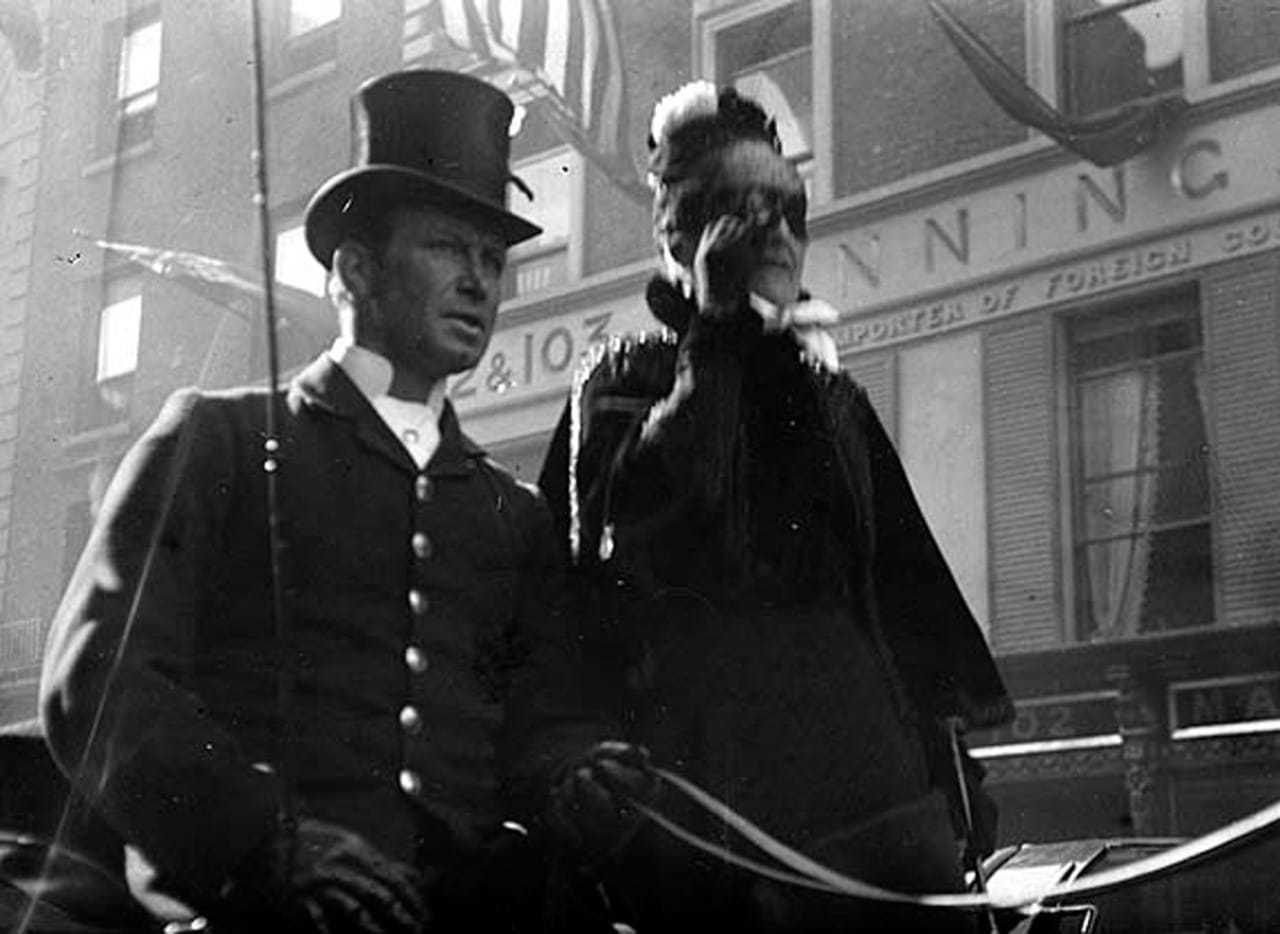
“Goodbye,” she said. “I have to go now.”
He didn’t answer but watched with steady eyes.
Meeting his eyes, she had a sense of herself reduced in size and given wings and flown out of herself toward him like a moth. She took a step closer as if to shake his hand, but he hadn’t extended his hand so she fluttered there, her purpose lost, around his head as if it were a flame.
Come back here, she called under her breath, and obediently the moth flew back inside her skin.
He took a step closer and made an expansive gesture with his arm, sweeping it out and quickly back. Instantly, she saw the flap of his greatcoat pulled open, revealing dozens of pockets neatly sewn inside. Each pocket held a tiny, flaming candle. As she stood entranced by the blazing spectacle, dozens of moths escaped her person. Each was drawn out of her toward a pocket inside the man’s greatcoat. They fluttered there above the flames.
“You’re full of tricks,” she said.
He smiled a magician’s smile.
Once more she recalled the fluttering creatures. Once more they returned obediently and folded themselves back inside their accustomed places where they lay still.
“Well, goodbye,” she said and walked away.
The moment she left him she felt better. Her breathing came easier, then tension in her shoulders relaxed. By the time she had reached the end of the block she had nearly forgotten him.
It was March before Joyce heard from him again. A tricky month. She didn’t quite know how to dress. Misled by a bright sky and dazzling sun, she’d underestimated the chill in the air and had worn only a light jacket over her sweater and skirt. Shivering and jamming her hands into her pockets, she waited at the entrance to the park where they had arranged to meet.
A park as familiar to her as her own childhood. She knew the turns of each of its paths, the exquisite danger of its large, climbing rocks, the limits of every swing in its playground. From where she stood she could see over the wall to where a few young children were being pushed on the swings. A heavy rubber mat had been laid on the ground beneath them for protection, but other than that nothing in the playground had changed since she had played there as a child.
Continue reading “Magic Man”
Enid Harlow is the author of three novels: GOOD TO HER, CRASHING, and A BETTER MAN. Her short stories have appeared in numerous literary journals, including Boulevard, Nimrod, TriQuarterly, The Ontario Review, Northeast Review, Southern Review, and Southwest Review, among others. “Magic Man” originally appeared in Southwest Review.
Image courtesy of New Old Stock
-

Sometimes We Choose What We Remember
Flash Fiction by Luke Allis
The old cliché that time heals all wounds is simply complete bullshit. Time dulls the shock, but when you have a hurt that runs deep enough you always feel the sting. I thought this as I stood in front of your coffin, staring at your lifeless face. Your skin looked so fake, like a bad wax figure that had been stored in a garage in Arizona. The inch-thick layer of makeup that was supposed to make you look more masculine was funny in a morbid kind of way. The dead never look like themselves. Death takes the very essence of the person, even the body. You looked like a stranger. The difference in you would not have been so stark if they had not put you a suit and tie and given you a crew cut—you looked all wrong. They put you in that itchy suit you hated, the black one that you were forced to wear to your high school graduation. Your tie was the standard diagonal red and sliver stripes. I was there to mourn my sister, not the brother our parents insisted that I have. I pictured you in your favorite dress: blue with small white daisies littered all over the cotton fabric. I wish I could have given you the funeral you desired, the funeral you deserved.
Your funeral was nothing that you would have wanted. It was in a Catholic Church. I stood and knelt more times than I can remember, and lip-synched the prayers that I never memorized. They called you “he” and “James” instead of she or Lily. It felt all wrong. There were a lot of tears, but little crying out. Everyone was grief stricken; almost no one was able to talk. Those that did speak, talked about you as the brother and son you haven’t been in a long time. Each wrong pronoun brought me to an electric anger. You know me, I never talk in front of others unless I absolutely have to. But at your funeral, I knew that I was the only one that would stick up for you and remember you as you meant and deserved to be remembered. I made sure to address you as: she, Lily, and my sister in front of everyone. After that no one else got up to speak. Our mother yelled at me afterward: “I can’t believe you ruined your brother’s funeral by bringing up his sickness. We should remember him as he should have been not as he was.”
You’d never believe what I told her if you were there: “Fuck you Mom, that is exactly why SHE is dead now. You and your fucking hatred and denial did this to her.” Then I walked away. I haven’t spoken to any of our family since.
I wish your funeral had felt more intimate, more like a celebration of your life—like those old Irish wakes Grandpa would go on and on about. Where you partied, laughed, and told stories of the person’s life; where the only crying was from too much laughter. I am determined to remember you this way.
Luke Allis holds a BA in creative writing from San Francisco State. He is currently an Instructional Designer, aspiring writer, and MFA candidate at San Jose State University.
-
Flamingo Pink
Memoir by Laryssa Wirstiuk
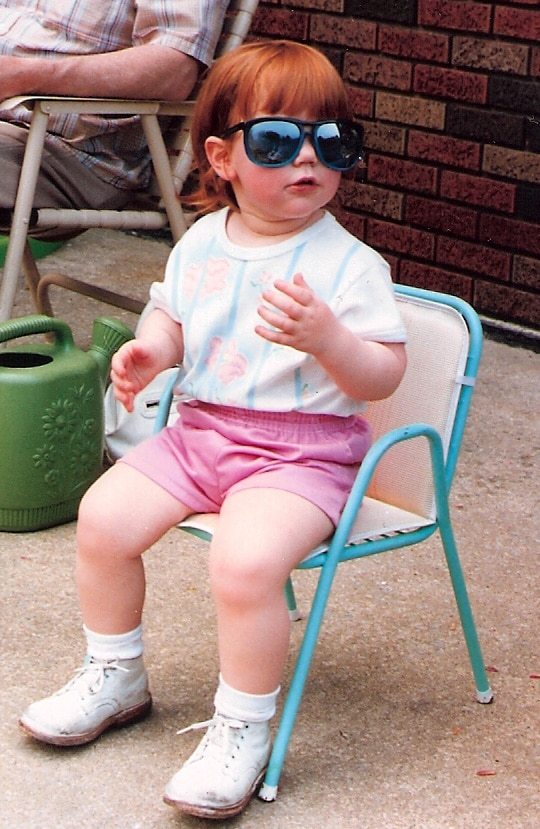
The cruelest word was “orange,” which my best friend in Kindergarten had used to describe my hair. The time was story hour, and our teacher was reading aloud one of many stories about young girls with “golden” locks: “Rapunzel,” “Goldilocks,” whatever.
“Do any of you know someone with ‘golden’ hair?” The teacher finally asked.
I raised my hand.
“My hair is kind of golden,” I said.
My so-called friend challenged my statement, while the other kids just stared. Alright, I guess my hair wasn’t golden. In my defense, however, my hair also wasn’t the color that everyone else called it: “red.” Not the color of firetrucks or blood or Valentine’s Day. I definitely didn’t resemble the mascot from the fast-food chain named after its founder’s daughter.
Maybe my best friend was right about “orange” being the most appropriate adjective. But it’s the color of October, the last month of the year before the weather in New Jersey goes to shit. Broken orange pumpkins destroyed by vandals signified anger over summer’s undeniable death. Orange tries to be natural, but it’s not. The closest thing to orange that I can stand is Orangina, the sparkling citrus beverage, but even that is more “yellow.” Language is so futile.
Growing up, my hair ignited passionate, unsolicited responses from other people. As a result, I had to bear the burden of that energy for years to come. Nearly 30 years after one incident, my grandmother still recounts the story every chance she gets.
“When you were a baby, I was pushing you in your stroller, and a stranger mumbled to himself when he saw you, ‘Stupid people. Who dyes a baby’s hair?’”
I inspired denial. I was unbelievable.
Even worse, I could never hide. In elementary school, I might as well have sported a scarlet letter on my head, “scarlet” being more specific than “red,” but still not at all accurate. In classes and at summer camps, especially with substitute teachers or absent-minded adults who couldn’t be bothered to learn anyone’s names, I would get, “Hey you, yes, you with the red hair.” I’d always be the one causing trouble. I was too easy to identify.
My hair was like religion or politics; everyone had an opinion about it. Unlike religion or politics, though, my hair as a subject was never off limits. Of course, I couldn’t get a haircut without someone at the salon cooing.
 Laryssa Wirstiuk lives in New Jersey with her mini dachshund Charlotte Moo. Laryssa’s collection of short stories The Prescribed Burn won Honorable Mention in the 21st Annual Writer’s Digest Self-Published Book Awards. Her poetry, fiction, and creative nonfiction have been published in Gargoyle Magazine, Word Riot, Barely South Review, and Up the Staircase Quarterly. http://www.laryssawirstiuk.com