Your cart is currently empty!
Blog
-
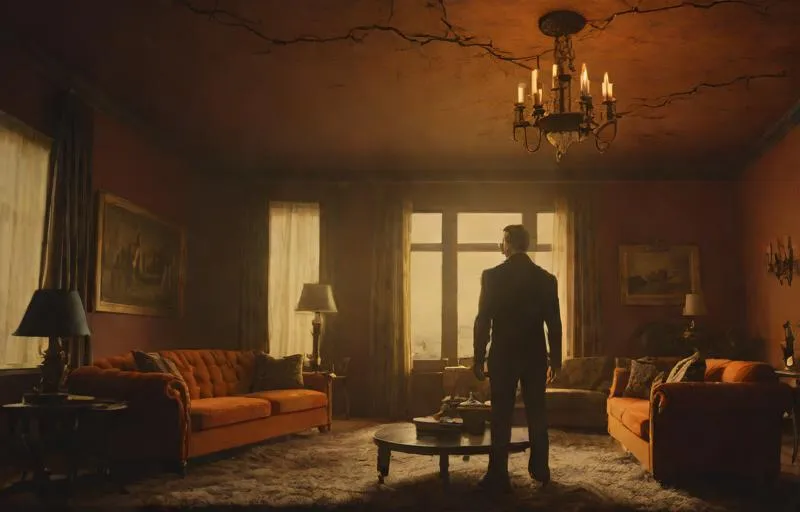
Center of Insurance Against Villains
speculative fiction by H.M. Wheat
The neighborhood was built in the seventies and didn’t seem to have been upgraded at all since then. All the houses were squat, single-level A-frames or ranch-styles, with enough wood paneling and painted brick to scare off even the bravest house flippers. In her three-year-old Honda, Nicole should have felt out of place. Instead, she watched as a Honda a little newer than hers parked in a nearby driveway, letting out a tumble of a small family with middle grade boys. A moving truck was close behind them, stalling at the curb with its hazards on.
Nicole had been under the impression that no one wanted to live in New Dale. She remembered watching the exodus on the news when she was in high school, the bumper-to-bumper traffic crowding on her television screen as citizens fled the city. Superheroes had recently come into prominence in the city, and with them had come supervillains. New Dale was deemed unsafe, and everyone with sense had gotten out.
Or so Nicole had thought. There were flowers in the window boxes on the house across the street, and an older woman was watering a lush green lawn a few houses down.
The screen in her dashboard gave the time as 9:56, so Nicole waited another two minutes, watching as the family with the Honda began unloading boxes from the moving truck. At 9:58, she gracefully exited her vehicle with the case folder in hand, making sure to lock it before she stepped too far away. At 9:59, she was walking up the well-groomed path to the front door. At 10:00, she knocked.
Continue reading this story on Substack.
H.M. Wheat holds a Bachelor of Arts in English from East Texas Baptist University, and is currently pursuing a Master of Arts in English (Creative Writing) at the University of Southern Mississippi. Her poetry has appeared in Riveted Literary.
-
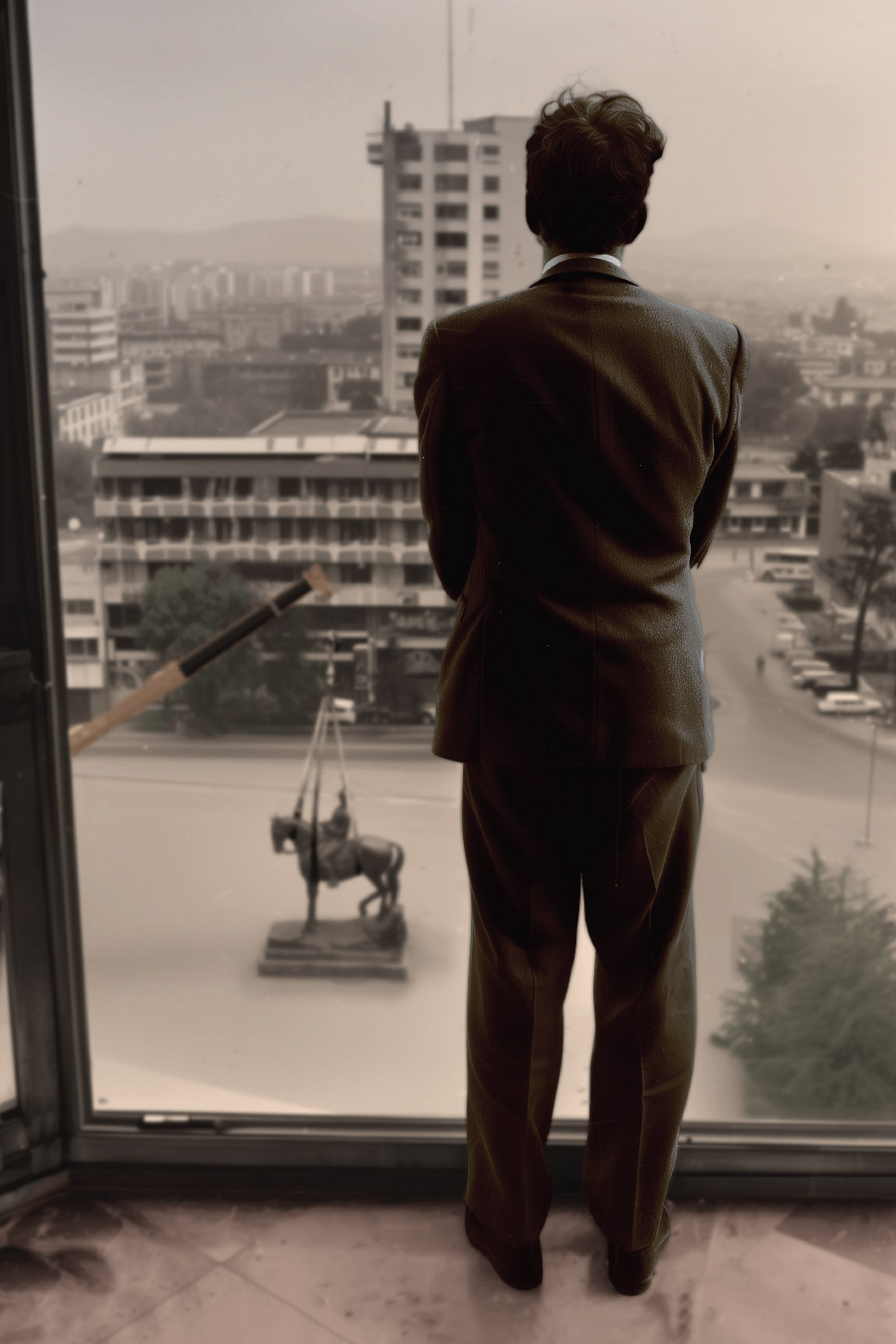
View From the Top – a Jiri Kajane Story
by Bill U’Ren and Kevin Phelan
Leni and I are on the floor, hunched over the rusty safe. I hold the light, while Leni dabs the solution of white vinegar and salt with a handkerchief. He wrings out some excess liquid, then applies the cloth directly onto the rusted metal, wiping from left to right. The mixture works like an eraser. As Leni moves his hand, new letters reveal themselves.
Zolotaya Seledka, it says.
This is the old Soviet brand of safes, infamously known for their nine-number lock combinations. As a child, I’d heard many stories of bankers and generals and business magnates making the arrogant assumption that they’d never forget their safe combinations. Nine numbers! Many of us at school practiced memorizing sequences. I’d made one with the birthdates of me and my brother Janos and our parents.
“How naïve,” our teacher would laugh. “First, you don’t get to choose the numbers. The safes come with them already installed! And second, it is not just the numbers! It is also the order of the dial spin on such a safe! Two times left, three times right, then two more each direction.” She held up both hands, her fingers flashing the numbers as she spoke them. “Sometimes, it is four spins right, then five left. And sometimes, it is all nine the same way. Every lock is different! They designed Zolotoyas to foil even the most seasoned safecracker.”
Leni wipes the engraved area one more time, brushes away the debris. The vinegar solution is making the metal look new, fresh from the factory.
“Are your assistants busy?” he asks.
“Yes.”
“Could they check the archives for Zolotaya Seledka manuals? Doesn’t it seem like something that would be there from the old days?”
“Filed in the archives under ‘S’ for safe?” I laugh.
Leni’s expression remains earnest, focused. “You’d have to give them a cover task—some other item they could requisition to distract the archivist. One of them could retrieve the fake cover item, and the other could find the real one.”
“Wouldn’t it be easier if I just went myself?”
“Don’t be crazy,” he says. “We can’t let anyone know what we’re doing. What would people say if the Deputy Minister of Slogans walks right into the Archives of the Ministry of Paper and demands a safe manual?” Leni dabs the cloth once more into the solution and starts wiping the top corners. “Within minutes of some clerk gossiping, we’d have a whole team knocking down the door, trying to take this gem away from us.”
“From you,” I say.
“From us. You were here when I found it,” he says. “Whatever’s inside belongs to both of us.”
I remember for a moment Leni’s strange, excited yelp yesterday. Across the room, he was pointing at the hidden safe in stupefied silence. A childlike excitement washed over me, and I immediately knelt and spun its dial. The satisfying clicking of the tumblers made us both look at each other and smile.
“Listen,” he says, “just think of something else you might need in the office that begins with the letter ‘S,’ and then send your assistants!” He’s scrubbing harder now. “I’ll stay here and keep working.”
We’re on the top floor of the Hotel Dajti, in the executive suite of the Hotel Director, which, for now, is the domain of Leni.
Since the day I’d first joined the Ministry as a junior officer, the Hotel Dajti had been overseen by Klodian Sulejmani, whose name I noted from time to time on official meeting minutes, rosters, directory listings. I’d never met him nor even seen him, but I kept thinking we would one day cross paths, especially considering how much time I’d been spending at the hotel these last few years since Leni started as its sous chef. Klodian Sulejmani, however, seemed to have figured out the enviable skill of keeping the place running without ever being there himself. This was what I had assumed, at least, until we entered his glorious penthouse office.
The view of Skenderbeg Square down below was breathtaking, of course, and I wondered if he had watched every day—and every night—the protests from this amazing vantage point. His office resembled a mini-apartment, with its own sink, toilet, and shower. In the back of the linen closet, situated in the hall connecting the office and the bathroom, Leni had found the safe underneath an old floor rug.
Leni told me that he himself had seen Klodian in the flesh only once. It was when Leni was new to the job, and he had arrived at the kitchen an hour early to begin baking a massive cake for the Minister of Transportation’s daughter’s wedding. Leni was the only one in the dark, cold building, or so he thought. And then, around four a.m., a figure appeared at the far end of the kitchen. Leni grabbed a chef’s knife and tiptoed carefully toward the stranger. When he popped out from behind the walk-in, Klodian’s eyes lit up, as surprised to see Leni as Leni was to see him. When their adrenaline subsided, Leni offered to make Klodian an omelette.
“With spinach and onion?” asked Klodian, hopefully.
“Whatever you like,” said Leni.
At a small table in the dining room, at four in the morning, Leni and the Director enjoyed omelettes and a pot of tea. It was a scene that should’ve been weird, but it wasn’t, Leni said, because Klodian was gregarious and generous, full of stories about the history of the hotel and funny anecdotes about its visitors, like the time the Yugoslavian prime minister demanded sheep’s milk yogurt. Eventually, Leni asked why he had never seen Klodian in his months of working there. Klodian got a long face. He talked about how he used to love wandering around the hotel, interacting with the workers, helping out in reception, assisting in the engine room. But later, as the hotel grew in stature, as the guests became more important, as the staff ballooned in size, he found that he couldn’t do it anymore. “No one wants to see the boss,” he said. “It makes people nervous, anxious, accident prone. So now,” he shrugged, “I am left to wander the halls only very late at night or early in the morning.”
Leni wipes off more rust from the safe and then turns back toward me. I realize I’ve been staring.
“You’re going?” he says, gesturing at me with the handkerchief.
“I’m going.”
In a moment, I am down the hall and pressing the round button of the service elevator. It lights up a warm, reassuring yellow. Across the square, up the block, I take the back stairs to my third-floor office. I have two assistants. One is efficient, loyal, and charismatic. This is Endrit. The other, Dritan, is efficient, loyal, and utterly forgettable. His parents, sadly, gave him a face that disappears in the crowd. He once told me that the two women in accounting across the hall had introduced themselves to him nine times, each forgetting that they had met him before.
I select forgettable Dritan to lead this mission. I explain to him the importance of going unnoticed while procuring the manual for the safe.
“You can count on me, sir.”
I detail the simple plan. He and Endrit will enter the Archives together, then split into two different directions in the “S” stacks. Dritan must be the one who is front-facing and does all of the talking. Endrit will get the safe manuals. In the meantime, I will busy myself in the office with paperwork, which actually I am behind on anyway. On their way out, the two of them salute me, and I cannot tell for certain if they are joking. Arguably, it is sort of a secret mission to them. Did I use the word “secret” when I laid out the plan? Probably I did, and this makes me think I should have saluted back.
An hour later, I’ve made it about a third of the way through the stack of my inbox when they return, their faces full of glee.
“Success?” I say.
They each hold up a report folder. Dritan’s says, “Marshimi i Kripes,” on the tab—a slogan campaign my office assembled in 1951 following the great salt shortage. To gain Archive access, they chose SALT for the cover request to get us into the “S” stacks. Endrit steps past him and presents his folder, calmly laying it on my desk. Inside are receipts for the purchase of the state hotel’s Zolotaya Seledka, some approval forms from processing, and, in the back, the faded paper operations manual, which appears to be written in three languages, none of which is ours. I quickly flip through, hoping I will find a section or a page—a little indented box, perhaps—which contains its factory-set combination. Numbers transcend language barriers, after all. Yet, there is nothing. The combo must have been on its own separate sheet, and who knows what the Director did with that.
“New assignment,” I say to them.
“Sir?”
“Take this manual and translate it.”
“It’s in Russian,” says Endrit.
“And Georgian and Latvian. Or Ukrainian. I can’t tell.”
“I don’t speak Russian.”
“Neither do I,” adds Dritan, eyeing me somewhat nervously.
“You don’t need to speak a language to translate it.” They look at me, dumbfounded. “Treat it like a code,” I shrug. “Get out one of our Russian language manuals and break it down. Consider yourselves codebreakers.”
“Codebreakers!” grins Endrit, turning toward Dritan. Their faces light up with excitement. I sense a general giddiness that often surfaces on days when we’ve completed particularly fruitful sloganeering sessions, brainstorming lists of options for whichever Ministry has engaged our team. They salute me once more, and this time I salute back as they leave, kind of clicking my heels without meaning to.
I examine the remainder of the materials in the safe folder. Apart from the primary requisition forms and original receipt, there’s another packet with some specs about the Dajti. When I get to page three, I grab my coat and head back across the square. In the top, rear corner of the hotel, I find Leni still huddled over the floor safe, tapping on different parts of the metal door. I sit down in the leather office chair, switch on the light, and pull out the paperwork.
“Leni,” I say, “did you realize that this model wasn’t designed to be part of the building?”
“Really?”
I start reading directly to him: “Gio Ponti, the Italian industrial designer who drew the original plans for the Dajti, was enamored with the brilliance and security of the Chubb Brothers’ British safes. He specified one for this office, but then after construction started, funds ran low, compromises had to be made, and they decided to substitute this Soviet imitation.”
Leni glances up at me. “Easier to get, of course.”
I nod.
He gestures toward the folder of paperwork in my hands. “And the code?”
I shake my head “no,” and as I am about to explain the language problem of the manual, there is a knock at the door. I hop up, peer through the peephole, and open the latch. There is no one there, just the sound of the elevator doors closing. At my feet, there are two trays, each with a bowl of red stew, a crusty roll, and some sort of dessert. Inside, I place them on the desk.
Seeing my confusion, Leni explains, “They’re still following Klodian’s rules. Every day, a tray magically appears at my door, and every day, I eat Klodian’s prescribed lunch order.”
I smell the stew. The thick squares of lamb look better than anything I’ve eaten in the Dajti’s main dining room.
“Two trays,” Leni says. “They must’ve seen you come up. Now you will get to enjoy Klodian’s lunch with me.”
Leni washes his hands, then sits opposite me at the desk. We begin eating, and I detail the Soviet language codebreaking mission I’ve given to my assistants. Impatience glows from Leni’s eyes.
“You could go outside and throw a stone randomly in the square and hit someone who speaks Russian.”
“Leni, you said yourself that we can’t have anyone else knowing what we’re up to. I couldn’t just take the manual down to the Translation Centre in the Ministry of Languages. That would have been a red flag for certain.” I set down my fork and adopt a look of patience. “We needed an in-house solution.”
“And your two assistants aren’t a risk?”
“Endrit and Dritan?” I laugh. “I know more about those two than their own parents.”
“So, they’re afraid of you.”
“Maybe just enough,” I say.
He nods, and then the two of us resume eating. I’m adding butter to a corner of the bread when I find myself thinking about the instructions to the safe, the manual.
“Leni, if not a combination, what exactly are we looking to get from that manual?”
“At the very least,” he says, sipping some of his lime water, “we’d know if it’s left first or right first.” He sets down his glass. “Imagine memorizing nine numbers and then, on top of that, nine dial directions.”
“If it’s me, I’d have to write them down.”
“Agreed.” Leni slices a bit of the lemon pastry. It’s sprinkled with powdered sugar in a zig zag design. “I doubt Klodian Sulejmani has a better memory than either of us.”
“What do you mean?”
“It’s got to be written down on something somewhere in this office. Don’t you think?”
I begin eating my own piece of the pastry. It’s flakey, yet soft, cooling on my tongue. Across from me, Leni slides away his food tray and opens the desk drawer. He starts rifling through its contents, setting aside pens, paper clips, staples.
“Aren’t you going to help me look?”
“In a minute,” I say. “I’m enjoying Klodian’s lunch.”
After I finish, I move over to the front of the office. On the wall, there is a row of photos of the square below. Handwriting on each in fine black marker indicates the various distances from the window to spots on the square. Beneath the photos, there is a camera on a tripod. I recognize the Russian insignia on the front, another one on the long lens.
Standing there in front of the massive window, I look away from the photos and stare down upon the square itself, watching the people cross back and forth, the late afternoon sun dappling the ground with flickering shadows as they step. From here, everything seems so small, so inconsequential.
For many years, twice a day, I crossed that exact spot on the square. From home to the Ministry, and then back again. Shortly after Ana and I met, my office not far from hers, we began making that walk together. Years spent walking back and forth, home to work, work to home. How did we look from this window? How would we have looked to Klodian, or his predecessor, or his predecessor’s predecessor, as they peered down upon us? And would they have noticed the day Ana moved out, or the first day afterwards when I made that walk alone? I remember it so well, the anger, the confusion, the loss of spirit. But from this window, it probably looked as if nothing had changed. I was still the same speck, moving in a straight line, a splotch of color on the palette, ambling briskly, no longer in tandem, but otherwise the same.
Leni’s voice from the corner surprises me. It’s filled with disappointment. “Every folder and file here is just requisitions and lists and procurement approvals.”
“It sounds like my office.”
Skepticism washes across Leni’s face. “Your office? The land of brainstorming scratchpads and failed slogans? That’s far more fun than anything I’m seeing here.”
“I guess it’s understandable why Klodian spent so much time up here,” I say. I gesture toward some binders on a side table. Local Vendors A-F. Grain Suppliers. Machinery Replacement Parts. “The hotel won’t run itself.”
Leni’s eyes narrow. “Look around. There’s nothing that belongs to him. All that time he spent up here, and what’s left are the same supply forms and the same kitchen lists of the people who ran things before him.” He moves to the bookcase, flipping through the volumes, pulling each one out for a second. “Just lists and checkmarks and ledgers!”
I can tell that Leni, interim hotel director, is imagining his own future if he stays in the position. And yet, as I know all too well, once things are arranged, it is quite difficult to undo them. Has the Dajti ever had an interim director who went back downstairs and returned to work in the kitchen?
Dinner arrives: two trays again. This time, it’s plates of lamb stew atop rice. There are small salads and little ramekins with a golden pudding dusted with cocoa. We eat mostly in silence, taking turns expressing with a sigh or a frown the continued troubling absence of a human life in this place. Yes, hands have touched these forms, and filed these completed lists, and crossed out the names of vendors no longer delivering, no longer operating, no longer alive. But nothing is written anywhere that makes me see Klodian. He is like a strange, efficient ghost.
Stomach full, I am now at one of the four corner bookcases, seated next to the bottom shelf. Leni is dabbing his lips with a napkin. He stares at the dinner tray, then looks up at me, his eyes filled with distress.
“This food is all I really know about the man,” he announces. “He must have really loved lamb — that’s what I’d have to say in his eulogy. ‘Here was a man who loved lamb.’”
“But, Leni, the omelette with spinach and onion.”
He tries to hold back a smile. “The omelette was pretty good.”
I hold up a ledger pulled from the bookcase. “I’m going to start flipping through these to see if he left any notes inside any of them.”
After a moment, I realize Leni has not responded to me. I look over. His face is frozen, as if he is reconsidering some point he had made earlier in an important conversation. He pushes his hands through his hair, wipes his forehead with his sleeve. I sense he’s maybe realizing what it’s like to try on Klodian’s shoes, a job that seems like it has no days off, no time off, no room for personality. The thought of Leni in such circumstances puts a pit in my stomach; he is almost all personality. I think better of saying anything, and resume flipping through the books, left to right.
“Look at this,” Leni says, holding up a heavy book with both hands. “More photos. Dozens of them.”
I walk over to where he has now cleared a spot on Klodian’s war table, where he is laying out the various binders—not books, but photo albums filled with small photographs. All are from one vantage point: the very spot where I was standing earlier. They’re simple shots, looking down on the square. We flip through the first binder. Pages of sunny backdrops give way to pages of clouds, then pages of rain and snow. Throughout the seasons though, one thing remains the same—the people. Dressed for work, dressed for school, the crowds all cross the square with purpose.
“Days, weeks, months,” says Leni, flipping through. He hands me a small optic, a photo magnifier, that he has found inside the drawer. I lean down, my eye to the optic, sliding along each of the pictures, looking for myself, looking for Ana. As I move along the rows, however, I don’t recognize any of the people. I flip the pages forward, trying a different season, but still, I have no luck. I move to the next album. Still nothing. Men, women, children, all non-descript, all moving in unison, all unaware of the camera high above them. “Months,” Leni mumbles, flipping the pages.
And then in the fourth album, in a line of people moving past the horse statue, towards the Ministry, I spot Teodor Marku.
“Teodor Marku!” I say to Leni, looking up from the magnifying glass. Leni gives me a blank look. “He held my office three people before me.” I smile, happy to have found some perspective in these pictures. I haven’t found myself, I haven’t found proof that I exist, but I have found a link to my existence, a simple context. Nothing can be either good or bad until it is placed in context.
Leni says, “I think Marku was Kiti’s grandfather’s brother.”
Kiti and Leni dated long ago. Funny, creative, a cute girl with an odd haircut, Kiti had always been my favorite of Leni’s former girlfriends. For years, as he worked his way in and out of lesser relationships, we were not allowed to speak of her. Only recently, when it became apparent that Leni’s new relationship was something different, something above all others, perhaps the final one, did he allow the mention of Kiti to return to our daily conversations.
I skip ahead many volumes to find that the square is the same, though the statues are now gone. The people, however, still press forward, going to work, going to school, continuing with their daily business. Pages and pages, people and more people. I flip through the volumes, occasionally recognizing some of the people below. Edmund Spaho is there; Hansa Splite too! Ana’s cousin’s wife is there, carrying a bag of produce.
“Kind of a strange hobby,” Leni says, “these photos.” He’s idly thumbing through another binder. “It’s almost like no one took them, like a timer was set for random shots.”
A knock on the door snaps me from my daze, making me realize I have been turning the pages without anything registering, the images just a blur. Leni moves to the door and finds a cart with two trays of food.
“Supper?” I say.
“Lamb kabobs.” He wheels the tray over to the war table.
“I think I’m still full.”
“Come on,” Leni says, sliding the food toward me.
I eat with one hand and flip the pages with the other. I’m getting a sense of what Leni meant by the photos and a timer. Some of the pictures don’t even have a subject in the center, only random shoulders and heels coming and going, the motion of people but not people. And then it occurs to me.
“Leni, where’s that very first book you found?”
He looks up at me, eyes narrowing with confusion. “You mean this one?” he says, handing it over.
I flip it open. On the first page, there are three rows of photos, three shots in each row, in the background, the clock tower.
“Look,” I say. Leni sets down his half-eaten bukë shtëpie roll and moves around the table. I slide the binder in between us. “Now compare it to the rest.”
“First day on the job, first time with the camera,” he says. “Of course, these are different.” He shrugs, uninterested.
“But the clockface in each!” I point at the three photos in the top row. The dial hands point to exactly one o’clock in the first picture. Then exactly nine o’clock in the next, then six o’clock.
Leni lifts up the binder and looks closer, his eyes scanning quickly.
“All of them are exact hours on the dot,” he says.
“And the sun and shadows aren’t in order. Dusk is near the beginning and not at the end. Morning is last when it should be first.” I point to the seven o’clock photo at the bottom of the page.
“These are pictures of the safe combination,” grins Leni.
“Opening day on the job, like you said.” I grab my jacket. “He was making sure he didn’t forget the numbers.” I turn and swing open the office door.
“Hey,” says Leni, “where are you going?”
“My assistants have been translating that manual. They’d better be done.”
I enter my office in the Ministry and find Dritan and Endrit at my desk, the former seated in my chair, and the latter on the edge of the desk itself, a nearly empty bottle of raki between them. Their faces fill with alarm, a commotion erupts, and suddenly they are standing at attention.
“Deputy minister!” yelps Dritan.
“You’ve been gone so long, we didn’t expect you,” says Endrit.
“Clearly,” I say.
“Deputy minister, we were celebrating.”
“It’s very good news,” Endrit blurts out. He holds up the manual, and Dritan holds up a notepad full of scribbling and markings.
“We didn’t stop until we finished. It took us hours but we were determined not to let you down.”
“No breaks?” I say. “You haven’t gone home?”
“How could we?”
“That means you’ve been drinking on empty stomachs.”
A sheepish grin comes across Endrit’s face.
“I guess that’s true,” he says.
Dritan hands me the notepad and points at various markings as he speaks: “The most important part was buried in the middle. A section that reads left 3, right 3, left 3.” He sets down the manual and the notepad side by side. I study the markings for a moment, but then he flips the page and indicates more writing at the bottom: ?????? ????????????? ? ????. His fingers trace the Cyrillic letters as he pronounces what they say: “Vvsegda vozvrashchaytes’ k nulyu.”
“Always go back to zero!” Endrit yells, proudly. He holds up one of the Russian dictionaries. “Technically, it means ‘always return to zero.’” He smiles. “You get the meaning.”
“We’re translators now,” adds Dritan, suppressing a smile, “or better yet, we are interpreters.”
I take the bottle of raki, swallow a quick swig, then hand it back to them.
“Well done, you two.” I gather the manual and notepad, then produce a batch of lek notes from my wallet. “Dinner is on me,” I say. At first, I hand all of the money to Dritan, then realize how foolish this is. I take it back and begin dividing it up. “Silly of me to put you in that position of eating together. You have lives, homes to go to. Yes, very silly of me, indeed.”
“Oh, no, sir,” says Endrit. “You had it right the first time. We eat together.”
“Okay,” I say, then I shuffle the lek notes back into a single stack and push them all into Dritan’s hands. “And take tomorrow off.”
Up in the office of the hotel director, at the top of the Dajti, I find Leni sitting right on the floor, next to the Zolotaya Seledka safe. It’s as if he’s been guarding it, waiting for it to wake up. Next to him is the binder page with the nine clockface photographs which are the combination.
“Leni, you’ve been here like this the whole time?”
“I thought about trying the numbers, spinning the dial,” he says. A light smile surfaces on his face. “But I didn’t.”
“That sounds exactly like the will power needed to run a place like the Hotel Dajti,” I say.
“Don’t,” he frowns.
I set down the translation notes from my assistants next to the binder page of clockface photos.
“Prepare to be rich,” I laugh.
Leni’s eyes widen, and he kind of freezes in place. A moment passes without him moving. Is he even blinking?
“Leni?”
“I was just so focused on opening the safe that I kind of forgot what that might mean.”
“How so?”
“Just to be clear,” he says, holding up his palm toward me. The other hand is resting on the safe dial. “We split it all fifty/fifty.”
“Do we know if Klodian has a family? A widow?”
“He lived here like a ghost.” Leni looks at me, and I can tell from his expression that announcing this, putting it into words, has made it even worse than when we were both just thinking it in silence.
I read out loud the left, right, left directions from Endrit and Dritan, while Leni dials the numbers. Each time he spins, I remind him, “Back to zero.” At the end, there is a satisfying click, and Leni pulls the lever and lifts open the lid. While I didn’t expect gold bars or piles of coins, I am still surprised when Leni pulls out only a thick, leather-bound journal, wrapped in a belt. He sets it down on the ground, then peers deeper into the metal hole of the safe.
“That’s it,” he says, reaching around. “Nothing else.”
“So, it’s a diary?” I say.
“Or maybe letters.”
“Open it up.”
Leni sets the journal on the war table and unfastens the belt. He flips the cover open. I feel my pulse quicken. He looks at me, turns the pages, scans, then looks back at me again.
“Everyone we know is in these,” he says.
They are pictures, taken from the same vantage point as the others, here from the top of the Dajti, but these photos show Skenderbeg Square during the protests. April 2, 1991. April 3. April 4. They are all marked with time and date.
In the photos, some of our friends are holding flags, others are holding makeshift signs, others are holding torches. The presence is unmistakable. You can almost feel the tension, the anticipation, the weird combination of excitement and dream. At some point, everyone’s faces came into the clear light of the hotel director’s camera tripod, and their image was recorded. I think of Ana. How many pages I will have to turn to find her here? A shiver rushes through me. I sit back and take a deep breath, trying to get my bearings.
“Leni, I think now we know a bit more about Klodian the person than just his love for lamb,” I say, forcing a laugh.
“Why does he have these?” Leni scowls. “Why did he take them?”
“They were hidden in the safe, though,” I say, pointing to the shelves where the other photobooks were. “Tucked away.”
“Maybe to blackmail with later, in case things had turned out differently.” A strange expression of betrayal crosses Leni’s face.
“Or he was protecting the people in these pictures so that no one would find them. Who knows who he was answering to during those days. The safe might have been the best place to hide them.”
Leni sits in silence, the leather-bound journal still open.
“Now I don’t know what to think,” he says.
“If he was going to do something bad with them, doesn’t it seem like that already would’ve happened?”
“I don’t know,” he says, his voice trailing off. He folds his arms across his chest.
I move over to the leather-bound ledger and begin flipping through it. I flip the pages quickly, recognizing some people, but not stopping. The book crackles as I turn the pages. Finally, I find a picture with Ana, hand in hand with her sister, their faces lit by the streetlights, protesters all around them. I unfasten the picture from the page and roll it into my pocket. Then I slide the book back to Leni.
“What are you going to do with that?” he asks.
“I don’t know,” I say. “Maybe give it to her.”
A strange chuckle escapes from Leni.
“Maybe we should give them to everyone,” he says.
Our eyes lock, and I realize there’s a sense of seriousness, conviction, in his phrasing. I sense my own discomfort at an earnest Leni.
“And how would we do that? Set up a table in front of the hotel?”
I’m trying to smile, to illustrate the joke, the absurdity of all of it. I can imagine the pleasure of emptying the journal of its compromising photographs, handing each one back to its rightful owner, all now wonderfully free from fear. In a different time, proof of guilt might have wrecked many lives, but instead, as I imagine us sitting at a table, me and Leni, a line of people waiting, us flipping through the pages, finding the photograph of each person in the square, handing it to them to do as they see fit, it occurs to me that some might burn them, sure, yet I can imagine others might frame them and put them up in the hallway for their children to admire.
I look back at Leni, who’s sitting there, frozen. He nods, and he seems to be asking me to help him find a way out. I turn and scan the office, tilting my head toward the many ledgers and manuals and receipts and order forms. In the hours, the days, we have been focused on this mystery, the envelopes in Leni’s inbox have grown. The daily, endless turmoil of the dedicated hotel manager awaits.
In front of us is the leather-bound ledger, liberated from the safe. While I have been envisioning a way to redistribute every page of its contents, wipe away history, Leni has been focused on a more pressing problem. Clearly, he is thinking of a different immediate future where the view from the top is perhaps the greatest trap of all.
Down the hallway, I hear the ding of the elevator, footsteps, and the rattle of two trays of food being placed in front of Leni’s office door. Then the elevator dings once more.
Bill U’Ren is an associate professor at Goucher College, where he teaches fiction writing and other narrative design courses. He earned his B.A. from UCLA and his Master’s from the Johns Hopkins Writing Seminars. His work has won the Donald Barthelme Award, the C. Glenn Cambor Award, and an IFP No Borders Prize.
Kevin Phelan lives in Northern California, where he has spent more than thirty years perfecting his chocolate chip cookie recipe. His work has appeared in Glimmer Train, Christopher Street, and elsewhere.
Christine U’Ren is a graphic designer and illustrator in the San Francisco Bay Area
The Jiri Kajane stories have been published in The Chicago Review, Glimmer Train, Michigan Quarterly Review, and Alaska Quarterly Review, among other magazines and anthologies. A new volume including never-before-published stories is forthcoming from Fiction Attic Press.
-

The Lifeguard
a short story by Jennifer Dickinson
Eleanor dragged a chair underneath the palm tree farthest away from the pool. She started a crossword puzzle, but after a few minutes, the pool seemed to be calling to her. “Eleanor, come swim in me, please.” She walked to the edge, feeling in her tank suit that she was naked in front of strangers. A sensation she hadn’t experienced in decades. It wasn’t entirely bad. Even though each hair on her head was silver, she still had a nice rack. She dipped one foot in, then the other. She sat down and lowered herself into the water. It was at once an icy shock and a warm embrace. She lowered herself in even more, until her whole head was wet.
“Daniel, I’m going to eat you up!”
A red-haired woman stood a few feet away hugging a little boy, who was probably no more than four. He screamed with joy. The woman play-bit his chubby cheeks. Eleanor swam away. Even though her face was wet, she didn’t want anyone to notice she was crying.
Daniel reminded Eleanor of her son, Frank, who’d wanted to go to the pool every day when he was little. In the summers they’d lived with shiny splotches of aloe vera on their pink shoulders and cheeks. Those days were the best because Frank hadn’t put a pill in his mouth yet. Frank had come home for Sam’s funeral, taken one of his suits and a pair of cufflinks, and then disappeared. One night Eleanor had seen Frank sitting at the entrance to the highway, holding up a sign that said: “Out of Work, Please Spare Some $ For A Starving Artist!” He wore Sam’s suit and she’d wanted to stop, but seeing his bleary eyes and his skeletal frame had made her cry harder at the funeral than her own husband’s death. She drove on.
The red-haired woman was there with Daniel every day. Eleanor soon learned their routine. The mother would play with him for a bit, then she’d go to her chair and text, or take selfies. Some days she had another woman with her who vaped even though there was a no smoking policy. Daniel’s mother hardly looked at him after their initial playing. He mostly set on the steps or clung to the sides. Sometimes he played with other children.
The day that Daniel didn’t come up for air, Eleanor was drinking a Diet Coke and finishing up a crossword puzzle. She’d had a headache all morning and looking at the bright light bouncing off of the pool made the headache worse. It was the first day she hadn’t been watching Daniel. His mother’s friend wasn’t there and she’d been more attentive to her son, which made Eleanor feel better about not looking.
An audio version of this story is available to paid subscribers on Substack.
Jennifer Dickinson’s fiction has appeared in Beloit Fiction Journal, The Florida Review, Blackbird, Juked, JMMW, Maudlin House, Isele Magazine, and elsewhere. She is the recipient of a Hedgebrook residency and a grant from the Barbara Deming Memorial Fund. She is a book coach and lives in Los Angeles.
-

What We Give to Our Kids
a short story by Kyle W. Davis
Eighteen Years Ago
I’ll do anything for him. Celeste paced in the softly lit clinic room and felt that statement’s truth about Chase—their future son. As a math professor, she relied on step-by-step proofs to establish truths. Yet she couldn’t explain this premonition. But like gravity to the ancients, she knew it to be true.
Colorful pictures of plump, beaming IVF babies decorated the clinic’s walls. The room was made for conversations, not operations. She watched Mason as he swiped through the colorful pages on the clinic’s tablet. She knew another thing: they would be getting a gene—some gene to improve things—no matter Mason’s opinion. Years ago, her sister had received an experimental gene therapy to cure a would-be fatal condition, and it worked. Thirty years later, gene transplants weren’t for only saving life, but improving it. A marketplace for the rich, famous, and talented sprung up to sell copies of their genes to hopeful parents wanting the best.
“This stuff is impossible to understand,” said Mason. “Except the price. They have a lot of options, just—”
She completed his thought: Nothing for an associate math professor and a junior real estate agent after IVF costs.
“We have to do it,” said Celeste. “This is what parents do for their kids. It’s the smart thing to do.”
“If I sell 38 Stratford.”
Celeste read the tablet over Mason’s shoulder. Each page featured a celebrity, a pithy bio, details about their special gene, and colorful cartoons of a looping and twisting protein, impossibly complicated and yet perfectly calibrated.
“What’s this one?” said Celeste.
“Actin. From that Serbian tennis pro. It’s twelve thousand.”
He scrolled past a clip of the lanky Serb whipping his racket around with speed and grace, the ball skipping past his winded opponent. Actin, it stated, was involved in muscle contraction and movement. The Serb’s reaction times were one-hundred-and-fifty-two percent faster than average due to rare genetic changes that improved muscle strength and quickness.
He tapped the screen, another gene. Something sensible: a blood group antigen for type AB blood, RH positive from a famous actor. Chase could be a universal recipient, and every blood transfusion would be acceptable. Eight thousand. Mason tapped on others: a Michelin-star chef with superior taste buds; a Grammy-winning pianist with long fingers.
-

Food for the People
a short story by Jiri Kajane
Fiction Attic Press is pleased to present the first new Jiri Kajane story in a quarter century, “Food for the People.” If you enjoy this story, you may also enjoy Winter in Tirana: The Stories of Jiri Kajane (Volume 1), and Some Pleasant Daydream: The Stories of Jiri Kajane (Volume 2), both published by Fiction Attic Press.
It’s early March, snow still on the ground, wind coming through the broken windows of the empty, disused ball bearing factory. Leni and I are sitting on crates, waiting, and the metal door dividing us from the loading docks rattles each time the wind sweeps through. We’ve been here long enough that I have noticed a rhythm to it.
“New beginnings,” Leni says.
“Indeed.”
“Sevasti guaranteed that he will have the first truck here by two o’clock.”
I check my watch; it’s 2:15.
Leni has purchased something called the New Hanjin Automat. An antique dealer in Tokyo, or maybe Sri Lanka, sold it to him in late August, and since then they have been working together to get the unwieldy shipment to Tirana. Finally, after some delays in Malta due to an underpaid crew and an unpaid fuel bill, the automat arrived at the port in Durres late last night. We’ve been waiting for Sevasti and his crew to transport it the last twenty-three miles.
-
The Heart
a short story by C. Wrenn Ball
They gathered in the center of the cabin, away from the world, the four of them talking about their family’s heart. She would drive her son South on 321 to Charlotte, early on a Saturday morning. By the time they reached the highway, her husband and daughter would have offered excuses around town. A trip across the country. Some time together, before her son’s wedding. They’d return like nothing had changed, if they were lucky.
The discussion had been short and to the point, her husband and daughter had not argued, despite the danger, the illegality. Her husband was too old to receive the organ, her daughter too young and was, of course, without a lover. The organ was naturally tender, already pressed to its limit, so they were resolved to tradition. Her daughter had not betrayed jealousy, and over the course of the night, her son had not uttered a word.
She had a doctor’s number, passed between pages in a book that was three generations old. Stored in a bedside drawer, a key to her cardiovascular system. She’d been staring at the faded ink for months. Borrowed time, borrowed, borrow. Then freely given, while fear reigned in her body.

Before they cut open her chest cavity, she had to know that her son would not waste the heart. She cornered him on the couch, the night before their drive down the mountain. They sat together, discussing the secrets of the universe and their family’s illicit organ, while she searched his eyes for doubt.
-
The Inevitable Door – flash fiction by Zachary Arama
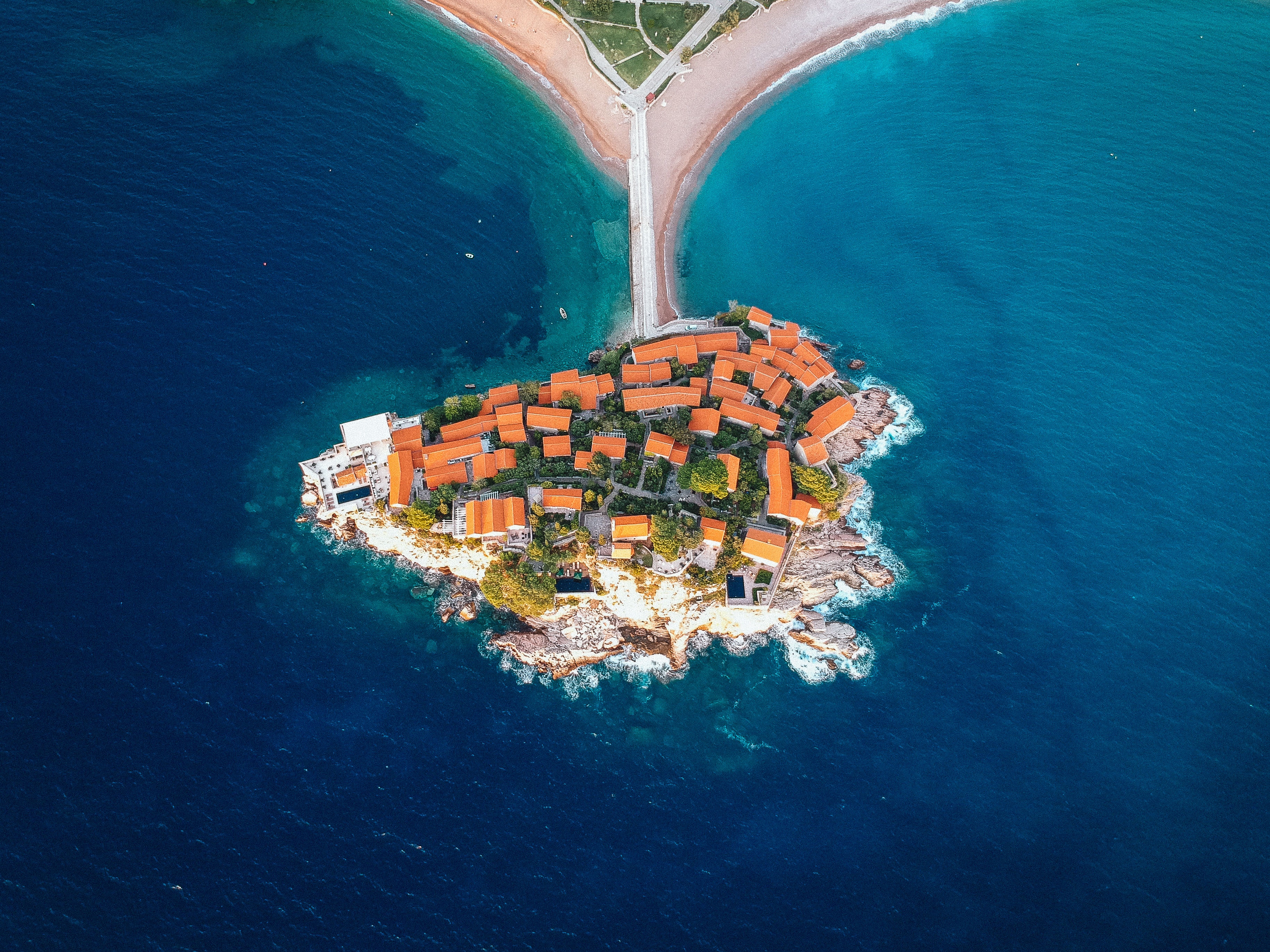
The door was found just off the coast of Montenegro.
As the world advanced through the 21st century, temperatures became warmer and weather crises more violent. The apex was a maelstrom in the Adriatic Sea. It appeared suddenly and with unprecedented ferocity; more than 400 fishing boats were sucked into its vortex. The oceans had been slowly subsiding for decades since the ice caps melted, and the maelstrom furthered their decline, revealing the large door cut deep into the granite.
The door was nine feet tall, and inscribed on slabs surrounding it were these words in different languages (many of them indecipherable):
‘If you can access this door, then you have doomed the planet beyond reparation. You may send one person through, and they will carry on your legacy. Everyone else will perish by your own folly.’
The world went into a collective panic.
At first, governments worked together to attempt opening the door. However, no tools, machinery, or explosives could open it. No scans, x-rays, or radars could penetrate the stone.
Those with the most talent began to stake their claim to be the person to go through the door- elite athletes shared videos of incredible feats of strength. Intellectuals put forward their claims, releasing lectures about the importance of intelligence over physicality, explaining that whatever was on the other side of the door should be met not with brawn, but with brains.
Each country rallied around a representative, some via election and some by force. Nobody could agree, as each country felt their representative was best and should be the one to enter the door.
Eventually, all governments agreed on a lottery, with every person in the world being eligible.
The winner was Olaf Hendrickson, a Norwegian drunk held at Halden Prison for public intoxication. He was quickly released, and after a parade was held (where Olaf had to be propped up by pillows in his stupor), he was taken to the Montenegrin coast.
Thousands of cameras recorded as Olaf walked up to the door, unsure if anything would even happen; no instruction had been given other than what was carved on the slabs. Suddenly, the ancient hinges creaked as the massive door began to swing outward. Once open, inside was only darkness. Olaf cautiously stepped forward, and a voice came from the open door:
“The door has been here since before any of our histories. The only thing we know is that the world goes through cycles. Humanity inevitably takes root on earth, expanding at an alarming rate, destroying everything with precision. When the oceans get too low, the door is revealed. Everyone on earth will die. Except you. You will remain as the representative of earth cycle number 34,876,546. Welcome.”
Olaf shuffled through the door, and it swung closed behind him. Humanity was left collectively stunned, and after a few environmental bills failed to reach a consensus in the world congress, everything continued as usual.
Zachary Arama hails from London, England, but currently resides in the Pacific Northwest, where he is working on his first novel.
cover photo by Oleg Gratilo on Unsplash
-
Center of Center
a serial novella-in-flash by Chris Wiewiora
We’re happy to announce the publication of CENTER OF CENTER, a serialized novella-in-flash by Chris Wiewiora. We are serializing the novella on our Substack site. New chapters will be released on Tuesdays, Thursdays, and Saturdays throughout February and March.

About the Novella
After a shooting at his Polis university, sincere public speaking teacher Josef Wi?czynska becomes a jaded bus driver. Josef still feels responsible for his Divided student Jonathan “J.J.” Jones’s death-by-patroller and he also feels purposeless following his mother’s recent natural death. On each of his eight color-coded routes around futuristic Center city in a country called United, Josef speculates about the surviving tech-obsessed students he left behind. Between pick-ups and drop-offs, Josef tries to escape his guilt by turning to comforting familial memories. Josef couldn’t rescue his student, but he needs to forgive himself.

About the Author
After Chris Wiewiora earned his MFA in Creative Writing and Environment from Iowa State University, where he taught public speaking, he worked a variety of odd jobs including driving a bus. His writing has recently been anthologized in Back to the Lake, Two Countries: U.S. Daughters and Sons of Immigrant Parents, and What Doesn’t Kill You. His travelogue memoir, The Distance Is More Than an Ocean, about growing up and going back to Warsaw, Poland was published by Finishing Line Press. Read more at www.chriswiewiora.com
-
No for an Answer – flash fiction by Gloria Frym
Listen to this story read by the author.
I once knew a woman of a certain age who loved her last dog like she loved her last boyfriend. I say last, because her age played a big part in these relationships. At this stage in her life it was unlikely that she get another dog nor another man. She might get another car but it too could be the final one. Who knew?
As a culmination to a long love life, she loved her last boyfriend as friend and companion. But she did not love him deeply or passionately or madly, and she was content with that type of love, at her age. He was not. He wanted more affection than she could offer. The last dog she would have was a bit like the man. He was the most friendly dog in the world which did not sit right with her. His discriminatory powers seemed to be missing. He loved every dog he encountered and every person. Unless another dog bared his teeth, he was ready to play. Even then, he would try and try again to gain the teeth-baring dog’s attention only to be foiled each time. When they were alone, he was full of kisses for her and when they sat on the couch together at night in the same spot where she once sat with her former man, the dog would lick her arms, even her pants, and move as close as he could to be next to her. If he could have held hands throughout a movie, he would have. This rather diluted her love for him. Also, he was a creature who constantly wanted to do something, rolling around on the floor barking as if to say, What’s next!, wanting to go outside in the most inclement weather, ringing the chimes that hung from the back door handle. He would paw the bells endlessly whether or not he actually needed to go out. He would not take no for an answer. If she did not respond to this signal, true or false, he would cry mournfully until she let him out.
It chagrined her that she did not love this dog as much as her previous dog who was independent, even standoffish. He was more like a cat. He could, as someone said, take care of his needs. He never kissed or licked her. She got used to the understanding between them, she adored him more than some friends, and attended to his modest requirements in exchange for his close presence. He never had a destructive period when he was a puppy, whereas this last dog chewed up the wand to the DVD player; macerated her expensive prescription glasses; ate up several covers of the Paris Review; dug up the newly planted and chomped the irrigation system; fileted several of his plush toys; unraveled two oriental rugs, etc. She often screamed No! at him and spanked him several times with the destroyed object, contrary to the advice of dog trainers. She wondered if her reaction to his early destructive tendencies left an enduring mark on either of them. But no, he remained intractably loving; she was a forgiving person. She had forgiven the men whose infidelities had once caused her unbearable anguish. She had forgiven or forgotten anger toward other persons who had diminished her. No, it was this ultra loving dog. She could not love him fully because his love took up more space than she had for dog love. He was excessive, as though he were sent to her to make up for all the partial loves she had experienced, even the lukewarm love from her children. She almost hated him for exceeding her limits. Though she would often say to him, I love you, as she did to her last boyfriend.
Gloria Frym lives in Berkeley. Her most recent book is How Proust Ruined My Life & Other Essays (BlazeVOX, 2020). The True Patriot, a collection of proses, came out from Spuyten Duyvil. She is the author of the short story collections–Distance No Object(City Lights Books), and How I Learned (Coffee House Press)–as well as many volumes of poetry. Her book Homeless at Home received an American Book Award. She is professor in the MFA Writing Program and the Writing & Literature Program at California College of the Arts.
Editor’s note: When I started Fiction Attic in 2005, I put out a call to friends and colleagues whose work I admired, asking if they would be so kind as to send me something. Frym sent me the flash fiction More Lies, which you can read in the wayback machine on our original website. As with every story Frym writes, I was hooked by the first line: “Rumor has it, this woman goes through dogs,”
Frym remains one of my favorite writers to this day, and I’m honored to be able to publish her work once again. I highly recommend her 2020 essay collection How Proust Ruined My Life. You will find two more stories by Frym in the coming weeks. M.R.
-

We Were Happy
flash fiction by Janet Bohac
We were happy.
We were sad.
One of us died.
Then, the other one died.If asked, I think this is how my parents would tell the story of their life together.
But, of course, that?s why they had me.
To bear witness.They would never tell you about our house, how there was no artwork, only one
gigantic photograph of the Teton Mountains my father ordered from the back of Popular Mechanics or Field & Stream. We never took a road trip to Wyoming or out West, not once, but this photograph dominated the living room wall. My father even made it a nice pine frame with mitered corners and varnish that honeyed to deeper hue over thirty years. No explanation for the presence of Grand Teton in our living room was ever given. It hung facing a wall of mullioned windows that looked out on the drive-in theater across the street where I gave my virginity away and not a moment too soon.We Were Sad
The garden was a thing of beauty. Fresh peas I?d pop from pods. Yellow pear
tomatoes I?d eat plucked from the plants. Plums that mostly fell, uneaten, except by
worms and wasps. A green apple tree to sit in.My chores in the summers included picking strawberries in the morning before
the sun got hot, then coaxing black and red raspberry drupelets from their receptacles,
and drawing down tart cherries where I could get to the highest branches in the four
trees that lined a de-commissioned chicken coop my father used to store lumber and
tools, an old Ford tractor and a riding lawnmower. There were two pear trees. Peaches
never seemed to take. Black cherries were stolen by blackbirds before we could pick
them no matter how many nets or tin pie pans my father hung on the branches to scare
them off.My parents were raised on farms about ten miles apart. My mother?s family grew
mint in the black muck of Rochester Colony near the Maple River which the French
originally called Riviere du Plain. It is an area of farms, roadside ditches, and trees
planted north to south to break the fetch of the prevailing west winds. On my father?s
farm they ran around all summer without shoes to save money. It was The Great
Depression. They only butchered meat when it was cold enough to keep and a two-
seater outhouse still was in place when I was a kid. There was a chicken coop out back
and I had to steal eggs from the hens when I stayed with my grandmother if I wanted
eggs for breakfast.I stayed with my father?s mother when my mother had her nervous breakdowns
so my father could work his summer job. How many times I can?t say. Some were before my memories began. Some I?ve blocked out. Let?s say every two years? Every six? I?m not even certain it started with postpartum depression, though I?m sure that was one of them. I know my mother had some trouble finishing high school, an unexplained delay or absence. In later years she mentioned an old neighbor who frightened her, who gave her an orange in the winter. When she was much older she referred to her time in locked psychiatric wards as the time when she “got down with flu.”One of Us Died
When my father?s Chevy Lumina was plowed into by a gravel hauler, he was on
his way to find my mother. I had become her guardian by then in a court appearance
three weeks before where my father appeared in soiled pants and filthy undershirt. It
wasn?t clear he understood anything that was said during the proceedings, and yet a
neurologist later that same day said he passed the mini-test for dementia and so she
couldn?t recommend his driver?s license be revoked. He drove two hours west, trying to find the hospital where my mother had been admitted, and I think he finally gave up
when he saw the gravel hauler coming and thought, “Fuck it” and pulled out onto the
highway.Three days later the doctor in the ICU stood next to me and asked, “If something
were to happen tonight . . .?”I think he might have prefaced it with the idea that they would be taking my father
off the ventilator, but I was suddenly alert and aware this was not a hypothetical
question. “He?d probably be pissed off if you didn?t try to save him once. But after that,
let him go.”There were tubes coming out of his head, and clots of blood moving through the
tubes. Closed-head trauma was what the death certificate said the next day.
Every Easter we drove to Florida for spring break. On the way we?d stop in
Nashville and go to the Grand Ole Opry at the Ryman. I would fall asleep up in the
cheap seats, the music of Skeeter Davis and Kitty Wells and Minnie Pearl?s? “How-
DEE!” echoing in my ears.My mother played guitar and sang duets with her sister Ann Mae at the drive-in
picture shows where they grew up. Sometimes she sang a few bars of “Please release
me, let me go . . .” and then had to hum the rest. Whether this was because of the
Thorazine or ECT or just regular memory loss, I can?t say. I know she twice threw away her wedding rings in fits of pique at my father, so maybe it was memory that silenced her. She stopped playing guitar altogether at some point, but hung onto the Gibson J she was given as a high school graduation present. My father seemed to hate it when she sang in later years, although I?ll bet that was one of the things that had attracted him early in their short courtship. Sometimes she sang “Fascination turned to love . . . “ by Nat King Cole. I sold the guitar a year before she died when I took one lesson and knew I?d never want to play for real. My father never sang or answered her in kind, but it was the money he left that paid for her eight years in a nursing home after he died.
Then, The Other One DiedSo, yes. They were happy. They were sad. He died, then she died. It was
important to her that she be buried in the little cemetery near Rochester Colony where
her parents, and sisters, and brother were buried. She was terrified at the thought she
would die first and be buried with my father?s family. I can?t remember how I knew that or when we would have had such a conversation, but when my father died, the first thing I did with her estate was buy her plot, her funeral, and a headstone. When I asked her if she wanted to see a picture of it, she looked coy, then said yes. The lunch after her funeral service was held in the hall of the same church, St. Cyril?s, where they had been married. The ceramic urn with my father?s ashes–he had no stated burial preference, only said, “Not going,” when asked for comment about death–got tucked into her casket at the last minute, stuffed in at her feet, as the funeral director closed her in.Perhaps it was one time in all the years we discussed my remaining single.
“Too damned independent,” my father decided. It was he who had paid my
expensive undergraduate tuition despite the pittance he earned as a public school
teacher and a summer job coach.It was after he left the room, my mother said, “It?s because of us,” and we just
looked into each other?s eyes.
Janet Bohac’s fiction has appeared in Palm Circle Press’s 2021 Short Story Anthology.
Read and share this story on Substack.
Click “Surprise me” to read more flash fiction.


