Your cart is currently empty!
Blog
-
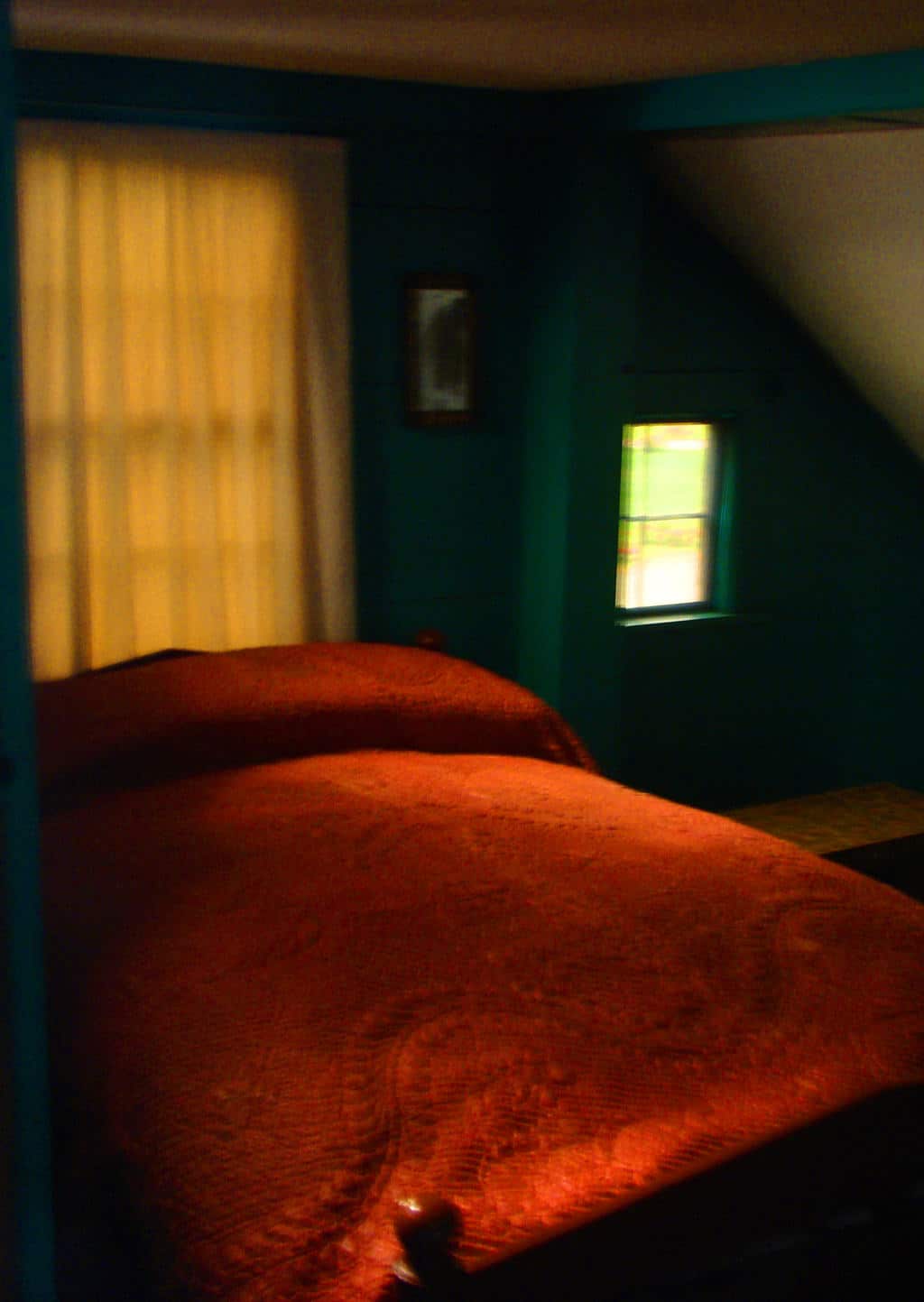
Billy, Elvis, & Jesus
Flash Fiction by Christopher Woods
Every morning, the same ritual. You dust both photographs. Turn Billy’s face up again for another day while the coffee brews. You look at Billy, then at Elvis. Outside the sun is coming up.
You never give up. Not you. Yes, it has been eighteen years since Billy walked out the door. That door. And ever since the door has grown smaller and the world beyond it vast and mysterious. A cruel kind of secret, maybe.
Billy, he never said boo. He left without a word. A light sleeper, you would have heard him if he had a last word or two. You don’t know where he went. He’s never called, never even dropped a postcard.
Mama, when she was still alive, always explained it to you this way. That Billy went to sow some wild oats. That you must have let him down somehow, him being a man and all, and you a woman. She said you could read all about it in the Bible. But you never bothered to read about it. That Bible reminded you too much of Mama and her runaway mouth.
Mama never knew the truth, that Billy didn’t have any wild oats to sow. Billy wasn’t so hot in the tame oats department either. But you got along with him fine. Oats or not, a warm body next to you on a cold night was a comfort.
Billy was no Casanova, not by a long shot. You always figured he would come home once he figured this out. Maybe when some woman told him so, and not so sweetly. You loved him because he was Billy, for his sturdy frame and strong jaw. That was enough. Still is, sad to say. And this is why it won’t surprise you if he comes back. That will mean he has learned his lesson, that no one loves him the way you do.
It’s strange, though. Elvis has been gone a long time too, but somehow it’s not the same. Oh, you know all about the sadness of Elvis being gone. Who doesn’t? You believe that Elvis was a giant among men when he was alive.
Now that he’s gone, he’s still about ten times bigger than the best of them. You think about this a lot, how a dead god is better than a cold man.
At the Visualize God In Grits Café, you work the lunch counter. You watch men coming and going, all day long. Some are nice. Others flirt. A few of them give you the creeps. Older now, you know better than to get involved. Besides, what would Billy say?
There was a time when you didn’t know who Elvis was. Mama changed all that. You must have been seven years old when she took you to see him in concert. Mama said the two of you had come along too late to see Jesus in person, but you were right on schedule for Elvis.
On her deathbed, Mama confessed something. She said that when Daddy climbed atop her on Saturday nights, she would close her eyes and imagine it was Elvis instead. Those were almost her last words, as if she was sharing the secret of the universe.
Seeing Elvis changed you. What your mother said when her death rattle was tuning up changed you too.
Tonight, when the sun goes down, you’ll be back here again, sitting on your lonely side of the bed. You’ll look at Billy and Elvis. You’ll turn Billy’s photograph face down for the night. Good night sweet Billy, wherever you are, you’ll say.
That will leave you and Elvis alone together. And you won’t feel the slightest tinge of shame when you reach for Elvis and hold him close. It’s one of those lonesome kinds of nights, you’ll tell him. You know, when the darkness sneaks inside and puts its arms around you? You know Elvis will give the darkness it marching papers. He knows all about it.
You will try to stay awake, hoping that Billy is coming home. If he does come home, this is how you picture it. It will be at dusk. Him coming up the road, the sun all fiery red through the trees. Lost people need to get home before dark. At night it’s too hard for them to find their way, especially after so many years.
But your eyes will close on their own in their weary way. You know that, wherever Billy is, he’s probably rubbing shoulders with the darkness that Elvis sent packing. And before you place Elvis back on the bedside table, you will kiss him like you would Jesus if he ever came back. Some say it’s just a matter of time.
Christopher Woods is a writer, teacher and photographer who lives in Houston and Chappell Hill, Texas. He has published a novel, THE DREAM PATCH, a prose collection, UNDER A RIVERBED SKY, and a book of stage monologues for actors, HEART SPEAK. His work has appeared in THE SOUTHERN REVIEW, NEW ENGLAND REVIEW, NEW ORLEANS REVIEW, COLUMBIA and GLIMMER TRAIN, among others. His photographs can be seen in his gallery –http://christopherwoods.zenfolio.com/
Image: Bed, Shelbourne, by Christopher Woods
-
Some Realizations after Ten Months in Texas
Memoir by Alyssa Sinclair
1.
My apartment door opens to a hallway lined with three other brown metal doors. An oversized patchwork owl hangs on my neighbor’s door, and a plastic waterfall—four tiers of fake rocks cascading down—has sat empty for weeks next to their welcome mat. Otherwise the hallway is a beige blur—cement floor, off-white walls, white light fixtures filled with dead bugs. The landing of the wide cement stairs affords a view to the outside. Standing at the railing, painted the same brown as my door, I can see the tall fence with its attenuated ribs separating the parking lot from the road, and the expanse of dusty, sparsely vegetated desert. Beyond that the highway loops around the limits of the town. The edges of the highway overpass are lined with birds nests, packed in wing to wing, like a Japanese hotel.
The stairs lead down to the lower hallway. The cement floor bleeds into the sidewalk and then the parking lot. The manager of the apartment complex refers to this whole hallway-and-staircase area together as “The Breezeway”. There is a brown film clinging to everything: the floor, the stair railing, the faux-wood paneling covering the walls, the bottoms of my shoes. I moved here in January. It is now October and the film of dirt has had four seasons in which to accumulate.
In the lower hallway there are belly-up cockroaches scattered across the cement floor. The numbers have grown since January. They are a red-brown color, their legs curled in “S” shapes, a trail of breadcrumbs to the stairs. Whenever I step on one a shiver of disgust runs from my flip-flopped feet up to my throat. Sometimes, at the base of the stairs, there will be one or two stuck between life and death for hours on end. Suspended on their rounded backs, their tiny, grasping legs pedal all day long. The movement rocks them back and forth, but it is not enough to fully flip upright. When they die it then takes a few days for them to disappear. Once, at midnight, I saw other cockroaches lingering around a dead one, and in the morning there was just a crumbly black substance left behind. More than once I have seen two ants dragging a dead cockroach down the sidewalk.
Upstairs, outside my door, spider webs dangle from the cream-colored paneling. Balls of lint and fuzz are caught in the silky threads. Occasionally I’ll spot a black spider curled in its web. It is either hibernating from the heat or dead from the heat. The bend of its legs is shiny and sharp, forming a basket around its underbelly. If I spray it with Raid it will die and fall to the ground, and I can check for the fatal red mark on its underbelly in the shape of an hourglass.
This summer the bugs began to enter the apartment. Since then I am often bitten in my sleep. I wake up to scabs pulled tight across itchy lumps on my ankles and nail marks up my thighs. For a few weeks in August there were small beetles buried in the beige carpet, and at least twenty tiny black bugs on the windowsill each morning.
The pest control man told me it’s all because I sleep by a northern facing window. “All that open land and the wind blowing in,” he said, “I’ll tell the manager to put a dimmer bulb in the light outside your window.”
The next night I walked my dog past that bulb at the corner of the building, and tried to tell if it was dimmer. Moth wings fluttered against the light and other, earth-ridden bugs twitched on the pavement. All of the movement made me jumpy. I didn’t think they had changed the bulb. A white truck, its tires lifted up high and a crane in the bed, pulled in and parked behind me. A young man got out wearing a fireproof jumpsuit. There were black smears down the fronts of his thighs. It was about ten o’clock. He was getting in from the oil field. He said hello and entered the Breezeway. The heavy knocking of his steel-toed boots echoed out into the parking lot. I could hear the gap between his steps as he climbed two at a time. I thought about taking two stairs at a time at my parent’s house, the thick runner beneath my feet. The darkness to the north suddenly seemed like a dream pulling me away from here. I heard the slam of his door come from the top floor. My dog tried to catch a giant sand-colored cricket in her mouth. It bounced away suddenly, sharply, almost as high as my hipbones. It seemed it could jump as high as my face if it really tried. I stepped away, pulling on the leash.
Alyssa Sinclair graduated from the University of St. Andrews in Scotland with an M.Litt in Creative Writing. Her thesis, a collection of short stories entitled This House of Bones, was based on stories of her father’s life. She is the recipient of the Dan Hemingway Short Story prize for her story “The Deposition.” Her nonfiction has been published in Salon.com and TheDailyBeast.com and has been short-listed for the New Writing section of Mslexia Magazine. She lives in Midland, Texas, the far-west center of the Oil and Gas industry, where she writes and teaches yoga.
-

Forgotten Flyers – Flash Fiction by Bobby Sauro
The Chief Inspector prints a flyer each time another woman is murdered. The woman is referred to by name; the unknown assailants are referred to as Citizen “10,” Citizen “11,” and so on. This serves the dual purpose of honoring the victims and letting the public know how many killers are out there. Some outsiders have suggested there is only one, but that would necessitate an individual ego and self-centeredness our society does not possess.
Katrina’s admirer was sweet; he doted on her from afar. She had become His Trina. The Station Master in her hamlet had introduced them through correspondence. Her admirer was looking for someone full of hope, unlike the jaded girls in his district. That she could belly dance was an unexpected bonus. He would put her in one of his little shows.
Our Chief Inspector will not rest until the killers are brought to justice, and what an exacting justice it will be! These foreign marauders will feel the hammer of the State.
For Katrina, this was also a way out of her province. Life had not been miserable but that wasn’t good enough. She would travel; be adventurous; her spirit would spread open.
We hang flyers at the train station to warn women not to travel by train (and also to advertise the holiday schedule because that must come out whether or not there are killers on the loose and we only have so much 80 lb. stock paper).
Her uncle warned Katrina. The city will swallow you whole. That would be fine, as long as it didn’t take her apart, piece by piece, over decades.
Our train station is a very windy place. The flyers become torn on their sides; their bottoms are shredded. Eventually, the pieces scatter in the woods. That is a fact of life here. Nevertheless, due to public outcry, we have hired a well-respected local to tend to the flyers. He is quite famous for his Top Hat, which will present a major challenge, given the wind.
In Katrina’s province, there had been a rumor of killers of women, but improving her station in life required bold action. Besides, there was no reason to fear; her gentleman would be waiting for her. What a team they will make! This man from her dreams, who brought all the places he had traveled alive in her mind, like only The Great Poet had done before.
By mistake, the former Commandant built the depot at the edge of town instead of in the center. This was outside of our control and so no apology is necessary but, as a result, the station has become a gathering spot for our fringe element: vagrants, drunks, the mentally challenged and the deviant (we are too polite to go into further detail). In lieu of an apology, we did make an announcement which apologized for any inconvenience the misplacing of the station had caused our fine citizens.
Katrina was surprised they let her bring her dog on the train but that is the province for you; not much concern about anything, nothing really matters. She will go somewhere that matters. Her name will be known. Her dog will run freely in the woods. She has never had him on a leash and the city will not change her.
Great news! At a symposium, our Chief Inspector heard of a new machine which will allow us to print the flyers more cheaply. This improvement will be available sometime within the next ten years. We will keep you posted on this exciting development but in all events expect the flyers to become more like a commodity.
Katrina is surprised there are not more people at the station when her train arrives. This will make it easier to spot her new lover. She will recognize him by his Top Hat.
Thanks to the efforts of our man in the Top Hat more than ten deviants have been arrested near the station. This has exceeded our expectations.
The station in the city looks worse than the one in her hamlet. Katrina pulls her stockings up over her knees. Because her province is frigid, she wears stockings on her arms as well. Missing feet, they run up her lean limbs, which were called gangly when she was young but which had become two of her greatest assets. An imposing man in a Top Hat waits impatiently by the tracks. Two stacks of flyers, each wrapped in a leather strap with large metal buckles, dangle from his hands.
Another one has been found, near the train station, in the woods. Choked. And also, sliced. We will no longer print new flyers every time, however, because it’s getting too expensive. Besides, this one was not from here, but from a faraway province we suspect (her stockings were ripped and, subpar). If we knew her name, we would tell you, but not print it because, well, you already know, the flyers.
On an unrelated note, due to our Chief Inspector’s razor sharp eye, a dog has been rescued in the woods near the station. Such a magnificent mane and a hunting dog nonetheless! Leather straps found tied to a tree nearby were too thick for the dog’s neck so the Chief Inspector left them to be retrieved at a later date. Out of the goodness of his heart, he brought the dog home. There is no need to describe the animal; you will see him in the photos we distribute with our special holiday flyers. As always, they will be posted at the station in time for the annual celebration, which this year will include carnival rides and be hosted by our newly-appointed Station Master (Our Chief Inspector is too busy with his growing family). There’s no need to print the Station Master’s name because, well, you already know him; he’s the man with the Top Hat in whom we have now vested total authority to tend to the flyers.
Bobby Sauro’s short fiction has appeared in Connotation Press, Fiction Southeast, elimae, Burnt Bridge, Corium, Dew on the Kudzu, and Red Fez. He resides in Atlanta but can often be found at www.sauromotel.com, a literary motel that houses short stories and articles about Kafka, Springsteen, sweet potato vendors and the occasional 1980’s vending machine. He once worked for a Chinese professor who knew Stalin and in a nail polish factory, but not at the same time.
Image courtesy of Paul Garaizar via unsplash.
-

Buried – Flash Fiction by Nathan Alling Long
You dropped it in the ocean so as hide it. But no, that’s not quite the right word—for hiding implies from someone, and no one was looking for it or would think to find it here. Hiding also suggests a temporariness. One hides something only later to reveal it. To hide something for good, one buries it.
Yet it seemed wrong to think of drawing the small parcel from your coat pocket as you leaned over the rail of the whale watching boat that afternoon, letting it slip out of your fingers into the water, to think of that as burying. You looked around, worried about being seen. But everyone else on deck was looking off in the distance for a tail or a spout of water.
You watched as the parcel floated a moment, then sank unceremoniously. As the boat pressed on, you could imagine the small wooden box swaying downward until it rested on the ocean floor. Yet all that water did not exactly bury the thing. Not made of earth, the ocean could not truly put it to rest.
As a child, you had been unsettled by the phrase ‘a man buried at sea’; you couldn’t understand how anyone could dig a grave at the bottom of the ocean, how they could pull the casket down, then cover it up. Wouldn’t the currents wash the dirt away and reveal the body? When you learned that it meant they simply let the body slip off the ship into the ocean, you were repulsed by the thought, the slothfulness and incompleteness of the act.
But you now have done the act yourself, buried but not buried, let the parcel fall into the immense anonymity of the sea. And since then, you have not spent a day without thinking about it. Sometimes you imagined the parcel jostled by the waves or the tail of a large fish. Other times you pictured it catching the hook of a fishing line or the net of a trawler. Or you imagined it scuttling across the ocean floor, incrementally, pushed by the currents so that it seemed almost a living thing again.
They told you before he was out of the womb that he would not live long. The arrhythmic pulse, a tell-tale heart. You said no matter, you would care for until it stopped. Then return it to a watery place, where it might feel comfort.
But now you find yourself going to the shore each day, as though the thing might wash up on the beach. You believe it is not comfortable, alone on the ocean floor. It is trying to come back to you, even though it is only ash in a box. You imagine that if you do not find it, it will be discovered by a fisherman or an early morning collector of shells. Then, years later, you will see it in someone’s living room or alone out on the curb.
When you are not at the shore, you find yourself watching what flows from faucets, as if your box might come through the small metal opening. You come to believe that all water is part of the same body, one endless being, like a grove of aspens connected by the roots. You believe it might return to you from any source. You look at the sky when it rains, wondering if it might fall from a cloud. You look for it in a glass of water at a restaurant, in a street puddle, in your own tears.
Soon it feels certain that you will find it, that you alone will find it, for you have buried it from everyone but yourself.
One day you wake from a frightening dream. In it, your tiny wooden box is still lying on the ocean floor, still as a stone, wedded to the floor like a shipwreck. It has not gone anywhere at all. You see then how well the sea, with its thick salty water, preserves the things it collects. Your box will never disappear. It will always wait for you.
That morning, you return to the shore, certain that it will never wash up at your feet. Still you feel the thread that tethers it to you. You place a hand in the salt water, feeling the tug. Without taking off your clothes, you step in the water, feeling you are a mother all over again, the cold sacrifice of everything. You start walking, then swimming. By effort or current, you will return to it. You know eventually you will be pulled under and sink down until the two of you are rejoined, there on the ocean floor, your body beside your tiny box, almost as if buried at sea.
Nathan Alling Long’s has appeared in over a hundred journals and anthologies, including Story Quarterly, Tin House, Glimmer Train, and Crab Orchard Review. He lives in Philadelphia, and teaches at Stockton Univeristy. “Buried” is part of a fifty story collection of flash fiction seeking publication. More can be found at https://blogs.stockton.edu/longn/.
Image by Tobias van Schneider via unsplash. -
Flight – Flash Fiction by Gypsy Martin
The first time it happened, it had been a shock. Ray’s head rested heavy on the small oval window of the airplane. His eyes had just closed when a gentle ding sounded and the fasten seatbelt light was extinguished. Ray started with a little snort at the noise and lifted his head, noting with relief the vacant seat beside him. A flutter of white outside the window caught the corner of his eye. There was something on the wing.
Squinting into the setting sun, he saw a woman sitting on a stool. She was knitting. A strand of yellow yarn extended from her needles to a worn canvas bag slumped at her feet. Her long white hair stirred in what looked to be a gentle breeze. The woman was his wife, Dorothy.
Or, rather, the woman was his wife, Dorothy. When she had been alive.
Ray and Dorothy had worked hard and loved each other and raised two good kids, which they figured made them better off than most. Their life together had been simple and sweet, and Ray’s only regret was that his big-minded wife had never set foot out of Iowa. She had never seen the ocean. That didn’t seem right, so Ray made a plan. He saved a little bit of every paycheck from the meatpacking plant, and for Dorothy’s 60th birthday he bought them two airplane tickets to Portland, Oregon. From there they’d drive to the coast.
Of course he’d suggested California first. It was the obvious west coast destination. But she’d demurred, saying California wasn’t really her kind of place, even if it was warmer. There would be no sojourn among the blonde and tan for Dorothy; she wanted to go somewhere wilder, lonelier. They would take Highway 26 from Portland to the coast, and drive north to Cape Disappointment.
To Ray, vacationing at a spot called Cape Disappointment was just asking for it. But they never made the trip anyway. A week before they were to fly to Portland, Dorothy collapsed on the kitchen floor. She died right there of a ruptured brain aneurysm. After that Ray didn’t care if he ever went anywhere again.
But his daughter worried about him, and, one year after the trip he didn’t take, Ray flew to Seattle to visit her. That’s when Ray saw Dorothy on the wing of the airplane. He’d gasped, then waved his hand madly to get her attention. Dorothy looked just past him, her lips turned up in almost a smile, her head tipped as though she were listening for something or someone.
Ray waved a few more times to no effect, and only then began to wonder just how crazy he was going. He watched her out the window until it grew dark and he fell asleep. When he woke up, she was gone.
The following year, on a hunch, Ray flew on the same date to visit a friend in Salt Lake City. He chose a window seat next to the wing. Dorothy was there again, knitting, with the same inscrutable expression on her face.
Ray flew somewhere every year after that, whether he could afford to or not. A phantom Dorothy on an airplane wing was better than no Dorothy at all, even if she never noticed him. She never changed, even when all the hair he lost from his head seemed to sprout from his eyebrows, and he began to walk with a stoop, and his fingers became gnarled and knobby. Nothing changed but the growing pile of knitting, which began to spill off her lap as the years went by.
On Ray’s twenty-sixth annual flight, he was alone, as usual. He had never remarried. He would never want anyone but Dorothy. His Dorothy could splint a broken arm, field dress a deer, and brew coffee for a hundred people at a church potluck. Good coffee. Ray had never been much of a reader, but Dorothy would check out stacks of books from the library and tell him the things they made her think. He’d never find another Dorothy and he didn’t want to.
Ray ducked to take his seat at the window, fastened his seatbelt, and pulled a pillow onto his lap to rest his arms on. He was going to Seattle, as he had the first year after Dorothy’s death, to see his daughter and her family. The grandchildren would hug him and ask a few perfunctory questions before easing their phones out of their pockets. They would settle into the overstuffed chairs in the family room, taking furtive peeks at their laps while pretending to talk to him. He did not think they should have phones, and he was not looking forward to the visit. But he had reserved a rental car, a Lincoln. After a just-long-enough stay, he would drive down to Cape Disappointment at last.
The cabin lights dimmed. Ray looked out into the dusk. Dorothy was there, as he knew she would be. But today she looked as she had when he met her, and she was most definitely not knitting. Dorothy wore a cream-colored sundress. Her hair fell in chestnut waves around her shoulders. She pulled an enormous blanket from her knitting bag, and Ray saw that he had been mistaken about the color of the yarn. It was not yellow, but gold. Dorothy set a wicker picnic basket down on the blanket. Kneeling, she opened the basket, took out a lemon meringue pie, and placed it front of her.
Dorothy picked up a fork and scooted closer to the pie. In the fading light she held up a second fork, raised an eyebrow, and smiled right at Ray. He smiled back. Then Ray Miller, age 86, reclined his seat as far as it would go, leaned back, and closed his eyes.
A resident of Camas, Washington, Gypsy Martin is mom to two boys and has achieved minor fame as a lunch lady at their elementary school. Her short fiction has been published online in the Journal of Microliterature. Her work has also appeared in print anthologies, including the forthcoming Flash in the Attic: 44 Very Short Stories from Fiction Attic Press. She also won a prize in the memoir category of the 2012 Writer’s Digest Writing Competition for a story about the indignities of homemade underwear.
Image courtesy of Andrej Chudy via unsplash
-

The English Translation of the Story of the Hero Who Named Many Places
A short story by Will Kaufman
He named this place the Apple Grove of Hope for Love, because it was in this apple grove, as a youth, that he came upon a horse, a dappled grey, and befriended it. In that time the people of our land lived far apart, and often wandered. How else to find love than on a horse?
This hill the hero named Horse-Thrown Hill, because he could not ride over it without his horse throwing him. Sixteen times in the course of the hero’s many travels he was thrown. Sixteen times as he crossed our land, looking for his love. Perhaps he should have named it Stubborn Hero Hill, for he could have ridden around it. It is not a very large hill. But he always thought, maybe this time. He would be thrown still had his horse not died.
I have never owned a horse, though I have seen several. Wild horses, even. A small herd, chestnut and white in a stretch of grassy valley too far from the city to be worth developing, and too narrow to farm. Its name on the map is Narrow Valley. I witnessed the wild horses of Narrow Valley grazing by the freeway, the E-244. Such are the names given now.
Professor Padarak drove me down that road, in her rusted Lada, to interview a retired truck driver whose father had a reputation as a great storyteller. We brought tape recorders and notebooks and maps, and meant to recover old stories and old names. Professor Padarak and Aydas the Research Assistant, seeing in each landmark that presented itself outside the streaked windows of the Lada a space for an old name to be scrived.
The truck driver told us the stories his father told him, of the great hero who gave many names to the places in our land, and other stories, too. He spoke a patois of the old dialect and the new—though not like the kind taught in classrooms—and trucker-words. In English he knew “distance” and he knew “horse” from “horsepower.” Then he offered us the use of a cot next to his iron stove.
I considered the shack’s concrete floor. “I’ll sleep in the car,” I said.
“Don’t be daft,” said Professor Padarak. “You’ll freeze.”
And this is the Best Tree for Sitting Under, with its twisted roots that make beds and chairs, and its dense leaves that shelter and shade. The hero sat here many times on his travels, stopping even if he was not tired, just because it is so good a place to sit. While he sat he thought about finding his love, about finding a woman with whom he could name a place Home, and how they would have many children, and he would ask her to name each one, then he would name a place for each one. This was a sad thought, too, because he would not need his horse any longer, having found love, but he loved his horse. He had spent so long with his horse, and needed his horse, and his horse held all his hopes in the thunderous chambers of her heart. Would his hopes still be thunderous once he found love?
He could have named the tree Where Happy Thoughts Become Sad Thoughts, or Where Joy and Sadness Forget Why They Are Different, but that was not necessary. Sit for long enough and all things come and go, so being a place one could sit for a long time was a much better recommendation for the tree than any such nonsense.
So why didn’t the hero sit and wait for his love, if all things would come and go? When he thought that, he knew he had sat too long, and he leapt onto his horse, and after leaping one such day he meant to tell his horse how, even though she was a means to love, he loved her for herself, but he could not speak to the horse for he did not know the horse’s name.
So he said aloud that he would find someone to name his horse, and hoped his horse heard him, and understood.
And the University library was a kind and warm place, gentle in spite of the efforts of its builders to harden it with linoleum and fluorescent tubes and steel shelves. We surrounded ourselves with reference books and set about making all the truck driver’s words English words so we could publish in English…
(EXCERPT) Continue reading this story on Beacon.
Will Kaufman’s work has previously appeared in The Collagist, PANK, Unstuck, Lightspeed Magazine, McSweeney’s Internet Tendency, and a number of other journals. He received an MFA in Creative Writing from the University of Utah in 2010.
Image courtesy of Patrick Tomasso via unsplash
 This story will appear in the anthology 20 Tall Tales: Weird and Wonderful Stories. Go here to pre-order the ebook.
 -
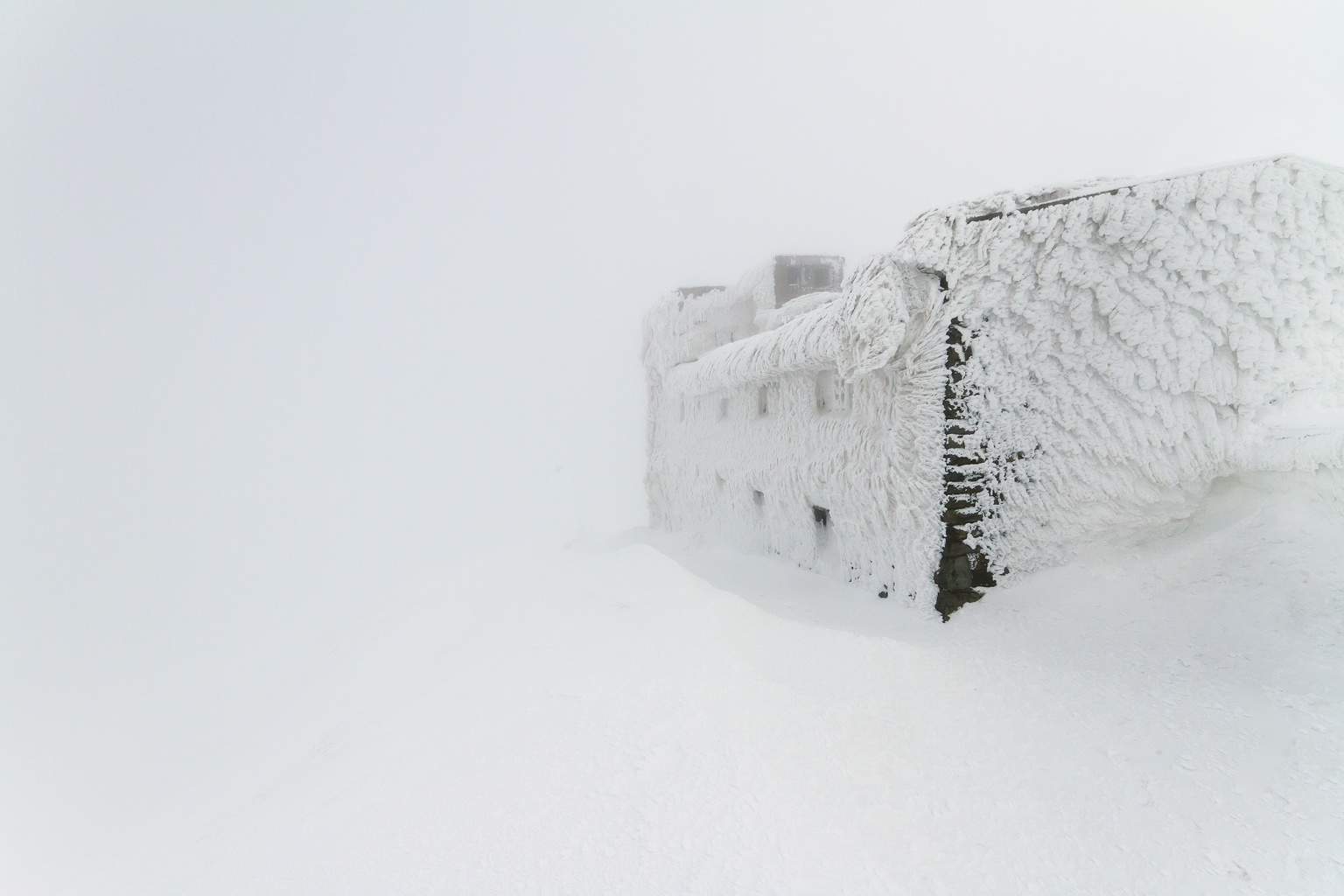
How to Handle Winter
A Short Story by Melissa Gutierrez
The snowman was more that than anything else—a man who lived in the snow. He had a pelt like other yeti, certainly, but it wasn’t anything abhorrent in the least; soft, in fact, were one to get close enough to brush arms with him and feel the fine hairs graze across so light and thrill like marabou. He was a beast of course, but had the good fortune of being a northern one. The cold, and nightly grooming sessions, kept his hunting-sweat from building up and stinking. And lying on a bed of furs each night looking upwards for the ribboned polar glow kept his heart always at peace—with so many swirling colors overhead, bright even through the plastic ceiling skylight, how would one ever feel alone?
The snowman couldn’t really bear to hunt. He could stand the sight of blood but couldn’t find a way to really do the deed without getting any on his whitely-padded hands. He might have been a vegetarian were he any longer left of center, but he had a sense of order in things and kept on eating meat. He made a trek down from his snow-packed mountain pass to the little village general store once every couple weeks, picking up a crate of Kobe steaks and a couple whole king salmon that the owner set aside. The snowman kept a hothouse for the slew of vegetables and herbs he grew himself. He had built it off the cabin-cave like a giant sunroom, and spent the early mornings tending to the rows of home-grown produce, and the evenings sometimes doing canning or other kinds of preservation prep. When the sun came up, he skied.
“I see him, Dad, I see him!”
“See what?” the father asked, and hunkered down at the windowsill, his elbows up on it and folded like a bedtime prayer. The daughter held her posture similarly, but with binoculars between her hands. Her eyes were hidden, her face attached to the lenses, and the other lenses pressed right up against the windowpane, where frost had started gathering low near the sill below.
“The snowman,” she said, saying it like a secret.
“The snowman?” the father asked.
“The snowman,” she said, and set the binoculars down on the wooden ledge. She turned to face her father. “He is tall and white and furry, and he rides a set of skis.” Her lips were like two berries, olallie-b or huckle, and her eyelids blinked in mark of fact.
“One time,” the father said, and stroked her curly hair, “before we moved, your mother and I lived in the hills of a golden valley. Growing up we watched cattle and deer and boars and goats and kept a sharp eye out for mountain lions. One time when we were little—we grew up friends and neighbors—your mother said to me, ‘Look, there, a giraffe.’ She pointed towards a little bunch of trees, and I couldn’t see a giraffe. And she said, ‘No, the next patch, inside that little shadow.’ And I looked inside that little shadow on the hill and sure enough, there was a giraffe. She said to me, ‘It comes out every night.’ So every night we watched the shadow on the hill and every night the giraffe came out again. Then one day, your mother said, ‘Let’s go see where the giraffe lives.’ We put our best boots on and climbed all the way to the top of that hill, to the patch of trees where we saw the giraffe come every night. It was summertime and the grass was dry like straw, and our climbing up through it was so noisy, like rustling through plastic grocery bags.”
The little girl put her hands together and rubbed them to make noise. Her father smiled.
“Yes,” he said. “Almost like that. But not as soft.” He smiled, then continued on. “We had scissorweeds and thistles sticking all throughout our socks. Halfway up we had to stop and pull a tick out from behind her knee. I was a Boy Scout then and had brought a first aid kit with us just in case, so I was armed with tweezers.”
The daughter wrinkled up her nose.
“We got it out okay. Your mom was brave. Anyways, as we were trudging upwards towards the giraffe lair, the sun was almost setting. We could see him come out from just a little down the hill. He stood calmly, looking at us. He was going to wait for us to meet him—we were going to see the giraffe up close.”
The daughter gasped. Her eyes were big. She pulled the binoculars down into her lap and leaned in forward.
“When we got to the giraffe,” the father said, “it was just a log. A giraffe-shaped log.”
The snowman’s cave was built along a low cliff of an upper mountain range that overlooked a valley. The whole area was so high up in the world that everything stayed white with snow year-round, except the very middle of the valley where a river ran and green grass grew in late June through July. Cold pats of snow remained underneath the trees around the valley’s fringes, even then. The trees grew all the way up to the bottoms of the rock cliffs, where there was no dirt to grow—a couple branches here and there, so a cardinal or owl could nest, so even birdsong met the alp-y mountain peaks sometimes. Above the cliffs were the mountaintops, almost ridge-like. The valley was like God had punched the earth, not round enough to be a crater really but imprinted in the earthface all the same. The only way out, besides scaling mountain cliffs and walls and peaks, was a little pass near the west end of the valley, like where maybe God’s right thumb had been when he threw that big hard punch. It wasn’t dangerous or blocked or controlled by anyone in any way, though mainly the only people who came in and out were food and fuel suppliers, and the occasional tourist who rented out a village cabin that they’d found online.
The snowman circled all of this on skis each and every day. On Mondays he’d make a half-moon from the right of his front door to the north side of the pass, and on Tuesdays he’d make the arc around the south. On Wednesdays he rode the treeline and on Thursdays he snaked through, in and out of the pines around the upper elevations. On Fridays he did downhill at a private slope he’d built a half a mile from his digs. On weekends he waxed and cleaned his skis, gave them and his legs a break, put his body in an ice bath in the snow and then caught up on any hothouse work he’d missed, or did an extra run down to the village store.
Continue reading the story on Beacon…
Melissa Gutierrez is an artist and writer living and working in Northern California. She holds an MFA from the University of Arizona. Follow her on twitter @mmgutz.
This short story will appear in the anthology Tall Tales: 20 Strange and Wonderful Stories from Fiction Attic Press.Image courtesy of Paul Itkin, via unsplash.com
-

The Place I Belong
Short Fiction by Kevin Sharp
My life changed when I turned seven.
It seems so long ago now, and I guess it was–especially with everything that’s happened to me since.
In 1976, my mom and I lived at the Starbrite Mobile Home Park outside Flagstaff, Arizona. I divided most of my free time there between reading in my room and playing in our yard (really a square of rocks occupied by some faded plastic flamingoes). I could stay in my fictional worlds for hours, until Mom called me for dinner or bed or because the approaching siren meant that something was going down (again) at one of the other trailers.
My mom’s name is Cinderella. Really. She hates it, always going by Cindy or Cin. She told me over and over not to name my future kids anything weird, that to parents it may be a spur of the moment thing but the kids had to live with it.
“For instance, I wouldn’t have named you Galahad,” she said.
I didn’t tell her that I wished she had, because Galahad is a way better name than Herman.
I knew my dad only as a faded image of blonde hair and sideburns. The card he sent for my seventh birthday showed an astronaut, untethered to any rocket, floating alone against a blue-black galaxy. Inside: Have An Out Of This World Birthday! Printed below that: Love, Your Pop.
Mom cried as she watched me sound the words out.
She took me to celebrate on January 1, 1977 – I’d been a New Year’s baby – and to give us both a break from our usual Rice-A-Roni or plain pasta dinners. The restaurant was called the Squat & Gobble, which doesn’t sound too fancy, but to me anyplace with cloth napkins and hardcover menus was like dining as a king. After I blew out the candle on my slice of chocolate cake (chosen off the silver dessert tray), the waitress, Dot, leaned down and whispered in my ear, “My mama poisoned my stepdad and made it look like an accident. He was a terrible man.” Then she gave a big smile; she had a smear of lipstick on her front tooth.
I lay in bed that night playing with my new Aquaman doll, wondering if Dot had told me something from a movie or a grown-up book.
The next day, my friend Richie and I waded in the creek behind his house, looking for crawfish or tadpoles. “Guess what, Herman.” His eyes were wide behind the giant lenses of his glasses. “I peeked through my parents’ keyhole and saw my mom tied up to the bed with my dad’s neckties. She shouted at him to…” Here Richie listed phrases whose meanings neither of us were sure of, exactly, nor did we know who to ask.
The school bus driver, Ms. Brenda, held me back Monday morning after all the other kids. She told me about the time she and her friends stole the principal’s car in high school. Only they didn’t know the principal needed his car to drive his sick wife to chemotherapy. There was a big mess – that’s how Ms. Brenda said it: “a big mess.”
“Not a day goes by I don’t think about that poor woman,” she told me. She wiped her eyes with a wadded Kleenex from her jacket sleeve.
After Ms. Brenda came Mrs. Nelson, my first grade teacher. The yard duty supervisor at recess. The assistant principal. The kids I talked to, on the playground, in the lunch line, in the bathroom. Even kids from the other classes, whose names I didn’t know. People who probably never even knew I existed.
They would all lean in and whisper to me, even if nobody else was around. Like what they were about to tell me was the biggest, most important thing ever.
Pug-nosed Tommy Gregson, who I guess would’ve been categorized as the class bully, told me his mom put a wad of toilet paper in his underwear every day so she wouldn’t have to wash brown stains out of it. Do you know what I could’ve done to Tommy with that information, especially as his reign of terror expanded in later grades?
What had happened when I blew out that candle? Since when was seven a magical age? In case you’re wondering, hearing all this stuff wasn’t my wish; I’d asked for the same things as every year: a life-size Batmobile, and for my dad to come home.
#
But whether I wished for them or not, my collection of secrets grew day by day, with every person I encountered.
My dentist said he ate chocolate at every meal, which I thought was a pretty cool secret for someone with that job. But then he added, “I fantasize about your mother every time you come in here. I hope you get lots and lots of cavities, young man.” (I didn’t know what fantasize meant; I pictured my mom with fairy wings, riding a unicorn.)
Mrs. Hooper from the trailer next door told me she’d once secretly dated a black boy even though her parents were super-racist. (I pictured checkered flags as her mom and dad drove fast around a track.)
Richie’s mom, when I was playing over at his house, told me she was pregnant. I thought from TV that this was good news, but she kept saying, “What was I thinking?”
Mom’s hairstylist. The gas station attendant. The red-haired girl who scooped at 31 flavors. The mailman with the cowboy mustache.
#
After a couple of weeks I felt all those stories dragging after me wherever I went, like the ghost’s chains in a Christmas movie I’d once seen. Mom and I were watching a show called Charlie’s Angels on our itchy green couch one night, when I told her what had been happening.
She ground out her cigarette in the abalone shell ashtray. “What do they say?” she asked.
I paused, wondering what the etiquette was in such a situation.
“No, you’re right. Always respect a secret.” She lit up a new one. “So what’s mine?”
I thought this over while one of the TV ladies karate-chopped a guy. I knew everything about Mom already, like that her hair wasn’t really black and she never wore underwear. But, no, it would have to be something she’d told me since my birthday.
“Um, that you didn’t pay for your new scarf. The purple shiny one.”
She stared at me while smoke swirled around us in the blue light of the TV; every other light was off to save power. “Hell, I’m just taking that thing for a test drive. Stealing is wrong and you shouldn’t ever do it. Okay?”
When she shook me awake however long later, Godzilla roared on TV and half my face was numb from the couch. Mom said, “I have an idea.”
I never saw any of the men she dated, because she’d never let them pick her up; instead, she’d put on her finger-length eyelashes and her one fancy dress to go meet them in our old blue station wagon. “It’s not as glamorous as a pumpkin coach,” was how she described the car. It used to crack me up, picturing the poor guy seeing that thing driving up and wondering what he’d gotten himself into. Then Mom would get out, all beautiful.
I’d stay up late reading comic books with a flashlight so she wouldn’t see my lamp on through the window shade and worry that I wasn’t sleeping again. Only when she was home, when I’d heard her kick off her high heels and the click-click of her lighter, could I relax. The walls of our trailer were thin as cardboard; it felt like we were right next to each other even when we weren’t.
She always said her dream man was “a young Elvis Presley with the soul of John Denver.”
Anyway, Mom’s idea…
She reached out to the TV knob with her bare foot, turned down Godzilla’s volume. “Baby, you’re gonna help me find Prince Charming.”
#
The pretty nurse at my doctor’s office led me into the exam room and told me she was head over heels in love with the doctor. Then Dr. Schwartz tapped my knees with his little hammer and told me he was gay.
A girl named Winnie Munson joined our class well into the school year; Mrs. Nelson put her in the only empty desk, which happened to be right next to mine. And so, five minutes into her time there, while everyone else focused on their subtraction problems, Winnie told me that her father locked himself into her older sister’s room every night. I didn’t respond; whatever weird games her family played were none of my business, and it wouldn’t be good for me to be seen whispering with a girl.
#
Mom stopped going out on dates – now she invited men to dinner at our trailer. If he was supposed to be there at 7:00, she’d start preparing around 6:50; the guy would show up and Mom would say she got stuck at work or had car trouble (both lies). Then I’d be in charge of entertaining him – except it was more like a job interview he didn’t know he was on.
Roger, who seemed like a giant in my tiny room, looked around and asked what sports I liked to play. “None, really,” I said. “I can’t run very good.”
His voice dropped to a familiar whisper. “You’re looking at a former college wide receiver. I was plenty fast enough, but I missed a lot of practice because I was boinking my coach’s wife the whole time.” He illustrated the concept using his finger and a closed fist.
Oh, Roger. It was nice meeting you. Sort of.
I signaled to Mom when we came out of my room – blink twice slowly – and she pretended she was getting a migraine, clutching her head with good authenticity. Then the two of us ate the nice dinner on the checkered tablecloth.
I had to open my window because of Tom’s cologne. He looked at my bookcase and my pile of comics while I looked at the curly carpet of chest hair he showed off. Tom seemed nice, and he knew about the Hardy Boys. If the worst problem had been his grooming we might’ve been ok. But then he had to kneel in front of me. “I took money from some bad people. Real bad. Now I sleep with a gun under my pillow.”
Bye, Tom.
Bye, Nate, with the night terrors you brought back from Vietnam.
Bye, Frank, with your five ex-wives and the reason why all of them left you.
Bye, Anthony, with your glass slipper jokes after seeing Mom’s name on the electric bill. (He didn’t even make it to my room.)
#
As the weather got warmer on its way to brutal, Mom took me to the public pool each weekend. I usually spent my time there lathered in Coppertone, watching the lucky kids whose dads played with them in the shallow end. Now it was all whispers in my wet ears: swimmers, parents, lifeguards, the lady at the snack bar. I got pretty good at holding my breath – and ignoring the blinding sting of chlorine – because I tried to stay underwater as much as possible. Finally I told Mom I didn’t want to go anymore; instead I’d sit three inches from the squeaky fan at home and mist myself with a spray bottle.
I didn’t want to go with her on her usual errands, either. People who had confessed once left me alone, but strangers were too risky – the man in the grocery store who was planning his suicide gave me actual nightmares. The only places I felt safe were at the movies (where I could sit way down in front by myself) and the public library (where I could hide in one of the carrels).
#
I thought Clay might be the winner of the Prince Charming sweepstakes when he offered me half a Kit-Kat bar outside the trailer while we waited for dinner. I’d been trying to avoid chocolate (and thus more cavities) but my seven-year-old will was weak.
Clay looked both ways before lighting what I knew was a joint. “I spend every day stoned – it’s the only way I can get through my shitty life. You’ll understand someday, kid.” When I was in bed later I heard him and Mom giggling; the smoke smell rolled in under my door. But I never saw him again after that.
Yale the draft dodger got to stay for dinner. So did Ben, who hadn’t been on a date in nine years. And Leroy.
But none of them were Mom’s guy. I wanted her to be happy. I wanted her not to be lonely.
“Oh, baby,” she said as she tucked me in one stuffy night. “There’s a world of difference between alone and lonely.”
This went on through the spring and summer. Richie’s mom had a baby. I lost a front tooth. Two girls vanished from my life: Winnie Munson, who stopped showing up to school, and the red-haired girl from 31 flavors (probably because the boss found out what she was doing in there after hours). Star Wars came out. Elvis died; Mom drank beers and sang along to his records all day.
#
The phone rang during Saturday morning cartoons. I held the receiver in one hand, my bowl of Cocoa Pebbles in the other. “Herman?” the man said. He spoke loudly over music and chatter in the background.
I didn’t know the voice, but I knew the voice. “Dad?”
“Yes, son.” A song played about blue eyes crying. “Say, is your mom there?”
“No, she said she’s splurging on a new haircut.”
I heard a sound like ice cubes. When he spoke again, he was much quieter, as if the phone was stuffed inside his mouth. “My folks had a terrible marriage. Fought all the time, cursed, hit each other – like they weren’t in love and never had been. I didn’t want me and your mom to end up like that. I didn’t want me to end up like that. Like maybe being a violent asshole was something my dad passed down, and then I’d pass it down to you. So I made myself leave.”
The operator asked him to deposit more money. Coins clinked.
He said, “The last time I saw you and Cin was the last happy day of my life.” A new song started: something-something country roads. “I don’t know why I’m telling you all this.”
And there in our tiny kitchen, for the first time when someone had finished whispering to me, I smiled.
Kevin Sharp teaches high school creative writing in Northern California. He is the author of the YA novel After Dakota; his work has also appeared on The Weeklings and in Bookmarks magazine. While he has technically grown up, Kevin has yet to outgrow Looney Tunes, The Price is Right, fantasy novels, or comic books. This story makes him want to confess his secret celebrity crush on Kate Winslet. Visit him online at www.kevin-sharp.com.
Image courtesy of Pawel Kadysz at unsplash.com
-
A List That Never Ends
Short Memoir by Sarah Elizabeth Schantz
When it was time to burn my mother she wept two red tears. I drove her to the crematory and watched my place of origin turn to white ash and silver mica.
Adderley was my first death—my best-friend’s little sister, I was only seven and Addie was only one: Sudden Infant Death Syndrome: Suddenly. Infinitely. Disappearing. Then came my grandparents, one after another, they were gone by the time I was fourteen. The same year my paternal grandmother died, so did another baby that I knew—she too suddenly disappeared forever; she was buried in a tiny pink casket and her mother, Mindy, cried during the entire service. Yet Mindy survived, somehow, and had another daughter—but life is never fair, and Mindy was killed in a car accident around the time I moved back to Colorado.
Little Bob had a hernia and it frightened me the one and only time we had sex. That night, I slept in his bed, and while I slept, he drew my portrait. After he showed it to me, he buried it in the backyard and refused to tell me where it was, although he did give it to me later once we knew I’d never love him like he loved me. Rendered in pencil on watercolor paper, this sketch remains taped to the inside cover of my journal, dated: 1995. Little Bob was not an artist, and yet, he captured me. And he is the only person I have ever kissed at the very top of a Ferris wheel. A decade later, Little Bob died from a hotshot of heroin, eleven days before I was married. Friends came from his funeral in Minneapolis to my wedding in Colorado, and Little Bob hitched a ride—in all the pictures taken, I am a bride surrounded by a swirl of light. His ghost still visits me from time to time, usually when I’m alone and driving a back road late at night.
After J.P. died from pancreatitis, I almost hit a coyote driving home on Valmont—it was the middle of the day. Three mornings later, I stepped into my yard and saw a coyote standing in the field. It was dawn and the pasture still a harvest gold beneath the veil of a cold white frost. The coyote stood and stared at me before he turned to walk away. His back leg was broken and he limped as he headed east to be reborn.
Everyone thought my mother was going to die on my thirty-fifth birthday. Pancreatic cancer spreads to the brain but the doctors forgot to tell us this. After a period of extreme psychosis, she fell still and silent and she hadn’t stirred in days. Because she was starting to swell, I was forced to remove her wedding band. I was prepared. It seemed fitting that she would die on my birthday, but she didn’t—Jamie died instead. Jamie was J.P.’s little brother and the last time I’d seen him was at my wedding; J.P. died on Jamie’s birthday just the year before. When they were kids, they were in the skate punk band called, Old Skull—airtime on MTV, talk show interviews, media buzz. Jamie hung himself from a tree in Lynchburg, Virginia and April had to cut him down.
April lost her leg hopping a train out of Dinky Town when she was nineteen. I used to massage her phantom leg, but only when we were stoned. April was in love with Cabbie back when we were young. One day, Cabbie bought a pair of Gingher sewing shears; expensive stainless steel, the shine was dangerous when he cut off his ear—he need to make room for the wingspan of a hawk tattooed across his face. Cabbie stored his ear in my freezer for a year; he wanted to get it bronzed like people do with baby shoes, but I think Little Bob sewed it to a dead chicken-rat instead.
Later, April and I ended up living in King Salmon, California. The “beach house” had been built on a fault line less than half a mile away from a nuclear power plant. This house is where Cabbie carved out his tongue because he didn’t want to tell lies anymore. In my bedroom, I had a futon on the floor, and not much else, and this is where he sat as he cut it out. I was at the bar but he bled all over my travelling doll, Anangka. Cabbie bled all over the house and up and down the front walk. When I came home, the house was like the aftermath of a massacre. When I went to see him in the hospital, he could still talk. Eating ice cream, Cabbie had a lisp when he explained: “To stop talking, the vocal chords must be removed.” When I was fifteen, there was a bearded homeless man in Boulder who wandered the streets at night in a long gray trench coat. He was towering tall and I swear he had a music box inside his chest by the way he sometimes would break into song. His name was Tom and I’m sure he’s dead by now.
April has a tattoo on her face like a game of connect-the-dots; a constellation of stars, sporadic lines. I wish this was the map to find Cabbie who disappeared in 1998 the year I almost died. $15,000 continues to sit in his bank account unaccounted for and April refuses to make the withdrawal. Cabbie made this money on the fishing boats in Alaska; he wanted to buy utopia. April thinks he went into the woods to castrate himself. He was only trying to be whole again. Maybe Cabbie bled out. After all, he was the closest thing we had to Christ.
There were others too: Marcus on his motorcycle, fragments of bone left on the asphalt like stars. Jeremy, whose middle name was Rainbow, died shooting up in the Denver bus depot bathroom. Marcel had an asthma attack doing speed and Micah, waltzing with a train. These four were all fathers when they died, their children young—J.P. was a dad too, and his son looks just like him.
Sobriety and Patch chose the shotgun tunnel into the afterlife, and Liz owed me $30.00 when she died from dope. Couch took angel dust and jumped off the roof of 5005, and it was the worst kind of luck when he didn’t die. Casey died from AIDS-related complications and Uri died like Marcel and Oakle, my stepdaughter’s uncle, left this world one November night via Oxycontin, also known as Hillbilly Heroin.
There was Kendra who I knew growing up; a few years older than me, she was her parent’s youngest, and our families were friends. Little Bob might have been the first person to ever serve me tuna mac, but Kendra was the first to ever make me mac and cheese from a box. Kendra was living in Canada in 1994 when she purchased a one-way plane ticket back to Colorado without telling anyone. She just left a rent check for her roommate, and when she landed in Denver, she didn’t go home. Every time I drive into the city, I see the tall round hotel where she went instead, and I have to wonder which window was the window from which she jumped. Kendra, who was so determined not to let her suicide be an inconvenience to anyone, did not leave a note and while others long for an explanation, I always thought her actions said enough.
Thorn was only three when his parents had to pull the plug. When Donovan came home from the hospital, I made salmon, and after we had eaten, I watched him carve a turtle urn for his son while Fish walked up and down the Mississippi, crying. And now Donovan’s the one in the hospital—intensive care—over a decade later, some wounds never heal. Caitlyn died from cancer with Shelley by her side and Meghan, who I used to babysit, died in her sleep—something to do with the spina bifida; her split spine. Jenny, who was always so much fun, used to say she was a member of the Die Young Club on account of having Hep C, yet she was nearly forty when she died, and her death was due to heroin. She’d been clean for years, Eddie wrote to me, instant-message, Facebook. But what kills me, he said, Is that her daughter was the one who found her. Jenny’s daughter was thirteen, same age as mine, same age as Little Bob’s little girl.
All I have of Bob is the drawing he drew of me and a dirty scrap of his Chicken Shack T-shirt. Anangka sits in the cup holder of my car to keep me safe; made from a sock she still wears Cabbie’s DNA. I have a letter Micah wrote to me, postmark Nova Scotia. Blue ballpoint pen, careful capital letters, he wrote: The other day I went to Eagle’s Cave where it’s all white sandstone inside and I drew some pictures to remind myself what I am. Eddie and Leona named their son after him. Micah like the mica in my mother’s ashes, her mountain mermaid scales. From Marcel, I have a letter he wrote to me from jail. I need to get out of here, he said, and on the envelope seal, he drew a grinning skull. Fish has Marcus’s old backgammon board and scrawled across the case, J.P. wrote: Go play your little games.
Cremated on a bed of quartz, wearing a pair of rock star leather pants, Jamie’s ashes came out green and course like crumbled jade whereas J.P. was naked when he turned into something soft. Something pure and terrible, his remains are like the China White we once injected along the banks of the River Styx. Rationed out to friends and family, I have a little of each brother. Side by side, they sit on my dresser and I can see them from my wrought iron bed. They sit on a black pool of Scrying glass with my mother’s death mask—the one I made with my daughter using plaster, gauze, and water. There they all watch over me, and speak to me through dreams, a list that never ends.
Sarah Elizabeth Schnoz lives on the outskirts of Boulder, Colorado in an old farmhouse surrounded by open sky, cattle, century-old cottonwoods and owls. Her short fiction and essays have appeared in Third Coast, The Los Angeles Review, Bombay Gin, Hunger Mountain, Alligator Juniper, and many others. In 2012, she won the Fall Orlando Prize in Short Fiction. She holds an MFA in Writing & Poetics, and her first novel, Fig, was published in 2015 by Simon & Schuster.
Image courtesy of Len de la Cruz, via unsplash.com
-

Eggs
Flash Fiction by Patricia Cosgrove
At the end of the lane, beyond the scrags of gorse and fuchsia and the fields dipping to the sea, the spring tide surged and broke on the shingle. The woman sat on an upturned fish crate in the shelter of the gable wall, eyes closed, counting the wet suck of each ebbing wave on the shore.
‘Mammy, can I have an egg?’ The child had snuck out barefoot, still in his pyjamas.
‘In a minute. Get back inside – you’ll catch your death.’
She slopped the dregs of her coffee under the crab apple tree, its branches gnarled and stunted from the salt winds. The April gusts had felled the blossom, drifting white petals through the cropped grass. She followed her son into the sagging lean-to at the back of the house, pressing her weight against the warped door, and wedged it shut behind her with a breeze block.
The child splashed his feet through the puddle in the middle of the cement floor.
‘Don’t do that!’
He cowered when she picked him up.
‘Please, Sean, don’t do that again,’ she said, stripping him of his sodden pyjama bottoms. She held him on her hip and stroked the small of his back. ‘Mammy doesn’t like that.’
She perched him bare-bottomed on a kitchen chair and scuttled through the pots on the draining board, found the blue saucepan. A greasy scum rimmed the inside and she scoured it. The water spluttered then gushed from the tap. It pooled in the plughole and wouldn’t drain. She took the rubber plunger from under the sink and siphoned out broken strands of spaghetti, chunks of tomato. She’d reminded her husband to scrape the plates before he washed them last night, but he’d forgotten. Cathal always forgot what she asked.
She chewed her lip and stared out at the washing sagging and jerking on the line. The wind snapped the sleeves of Cathal’s shirts into mock salutes and she thought of the tedium later; collar, cuffs, arms, yoke, the hissing tip of the iron nosing smooth between the nub of buttons.
Sean dragged his chair over to the shelf beside the fridge, stretching to reach the purple carton. He opened the lid, did eeny-meeny-miny-mo over the six brown eggs.
‘This one,’ he said. ‘And one for you.’
A small grey feather clung to a shell and he lifted it between his thumb and forefinger and blew it like a kiss at his mother.
‘Get off that chair before you fall!’
He clambered down and sucked in his cheeks as she sparked the blue flame on the stove.
‘I suppose you want dippy soldiers with that?’
He nodded and rummaged through the bottom drawer for the egg timer, stood beside her as she slotted bread into the toaster, peeled back foil from a half block of butter.
‘Move, Sean! You’re always under my feet!’
His thumb went into his mouth before he could help himself. His mother smacked his hand away.
‘Don’t do that,’ she said. ‘Mammy doesn’t like that.’
A squall passed over the sun, darkening the kitchen and a sudden shrapnel of rain drummed the slates, gobbed melts of ice against the windows. The washing, she thought, all the morning’s work undone.
She hurried into the garden, the wet grass soaking through her slippers. The line pole pitched to and fro and she grappled it with both hands, the rusted iron streaking her palms orange. She tugged at a shirt hem, felt it spinnaker away as the fraying rope unsnarled itself free from the branch in the apple tree. The washing trailed in the ground, muck-spattered. She put her fists to her eyes and counted the waves beyond the wall.
The eggs rattled in the pot. The child held the timer up to his face, watching the pink trickle of sand until the last grain fell.
‘Mammy,’ he called. ‘Maameee.’ The door of the lean-to banged in the wind.
He went towards the stove, looked up at the steaming pot and reached for the handle. His scream, the pure clear hurt of it, spliced the wind.
Patricia Cosgrove comes from a small coastal town in North Dublin, where she still lives. As a child, Patricia was told that her constant tale-telling would turn her tongue black. Undeterred, she continues to make things up. This is her first published piece of fiction.
Image courtesy of Helena Bjork