Your cart is currently empty!
Blog
-

Planting Trees: A Life in Houses and Backyards – Memoir by Alyssa Kilzer
Planting Trees: A Life in Houses and Backyards
Memoir by Alyssa Kilzer
Part 1
When I was born, my parents were living in a neighborhood called Hunting Trail, just outside of Raleigh, North Carolina. On our street tall trees shaded the curving cement road. There was a country music star with horses living in the neighborhood. I’ve seen photos of the Hunting Trail house, a gray colonial, probably chosen because it reminded my mom of the colonials around Boston, where she grew up. From one of these photos stems a memory of our dog, a collie, running around in our back yard, and sitting on the low wooden back porch, her tail wagging. I can almost see my nursery now—a small white room with white carpet and a rocking chair, the dog sleeping beneath my crib. I feel so certain that the collie slept beneath my crib. “That wasn’t you,” my mom says. “The collie was hit by a car before you were born.”
We spent the summer of my first birthday at my mom’s family house in Cape Cod, which she went on to inherit, when I grew older. The house is located in a peculiar neighborhood called Scraggy Neck—a small island connected to the mainland of Cape Cod by a causeway, thus taking the shape of a scraggly, wooly-haired head with a thin neck. A looping road circles the whole island, just over two miles around. There are no stores on Scraggy Neck, only houses, woods and beaches, three small anchorages, and tennis courts.
As you drive or walk around the island there are thick woods to your left, and breezy ocean views beyond grey-shingled houses and car-filled driveways to your right. Our house is a small split-level, tucked away between the ocean and the main road. It was built in the 1960’s by my grandfather, and sometimes deemed the “Mildew Manor” by my own dad.
My brother Steve was born in July, before my first birthday. Somebody must have driven me to the hospital from Scraggy Neck, the day after his birth. There is a photo of me nestled next to my mother on the hospital bed, Steve in her arms. I have always been told that I immediately stuck a bottle in his ear when my mom placed him in my arms. After that first summer at Scraggy Neck we spent one more winter at Hunting Trail, before moving to Nashville, Tennessee.
In Nashville Steve and I liked to play on the swing set and in a blow-up pool filled with water. There is a series of photographs of me wearing a raccoon skin hat, standing atop the wooden swing set. The land is completely flat and treeless behind me. I can remember looking over that treeless expanse from the top of the slide, imagining what it was like to be Johnny Appleseed, the caretaker and explorer of the land. Was he overwhelmed, I wonder now, with the responsibility of filling up the vastness? It dwarfs me to think of all of America, naked and treeless, a single pioneer setting out by foot to plant all the trees, personally.
My sister Amy was born in Nashville, the year I turned three years old. I am told that I charged into the hospital after my sister’s birth, calling out “I am family and close relatives!”, not letting any nurse deny me access to my mother’s room. I remember entering the room, and being in awe of the small baby lying on my mother’s chest, asleep. Everyone was whispering. I stood on tiptoe and carefully looked at her squished face. When I think of the Nashville house I can almost feel the care I took to not touch the top of her head where the soft spot lay beneath her wispy hair.
The stairs of the Nashville house bent in an L shape, with a landing in the middle, and extended down to the front door. A month after Amy was born my mother fell down the stairs and broke her leg. I was with her when it happened. She held Amy up away from her head as she fell, perfectly preserving her as if she was a glass of water that couldn’t be spilled. “Go outside,” she gasped, “And tell the neighbors to call 911.” I had never been allowed to cross the street on my own. I paused at the edge of our front lawn, looked both ways even though it was one of those slow suburban streets with no traffic and no trees to obstruct your view, and knocked on the neighbor’s front door. That summer at Scraggy Neck my mom was on crutches, Amy on a carrier around her neck.
We moved back to Raleigh, North Carolina after my fourth birthday, but this time into a large white stucco house, again atop a hill with a sloping front lawn. The side of the house was very textured and perfect for scratching your back on, just like the bear in the Jungle Book cartoon. My dad planted three saplings in the front lawn, in a row down the hill. Their branches were skinny and just budding and I can remember the smell of the mounds of dirt around their trunks, as my dad showed me how to plant a tree.
There was a wooden fence built to surround the large backyard and separate it from the woods and hill beyond. It was stained a cherry color, even and consistent across all its planks and edges. I remember it like it is still new enough to be free from any water spots or fading. The black hinges of its gates stick out in my mind: their flat black paint, the curved edges screwed flush into the wood. As a child they marked where I shouldn’t go. I didn’t want to explore the woods beyond the fence, because my dad told me that the Boogie Man lived at the top of a pine tree there, and that pictures of him were occasionally printed in the newspaper. Sometimes my mom would let me cross the street out front and smell the honeysuckle bush that grew there. I can still remember that bush, the image of it sun bleached—a tumble of branches like my sister’s tangled hair when she was three, the white flowers taller than me, their scent wafting down.
Our backyard swing set had expanded to include other playthings. We also had a little gray castle and a miniature plastic house. The castle had its own small turret you could climb up, and the house had a countertop, a toy telephone, and shutters that opened and closed. During the year I was five I convinced my parents to buy me a Cocker Spaniel puppy I named Sparky, a green parakeet I named Tweety, and also a rabbit, christened Peter, after the Beatrix Potter character. Peter had downy brown and white fur and ears that stood straight up. My dad built a hutch in the furthest corner of the yard, and that was where Peter lived. I would carry food out to him twice a day, and worry about him if it rained or was ever cold enough for frost.
Once I took Peter for a walk around the back yard, but I had left the gate open. Peter hopped away and around the fence. His little nose would sniff the air, and then whenever I would reach down to catch him he would hop a little bit further away, rustling the long grass. He hopped all the way to the edge of the woods, where I followed him and cornered him against a rock. I picked him up. The trees swayed in the wind and I imagined the Boogie-man leering down at me. I ran back to the yard and secured Peter in his hutch.
We drove from North Carolina to Scraggy Neck each summer, not an inconsiderable drive. We would always stop at the same all-you-can-eat buffet restaurant along the highway, where all the tables were in booths and you had to peel the plastic seat from the back of your legs when you stood up. Because of the heat, Mom would leave Sparky tied up in the shade, Peter and Tweety on either side of him. I had an intense fear that somebody would steal my pets while we were eating and I always sat by the window so I could watch them and any strangers in the parking lot.
At the end of these long journeys, my dad would drive the car up onto the lawn so that it was as close to the front door as possible. From there we would all help unpack. The air was damp and musty and my mom would throw the windows open, so the ocean air could filter in. When we first arrived I would walk up and down the creaky, uncarpeted wood stairs over and over again, breathing in that smell.
The winter I was six we went to Boston to look at new houses. We drove out to a town called Sudbury, to see a house my dad loved. There was a nature reserve at the end of the street, and a river that had a weir many years ago. From that came the street’s name: Weir Hill Road. The house had a huge backyard of seven acres that included a field and thick woods that backed up to the river. My whole family took a tour of the house, but what I remember most vividly is walking down to the nature reserve. The bare trees waded in the snow, at least four feet deep, the narrow path shoveled and icy. I sledded down each hilly part of the walking path. We walked to where the trees parted to reveal a river so frozen I could walk out on the edge of it and pretend I was skating with my snow boots.
My parents made an offer on the house shortly after. Tweety, Peter and Sparky were given away to neighbors before we moved in that summer. The Weir Hill Road house was built into the side of a hill. From the end of the driveway I could run straight down the hill, gaining momentum that would propel me almost all the way to the end of the field. We still had the swing set, toy castle and house, but here they were one fraction of the backyard. I could pick dandelions and look for salamanders under rocks. I developed a love for catching frogs, holding them gently in my hand and feeling the bumps on their cool skin.
Any opportunity I got I would go out into the woods. I wasn’t allowed to go alone, but would take a few steps in anyways and peer around at the brush, and wet leaves, the trees stepping one behind the other, further and further away. I liked to imagine that I was an explorer, cataloguing the frogs and salamanders and discovering new species. I hadn’t learned much about animals in school yet, but I would make up facts about their life expectancy and families and tell anybody that would listen. Soon we got a miniature poodle, named Gracey, who was my companion and ran with me from the top of the hill out through the field, her tongue wagging and ears flapping behind her.
In the autumn the Weir Hill Road house was repainted from mustard yellow to cream. I took piano lessons and attended girl scouts. On weekends my dad would take us for walks in our woods and the nature reserve. I remember the day Dad took us all the way through the woods and out to the river, where the ground became swampy and the water was up around our boots. My feet sank deeper into the mud and he told us a story about being a child and going fishing in a swamp with his dad. Around that time of the year the leaves were turning, and we emerged from the sweeping half circle of reds and auburns and yellows and trudged back to the house. I liked to imagine living forever in the woods, making lean-tos from saplings and pine needles and surviving on swamp fish in my dad’s canoe. I still dream sometimes that I walk out to the edge of those woods to find an old broken down house, where somebody has been living all this time.
At the nature reserve we followed the many walking paths by the river and up over the hill. Sometimes during hunting season we could hear the sounds of gunshots in the distance. My dad has always been a lover of history, and as we walked he would talk about how the gullies in the sides of the hill were formed in the ice ages, when huge glaciers melted and cut into the side of the land. I imagined blue glaciers as big as our house melting away into the river, and for the first time started to comprehend the life span of trees and land.
We would run down the steep sides of these valleys, our gloved hands reaching for branches to slow us. In bad weather we would hurry home and I would stand by the long windows in the kitchen and watch it raining all the way out to the edge of our woods.
Three days after my eighth birthday my brother James was born. For two days Amy, Steve and I were left with a babysitter on Scraggy Neck. I spent some time sitting out on my favorite rock. I lay back and watched the sun flickering through the trees above. My bare feet pressed into lichen and moss and dirt. He could be anything and anyone, I realized.
Continue reading this story on Beacon.
Alyssa Kilzer graduated from the University of St. Andrews in Scotland with an M.Litt in Creative Writing. Her thesis, a collection of short stories entitled This House of Bones, was based on stories of her father’s life. She was advised and mentored by John Burnside.
Kilzer is the recipient of the Dan Hemingway Short Story prize for her story “The Deposition.” Her nonfiction has been published in Salon.com and TheDailyBeast.com and has been short-listed for the New Writing section of Mslexia Magazine.
She lives in Midland, Texas, the far-west center of the Oil and Gas industry, where she writes and teaches yoga.Photo courtesy of Martin Knize via unsplash.com
-

The Mourning of the Russian
Flash Fiction by Agustín Cadena, translated by Patricia Dubrava
He wasn’t Russian, of course, but that’s what they called him because he had nearly white blond hair and looked like Ivan Drago, the Russian giant who fought Rocky in the movie. A dozen years of lifting weights had given him an impressive physique.
He liked the nickname. Actually, he thought any nickname was preferable to his own name. Florentino. And the problem wasn’t the name itself, but its diminutive, which certainly wasn’t masculine. In school he’d had to beat to a pulp the few who dared call him “Flor.” That’s how he got used to fighting. Flower. He hated that name, even for women. So he always introduced himself: “They call me El Ruso.”
In the neighborhood everyone knew he worked for the secret police. That’s how things are in a small community: the secrets of one are the secrets of all. No one had a reason to betray him: he was a silent and solitary neighbor, but agreeable. He’d been seen helping some woman carry her groceries or scolding children who played on the block without watching for cars. The girl at the store found it endearing when he came to make his purchases, because, since he didn’t even have a girlfriend (only a cat, and who knows if it even had a name) he took one of each: a bread roll, a tomato, one beer, one apple. And of course, milk and a little bag of kibble for his cat. A wonder it didn’t occur to him to buy in bulk, which would be cheaper and more efficient. He always paid and thanked the girl without smiling. Perhaps he wanted to hide that he liked her, because with the other neighbors he became a little more expressive.
In his work he was different: there he couldn’t be nice. He knew that it was because of his physique, more than any other reason, that the other officers had made him a dark legend. They used him to terrify those they arrested, often without even needing his presence. “Leave him alone,” they would say, tired of beating some suspect. “If he doesn’t sing, we’ll let the Russian interrogate him.”
So it was. But this story is about when his cat died, not about any of that. No one knew what happened. Perhaps the cat was very old, that’s all. The fact is, one day the Russian appeared in the store with the face of a chastised child and didn’t buy one of each thing, but several of each, as if making provisions. Except kibble.
“And you’re not getting anything for the cat?” the girl asked him.
“The cat died,” he responded. He put money on the counter and left without waiting for his change.
He didn’t go out all day. The girl told the story of the cat to all the neighbors who came to buy something, and by nightfall, the Russian’s solitary grief was the main topic of gossip. The nosiest busybodies loitered at the door of his apartment and watched the light of his window in the night. The Russian didn’t appear. Nor did he go out the following day. Who knew what he did with the cat’s body: perhaps he was mourning over it. The trash truck guys said it didn’t come to them.
On the third day, curiosity had become a vague, undeclared anguish. The neighborhood felt unprotected without its guardian. Someone said they should knock on his door to ask if he was O.K., but no one wanted to risk making him angry. They drew straws. The dry cleaner guy lost, the biggest coward of all. Arming himself with courage was a waste of effort: the Russian didn’t open the door. At last, a schoolboy had the brainstorm needed: he began to shout “Flor! Florecita!” from the street.
Only then did the Russian come out. He came out angry, ready to pound the insolent idiot, whoever it was. It seemed to him that many pairs of eyes were watching him, hidden behind curtains, but he didn’t find the person who dared disturb his mourning. And his mourning ended there.
The life of the neighborhood returned to normal.
Agustín Cadena was born in Ixmiquilpan, Hidalgo, México. He taught at UNAM; at Austin College, Texas; and currently teaches at the University of Debrecen, Hungary. Essayist, fiction writer, poet and translator, Cadena has won numerous national prizes, including those for short fiction in 2004 and 2005, and for poetry in 2011. He has published twenty-six books, among them collections of short fiction, essays and poetry, three novels, and four young adult novels, most recently La Sed de la Mariposa, 2014, and Fieras adentro, 2015. His work has been translated into English, Italian and Hungarian. The three short short stories submitted here are from a manuscript called Dibujos a Lápiz, (Penicl Sketches) to be published in 2016. Cadena blogs at elvinoylahiel.blogspot.com
Patricia Dubrava chaired the creative writing program at Denver School of the Arts, where she also taught Spanish. She has two books of her own poems and one of stories translated from the Spanish. Recent translation publications include stories by Agustín Cadena in Aldus, Winter 2013, and Café Irreal, August 2013, 2014 and 2015. One of her translations of a Cadena story is in New Border Voices: An Anthology, 2014. Her translation of a Mónica Lavín flash fiction appeared in Norton’s Flash Fiction International, 2015. Dubrava blogs at www.patriciadubrava.com
image courtesy of Henry Lornzatto, via unspalsh
-
Magic Man
A Short Story by Enid Harlow
“Goodbye,” she said. “I have to go now.”
He didn’t answer but watched with steady eyes.
Meeting his eyes, she had a sense of herself reduced in size and given wings and flown out of herself toward him like a moth. She took a step closer as if to shake his hand, but he hadn’t extended his hand so she fluttered there, her purpose lost, around his head as if it were a flame.
Come back here, she called under her breath, and obediently the moth flew back inside her skin.
He took a step closer and made an expansive gesture with his arm, sweeping it out and quickly back. Instantly, she saw the flap of his greatcoat pulled open, revealing dozens of pockets neatly sewn inside. Each pocket held a tiny, flaming candle. As she stood entranced by the blazing spectacle, dozens of moths escaped her person. Each was drawn out of her toward a pocket inside the man’s greatcoat. They fluttered there above the flames.
“You’re full of tricks,” she said.
He smiled a magician’s smile.
Once more she recalled the fluttering creatures. Once more they returned obediently and folded themselves back inside their accustomed places where they lay still.
“Well, goodbye,” she said and walked away.
The moment she left him she felt better. Her breathing came easier, then tension in her shoulders relaxed. By the time she had reached the end of the block she had nearly forgotten him.
It was March before Joyce heard from him again. A tricky month. She didn’t quite know how to dress. Misled by a bright sky and dazzling sun, she’d underestimated the chill in the air and had worn only a light jacket over her sweater and skirt. Shivering and jamming her hands into her pockets, she waited at the entrance to the park where they had arranged to meet.
A park as familiar to her as her own childhood. She knew the turns of each of its paths, the exquisite danger of its large, climbing rocks, the limits of every swing in its playground. From where she stood she could see over the wall to where a few young children were being pushed on the swings. A heavy rubber mat had been laid on the ground beneath them for protection, but other than that nothing in the playground had changed since she had played there as a child.
Continue reading “Magic Man”
Enid Harlow is the author of three novels: GOOD TO HER, CRASHING, and A BETTER MAN. Her short stories have appeared in numerous literary journals, including Boulevard, Nimrod, TriQuarterly, The Ontario Review, Northeast Review, Southern Review, and Southwest Review, among others. “Magic Man” originally appeared in Southwest Review.
Image courtesy of New Old Stock
-

Sometimes We Choose What We Remember
Flash Fiction by Luke Allis
The old cliché that time heals all wounds is simply complete bullshit. Time dulls the shock, but when you have a hurt that runs deep enough you always feel the sting. I thought this as I stood in front of your coffin, staring at your lifeless face. Your skin looked so fake, like a bad wax figure that had been stored in a garage in Arizona. The inch-thick layer of makeup that was supposed to make you look more masculine was funny in a morbid kind of way. The dead never look like themselves. Death takes the very essence of the person, even the body. You looked like a stranger. The difference in you would not have been so stark if they had not put you a suit and tie and given you a crew cut—you looked all wrong. They put you in that itchy suit you hated, the black one that you were forced to wear to your high school graduation. Your tie was the standard diagonal red and sliver stripes. I was there to mourn my sister, not the brother our parents insisted that I have. I pictured you in your favorite dress: blue with small white daisies littered all over the cotton fabric. I wish I could have given you the funeral you desired, the funeral you deserved.
Your funeral was nothing that you would have wanted. It was in a Catholic Church. I stood and knelt more times than I can remember, and lip-synched the prayers that I never memorized. They called you “he” and “James” instead of she or Lily. It felt all wrong. There were a lot of tears, but little crying out. Everyone was grief stricken; almost no one was able to talk. Those that did speak, talked about you as the brother and son you haven’t been in a long time. Each wrong pronoun brought me to an electric anger. You know me, I never talk in front of others unless I absolutely have to. But at your funeral, I knew that I was the only one that would stick up for you and remember you as you meant and deserved to be remembered. I made sure to address you as: she, Lily, and my sister in front of everyone. After that no one else got up to speak. Our mother yelled at me afterward: “I can’t believe you ruined your brother’s funeral by bringing up his sickness. We should remember him as he should have been not as he was.”
You’d never believe what I told her if you were there: “Fuck you Mom, that is exactly why SHE is dead now. You and your fucking hatred and denial did this to her.” Then I walked away. I haven’t spoken to any of our family since.
I wish your funeral had felt more intimate, more like a celebration of your life—like those old Irish wakes Grandpa would go on and on about. Where you partied, laughed, and told stories of the person’s life; where the only crying was from too much laughter. I am determined to remember you this way.
Luke Allis holds a BA in creative writing from San Francisco State. He is currently an Instructional Designer, aspiring writer, and MFA candidate at San Jose State University.
-
Flamingo Pink
Memoir by Laryssa Wirstiuk
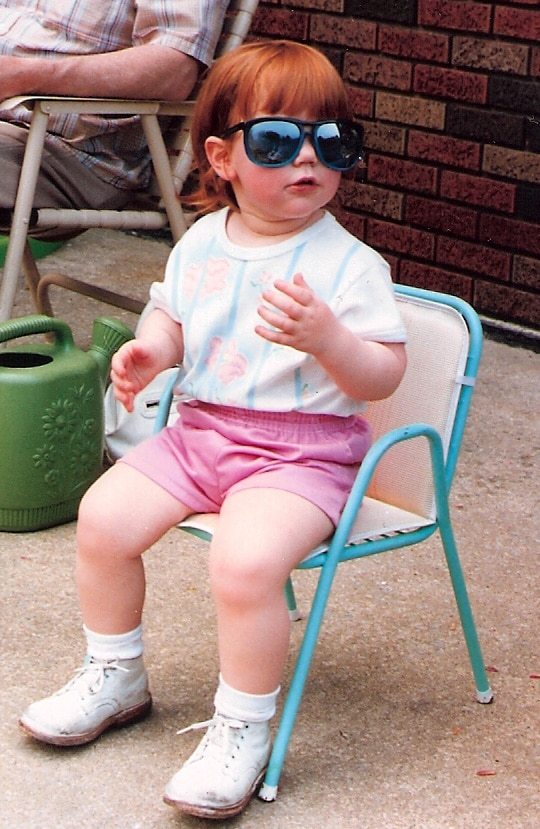
The cruelest word was “orange,” which my best friend in Kindergarten had used to describe my hair. The time was story hour, and our teacher was reading aloud one of many stories about young girls with “golden” locks: “Rapunzel,” “Goldilocks,” whatever.
“Do any of you know someone with ‘golden’ hair?” The teacher finally asked.
I raised my hand.
“My hair is kind of golden,” I said.
My so-called friend challenged my statement, while the other kids just stared. Alright, I guess my hair wasn’t golden. In my defense, however, my hair also wasn’t the color that everyone else called it: “red.” Not the color of firetrucks or blood or Valentine’s Day. I definitely didn’t resemble the mascot from the fast-food chain named after its founder’s daughter.
Maybe my best friend was right about “orange” being the most appropriate adjective. But it’s the color of October, the last month of the year before the weather in New Jersey goes to shit. Broken orange pumpkins destroyed by vandals signified anger over summer’s undeniable death. Orange tries to be natural, but it’s not. The closest thing to orange that I can stand is Orangina, the sparkling citrus beverage, but even that is more “yellow.” Language is so futile.
Growing up, my hair ignited passionate, unsolicited responses from other people. As a result, I had to bear the burden of that energy for years to come. Nearly 30 years after one incident, my grandmother still recounts the story every chance she gets.
“When you were a baby, I was pushing you in your stroller, and a stranger mumbled to himself when he saw you, ‘Stupid people. Who dyes a baby’s hair?’”
I inspired denial. I was unbelievable.
Even worse, I could never hide. In elementary school, I might as well have sported a scarlet letter on my head, “scarlet” being more specific than “red,” but still not at all accurate. In classes and at summer camps, especially with substitute teachers or absent-minded adults who couldn’t be bothered to learn anyone’s names, I would get, “Hey you, yes, you with the red hair.” I’d always be the one causing trouble. I was too easy to identify.
My hair was like religion or politics; everyone had an opinion about it. Unlike religion or politics, though, my hair as a subject was never off limits. Of course, I couldn’t get a haircut without someone at the salon cooing.
 Laryssa Wirstiuk lives in New Jersey with her mini dachshund Charlotte Moo. Laryssa’s collection of short stories The Prescribed Burn won Honorable Mention in the 21st Annual Writer’s Digest Self-Published Book Awards. Her poetry, fiction, and creative nonfiction have been published in Gargoyle Magazine, Word Riot, Barely South Review, and Up the Staircase Quarterly. http://www.laryssawirstiuk.com
 -
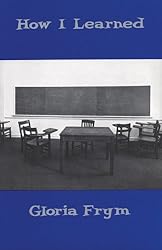
CSI SUV – by Gloria Frym
I was taking a bath when the idea first occurred to me—the phone call which deprived me, forever I believe, of the good opinion of several friends. I have heard it said by others that they laughed so hard they wanted to do it themselves. Since I am not in possession of a great amount of free inventive powers, I always felt the need of some firm ground in the form of idea in my work. The same thing happened with this.
At the basis of it lay a story I had been greatly struck by just as three pit bulls in the dog park happened to rush by me, each yelping at the same pitch. In that remarkable moment I could watch the embodiment of a principle that had scarcely come to life but was just beginning to stir at the time, the principle which later received the name of ***.
Though very powerful, the impression this incident left on me was still rather vague. At first, I could not quite make out what the pits were after except one another.
I kept returning to the park to observe and listen to everything around me as though wishing to check the truth of my own impressions. I was worried by the following fact: not in one work of literature did I ever find as much as a hint at what I seemed to see everywhere. At the dog park, there was a woman who was endowed with an impressive nose for everything—namely, the ideas of our time. I told her what I was thinking of and what interested me so much and was astonished to hear the following remark:
Did you get this from something you saw in the movies? I said nothing.
These words produced such an effect on me that for several days I tried not to think of the idea I had in mind. However, at some point, it matured in my head. In order to sort the curds from the whey I accidentally returned a call from a dear friend. What was I after? An embodiment of the idea.
I pressed Send and when I did not hear her voice, I put the phone aside. Then I turned on the television. Nothing but crime shows on four of the few free channels left. I stretched out from a long day; my dear dog leapt onto the couch to sit beside me in order to be stroked. I was not entirely certain that this creature loved me for who I am or simply loved to be stroked and fed. Is that love? I wondered, further enlarging the sub-idea that was involved in this account. Also, my dog is not particularly affectionate and does not always run with others. Nor does she lick my face unless I should have some leftover meal or the scent of it besmirching my cheeks.
Sirens blared from the flat screen speakers, alerting my bitch’s ears, not to mention my own, and I summarily mistook the sound for 1)the emergency alert system at last in action; 2)medical aid rushing to the scene of a neighbor’s heart attack. The story on TV involved a dead body, a sharp-tongued detective, and a pert sarcastic set of female coroners who compete for excellence in their work as well as the attention of the same man.
She’s toast, the detective says, poking a campfire stick at the victim’s elbow.
She was burned like a marshmallow.
Ok, says one of the coroners, let’s do a work up. You never know the time of death with these sorts of SUVs.
No, you don’t, says the other coroner, removing her 5-inch heels to dump a pebble that had inadvertently crept its way into her arch.
What are you doing? screams the first pert coroner in concert with the detective. You’re occupying the crime scene with your crap.
What are you calling crap? And who is you? Who am I? Why?
A long silence ensued while the medics hoisted the charred body onto a stretcher.
Crispy, ya think? said one of the medics.
Lucky her lips are still intact, said the other.
Just as this pronouncement was made by the television medic, fire trucks pulled up to my house. I certainly had not asked for them. My landline phone rang. It was her, dear friend. Are you there? she yelled over crackling static. Am I where? I said. She seemed to not hear me.
After that it was all a blur. The television medic, the pert coroners, the sirens, the phone calls, the knocks on the door, the boyfriend, the girlfriends, the clerk in the mini-mart with whom I had exchanged ideas about capitalism. All rotating before me like a spinning globe. We heard what the police said, we feared, we rushed over because … .we love you, each said in their own voice, except all the voices became a chorus and the chorus stood by my couch and my dog barked a bark I had never heard before.
How utterly wonderful! I love you too, I said in the ensuing group hug.
Except that instantly the pedestal on which I stood among these dears had been destroyed chiefly by the chief medic combing through my home and discovering my cell phone, which was still blithely speaking to my friend who was standing right in front of me, not hearing it anymore, half-crazed at the thought that someone had put me on a spit and roasted all but my face.
Would they understand or forgive me? Not me, but my idea. The excuse of being an unloved child no longer held any caché among the best of them who had, well, let’s leave it at that. That it might have been an accident lingered in the minds of some of those present, except the boyfriend of my girlfriend who did not believe in accidents. They did not, have never got quite the right idea of what took place in the mind of a person, or of what exactly her joys and sorrows, her aims, successes and failures are. They do not, for instance, even suspect the pleasure that consists of castigating one’s self and one’s faults in the actions one commits. Now they seem quite sure that this was a little prank, even if the reality of life has been correctly and powerfully reproduced, even if this truth does not coincide with my own sympathies. In the words of Goethe, “if these are roses, they will bloom.”
Gloria Frym was born in Brooklyn. Her new collection of prose, THE TRUE PATRIOT, is just out from Spuyten Duyvil. Her recent books of poetry are The Stage Stop Motel and MIND OVER MATTER (BlazeVOX books, 2011). She is also the author of two short story collections—DISTANCE NO OBJECT (City Lights Publishers, 1999) and HOW I LEARNED (Coffee House Press, 1992). She teaches at California College of the Arts in the San Francisco Bay Area.
Photo courtesy of Will Langenberg. Visit the artist at willlangenberg.com.

-

The Snorer – Flash Fiction by Sophie Nunberg
Flash Fiction by Sophie Nunberg
He was insecure about the things he could not really control: his male pattern baldness, the red hair that grew only on his little toe, and his snoring.
He loved his wife, very much, and he hated how his droning nighttime noises kept her from rest and fantasy. She had tried waxy earplugs or playing their record player at night but the former was easily penetrated by his incessant noises and the latter kept their children awake.
His noises filled the room, ricocheting off of her vanity and his small bookshelf, pillaging the sleep that rested in her overly sensitive ears. Most mornings, when he finally awoke and saw the skin under her eyes irritated, swollen, his neck flushed red. He was always exceedingly apologetic, often bringing home flowers or small gifts. But it was difficult to compensate for the something he took from her each night.
They saw doctors, who took samples, weighed him and then examined his nose and lungs but never asked about anything other than allergies. Her next-door neighbor had told her, casserole cocked on her hip, about nasal strips that her husband has purchased during a business trip to Japan. His friends were no help. Hers gave diet recommendations over a card game or the pews of their church.
And though she loved him, too, very much, she had never known the depths of her love for uninterrupted rest, for sleep without caveats. Even when he slept on the couch, his snores vibrated in the floorboards, rattling her awake. For their seventh anniversary, he carpeted the entire house. But his noises scraped across the loops of soft fabric, always finding their way back to her.
Doctors gave her baby-blue chalky pills whose middles had been hollowed and whose results were hallowed. She slept but too heavily, too close to death.
She gave birth a couple of times and each time, for a while, things got better. She told him that lack of sleep was not overbearing when her deprivation had purpose.
But the purpose waned and their children grew and she could not bear the unrelenting reliability of his disturbances. She could not bear the solitude of night, their bedroom too dark for her to read, the world too abandoned, her company only his violent susurration. The world’s weight pressing down upon her but she could not push back.
When she left, she told him it was for another man, not a new bedroom, new mattress and delightfully quiet sleep.
Sophie Nunberg graduated from the University of Chicago in 2012. She lives in San Francisco and is the Communications & Content Manager for the anti-trafficking division of the Alameda District Attorney’s office. She previously interned for McSweeney’s. In her free time she manages and edits a music blog that currently has over 350,000 followers.
Image, Solar Eclipse III, courtesy of Superfamous.
-
Recovery
A Memoir by Jason A. Ney
This is a story of a VHS tape.
It’s not a story—not primarily, at least—about how, because I attended the same tiny Christian school from kindergarten through twelfth grade, I had limited options for making friends, but how by my junior year, five of us had found each other and settled into a mix of friendship and the occasional on-again, off-again romantic pairing, spending almost every weekend at one of our houses: watching movies at Christina’s, swimming at Candace’s, hanging out at Dan’s, sitting around a bonfire and falling asleep on the trampoline at Jon’s. Forming a bond we all thought would last forever.
It’s not about how, after high school, we scattered to different colleges in different parts of the country and then settled into our adult lives, or about how we all, to various degrees, still keep in contact with each other—with one exception.
But this is not a story about Christina. It’s not about how after she went to college, she left the faith in which we’d all been raised. It’s not about her slow but steady slide away from every one of us. It’s not about how she got pregnant out of wedlock by someone none of us knew and then bailed out of being one of Candace’s bridesmaids by cutting off all communication with her weeks before the wedding. It’s not about how she willed herself off the grid, deleting our voice mails, ignoring our e-mails, acting as if all those years, the thousands upon thousands of hours we spent together, were nothing more than a chapter of a book she wanted to tear from its spine and set ablaze.
It is, however, about why, four days after Christmas, I’m fidgeting in a car outside her parents’ house in the dark, ratcheting up the nerve to ring their doorbell and worrying about how this unannounced visit—my first contact with any member of her family in over a decade—will be received.
– – –
I grew up in the analog age of cassettes, VCRs, and theatres that projected 35mm film. By the time I hit my teens, our family’s home movies—recorded by a video camera so big, whoever used it had to mount it on either a shoulder or a tripod—took up two entire drawers of our entertainment center. Since the digital era of video-capturing cell phones, Facebook, Twitter, Instagram and selfies was still years away, I took all my pictures with a Canon point-and-shoot loaded with a roll of film that, once finished, I would give to my dad. He would take it to the one-hour photo lab in Boscov’s department store, and after the lab developed it, he would pick up my photos—24 or 36, depending on the size of the roll—and bring them back to me in a glossy paper envelope. I’d shuffle through them, keeping the pictures that had turned out well and throwing out the bad ones, the out-of-focus blobs I’d shot at the wrong F-stop or speed.
When capturing a moment on film or on tape, I budgeted my resources. Each roll of film cost money, and once I shot it, it was done—no “erase and retry” button, no ability to take dozens of the same moment and leisurely shuffle through them later to pick out the best version. Once a VHS tape was filled with two hours of footage, I had two options—keep it or tape over it. If I lost a roll of film, making duplicate prints became practically impossible. So compared to today, when a single smartphone can hold more HD video than the fifteen years of grainy footage in our entertainment center drawers, my rolls of film and VHS tapes seem dangerously ephemeral, their inherent frailty compounded by a rapid onslaught of technological advances that have made accessing their content—the touchstones of my adolescence—increasingly difficult.
These technological archaisms have forced me here. They are why I’m sitting in this driveway, debating whether or not to just go home and give up the search for a tape that might no longer even exist.
 Jason A. Ney holds a Ph.D. in English from the University of Denver. His work has also appeared in Noir City and Little Did She Know. He is currently writing a memoir about growing up in Christian fundamentalism.
 -

The Paper City
Flash Fiction by Rebecca Harrison
Our city was paper. It was warm. When the winds came, we heard the cathedrals tear. We saw the towers ripping. We tried to hold our walls to the ground, but the winds blew the city into pieces and carried them away. Some of the scraps fell at my feet and I put them in my pockets. When the winds had gone, I counted them. I kept them safe.
We followed the winds. We looked for pieces of our homes in the skies. I tried to remember the shapes of the city. I drew the towers and cathedrals on the paper scraps, so that I would know how to put the city back together.
We stopped searching. We live among brick and stone. I’ve watched the others forget, but I’ve kept the paper scraps. I listen for winds. I gather paper. I don’t know if the pieces are from my home.
Rebecca Harrison sneezes like Donald Duck and can be summoned by a cake signal in the sky. Her best friend is a dog who can count. Her stories have been published in Remarkable Doorways Magazine, The Fable Online, Maudlin House, 99 Pine Street, Rose Red Review, Axolotl Magazine, and elsewhere.
Image courtesy of LesEnfantsParis
-
Playing the Game
a short story by John Timm
The actuarial office is exactly 6.1 miles from the house via the 405 Freeway. When the 405 is backed up (it often is), the distance is 7.2 miles on surface streets. Travel time using either option is difficult to calculate with the same exactitude, given such random variables as traffic accidents and weather. Still, a pattern has developed over the past eighteen years that allows me to predict closely (within 45 seconds) where I will be at any given time once I leave my driveway at precisely 7:30 a.m. There are certain markers along the freeway that permit this: mile posts, billboards. exit ramps. Likewise, on the surface streets there are intersections and traffic signals, a Target, a Ross, a Michel’s, a Von’s, seventeen strip malls, nine fast food restaurants (including one that is presently closed) three car washes, a railroad crossing (which introduces a random variable into the equation) and a fire department (another random variable).
Today at 7:35 a.m., I am stopped at the corner of Sawtelle and Sepulveda, in the left driving lane, second car back from the stop light. At this hour, the light remains red for 25 seconds. It is .8 miles to the freeway entrance ramp. It requires a left turn, and experience has taught me to be prepared, hence my left lane position. The radio is tuned to its customary place on the dial, and I’m listening to Traffic and Weather on the Fives. Regularity and consistency have their comforts.
The car in front of me is familiar. California 6DMW935, a 2007 grey Honda Civic, purchased in Tulsa, Oklahoma. The lone occupant has a husband (or male companion), three children and two dogs. (This assumes that the family decals on the rear window belong to the driver, and if so, have been updated regularly). While I admit I’ve not done an actual calculation on paper, there is a high degree of probability I will follow this same vehicle three out of every eleven travel days.
To my right in the curb lane is the green and white Peerless Laundry Company van (PLC 1706). It’s slightly ahead of its usual daily pace, normally parked until 7:37 a.m. in the Pep Boys lot back at Sepulveda and Franklin.
At Sepulveda and Barman, I see Marvin in the curb lane, awaiting his opportunity (Marv would never call it his “chance”) to move into the left lane in order to make the same left turn as I onto the freeway. We exchange our ritual morning greeting, a quick flourish of the hand (my right, his left) as we focus intently on the road ahead. I am ninety-five percent confident that Marv and I will enter the freeway ramp in tandem at 7:39 a.m., exiting together, at 7:51 a.m. onto San Vicente Boulevard. With only one long block to go (.2 miles), we’ll be parked in our designated places (Row 3, stalls 15 and 16) two minutes thereafter and will enter the building at 7:53 a.m., as duly recorded by the Simplex Time Recorder. If the 7:35 a.m. radio traffic report demands an all-street routing, we will arrive at the lot with at 7:59 a.m. with just one minute to spare. Neither of us has ever arrived late.
Marv has been my co-worker for seventeen of the last eighteen years. We both joined the firm on our birthdays, a coincidence we often discuss, and since his birthday is exactly thirty days after mine, it’s easy to remember.
We take our daily lunch together in the cafeteria, as we have over these seventeen years, and it’s there we play the game, seated at our regular table. Marv and I agree in advance on the same entree in order to finish eating by the appointed starting time, 12:20 p.m.
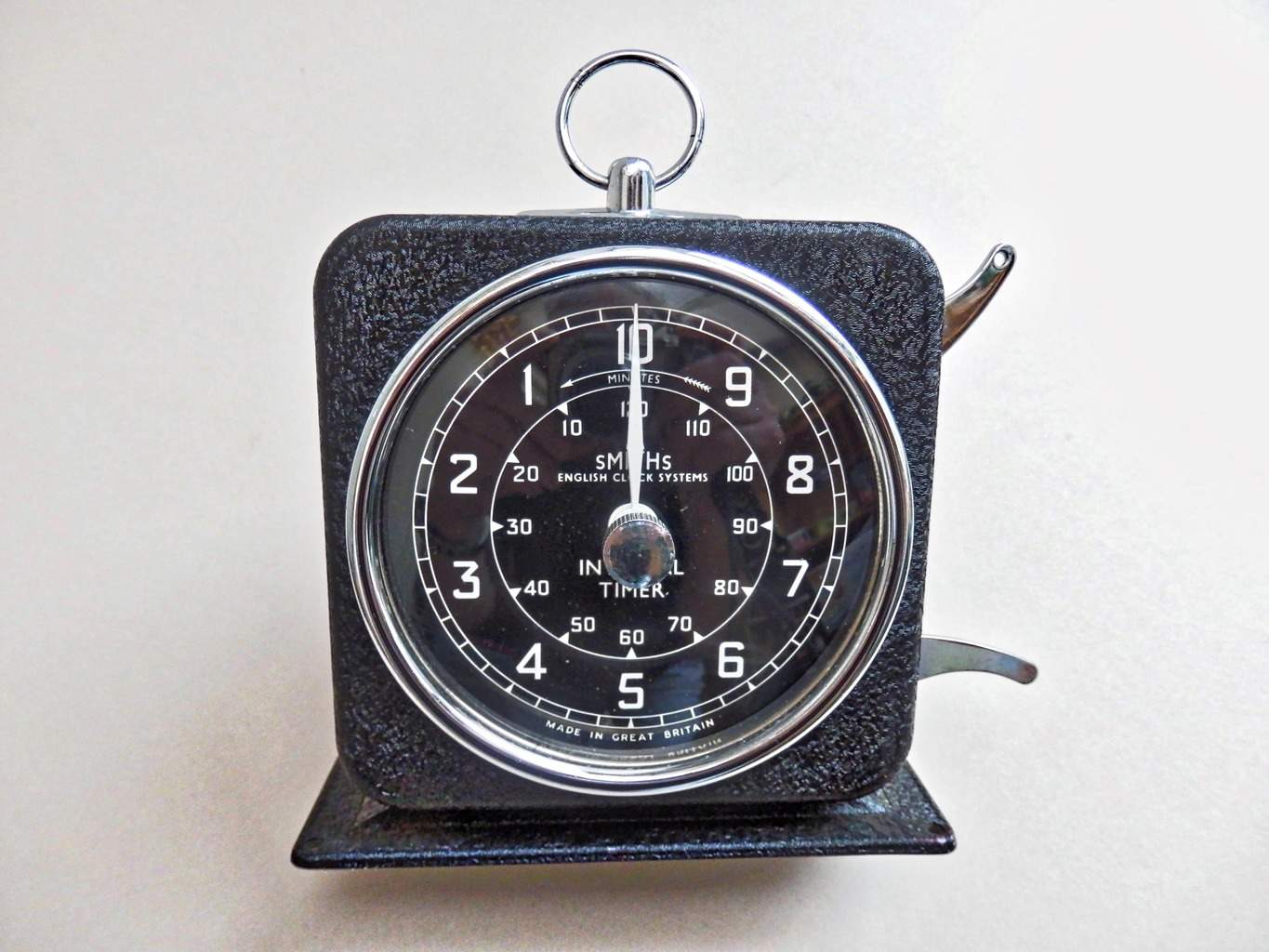
It’s a game of our own invention. We didn’t know what to call it at first, but on Marv’s second anniversary at the office (March 17, 1997) we gave it the name What If? I remember that moment as if it were yesterday. Here’s how we play. On alternate days, one of us is the guessmaster (the title was my idea). As guessmaster, we have to bring with us the name of an occupation, along with a job description, education and skill requirements, tools or devices employed and any licenses, if required. The guesser (I’ll give Marv credit for that one) has three minutes, no more, no less (we employ a digital timer), to come up with the exact name of the position. If he does, the guessmaster must buy lunch the following day. If not, the guesser must buy lunch the following day for the guessmaster. Simple game, simple rules. Over time, Marv and I stand virtually even, the tally swinging back and forth day to day, week to week, month to month. We often joke it’s the law of averages at work more than any special talent on the part ofeither of us.
But the game doesn’t end there. Officially it does, yes, but Marv and I spend the balance of the lunch hour (until 12:59 p.m.) discussing the relative merits and disadvantages of the position of the day.
Continue reading this story at Beacon.
John Timm teaches communications and foreign languages at a university in the Phoenix area. His work has appeared in Bartleby Snopes, Perspective Literary Magazine, Story Shack, 300 Days of Sun, Romance Notes, Luso-Brazilian Review and elsewhere.
Image courtesy of quicksandala, via morguefile.com.