Your cart is currently empty!
Blog
-
Whose Hand?
Flash Fiction by Preston Gralla
He stood behind her, not daring to touch her shoulder. He took a breath. Reached out. Then stopped himself.
“Can I touch you?” he asked.
“Of course you can. Why would you think you need to ask me that?”
He pushed her hair aside, brassy blonde now so many decades after the soft gold of her youth. He touched her shoulder, felt it not just in the present, but through time: bony and taut as a 12-year-old, pillow-soft at 17 cradling their newborn son, full and firm in the voluptuousness of her thirties and forties, slowly losing muscle each decade beyond. Now the flesh beneath his hand was slack.
Whose hand was it? Whose shoulder?
“You need to get ready, Bob. They’ll be here soon. I told you. It’s nearly two o’clock.”
“That’s right,” he said. “I forgot.”
Who was coming? And why?
“No, Bob, she said gently. “Not in that. Dress in something more comfortable. Maybe sweatpants. And those special sneakers we bought you yesterday so you could walk more easily. You need to be dressed comfortably for them. Remember? I told you that before.”
Before? Had she told him that? When was before?
“That’s right. I forgot.”
He slowly dressed himself, pleased he could still do it. Out of his sight she packed his bags. She put them in the bathroom and would get them when the visitors arrived. She walked with him to the living room and they sat on the couch. He smiled uncertainly.
She’s beautiful. Who is she, again?
They waited together for the doorbell to ring.
Preston Gralla’s work has been awarded a Fiction Fellowship from the Massachusetts Cultural Council, and has won the Yudis Prize for fiction from Union College. Under Gralla’s editorship, PC/Computing was a finalist for General Excellence from the National Magazine Awards. He has published more than 40 books of non-fiction, which have been translated into 20 languages. Gralla’s work has been published in the Los Angeles Times, USA Today, the Dallas Morning News, and the Boston Globe Sunday Magazine, among others.
Did you enjoy this story? Please consider subscribing to Fiction Attic to help up us discover and promote more great writing.
-
Architecture of the Eye
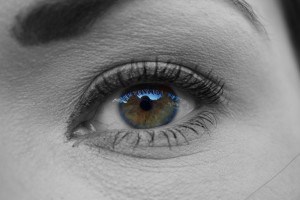
Flash Fiction by Mitchell Grabois
1.
I wrote about nature, about parents and children and the terrible things they do to each other, about unemployment, poverty and humiliation. Now, every poem is a sonnet to sexual dysfunction and an ode to Viagra. There’s a new calm in the world. I’m a master of resignation. I might sound old but I’m not.
2.
Tums rules this dyspeptic universe. In other words: we can’t stomach the world. In other words: human nature is too much to take. Medical marijuana eases nausea. Acid reflux is one more aggravation. The acrobat on his unicycle balances a ten foot stack of dishes. I can make out a slice of pizza and a Ruben sandwich. He pedals backwards. He balances a ball on his nose. With his chin he eases a bottle of Tums from his shirt pocket. He tosses the bottle in the air. The tablets fly out like a spray of stars. All the constellations have stories. They all have something to complain about.
I wasn’t going to tell you, but I am suffering from stomach cancer. In the early days, friends would hear the news and say: I’m sorry, and I’d nearly shout at them: Don’t tell me you’re sorry. Tell Cancer you’re sorry. Because I’m going to kick Cancer’s ass, send him back to the Cancer Ward where he belongs, where he can lay on a bed naked and bleeding, and lick his wounds. That’s what I said in the early days, the Days of Hubris.
3.
God engineered the Universe, a masterwork of physics, chemistry, mathematics and art. His earthly animal designs contain mind-boggling genetics. Consider the architecture of the eye. But He fails at communication. He’s a monster. When His children misbehave, all he can think to do is drown them all, like a future sex offender down at the riverbank with a burlap sack of new kittens.
He is worse than Frankenstein’s monster. His clumsiness knows no bounds. Still, He demands our love and obedience.
4.
I cannot stop looking at your photo in its digital frame that my aunt has set up in her parlor and is lit twenty-four hours a day, like an electric memorial candle. Your overmedicated blue eyes are bright as marbles. Under your blue denim shirt, your skin is energetic, as are your small pointy breasts.
The photo shifts to one of Odetta, the blues singer. She holds up her hand like a milagro. Then that photo dissolves. There you are again, freckles on your nose and under the illuminated marbles that are your eyes, your throat bony, your expression inscrutable.
I awake from a two-second nap. Here you are again, no more scrutable, making your known unknown. It’s time to boil the forceps, you used to say. Your eyes are so blue, they have sucked in the sky and left the world sunk in blackness.
Mitchell Krockmalnik Grabois has had over seven hundred of his poems and fictions appear in literary magazines in the U.S. and abroad. He has been nominated for the Pushcart Prize for work published in 2012, 2013, and 2014. His novel, Two-Headed Dog, based on his work as a clinical psychologist in a state hospital, is available for Kindle and Nook, or as a print edition. He lives in Denver.
Image: Eye by Dave MeierEnjoy all of our stories and support emerging writers by subscribing to Fiction Attic Press.
-

A Clear Shot
Flash Fiction by Andrew O’Kelley
Calvin felt an itch arise near his ankle and willed it away. Steady, purposeful movements, his father had insisted. That didn’t include scratching, toe-taping or picking your nose. The dry leaves ticked in the branches around his tree stand, twirling downward in a gentle wind. A tree can’t reach to scratch, so why should he. The sun had risen now above the ridge, the tall grass bending in the breeze. He studied the trail, the clearing, he’d get nothing today it seemed. But he’d wait.
He heard a soft knocking sound, lower, over the crest of the hill. Moving steadily, then faster, much faster. He scanned the grove of pine that hid the trailhead. A flash of blue. Then into the open field; a woman, running. The wooden bucket swinging wildly on its rope handle, her long dress buffeting, catching here and there on the dry brush. Her dark hair twisting across her face as she glanced back. No sound but the rapid draw of her breath. And then a movement. He almost missed it.
He almost missed it. Women will do that to you. His father had a lot to say about women, but Calvin had hoped to learn on his own. The Taylors, preacher Bob and his wife down the ridge, had two daughters just about grown. Probably one of that clan he guessed, but he was more concerned about the movement. Coming low through the tall grass, stalking. He’d only seen it once before, far off, but there was no mistaking the malevolent crawl of a big mountain cat. It moved like the shadow of a cloud; skimming across the valley, the color changing with the terrain, relentless as the wind. He raised the rifle, steady, purposeful, tracking the muscled blur. He had its speed, but it was keeping low in the grass and gaining on the blue flutter at the edge of his view. Closer. Now too close.
He had a clear shot. But only one. She would be caught, screaming. Screaming across the valley in the cool morning air. The big cat doing as big cats do. Or she could drop quietly in a soft gingham heap, the wide spring sky overhead. Peaceful.
Calvin squeezed the trigger. A steady, purposeful movement.
Andrew O’Kelley uses an old laptop to arrange words in the best order he can manage. Having tried similar feats with photography, wood working and guitar, his results may vary. He does all this in Minnesota. His stories have appeared in Emerge Literary Journal and Eastern Iowa Review.
-
The Electric Discharge Corona
photo courtesy of Tom Eversley @TomEversley Memoir by Anne-Marie Yerks
The things you don’t know about a house when you buy it: The leaks, the bugs, the dark and cold corners and warped walls. A stove that refuses to hit the right temperature, the driveway that isn’t shaped right, the too-loud clank of the mailbox door, a backyard too shady to grow vegetables. But the good things too: The porch with tall windows, the wood around the windows, the deep sills where the cat sleeps. Watching people stroll the sidewalk ? there are the dog-walkers, the power walkers, bottle deposit seekers, partiers, the carless, the insane. They go by as we look on from the enclosed porch of our ninety-four year old house of mysteries, the most compelling of which happened less than five years ago. A woman died here, and we don’t know why.
I don’t know why, but I know when. And I know who she was. Her name was Renee Galinyan, and she was 37 years old on her last day of life. She was in love with the man we bought the house from, and she liked belly dancing, comedy clubs, Renaissance festivals, and dogs. She was overweight, pretty and sparkly, with straight dark-brown hair and optimism shining from her brown eyes. An Armenian church prayed for her the week before she died, and a group of people from a medical lab donated $81.31 to the church in lieu of flowers for her memorial. Other people donated thousands. She had a tattoo on her shoulder ¾ one I didn’t look at closely because I dislike tattoos ¾ and, interestingly, an active account on MySpace. She had a brother not much older or younger than her, handsome in the way she was pretty, and a mother who liked the man she loved. All of this I learned from an Internet session of many hours. I combed search engines and Facebook profiles and photo albums, typing and retyping keywords into different combinations to learn more. Eventually, I had enough information that I could like Renee instead of fear her, but nowhere did I learn why she died. The final days, what were they like? Did she know it was coming, or was she still hoping for recovery?
With this question, the ghost made itself.
The Electric Discharge Corona won first place in the Fiction Attic Creative Nonfiction Contest and will appear in our forthcoming anthology, Modern American Essays. This is only an excerpt.
-

Urban – by Lila Dunlap
Smiling Whalecourtesy of © Carol Trammel | Dreamstime And then Urban plopped down in the seat next to me, filled it up with her rolls and rolls, tight in her tight T-shirt and tight black tights. I couldn’t see much of her then—I only dared to look out the corner of my eye at her rustling figure, and the theater was so dark… a few lights and colors flashed onto the crowd. Some blue sheen slid over her big face, over her cheeks, her wide chin, over her round lips and the head of a drip dripping juicy sucker that went entering, exiting, entering, exiting, glassy red in that strange dimness full of silent people breathing and clapping and eating and all staring.
Out of my left eye, I suddenly glimpsed a thick mahogany whale surface her mouth—and then disappear. Almost instantly, my throat jumped and hardened, closed up, and my hairline got hot hotter and damp. My attentions were now completely absent from the performance. I sweated and sweated and sweated; my eyes darted back and forth from the irrelevant stage to my new neighbor, whence I noticed a squash of a hand with long hard nails clutching a shiny plastic purse, like a dead animal in her lap—its teal waves were spotted with rough studs glittering and rhinestones writhing but Urban paid no mind!—just every once and a while during a squirm, readjusted the bag, but no, never looked down.
By then my throat was very tight indeed, and I was in dire straits to sit still. My legs and arms executed over/under weaving maneuvers but I pretended to not notice and assumed a nonchalant expression. I wanted so badly to appease the restless snakes, to stand up and stretch (I could have run a marathon), or at least stand and touch my toes, but, God, I couldn’t let my new friend notice me.
I closed my eyes (just for a moment; had to remain alert) and took a deep breath. I re-opened, looking straight ahead, limbs still calm, controlled, behaved. I even thought for a moment about the show and was able to catch a whiff of plotline or clever social commentary, but, oh, my thoughts weren’t to be reigned in so easily: had she seen me acting silly? Making such a goddamn dirty fool of myself? No, goodness I must stay still. All at once, one of the performers must have made a joke—she burst a harsh laugh (deep, too!). Wet beads flew; the whale emerged.
-
The Perfect Strawberry – by Tamsin Hopkins
 It’s the late spring when the plants perk up. You clear away the detritus of winter, give them a feed, begin to mulch. They lift up their heads, raise those perfect white and yellow flowers to look at the sky, those tiny heralds of the summer to come. School fetes, a lovers’ picnic, June breakfast on the doorstep, jam and buttered toast.
Soon, speckled green nubs appear, noses that push through pixie hat leaves. They arch over and turn down, swelling, widening at the base. They blush when they get big enough, if they can see the sun. The color enters through the umbilical stem, collects in the cone. That’s when the strawberries start to weigh the plant down, will touch the soil and bruise, soft brown patches spoiling their flesh. That’s when you’d better get some straw down, make a dry pillow to cushion the maturing fruit.
Mice and birds nibble little shallow hollows out, but their spit doesn’t spoil the flavour.
Each berry has its own perfect day, balanced on a fulcrum before tipping over, and it’s too late.
Some people say they don’t taste as good as they used to, that the berries are pampered, bloated, bred to produce a heavy crop. You can get the wild forest strawberries if you think that.
Longer, tighter, sharper colours and definitely sweeter, each berry is a highly charged thrill.
They make good ground cover as well, supressing weeds, doing your work for you. Their slim tendrils supplant anything. A word of warning, however: being essentially wild, unbiddable, they are apt to take over the border. They do not need the gardener.
They do not produce their fruit for you.
Tamsin Hopkins lives and writes in London. Her work has appeared in various anthologies, most recently Fiction Desk Ghost Stories II. Her story collection Sand Tranny and Other River Stories is due out in February of 2016 from Cinnamon Press. She tweets @TamsinHopkins and is working on a poetry collection.
-
Coming of Age at the End of Days by Alice LaPlante
If, like me, you were raised on a steady diet of Rapture sermons, you’ll find much to relate to in Coming of Age at the End of Days, the darkly entertaining novel of faith gone awry by Alice LaPlante, the bestselling author of Circle of Wives.
Sixteen year old Anna, unpopular at school and searching for something to hold on to, falls under the spell of the Goldshmidts. The Goldshmidt parents and their teenaged son, Lars, belong to a cult whose mission is to speed up the coming of the Tribulation–the dark period of hell on earth that fundamentalist Christians believe will follow the second coming of Christ. When she is suddenly orphaned, Anna becomes ever more obsessed with the Tribulation and her role in making it happen.
The cult’s mission centers on the breeding of pure red heifers; Orthodox Judaism holds that Jews must be purified by the ashes of a red heifer in order to rebuild the Third Temple. Evangelical Christians have long been on this bandwagon, as they believe that the rebuilding of the Third Temple is a prerequisite for the coming of Christ. This is great stuff, and it’s not even made up. For a fascinating, in-depth explanation of the red heifer mythology and a profile of the Mississippi preacher named Clyde Lott and the Orthodox Rabbi who are in cahoots to breed cattle to get things rolling, read the excellent PBS Frontline report, Forcing the End: Why Do a Pentecostal Preacher from Mississippi and an Orthodox Rabbi from Jerusalem Believe That a Red Heifer Can Bring Change?
In the background of LaPlante’s novel is a far-away figure who is working to breed the heifers–a character who seems to be based to large extent on Lott. For readers who didn’t grow up with the terrifying Left Behind series (we watched them at church lock-ins) and with the Rapture in the background as a constant threat, LaPlante’s novel may seem delightfully far-fetched. As someone who believed all this stuff hook, line, and sinker until I left high school, it’s fun to read it as an adult, when I am able to see it as a dark fairy tale instead of a terrifying inevitability.
Anna is an interesting character, and I easily found myself rooting for her. The only bit that didn’t quite ring true was Anna’s initial fascination with Lars. He utters a few words to her at a bus stop, and she falls instantly under his spell. I would have liked to see her more gradually sucked in; a deeper exploration of why she fell for Lars’s story, and for and Lars’s outsized view of his own elevated place in the world, would have made for a richer character.
What I find most interesting about the Tribulation is its potential to become a self-fulfilling prophecy. Evangelical American presidents have made monumentally dangerous decisions based upon the belief that it is their duty to move the world in the direction of the Second Coming. As I write this, ISIS too is attempting to bring on the Apocalypse. With three distinctly different groups–evangelical Christians, Islamic extremists, and Orthodox Jews–moving toward three very different versions of the end of days, the Tribulation, which Evangelical Christian envision as hell on earth, may very well come to pass.
In Coming of Age at the End of Days, LaPlante has crafted a darkly entertaining and often enlightening cautionary tale about what happens when youth and faith collide.
Buy the book: Indiebound Amazon
ISBN 9780802121653
Atlantic Monthly Press, August 2015
Michelle Richmond is the New York Times bestselling author of four novels, including Golden State and The Year of Fog, and two award-winning story collections.
-
Writing Truth Number One
Writing Truth Number 1:
The writing life is a long and meandering path.
Here’s the good news: we’re not models. We don’t have a shelf life. We don’t have to do our best work by the age of twenty, and, in fact, for most of us, our best work will come much later than that. Are you 40 and you haven’t yet published a book? 50? 65? No worries.
The path is long because it can be. As long as you are lucid, you can write, and you’ll probably get better as you go.
The path is meandering because you will change, and the publishing world will change, and the things you want to write about will likely change as well.
The path is meandering because you will change, and the publishing world will change, and the things you want to write about will likely change as well. When I began writing, I saw myself as a writer of short stories. I only started writing a novel after hearing from many agents, in numerous rejection letters, to get back to them when I had a novel. The way you write will probably change, too. When I was first starting out, I wrote a lot of very long, beautiful sentences, because that’s what I thought writing was about. With each book, however, the sentences get more pared down. I’ve learned to see the beauty in brevity, the startling power of sparse language.As it turned out, after writing my first novel, I was hooked. So I wrote another one. And another one. And another one after that. And now, I’ve just turned in a revision of yet another one. A couple of my novels sold really well. A couple didn’t sell well at all. There was a period of two years when I published two books in a row, followed by a period of six years when I didn’t publish a book at all, followed by a year in which I published two books in one month. By which I mean to say that the path changes. Sometimes it’s smooth, sometimes it’s bumpy, sometimes you feel lost in the undergrowth, sometimes the vista looks expansive and promising.
What matters is that you keep going.
What matters is that you keep going. Simply that. Don’t stop writing. Well, actually, maybe you’ll stop writing for a few weeks or a few months, because you had a baby or you started a new job or someone in your family needs a caregiver or you’re moving to a new house/new city/new relationship. That’s okay. Really—it is—as long as you start back up again.And that is the first thing I wish I’d known about writing twenty years ago: the path is long and meandering. It’s okay to have days when you don’t write, and it’s okay to have years when you don’t publish, and it’s okay to have books that don’t sell well. Because there will also be days when you do write, and years when you do publish, and, if you’re lucky and extremely persistent, there will even be books that sell well.
Your job is simply to write. Get on the path. Stay on it, no matter where it takes you.
-
Narrative Craft: Point of View
There are two things to consider when choosing the point of view of your novel.
- Who is telling the story?
- From what distance is the story being told?
There are four primary points of view you might choose for your novel:
- First person
- Limited third person
- Omniscient
- Second person
Whatever point of view you choose, one of the biggest mistakes you can make is suddenly shift point of view, thereby interrupting the fictional dream. This is particularly true with first person narration. If your novel is told from the point of view of a particular character, you must be careful not to break character by suddenly revealing something that your point of view character wouldn’t logically know. The moment you slip into someone else’s mind, the gig is up. The reader is left wondering, “What just happened?”
First Person
An “I” speaks to the reader. The character’s voice becomes extremely important. The language of your story must be consistent with the language and tone of a particular character.
Advantage of First Person:
It’s very intimate, resulting in less distance between the speaker and the reader.
It allows the author to delve deeply into the mind of a single character
Disadvantages of First Person:
The narrator (and therefore the reader) does not have access to what is going on inside the minds of the other characters. The narrator can know only what this particular character knows.
In Nabokov’s Lolita, the story is narrated in the first person by Humbert Humbert; as the story unfolds through his perspective, we begin to understand that Humbert is an unreliable narrator—that is, we cannot trust his version of the story. Either by intent or by some flaw of his nature, he fails to tell us the truth. In the case of Lolita, it makes for an interesting and complex story.
Mersault engages the reader’s empathy in The Stranger, despite his seeming coldness, because the first-person narration brings the reader straight into Mersault’s mind. We understand his motivations from his own point of view, and, as a result, actions that might otherwise seem reprehensible begin to make sense to us.
First person peripheral refers to a first-person narrator who is not at the center of the story, but who is commenting instead on what s/he observes about other characters.
Third Person Limited
This perspective is quite close to first person, so close, in fact, that if it is done well the reader may forget that no “I” is present. Although the narrator speaks in third person (he/she/it), the narrator stays close to the mind of a single character.
Advantages & Disadvantages
This perspective has pretty much the same advantages and disadvantages of the first person narrator. It does, however, establish a bit more distance between reader and narrator than does the first person.
Omniscient
An omniscient narrator sees all, hears all, and knows all. There’s really nothing an omniscient narrator doesn’t have access to. This type of narrator can delve into the minds of all of the characters. An omniscient narrator also knows background, and can even comment on what will happen in the future.
An omniscient narrator sees all, hears all, and knows all. There’s really nothing an omniscient narrator doesn’t have access to. This type of narrator can delve into the minds of all of the characters. An omniscient narrator also knows background, and can even comment on what will happen in the future.
Examples of omniscient narration include the novels of Charles Dickens, the stories of Tolstoy and Chekhov, and One Hundred Years of Solitude by Gabriel Garcia Marquez
Advantages
It allows the writer to paint with a broad brush stroke.
Disadvantages
It establishes greater distance between the reader and the characters, so some of the emotional resonance may be either lost or more difficult to achieve.
You must be adept at moving back and forth among the different characters, while making it clear to whom a particular section, paragraph, thought, or event is occurring.
When to Use Omniscient Narration
If your novel has a large cast of characters and you want to be able to show their actions, thoughts, and conversations, the omniscient point of view is your best bet. It’s also good for intergenerational novels.
Second Person
While the second person isn’t terribly common, it bears mentioning.
The “you” to whom the narrator is speaking may be the reader as listener, the narrator’s alter ego (in which “you” refers to the narrator himself, as in Jay McInerney’s Bright Lights, Big City), or a particular third party (as in Jamaica Kincaid’s story “Girl,” where the “you” is the narrator’s daughter).
Disadvantages:
The second person lends itself more to short fiction than to novels. In long form fiction, second person can sound tiresome or even off-putting, and can feel very claustrophobic. It’s also difficult to maintain over a span of hundreds of pages. I recommend using second person only if you feel that it is the only way in which your particular story can be told.
What Point of View Are You Most Comfortable With?
Look back at the fragments you have written. Is there one point of view that runs through all or most of them?
What point of view came most naturally to you as you were writing? Why? This is often the point of view from which the story wants to be told. Think of the novels you enjoy. Are most of them limited third person, first person, omniscient? The kind of novel you are drawn to will offer clues for the kind of novel you want to write.
-
Narrative Craft: Setting
Setting encompasses not only place, but also time.
Where does your story take place?
When does your story happen?
To truly understand the depth of feeling that setting lends to a novel, read those writers whose names have become associated with a particular place. The following writers are such masters at setting that reading their books may be the best education you can get in how to write convincingly about place and time:
- Eudora Welty is Mississippi and the Deep South.
- Ron Rash writes so convincingly and heartbreakingly of Appalachia that his novels and stories have become one with the place. When one thinks of Appalachian literature, one thinks of Ron Rash.
- Dorothy Allison’s Bastard out of Carolina, a memoir of desolate poverty and abuse, forever linked her to Greenville, South Carolina.
- By the time I moved to San Francisco in the late nineties, I felt I knew the place by heart, thanks in part to Armistead Maupin’s Tales of the City.
- Paul Auster, who has published dozens of books, will forever be remembered for some of his earliest novels, The New York Trilogy.
While Ian McEwan writes primarily about England, his chilling novella The Comfort of Strangers derives much of its tension from the setting of Venice—the convoluted streets and hidden alleys are essential to the feeling of disorientation that leads to the protagonist’s undoing.
Nordic writers seem to have a particular gift for creating settings so stark and extreme that the setting itself becomes a major player in the novel. If you want to know how to do setting, read Icelandic crime writer Arnaldur Indridason (Arctic Chill) and prolific Swedish husband and wife team Sjöwall-Wahlöö (The Man on the Balcony, The Laughing Policeman).
On the more literary end of the spectrum, Pers Peterson’s Out Stealing Horses, named by The New York Times Book Review as one of the ten best books of 2007, is set in the sometimes bleak, sometimes breathtakingly beautiful Norwegian countryside.
By the way, Peterson has said, “I do not plan” (sound familiar?) He compares making art to “carving out a sculpture from some material. You have to go with the quality of the material and not force upon it a form that it will not yield to anyway. That will only look awkward.”
For me, setting comes first. I know the setting before I know anything else about the story. Think about the last great book you read. Chances are, you had a strong idea of where you were early in the book.
A novel or story that opens with dialogue often leaves the reader scratching his head. Why? Because dialogue without a clear picture of who is speaking, or a sense of the speaker’s place, is disorienting. Setting grounds a story. When readers enter a book through a strong setting, they have a more complete sensory experience. Our senses drag us into the narrative. When you begin with setting—the dark alleys of Venice at night, the stark, frozen landscape of Norway—the readers’ senses and emotions are instantly engaged.
Remote as Mars
When writing setting, it helps to make the assumption that your audience has never been there. Think of your setting as a place as remote as Mars: you are describing this utterly foreign landscape to someone who has no idea of what the place is, what it looks like, smells like, what the air tastes like.
Speaking of Mars, I highly recommend Ray Bradbury’s Martian Chronicles for further study on setting. Bradbury puts his character on Mars, and describes the place with such utter attention to realistic detail that we feel not only as though we are there, but as though being there, on Mars, isn’t really that strange at all.
Now, think of one of your strongest memories, from any place or time. Write about the setting where this memory takes place.
Write about the setting where this memory takes place.