Your cart is currently empty!
Blog
-
Writers on Writing: Stephen King on Grammar & Work
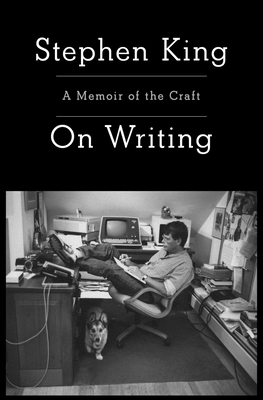 Stephen King recently sat down with Jessica Lahey of The Atlantic Monthly to talk about teaching writing. King’s On Writing: A Memoir of the Craft is one of my favorite books on writing ever written. I love it for its accessibility, its wisdom, its lucidity, and its utter lack of pretension.
Lahey gained a new respect for the book when she used it to unlock her students’ resistance while teaching writing in a residential drug and rehab program for teens.
At one point, Lahey asks King about the relevance of teaching grammar in classrooms. “Why bother to name the parts?” she asks, if someone “either absorbs the principles of one’s native language in conversation and in reading or one does not.” Here is King’s response:
When we name the parts, we take away the mystery and turn writing into a problem that can be solved. I used to tell them that if you could put together a model car or assemble a piece of furniture from directions, you could write a sentence. Reading is the key, though. A kid who grows up hearing “It don’t matter to me” can only learn doesn’t if he/she reads it over and over again.
I like the idea of demystifying writing, of naming the parts in order to make them less lofty and unattainable. The key here, though, is that we learn what we hear, and if we hear the wrong thing from an early age, we will have to retrain ourselves.
Read the entire interview, How Stephen King Teaches Writing.
Or get the book.
-
Revision: first draft vs. final draft
No one writes a perfect story, essay, or novel the first time around. That’s where revision comes in. The first draft contains everything you wanted to say. The final draft contains everything you needed to say—those things that are essential to the story.
The first draft is likely to have more abstractions, while the final draft should be brimming with significant detail.
The final draft should not contain every detail you find interesting or clever, every detail that came to you during your many inspired and challenging hours of writing. It should, instead, contain relevant details that add meaning. Purple flowered couch may be less meaningful, for example, than the broken pot beneath the window. The purple couch is merely a matter of taste, whereas the broken pot indicates that something has happened—a break-in, maybe, or a more general state of disrepair in the lives of the characters.
The final draft may be longer or shorter than the first draft, depending on your inclinations, but it should be more focused.
I usually edit out many thousands of words over the course of my revisions, but some writers create a skeletal first draft and flesh it out later. I tend to write an overblown first draft and pare it down over time. Whether you pare down or expand upon your first draft, in the end, your final draft should be more focused. The associations among the various parts of your narrative will be clearer, and the themes will have been strengthened by the actions and observations of the characters.
The first draft is your baby, the thing you can’t let go of. The final draft is your concession that a book must be interesting, it must be cognizant of an audience, and it must make the reader want to keep turning pages.
By “concession” I do not mean that you have sold your literary soul, only that you have found a way to combine your best vision and your hard-won narrative skills, in order to make a thing of beauty that is both meaningful and entertaining.
Michelle Richmond is the author of four novels and two story collections. Get her weekly writing and publishing tips, or sign up for an online writing class.
-
Writers on Writing – Willa Cather on “Making It an Adventure”
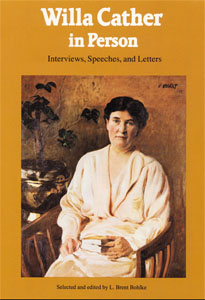 In 1921, Willa Cather told an editor for the magazine Bookman that she only worked for two and a half to three hours each day. “If I made a chore of it, my enthusiasm would die,” she said. “I make it an adventure every day.”
Like so many other writers, Cather preferred working in the morning when she was “fresh” and unencumbered by the day’s concerns. I always prefer working in the morning, too, although my intentions are far better than my practice. For me, the key is getting up early enough to give myself at least an hour before I switch to “mom” mode, which means getting up not a minute later than 5:00. I go to bed most nights believing I will be out of bed by 5:00 the next morning, and then I roll out of bed closer to 6:30 or 7:00, chastising myself and promising to do better tomorrow.
Today was one of those rare days when I happened to live up to my nightly vow. By 5:05 I was at my desk with my coffee, writing. By 6:30, I had written three and a half pages. Those three and a half pages felt more like 20; I felt triumphant, as if I had accomplished a great deal.
And it only took one and a half hours! Cather is on to something here. If you work in short spurts–two hours instead of five–every minute of it is more likely to feel like an adventure. If you can’t afford two hours, try one. If you can’t afford an hour, try thirty minutes. University of Nebraska Press has published a whole book of Cather’s insightful advice on writing, with the utterly unpretentious and spot-on title, Willa Cather on Writing.
Alice Munro, by the way, is a writer who accomplished much of her early success while juggling writing with motherhood. First, she wrote while her youngest child napped, and later, she wrote while her children were at school. Toni Morrison’s time was so limited as a single mother with a nine-to-five job that the time she did manage to find at the typewriter was rich with possibility. “By the time I get to the paper something’s there,” she said. “I can produce.”
No matter when you are able to make it to your writing desk, or your notebook, try to approach it as an adventure, not a chore. Merely having the privilege of an hour to write can be an adventure in itself.
This week, when you sit down to write, attempt to do it with a sense of enthusiasm for the hour that you have, the hour that will never repeat itself, this spectacular, beautiful, unique hour in which anything can happen.
-
How to End a Story
Stories are like relationships: the beginning is always so much fun, and the ending is fraught with turmoil.
When I sit down to start a story, the first sentence just sort of comes to me. The second sentence too. If I’m lucky, the third swiftly follows. The inimitable short story writer Kate Braverman once visited a class I was teaching and told the graduate students that she channels her characters. They speak through her and onto the page, she said, as if she isn’t even there.
I, unfortunately, channel nothing. It is all rough work after sentence three. By the time I’m in the middle of the story, I’m feeling more than a little uncomfortable. Where am I going? Where have I been? Have I gotten lost in the labyrinth? Probably, yes.
Somehow, I find my way through. The characters do things. They meet with hardship and grief, or maybe they just meet someone challenging in a Laundromat. They get into trouble, maybe out of it. Probably not. I find myself feeling that they have done all they can do. Not much more can be said. The action has fallen. We have all had our dénouement (which, by the way, is a French term meaning untying, from Middle French desnouement, from desnouer – to untie – from Old French desnoer, from des- de- + noer meaning to tie, from Latin nodare, from nodus knot.) And here we are in the labyrinth again, attempting to untie the knot, unwind the rope, escape the not-so-fun funhouse.
It’s time to write our way out.
One wants to resolve things, after all.One feels a deeply human need to conclude. After the falling action, there is often something more. Something unexpected. And here we come to what I have been meaning to say all along: a good ending is layered. The reader thinks she has discovered everything she can possibly discover about a story, but then: another image appears, another paragraph hums along, another question begs to be answered. One is left with the feeling of having walked out of the dark theater into the light, only to realize there was something else playing after the credits, some secret part of the film, some final moment. You can hear it through the door, vaguely, but you can’t get back in. You’re not sure what you’ve missed, but you’re certain that you’ve missed something, that the reel kept on playing, the story kept on going, after your departure. You were only an observer, a brief malingerer, there but not there. The lives within the story carry on.

-
The Art of Simplicity – tips for writers from graphic designer Chip Kidd
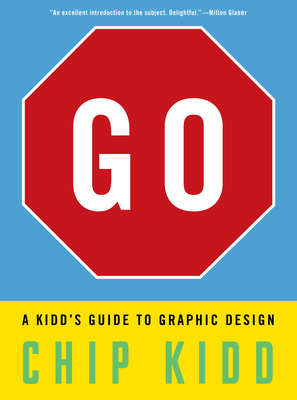
I’ve been reading Chip Kidd’s Go: A Kidd’s Guide to Graphic Design. Although the book was written for a younger audience, it’s a gorgeous, superbly readable crash course in the history and principles of graphic design.
One of the lessons that writers can take to heart is Kidd’s explanation of simplicity vs. complexity. “Simple, direct visual elements will get the attention of your viewer in a different way than complex images that the writer will have to decode,” Kidd writes. Complexity, on the other hand, “has to be very carefully managed or it becomes chaos.”
The best writing strikes a balance between simplicity and complexity. As a writer and as a reader, I am drawn to very direct sentences that are simple to navigate. I’m not talking about sentences that are very short, or sentences in which vocabulary is limited to the lowest common denominator. I’m talking about sentences that are clear and meaningful. The writer’s goal, on a sentence by sentence level, should be clarity. Overblown descriptions, adjective pile-ups, and self-conscious phrasing hinder clarity. Any sentence that screams “look at me!” fails the reader. The writer’s job is to communicate a story. The sentences should be clean enough to communicate that story effectively.
For me, complexity comes into the picture in the construction of the plot and the pattern of the novel. Kidd uses a wonderful spirograph illustration to demonstrate the principle of complexity. When you write a novel, there are many elements at play, including character, theme, plot, setting, and point of view. All of these elements must somehow find their way into an elegant design. The elements intersect throughout the novel with various degrees of symmetry, layered in a way that makes each element visible but none overpowering.
Michelle Richmond is the New York Times bestselling author of four novels and two award-winning story collections. Ger her latest novel, Golden State.
Kidd’s book is a wonderful experience for anyone interested in graphic design or the visual arts. But it is also a powerful reminder that, as writers, we can find inspiration anywhere and everywhere.
-
How to Start a Story
One of the questions I hear frequently from aspiring writers is, “How do I start a story?” Even seasoned writers have days when the story won’t come.
Talking to a reporter for Interview Magazine in 1995, Martin Amis said of novel-writing, “If I come up against a brick wall, I’ll just go and play snooker or something or sleep on it, and my subconscious will fix it for me.”
Good advice, for sure. But if snooker and the subconscious don’t do it for you, here are a few tips to get you going.
- You can begin “in medias res,” or in the middle of the action. When you’re telling a friend a story, you rarely begin with, “I was born in such-and-such hospital in such-and-such city.” Rather, you jump forward to the exciting part, the middle of the action of your own life. “I was standing in front of the old movie theater on Amsterdam Avenue when…”
- You can begin with a character in a strange or tense situation (Gregor Samsa wakes up as a cockroach in “The Metamorphosis”, Mersault is on trial for murder in “The Stranger”).
- You can begin with a line or two that describes the setting, then move on to who is in the setting, and why.
- You can begin with a writing prompt that takes you somewhere totally unexpected.
- You can begin with an inciting action: a man on vacation jumps off a cliff into the cold water below, and as he is jumping we see a large rock jutting up from the surface of the water.
- You can begin with a phrase, an image, a place, a memory, a character who demands to be heard.
- You can begin by withholding information. A great example of an opening paragraph that sets up tension by withholding information is Shirley Jackson’s classic short story, “The Lottery.” It begins with a sentence about the setting, then moves on to describe the townspeople gathering for an event. In the happiness of the opening paragraph, it is clear that something is about to happen; that something turns out to be quite terrible and dramatic.
A story can begin anywhere, but the most important thing about the beginning of a story is that it draw the reader in by introducing both character and conflict.
Want to learn more? Try Story Starters: A Workbook for Writers.
-
A Handful of Glorious Pages
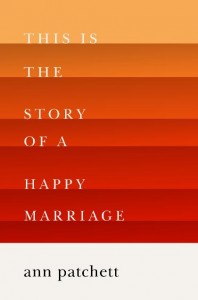 Are you a novelist, a short story writer, or both?
I’m currently reading Ann Patchett’s essay collection, This Is the Story of a Happy Marriage, which chronicles Patchett’s journey to becoming a writer. There are plenty of quotable passages in the book, but one of my favorite has to do with the short story form:
Love the short story for what it is: a handful of glorious pages that take you someplace you never knew you wanted to go.As both a novelist and a short story writer, I can tell you that I love the way stories happen: you write a sentence, and then another sentence, and a few weeks and twenty or so pages later, you have arrived at a totally unexpected destination.How does this differ from writing a novel? With a novel, while I don’t know exactly where I’m going or where and how the novel will end or what tangents it will take, I do usually begin with a general sense of direction. A sense of direction is important, because I know that a novel will require an investment of at least a couple of years. So I begin with a setting, a character, and a problem that needs to be solved or a question that begs to be answered.In my forthcoming novel, Golden State, for example, I began with two questions: 1) What would happen if California tried to secede from the nation in the present day? 2) What if the narrator’s estranged sister suddenly reappeared in her life? The novel was built from these questions, which married the personal with the political in a way that was very enjoyable to write and, I’ll admit, quite challenging to orchestrate.
With a short story, I feel more free, because I know my investment of time will be much shorter. I often don’t know what the problem is when I begin, or even who the major players are. I start instead with language–a series of words that present themselves in my brain and somehow compel me to follow them with other words.
Many novelists write only novels. Some short story writers write only stories. But the vast majority of published fiction writers do –or have done–some combination of both. Fiction writers frequently debut with a story collection, which is followed by a novel. One reason for this pattern, I believe, is that short stories tend to be the preferred form in graduate writing programs, so many writers come out of their MFA program with a story collection in near-publishable shape. After the writer gets a few good reviews and catches an agent’s eye with a story collection, he or she either a) decides that it would be fun to write a novel or b) concedes to the demands of the marketplace, which favors novels over story collections.
As for me, writing novels is my bread and butter, and I never feel quite whole unless I’m working on a book-length project. In fact, I can’t remember a time in the past twelve years when I wasn’t working on a book! But there is sustenance to be had in short stories too, and when I am feeling tired of my novel-in-progress, or antsy, or simply inspired in a different direction, I often begin a short story.
When you are feeling at wits’ end about your novel, I encourage you to set it aside for an hour or day or a week and begin a short story instead. It is possible that the writing of the story will push you back, joyfully, to your novel, and that you will abandon the story in short order for the bigger project. But it is also possible that you will sink blissfully into the freedom of the story, and that you will emerge, days or weeks later, with “a handful of glorious pages.”
As always, happy writing! Please join the conversation on twitter, stop by my facebook page, or read (and submit) good stories at Fiction Attic.
-
Before You Begin: (or How to Get Past Fear & Procrastination and Write Your Novel)
Anyone who tells you that writing a novel is easy has probably never written one. Here are the five most common statements I hear from people who are struggling to write a novel:
- I don’t know where to begin.
- I’ve written a few chapters, but I can’t figure out where to go from here.
- I have a great idea for a novel, but the idea of actually sitting down and writing it feels too daunting.
- I’ve heard you’re supposed to write an outline for your novel, so I did. Now what?
- I’ve actually written a novel before, but I put it away because it isn’t good enough to send out.
No magic formula.
If you find yourself nodding your head to any of these statements, I know what you’re going through. I’ve been there. The truth is, there’s no magic formula for writing a novel. Writing a novel comes with no guarantee of publication, of success, of sales, of an audience. But if you’re reading this, you probably know all that already. And I believe that you’ve already made up your mind about one thing: writing a novel is worth the time and effort, the headaches, the inevitable state of not knowing what will happen to the book into which you’ve poured your heart and soul.You don’t have to know where you’re going.Too often, novels don’t get written because writers think they have to know exactly where the novel is going before they begin. Most of the how-to books on novel writing will tell you to sit down and write an outline first, and start writing your novel later. My approach is the opposite. There actually will come a time to write an outline, but not until you’re deep into the book, with some key chapters and scenes already written.
Trust the writing that comes naturally.
So often, when working with private clients, I’ll praise a particular section of the book for its naturalness, for the fluidity of the writing and the complexity of the characters. Often, the surprised writer will say, “But that was one of the easiest chapters to write!”
Letting go of the inner tension
I think what’s happened in these sections is that the writer has let go of the inner tension of trying to make the passage fit into a predefined idea, and has, instead, written about what mattered to them in the story.
Forget you’re writing a novel.
So, if you’ve been holding back on your novel because it scared you, or because you got stuck, or because you simply didn’t know where to go, my primary advice would be to forget for a moment that you’re writing a novel.
Instead, begin here:
“I want to write this story because…”Follow that up with:
“I care about these characters because…”Then, see where it takes you! You might be surprised.
Ready to get started? Go to DAY 1.