Your cart is currently empty!
Category: Flash Fiction
Flash Fiction from Fiction Attic Press, featuring stories under 1,000 words
-
The Double
by Laura Schadler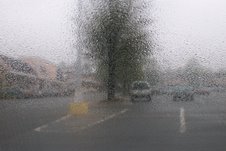 She pulled her girls in a carriage behind her bike. Their plastic high heels and necklaces clicked. The river was in the distance. So was the shopping center. It swelled like a blister. She’d been wild when she was younger. Now, she didn’t look like a suburban mom, her tattoo underneath her tank top, her skinny tan legs. She looked like a boy, like a hard insect. Red lips and unpainted fingernails. She had blonde daughters who wore ballerina outfits and said strange things, ages three and four.
Today, in her peripheral vision she saw a woman who looked just like herself. This woman had the same slouch, the same blurred red of an inky flower on her shoulder. This was trouble, she knew. Not a curse, perhaps, not that obvious. Not worth worrying herself over. She needed to get seltzer, paper clips, tortilla chips, wine. She needed things. But this woman was too close to her, right beside her shoulder. This woman was suggesting she just get off the bike, was whispering for her to rest her bike on the ground and take off. Not to drown herself in the river. Not to leap from the cliffs beyond the shopping center. But to really take off. Take off to where the signs said, 300 miles away.
She wasn’t thirty yet. She made sacrifices for her husband and children. She tried to learn practical things, how to sell houses, how to cook different recipes. She’d married her husband on a hill. He was a nice man, not like the ones who came before him, dark haired, cruel, sizzling. Her husband didn’t yell, but he certainly wasn’t kind, he certainly wasn’t the best one for her. She’d never say it, but she missed the men who tried to pull dirty things in bed, held their keys up with their drugs on the end for her. But that wasn’t all of it. Sometimes hard things like marble or cement looked incredibly soft to her.
She wasn’t thirty yet, but she’d had a baby die inside her. Her daughter’s heart had been on the outside of her body and she’d been born dead. She went out to dinner one night and tried to tell this story, but ended up dropping her wedding ring in her water glass to watch how fast it would sink. Dinner had been beautiful and expensive, the pink skull of a fish. There was a poet and both his wives stuck their heads in the oven. She remembers learning this in high school. If she knew for sure that her husband’s second wife would also stick her head in the oven, she would gladly do it first.
The woman who looked just like her was still by her side, also had her hair, her green eyes, her small breasts. This double seemed to want to give her the answers. She thought of crashing her bike, of which parts of her brain affected speech, memory, and knowing the names of things. Which parts of her brain, when stimulated with electricity, might create this image of her double. What damage had she done to herself. What hope did she have for things without explanation. Harbingers.
Later, in her garden, the woman was there again. This time she knew it meant death. It meant climb to the tops of towers and fling yourself onto the spikes. It meant put on your wedding dress and burn down the house. It meant make dinner, set the table, ask how his day was. It meant drink wine in the shower, the glass steaming up, your fingers cold. It is what it is. Everything is like being married, everything is difficult, shitty, hilarious. Everything makes you catch your breath.
She imagined her dead, baby daughter like an awful butterfly in the garden. Pink, moth-like, dangerous.
Perhaps her alive daughters would forgive her, would grow up to realize that this was no kind of life, would understand why she packed her suitcase and left, would even someday leave themselves. She walked out of the house, got in her car and drove past the shopping center, the river, the green signs that marked the miles and towns of the distance. The woman who looked like her, her double, left her side then, disappeared from her. And she knew that this woman had walked into the gleaming white house that she was leaving behind. Had walked in, closed the door and sat down at the kitchen table. Soon, her husband would be home with her daughters. It would get dark outside and be night.
Photo by Steve Shearer.
-
Run Away
by Jay Boyer
That is not true. Mommy did not call you an asshole.
Mommy does not use that kind of language. Not with her little girl, who Mommy loves with all of her heart.
All right, Mommy might have, in the very distant past, felt so overwhelmed that she called you a shithead. She didn’t mean for you to hear that of course. She was speaking to herself, which Mommies are allowed to do when their little girls look them right in the eye and say the kitty ate Mommy’s chocolate. Did you honestly think Mommy would believe we have a kitty?
I know this is hard for you to understand, but Mommy has a Masters Degree. She wrote her thesis on String Theory and made a groundbreaking case that particles of light change in direct proportion to the mass of the waterline at the edge of a pond. Now Mommy can’t tell you where she just put her glasses. Do you see? This is what this life is doing to me. There is simply not enough of Mommy to go around sometimes. She’s like particles of light reflecting off the water. She hasn’t the height, weight, or mass you are perceiving. She appears to be whole but she isn’t. She feels like the world is the mass of the waterline, and Mommy is coming apart at warp speed before her very eyes.
That is why sometimes Mommy has to go into the bathroom and say her name aloud twenty-five times just to be certain she actually exists.
Now, Mommy is going to take a deep breath. See? Would you like to take a deep breath as well? That’s it, honey. But deeper. Should we try it again? Don’t be frightened. Mommy did not call you an asshole when you ignored what she told you to do.
That would be a sign Mommy’s coming apart. Which she’s not. Which she’s totally not. She would if she could, but she can’t. And you know why? Do you want to know why, honey? Because Mommy is your rock.
-
Abducted
flash fiction by Stephen Graham Jones
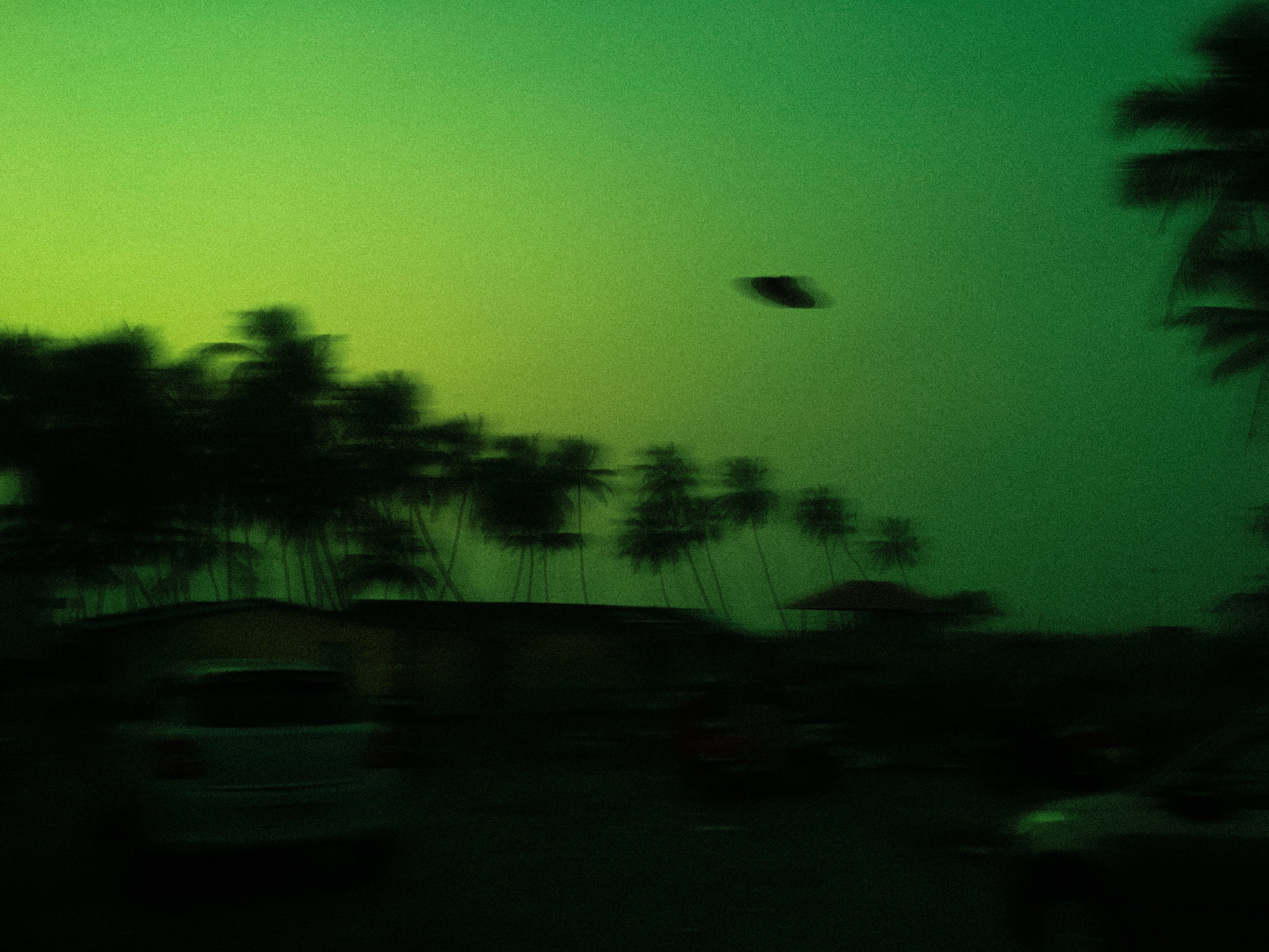
Every time Donald saw a UFO, he got an erection. The problem, of course, was that UFO’s didn’t seem to be quite as common a phenomenon as they’d been in his youth. Dr. Collins smiled politely, in appreciation, and studied the holes in the tops of his loafers.
“So what you need then . . . ” Dr. Collins said, narrowing his eyes to keep up, to record all this for his wife, “what you need is some way of bringing the aliens back, yes?”
Donald didn’t have to look away to answer. There was never any eye contact during the examinations. Dr. Collins had given up on that years ago; it was why he’d had the large window cut into the room – to give his patients trees to study, birds, squirrels, life. Anything but the fourteen thousand dollar chair in the corner, the tile around it splashed with iodine.
“Maybe if they could just do a flyby once a week or something,” Donald said, smiling. “Flash their lights a little for the wife, y’know?”
The wife. Dr. Collins filed that one away too, crossed the floor to the side counter, for the prescription tablet he had to keep locked in the drawer now. The reason for Donald’s visit, according to the chart he’d filled out in the waiting room, was prostate, which he’d spelled prostrate. It meant to throw oneself facedown on the ground in humility.
Without looking up from his tablet, Dr. Collins asked, “Is that all you need, then? Some more, um . . . close encounters?”
“You can arrange them?” Donald said, his voice rising, incredulous, his hands gripping the examination table.
Dr. Collins signed his name with a flourish, letting the s trail out longer than usual – a comet tail, he thought – and shrugged for Donald, said, “You still have to provide the candles, I guess.”
Donald laughed with him, and for a moment they were just two gentlemen from different generations, each raised well enough to know how to discuss delicate subject matter. The way Dr. Collins would tell it to his wife, he knew, would involve some of the things he should have said, about implants, maybe, about how the discs they were both talking about were essentially the same, it was just a matter of scale, of provenance: one came glittering down from the sky, the other across the counter of a pharmacy. But then Donald stepped down, took the prescription Dr. Collins was offering. He looked from it up to Dr. Collins, then out the window again.
“I assure you -” Dr. Collins started, trying not to smile.
Donald didn’t let him finish, interrupted not so much with words but by centering Dr. Collins in his old man eyes, his face still angled slightly away, as if he were embarrassed.
“I think you maybe misunderstand, Doc,” he said, still picking through his words in a way that Dr. Collins could tell there were a lot not being said. “I didn’t get the hard – I didn’t get excited about the UFO’s myself, see. No, no. They never were much but a bother to me, with what they did to the corn and all.”
Now he was handing the prescription back. Dr. Collins looked at it between them like it was from another planet, and from it up to Donald, just as alien now.
“Then . . . what?” he said, not sure if he should be ready to smile or not.
Donald shrugged, rubbed his rough chin with the side of his hand in a way that Dr. Collins couldn’t tell if it was the hand itching or the chin.
“The wife, I mean, y’know?” he said finally, looking outside now, but up, too. Dr Collins looked with him. “Every time they buzzed our house back then, me, I’d go for the barn, to keep the horses from kicking their stall doors out. But the wife, she’d run out after them, see? Then come back – God – come back to the porch an hour or two later, corn silk in her hair, spider web trailing off thesleeves of her dress like a shawl I guess, her chest just rising and . . .”
Dr. Collins studied the sky long after Donald was gone, his new prescription not a prescription at all, but a referral, for his prostate, spelled without the r. That’s what he had really been there for. Dr. Collins didn’t tell his wife about that part of it, though. Instead, the next morning, Saturday, he found himself awake in the house earlier than usual. No coffee in the air, no cars outside. Just dawn, seeping in through the blinds over the kitchen window in beams that, for a moment, seemed to be feeling, scanning.
Dr. Collins – Stan on the weekends – walked through the beams to the front door, and out onto the different world of the porch, the automatic sprinklers flowing up into silvery mushrooms, the whole landscape of the neighborhood suddenly alien, so that, until his wife came gasping up from the street, her morning run complete, he knew he believed.
“Getting too old for this,” his wife said when she could, her hands made into fists around the knees of her sweatpants, her lungs trying to wring all the oxygen they could from Earth’s thin atmosphere, and Dr. Collins shook his head no about that. She wasn’t.
Stephen Graham Jones is the author of The Fast Red Road-A Plainsong, All the Beautiful Sinners, Bleed into Me, The Bird is Gone: A Manifesto, My Heart Is a Chainsaw, and many other books. An Assistant Professor of English at Texas Tech University, Jones is really, really into Elvis.
This story appeared at fictionattic.com in 2005.
-
Landfill
flash fiction by Stephen Ausherman
Delores lived in a split-level ranch home set upon a landfill. She stored peach preserves in her storm cellar, but they didn’t taste right. Her husband, before he died, took good care of her. He built a shed on the property, a place where she could keep all the animals she liked to make out of corncobs and gumdrops, life-sized antelopes and ocelots with cellophane eyes and sugary hides. And he erected a satellite dish that pulled in a variety of shows on art, nature, and troubles in the world she could never have imagined on her own.
It stood out in the yard, an enormous unblinking eye that stared at the heavens and shared its visions on a 15-inch screen. It revealed a multitude of ministries from Florida to California, each in desperate need of prayer, forgiveness, contributions, whatever you can afford. Earth is so crowded, they said, and yet so empty. We need your help to fill the void.
Delores could afford little more than hunger, and so focused on the new forms of worship she learned from the TV. She meditated. She danced in circles with her hands in the air. She took a vow of silence and broke it by speaking in tongues. She tried fasting, only to end up with a vitamin deficiency that nearly blinded her. Light from the screen took on an unbearable glare. Soon even the softest glow seemed to sear her eyes.
She sought refuge in the storm cellar, moving in with the spiders and paint cans and peaches in mason jars. Her eyes remained shut, yet cracks of daylight crept in and spread like crimson webs pulsing in her eyelids. She spent days with her face pressed into her knees, just waiting for the night.
Six months of experimental rehabilitation at St. Luke’s inBirmingham restored her sight and relieved her pain. It also afforded her a detailed knowledge of the hospital, its prayer halls, operating rooms, and most of all, its disposal units and incinerators. She soon amassed an impressive collection of surgical leftovers: exhausted organs and severed limbs. She pickled them in formaldehyde and placed the amber jars on the bookcase in her bedroom to keep her ever mindful of the suffering of others.
As her collection grew, she made room in the shed, setting her gumdrop animals loose in the yard, where they blanched in the sun and decomposed in the rain. The satellite remained fixed upon heaven. The needful people on TV grew insatiable.
She retreated once more to the cellar, this time with her jars of humanity. There, in the darkness, her heart beat out its subterranean percussion, talking drums she swore would wake the world. Through the thundering rhythm, she spoke to the jars, whispered to the ears and bones, hands and hearts. She had all the pieces she needed feel whole again. She told them all, one by one, welcome to the family.
Stephen Ausherman’s first novel, Typical Pigs, was nominated for the Peter Taylor Prize and won the Llumina American Writers Contest. He is also the author of a collection of travel essays, Restless Tribes. View his profile on Psychology Today.
This story was originally published on Fiction Attic Press in 2005.