Your cart is currently empty!
Category: Flash Fiction
Flash Fiction from Fiction Attic Press, featuring stories under 1,000 words
-

Persephone
Flash fiction by Elizabeth Varadan
My mother returned to her parents in L. A. whenever things didn’t go well in her life. To sort things out, she would explain to me. In time, I grew used to these trips and thought of L. A. as the one home that never changed. There were the applesauce turnovers on the day of our welcome, followed, days later, by excited scenes that left my mother in tears, followed by our departure that left my grandmother in tears, until the next welcome home with turnovers.
My grandmother bought an abundance of pomegranates when they were in season, and through successive visits, I developed a taste for their tart sweetness.
The November I was fourteen, I was into Greek myths, particularly the story of Persephone. Carefully peeling away the pomegranates’ russet husks, I couldn’t help thinking about the deal Ceres worked out with the God of the Underworld—six months in each location; almost as bad as my mother’s yo-yo-ing life.
After I peeled off the thin membrane in each section, I’d spill the seeds into a little dish, where they glistened, like the tiny garnets in my grandmother’s earrings. And I wondered: did Ceres welcome her daughter home each time, only to make scenes that would chase her off again? Or did she cry hard enough each time Persephone departed with her husband to make sure she’d return?
And if I ran away from home, as I was considering, would my mother be able to find me? Ceres knew where Persephone was, but in my fantasy, I would bleach my hair, wear high heels, slather on lots of make-up, get a job in some city we hadn’t been, and then I would stay there. If I could sort out my life, maybe my mother could sort out hers.
I saw garnet earrings last week at a flea market. I almost bought them. Instead, I bought a pomegranate from the farmer’s market at the far end of the grounds, past all the junk stalls.
At home, eating the tangy seeds, I thought of Persephone and the weeping Ceres. I thought of my grandmother who never could let go of her children after the loss of her first two sons. I thought of my mother, the rebel daughter, who had caused my grandmother so much grief and then kept spoiling her own life so she had to come home again.
And I thought, too, of myself—my mother’s own wayward daughter whom she thought lost to her for so many years, until the long winter was over.
Elizabeth Varadan’s work has appeared in The Rockford Review, Word Riot, Art Times, Long Story Short, Flash Me Magazine, Epiphany, Melic Review, Whim’s Place, Laughter Loaf, Banyan Review, C-Oasis, and Notes Magazine.
-
The Crush
flash fiction by A.W. Marshall
“Feel it?”
He had his fingers arranged in a circle, pressing against my chest like a little cage.
“Not yet.”
But I felt something. Kevin was my neighbor, and he said he had Telekinetic powers and wanted to touch my heart. Said he touched a girl’s heart from school last week, and she missed three days of class.
“I have to focus,” he said.
He was three years older and just before the bus dropped us off he plopped down beside me. I imagined he asked to touch my heart because he liked me too. I imagined his fingers reaching in, my heart cradled in his hand, my lips parting just as he gave me my first kiss. We decided on Saturday, while my parents were at Safeway.
“Calm down,” he said.
He continued to bear down on my chest, his eyes flared at his hand. He was pressing hard, and I imagined lifting my shirt later that night to see five small purple planets. I would put my fingers on each one and he’d feel it next door.
“Fuck,” he said, and I craned my neck around nervously. Even with my parents miles away, squeezing plums and fondling eggs for cracks, I worried. But the house was still just the house, the words disappeared.
“I can’t do it,” he said. “Kali was easier. Your heart is beating so fast I can’t center my attention on it. Nevermind, okay?”
“No wait,” I said, “I’m just nervous is all.”
I ran to the bathroom, splashed cold water on my face. I told myself, you have to calm your heart or he will not feel it and then what good would your heart beating so much mean anyway?
When I came back, he was sitting on the couch, wiggling his finger through a hole in the knees of his jeans. His blonde bangs hung down, and I could see the small muscles of his back through his Dwarves t-shirt.
“I’m ready.”
“Close your eyes this time,” he ordered.
His five fingers on my chest. My heart started to speed up, and it felt like my lungs suddenly needed more air. Eyes closed, I tried to picture my grandmother in her rocking chair, the most boring thing I could think of.
“Better,” he said.
And then a weird spreading pinch followed by five worms against my chest, wiggling in. His wrist moved to the side to be free of my sternum. One of my ribs ached upwards. Muscles across my chest bruised open. And I gasped as my lungs pushed back and his fingers squirmed around my heart, and now I couldn’t stop it from fluttering. He slowly cupped his hand around, holding it. The muscles of my heart beat against the muscles his hand, and I parted my lips, hoping.
Then he squeezed.
“Did you tell your parents I was coming over?”
I didn’t.
“Did you?”
“No,” I said. My heart flitted, but it could not escape. His fingers held it firm. I opened my eyes and he was staring into them, an indiscernible look across his face.
“Imagine if I can do this now, what I can do later.”
I could not imagine anything. Then this boy pulled me toward him, mashing my heart against my rib cage, my whole body following. I thought about the girl missing three days of school. My eyelashes quivered under his breath. He smelled like sweat and Froot Loops. His lips pressed against mine, harder than I ever imagined.
END
Fiction Attic Press is always looking for thought-provoking flash fiction.
-
Chibas Speaks
by Steve AlmondAugust, 1951. In Havana, in a studio the width of his arms, Chibas speaks. His voice swells with heroism. Clustered around wooden radios the shape of cathedral doors, listeners reach to adjust the volume.
Chibas says: Batista is a thug, the university has become a refuge for murderers, Cuba, with her beautiful girdle of mountains, her sea bass and garlic, Cuba starves. In her elegant buildings, American gangsters feast on steaks and shoot disease into our women. Roulette wheels spin and the Arawak die. Father Varela, with his elegant proofs, dies. Jose Marti dies. His victorious love and turbulent appetites, dead; moral progress fails, gives way to tailfins and murder. All that remains of history is the gesture.
Chibas speaks and thinks not of the words (they are always the same) but of his father. When Chibas was a boy, his father built him a toy bridge from slats of wood. Chibas smoothed his fingers along the wood for hours, pretended to march off to work with his father, a little man in a little coat and hat.
Where is that bridge today? He wonders this even as he speaks to the poor and the hopeful of Cuba, as he laments what the island has become. There is no goodness left in this place. His father told him this.
The time has come to face the truth, Chribas says, to wake ourselves from centuries of slumber.
But something is happening. Something is happening to Chibas as he speaks; a slice of mango is falling into his mouth; like a second tongue, only sweeter. The fingers of his first lover are grazing his stomach, the glorious stink of the melacon fills the hazy studio, his father’s lemony cologne, applied, with a gentle dab of the thumb, to the back of his neck. These are the minutes he wishes were a thousand years.
He has to remind himself: this is really happening. This speech, these words, the plan behind them. He has to remind himself: duty.
The address is over. In his trouser pocket, the pistol is dense and cold. What is death but the end of a bridge that connects us to childhood? What is goodness but a kind of awful bravery? Chibas thinks: Forgive me father. He alone knows what comes next.
Chibas Speaks, by Steve Almond, appeared in Issue 10 of Fiction Attic: The Journal of Elegant Wit
Steve Almond is the author of the story collections My Life in Heavy Metal and God Bless America, as well as Candy Freak and a bunch of other books. His fiction has appeared in Tin House, Playboy, Other Voices, The Mid-American Review, Nerve, and many other magazines. “Chibas Speaks” originally appeared in Story Quarterly. Steve lives in Somerville, Massachusetts and teaches at Boston College.
Manhattan-based artist Matt Cervenka studied at the School of Visual Arts and S.U.N.Y. at Farmingdale. Extensive travels in the Southwest, Mexico and Europe have provided inspiration, and Matt has incorporated their cultures in his work. Presently, Matt enjoys working with gouache, pen and ink, acrylic, and mixed media.Austrian Television’s Tema recently aired an interview with Matt, featuring his animal portraits. See Matt’s New York Cityscapes at Portable Muse.
Subscribe to get new flash fictions in twice a month in your inbox.
Submit your flash fiction or personal essays to Fiction Attic.
-
Telegraphing the Fox
In a drawerful of correspondence, I found a slew of cards addressed to my dour, sour father dated a few years previous, from one Gloria Greenberg on East 88th Street. Each message contained some sort of thank you – for flowers, a night at the theater, the card he’d sent her, and for being such a wonderfully kind and generous man on her birthday. What were his gifts, I wondered. Dinner out? Jewels? Art? From the handwriting, I deduced that Mrs. Greenberg–she used the title on her return address–was close to his age; each letter was carefully formed, slanting just so, her numerals curvaceous. Clearly, she’d studied penmanship, a skill dropped from the latter twentieth century curriculum. Naturally, I was glad to discover that this romance–how many were there?—had not been with some young gold-digger, though she might have been an old one.
This is an excerpt from a flash fiction by Annie Dawid.
Read this story in its entirety when you subscribe to Fiction Attic Press.
-
On the Nightwalk
by Mark Sheerin
He was on the road when they picked him up and it was night. There he was, large as life, in outsize Day-Glo, a coat like they used working on the motorways, except he worked for a fashion magazine.
The coat was bought second-hand.
“Can I ask you where you’re going?”
The police had the car window down. From all the vehicular markings and the lights he could tell this was a serious business..
“To the station,” he said.
He did not say he was leaving the country. That was surely understood.
“At this time?”
There was no mirth in the car, no flexibility, no grounds for argument.
“I was heading down there on the off-chance.”
“You’ve missed the last train now.”
The police said so with a kind of omniscient clarity.
“There’s always tomorrow’s first train.”
Said with a shrug, but they did not take kindly to him waiting for dawn, even though there had been a lot of that recently, a lot of nights spent vigilant against an enemy. It got so he was happy only on the move, remaining one step ahead of police, doctors, parents, special agents, white slave traders. Which is where this coat might really have helped, a high-visibility anti-kidnap strategy, in theory if not in fact.
“Where d’you live?”
He was not in the habit of fighting or lying. His strain of delinquency wasn’t up to it.
“You’d better get in, son.”
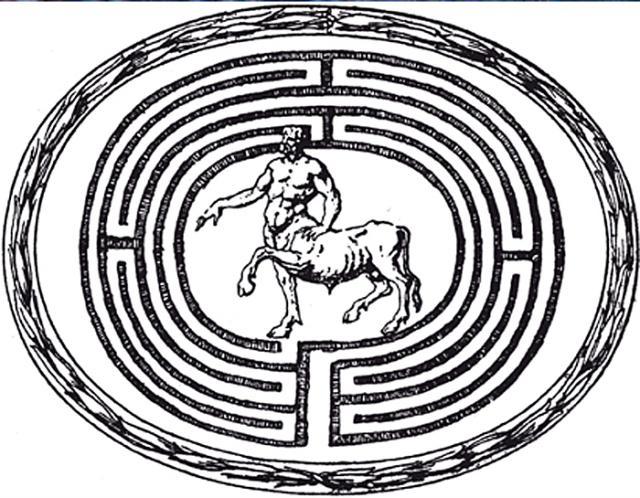
Son, he thought, Sonny Jim, Sunbeam. So let the re-oedipalisation process begin, he thought, then opened the passenger door like a lamb. The rear seat smelled of leather and he thought once again of the minotaur and his labyrinth and the darkness with which he was locked in combat. The radio crackled as the police upfront called in their report.
“Caucasian male. Aged around 20”
By god though, he was alive. While parents and peers slept he was under arrest, the subject of a radio report.
“Inappropriately dressed,” came the voice.
And he could never understand that final comment. There he was, on his way to Europe, where the jacket would make him famous. Tell me officer, he wanted to say, is that really such a crime?
Mark Sheerin is a journalist from Brighton, UK. He covers art for, among others, Culture24, Hyperallergic and his own blog criticismism. His fiction has appeared in Litro, Metazen and Pages Of magazine. He also runs a spoken word event in local gallery CAC.
-
Staking Claim. flash fiction by Vanessa Hua
from the archives (originally published in Issue 5, June 2012)

image courtesy of Jessica Gale Years before my mother died, my sister was prepared.
Ilana arrived home one weekend, clutching two packs of Post-Its. “It’s time,” she said, handing me a yellow stack. She unpeeled a bright orange sticky note, and slapped it onto a pint-sized terracotta warrior that guarded the living room, a gift from our great-grandmother.
The industrious chemists at 3M invented the sticky notes to free people from the tyranny of paper clips and staples. The jaunty curl of paper wound up on all kinds of never-before-possible surfaces: in a choir book to mark various hymns, on an eyes-only memo from your department head, and on the kitchen counter, as a Dear John note. Or on your inheritance.
“Let’s not worry when Mom goes,” she said. “You hear about those families fighting over nothing at funerals, because there’s no will. It’s easier to divide it up now, when we’re not so emotional.”
She slapped another Post-It onto a wooden radio, the big heavy kind they made copies of at Restoration Hardware. I looked over at my mother, who curled up on the couch with a mug of green tea. The vulturing of her property did not perturb her.
“It’s okay with me,” she said. “Whatever you kids want to do.”
Her attitude was typical. My father was killed when I was a baby. A pizza delivery truck in on-coming traffic hit a deer, flinging the buck into the windshield of my father’s Buick. After that, my mother saw no use in getting in the way of what was supposed to happen. Fate interrupted the mundane.
I flicked the Post-Its like a cartoon flip-book under my thumb. It would be different if Mom were hooked up to life support, or fading away in a rest home. But she’d had us young, sometimes mistaken for a big sister when she dropped Ilana and I off at elementary school.
Now she ran her own country antiques store in Sutter Creek. She wore sleeveless tops that showed off her strong and tanned arms. When I helped her with pick-up and deliveries, she had no problems holding up her end of the oak dressers and teak armoires.
Five years earlier, I had moved from New York back to the foothills of the Sierra Nevada to finish my dissertation on Civil War folk songs. I had never been comfortable in the city, with its endless squirming crowds and heaps of garbage left for pick-up each night.
Despite the change in habitat, I had trouble writing. The chunk of fool’s gold, the poster of constellations that glowed in the dark, and the wrinkled 1987 Sports Illustrated swimsuit issue in my bedroom placed me in childhood, the wrong century.
“Go ahead,” I said. Ilana, three years older, had always used her head start over her little brother to her advantage. She laid down the rules, and I would hold back, trying to figure out how to catch up.She plopped Post-Its on more than she’d be able to fit in her tiny condo, and even on items that clashed with her sleek decor. She didn’t have a husband, or a house, or kids, but was already staking claim to the accessories of her future life.
Ilana was a San Francisco attorney who specialized in lawsuits to prevent what could happen. She came home rare enough to make her visits a production–ones that justified my mother cooking my sister’s favorite biscuits, each time–but often enough to avoid guilt.
Soon, the living room looked as if a flock of monarch butterflies had touched down, the orange notes fluttering at times in the hot breeze. I held off. There wasn’t much I wanted, wasn’t much I could see in my future. But that afternoon, I hid what mattered in the crawl space of the garage, under a crate of encyclopedias and a pile of wooden tennis racquets.
The next morning, the camera I’d stashed was sitting in the coffee table, tagged with an orange Post-It. I cradled the Rollieflex in my right hand. I’d found my grandfather’s camera when I was a teenager.
Its twin lenses looked liked an odd pair of spectacles mounted on the rectangular case, which rested on the small end. The camera had a large square viewfinder on top. People couldn’t tell when you were taking a picture.
She’s done it again, I thought. Taken what I wanted, without even knowing, without spite. Ilana had the present and the future all wrapped up. I only had the past.
“I was looking for my old cheerleading uniform in the garage, and found this,” Ilana said, sweeping the Rollie away from me.
“Don’t you think it will make a cool decoration, for when I get a guest bedroom? I wonder if it works.”
“It does,” I said, tugging it away.
“You’ll have to show me how. Maybe I’ll take it now, instead of waiting,” she trailed off, even she unable to say “when Mom dies.”
I considered Solomon’s choice, and let the camera slip out of my fingers.
The lenses shattered against the tile floor, and a large crack shot through the case, over-exposing the photos I’d taken of bleary newlyweds stumbling out of a B&B, of my unsuspecting mother, beautiful, at the shop counter, of a gold mine tower silhouetted at sunset.
We stared down at the smashed pieces.
“Ouch,” Ilana said. Then again, I just got a digital camera, so maybe I didn’t need more junk to clutter up my place.
I picked up the Rollie and looked through the viewfinder: nothing. Nothing plus me.
Vanessa Hua is an award-winning journalist and the author of the novels Forbidden City and A River of Stars. Her fiction has appeared in the Atlantic Monthly, ZYZZVA, Calyx, American Literary Review, River Styx, and elsewhere. She received first place in the 2008 Atlantic Monthly student fiction contest. She received scholarships from the Bread Loaf Writers’ Conference. Visit her at vanessahua.com.
Subscribe to get new flash fictions in twice a month in your inbox.
Submit your flash fiction or personal essays to Fiction Attic.
-
Over There
by Steven Gillis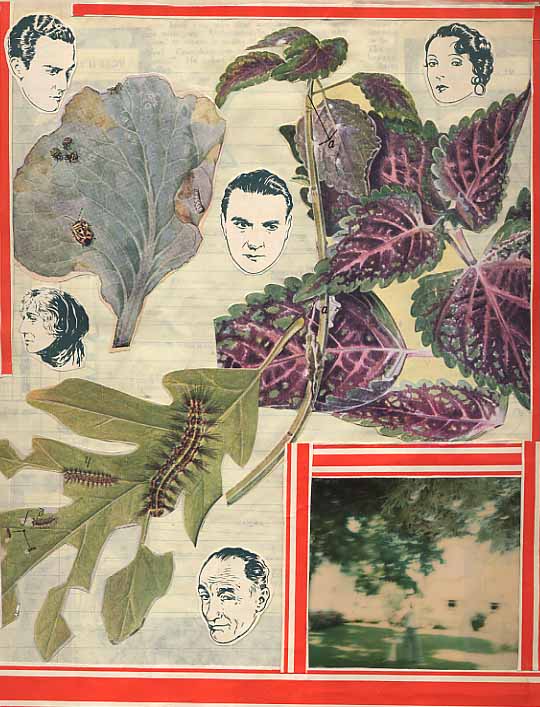
The man next door, our neighbor, is behaving badly or so it seems to me. This is not a good thing, I think. How can it be? “It can’t,” my other neighbor says. We decide to have a meeting, invite our other neighbors from farther down the block. Some come, some don’t. Those who don’t show we talk about as well.
We are a community of strangers, made friends by our proximity and the necessity of getting along. Of the neighbor to my left, we wonder, “What’s he up to?” and ask as well, “What about the others? Why aren’t they here?”
Chub Weinman says he saw my neighbor and one of those not with us now talking the other night. He says they looked serious and friendly.
“Ah-ha,” Marty Ferril waves his corn dog.
“Which was it?” I want to know. “Serious or friendly?”
“Both,” Chub Weinman says. “Seriously friendly.”
We nod at this, all of us gathered in Fergie Feckles’ basement show solidarity by tapping our chests and cursing a bit.
We’re worried about the future, we say. Worried about our pensions and our tv shows, things that continue to change beyond our control. Our neighbor in question pretends to be above all this. He drives a blue Saab with tan leather seats, wears stone washed jeans and teaches Humanities at the University. I work for BellSouth, outdoors fixing and setting lines. Chub and Marty and the others, too, work in jobs the same as mine. We know what it means to face adversity, have seen our status and security fucked with, have had to struggle and shift to adjust. To have stuck it out and at the same time, apart from the exceptions caused by human weakness, to remain decent fellows, that is what has made us hard. Our refusal to buckle, this is a page of glory in our history, I tell the others, “This is as we choose to be.”
I’ve tried to explain the situation to Jenny Darne, my buddy Earl Darne’s wife, have told her in no uncertain terms as we undressed in our room at the Tuckit Inn, how conformity is not a dirty word, is the measure of a man’s worth, his willingness to fit in and become part of the whole. “There are certain things a man can’t do,” I flip her over and make sure she gets my point.
Fergie’s wife, Lydia, has made the corn dogs and brought them down to the basement. We have beer and chips. I wonder if its such a good idea to drink during our meeting. Some of my neighbors agree while others don’t. Those of us who do not drink take note of those who do. Those who drink eventually gather together on one side of the room, near the deer head which has come off the wall, too heavy for the mock-wood panels Fergie used to refinish his basement. Andy Futts can’t resist and turns to the deer after a second drink, rolls his hips and says, “Talk about getting head.” Those of us on the other side of the room, not drinking, take note of this as well.
As we are a democracy, I ask the others to vote on what they want to do. I give them a list of four suggestions from which to choose and after some discussion I tell them, “Here’s what I think’s best.”
The neighbor we’ve come to talk about has a son who plays football with our boys on the Renton Eagle’s team. He’s the punter which says it all, I think. My neighbor comes to the games from work, stands by himself, down by the fence, and doesn’t sit up with us in the bleachers. I watch my boy at tackle go and drive the other team’s end into the ground. Jenny Darne never comes to the games. She says football is a brutal sport but she likes it when I slap her rump. I ask her to go away with me for a weekend, say that we can fish and hunt and camp under the stars. The idea makes her laugh. I blush and curse, but as I do she only laughs some more.
All is risk and danger. I feel the threat at work when I hold two ends of a severed line, feel it when I lay in bed and my own wife at a distance snores. I have heard that in his classroom my neighbor lectures on Aglaia, god of charity, Themis, god of justice, and Ares, god of peace. I see him with his own wife walking in the evenings, holding hands in the center of the street. What can such a man be thinking, I wonder? “You see how he’s not like us?” There’s talk he plans to keep his son at home for school and not let him fight in the war. I hear other things about him, strange and unsettling. I’ve shaken his hand before and his skin is soft even as he tries to make his grip hold firm.
“What sort of man is this?” I warn the others. “He isn’t like us.” He’s thin and placid, without spirit and refuses to bay at the moon. “No,” I say and tell them then, “It can’t go on. This sort of bull among us is a danger. We stand and fall on our weakest link and how can we as neighbors rely on such a sorry guy? No, no, no,” I say again and touch my chest, “There’s something we can’t swallow going on over there.”
Steven Gillis’s novel The Weight of Nothing (Brook Street Press, 2005) was a finalist for both the Independent Publishers Book of the Year and ForeWord Magazine Book of the Year.) His first novel, Walter Falls, was published in 2003 and was a finalist for National Book of the Year. He is currently at work on a new novel, Temporary People. A collection of Steve’s stories, Gifaffes, will be published this fall by Atomic Quill Press. Steve teaches writing at Eastern Michigan University and is the founder of 826 Michigan, a nonprofit mentoring and tutoring organization for public school students specializing in reading and writing and a chapter of Dave Eggers’ 826 Valencia. All author proceeds from Steve’s writing go to his 826 Michigan foundation. Steve lives in Ann Arbor with his wife Mary, and children Anna and Zach. Steve is also the co-founder of Dzanc Books.
Image by this issue’s feature artist, Ira Joel Haber. You can find more of his work here.
-
Bugaboo
by Jenny Pritchett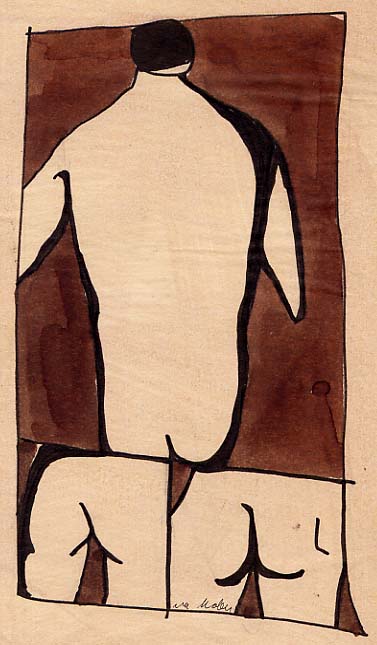
At first Antonia thought of a shipwreck. The boy and the girl peeled off their clothes, but they were on their knees in the middle of a bed with the bedclothes hiked around their thighs, and the sheets were red so she thought of a sea of blood and had to focus on the pale flesh of their bodies–his concave chest and half-erect penis bobbing like a mole from its burrow of dark hair, her low breasts and a raised, flesh-colored birthmark at the verge of her hip. They began to make love, him thrusting his tongue, him gripping her wrists. They turned toward Antonia, and as the black fringe of the girl’s hair shuddered Antonia imagined her tongue heavy like a whale in the girl’s mouth. They stood before her, the girl’s skin glazed and tiny beads of sweat standing out on her nose, and she grasped the back of Antonia’s chair, one hand over each of Antonia’s shoulders. The girl’s face swung close, her mouth like a sucker, her tongue like a dove, and Antonia watched all the ugly things rush from those lips, the ghouls and headless children and her impenetrable faith in her husband, and she slid her thumb into that crevice, enveloping her nail and knuckle, and felt a vacuum as the girl pursed her cheeks. In this way Antonia, full of spume, stopped the flood of bugaboos and sent it back into the night.Jenny Pritchett is the editor of Fourteen Hills. This is her second appearance in Fiction Attic.
Image by Ira Joel Haber, featured artist. View more of his work here.
-
Sharper
by Jackie Shannon-Hollis
The list of the things I did for him is inside the black silk envelope. The black silk envelope is in the top left drawer of the desk from Italy. The desk is empty, except for the envelope. The desk is in the bedroom. The bedroom is large and the desk is far from the bed. It’s next to the window that looks out on the garden.
The first item on the list is the first thing I did for him. The second item on the list is the second thing I did for him. And so on. Each item on the list is in his words.
First on the list: Please, tell me your name.
Second on the list: Please, let me take you to dinner.
Third on the list: Please let me open the door.
Fourth: Please, let me order for you.
Fifth: See me again.
Sixth: Wear a dress. I like blue.
Seventh: Stay the night.
The black silk envelope has a silver clasp; the silver clasp is in the shape of a ballock dagger. It’s a miniature version of the antique dagger hanging on the wall of his den. Sixteenth century he told me. He put the hilt of the dagger in my hands. It was a larger version of him, down there. Phallic. Larger and sharper.
Tenth on the list: Make it with two sugars, no cream. I’ll stir it myself.
Twelve: Not an omelet. Have two eggs. Scrambled in unsalted butter. Moist. A bit of fresh dill on top. Dry toast.
Fifteen: Yes, like that. Slow.
Sixteen: Never cut your hair. Except. You could trim yourself here. Closely.
Twenty: I’ve made an appointment for you. A manicure. A pedicure. Weekly. Don’t miss it.
The list is on unlined linen paper. The paper is ecru. It smells of citrus. The ink is blue.
Twenty-seven: Close the door when you’re in the toilet.
Thirty-one: Marry me.
Thirty-nine: Ah. Excellent. A private moment. Put this on under your dress. Wear it for the rest of the reception. It’s my wedding gift to you. It won’t hurt much if you move slowly.
The list is twelve pages. Seventeen items to a page. No two items are the same.
The blue ink on ecru paper echoes our time together.
Forty: If you wake in the night and I’m hard, go down on me, even if I’m asleep.
Fifty-five: Now that we’re married, there is no need for you to work. Resign tomorrow.
Sixty-one: Wear stockings. No panty hose. Ever.
The envelope was the last thing I bought for myself. After that, everything was either from him or for him.
There was only the one black silk envelope on the shelf at the store. The tip of the dagger was pointed up. It seemed fitting. It was exactly like the ballock dagger on the wall of his den. The list was just two pages then. They fit nicely, folded once. There was room for more.
Seventy: No panties on Tuesdays.
Eighty-two: Go to that man at the end of the bar. Smile and speak softly to him. If he wants to touch you, let him. I’ll be here. Watching. Don’t look over.
Ninety-four: Put on the black lace panties and the red bra. Get on your knees and tie my shoes for me. Tie the laces in small bows. Left over right. Don’t look up.
One-hundred one: It’s a Tuesday. Time to climb. Don’t look down.
The ballock dagger on the envelope could be pointed in any direction. Depending. The silver became tarnished over time. I did not polish it. The dagger on his wall was pointed up and to the left. He kept it polished and the silver caught the light.
One-hundred twelve: Tell me your plans for the day.
One-hundred twenty-seven: End your friendship with Cleo. She’s coarse.
One-hundred thirty-one: Don’t eat garlic again. Nothing with garlic in it. You smell bad.
One-hundred forty: Leave your phone on at all times. I’ve set it so you know my call. You must always pick up when the Beatle’s play, “I Feel Fine.”
One-hundred forty-nine: Tell me what you did today. Every detail. Every thought. Every move. But first, put these on. Press them until they click.
One-hundred fifty-six: Say you’re sorry. Tell me how sorry you are.
He never looked in the desk. He never looked out on the garden. But the rest of the large bedroom, he used well.
One-hundred sixty-two: Don’t call or visit your mother, unless I’m with you. Same for your sister.
One-hundred seventy-five: Say please. Say it louder. Say it like you mean it.
One-hundred eighty-seven: Don’t cry.
Two-hundred four: Come to me, marching up the driveway, at 8:58 p.m. wearing a red drum majorette uniform with gold epaulets on the shoulders and white boots that come to just above your knees and a tall hat with a black chin-strap and a shiny silver baton that will catch the light when I take it from you and use it.
His final request.
The drum majorette uniform was fire engine red. I charged it to him.
The ballock dagger was heavy but I was strong. In its place I left the baton that came with the uniform. Temporarily.
From a distance, at night with the garden lights on, with me coming up the sidewalk marching in 4/4 time, the dagger looked just like a baton. When I threw it in the air and caught it in my white leather gloves, the dagger caught the light.
It was simple. The knife was in his hands when he fell, it was like he used it on himself. That’s what everyone believes.
His ashes are in the black porcelain vase. The black porcelain vase is on the desk from Italy. It is the only thing on the desk. The desk is far from the bed. It’s where I have my tea and look out onto the garden.
Jackie Shannon-Hollis lives in Portland, Oregon, and is working on a collection of short stories. Her work has appeared in MARY, Rosebud and the South Dakota Review, and will be in an upcoming issue of the Oregon Literary Review.Image by Ira Joel Haber, featured artist. View more of his work here.
-
I Live in a Triangle
by Stephen MacKinnon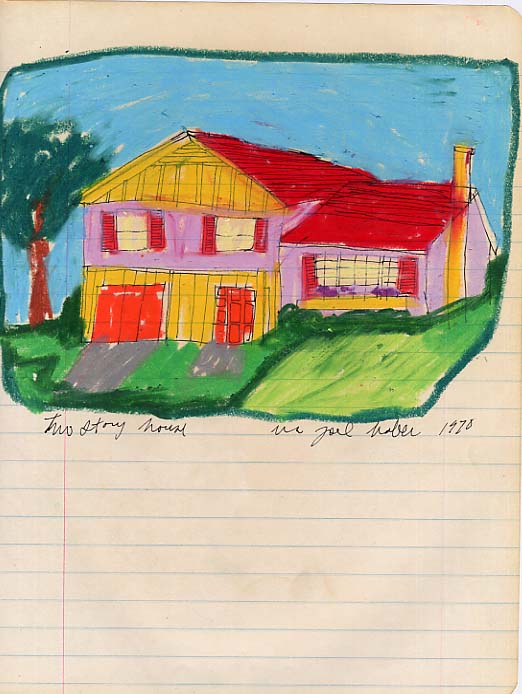
I live in a triangle. It’s exactly 213 square miles. It’s a place of Indian curses, ghostly apparitions, cattle mutilations, gigantic snakes, low-flying UFOs, huge birds, and ape-like creatures, seven feet in height, that leave 18-inch footprints. And I live right in the heart of it.
I work here, too, real estate, the only agent in town, although since I haven’t sold anything in six months that will probably change. Soon. The publicity about the reservoir and the Dark Forest Entry Association is killing me. After next month, when 20/20 and 48 Hours come, I doubt anyone will ever take me seriously again.
The activity centers around a 6,000 acre reservoir. Fear of the reservoir goes back 300 years, when the Wampanoag raiding parties hid among the black spruce during the tribe’s war with English settlers.
This much I was willing to discuss with the software engineers who seemed to like everything they saw: a colonial on Hemlock, the Greek Revival on Chestnut Street, the townhouse overlooking the reservoir. I spent little time on features, focusing instead on eliciting cues that might speak to what we call the magic moment, the exact moment the prospective buyer sees themselves in the house being to shown to them. If neither, especially the wife, has a magic moment, no amount of persuasion is going to save the sale. That would seem to explain his sudden departure, but I’m beginning to think it was all the conversation about the reservoir.
“This is it?” the husband asked, on the balcony, sweeping his arm toward the sun-sketched reservoir.
“Pretty, isn’t it? Can you imagine having your morning coffee here, leafing through the paper?”
He said friends were paddling across one day when they came across what looked like a small orange orangutan sitting on an island. “Have you heard that one?”
“No, that’s a new one.”
“You’ve heard the rest, though, right?”
“The rest?” I must have paused a second too long, because the next thing I knew he’d thrust out his hand, a very business-like hand, and was saying thank you for my time. I shook his hand, fumbled for a card from my breast pocket. By then he was at the door, letting himself outside.
I had no more appointments so I went back to the office and copied beauty sheets. Soon my mind went back to everything I’ve tortuously catalogued under “avoid at all cost.” Stories. Stories that could not stand up as theorems, much less even marginally plausible rumors, but they seem to stick in the local collective memory like tar, stories that seem to grow deeper and wider with every rumor and suspicion.
In December 1971, two UFOs were reported to have landed on Route 77. Less than a year later, another was sighted just a few miles up the highway. In 1973, Officer Dan Sweeney claimed he saw a white bird six feet tall and twelve feet from wing to wing soar over Baker Street.
I began to think of myself as I once was. A simple, stable, ordinary high school geometry teacher. Triangles, I always told the students, contain no mysteries. If you know two angles, you can find the third. Pythagoras did all that work centuries ago.
Yet sometimes on the drive home at the end of the day, the darkness closing in on me, I avoid the back roads and yet still find myself reluctantly gazing up at the sky as if it might, out of pity, yield the exculpatory evidence I am sure is there.
Grace Pelletier insisted for years she’d seen Bigfoot coming out of the reservoir. She had a photo. One photo. It certainly looked seven feet tall. But upon closer inspection, by Bert Clemson at the Chamber, it turned out to be a tree stump; its reflection in the water created the illusion it was walking toward a canoe.
But memory is a funny thing. When I am asked, especially by out-of-staters, relos, why property values are so cheap, I avoid reservoir talk. I point out proximity to major highways, vibrant downtown, better-than-average school system.
Inevitably, the conversation circles back to gigantic snakes, low-flying UFOs, huge birds, and ape-like creatures that leave 18-inch footprints coming out of the reservoir, which I tell them I can neither confirm nor deny, which is true, because I’ve seen none of that with my own eyes.
The Dark Forest Entry Association doesn’t help. They’ve festooned Route 77 with “No Trespassing” signs, which is heart-breaking, considering the quaint beauty of the dense woods and moss-tipped stone walls, pictures of which adorn most of the Chamber of Commerce literature I’m fond of mailing, when I have money and time. Yet I often pause and look at the photo of the reservoir that adorns the front of the tri-fold brochure. I swear at times the clouds say “Go Back.”
Driving home this evening, I passed the Dark Entry Road. I felt a tightening in my limbs, a new feeling. So I stopped, put the gear shift in reverse, and backed into the little entrance by the padlocked gate.
Just as I came to a stop, a pick up truck slowed near the entrance. The driver–a large, mustached man in a tan Carthart iron worker’s jacket and John Deere cap–said, after snapping my picture and license tag, “Can I help you?”
“Yes,” I said, “Can we talk?”
“About?”
I told him. I said this foolishness was beginning to get bad for business. He glanced at the magnetic Century 21 signs on my car, and said, “Put the car in drive, step on the gas, and head straight back to where you came from.” I repeated my request. He cocked a double-barrel. Humiliated, I did as told.
When I got home, Milly asked me how my day went. I told her. She said things will get better. How? I want to say.
“Market’s bad for everyone, Dick. It’ll pick up.”
Tonight, as most nights, I’ll wake in the middle of a dream about a serpent with an Indian head dress, something with a long tail that rolls and plunges in the middle of the reservoir. I’ll walk out into my backyard, glance at the house worth exactly half what I paid in 1965, and stare up at the sky for proof, proof what everybody has been saying cannot be true.
Stephen MacKinnon’s work has appeared in Armageddon’s Buffet, Conte, Fugue, Just A Moment, Marginalia, Ontario Review, Plum Biscuit, The Belletrist Review, The Oregon Literary Review, The Southeast Review, The Talking River Review, Triplopia, and Whistling Shade. In addition, his stories have received award recognition from Carve Magazine, Ontario Review, Rosebud and The Southeast Review.
Image by Ira Joel Haber, featured artist. View more of his work here.