Your cart is currently empty!
Author: Editor
-
Staking Claim. flash fiction by Vanessa Hua
from the archives (originally published in Issue 5, June 2012)

image courtesy of Jessica Gale Years before my mother died, my sister was prepared.
Ilana arrived home one weekend, clutching two packs of Post-Its. “It’s time,” she said, handing me a yellow stack. She unpeeled a bright orange sticky note, and slapped it onto a pint-sized terracotta warrior that guarded the living room, a gift from our great-grandmother.
The industrious chemists at 3M invented the sticky notes to free people from the tyranny of paper clips and staples. The jaunty curl of paper wound up on all kinds of never-before-possible surfaces: in a choir book to mark various hymns, on an eyes-only memo from your department head, and on the kitchen counter, as a Dear John note. Or on your inheritance.
“Let’s not worry when Mom goes,” she said. “You hear about those families fighting over nothing at funerals, because there’s no will. It’s easier to divide it up now, when we’re not so emotional.”
She slapped another Post-It onto a wooden radio, the big heavy kind they made copies of at Restoration Hardware. I looked over at my mother, who curled up on the couch with a mug of green tea. The vulturing of her property did not perturb her.
“It’s okay with me,” she said. “Whatever you kids want to do.”
Her attitude was typical. My father was killed when I was a baby. A pizza delivery truck in on-coming traffic hit a deer, flinging the buck into the windshield of my father’s Buick. After that, my mother saw no use in getting in the way of what was supposed to happen. Fate interrupted the mundane.
I flicked the Post-Its like a cartoon flip-book under my thumb. It would be different if Mom were hooked up to life support, or fading away in a rest home. But she’d had us young, sometimes mistaken for a big sister when she dropped Ilana and I off at elementary school.
Now she ran her own country antiques store in Sutter Creek. She wore sleeveless tops that showed off her strong and tanned arms. When I helped her with pick-up and deliveries, she had no problems holding up her end of the oak dressers and teak armoires.
Five years earlier, I had moved from New York back to the foothills of the Sierra Nevada to finish my dissertation on Civil War folk songs. I had never been comfortable in the city, with its endless squirming crowds and heaps of garbage left for pick-up each night.
Despite the change in habitat, I had trouble writing. The chunk of fool’s gold, the poster of constellations that glowed in the dark, and the wrinkled 1987 Sports Illustrated swimsuit issue in my bedroom placed me in childhood, the wrong century.
“Go ahead,” I said. Ilana, three years older, had always used her head start over her little brother to her advantage. She laid down the rules, and I would hold back, trying to figure out how to catch up.She plopped Post-Its on more than she’d be able to fit in her tiny condo, and even on items that clashed with her sleek decor. She didn’t have a husband, or a house, or kids, but was already staking claim to the accessories of her future life.
Ilana was a San Francisco attorney who specialized in lawsuits to prevent what could happen. She came home rare enough to make her visits a production–ones that justified my mother cooking my sister’s favorite biscuits, each time–but often enough to avoid guilt.
Soon, the living room looked as if a flock of monarch butterflies had touched down, the orange notes fluttering at times in the hot breeze. I held off. There wasn’t much I wanted, wasn’t much I could see in my future. But that afternoon, I hid what mattered in the crawl space of the garage, under a crate of encyclopedias and a pile of wooden tennis racquets.
The next morning, the camera I’d stashed was sitting in the coffee table, tagged with an orange Post-It. I cradled the Rollieflex in my right hand. I’d found my grandfather’s camera when I was a teenager.
Its twin lenses looked liked an odd pair of spectacles mounted on the rectangular case, which rested on the small end. The camera had a large square viewfinder on top. People couldn’t tell when you were taking a picture.
She’s done it again, I thought. Taken what I wanted, without even knowing, without spite. Ilana had the present and the future all wrapped up. I only had the past.
“I was looking for my old cheerleading uniform in the garage, and found this,” Ilana said, sweeping the Rollie away from me.
“Don’t you think it will make a cool decoration, for when I get a guest bedroom? I wonder if it works.”
“It does,” I said, tugging it away.
“You’ll have to show me how. Maybe I’ll take it now, instead of waiting,” she trailed off, even she unable to say “when Mom dies.”
I considered Solomon’s choice, and let the camera slip out of my fingers.
The lenses shattered against the tile floor, and a large crack shot through the case, over-exposing the photos I’d taken of bleary newlyweds stumbling out of a B&B, of my unsuspecting mother, beautiful, at the shop counter, of a gold mine tower silhouetted at sunset.
We stared down at the smashed pieces.
“Ouch,” Ilana said. Then again, I just got a digital camera, so maybe I didn’t need more junk to clutter up my place.
I picked up the Rollie and looked through the viewfinder: nothing. Nothing plus me.
Vanessa Hua is an award-winning journalist and the author of the novels Forbidden City and A River of Stars. Her fiction has appeared in the Atlantic Monthly, ZYZZVA, Calyx, American Literary Review, River Styx, and elsewhere. She received first place in the 2008 Atlantic Monthly student fiction contest. She received scholarships from the Bread Loaf Writers’ Conference. Visit her at vanessahua.com.
Subscribe to get new flash fictions in twice a month in your inbox.
Submit your flash fiction or personal essays to Fiction Attic.
-
Writers on Writing: Elizabeth Black (or Why You Need an Agent)
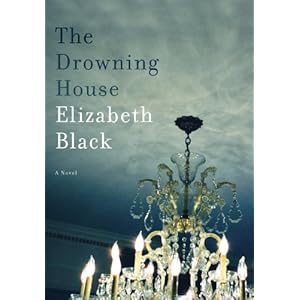
I’m currently reading a wonderful novel, Elizabeth Black’s The Drowning House. It’s a debut novel that will be published by Nan A. Talese/Doubleday in January. I received the book from the publisher a few days ago and, since the moment I opened it, I’ve had a difficult time putting it down.
The novel is set in Galveston, Texas. I’ve never been to Galveston, but the setting nevertheless feels eerily familiar. I’m from Alabama’s Gulf Coast, and Black skillfully evokes the heat, humidity, and the languid desire to do nothing that pervades Gulf Coast life. The Drowning House is a mystery that works on several levels, and it’s also a beautifully realized story about grief. The narrator, a photographer, has returned home to Galveston after the death of her young daughter to do research for an exhibition. She finds herself drawn into the circle of an old family friend who is also the town’s wealthiest citizen, and is compelled to ask questions that no one in this closed-off community wants to answer.
Elizabeth Black’s post about her own road to publication, which began at the Writers League of Texas Agents Conference, serves as a great primer on how to meet an agent, and why it’s so important to have one. It’s also a very realistic account of the long slog to publication.
We spent almost two years making revisions to The Drowning House, beginning with some larger changes (like eliminating a plot line to allow other key elements to emerge) and proceeding through two line edits. I’m a single mother with a full-time job, and my older daughter was married last fall, so it was a busy time for me.
A good agent doesn’t just act as a middleman between writer and publisher. A good agent helps you make the book the best it can be before putting it in the right hands. A good agent knows what editor might be on the lookout for a book like yours, and her relationships with publishers are invaluable. A good agent will help you get through the tough times when it seems as though the book might never be published. Without my agent, whom I trust implicitly and who has been a tremendously savvy advocate for my work, I’d be utterly adrift in the publishing world.
 Of course, anyone can forgo the agent and publishing house these days and upload a book to Smashwords, Kindle, Nook, or iTunes. But the reality is that a self-published book simply doesn’t have the same level of editorial vetting as a book that goes the traditional route; nor does it have the all-important marketing that, in many cases, can make a book.
 One crucial element of marketing is the distribution of the ARC (advanced reading copies) not only to reviewers and booksellers, but also to other authors, with a request that they read the book and, if they like it, offer a cover quote. Self-published books rarely, if ever, get reviewed in The New York Times or the San Francisco Chronicle, and very few will ever have the advantage of the booksellers’ interest pre-publication. The Drowning House came to me unsolicited, and I’ve never met the author; but because it came from an imprint I respect, and because it came in paperback (not as lines of text on an e-reader), I opened it and began reading. And I kept reading, and I imagine I’ll finish it tonight. It’s a terrific novel, and I suspect there are a number of other potential supporters feeling the same way I’m feeling about this book right now. The fact that the book will likely hit the stands with rave reviews, and that it will be available in brick-and-mortar bookstores, where huge numbers of readers still go to browse and buy the booksellers’ recommended reads, will give it a far better chance of success than most self-published novels ever have.
So, if you’re really serious about your novel, before you slap it up on Amazon and leave it to swim with the sharks, consider what you might be missing. Consider the readers you might lose by not giving your book a chance it deserves.

-
First Novel Contest
First Novel Contest: We are now accepting submissions of novels for our first novel contest. To be eligible, you must never have published a novel with a national press.
Prize: $500 advance against royalties, publication in ebook and POD, and a standard publishing contract.
Entry fee: $10.
Deadline: September 30, 2012. Submit here.
-
How to Start Writing a Novella
Novellas are a time-honored literary form, and they’re making a comeback. Longer than a story, shorter than a novel, the novella allows for a complete narrative arc but is also a perfect form for narrative experimentation. If you want to write a novella but aren’t sure how to begin, open a notebook and quickly sketch out these ten elements of your story:
1. When and where does your novella take place?
2. Who is the most important character in your story?
3. What are a few scenes you’d like to include?
4. What problem does your protagonist face?
5. Why should a reader care about this protagonist and this problem? What is your protagonist risking?
6. Who is telling the story? How far removed in time are they from the events that took/are taking place?
7. Write one paragraph. Add a few white spaces. Write another little paragraph. You don’t have to write in order.
8. Give yourself a soft deadline. When will you finish writing 20,000 words? Work toward that deadline every week.
If you liked this quick post, get a deeper dive on writing a novel or novella at The Caffeinated Writer: How to Write a Novel
-
How to Submit a Story for Publication
So you’ve written a story, revised it, and are ready to send it out. Here are a few tips for submitting your stories for publication to literary journals and other magazines.
• Until recently, submitting to literary journals meant buying loads of stamps, weighing your manila envelopes at the post office, and including self-addressed, stamped envelopes. Fortunately, this is no longer the case. Most literary magazines have an online submission form, and most prefer online submissions to hard copies.
• If the literary magazine asks for a cover letter with your submission, make it brief. Your letter should mention where you’ve published in the past, and should include a very short bio. Your cover letter should NOT explain or praise the story. That is very bad form, and will likely result in your story being deleted before it is even read.
• Do submit to more than one place at once. Five is a good number to start with.
• Never send a publication a second story before the editors have responded to the first.
• Never call to check on the progress of your submission.
• Shorter stories (8-15 pages) are more likely to be accepted than very long stories.
• Always double-space your story, use one-inch margins, and indent every paragraph!
Here are some of the best online resources for anyone looking to submit fiction:
Newpages.com—litmags, publishers, and book reviewswww.webdelsol.com–Contains many useful links to literary magazines and resources for writers.
Mid-American Review–Contains useful links under “Writer’s Tools” link.
www.zuzu.com–Same concept as Webdelsol, but with even more links to literary magazines and e-zines
More great resources to check out before you submit:
• Novel and Short Story Writer’s Market (Writer’s Digest Books)–This is probably the best; it covers many of the better publications with detailed descriptions of tastes, editorial guidelines, payment, and rights.• Pushcart Prize Anthology (Pushcart Press)–Annual anthology of the best of literary magazines and presses selected by editors themselves; you’ll not only find fiction in here, but a list addresses of prize-winning magazines and presses.
For current publishing opportunities, check out the Writer’s Chronicle, published by the Associated Writing Programs (www.awpwriter.org) and Poets and Writers Magazine (my personal favorite), which has upcoming deadlines for literary contests, as well as calls for submissions. Go to www.pw.org
Some of my favorite literary magazines:
Glimmer Train Fourteen Hills The Sun
Other Voices Alaska Quarterly Review Mid-American Review
Ploughshares Granta Boulevard
Story Quarterly Quick Fiction Online:
CutBank South Carolina Review Nerve (sexy stuff only)
Missouri Review Bellevue Literary Review Blackbird
Mississippi Review Gulf Coast Identity Theory
North Dakota Quarterly Sycamore Review Exquisite CorpseAny publication is a big boon and a definite validation of your talent, but here are the magazines that can really jump-start a career: The Atlantic Monthly, Harper’s, The New Yorker, Zoetrope, McSweeney’s, The Paris Review. It never hurts to send to these guys as long as you’re sending out a bulk submission. All of them except McSweeney’s & The Paris Review publish mainly agented material, but occasionally a non-agented submissions will make it into the magazine..
[box]Sometimes the hardest part about being a writer is getting the first words on the page. Where Stories Begin: A Workbook for Writers, will banish writer’s block, spark your imagination, and provide endless opportunities to make stories out of thin air.[/box]
[box]Online Flash Fiction Class: 5 Very Short Stories in 5 Weeks
Begins April 14. Duration: 5 weeks. Tuition: $210.
[button link=”http://www.bayareabookdoctor.com/online-creative-writing-course/”]Learn more[/button] [/box]
-
How to Start a Story
 One of the questions I hear frequently from aspiring writers is, “How do I start a story?” Even seasoned writers have days when the story won’t come. Talking to a reporter for Interview Magazine in 1995, Martin Amis said of novel-writing, “If I come up against a brick wall, I’ll just go and play snooker or something or sleep on it, and my subconscious will fix it for me.” Good advice, for sure. But if snooker and the subconscious don’t do it for you, here are a few tips to get you going.
- You can begin “in medias res,” or in the middle of the action. When you’re telling a friend a story, you rarely begin with, “I was born in such-and-such hospital in such-and-such city.” Rather, you jump forward to the exciting part, the middle of the action of your own life. “I was standing in front of the old movie theater on Amsterdam Avenue when…”
- You can begin with a character in a strange or tense situation (Gregor Samsa wakes up as a cockroach in “The Metamorphosis”, Mersault is on trial for murder in “The Stranger”).
- You can begin with a line or two that describes the setting, then move on to who is in the setting, and why. (more…)
-
Creative Fidgeting
courtesy of WFMU An article by Roland Rotz, Ph.D., in ADDitude Magazine this month claims you shouldn’t fight the fidget, especially when it comes to children with ADHD:
Doing two things at once, it turns out, can actually help focus the ADHD brain on a primary task.
Experts believe that engaging in an activity that uses a sense other than what’s required for your primary task — listening to music while reading a social studies textbook, for example — can enhance focus and improve performance in children with attention deficit disorder. These secondary tasks are called fidgets — mindless activities you can do while working on a primary task.
Rotz recommends walking, moving around, doodling, using multicolored pens and pencils, keeping your hands busy, listening to music, and chewing gum.
I think anyone–with or without ADHD–can benefit from a bit of creative fidgeting. When I’m stuck in a novel I’m writing, it always helps to get up and move around. When we lived in the Outer Richmond in San Francisco, I used to take long walks on Ocean Beach (well, yes, that does sound like a personal ad, but I did!), and I never came home from one of those walks without a few paragraphs in my head. Something about the zen aspect of moving with no invited noise–I never wear headphones when I walk, so the noise was that of the waves and water, and the hum of traffic on the Great Highway–intensified my focus, such that I would write in my mind as I walked, repeating the sentences in order to memorize them.
I say “invited noise” because, while noise is inescapable, we don’t have to invite it in. Turning off the headphones when you’re running or walking, or turning off the TV when you’re on the treadmill, or turning off the radio in the car, is a way of keeping the endless, not-so-ambiant noise at bay. Of course, one of the fidgeting activities recommended in the ATTitude article is listening to music–so it really depends on the person. My husband always listens to music when he’s writing or reading, and it works for him, but anything with words completely stumps me, because the words crowd out the ones I’m trying to write down. That’s why I can’t write in cafes, which is a method some of my writer friends swear by.
Think about your own creative process. Are there any kinds of fidgeting you do that bring you focus?
-
Writers on Writing: Kathryn Stockett’s tale of never giving up, despite rejection
 More Magazine features an essay by Kathryn Stockett, author of the wildly successful novel The Help, now a wildly successful film. It’s an old story, but worth repeating: novelist gets a zillion rejections, or 60, to be more precise, before finally landing an agent, a publisher, and a long-running spot at the top of just about every bestseller list you can imagine.
Stockett’s advice for writers and anyone else who keeps hitting a brick wall? “Give in to your obsession.”
Click here to get free downloads from the Guided Workbooks for Writers series.
In the end, I received 60 rejections for The Help. But letter number 61 was the one that accepted me. After my five years of writing and three and a half years of rejection, an agent named Susan Ramer took pity on me. What if I had given up at 15? Or 40? Or even 60? Three weeks later, Susan sold The Help to Amy Einhorn Books.
For Stockett, 61 was the magic number. With The Year of Fog, my magic number wasn’t far behind. I like to believe that every good book has a magic number, that books will find their way into the hands of a receptive agent and editor given enough time and persistence. For me, the agent was Valerie Borchardt, and the editor was Caitlin Alexander, and I consider my book very fortunate to have fallen into their hands.
So if you have a book that keeps coming back with a form letter that says, “Unfortunately, this book is not quite right for us,” don’t give up. Envision in your mind a magic number. You don’t know it yet. No one does. It could be twenty rejections from now, or forty. Or it could be just one.
Related: What if the only thing standing between you and publication is a great revision? Visit the Book Doctor now. -
What writers can learn from late, great music man John Carter
 In July’s obit section, WORD magazine remembers John Carter, songwriter, producer, and A&R man extraordinaire, who “was instrumental in the careers of and a passionate supporter of Bob Seger, The Motels, Sammy Hagar, Melissa Etheridge, Tori Amos, David and David, and … Tina Turner.”
WORD quotes an interview for industry website Taxi, in which Carter said that “the one thing he had learned was that over 70 percent of hit records have titles containing nouns.”
All kinds of songs become successful, and therefore can be held up as examples to encourage someone that what they’re doing is right, but I think, in general, it’s an English lesson. Lyrics are important It’s about a story. It’s about a great title. The title should have a big noun in it. Some of the best songs are even proper nouns. Nouns, baby, nouns!”
If you think about it, the same principle applies to good writing of any kind. One, “it’s about a story.” And two, it’s specific: proper nouns are nothing if not specific. It’s the very old, very true creative writing 101 lesson: you get to the universal by way of the personal. You reach many by focusing on the struggle of one. It’s easy to find great books with a proper noun in the title:
Ulysses
Lolita
Portnoy’s Complaint
The Great Gatsby
Jane Eyre
Madame BovaryOkay, you get the picture. Of course, this is not to say it has to be a proper noun. I can think of equally exciting books that have only improper nouns (I don’t think that’s a thing, really, but I like the sound of it) in the title.
To Kill a Mockingbird
A Portrait of the Artist as a Young Man
The Bluest Eye
Things Fall Apart (what can be less specific than things?)
Brave New WorldYou’ll note, however, that all of the books in the latter category get very specific very quickly, with characters whose personal and unique struggles have a universal quality. Scout moves us not because she’s archetypal, but because she is a very specific child at a very specific time and place, engaged in a universal struggle played out in the tragedy of one man and one town.
-
Writers on Writing: And All the Ships At Sea
I wanted to share an interesting email I received last week from a reader:
I’m a Marine stationed over at Camp Pendleton in California. While I was on deployment, I found The Year Of Fog in the small ship library…I was a part of an expeditionary unit sitting off the coast of Burma last year after their country was ravaged by a natural disaster. I mean this in the greatest sincerity when I say that reading and finishing your story was truly all I looked forward to the 2 months I spent sitting on a ship, counting the days until I could come home. I’m not sure what it was, but I found myself very sympathetic and attached to the main character. I almost wish the story hadn’t ended. Or at least had ended the way I was expecting. Again, thank you for your story.