Your cart is currently empty!
Blog
-
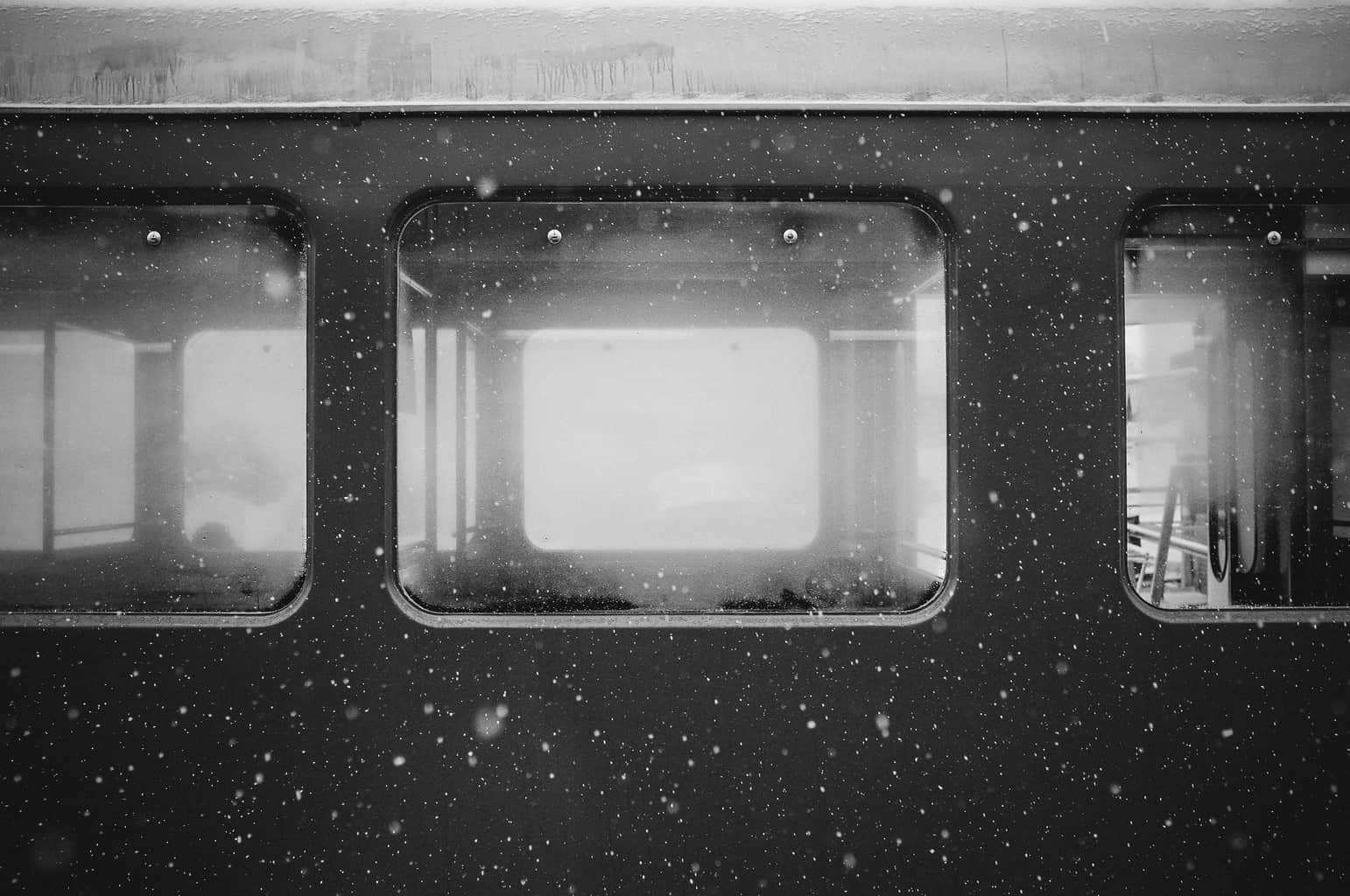
The Quiet Place – First Fiction by Roberto Reyna
We’ve been together for as long as I can remember. The origins of the GHST club may have been a mere façade, but the same cannot be said for its importance to us. We came up with the idea for a fake community service club to complete our school requirement in what felt like an instant; it wasn’t hard, the four of us literally make up GHST. I’m Grey, you could say that I’m always a step ahead of the others, making me the natural leader.
Heath is the quietest among us, but he’s always listening. Sara, although I’d never admit it to her face, is the smartest; she just needs to work on her arrogance. Timothy is a bit reckless, sometimes too headstrong for his own good. We’ve been friends ever since we met, so many years ago, at the orphanage. I’m thoroughly convinced, that if it weren’t for these specific circumstances, we wouldn’t have become as close as we are now.
We all agree, every day at school is exactly the same, save for one small difference; in one way or another, every day is, in some way, blander than the day before. The school is always so loud; so much yelling, so many footsteps. The loudest sound is the constant drone that comes from nowhere. The best part of every school day is when we meet up for GHST. We finally shut the door on the overwhelming pounding that persisted throughout the day, but we are still in the school, so it is still loud. We don’t really do anything in GHST, it’s usually best to just sit in silence until we decide to go back to the orphanage.
When it’s finally time to leave school and end what lasts forever, we all walk to the subway together. Sara guides Heath when he forgets his walking stick. Timothy stops every once in a while to catch his breath, or use his inhaler if need be. I walk a couple steps ahead everyone. The rattle of the tracks echoes in our heads, no one says anything about it, but it’s clear that we all hear it. Just when we are all ready to continue the routine, Timothy yells, “Hey! Look at that!” Before anyone can react, he jumps onto the tracks and dives onto the ground. I dive in after him, with Sara right behind me, and try to get him out before anyone gets hurt. Heath stumbles without Sara to guide him and falls onto the tracks too. The rumbling gets louder, a bright light flashes, I can hear so much that I can’t hear anything. Timothy helps Sara lift Heath and I glide out after them. We all take a second to collect ourselves on the platform.
“What were you thinking!?” Sara yells at Timothy.
“Check it out,” he says, holding a bright, white scrap of paper in front of our faces.
Heath clutches his arm and says, “I could’ve broken something.” We decide that it would be best to just walk to the orphanage at this point, so we do.
We push the heavy door open and try to walk in as quietly as possible. All of our footsteps creak and the sound bounces off the walls. No one notices, though. Everyone seems a bit more somber than usual. In the living room, Timothy shows us what he found on the tracks. “It’s a map”, he says. “Everything looks straightforward enough, except for the destination. It says that it leads to ‘the quiet place’”. Sara stares in awe at the paper.
“Is he telling the truth?” Heath asks.
“I think so,” Sara responds.
We decide that we have to follow it. Tomorrow. We will leave tomorrow. We all go to our rooms to sleep, Sara clutches the map and stares at the ceiling, unable to sleep as usual. Timothy breathes heavily. Heath tosses and turns in bed. I’m already asleep.
It’s time to go. We open the door as softly as we can, but the hinges squeak with every inch the door moves. We are out. “It looks like the map only takes us into the woods, but it stops pretty abruptly, it might not be safe,” Timothy remarks. Our silence reassures him that nothing can hinder GHST. A homeless man lies, asleep, on the sidewalk. He looks tranquil. Sara drapes my jacket over him. She feels cold, but she doesn’t feel like she needs it. We don’t even stop for a second.
Suddenly, the buildings twist into trees, the sidewalks melt into dirt. The wind rips across our faces and we cover our ears. “Where are we?” Heath asks.
“We aren’t there yet”, Sara replies. A dog circles us, his cries make Heath grimace. Timothy offers the dog his sandwich, Heath follows by handing Sara his water bottle which she pours out for the dog. We keep pace.
“The end is coming up,” Timothy declares. We find two paths at the end of the trail. One leads up a steep hill and the other seems to be blocked by fallen trees. After careful judgement, we decide to walk up the hill. I feel different. So do Heath and Sara and Timothy. They run up the hill just in front of me. Timothy sprints faster than he ever has before. We reach the summit. Beautiful trees that sway gently in the wind surround a park. An old sign reads, “The Quiet Place.” We all stop, I can hear everything, we all can.
“Let’s go sit on that red bench,” suggests Heath. Everyone walks over. We all sit down.
“I’m tired,” says Sara. We all are. Timothy breathes deeply, exhaling slowly. I sit down on the bench, next to GHST. We sit there for as long as I can remember.
Roberto Reyna is 18 years-old and a student at Haverford College. He grew up in Puerto Rico. He wrote this story between his high school graduation and his freshman year in college. Follow him on Twitter @antiderivada.
-

Delilah’s Skull – Flash Fiction by Nan Wigington
When my dad died, I wanted to sell everything, but my brothers said no, take something, so I took Delilah’s Skull.
My dad kept cabinets. Mostly at the hospital. Patient parts, he said. For research. Some cabinets contained bones – the odd compressed spine, tibias, broken ulnas. He had organs, too, slices of cirrhotic livers, a cadre of cancerous lungs, eyes in jars of viscous liquid. They rolled upward when you shook them. The only part he didn’t keep locked away was Delilah’s skull. That stayed at the corner of his desk at home.
It was hardly a skull, though. No attached mandible, occipital. Just the hard cap of parietal and frontal bone. I used to like to run my finger along the coronal suture.
Until he stopped smoking, my dad used Delilah as an ashtray. Butterscotch candies lived there for awhile, too. But I remember it best empty. When you could see the trace of blood vessels. They ran down the yellow sides, dried tributaries of ancient rivers.
Delilah was my dad’s cadaver. He grew up in this profession when bodies were easy. No one donated, so you just took. Still the act of taking unhinges most of us a little. Even my dad.
My dad used to pretend he went a little crazy because of the formaldehyde and phenol, but he admitted later that it was the act of unzipping the bag and seeing her face – its walnut gleam, its perfect symmetry – half-lidded eyes, a crown of red hair.
Like all of us, he tried to justify his act, looked for proof of her bad life…tattoos, needle marks, wounds. But, over and over again, the only violence he could find were the strikes of his own scalpel. And his thievery. The hunger of it. Taking the heart and lungs first. Then the ovaries. My dad said his partner tore into her abdomen, cracked her pelvis like a hungry drunk, and ripped her perineum.
My dad hated most when he cut her throat, removed the larynx. Gone the curtain of speech and song. He said he touched the ossicles of her middle ear and whispered, “Sorry, sorry.”
What happened when they cut into Delilah’s skull? How many coils and folds did they find in her brain? What decisions and indecisions, what forgetting, what remembering? My dad said that back then, they were in the habit of throwing all that away.
I am my father’s daughter. I save what I have not destroyed. Delilah’s skull remains in plain sight on my desk at the hospital. Sometimes a patient picks her up and holds her in the palm of a hand.
Once a nurse put condoms in Delilah. Another time someone dumped in chocolate hearts. As if she were a stain to be covered. Both offerings were cast out. No one understands. Nothing can appease the long dead.
Nan Wigington‘s work has appeared in Gravel, The Airgonaut, Sicklitmagazine.com, and No Extra Words. She has worked as an unclaimed property clerk, an accounting analyst, an ensemble actress, and a paraprofessional in an K-2 Autism center classroom.
-

Kingdoms – flash fiction by Christopher Woods
They had lived in the dark, in its midst, some fifteen years. Ever since the children left, fleeing the house of perfection. And, the house of boredom.
He considered all this, driving through the night to their mountain cabin. Oncoming headlights, though there were very few, illuminated the snow on either side of the road. The darkness that followed each passing car triggered his thoughts back to the curving black road.
The road doubled back, then surged ahead, always elusive. It was treacherous going, as if there might be something, maybe even evil, along that road that night, as if something might, at any second, hiss and spit at them.
She sat beside but away from him. Giddy in the dark, she hummed along with the big band music on the radio and rubbed her thighs. These years she was spent, the same as he. And they both knew it all too well.
Already, on this late night road, they were quite beyond the boredom that had seeped inside the doors of their marriage. Then, above the sound of the music and the heater, she spoke. Best slow down, she said. He turned up the radio and scanned channels, looking for something she would not like. Best slow down, she repeated, louder than before.
Instead, he pressed his foot on the accelerator, hard. In his mind, he was going to rise above their shell of a family. To him, they would rise up from that twisting, viperlike road. They would glide through the dark sky where stars crisscrossed the blackness. He imagined himself going beyond all this. He didn’t know for how long, or even when he would return. He had bourbon singing in his blood.
She sighed, forgetting the song she had been humming. Looking away from him, she saw her sad reflection in the window. She imagined a snake was in their cabin. It was a snake that waited patiently in the night. She hoped that it was a very poisonous one, and that it was coiled on his side of the bed. Waiting.
He too was dreaming of a snake. His snake, also patient, had lived in the world long enough to know that waiting counted for much, maybe for everything. His snake was along this very road, this very night. It was coiled on the side of the road where he planned to push her out.
And though they both knew this was the dead of winter and snakes would be hibernating, it didn’t matter. For them, snakes would come out this night. These snakes could be commanded.
These snakes were a necessity.
It happened quickly, both of them silent and lost in thought. In an instant he passed out and his hands loosened from the steering wheel. Panicked, she looked out the window and once again came face to face with her reflection. Her eyes were frozen. When at last she broke her gaze and tried to take the wheel herself, it was too late.
The car seemed to fly, as he had wanted it to do. But it flew to the side, into the air, finally falling hundreds of feet to the snowbound trees below.
Beneath the roots of those trees, snakes huddled in balls, sleeping, awaiting the thaw. They dreamed of possibilities. Of warm beds in mountain cabins, where the people, for one reason or another, had gone away.
And, in their dreams, the people never returned. The sleeping snakes knew how waiting could count for much. How, if they waited long enough, even kingdoms could change hands.
Christopher Woods is a writer, teacher and photographer who lives in Houston and Chappell Hill, Texas. He has published a novel, THE DREAM PATCH, a prose collection, UNDER A RIVERBED SKY, and a book of stage monologues for actors, HEART SPEAK. His work has appeared in THE SOUTHERN REVIEW, NEW ENGLAND REVIEW, NEW ORLEANS REVIEW, COLUMBIA and GLIMMER TRAIN, among others. His photographs can be seen in his gallery –http://christopherwoods.zenfolio.com/
-
Day 21: And Now, The Outline (of sorts)
“All human happiness and misery take the form of action,” Aristotle wrote.
If you’ve gotten this far, you know I have a thing about not outlining your novel too early. I think an outline before you begin can stifle the process and force you in the wrong direction.
Now, however, three weeks in, is a good time to get a kind of outline down on the page. This is about the shape of your story.
Write this down:
- Your inciting action: the first thing that happens in your book, the even that sets off everything else
- Background: List three events that happened before the action of your novel, three events that explain how your protagonist came to be in this situation
- Development: Take the scenes that you’ve already written, and put them in order an order that makes sense.
- End: Write how you think your novel should end (this can change, but get something down).
- Now: what’s missing? Make a list of scenes that still need to be written to get your protagonist from the inciting action to the end of the book.
That’s quite a bit of work for today, but if you made quick work of it and your writing window hasn’t closed, choose one scene from the “What’s missing?” list and write it.
-
Day 20: Theme
In addition to identifying certain subjects in your work, when you look back over what you have already written, you will notice certain themes emerging. Theme is important in a novel because it ties the various elements of plot and character together. If a plot is the sequence of events, the theme is the big idea of the book.
Theme is at heart of that all-important truth about fiction: we get to the universal by means of the particular. While your theme can be expressed in broad, universal terms, it must be revealed through your specific characters in their very specific and particular situation.
Maybe you novel actually began with the big idea: you wanted to write a book about how we hurt those we love, or a book about good triumphing over evil, or a book about how the truth is so much different from what it appears to be on the surface.
If you already know your big idea, write it here. If you have more than one, that’s okay. Write down as many as you have. You can narrow it down later.
The big idea behind the book is:
Additional themes worth exploring are:
Now, take the BIG IDEA and write a scene that bears that theme out.
For example, if the theme is, “We never really know the ones love,” and your protagonist is a married man, you might write a scene in which a man discovers something about his wife that makes him realize that he never really knew her. Whoever your characters are, they are the vehicle through which you will reveal your theme.
-
Day 19: Intrigue
There comes a point in the writing of every novel when you discover what intrigues you, and what doesn’t. By now, you’ll have found that some of the scenes and characters come naturally, while others feel completely forced.
Now is a good time to return to those 500-word writing prompts. Which short pieces should be expanded into longer chapters? Identify the pieces and write three or four sentences about what you might accomplish in a longer chapter based upon each piece.
- In a longer chapter I would:
- In a longer chapter, I would:
- In a longer chapter, I would:
Now, choose one of the 500-word prompts that intrigues you and expand it into a chapter of at least 2,000 words.
-
Day 18: Close Encounters
Today, have your protagonist meet someone you never planned for him or her to meet. Play the scene out in dialogue. Set us in place and time. What brings them together? What tears them apart? Is it a scene of conflict, or intimacy, or both?
-
Day 17: Make a Decision
A plot operates as a series of switchbacks. If the switchbacks are too obvious, the reader can predict what happens next and is less inclined to keep reading. The plot shifts should arise naturally from situation and character, but should still be surprising.
Yesterday, you took a break from the main storyline to provide your reader (and yourself) with a breather. Today, we’re getting back into the thick of it.
On Day 17, you listed three obstacles that stand in the way of your protagonist obtaining the object of his or her desire, and you wrote a scene in which he faced off against at least one of those obstacles.
Today, return to what you wrote on Day 17. Pick up where you left off: have your protagonist make a decision that shifts the novel in some way.
-
Day 16: Let Your Book Breathe
Readers need breathers. Why? Breathers give the reader a chance to stop and meditate. A breather allows a reprieve from the primary action of the novel. A breather slows the pace. Sometimes, you have to do that. Going at breakneck speed from page 1 to page 400 is generally not advisable.
A breather may take the form of a subplot (see Day 10), but it may also be something smaller. In The Year of Fog, Abby is a photographer. Her search for the missing child is broken up with brief episodes about photography and memory. While Abby’s work is not a major subplot to the novel, the brief chapters–only a few paragraphs each–dealing with photography serve to allow the reader to take a break from the intense search; they allow the reader to breathe. Ideally, your breathers will be thematically consistent with the central question. Abby wants to find Emma, the girl who went missing on the beach, but she can’t remember enough of what happened that day to piece the puzzle together. Her work as a photographer is grounded in image, a form of recorded memory. So even when we’re taking a break from the search, we’re reminded of it.
Haruki Murakami is the master of the breather. His novels are spacious because the plot is not entirely the thing. He meanders, he philosophizes, he reminisces. In all of Murakami’s novels, the narrative breaks away from the main story line and comes back, again and again and again.
Take The Wind-Up Bird Chronicle. In a suburb of Tokyo, Toru Okada is on the hunt for his wife’s missing cat. Simple enough: a search. There is great potential in a search. But the stakes of the search multiply exponentially when Okada begins searching for his wife as well. From the publisher’s description:
As these searches intersect, Okada encounters a bizarre group of allies and antagonists: a psychic prostitute, a malevolent politician, a cheerfully morbid sixteen-year-old girl, and an aging war veteran who has been permanently changed by the hideous things he witnessed during Japan’s forgotten campaign in Manchuria.
Is The Wind-Up Bird Chronicle a mystery? Is it a political novel? Is it a love story? Is it a picaresque? Is it a fantasy? It is all of these things. Few writers have what it takes to pull off such a feat, but Murakami does it elegantly, enticingly, and beautifully. His novel is an intricately patterned masterpiece. The moment you think you might be losing the thread, he pulls you back.
I encourage you to read The Wind-Up Bird Chronicle. You should also pick up The Death of a Beekeeper, another masterfully patterned work of fiction. Gustafsson’s book is a novella, very short, and yet within its sparse pages one finds numerous subjects, arranged in a series of notebooks.
I would love to see these two novels laid out in pieces on the floor. It must have been quite a task, figuring out which pieces went where. The arrangement of each work—Murakami’s vast, sprawling novel and Gustafsson’s small, exquisite novella–creates moments of intense suspense, while allowing for stretches of thoughtful repose. Just when you think you’ve had enough suspense, the narrative moves into a slower phase; just when you think you’ve had enough philosophy, we return to the suspenseful plot.
Today, think of a way to let your book breathe. One place to begin is your protagonist’s profession. In Homing Instincts, by Karen Guzman, Seth Hingham is a wildlife biologist. His appreciation for a knowledge of the natural world gives readers a break from the main action: his attempt to put his life back together after his divorce and his father’s death.
What is your protagonist’s profession? Today, think about how the profession connects thematically with the main storyline of your novel.
Now, write, 1600 words about what your character does for a living. Use the language of the profession. If you don’t know it, do research!
For an in-depth exploration of breathers, pacing, structure, and plot, get The Paperclip Method: The No-Outline Novel Workbook.
-
Day 15: Make It Complicated
By now, you’ve established conflict and point of view. You know your central question. Your character is in trouble. You’ve written some scenes, and you’ve written some summary. You’ve made sure the stakes of the novel are clear. What next?
Now it’s time to complicate matters.
You must introduce a series of events in which the conflict is played out. Development is the series of attempts made by the protagonist to resolve his/her conflict. These attempts should increase with regard to drama and/or suspense, and ideally, each step in the development should tell us a little bit more about the protagonist.
In Lydia Nesbit’s amazing debut novel, Shine Shine Shine, the narrator’s husband is in space on a rocket that has fallen out of orbit. The narrator wants two things: for her husband to come home, and for her surreal suburban life to have a kind of order and meaning. There is a tremendous threat to both of these desires. At one point, she has a car accident, and during the car accident her wig flies off of her head. Suddenly, she is exposed to her friends and neighbors, and to the reader as well; at this moment, we learn something significant about her that we did not know before. This is a woman who has been keeping secrets for years. When her secret is revealed, will she be an outcast? Will her carefully constructed life fall apart? How will she respond to this crisis?
The best novels reveal some new complexity at every turn.
When I say complexity, I’m not talking about cheap shots (“Damion is Gerald’s baby!”), but about subtle inflections that alter what we know of the characters and the world in which they operate.
Whatever type of conflict drives your story, the two sides of the conflict should be uncertain enough to keep the reader engaged. That is, they need to be paired in a way that does not make the outcome easily predictable. If your reader knows what’s going to happen, there’s no point in finishing the story.
As the novel moves forward, new complications must be introduced. Characters must be revealed as flawed human beings. Tension should rise. Subtle (or not so subtle) shifts should take place in your protagonist–internally or externally.
Today:
Make a list of three things that threaten to keep the protagonist from achieving his or her desire.
Then, write a scene in which the protagonist comes up against one or more of these obstacles. How does he or she react?
In this scene, we should learn something about your protagonist we did not know before.