Your cart is currently empty!
Category: Books
-
Writers on Writing: Elizabeth Black (or Why You Need an Agent)
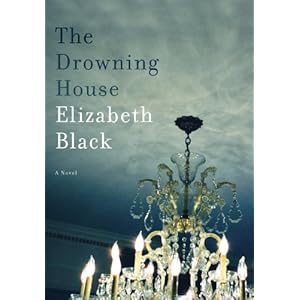
I’m currently reading a wonderful novel, Elizabeth Black’s The Drowning House. It’s a debut novel that will be published by Nan A. Talese/Doubleday in January. I received the book from the publisher a few days ago and, since the moment I opened it, I’ve had a difficult time putting it down.
The novel is set in Galveston, Texas. I’ve never been to Galveston, but the setting nevertheless feels eerily familiar. I’m from Alabama’s Gulf Coast, and Black skillfully evokes the heat, humidity, and the languid desire to do nothing that pervades Gulf Coast life. The Drowning House is a mystery that works on several levels, and it’s also a beautifully realized story about grief. The narrator, a photographer, has returned home to Galveston after the death of her young daughter to do research for an exhibition. She finds herself drawn into the circle of an old family friend who is also the town’s wealthiest citizen, and is compelled to ask questions that no one in this closed-off community wants to answer.
Elizabeth Black’s post about her own road to publication, which began at the Writers League of Texas Agents Conference, serves as a great primer on how to meet an agent, and why it’s so important to have one. It’s also a very realistic account of the long slog to publication.
We spent almost two years making revisions to The Drowning House, beginning with some larger changes (like eliminating a plot line to allow other key elements to emerge) and proceeding through two line edits. I’m a single mother with a full-time job, and my older daughter was married last fall, so it was a busy time for me.
A good agent doesn’t just act as a middleman between writer and publisher. A good agent helps you make the book the best it can be before putting it in the right hands. A good agent knows what editor might be on the lookout for a book like yours, and her relationships with publishers are invaluable. A good agent will help you get through the tough times when it seems as though the book might never be published. Without my agent, whom I trust implicitly and who has been a tremendously savvy advocate for my work, I’d be utterly adrift in the publishing world.
 Of course, anyone can forgo the agent and publishing house these days and upload a book to Smashwords, Kindle, Nook, or iTunes. But the reality is that a self-published book simply doesn’t have the same level of editorial vetting as a book that goes the traditional route; nor does it have the all-important marketing that, in many cases, can make a book.
 One crucial element of marketing is the distribution of the ARC (advanced reading copies) not only to reviewers and booksellers, but also to other authors, with a request that they read the book and, if they like it, offer a cover quote. Self-published books rarely, if ever, get reviewed in The New York Times or the San Francisco Chronicle, and very few will ever have the advantage of the booksellers’ interest pre-publication. The Drowning House came to me unsolicited, and I’ve never met the author; but because it came from an imprint I respect, and because it came in paperback (not as lines of text on an e-reader), I opened it and began reading. And I kept reading, and I imagine I’ll finish it tonight. It’s a terrific novel, and I suspect there are a number of other potential supporters feeling the same way I’m feeling about this book right now. The fact that the book will likely hit the stands with rave reviews, and that it will be available in brick-and-mortar bookstores, where huge numbers of readers still go to browse and buy the booksellers’ recommended reads, will give it a far better chance of success than most self-published novels ever have.
So, if you’re really serious about your novel, before you slap it up on Amazon and leave it to swim with the sharks, consider what you might be missing. Consider the readers you might lose by not giving your book a chance it deserves.

-
Writers on Writing: Joshilyn Jackson, in the carpool lane
Roxanne Ravenel over at All Things Girl conducted a wonderful two-part interview with Joshilyn Jackson, whose new novel, Backseat Saints, will surely satisfy her fans and earn her many new ones. Joshilyn talks about her love-hate relationship with the South (“I am truly happy nowhere else, and yet I am angry with it, so I don’t imagine I am finished writing about it”), what she reads, and why she thinks writing groups are a good idea, among other things.
My favorite bit of the interview involves Joshilyn’s writing process (or lack thereof). This pretty much sums my process up, too, sans ballet (my boy is more into ninjas).
 Oh Lord, I wish I had a process. It would be so much more efficient. I write on three different computers and mail the updated files to my g-mail account to download the latest every time I switch. I write at home in bed on my ancient craptoposaurus, at home in my office on my desktop, and I drag my little netbook everywhere to write in coffee shops and carpool lines and while waiting on a folding chair for my youngest to finish her ballet lesson. I do not have set working hours, either. I write in seizures, disappearing to borrowed vacation homes, off season, to draft twenty thousand words in four days, and then I don’t open a single file again for two weeks, then I’ll be up at three am for nine days in a row, revising. It’s a ridiculous, stupid way to work, and I cannot recommend it. It’s also the only way that works for me.
 -
Jose Saramago quits blogging
The AFP reports that Nobel prize-winning author Jose Saramago, known for his haunting novel Blindness, will say goodbye to the blog that he began writing last September. Why? He needs to finish his novel. Saramago was 85 when he started the blog with a love letter to Lisbon. In his last blog entry, Saramago writes:
“It has always been convenient that goodbyes be brief…Goodbye therefore. Until another day? I sincerely don’t think so. I have started another book and want to dedicate all my time to it,” he wrote in his final blog entry.
Good advice for all of us. Now, if only I could get this blog monkey off my back.
-
Readings for Writers
The Kenyon Review has just published a new anthology of work culled from the magazine over the past seventy years. Editor David Lynn writes:
Readings for Writers is a very different creature from your usual anthology…A different principle of selection comes into play: choosing stories, poems, and essays from across the decades to provoke lively responses from writers today, to inspire and challenge…the selections here are intended to inspire active response—pen to paper, fingers to keyboard.”
All in all, it looks like a terrific volume for teachers of writing, not to mention anyone who is engaged in the practice of writing short stories, essays, and poems. Contributions are arranged chronologically, beginning with Randall Jarrell, Allen Tate, and Dylan Thomas–all published in the magazine’s first year, 1939–and ending with Cara Blue Adams, whose essay appeared in 2009. Along the way areworks by the likes of Flannery O’Connor, Thomas Pynchon, Sylvia Plath, Nadine Gordimer, V.S. Naipul, Don DeLillo, Robert Haas, Annie Dillard, Billy Collins, Virgil Suarez, Czeslaw Milosz, Pablo Neruda, W.S. Merwin, and many others–82 selections in all.
I was browsing the contents page when, quite by surprise, I came upon “A Life in Pods,” an essay of mine which appeared in the magazine in 2008. I’m thrilled to be included in such amazing company, and can’t wait to get my copy and dig in.
-
Divisadero, by Michael Ondaatje
I’ve just finished reading the ARC of Michael Ondaatje’s extraordinary new novel Divisadero, which will be published in May. The book begins with a harrowing familial violence on a farm in Petaluma and ends in another country at another time. San Francisco residents will recognize the title, which is the street where the novel’s overriding consciousness, Anna, lives as an adult. I say “overriding consciousness” because, while Anna narrates some portions of the novel, there are also large swaths of omniscience, as well as points at which the omniscient narrator collides, unexpectedly, with Anna’s voice.
Years after the violence that shatters her family, Anna moves to France to temporarily inhabit the home of Lucien Seguro, a famous French poet. After a detailed and arresting account of the lives of Anna, her sister Claire, their father, and a cardsharp named Coop who was raised alongside the two girls, the novel’s focus shifts to Lucien: his upbringing in the French countryside, his affection for a neighbor woman, Marie-Neige, and her husband Roman, his childhood. Slowly and brilliantly, these stories intersect, held together by a man named Rafael, who becomes Anna’s lover in France.
This is a story about orphans, and about events that drastically alter the landscape of family. It is a patient, gentle book. Ondaatje writes truthfully and unflinchingly about desire. One of the most memorable aspects of the novel is his portrayal of parent-child relationships, particularly between mothers and sons. (more…)
-
Ray Bradbury at Home
I just came across this odd and wonderful little collection of video clips, taken at Ray Bradbury’s home in LA in 2001, by the folks who publish raybradbury.com. In it you’ll see the chaotic basement where the exceedingly prolific Bradbury works, and hear him joking about holding the record for rejections from The New Yorker. I didn’t realize until visiting the site that Bradbury had a new book out in 2006, Farewell Summer, a follow-up to Dandelion Wine, first published in 1957. You’ll also see Bradbury talking about linked story collections, something he did way back in the 1940s with The Martian Chronicles, and on how he put together his collection of metaphorical objects from Hollywood and beyond that surround him (according to Bradbury, in the old days all you had to do was ask for something and it could be yours).
-
David Mamet on Hollywood
Mamet was interviewed in Time Out New York by Joshua Rothkopf. The subject: Mamet’s new book about film, Bambi vs. Godzilla.
Hollywood is capitalism at its best: opposing forces working it out, using the tools of the marketplace. As such, it’s vastly messier than totalitarianism, but it kills a lot less people.
On audience:
I write for the audience. The small market or the mass market may be a function of the worth of my script, or of the assiduousness by which it was sold. But, like any other artist, I consider my potential audience everybody alive and half of the people who are dead.
And, by my vote, a Mamet must-read for writers: Writing in Restaurants, circa 1987.