Your cart is currently empty!
Category: publishing
-
A Handful of Glorious Pages
 Are you a novelist, a short story writer, or both?
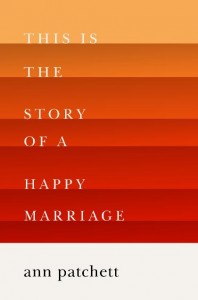
I’m currently reading Ann Patchett’s essay collection, This Is the Story of a Happy Marriage, which chronicles Patchett’s journey to becoming a writer. There are plenty of quotable passages in the book, but one of my favorite has to do with the short story form:
Love the short story for what it is: a handful of glorious pages that take you someplace you never knew you wanted to go.As both a novelist and a short story writer, I can tell you that I love the way stories happen: you write a sentence, and then another sentence, and a few weeks and twenty or so pages later, you have arrived at a totally unexpected destination.How does this differ from writing a novel? With a novel, while I don’t know exactly where I’m going or where and how the novel will end or what tangents it will take, I do usually begin with a general sense of direction. A sense of direction is important, because I know that a novel will require an investment of at least a couple of years. So I begin with a setting, a character, and a problem that needs to be solved or a question that begs to be answered.In my forthcoming novel, Golden State, for example, I began with two questions: 1) What would happen if California tried to secede from the nation in the present day? 2) What if the narrator’s estranged sister suddenly reappeared in her life? The novel was built from these questions, which married the personal with the political in a way that was very enjoyable to write and, I’ll admit, quite challenging to orchestrate.
With a short story, I feel more free, because I know my investment of time will be much shorter. I often don’t know what the problem is when I begin, or even who the major players are. I start instead with language–a series of words that present themselves in my brain and somehow compel me to follow them with other words.
Many novelists write only novels. Some short story writers write only stories. But the vast majority of published fiction writers do –or have done–some combination of both. Fiction writers frequently debut with a story collection, which is followed by a novel. One reason for this pattern, I believe, is that short stories tend to be the preferred form in graduate writing programs, so many writers come out of their MFA program with a story collection in near-publishable shape. After the writer gets a few good reviews and catches an agent’s eye with a story collection, he or she either a) decides that it would be fun to write a novel or b) concedes to the demands of the marketplace, which favors novels over story collections.
As for me, writing novels is my bread and butter, and I never feel quite whole unless I’m working on a book-length project. In fact, I can’t remember a time in the past twelve years when I wasn’t working on a book! But there is sustenance to be had in short stories too, and when I am feeling tired of my novel-in-progress, or antsy, or simply inspired in a different direction, I often begin a short story.
When you are feeling at wits’ end about your novel, I encourage you to set it aside for an hour or day or a week and begin a short story instead. It is possible that the writing of the story will push you back, joyfully, to your novel, and that you will abandon the story in short order for the bigger project. But it is also possible that you will sink blissfully into the freedom of the story, and that you will emerge, days or weeks later, with “a handful of glorious pages.”
As always, happy writing! Please join the conversation on twitter, stop by my facebook page, or read (and submit) good stories at Fiction Attic.
-
How to Write & Pitch the Cross-Genre Novel – Part 1
by Michelle Richmond
(This article originally appeared in the July/August 2013 issue of Writer’s Digest Magazine.)
The term “genre fiction” traditionally refers to any novel that fits neatly into a prescribed category: science fiction, romance, mystery, Western. But the line between genre fiction and mainstream fiction becomes blurrier by the year, in part because readers have become more sophisticated, and in part because the publishing industry is expanding, finding new and ever more creative ways to reach audiences.
Just because a novel contains a murder doesn’t mean it will check the old boxes one used to expect from a mystery. Likewise, a man on a horse doesn’t automatically mean we’re in for a traditional Western. Kate Atkinson’s Case Histories and Cormac McCarthy’s celebrated apocalypse novel, The Road, come to mind. A thriller may be intensely character-driven, like Stewart O’Nan’s Songs for the Missing; and a novel that inhabits a richly imagined science fiction world may also be marketed as mainstream fiction, like Karen Thompson Walker’s The Age of Miracles.
M.J. Rose, internationally bestselling author of twelve novels and two nonfiction titles and founder of AuthorBuzz.com, knows what it means to face off against genre conventions. Her novels combine such diverse genres as romance, paranormal, and mystery, and are often also classified as historical fiction. Last year, Rose’s The Book of Lost Fragrances simultaneously made two best-of lists in very different genres: Amazon’s “Best Fantasy Novels” and Publishers Weekly’s “Best Mystery/Suspense.” But the success of Rose’s recent books belies a dilemma that she faced from the beginning of her writing career, and which she still confronts today. While reviewers and readers often praise the diversity of Rose’s books, that very diversity has been a headache in terms of publishing. “For years,” Rose says, “publishers told my agent that they loved my work but didn’t know how to market such cross-genre fiction.” If anything, she says, the cross-genre nature of her work made it harder to sell.
Literary agent Elizabeth Pomoda agrees. “Fiction in different genres is packaged and marketed differently and shelved on different bookstore shelves,” she says. “There’s no shelf for cross-genre fiction, so cross-genre fiction wouldn’t be the easiest way to start a career.” That said, the literary landscape is changing, and the gates are opening in ways no one could have predicted ten years ago. She notes that we are now living “in a bottom-up culture in which readers, not publishing conglomerates, are the gatekeepers, and word of mouth is replacing reviews.”
Julianna Baggott, bestselling author of nineteen books running the gamut from YA to poetry, knows a few things about genre-bending. The header logo on Baggott’s labyrinthine website reads, “Baggott, Asher, Bode,” the three names under which she writes. Baggott’s extraordinary career serves as proof that the challenges of crossing genre can also net huge rewards. “Switching from one genre to another is like hitting a release valve,” she says. “When one genre starts to feel limiting, another begins to look liberating.”
Baggott’s most recent novels, Pure and Fuse, are part of a science-fiction trilogy featuring young adult heroines whose stories will also appeal to adults. The worlds Baggott creates are fantastical, and the writing is as lyrical as it is suspenseful. Baggott encourages writers to take what they know from one genre and use it to their advantage in anything they write.
“Each genre has its own demands,” Baggott says, “and the lessons learned in one are often transferable to another. The impact of image and brevity honed in poetry are useful in the novel. The truth of essay helps with insights and epiphany in fiction. I call screenplays ‘plot poems,’ because both the poem and the screenplay must be able to bear up under the weight of so much white on the page, like a house buried under snow.”
This is part 1 of a 4-part series. Subscribe to my weekly writing and publishing tips to never miss a post.
-
How to Publish a Book – Online Publishing Class
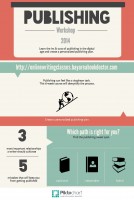
In this six-week course, you’ll learn the ins and outs of publishing in the digital age. What we’ll cover:
Traditional versus Independent Publishing: Learn the pros and cons of traditional and independent publishing, and decide which path is right for you.
Agents and Editors: What They Do and How to Find Them: Understand the role of the literary agent and the editor, as well as the relationship between the two. Discover how to find an agent, what terms to expect, and what red flags to watch out for.
The Path to Publication: Learn how you can improve your chances of getting your manuscript noticed by an agent or editor. Get my secret for building a publishing portfolio that will make your manuscript stand out.
Preparing Your Manuscript for Publication: Learn the 5 common mistakes that will keep your manuscript from getting a serious read. Understand the industry standards that are key to a professional manuscript presentation. Learn how to format your manuscript for independent ebook publishing.
The Money Trail: Learn the basics of advances and royalties. Understand what to look for in a traditional publishing contract, and how to get the best royalties for independently published work.
Understanding Copyright: Whether you choose to go the independent or traditional publishing route, copyright deeply affects your income stream. Learn how to protect your work from copyright infringement, and how to balance discoverability with copyright protection.
This course is intended for:
- Writers who are new to publishing
- Writers who have published independently but are interested in making the leap to traditional publishing
- Writers who are interested in having a hybrid career that includes both traditional and independent publishing
- Writers who have published in literary journals, magazines, or online but have not yet published a book
By the end of this course, you will have a clear idea of how to proceed with your manuscript. You will have created a personalized publishing plan to help you take your writing career to the next level.
Each week features a downloadable lecture, an assignment, and a discussion forum, where you can ask questions and post comments.
Go here to enroll in the publishing workshop.
-
Where to Find Pre-designed Ebook Covers
These sites offer quality pre-designed ebook covers:
Literra Designs: covers starting at just $35. Literra keeps costs low by using free stock images. You can customize the cover text for free. Back-of-the book and spine designs cost extra.
Beetiful.com is much pricier, at $165 per cover, but the covers tend to look a bit more professional. If you’re serious about marketing your work, I recommend Beetiful.
Fostering-success.com has pre-designed covers starting at $99, plus an additional $85 for full wrap. Don’t let the weird website name turn you off. They have some decent covers at a mid-range price.
CCRbookcoverdesign skews more toward sci-fi and horror. If genre is your thing, these could work. Very affordably priced at $45-$75. (The primary image for this post is from CCR)
Damonza.com offers very good-looking, unique, artistically inclined covers, but at a heftier price than the others–$195. If you don’t mind spending more, this site is worth checking out. Unfortunately, some of the covers, while arresting, have titles that aren’t as readable as you might like them to be.
Goonwrite.com has covers starting at $30. The brightness of the images definitely gives the covers a pre-packaged look, but that doesn’t mean they’re not eye-catching. If you scroll down you’ll find searchable genre categories on the left hand side of the page.
Author Marketing Club features covers by a number of designers. You choose the design, and AMC hooks you up with the designer. Covers are affordably priced, although some look a bit too formulaic. AMC offers is a membership of $105 per year, which gives you free access to all of their ebook cover designs.
-
3 Myths That Are Killing Literary Culture
1. Writers just want to be read.
I recently heard a young woman at a party say that writers don’t mind when their books are downloaded for free on the internet, because “writers just want to be read.”
As a working writer who pays my mortgage and buys groceries and sends my kid to summer camp with the proceeds from my books, I can tell you that this isn’t true. While I do want to be read, that isn’t my primary concern. My primary concern is making a living.
2. Writers don’t need to be paid for their work.
Let’s say you design and produce a T-shirt. Let’s say you sell the T-shirts for $20 each, and with the proceeds from these T-shirts, you pay your rent, buy coffee, pay off your student loans, pay the electric bill,go to the movies, buy a beer at the corner bar, etc.
Now, you may give your shirt to a few friends in order to drum up business. That’s called marketing, and it’s not much different from when publishers send out review copies of books to newspapers, magazines, and influential bloggers. You’re willing to give away a few shirts in the hopes that it will lead to sales.
Let’s say a bunch of people—a thousand, two thousand, ten thousand, half a million—come to you and say, “Hey, you should give us that shirt, because we’ll wear it, and when we wear your shirt, it’s going to be good for you.” What would you say? You’d probably turn them down. You’d probably point out that creating the shirt took time, effort, and resources. Maybe you studied graphic design to learn the skills that went into making that shirt. Maybe you worked at the mall for a few dollars an hour while you were figuring out how to arrange your life in a way that would allow you to do more fulfilling work. You’d probably point out that you didn’t make that shirt just to give it away. You need to sell the shirt, because that’s how you make a living, and the fact of someone wearing your shirt does absolutely nothing for you. It’s good for the person who gets the free shirt, but it is most definitely not good for you.
Don’t like the T-shirt example? Make it an app. Let’s say you spend time, money, and intellectual capital developing an app that you sell for $1.99. If thousands of people were to say to you, “Give me that app. I want to use it, but I don’t want to pay for it. If you give it to me, it will be good for you,” would you agree?
Authors make a living by selling our books. We write books that we hope will be good, books that we hope will be meaningful, but we also write books that we hope people will buy. We do not go to the store and walk out with a new pair of shoes or a new baseball bat or an ice cream cone without paying for them. We don’t expect the taxi driver to drive us to the airport for free, and we don’t expect the tech guy to fix our computer for free, and we don’t expect the piano teacher to give our kids piano lessons for free. We understand that when a service is provided, it is good practice to pay for it. We hope that others will show us the same courtesy.
When increasing numbers of readers decide they’re going to get our books for free by illegally downloading them, and when increasing numbers of libraries lobby for the “right” to lend digital copies of our books to anyone, anywhere, forever, without compensating the creators, authors don’t make a living.
In “The Slow Death of the American Author,” an opinion piece for The New York Times, Scott Turow points to the offshore pirate sites that offer illegal downloads of copyrighted books. Google and Bing serve ads to these pirate sites, and subscribers pay a fee to download content, so both the pirates and the mega-corporations are making big money off of the books they had no role in creating. Kim dot com gets another Rolls Royce, Google tops off its multi-billion dollar coffers, and PayPal gets a huge chunk of the pie. The only ones who aren’t being compensated for those books are the people who wrote them. The people who are downloading books and music illegally don’t mind paying the pirate, and they don’t mind sending a percentage to paypal; these entities are often praised as innovators. It is strange that the same people who happily to give money to the pirates believe that the writers and musicians who created the content are wrongheaded or selfish to ask for compensation. (The Trichordist has been writing on this subject for the music industry for some time now.)
If I stood on a corner telling people who asked where they could buy stolen goods and collected a small fee for it, I’d be on my way to jail. And yet even while search engines sail under mottos like “Don’t be evil,” they do the same thing. ~Scott Turow
The only people who can legitimately say, “Authors shouldn’t be paid for their books,” are people who happily go to their jobs for free. There’s a rallying cry among certain academics, librarians, and journalists that copyright is anti-culture, that all books should be free to all people, but I don’t know a single professor or librarian who doesn’t get paid to show up to the university or to the library. The same journalists who lambast authors are often salaried employees of newspapers and magazines that a)charge a subscription fee and b) pay the journalists for their content.
Traditionally, libraries purchase a hard copy of a book, which they then lend out to their patrons. I happen to be a longtime fan of libraries and the services they provide to the community. As an author, I have accepted the fact that I receive a royalty only on the copy the library purchases, not on the lending (although in Europe, authors do receive royalties each time their books are lent). It’s a model that American authors have by and large come to terms with, and, traditionally, there has been a friendly relationship between libraries and authors. Unlimited e-book lending, however, is an entirely different ballgame. For one thing, a physical book has a shelf life and must eventually be replaced, while an e-book may be lent forever from any location. By effectively ensuring that no reader will have any incentive to purchase an e-book, ever, it erases a huge chunk of the author’s royalties.
If you happen to be a professor or librarian who believes that information, including copyrighted books, should flow freely with no compensation for the creators of that information, or that publishers should offer books to libraries for free or next to free, or that soft copyright laws are essential to democracy, I urge you to put your money where your mouth is: the next time you receive a paycheck, return it. You are just happy to be able to go to work, right? You don’t do it for the money. (It also bears saying that libraries need content, and the content comes from somewhere, so when libraries lobby against fair compensation for authors, and when they remove the incentive to actually show up at the physical library to get a book, they are lobbying against their own existence.)
3. Writers make so much money, they shouldn’t mind if their books are illegally downloaded.
Advances for mid-list authors—that is, the vast majority of authors—are far from a living wage. The advance for my first book was $2,000. As I wrote the stories in the collection over a period of eight years, I wasn’t exactly raking it in. My second book, which took a much more reasonable three years to write, received an even smaller advance of $1,000—or about $333 per year. My third book, which took me more than four years to write, received an advance of $25,000, as did my fourth book, which, fortunately, only took one year to write. Obviously, during those years of writing I was making a living in other ways—from wiping down the beds at a tanning salon to selling credit processing machines all over New York City to teaching creative writing. For my next two books, I received a much bigger advance, but this only happened after one of my books, through some alchemy of good fortune and good timing, sold half a million copies. (Obviously, I did not do this alone; my book sold well because I had the support of booksellers and my agent and my editor and publisher, the very entities that piracy threatens to put out of business.)
My point here is that very few authors are making the big bucks. There are the mega bestsellers, of course, but the vast majority of authors make far less per hour than the barista at Starbucks or the person flipping those admittedly amazing burgers at In n’ Out. So when you say, “If I download this book for free, it doesn’t really hurt anybody,” you’re wrong. It hurts the person who made it.
I assume that most of the people who read this post do not illegally download books, music, or movies. But if you are a person who does that, I ask you to do one thing before you download the next book or song from a file sharing site: take a moment to visualize yourself reaching into that author’s purse, or that musician’s wallet, and stealing money. Are you comfortable with that image of yourself? If so, go ahead; download away.
Why this should matter to you.
If you’ve read a good book in the past few years, if you’ve read a book that moved you,a book that enlarged your world-view, a book that changed you, if you have ever read a book that made you want to be a writer or inspired you to be a reader, then remember where that book came from: an author who lives in the same world in which you live, an author who cannot download lunch, blue jeans, or an apartment for free.
-
How to End a Story
 Stories are like relationships: the beginning is always so much fun, and the ending is fraught with turmoil.
When I sit down to start a story, the first sentence just sort of comes to me. The second sentence too. If I’m lucky, the third swiftly follows. The inimitable short story writer Kate Braverman once told a group of enraptured graduate students (they happened to be my students, and she was wowing them with her general exuberance and wonderful strangeness) that she channels her characters. A bit like spirits, some linguistically gifted version of the returning dead. They speak throughher and onto the page, as if she isn’t even there.
I, unfortunately, channel nothing. It is all rough work after sentence three. By the time I’m in the middle of the story, I’m feeling more than a little uncomfortable. Where am I going? Where have I been? Have I gotten lost in the labyrinth? Probably, yes.
Somehow, I find my way through. The characters do things. They meet with hardship and grief, or maybe they just meet some swanky fellow in a bar or a Laundromat. They get into trouble, maybe out of it. Probably not. I find myself feeling that they have done all they can do. Not much more can be said. The action has fallen. We have all had our dénouement (which, by the way, is a French term meaning untying, from Middle French desnouement, from desnouer – to untie – from Old French desnoer, from des- de- + noer meaning to tie, from Latin nodare, from nodus knot.) And here we are in the labyrinth again, attempting to untie the knot, unwind the rope, escape the not-so-fun funhouse.
It’s time to write our way out.
One wants to resolve things, after all.One feels a deeply human need toconclude. After the falling action, there is often something more. Something unexpected. And here we come to what I have been meaning to say all along: a good ending is layered. The reader thinks she has discovered everything she can possibly discover about a story, but then: another image appears, another paragraph hums along, another question begs to be answered. One is left with the feeling of having walked out of the dark theatre into the light, only to realize there was something else playing after the credits, some secret part of the film, some final moment. You can hear it through the door, vaguely, but you can’t get back in. You’re not sure what you’ve missed, but you’re certain that you’ve missed something, that the reel kept on playing, the story kept on going, after your departure. You were only an observer, a brief malingerer, there but not there. The lives within the story carry on.
Michelle Richmond is the author of four books of fiction, including the New York Times bestseller The Year of Fog. She is the creator of the Guided Workbooks for Writers series.
Sign up for Michelle’s weekly tips on writing and publishing.
-
Novella Writing – a Map for Getting Started
The first thing you need to know about writing a novel is that there are no easy answers. There’s no magic formula for novel-writing. Every novel demands its own structure, its own pace, its own way of looking at the world.
Still with me? Good. Because, as it turns out, novel writing isn’t just a head-banging exercise in utter frustration and despair (although, trust me, sometimes it is just that). It’s also a deep swim into your own head space, a really fun adventure, and one of the most thrillingly creative things a person can do. It’s your world; you get to make it, populate it, cultivate it, and bring all of the pieces together.
If you’re ready to take on the challenge of writing a novel, continue reading for 10 steps to get your started.
1. Consider the setting.
Setting encompasses not only place, but also time. Where does your novel happen, and when?2. Consider the point of view.
Who is telling the story, from what distance? Do you have a first-person narrator who is at the center of the action, an omniscient narrator who is able to go into the thoughts of any character at any time, a limited third person narration that sticks closely to one character? (more…) -
Writers on Writing: Elizabeth Black (or Why You Need an Agent)
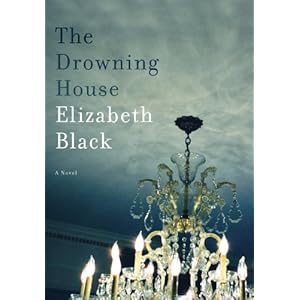
I’m currently reading a wonderful novel, Elizabeth Black’s The Drowning House. It’s a debut novel that will be published by Nan A. Talese/Doubleday in January. I received the book from the publisher a few days ago and, since the moment I opened it, I’ve had a difficult time putting it down.
The novel is set in Galveston, Texas. I’ve never been to Galveston, but the setting nevertheless feels eerily familiar. I’m from Alabama’s Gulf Coast, and Black skillfully evokes the heat, humidity, and the languid desire to do nothing that pervades Gulf Coast life. The Drowning House is a mystery that works on several levels, and it’s also a beautifully realized story about grief. The narrator, a photographer, has returned home to Galveston after the death of her young daughter to do research for an exhibition. She finds herself drawn into the circle of an old family friend who is also the town’s wealthiest citizen, and is compelled to ask questions that no one in this closed-off community wants to answer.
Elizabeth Black’s post about her own road to publication, which began at the Writers League of Texas Agents Conference, serves as a great primer on how to meet an agent, and why it’s so important to have one. It’s also a very realistic account of the long slog to publication.
We spent almost two years making revisions to The Drowning House, beginning with some larger changes (like eliminating a plot line to allow other key elements to emerge) and proceeding through two line edits. I’m a single mother with a full-time job, and my older daughter was married last fall, so it was a busy time for me.
A good agent doesn’t just act as a middleman between writer and publisher. A good agent helps you make the book the best it can be before putting it in the right hands. A good agent knows what editor might be on the lookout for a book like yours, and her relationships with publishers are invaluable. A good agent will help you get through the tough times when it seems as though the book might never be published. Without my agent, whom I trust implicitly and who has been a tremendously savvy advocate for my work, I’d be utterly adrift in the publishing world.
 Of course, anyone can forgo the agent and publishing house these days and upload a book to Smashwords, Kindle, Nook, or iTunes. But the reality is that a self-published book simply doesn’t have the same level of editorial vetting as a book that goes the traditional route; nor does it have the all-important marketing that, in many cases, can make a book.
 One crucial element of marketing is the distribution of the ARC (advanced reading copies) not only to reviewers and booksellers, but also to other authors, with a request that they read the book and, if they like it, offer a cover quote. Self-published books rarely, if ever, get reviewed in The New York Times or the San Francisco Chronicle, and very few will ever have the advantage of the booksellers’ interest pre-publication. The Drowning House came to me unsolicited, and I’ve never met the author; but because it came from an imprint I respect, and because it came in paperback (not as lines of text on an e-reader), I opened it and began reading. And I kept reading, and I imagine I’ll finish it tonight. It’s a terrific novel, and I suspect there are a number of other potential supporters feeling the same way I’m feeling about this book right now. The fact that the book will likely hit the stands with rave reviews, and that it will be available in brick-and-mortar bookstores, where huge numbers of readers still go to browse and buy the booksellers’ recommended reads, will give it a far better chance of success than most self-published novels ever have.
So, if you’re really serious about your novel, before you slap it up on Amazon and leave it to swim with the sharks, consider what you might be missing. Consider the readers you might lose by not giving your book a chance it deserves.

-
How to Start a Story
 One of the questions I hear frequently from aspiring writers is, “How do I start a story?” Even seasoned writers have days when the story won’t come. Talking to a reporter for Interview Magazine in 1995, Martin Amis said of novel-writing, “If I come up against a brick wall, I’ll just go and play snooker or something or sleep on it, and my subconscious will fix it for me.” Good advice, for sure. But if snooker and the subconscious don’t do it for you, here are a few tips to get you going.
- You can begin “in medias res,” or in the middle of the action. When you’re telling a friend a story, you rarely begin with, “I was born in such-and-such hospital in such-and-such city.” Rather, you jump forward to the exciting part, the middle of the action of your own life. “I was standing in front of the old movie theater on Amsterdam Avenue when…”
- You can begin with a character in a strange or tense situation (Gregor Samsa wakes up as a cockroach in “The Metamorphosis”, Mersault is on trial for murder in “The Stranger”).
- You can begin with a line or two that describes the setting, then move on to who is in the setting, and why. (more…)
-
Writers on Writing: Kathryn Stockett’s tale of never giving up, despite rejection
 More Magazine features an essay by Kathryn Stockett, author of the wildly successful novel The Help, now a wildly successful film. It’s an old story, but worth repeating: novelist gets a zillion rejections, or 60, to be more precise, before finally landing an agent, a publisher, and a long-running spot at the top of just about every bestseller list you can imagine.
Stockett’s advice for writers and anyone else who keeps hitting a brick wall? “Give in to your obsession.”
Click here to get free downloads from the Guided Workbooks for Writers series.
In the end, I received 60 rejections for The Help. But letter number 61 was the one that accepted me. After my five years of writing and three and a half years of rejection, an agent named Susan Ramer took pity on me. What if I had given up at 15? Or 40? Or even 60? Three weeks later, Susan sold The Help to Amy Einhorn Books.
For Stockett, 61 was the magic number. With The Year of Fog, my magic number wasn’t far behind. I like to believe that every good book has a magic number, that books will find their way into the hands of a receptive agent and editor given enough time and persistence. For me, the agent was Valerie Borchardt, and the editor was Caitlin Alexander, and I consider my book very fortunate to have fallen into their hands.
So if you have a book that keeps coming back with a form letter that says, “Unfortunately, this book is not quite right for us,” don’t give up. Envision in your mind a magic number. You don’t know it yet. No one does. It could be twenty rejections from now, or forty. Or it could be just one.
Related: What if the only thing standing between you and publication is a great revision? Visit the Book Doctor now.