Your cart is currently empty!
Category: Books
-
Coming of Age at the End of Days by Alice LaPlante
If, like me, you were raised on a steady diet of Rapture sermons, you’ll find much to relate to in Coming of Age at the End of Days, the darkly entertaining novel of faith gone awry by Alice LaPlante, the bestselling author of Circle of Wives.
Sixteen year old Anna, unpopular at school and searching for something to hold on to, falls under the spell of the Goldshmidts. The Goldshmidt parents and their teenaged son, Lars, belong to a cult whose mission is to speed up the coming of the Tribulation–the dark period of hell on earth that fundamentalist Christians believe will follow the second coming of Christ. When she is suddenly orphaned, Anna becomes ever more obsessed with the Tribulation and her role in making it happen.
The cult’s mission centers on the breeding of pure red heifers; Orthodox Judaism holds that Jews must be purified by the ashes of a red heifer in order to rebuild the Third Temple. Evangelical Christians have long been on this bandwagon, as they believe that the rebuilding of the Third Temple is a prerequisite for the coming of Christ. This is great stuff, and it’s not even made up. For a fascinating, in-depth explanation of the red heifer mythology and a profile of the Mississippi preacher named Clyde Lott and the Orthodox Rabbi who are in cahoots to breed cattle to get things rolling, read the excellent PBS Frontline report, Forcing the End: Why Do a Pentecostal Preacher from Mississippi and an Orthodox Rabbi from Jerusalem Believe That a Red Heifer Can Bring Change?
In the background of LaPlante’s novel is a far-away figure who is working to breed the heifers–a character who seems to be based to large extent on Lott. For readers who didn’t grow up with the terrifying Left Behind series (we watched them at church lock-ins) and with the Rapture in the background as a constant threat, LaPlante’s novel may seem delightfully far-fetched. As someone who believed all this stuff hook, line, and sinker until I left high school, it’s fun to read it as an adult, when I am able to see it as a dark fairy tale instead of a terrifying inevitability.
Anna is an interesting character, and I easily found myself rooting for her. The only bit that didn’t quite ring true was Anna’s initial fascination with Lars. He utters a few words to her at a bus stop, and she falls instantly under his spell. I would have liked to see her more gradually sucked in; a deeper exploration of why she fell for Lars’s story, and for and Lars’s outsized view of his own elevated place in the world, would have made for a richer character.
What I find most interesting about the Tribulation is its potential to become a self-fulfilling prophecy. Evangelical American presidents have made monumentally dangerous decisions based upon the belief that it is their duty to move the world in the direction of the Second Coming. As I write this, ISIS too is attempting to bring on the Apocalypse. With three distinctly different groups–evangelical Christians, Islamic extremists, and Orthodox Jews–moving toward three very different versions of the end of days, the Tribulation, which Evangelical Christian envision as hell on earth, may very well come to pass.
In Coming of Age at the End of Days, LaPlante has crafted a darkly entertaining and often enlightening cautionary tale about what happens when youth and faith collide.
Buy the book: Indiebound Amazon
ISBN 9780802121653
Atlantic Monthly Press, August 2015
Michelle Richmond is the New York Times bestselling author of four novels, including Golden State and The Year of Fog, and two award-winning story collections.
-
Writers on Writing: Stephen King on Grammar & Work
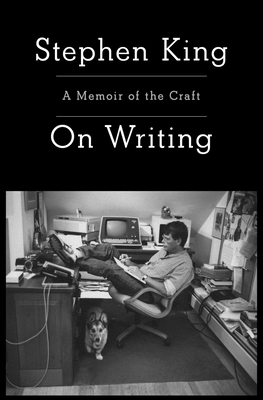 Stephen King recently sat down with Jessica Lahey of The Atlantic Monthly to talk about teaching writing. King’s On Writing: A Memoir of the Craft is one of my favorite books on writing ever written. I love it for its accessibility, its wisdom, its lucidity, and its utter lack of pretension.
Lahey gained a new respect for the book when she used it to unlock her students’ resistance while teaching writing in a residential drug and rehab program for teens.
At one point, Lahey asks King about the relevance of teaching grammar in classrooms. “Why bother to name the parts?” she asks, if someone “either absorbs the principles of one’s native language in conversation and in reading or one does not.” Here is King’s response:
When we name the parts, we take away the mystery and turn writing into a problem that can be solved. I used to tell them that if you could put together a model car or assemble a piece of furniture from directions, you could write a sentence. Reading is the key, though. A kid who grows up hearing “It don’t matter to me” can only learn doesn’t if he/she reads it over and over again.
I like the idea of demystifying writing, of naming the parts in order to make them less lofty and unattainable. The key here, though, is that we learn what we hear, and if we hear the wrong thing from an early age, we will have to retrain ourselves.
Read the entire interview, How Stephen King Teaches Writing.
Or get the book.
-
The Art of Simplicity – tips for writers from graphic designer Chip Kidd
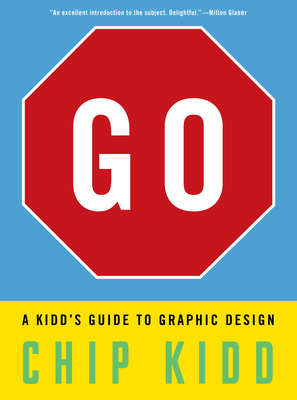
I’ve been reading Chip Kidd’s Go: A Kidd’s Guide to Graphic Design. Although the book was written for a younger audience, it’s a gorgeous, superbly readable crash course in the history and principles of graphic design.
One of the lessons that writers can take to heart is Kidd’s explanation of simplicity vs. complexity. “Simple, direct visual elements will get the attention of your viewer in a different way than complex images that the writer will have to decode,” Kidd writes. Complexity, on the other hand, “has to be very carefully managed or it becomes chaos.”
The best writing strikes a balance between simplicity and complexity. As a writer and as a reader, I am drawn to very direct sentences that are simple to navigate. I’m not talking about sentences that are very short, or sentences in which vocabulary is limited to the lowest common denominator. I’m talking about sentences that are clear and meaningful. The writer’s goal, on a sentence by sentence level, should be clarity. Overblown descriptions, adjective pile-ups, and self-conscious phrasing hinder clarity. Any sentence that screams “look at me!” fails the reader. The writer’s job is to communicate a story. The sentences should be clean enough to communicate that story effectively.
For me, complexity comes into the picture in the construction of the plot and the pattern of the novel. Kidd uses a wonderful spirograph illustration to demonstrate the principle of complexity. When you write a novel, there are many elements at play, including character, theme, plot, setting, and point of view. All of these elements must somehow find their way into an elegant design. The elements intersect throughout the novel with various degrees of symmetry, layered in a way that makes each element visible but none overpowering.
Michelle Richmond is the New York Times bestselling author of four novels and two award-winning story collections. Ger her latest novel, Golden State.
Kidd’s book is a wonderful experience for anyone interested in graphic design or the visual arts. But it is also a powerful reminder that, as writers, we can find inspiration anywhere and everywhere.
-
A Handful of Glorious Pages
 Are you a novelist, a short story writer, or both?
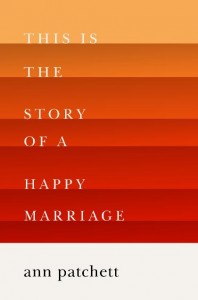
I’m currently reading Ann Patchett’s essay collection, This Is the Story of a Happy Marriage, which chronicles Patchett’s journey to becoming a writer. There are plenty of quotable passages in the book, but one of my favorite has to do with the short story form:
Love the short story for what it is: a handful of glorious pages that take you someplace you never knew you wanted to go.As both a novelist and a short story writer, I can tell you that I love the way stories happen: you write a sentence, and then another sentence, and a few weeks and twenty or so pages later, you have arrived at a totally unexpected destination.How does this differ from writing a novel? With a novel, while I don’t know exactly where I’m going or where and how the novel will end or what tangents it will take, I do usually begin with a general sense of direction. A sense of direction is important, because I know that a novel will require an investment of at least a couple of years. So I begin with a setting, a character, and a problem that needs to be solved or a question that begs to be answered.In my forthcoming novel, Golden State, for example, I began with two questions: 1) What would happen if California tried to secede from the nation in the present day? 2) What if the narrator’s estranged sister suddenly reappeared in her life? The novel was built from these questions, which married the personal with the political in a way that was very enjoyable to write and, I’ll admit, quite challenging to orchestrate.
With a short story, I feel more free, because I know my investment of time will be much shorter. I often don’t know what the problem is when I begin, or even who the major players are. I start instead with language–a series of words that present themselves in my brain and somehow compel me to follow them with other words.
Many novelists write only novels. Some short story writers write only stories. But the vast majority of published fiction writers do –or have done–some combination of both. Fiction writers frequently debut with a story collection, which is followed by a novel. One reason for this pattern, I believe, is that short stories tend to be the preferred form in graduate writing programs, so many writers come out of their MFA program with a story collection in near-publishable shape. After the writer gets a few good reviews and catches an agent’s eye with a story collection, he or she either a) decides that it would be fun to write a novel or b) concedes to the demands of the marketplace, which favors novels over story collections.
As for me, writing novels is my bread and butter, and I never feel quite whole unless I’m working on a book-length project. In fact, I can’t remember a time in the past twelve years when I wasn’t working on a book! But there is sustenance to be had in short stories too, and when I am feeling tired of my novel-in-progress, or antsy, or simply inspired in a different direction, I often begin a short story.
When you are feeling at wits’ end about your novel, I encourage you to set it aside for an hour or day or a week and begin a short story instead. It is possible that the writing of the story will push you back, joyfully, to your novel, and that you will abandon the story in short order for the bigger project. But it is also possible that you will sink blissfully into the freedom of the story, and that you will emerge, days or weeks later, with “a handful of glorious pages.”
As always, happy writing! Please join the conversation on twitter, stop by my facebook page, or read (and submit) good stories at Fiction Attic.
-
How to Write & Pitch the Cross-Genre Novel – Part 1
by Michelle Richmond
(This article originally appeared in the July/August 2013 issue of Writer’s Digest Magazine.)
The term “genre fiction” traditionally refers to any novel that fits neatly into a prescribed category: science fiction, romance, mystery, Western. But the line between genre fiction and mainstream fiction becomes blurrier by the year, in part because readers have become more sophisticated, and in part because the publishing industry is expanding, finding new and ever more creative ways to reach audiences.
Just because a novel contains a murder doesn’t mean it will check the old boxes one used to expect from a mystery. Likewise, a man on a horse doesn’t automatically mean we’re in for a traditional Western. Kate Atkinson’s Case Histories and Cormac McCarthy’s celebrated apocalypse novel, The Road, come to mind. A thriller may be intensely character-driven, like Stewart O’Nan’s Songs for the Missing; and a novel that inhabits a richly imagined science fiction world may also be marketed as mainstream fiction, like Karen Thompson Walker’s The Age of Miracles.
M.J. Rose, internationally bestselling author of twelve novels and two nonfiction titles and founder of AuthorBuzz.com, knows what it means to face off against genre conventions. Her novels combine such diverse genres as romance, paranormal, and mystery, and are often also classified as historical fiction. Last year, Rose’s The Book of Lost Fragrances simultaneously made two best-of lists in very different genres: Amazon’s “Best Fantasy Novels” and Publishers Weekly’s “Best Mystery/Suspense.” But the success of Rose’s recent books belies a dilemma that she faced from the beginning of her writing career, and which she still confronts today. While reviewers and readers often praise the diversity of Rose’s books, that very diversity has been a headache in terms of publishing. “For years,” Rose says, “publishers told my agent that they loved my work but didn’t know how to market such cross-genre fiction.” If anything, she says, the cross-genre nature of her work made it harder to sell.
Literary agent Elizabeth Pomoda agrees. “Fiction in different genres is packaged and marketed differently and shelved on different bookstore shelves,” she says. “There’s no shelf for cross-genre fiction, so cross-genre fiction wouldn’t be the easiest way to start a career.” That said, the literary landscape is changing, and the gates are opening in ways no one could have predicted ten years ago. She notes that we are now living “in a bottom-up culture in which readers, not publishing conglomerates, are the gatekeepers, and word of mouth is replacing reviews.”
Julianna Baggott, bestselling author of nineteen books running the gamut from YA to poetry, knows a few things about genre-bending. The header logo on Baggott’s labyrinthine website reads, “Baggott, Asher, Bode,” the three names under which she writes. Baggott’s extraordinary career serves as proof that the challenges of crossing genre can also net huge rewards. “Switching from one genre to another is like hitting a release valve,” she says. “When one genre starts to feel limiting, another begins to look liberating.”
Baggott’s most recent novels, Pure and Fuse, are part of a science-fiction trilogy featuring young adult heroines whose stories will also appeal to adults. The worlds Baggott creates are fantastical, and the writing is as lyrical as it is suspenseful. Baggott encourages writers to take what they know from one genre and use it to their advantage in anything they write.
“Each genre has its own demands,” Baggott says, “and the lessons learned in one are often transferable to another. The impact of image and brevity honed in poetry are useful in the novel. The truth of essay helps with insights and epiphany in fiction. I call screenplays ‘plot poems,’ because both the poem and the screenplay must be able to bear up under the weight of so much white on the page, like a house buried under snow.”
This is part 1 of a 4-part series. Subscribe to my weekly writing and publishing tips to never miss a post.
-
3 Myths That Are Killing Literary Culture
1. Writers just want to be read.
I recently heard a young woman at a party say that writers don’t mind when their books are downloaded for free on the internet, because “writers just want to be read.”
As a working writer who pays my mortgage and buys groceries and sends my kid to summer camp with the proceeds from my books, I can tell you that this isn’t true. While I do want to be read, that isn’t my primary concern. My primary concern is making a living.
2. Writers don’t need to be paid for their work.
Let’s say you design and produce a T-shirt. Let’s say you sell the T-shirts for $20 each, and with the proceeds from these T-shirts, you pay your rent, buy coffee, pay off your student loans, pay the electric bill,go to the movies, buy a beer at the corner bar, etc.
Now, you may give your shirt to a few friends in order to drum up business. That’s called marketing, and it’s not much different from when publishers send out review copies of books to newspapers, magazines, and influential bloggers. You’re willing to give away a few shirts in the hopes that it will lead to sales.
Let’s say a bunch of people—a thousand, two thousand, ten thousand, half a million—come to you and say, “Hey, you should give us that shirt, because we’ll wear it, and when we wear your shirt, it’s going to be good for you.” What would you say? You’d probably turn them down. You’d probably point out that creating the shirt took time, effort, and resources. Maybe you studied graphic design to learn the skills that went into making that shirt. Maybe you worked at the mall for a few dollars an hour while you were figuring out how to arrange your life in a way that would allow you to do more fulfilling work. You’d probably point out that you didn’t make that shirt just to give it away. You need to sell the shirt, because that’s how you make a living, and the fact of someone wearing your shirt does absolutely nothing for you. It’s good for the person who gets the free shirt, but it is most definitely not good for you.
Don’t like the T-shirt example? Make it an app. Let’s say you spend time, money, and intellectual capital developing an app that you sell for $1.99. If thousands of people were to say to you, “Give me that app. I want to use it, but I don’t want to pay for it. If you give it to me, it will be good for you,” would you agree?
Authors make a living by selling our books. We write books that we hope will be good, books that we hope will be meaningful, but we also write books that we hope people will buy. We do not go to the store and walk out with a new pair of shoes or a new baseball bat or an ice cream cone without paying for them. We don’t expect the taxi driver to drive us to the airport for free, and we don’t expect the tech guy to fix our computer for free, and we don’t expect the piano teacher to give our kids piano lessons for free. We understand that when a service is provided, it is good practice to pay for it. We hope that others will show us the same courtesy.
When increasing numbers of readers decide they’re going to get our books for free by illegally downloading them, and when increasing numbers of libraries lobby for the “right” to lend digital copies of our books to anyone, anywhere, forever, without compensating the creators, authors don’t make a living.
In “The Slow Death of the American Author,” an opinion piece for The New York Times, Scott Turow points to the offshore pirate sites that offer illegal downloads of copyrighted books. Google and Bing serve ads to these pirate sites, and subscribers pay a fee to download content, so both the pirates and the mega-corporations are making big money off of the books they had no role in creating. Kim dot com gets another Rolls Royce, Google tops off its multi-billion dollar coffers, and PayPal gets a huge chunk of the pie. The only ones who aren’t being compensated for those books are the people who wrote them. The people who are downloading books and music illegally don’t mind paying the pirate, and they don’t mind sending a percentage to paypal; these entities are often praised as innovators. It is strange that the same people who happily to give money to the pirates believe that the writers and musicians who created the content are wrongheaded or selfish to ask for compensation. (The Trichordist has been writing on this subject for the music industry for some time now.)
If I stood on a corner telling people who asked where they could buy stolen goods and collected a small fee for it, I’d be on my way to jail. And yet even while search engines sail under mottos like “Don’t be evil,” they do the same thing. ~Scott Turow
The only people who can legitimately say, “Authors shouldn’t be paid for their books,” are people who happily go to their jobs for free. There’s a rallying cry among certain academics, librarians, and journalists that copyright is anti-culture, that all books should be free to all people, but I don’t know a single professor or librarian who doesn’t get paid to show up to the university or to the library. The same journalists who lambast authors are often salaried employees of newspapers and magazines that a)charge a subscription fee and b) pay the journalists for their content.
Traditionally, libraries purchase a hard copy of a book, which they then lend out to their patrons. I happen to be a longtime fan of libraries and the services they provide to the community. As an author, I have accepted the fact that I receive a royalty only on the copy the library purchases, not on the lending (although in Europe, authors do receive royalties each time their books are lent). It’s a model that American authors have by and large come to terms with, and, traditionally, there has been a friendly relationship between libraries and authors. Unlimited e-book lending, however, is an entirely different ballgame. For one thing, a physical book has a shelf life and must eventually be replaced, while an e-book may be lent forever from any location. By effectively ensuring that no reader will have any incentive to purchase an e-book, ever, it erases a huge chunk of the author’s royalties.
If you happen to be a professor or librarian who believes that information, including copyrighted books, should flow freely with no compensation for the creators of that information, or that publishers should offer books to libraries for free or next to free, or that soft copyright laws are essential to democracy, I urge you to put your money where your mouth is: the next time you receive a paycheck, return it. You are just happy to be able to go to work, right? You don’t do it for the money. (It also bears saying that libraries need content, and the content comes from somewhere, so when libraries lobby against fair compensation for authors, and when they remove the incentive to actually show up at the physical library to get a book, they are lobbying against their own existence.)
3. Writers make so much money, they shouldn’t mind if their books are illegally downloaded.
Advances for mid-list authors—that is, the vast majority of authors—are far from a living wage. The advance for my first book was $2,000. As I wrote the stories in the collection over a period of eight years, I wasn’t exactly raking it in. My second book, which took a much more reasonable three years to write, received an even smaller advance of $1,000—or about $333 per year. My third book, which took me more than four years to write, received an advance of $25,000, as did my fourth book, which, fortunately, only took one year to write. Obviously, during those years of writing I was making a living in other ways—from wiping down the beds at a tanning salon to selling credit processing machines all over New York City to teaching creative writing. For my next two books, I received a much bigger advance, but this only happened after one of my books, through some alchemy of good fortune and good timing, sold half a million copies. (Obviously, I did not do this alone; my book sold well because I had the support of booksellers and my agent and my editor and publisher, the very entities that piracy threatens to put out of business.)
My point here is that very few authors are making the big bucks. There are the mega bestsellers, of course, but the vast majority of authors make far less per hour than the barista at Starbucks or the person flipping those admittedly amazing burgers at In n’ Out. So when you say, “If I download this book for free, it doesn’t really hurt anybody,” you’re wrong. It hurts the person who made it.
I assume that most of the people who read this post do not illegally download books, music, or movies. But if you are a person who does that, I ask you to do one thing before you download the next book or song from a file sharing site: take a moment to visualize yourself reaching into that author’s purse, or that musician’s wallet, and stealing money. Are you comfortable with that image of yourself? If so, go ahead; download away.
Why this should matter to you.
If you’ve read a good book in the past few years, if you’ve read a book that moved you,a book that enlarged your world-view, a book that changed you, if you have ever read a book that made you want to be a writer or inspired you to be a reader, then remember where that book came from: an author who lives in the same world in which you live, an author who cannot download lunch, blue jeans, or an apartment for free.
-
The Copyright Problem: Three Myths That Are Killing Literary Culture
-

via Wikicommons 1. Writers just want to be read.
I recently heard a young woman at a party say that writers don’t mind when their books are downloaded for free on the internet, because “writers just want to be read.”
As a working writer who pays my mortgage and buys groceries and sends my kid to summer camp with the proceeds from my books, I can tell you that this isn’t true. While I do want to be read, that isn’t my primary concern. My primary concern is making a living.
2. Writers don’t need to be paid for their work.
Let’s say you design and produce a T-shirt. Let’s say you sell the T-shirts for $20 each, and with the proceeds from these T-shirts, you pay your rent, buy coffee, pay off your student loans, pay the electric bill,go to the movies, buy a beer at the corner bar, etc.
Now, you may give your shirt to a few friends in order to drum up business. That’s called marketing, and it’s not much different from when publishers send out review copies of books to newspapers, magazines, and influential bloggers. You’re willing to give away a few shirts in the hopes that it will lead to sales.
Now, let’s say a bunch of people—a thousand, two thousand, ten thousand, half a million—come to you and say, “Hey, you should give us that shirt, because we’ll wear it, and when we wear your shirt, it’s going to be good for you.” What would you say? You’d probably turn them down. You’d probably point out that creating the shirt took time, effort, and resources. Maybe you went to university to learn the skills that went into making that shirt. Maybe you worked at McDonald’s for a few dollars an hour while you were figuring out how to arrange your life in a way that would allow you to do more fulfilling work. You’d probably point out that you didn’t make that shirt just to give it away. You need to sell the shirt, because that’s how you make a living, and, no matter how good-looking or smart or self-contented these free-culture advocates are, the mere fact of them wearing your shirt does absolutely nothing for you. It’s good for them, maybe—free shirt—but it is most definitely not good for you.
Authors make a living by selling our books. We write books that we hope will be good, books that we hope will be meaningful, but we also write books that we hope people will buy. We do not go to the store and walk out with a new pair of shoes or a new baseball bat or an ice cream cone without paying for them. We don’t expect the taxi driver to drive us to the airport for free, and we don’t expect the tech guy to fix our computer for free, and we don’t expect the piano teacher to give our kids piano lessons for free. We understand that when a service is provided, it is good practice to pay for it. We hope that others will show us the same courtesy. When increasing numbers of readers decide they’re going to get our books for free by illegally downloading them, and when increasing numbers of libraries lobby for the “right” to lend digital copies of our books to anyone, anywhere, without paying author royalties, authors don’t make a living.
In an opinion piece for The New York Times, The Slow Death of the American Author, Scott Turow points to the offshore pirate sites that offer illegal downloads of copyrighted works. Google and Bing serve ads to these pirate sites, and subscribers pay a fee to download content, so both the pirates and the mega-corporations are making big money off of the books they had no role in creating. Kim dot com gets another Rolls Royce, Google tops up the multi-billion dollar coffers, and PayPal gets a huge chunk of the pie. The prize goes to the middleman. Yay for them. The only ones who aren’t making money off of those books are the people who wrote them.
If I stood on a corner telling people who asked where they could buy stolen goods and collected a small fee for it, I’d be on my way to jail. And yet even while search engines sail under mottos like “Don’t be evil,” they do the same thing.
The only people who can legitimately say, “Authors shouldn’t be paid for their books,” are people who go to their job for free. I don’t know many people who do that. Actually, come to think of it, I don’t know any. There’s been a rallying cry among certain academics and librarians who say that copyright is anti-culture, that all books should be free to all people, but I don’t know a single professor or librarian who doesn’t get paid to show up to the university or to the library.
Traditionally, libraries purchase a hard copy of a book, which they then lend out to their patrons. I happen to be a longtime fan of libraries and the services they provide to the community. As an author, I have accepted the fact that I only receive a royalty on the copy the library purchases, not on the lending (although in Europe, authors do receive royalties each time their books are lent). Unlimited e-book lending is an entirely different ballgame; by effectively ensuring that no reader will have any incentive to purchase an e-book, ever, it erases a huge chunk of the author’s royalties.
If you happen to be a professor or librarian who believes that information, including copyrighted books, should flow freely with no compensation for the creators of that information, or that publishers should offer books to libraries for free or next to free, or that soft copyright laws are essential to democracy, I urge you to put your money where your mouth is: the next time you receive a paycheck, return it. You are just happy to be able to go to work, right? You don’t do it for the money. It also bears saying that libraries need content, and the content comes from somewhere, so when libraries lobby against fair payment to authors, they are lobbying against their own existence.
3. Writers make so much money, they shouldn’t mind if their books are illegally downloaded.
Advances for mid-list authors—that is, the vast majority of authors—are far from a living wage. The advance for my first book was $2,000. As I wrote the stories in the collection over a period of eight years, I wasn’t exactly raking it in. My second book, which took a much more reasonable three years to write, received an even smaller advance of $1,000—or about $333 per year. My third book, which took me more than four years to write, received an advance of $25,000, as did my fourth book, which, fortunately, only took one year to write. Obviously, during those years of writing I was making a living in other ways—from working at a tanning bed salon right out of college to selling credit processing machines all over New York City to teaching. For my next two books (neither of which has been published yet), I received a much bigger advance, but this only happened after I had proved myself by turning that $25,000 advance into a book that sold nearly half a million copies.
Just for the sake of argument, let’s pretend $50,000 is the average advance for a book by a midlist author (in fact, the average midlist advance is rapidly declining). Let’s say the book for which you receive a $50,000 advance takes three years to write—which is fairly normal among writers. You receive your advance in increments—upon signing, upon delivery of the finished product, upon hardback publication, and upon paperback publication—so the advance is spread out not only over the years it takes to write the book, but also over the years when you are waiting for it to be published, and then waiting for the paperback release. So if it takes you three years to write the book, the advance is spread out over a period of about five years.
That makes the annual income for that book $10,000. With that, you need to pay for child care so you can write the book, pay your mortgage, buy the groceries, etc. In order to make this work, of course, you need another job, although that other job is the reason it takes you three years to write a book. It also helps to be married and to therefore be in a two-income family. If you’re a trust fund baby, like most successful writers were until fairly recently, you’ll be fine. (There’s a reason that only independently wealthy people wrote and published books before the mid-twentieth century.)
Only after you have earned out your advance do you begin earning royalties. For a $50,000 advance, you’ll have to sell close to 50,000 books to earn out the advance. If you don’t earn out the advance, you don’t get royalties. Also: if you don’t earn out the advance, the publisher doesn’t see you as a viable investment, and your next advance is a) much smaller or b) nonexistent.
The fact is, very few authors are making the big bucks. Stephen King is, of course, and so are Danielle Steele and J.K. Rowling (which is not to say that these authors are not also losing huge sums of money each year to illegal downloads), but the vast majority of authors make far less per hour than the barista at Starbucks or the person flipping those admittedly amazing burgers at In n’ Out. So when you say, “If I download this book for free, it doesn’t really hurt anybody,” you’re wrong. It hurts the person who made it.
I assume that most of the people who read this post do not illegally download books, music, or movies. But if you are a person who does that, I ask you to do one thing before you download the next book or song from a file sharing site: take a moment to visualize yourself reaching into that author’s purse, or that musician’s wallet, and stealing money. Are you comfortable with that image of yourself? If so, go ahead; download away.
Why this should matter to you. If you’ve read a good book in the past few years, if you’ve read a book that moved you, a book that enlarged your world-view, a book that changed you, if you have ever read a book that made you want to be a writer, then remember where that book came from: an author who lives in the same world in which you live, an author who cannot download lunch, blue jeans, or an apartment for free.
-
-
I am the Common Reader: Virginia Woolf on pleasure, reading, & the survival of literature
Despite her knowledge of Greek and her voracious reading of the classics, Virginia Woolf considered herself a self-taught reader. As a woman, she had been denied the illustrious Oxford education that the men in her family enjoyed. As it turns out, her lack of affectation, her insistence on taking pleasure in reading, is what makes her essays on literature so lucid, smart, and delicious to read.
Reviewing The Essays of Virginia Woolf, Volume 6: 1933-1941, for the December issue of The Atlantic Monthly, Benjamin Schwarz notes that, despite Woolf’s place in “the highest stratum of the English intellectual aristocracy,” her essays were written not for the academic but for the common reader, the category in which she rather modestly placed herself. The common reader, she posited, “reads for his own pleasure rather than to impart knowledge or correct the opinions of others.”
Here, Schwarz excerpts Woolf’s essay “Hours in a Library”:A reader must check the desire for learning at the outset; if knowledge sticks to him well and good, but to go in pursuit of it, to read on a system, to become a specialist or an authority, is very apt to kill…the more humane passion for pure and disinterested reading. The true reader is a man of intense curiosity; of ideas; open-minded and communicative, to whom eating is more the nature of brisk exercise in the open wire than of a sheltered study.
For all of her wealth and status–the very condition that allowed her the coveted room of one’s own–Woolf also believed passionatelym Schwarz notes, in the democracy of reading, as evidenced in her essay “The Leaning Tower.”
Literature is no one’s private ground; literature is common ground.
Woolf’s prescription for the survival of literature, which might have ruffled feathers in her time, is no less meaningful today. Literature will survive, she wrote,
if commoners and outsiders like ourselves make that country our own country…teach ourselves how to read and how to write, how to preserve and how to create. (more…)
-
Writers on Writing: Thaisa Frank
This week, Yuvi Zalkow interviewed Thaisa Frank for The Rumpus. They met at the bar of the Hotel Rex, where Frank, author most recently of Enchantment, talked about where stories come from, among other things. I’ve long admired Frank, beginning with her story collection A Brief History of Camouflage, have often taught her work in creative writing classes, and in recent years have been honored to get to know her.
In the intro, Zalkow says that the interview itself felt a bit like being inside a Thaisa Frank story. If you’ve read her work, you’ll have a vague and disturbing sense of what that means. When stepping into a Thaisa Frank story, it’s almost impossible not to feel displaced, as if you’ve walked into a dark, empty bar and have brought none of the right equipment, not to mention the right frame of mind, to encounter whatever it is you’re about to encounter. When I first came across her stories in a San Francisco bookshop fifteen years ago, I felt as though I’d fallen through the rabbit hole. The stories in Enchantment, magical in every way, unexpected at every turn, seem to come from a different universe.
Read on for some of the highlights from the interview, which you’ll find in its entirety on The Rumpus.
On where stories come from:
I often feel there’s a triggering event that makes me want to start a story. There is a title often, but the title contains the stuff of the story. The title is like a packed piñata, even if it’s made of iron and I have to beat it and beat it for the stuff to come out.
On what happens when the story turns out not to be anything like the story you intended to write:
And it’s the failure of the intended story that usually guarantees, if not success, then the forward motion of the final story.
On surrealism:
Old-fashioned surrealism is where you take one or two extraordinary things and have them in a world that obeys all the laws of reality…I’m also very interested in classic surrealism, where you take one thing that really couldn’t happen —like how Kafka took a guy and turned him into a bug—but after that, everything proceeds pretty logically.
On what’s missing from the teaching of fiction
…one of the things we don’t have in teaching fiction is a true poetics of fiction—a way of talking about fiction without getting tangled up in the content.
Read the Rumpus interview with Thaisa Frank. Visit Thaisa Frank’s website. Visit Yuvi Zalkow’s website.
Writers: Submit your work to the Fiction Attic Press First Novel Contest.