Your cart is currently empty!
Author: Editor
-
Mel in Her Element–by Phoebe Brueckner
Mel went down to the docks alone and hired a fishing boat, took it out all by herself. She brought with her a plentiful supply of fresh water, not knowing how long she’d be out. Given her track record, she figured it might be a while. She sat on the boat with the fishing pole in hand, staying hydrated, watching the sun dance on the sea’s glassy calm. It was so quiet out there on the water, peace and awe flooding in around her. It would be nice to be able to share it, to turn to her love and say, “Pass me the crackers?”
By late morning she was sweating in the hot, hot sun, but she’d brought a wide-brimmed hat and sunscreen, and she knew to drink water consistently. When she had to pee she went in a bucket, then dumped it into the sea. But by midday she was dangling over the side of the boat to pee in the ocean just like the fish themselves, enjoying the liquid movements all around her. In the late afternoon, Mel cracked open a cold seltzer and cast her line, yet again—and shortly after that felt a sharp tug.
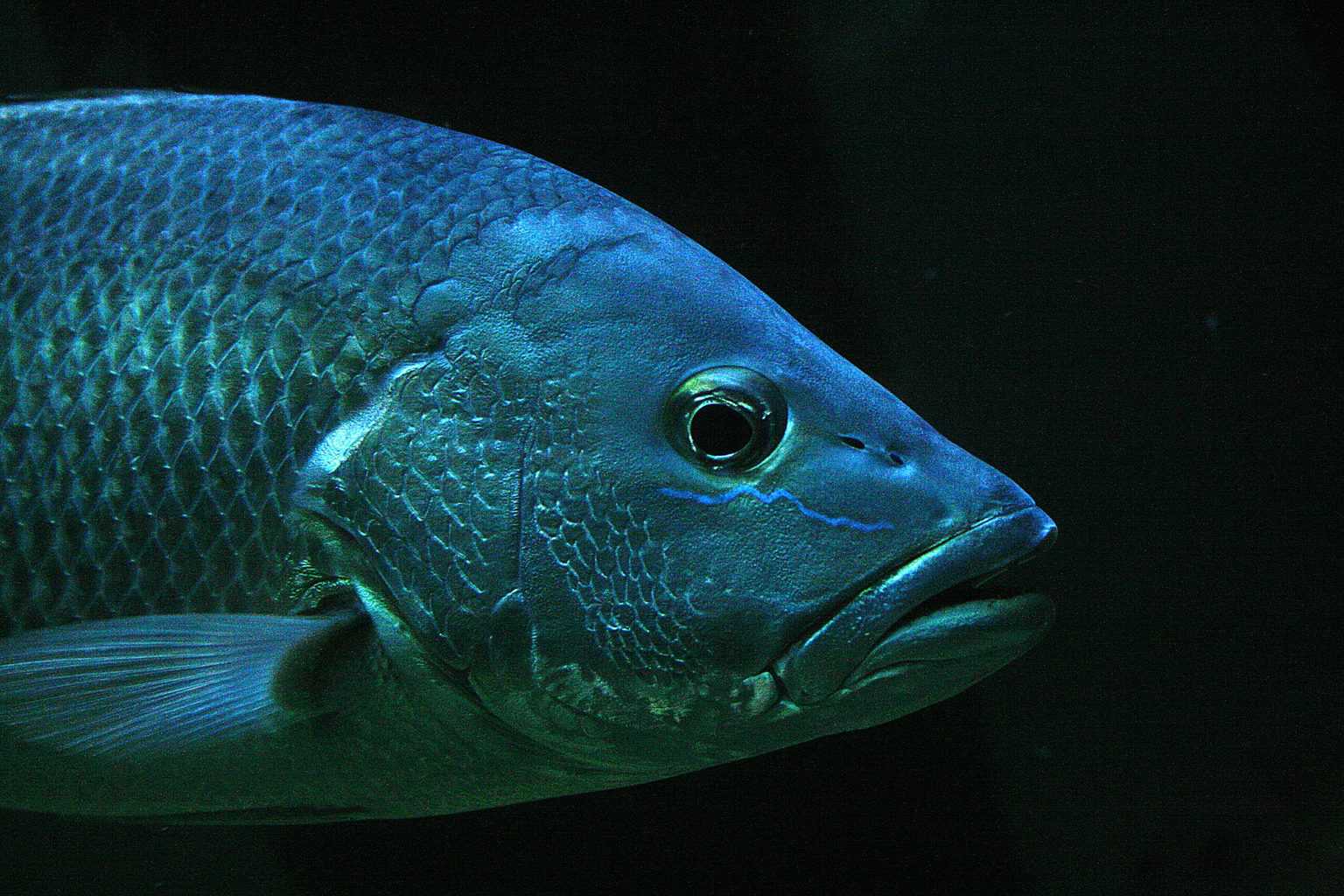
She reeled it in, nearly breathless, heart thumping as the fish hit the floor of the boat. It was a good-sized, good-looking fish, but it was flopping so violently back and forth, desperate for air, and freeing the hook from its lip was a struggle.
“I can’t breathe,” said the fish, “I can’t breathe.” And Mel knew then that he wasn’t the one for her, so she threw him back into the sea. He darted into the depths straight away, and she wiped blood and scales from her hands. She hoped his lip would heal quickly. She felt terrible about having hurt him. It was selfish of her, she saw that now, to reel him in just because she felt ready for love.
She stood looking at the water for a while, hands on hips, her fishing pole kicked into the corner of the boat. Then she lay down on her back, put the wide-brimmed hat across her face, and let the waves rock her so gently. Far below, she could tell what was happening. She could sense schools of fish rushing by, flicking light back and forth with their bodies’ quick movements; she could sense all the sharks getting ready to cruise. She could feel herself swimming with all of them, encased always in liquid and breathing in a magical way. But the thing our dear Mel thought to hope for was rain.
Phoebe Brueckner is based in the San Francisco Bay Area. Her short fiction has been published in Flash Fiction Magazine, Boston Literary Magazine, and Jet Fuel Review.
Subscribe to get new flash fictions in twice a month in your inbox.
Submit your flash fiction or personal essays to Fiction Attic (we pay our writers).
-
The Newcomer–by Kay Smith-Blum
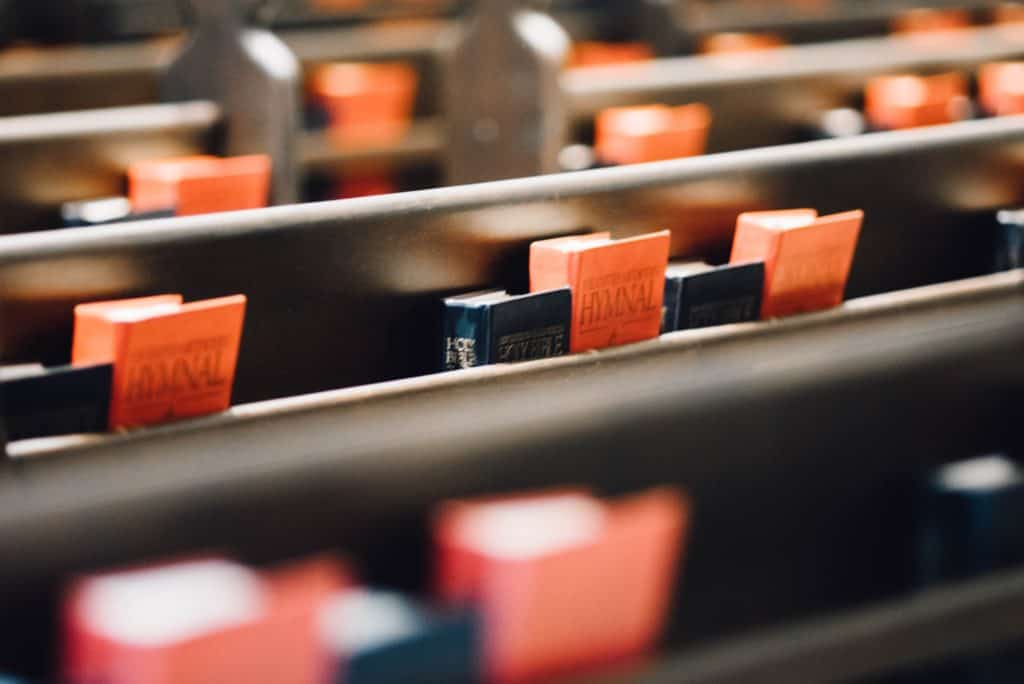
image courtesy of https://unsplash.com/@chuttersnap No one really noticed the newcomer. Mrs. Haggerty arrived during the doxology. She covered her cough with her palm, wishing her bunions would quiet down. She extended a friendly handshake to Mrs. Lane in the foyer, before accompanying the newcomer down the aisle. She bent over to rub her right foot before entering the pew.
Mr. Brown leaned into the last phrase. “Praise Father, Son and Heavenly Ghost.” He breathed in, replenishing his spent air, issuing a hello as he pushed himself a bit closer to the youngest Galanos daughter to make way for Mrs. Haggerty and the newcomer. The youngest Galanos nudged her mom, opening her mouth at the same time as Mr. Brown exhaled. But Mrs. Galanos, somewhat preoccupied with thoughts of the elder son who hadn’t come home last night until well past midnight, didn’t abide chit-chat in church and put her finger to her daughter’s lips and then to her own signaling silence.
Mrs. Haggerty grasped the hymnal and turned to the worn page for Morning Has Broken, not that she needed it, the words memorized long ago when Cat Stevens covered it in the ’70s and she and Mr. Haggerty used to make love at midday which they never did anymore because he traveled so much or because their lovemaking had become stale. She sang the words and wished they could refresh somehow. Beside her, the newcomer was “springing fresh from the world” and could make change.
The newcomer’s head spiked in red-orange bits, outgrowth from a golden base that shed some. Mrs. Haggerty did not notice the strand that floated her way or the one that landed on Mr. Brown’s lower lip as he pursed it, leaning over the next pew to whisper to his fidgety nephews to settle down. Mr. Brown’s sister had a tendency to sleep in on Sundays and Mr. Brown would stop by to gather the empty liquor bottles for the trash and the boys for church. No one commented on the newcomer’s crown-like appearance but it may have been the source of the giggles from the boys, causing an exasperated exhale from their uncle into their ears that put their revelry to rest.
Mrs. Haggerty turned the hymnal page wondering about a new face cream advertisement she had seen, smoothing the page wide so the newcomer could find the entry along with her into the song. The congregation swelled in unison. Mrs. Haggerty sneezed, wondering if she was catching the same cold that her husband had brought home from his trip to California. His stuffed head kept him away from church this morning or so he said upon recounting how much he preferred west coast weather to the Midwest extremes. The youngest Galanos daughter licked her palm, sticky from morning pancake syrup, until her mother took her hand squelching the action, mashing their palms together. Mrs. Galanos ran her hand along the back of her neck studying her eldest and considering who the girl might be that had kept him out so late if in fact it was a girl. She tapped her fingers on her lips thinking Mr. Galanos might ascertain the truth and at least she didn’t have to worry about her oldest daughter all set for college and leaving home in the fall.
When the offering plate came around, Mr. Galanos made the usual family donation, a crisp one-hundred-dollar bill after which Mrs. Galanos handed the plate, a shallow dish really, to her daughter who popped open her pink patent purse and placed in a quarter before passing it to Mr. Brown who gave the plate to Mrs. Haggerty who handed it to Mr. Lane after the newcomer tossed in a contribution as well. Mr. Lane stepped to the next row, handing the plate off to Mr. Brown’s nephews, who mixed the coins and bills like a salad, before passing it off to Mrs. Young who leaned back, almost cheek to cheek with Mr. Brown, wishing he would say yes to her dinner invitation and to accept his apology for the rambunctious youngsters. The offering plate moved through two more rows before Mr. Lane returned it to the front table to be counted, sans the Galanos hundred which he pocketed in a magician’s flash to pay off his gambling debt in the next county. His losing streak had to end soon.
The youngest Galanos daughter whispered to her mom she couldn’t wait any longer to use the toilet and sifted by Mr. Brown, interrupting his daydream about his time last night with Melvin, who loved Mr. Brown, ran the local hardware and had a remote farmhouse where they could be alone. Mrs. Haggerty sneezed again just above the child’s head as she passed. The sermon, on spreading the gospel, was rich in meaning particularly with the newcomer in their midst who they would all make welcome.
The opportunity to be hosted by a variety of the church’s members was not lost. The newcomer eventually found a way into the hearts of the entire congregation, settling into the tissue of their lives, offering reason if not solace when Mr. Lane’s losing streak did in fact end. He was the first to die, followed by the youngest Galanos daughter and Mrs. Haggerty and shortly thereafter, her husband. The newcomer decided to stay for a while, for at least a year, if not two.
Kay Smith-Blum, a recovering retailer, was named Woman Business Owner (NWWA) of 2013. Smith-Blum co-authored the “Every Man” card series, published by Schurman Fine Papers. An author of historical fiction, she lives in Seattle WA. Her short stories can be found at CommuterLit.com, Minerva Rising (Winter 2021) Fiction Southeast (Winter 2021) and The Stray Branch (Spring 2022). Her humorous essays (nominated for Best of the Net) may be found at Pif Magazine, Heavy Feather Review, The Furious Gazelle (Winter 2021), Quail Bell Magazine, Bewildering Stories and Down in the Dirt Magazine.
Twitter @kaysmithblum Facebook/Linkedin Kay Smith-Blum Instagram @discerningKSB
-

Abuela’s Hammer–by Lucy Rodriguez-Hanley
Fellita is on a mission to kill the man who violated her granddaughter. He put his hand so far up Elena’s nalgas that he managed to grab her holy hole too. Fellita only knows about the ass grab, she’ll take out his whole family if she knew the rest.
Elena is chunky, like me. We hide inside big jogging pants with the waistband rolled up so we can look fatter. We wear long T-shirts, me to cover my boobs and Elena, her bubble butt.
I am used to ignoring the hungry dog looks from men older than Papi. Our uptown Manhattan neighborhood is infested with sinverguenzas who undress young girls with their eyes. Watching my best friend get assaulted in broad daylight, right in front of our building while I was too chicken shit to protect her, trips me up with guilt. It should have been me. The minute he saw us, Nestor started telling his friends what he would do to me if he ever catches me alone. Elena put her arm around me and that’s when he came at her, and called her a fat, ugly dyke. I should have punched him, pulled his hair, kicked him, instead, I froze.
From behind, Fellita looks like a teenager. She bleaches her hair blonde to look like her idol but she is more Celia Cruz than Gwen Stefani. Her copper skin and curvy shape always gets men’s attention but her face always freaks them out. They are expecting Lolita and instead get a fifty-year-old grandma with braces and coke bottle glasses.
She walks slowly, the cowry bells on her silver anklet jingle all the way up the block. She’s in disguise, cat eyes sunglasses and a big floppy sun hat. The men on the corner of 170th and Broadway selling stolen True Religion jeans out of the back of an SUV have already spotted her. Fellita moves slowly like a mermaid luring them to their untimely demise. Elena and I follow her from the other side of the street.
Nestor whistles at Fellita.
She takes a hammer out of the Hello Kitty tote bag and smashes the windshield of the SUV. The crack in the glass spreads like a spider spinning its web at 100 miles an hour.
The men, caught off guard, freeze when she aims the hammer at Nestor’s head.
“Abue nooooo! he didn’t do it!” Elena screams, running across the street to stop her grandma from killing Nestor. I run after her.
“Este es el perverso?” Fellita asks Elena, then me as she crumbles Nestor the molestor’s balls into tiny specs of dust. I nod. One of the men grabs Fellita from the back. She kicks him like a pissed off mare, and bites the arm he tried to grab her with. Nestor’s high pitched screams reverberate, bringing everyone to their windows, their stoops and the corner. She finally lets go when he pees on her hand.
If one of my nosey neighbors tells Mami I am with Fellita and Elena after she told me not to hang out with them because they are chusma, I’ll be grounded for life.
When a police car pulls up to ticket the SUV for blocking the fire hydrant, the men scatter along Broadway like cockroaches running from a can of Raid.
Nestor leaves me alone for the rest of the summer and relocates his business to the corner of 173rd and Amsterdam.
170th and Broadway stays free of sinverguenzas and pervs. Fellita, and the neighborhood’s abuelas, tias and mamis, including mine, patrol the block armed with hammers, rolling pins, and screwdrivers they are not afraid to use.
Lucy Rodriguez-Hanley was born in the Dominican Republic, raised in New York, and has been living in Los Angeles for the past 16 years. In her work as a writer and filmmaker, she strives to make the identity of the bilingual, bicultural, brown girl/woman visible and to dispel some of the stereotypes that marginalize people who grow up immigrant, urban, and poor.
Photo by Jilbert Ebrahimi on Unsplash
-

We’re Sixteen and We’re Stupid, But You’re My Salvation
Memoir by Winnie Grey
We’re sixteen and we’re stupid, but we’re in love.
“I’m sorry,” she tells me. “They shouldn’t say things like that to you.”
We’re lying side by side on her zebra print bedding, the rainbow fairy lights she has strung up along her ceiling suspending us in a sort of dazed dream; I’ve always loved these lights. Over time, they’ve come to mean warmth. Safety. A place where I can be myself, be with her, and scream song lyrics until the latest lecture from my father fades from my mind.
“It’s okay,” I say. “I’m used to it. This is just my life, you know? One day it’ll be over; one day I’ll get to leave. And until then, I have you, and my books, and the hopes of a One Direction reunion, so I’ll be just fine.”
She laughs and leans into me. Her face settles into the crook of my neck, so warm, and I can feel her smile against my skin.
She has the prettiest smile I’ve ever seen.
“What time are they picking you up for church in the morning?” she asks.
I groan at the thought of another stifling service on those scratchy pews. Another two hours of my life lost to being told how awful of a person I am, how if I really was good, I’d beg and cry and fall face-down to the stiff green carpet and beg to be made into a soldier.
“I’ll have to get up at seven,” I say. “To shower.”
She breathes in, sweet and steady, hand sliding into mine and squeezing in a reassuring way. A promise. An affirmation that she isn’t going anywhere until the day she helps me move out of my house and we both fly as far from this town as possible.
But that’s still years away and even as I squeeze her hand back, I can’t help but think about the panic attacks and nightmares that have been seizing me with increasing frequency; images of “hellfire” and “damnation” that flicker like flames behind my eyelids, a voice in the back of my head that sounds exactly like my father’s, telling me that I’m going to rot in hell. That I have dark spirits inside of me. That’s what the last lecture had been about: my depression. Or, as they liked to phrase it, the demons inside of me.
It’s difficult to reconcile the darkness that they claim so often to see in me with the light I feel when I’m around her. It doesn’t make any sense; I only feel dark when I’m around them.
My father is a small man, physically, but his ego could move mountains. He was raised in the faith, his father and grandfather each pastors of the church that he now rules over. He has eyes like black beads and close-cropped hair that always looks as though it would be stiff to the touch. He’s quick to anger, and spends every spare dollar on expensive leather briefcases and special editions of Bibles. When I was just a little girl, before I understood what his religion really stood for, and before I realized that I was being raised to hate myself, I was quite certain that my father hung the moon every night; but then I grew up, grew away, and knew that if he did possess that power, he would sooner snatch it from the sky and force it to do his bidding.
He and my mother had met at a special church conference when she was only 15; they were married before she turned 21. A few years later, I came along: the miracle child. A gift from God himself to my parents, who were forced to adopt after discovering they couldn’t conceive children of their own. My childhood was a whirlwind of overwhelming affection, of church services and prayer meetings and Be Quiet’s and Occupy Yourself’s and Don’t Ask Question’s. I learned how to entertain myself, and how to hide my true emotions, just to keep them off my back. By the time I realized the depression and anxiety these behaviors would lead to, it was too late. So I began to live solely for the future–for my future.
I was 16 when I found myself falling for my best friend, a dark-skinned girl who Sharpied rainbows on her Converse high tops and had the prettiest blue-tipped hair, the warmest smile I’d ever seen.
She draws me out of my thought spiral now by beginning to sing softly. It’s a Spanish song, so I don’t understand the words, but her voice is light as air and smooth as honey. It calms me in a way the church hymns never have.
Every moment of my life is spent in this internal chaos: hacking away at the girl I was raised to be with an axe and building the girl I know I am in her place. It’s climbing uphill, it’s swimming upstream, and some days I am pushed back more than I can push forward. But no matter how dark the skies get, I can’t bring myself to give up. To let go.
“You okay?” she asks.
I miss her singing the moment she stops, but I nod. “Sorry. Just still thinking about last night, I guess.” Another lecture. Another night of Angry Father and Disappointed Mother, of tears and shaking heads and Where did we go wrong?s.
All because I wasn’t the happy hand-raising daughter they’d wanted. I know they’d deny it if I ever said it to their faces, but they don’t have to say anything anyway; I can read the disappointment in their eyes. They hate that I’m quiet, hate that I’m so sad, hate that I have no desire to sing on the praise team or compete in Bible quizzing. And I can’t fix any of that, because I can’t change who I am, and I’m unwilling to pretend any more than is absolutely necessary for my survival.
“They want to break me,” I whisper. “Change me. Force me to be something I’m not. I know who I am, but I’m afraid. I’ve seen the way they get in peoples’ heads. What if that happens to me?”
“It’ll be fine,” she reassures, and pulls me somehow even closer to her. She smells like vanilla and crisp spring air and the earth after the rain is over and the clouds have begun to part. I love her so much in this moment, I can barely breathe.
“You’ll be okay.” A parting of pretty pink lips, a rush of warm breath across my neck. “They can’t take you from me. I won’t let them.”
I nod, my cheek pushing against hers, and she starts to sing to me again. The sun has began to sink below the horizon outside, and golden light slants through the blinds on the window and bathes us both in a warm glow. She raises a hand and brushes a stray piece of long hair behind my ear. Her eyes are a kinder version of the moon.
You’re my salvation, I think. Not the one they’ve forced me into since I was a child, wet words that ached with fear. See, love, you’re salvation like rainfall. You’re salvation like looking up at the sky and connecting a new constellation for the first time.
They think they’re saving me, but you already did.
Winnie Grey is an undergraduate student in the B.A. English program at Indiana State University. Her work has been published in the poetry anthology Life (as it) Happens and is forthcoming in Allusions. She lives in Terre Haute, Indiana with family.Photo by chuttersnap on Unsplash
Photo by Olga DeLawrence on Unsplash
-

Time. Lost Ears. Pain. Three micro-fictions by Sarah Alderfer
Time
Do you think time can disappear without a trace, with no explanation? You’d think it’d be spun on wheels, but I think it has a mind and dance of its own. I approached my seat on the small plane, it didn’t feel right. I wasn’t supposed to be here, not yet. I sat down next to a man with every hair and seam in place. He had a flashy watch, too. As the plane took off, I clung to the view of the old country, determined to watch until she disappeared, swallowed by sky, or sheer grief. It’s strange, leaving a home that’s not your own. Maybe the minutes escaped through my feet, that’s where I feel it first, cold, numb. Maybe it’s through my stomach, sinking like a black hole. It started ticking again when I picked my head up from between my knees. I looked up from my hands. Glancing out the window, I asked the man why we were landing already, we had just taken off. “We’re in Frankfurt” he said, looking at his watch with a flick of his wrist. Time: it takes, taunting you in circles.
Lost Ears
One morning, I woke up and realized that I had lost my ears. I looked under my bed, I couldn’t find them. I waited a day or two, they didn’t come back to me. I looked down often. I’d kick rocks or hide my tears. When I think of that time, I think of the color black, a heavy one. One day, my mom gave me a note. It was a yellow, folded piece of paper. She said to open it on the bus as she rushed me out the door. The red ink told me to keep my head up. So I tried. I looked at lips as they spoke to me. I even saw hands come alive. I saw smiles and I saw heartbreaks. I didn’t lose that morning, I found eyes.
Pain
One night, three years ago, I wrote a poem, almost by accident. I remember the sheer grief, how it took my breath away. Time passed so slowly, each second was painstaking. Each inhale, and then the exhale, was work. So much work. All I did was watch Forensic Files in my bed and occasionally eat cold leftovers. Sometimes, I went to work. Sometimes, I turned around on the way there, unable to see through my tears. Sometimes, I didn’t even get out of bed.
I’m sorry, by the way. Air was so heavy. Blades and fire were release, the grip on my chest, gone. Fix. I came to a point where I refused to be ruled by something so little. I’m not even sure what spurred that resolve, it had still hurt so much. I remember that night, the wave was coming. I lay in my bed, the next episode of Forensic Files was on. The wave crashed, and I laid there, bracing. I made myself feel everything, each sliver of glass. I let myself wash away instead of reaching out. It was then that something happened. Words came swirling. Gasping for air, I wrote them down. It was the first time I felt relief without hurting myself. I was never the same after that. I had something to say, a voice. It was just the beginning that night, basking in the light.
Sarah Alderfer is a 26-year-old nanny and nutrition student. This is her first published fiction.
Why we chose it: Sometimes a voice reaches out to you. It has less to do with story than with feeling, a sense of something rising up from the interior of the writing that transcends subject. When this submission came in, I was intrigued by the cover letter, which stated simply, “This is new to me. Thank you for your time and consideration.” A one-line bio followed the signature: “I am a 26-year-old nanny and nutrition student.“
I opened the file and read “Lost Ears.” It was strange and beguiling. Before I’d had time to wrap my head around it, I was moving on to “Pain.” The sense of intimacy deepened–the raw despair followed by the discovery of writing as a way out of the darkness. And then on to “Time,” the unusual assertion that “you’d think it’d be spun on wheels.” I loved reading “Time” because it places us with a character in a place and time, in motion, contemplating one of the great mysteries in a new way.
I am excited to see what Sarah Alderfer writes next. I expect we’ll be hearing more from her.
Michelle Richmond, Editor / Fiction Attic Press
SUBMIT your flash fiction, micro fiction, short story, or essay to Fiction Attic Press.
-

Bulb-Shaped–by Jeffrey Bakkensen

Photo by Blake Wisz on Unsplash You took a stick and drew a circle in the leaves around us and the fire. “No one comes in or out.” We teased the dog until she learned the rules. When night came, we went inside the trailer.
We weren’t using our phones. That was another rule. There were no outlets, only softly glowing sconces powered by a panel on the roof. There was no shower. These weren’t rules, only facts. The toilet was this eco-friendly Space Age thing lined with something like aluminum foil that closed over your waste and twisted around and made a whirring noise, and opened up again fully clean. There was limited water.
When it was really dark, we switched off the sconces and watched the darkness until we were scared it was watching us back. I went outside and pissed on the fire while the dog pissed on the leaves. We opened a bag of chips and a six pack and played rummy on the fold-out table between the bed and the kitchenette. I said I didn’t remember beer being so sweet, and a few minutes later, you said the same thing. We both laughed because you must not have heard me.
Then we were quiet for a long time staring at our cards. I cracked another beer, cracked one for you even though yours wasn’t done, and waited. Eventually, you got up to use the bathroom. When you came back, you said you thought it had happened.
I’d filled the waiting minutes reading a magazine that was laid on the bed when we arrived. The magazine was about people renting their trailers all over the country. Nadine’s trailer was near Zion National Park. Brent’s was deep in Minnesota.
I’d meant to let myself get caught looking at your cards, but I was too busy reading about trailers, and you surprised me.
The aluminum bag whirred, and the bathroom door opened. The dog and I both looked up. You came outside and washed your hands in the kitchenette sink.
“I think that was it.”
We hugged, me crouching under the trailer’s low ceiling.
“That’s good,” I said, and I didn’t have anything else to say.
Later, I knelt at the toilet and with a finger palpated the eye of the aluminum bag, but I didn’t know what I should be looking for. Maybe a receipt I’d carried crumpled in my wallet for weeks, but couldn’t find when I finally needed it. After all, you said you thought, not that you knew.
I knew that even much later, I would remember the trailer, the toilet, you drawing a circle in the leaves. The trailer air fouled with memory-making.
The dog died. That was how we knew that time was passing. We measured it by the night in the trailer, and whether the dog was still alive or had already died. Frost heaves broke our flower bed into beds, and while I stamped them down, you slipped away. Long after the dog died, you came bulb-shaped with your separate success to tell me what I’d thought but not known to name, how wanting doesn’t stop just because the thing is gone for good.
I wanted to buy a trailer of my own and park it in the street out front. I wanted to fill my trailer with debris in layers so my back stooped and you’d climb to me up a ziggurat of cereal boxes and out-modeled phone chargers. I wanted to lock myself in the bathroom and push through the toilet’s aluminum eye and curl myself around the receipt I couldn’t find.
“You feel okay?” I asked.
“Just cramped.”
We played solitaire and then war. When the beer ran out, I took the dog on a long walk through the trees, lighting our way with my phone’s flashlight. By the time we got back, you were asleep.
For you, I thought, it was already morning. We were packing up and driving home.
Jeff Bakkensen lives in Boston. Recent work has appeared in A-Minor Magazine, Oblong Magazine, Smokelong Quarterly, and The Antigonish Review
Did you enjoy this story? Submit your flash fiction or personal essay.
Read more flash fictions in Flash in the Attic: 44 Very Short Stories.
-
Bra
flash fiction by Vanessa Chan
I recently injured my arm, so I cannot reach around my back. That means I have to put my bra on the wrong way around. I start with clasping the bra in the front, under my breasts, then pulling the band in a circle along my skin until the clasps reach my back, before I can pull the straps and cups in place. It chafes.
My friend Shauna used to never wear a bra. She told me that bras are symbols of the patriarchy, that they have no purpose, that the underwire served only to point and lift our breasts closer to boys’ vision. I told her she was lucky because her breasts were small, perky. She told me I was too self-conscious and needed to be more confident; she said that’s why Tommy Patrice had picked her to go the prom with, even though he had asked me out first, and I had the bigger, rounder breasts.
The other thing about Shauna was that she died a week before high school graduation. She was found face down in a monsoon drain floating in shallow brown water that smelled like trash. One of her arms had been dislocated; it twisted behind her like it was waving goodbye. Everyone knew Tommy did it, but they never charged him. Only some people blamed him. She was easy, they said. She didn’t wear bras, they said.
It’s true that breasts have no muscle mass. Except for the nipple, they don’t react stimuli; they can’t be reshaped, they can’t point at things, they can’t protect themselves. Not like arms – arms can hold you up, turn you around, beat things away, get bigger and stronger.
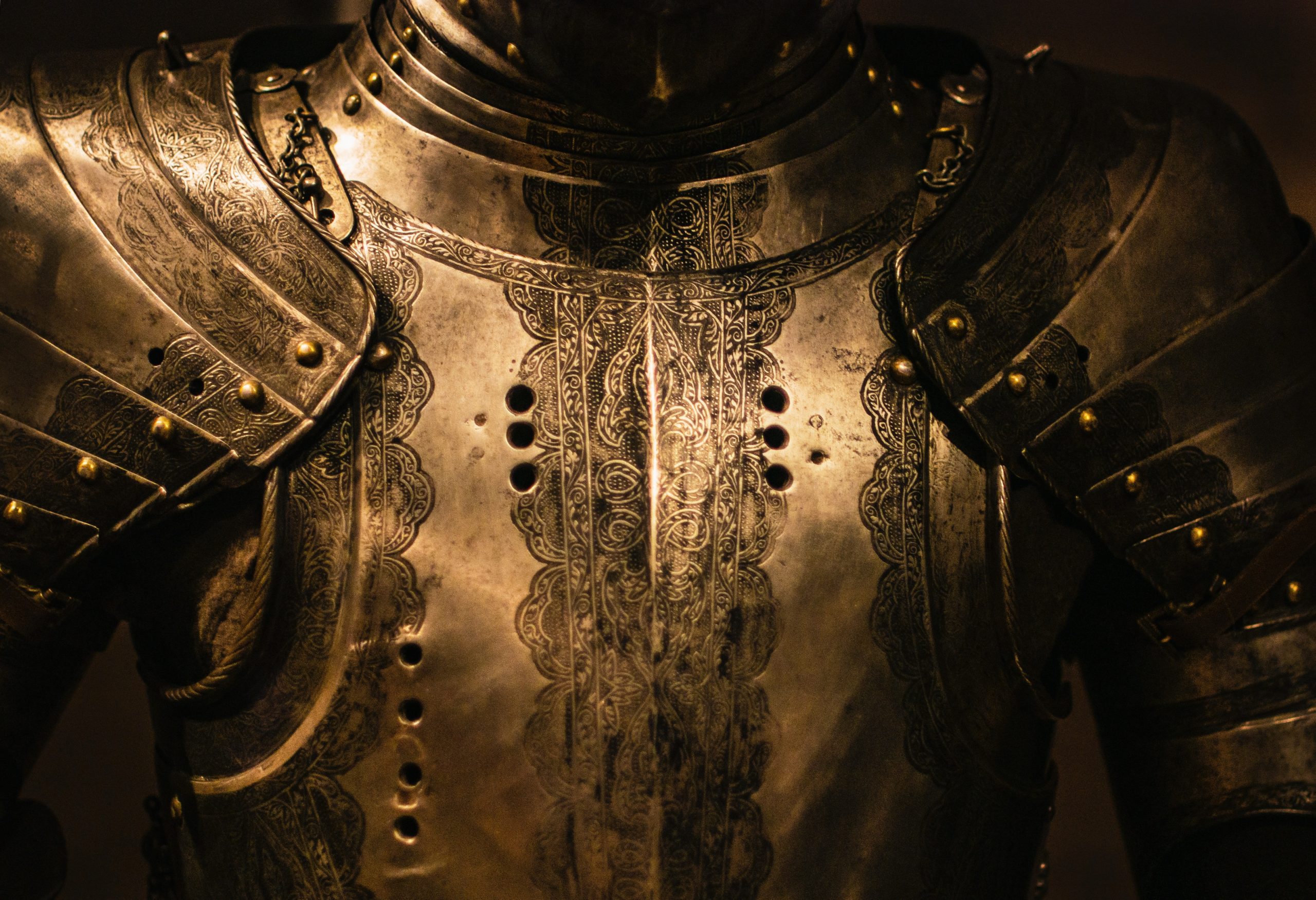
But lately my twisted arm means I can’t do the things I usually do to keep myself safe. I can’t grip the keys between my fingers as I walk down the street. I fumble longer trying to get myself into my door. I don’t have the strength to push away unwanted advances. I am unstable, off-center, easy prey. I tell myself that Shauna was wrong. Bras aren’t just to mold our breasts and give them a sense of direction. No, bras are like armor, the underwire protecting against the elements, the cups keeping out unwanted intruders, the clasps making it just a little harder to break in. And so, I twist myself around every day to buckle my breastplate.
I will not be hunted.
Vanessa Chan is a Malaysian writer based in New York. Her work is published or forthcoming in Atticus Review, Jezebel, and Mekong Teahouse, and she recently won the Fiction Factory Flash Fiction contest. She is an MFA candidate at The New School and writes about race, colonization, and women who don’t toe the line. Vanessa can be found at vanessajchan.com or on twitter at @vanjchan.
Armor photo by Nik Shuliahin on Unsplash
-

Backroad
flash fiction by Brigid Ives
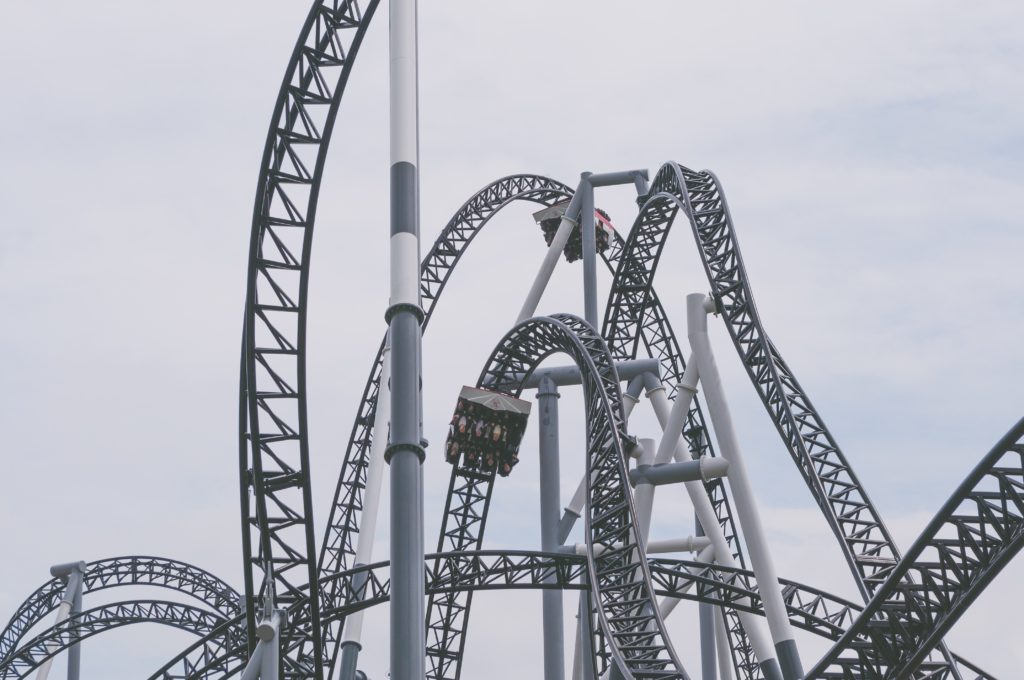
I remember when I thought that racing down backroads was dangerous. Maybe it was my years living in the city that made the winds and curves seem like a rollercoaster ride—your heart racing at the ever-present possibility of going off the tracks. It took years for me to glance down at my speedometer and notice that I was going above the speed limit, expecting the next move before it came.
Familiarity came gradually, over time. The same way you learn a person’s body, where one day, when you’re both comfortable with total nudity, you find yourself not staring, not feeling surprised by their physiology.
Sometimes, when I lay in the bathtub, I feel unmanageable. It takes a while of marinating in what has surely become dirty water to really look and see your body. My earliest memories consist of the intimate relationship I had with my parents’ physical forms. I could tell you where their freckles landed on the back of their thighs, how their ears fit into their heads. I remember thinking that they were too much—too big, too much skin, too many pieces and parts that they couldn’t even see. I enjoyed the feeling of being compact, of knowing where everything was. When’s the last time I’ve really looked at my pinky toe, anyway?
I find it hard not to think about him. And then I think about myself thinking about him. “Cut yourself a break,” my Mom used to say, “your brain is too busy.” Isn’t everyone’s brain busy? Can anyone’s head really stay silent? These are the kind of things I’ve find myself spewing to my therapist. They’re all collected in a bucket like rainwater for her to reply with just one seemingly thoughtful response—“I think you’re asking the wrong questions.” Which, as it turns out, isn’t an answer.
Forgiving myself. That’s what I’m trying to do. Forgive myself. It’s no one’s fault. There’s no one to blame. But we all know there’s always someone to blame. I genuinely believe that all feelings need a target. Anger, love, loss, blame, dreams don’t just dry up like a raisin in the sun (they all definitely explode).
The same way you learn a person’s body, where one day, when you’re both comfortable with total nudity, you find yourself not staring, not feeling surprised by their physiology.
What I want to know is, when you pass people on the street, or have a brief interaction with a person in some commonplace location, do you fill in the blanks? I always do. I’m not sure if it’s because that helps me treat them like a person. Susan at the Deli married her high school sweetheart and he’s never cheated but she has, just once, ten years ago. They worked through it for the sake of their son. Jon, the mailman, has a passion for sci fi novels and ramen noodles, which is why he named his most recent cat Ishiguro, which he mispronounces purposefully when repeating it to women—their eligibility ultimately hanging on a correction.
Maybe this is why I work at the National Park. As people drive in, I can put down my book and take a peak into their lives. Otherwise, it’s peaceful (read: solitary). I’m alone with my thoughts on the drive back. “Just turn on the radio,” my mom advised. She’s excellent at minimizing.
“I don’t think it’s good for your psyche to drive that road every day.” Au contraire, it’s the only way for me to maintain any psyche at all, I tell my therapist. “You must feel forced to relive it. I think you’ve done your penance.”

Photo by Zach Miles on Unsplash The memory is like a cheap piece of gum you’ve put in your mouth five hours ago. It’s disgusting and falling apart and been stretched and pulled every which way. Worn. It’s worn. You’ve tried a million different ways—a million different combinations. It always ends up the same way. You never make any progress.
Was I looking down at my phone? Or was that the moment before? Would I feel better or worse had I been responding to a text message? Does the truth even matter at this point? It was a summer job, and I remember the playlist I’d selected for my evening drive home: “Summer 2k17 Jamz.” They say that, during incidents of trauma, you recall the tiniest of details. And once we’d made contact, everything seemed to go in slow motion.
Jon, the mailman, has a passion for sci fi novels and ramen noodles, which is why he named his most recent cat Ishiguro, which he mispronounces purposefully when repeating it to women—their eligibility ultimately hanging on a correction.
I never saw him—inside the car, I mean. I didn’t see what his face looked in his last moments, I couldn’t discern whether he knew what was about to befall him. I didn’t see the car flip, and it took a few minutes after we made contact for me to come to. It’s a weird combination of feeling frantic and calm. It’s as if there’s so much that you need to do but nothing that can be done. The still of the night matched by the cacophony of bugs, frogs, owls.
In my most dramatic moments, I want to cry and take responsibility—take the blame—for the life I took. A life that I had the inability to mourn. It seemed uncouth to attend the funeral. His family wouldn’t feel appeased by an apology. I wasn’t drunk, I wasn’t asleep. It was an accident. That’s what everyone says—it was an accident.
The English language—no, all language—is so painfully imprecise. In those most profound moments of feeling, words are so inadequate to express what’s going on behind the scenes. Take the word accident, for instance. Accident provokes images of spilled milk, a skinned knee, coloring outside of the lines, a fender bender, a wet bed. You don’t think ambulance, police investigation, body bag, shouts of rage, flares lighting the night.
When I meet new people, I want to confess. I’m a murderer. It was me. And then here I am, back at the start of the circle, angry that I’m still thinking and worrying about me. How this whole incident reflects on me. What about them? What about him? How can I ever possibly fix this?
I imagine myself laying in bed one night, beside a new lover, staring at the ceiling and sharing this story again. Re-telling, reliving. Feeling the person beside me soaking up the details, formulating questions, processing, processing. I can hear it underneath my words. They’re probably wondering if this is something they can live with—living with me like this. They’re lucky that they have a choice.
How many bodies have you really known—including your own? Roommates’, maybe. Siblings. There’s a comfort that comes with knowing the shape of someone’s fingernails, how the hair runs down the back of their neck, their ankle bone. You can press the gas pedal a bit harder.
-
Google My Address
Essay by Amy McCullough
There are two things I won’t do in our (relatively) new house. I won’t bring in the previous tenants’ mail, and I won’t lie in bed a certain way.
There’s another thing: I won’t write about it from within it—or anywhere near it, for that matter. I’m in the Las Vegas airport right now; it’s just after midnight, Austin time (10 p.m. here). I’m on a layover en route to Chicago, where I’ll be helping my dad with his homecoming from rehab after a stroke (an unexpected, sobering implication of his elderliness for both him and me). It’s an alienating thing to be on an airplane with young couples and groups of friends and a mariachi band, all excited to arrive in Sin City, when I’m just a tired 38-year-old on a decidedly less celebratory errand.
I’m writing about the house now because I am far from it. I do not consider myself a superstitious person, but I have been reluctant to “go there” from there, as it were. My main concern is nightmares. I haven’t had any yet, and we’ve lived there going on a year (11 months almost to the date, actually).
When I first heard what happened there, on Cordell Lane, I thought it was a deal-breaker. I was in the midst of writing Jimmie a message that said, “I don’t think I can live there; those are just too bad of vibes” (or something to that effect), when a new message appeared in my inbox. It was Jimmie, reaching me before I sent my own email, saying he was down. Well, he wasn’t “down” as in cool with what had happened. He may have found it interesting or fascinating, if you had to choose a couple slightly positive adjectives. He might have seen it as a novelty that meant we could be right for the house—just the kind of couple who could “take it,” so to speak (I had a similar thought). But he was not discouraged. He was still “down” with submitting our rental applications. His one caveat was that the killer had to be dead.
“I mean, as long as the guy who did it isn’t still out there,” he explained, it doesn’t really bother me.
Okay. I got that. But did it bother me? I thought the vibes were so bad I was ready to let it go, to surrender that bright, sunny living room and open kitchen area with its bay window and white brick chimney, its exposed rafters and high, angled ceiling. I was about to stop imagining myself living in a home with closets and floors that didn’t give you splinters if you walked barefoot. I was “cool,” actually, with looking around a bit more. Mostly because I was afraid I’d have brutal nightmares.
You have likely surmised by now that a murder took place at our house. The previous tenants were an estranged married couple; I believe they were separated but still living together…I think he even had a girlfriend, and that topic caused a pot-boiler fight that alerted the neighbors to some potential violence before the final blows. I would check the details, but I prefer not to Google our address. I don’t want to see the headline, “Two bodies found in East Austin home,” because I don’t want to think about those bodies. I don’t want to start imagining where they were in the house, what room it happened in. I don’t want to think about their three dogs and if they tracked bloody paw prints all around the house afterward, before the police arrived. I can’t remember if he did it with a knife and a gun or just a gun; I recall reading of both weapons, but I might be confused. As I said, I don’t look it up. I don’t want to be reminded of the details. I don’t want to make it too real.

But it is real. Two people died in the house we’ve been living in for (almost) a year. A man and a woman not far from our ages, I don’t think, probably in their thirties (Jimmie just turned forty, but close enough). Shay, the ambitious young real estate agent that was helping the out-of-the-country owner rent her home, told us she had to disclose that someone had died in the house. You know, “just FYI.”
“Someone,” as indicated by the headline I prefer to avoid, was actually some two. The man apparently killed his wife and then killed himself. Murder-suicide. A compound noun that surely no one wants associated with themselves or their dwelling.
When Shay first mentioned the death in the house, I assumed it was probably an elderly person, perhaps a parent that was being cared for in their home by a hospice nurse or family member. Then I Googled our address. We moved in in September. The incident happened that June. The house had been “completely remodeled” since, Shay assured us. We were the very next tenants.
Jimmie says he loves making up stories, thinking about stories, and he does. For some stupid reason, I get upset or competitive when he says things like that. Like, “Oh, do you? Are you the creative one?” We are both creative, and we very often (almost always) work as a creative team (we make independent movies together as a hobby). So it’s pretty stupid to get defensive about such statements, but I sometimes do. I occasionally get a little pick-a-fighty, especially after a drink or two. That may be getting worse as I get older.
Jimmie and I don’t fight much, but we’ve actually had a few doozies in this new house. I honestly don’t think it’s the “bad vibes.” I think it’s because we wrapped up a two-year project there (a full-length movie titled Gary and the Underworld), and tensions and emotions always run high when we’re finalizing a movie. We want it to be perfect, and there are usually small discrepancies between how each of us thinks perfection will be attained, which leads to some disagreements. It makes sense, and we’re both used to and sort of expect the process to some extent. We feel bad for overreacting to criticisms or ideas we’re not into, but we work on it until we’re both happy with the end result.
But a few of those Gary-related arguments got me thinking, as we sat on our back patio, drinking rye whiskey and beer and getting more and more worked up, as we misunderstood each other and overreacted with each back-and-forth, about how things could escalate to such a horrible end. It has crossed my mind: What if this house is cursed? What if a bad enough fight leads us to dark, evil places we never would have expected?
I don’t worry about that often or even realistically. Jimmie and love each other very much. We truly want nothing more than to live together as long as possible. The envisioned possibility of a homicidal scenario is not a rational fear, but it’s one of those things that crosses your mind if you live in a murder house.
It’s also the kind of running-away-with-things imaginations Jimmie and I have. We can’t help but imagine horror movie plotlines, even if it’s wrong to have those thoughts about a real thing. Clearly, we realize this event did not happen to be our creative muse, but it happened, and we became a part of that story by being the next people to live there, and it is a muse.
It also, in a strange way, is an inspiration to be good to one another, to be the most confidence-inspiring couple. Can you imagine, for instance, what the owner must have been thinking when reviewing applications? How solid of a couple is this? Lucky for her, pretty solid. At the time of applying, we had 8 consecutive years of rental history in Austin and 11 years together. We’d even lived (enjoyably) on a 27-foot sailboat for a year; that’s compatibility.
But the storylines arise. I was doing some yard work not long after we moved in, and I found a bone in what seemed like the remains of a raised garden bed. There were no wooden borders anymore, but there were mounded areas of fresher-seeming soil, where the grass grew more lushly, as if someone had amended it with compost and fertilizer…or, you know, like a fucking grave.
So, of course, it crossed my mind that, if I continued digging and poking around, maybe I’d find more bones, human bones—and lots of them. Maybe the wife wasn’t the husband’s first victim? Maybe she was one of many.
It was probably from a past barbecue…or maybe some incident involving wildlife. Our dog, Dexter, has already killed two possums in our backyard—a skill we did not realize he had until about a month after we moved in, when he made my jaw drop in all earnestness as I watched him pluck a white-faced victim off the top of our rather high wooden fence and drag it down into an area of Tradescantia plants we call the “Secret Garden” (it’s sort of hidden around a corner). In the Secret Garden, Dexter took Springsteen’s advice and did not think twice; he promptly broke his victim’s neck—Jimmie heard the crack. Jimmie disposed of the body and I cleaned up our bloody hound dog, who did not have a single scratch on him. I do realize the faux pas when I let him out and say, “Try not to murder anything tonight” or when I refer to the yard as a crime scene (but it never occurs to me until after it comes out).
Jimmie actually just confessed to me last night that he has had a dream about the house—not a terrifying, gore-filled re-creation of the crime, but a story about a song and a cassette tape (which, incidentally, also involves digging). It’s interesting to me that it came up last night, because I was already planning on writing about this during my Las Vegas layover, while I had “the chance”; it’s also notable because we never talk about it. We agreed at some point not to, to avoid giving the event “energy” (this is an idea we got from Yoko Ono; she says something in an old interview about giving more energy to peace than to war).
Jimmie is a musician, even if he wouldn’t call himself that. He has played trumpet his entire life and has added bass guitar, keyboards, and tenor saxophone over the years. He’s added sax with especial vigor. The instrument he plays belonged to my paternal (favorite/only known) grandpa; Jimmie took it up to give it life outside of a dusty storage space on the second floor of my hermitic uncle’s house (and because he wanted to learn). And playing it has become a new passion for him. I (and Jimmie) believe this has something to do with the saxophone liberating him from the anxiety intrinsically linked to his trumpet playing (which developed from years of self-imposed pressure as a young man).
All that considered, I wasn’t surprised that Jimmie’s story related to “the horror” is also about a song. In his dream, he is working on a song and has something he really likes, a start, but he doesn’t know where to go with it. It feels like it has an ending, a direction, but he can’t find it. He has songwriter’s block. Then, one night, he is drawn via a strange impulse, an instinctual attraction, toward the backyard. He begins to dig and eventually finds a tape—and it has his song on it. His whole, completed song.
Jimmie interpreted this to mean that the guy, the murderer, had the same experience, wrote the same beginning of the same song in our house. That eventually he filled it out, realized where it needed to go, and recorded it. Then, presumably, he lost his mind and killed his wife and himself. I’m not sure where in that sequence he buried the tape, but you know how dreams are spotty and weird. This is all speculative, but the gist is that the song goes with the house, and the tenant becomes victim to the crazy-making songwriting experience. Jimmie’s character in this story is probably supposed to add to the composition and bury the tape again, then kill his whole family or what have you.
Initially, I wondered if a neighbor would say something, mosey over nonchalantly and ask, “You know what happened in this house, right?” But no one has been that classless, luckily. But there are kids around, and you know kids will say anything. Mariah, the grade-school-age daughter of our across-the-street neighbor, basically interrogated us the day we arrived with our moving truck; her little brother rolled his eyes as if to say, “She always does this.” She asked us what we were doing, formulated specific questions about items we were carrying out of the truck, asked if we had jobs and what and where they were. She is a natural journalist. So, she might have said something. Hopefully she doesn’t know.
You never know how people are going to take it, so you don’t tell anyone—or that’s what you agree to do before having your first houseguests. Along with agreeing that we would generally let the topic, um, die, Jimmie and I also agreed we probably shouldn’t tell anyone, especially anyone atthe house. (For instance, Jimmie told Richard, a coworker who he very much likes and respects but who is quite unlikely to come over, about the murder-suicide and about his dream; that seems more acceptable because Richard won’t ever have to think about that while in the space where it happened.)
The November after we moved, two of our closest friends came to visit from Portland. They are siblings (brother and sister), and the sister was bringing her newish boyfriend. We had met him briefly once before in Portland and liked him, but we did not know him well. Ashley, the sister, and I are best friends, and our birthdays are three days apart. So we make a point of getting together every year for “Scorpio Fest.” This was Scorp Fest 2017, and it would be everyone involved’s first time at our new house.
We now had two extra bedrooms, so that was exciting. Ashley and Shane could have the room we intended to convert into a guest room. It is normally my “boudoir,” a spare room that I’ve converted into an indulgent, early-‘90s-themed mega-closet and dressing room in a reactionary move against our old house, which we loved but which had, well, “nominal” closet space is putting it nicely.
Chris, the brother, could have the “Devil’s Office,” another extra bedroom that is basically a juvenile space for playing video games while seated in vinyl bean bags. (We don’t smoke pot often, but let’s just say that whenever we have some nearly all of it gets smoked in there.) It’s also, weirdly, a slightly smaller-scale replica of our old living room. We went a little bonkers and bought all new living room furniture for our new house—which, if I haven’t made clear, is a pretty beautiful, spacious, and stylish place in which to live (less the upsetting history). So we put our worn-out previous couch, as well as a lamp and a large piece of art from our old living room, in the Devil’s Office. It has this name because, for a few months after we moved in, we had every intention of turning that extra space into a set for a scene in Gary and the Underworld that, not surprisingly, takes place in Beelzebub’s place of business. (We ended up shooting the scene elsewhere, but the name stuck.)
We decided before this Oregonian threesome arrived that we would not, under any circumstances, bring up the incident at the house. We felt fairly sure that the Bonds (the siblings) wouldn’t care, meaning we didn’t think they’d be bothered, personally. We do not believe in ghosts—an important factor in our ability to live where we do—and we didn’t think they did, either. But we didn’t know about Shane.
As their visit went on, Jimmie and I both became more and more tempted to bring it up. We felt this temptation separately, we came to find out later; we were both effectively keeping our mouths shut about it, even to each other. The Bonds, as I have said, are some of our dearest friends in the world, and if we were going to share with anyone, it would be them. Also, that is just “one spicy meatball,” as an ex of mine would have put it. With the right (read: best friends who don’t believe in ghosts) company, it was hard not to want to spill the beans about the spilled blood.
I had resolved that we should tell them the day they were leaving. I thought, just in case they did find it upsetting, it would be courteous not to make them sleep in the house after planting that seed, a gruesome acorn from which to sprout (as I myself was certainly terrified) a horrible nightmare. I was going to tell Jimmie that I thought this was a good course of action the night before they left (in case he was feeling tempted, as well).
But he beat me to it.
In a moment of attempted male bonding during which Ashley and I were picking up a pizza, he told Chris and Shane. Chris was enthralled, in the ways a decent person could be. Shane Googled it…because the Internet makes things true. Having seen that Jimmie (who, admittedly, he did not know well) was not shitting him, and—unfortunately—being someone who does believe in ghosts, he got a bit too loaded and then freaked the fuck out.
I won’t go into the gory (social, not corporeal) details, as I would like to remain friends with these people. But a knock-down, drag-out fight between Shane and Ashley was the end result, fueled by simmering tension between boyfriend and brother (and not helped by some previous dickish behavior of Jimmie’s and a bit of OCD new-house uptightness on my part). Take booze and ghosts, add any amount of fodder for conflict—and drama is going to ensue.
Curbside crying took place, as did screaming in the house and on our front lawn. The front door was definitely slammed. During and after, I couldn’t help but wonder what the neighbors must have been thinking: hearing escalated, shriek-pitched fighting from the house where the worst kind of domestic dispute had played out just six months prior.
Speaking of the front door, if you Google our address (which is, apparently, the thing to do), you’ll see older photos of it with a cherry red door. It is now cobalt blue. I can only imagine that’s because the owner didn’t want to leave the door of the “murder house” red when going ahead with an overhaul remodeling effort.
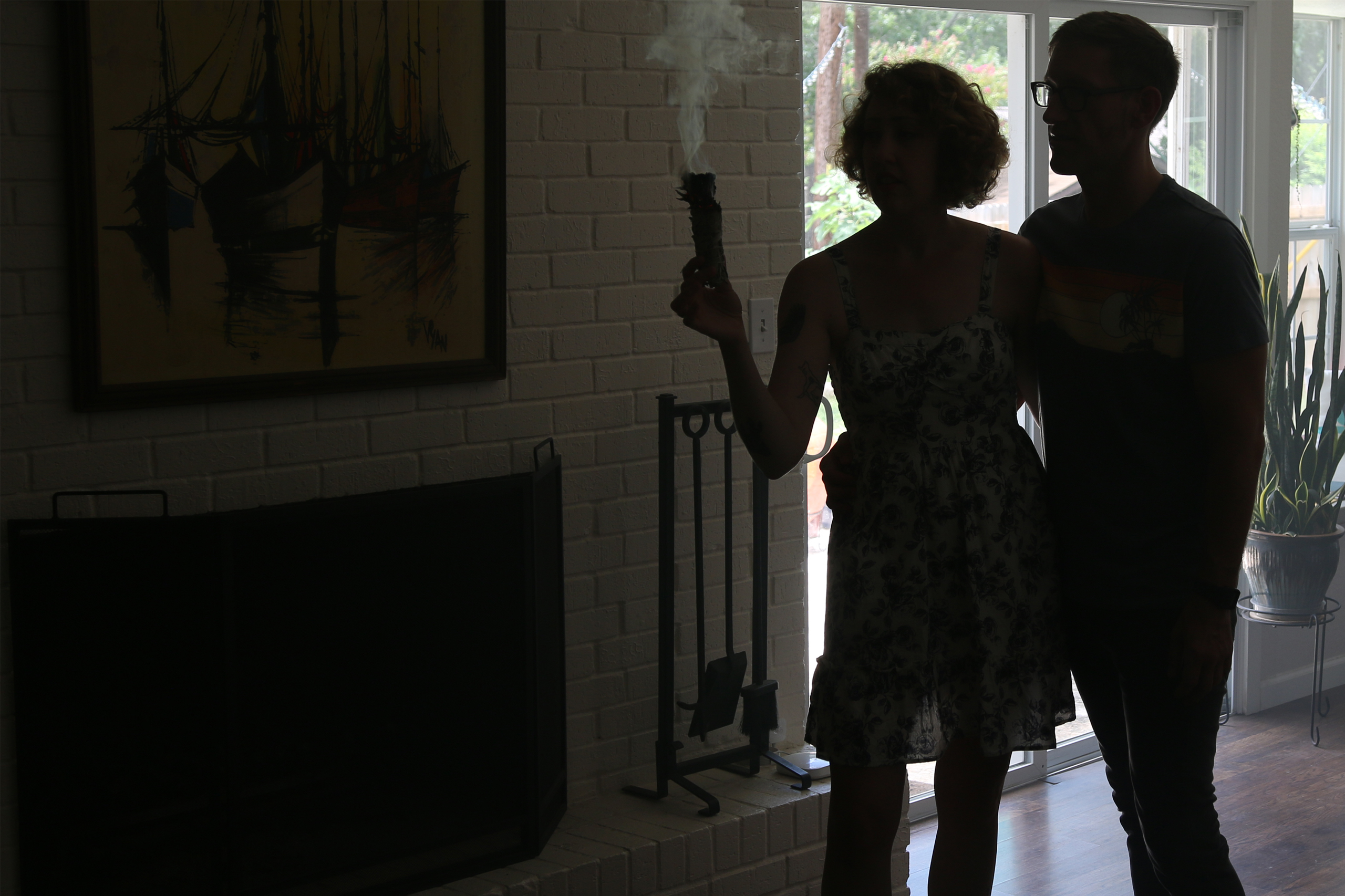
The first thing Jimmie and I did when we entered through that door as actual tenants was light a sage “smudge stick” and walk through the house, cleansing each room of “bad vibes” while listening to “At Dawn” by My Morning Jacket (you’re supposed to repeat something positive or important to you or listen to some sweet jams; we chose the latter). Neither of us necessarily subscribe to the idea that a sage smudge stick actually does anything, but Jimmie is from Oregon and I lived there for a while (in Eugene, even), so we are both part hippie (native and honorary); as such, we have soft spots for such metaphysical leanings, and the ritualistic/ceremonial aspect of it appealed to both of us.
When we were debating about living there after discovering the details about “the “death in the house,” as Shay put it, I arrived at the smudge stick idea as a way I could make myself feel okay with living there. Often, for me, just deciding something will work for me is enough to make it true. So we did that, and the sage is still in our fireplace, a totem to our good vibes. (Truth be told, we broke it out again after Scorp Fest 2017 just for good measure.)
The other superstitions I have mentioned. I won’t bring mail with names of the victim or the murderer into the house. I suppose I don’t want their presence there, in any form or suggestion. We don’t get things for them very often, but pieces do come. And I take them directly from the mailbox to the recycling bin. I have never mentioned this to Jimmie. The one or two times I’ve seen a piece of mail for one of them in the house or in the indoor recycling bin (because he beat me to the mail), I promptly take it outside without a word.
And I won’t lie in bed, in our bedroom, on my back with my arms crossed over my body. It reminds me too much of what I imagine is done when you die, how you’re put into a body bag. I remember (or was it my imagination?) seeing an image in one of the news stories about our house of a body bag being carried out. I suspect my psyche might have made that up afterward…but I think I saw it. I’m not going to check. Regardless, I don’t feel at all comfortable mimicking what I picture as that position: the position of death.
Like I said, I don’t know what room it happened in, and I don’t (ever) want to. When it came up briefly with Chris—after he confessed to me that Jimmie had served that spicy meatball (and that he was still okay with being our houseguest)—he flippantly said that it probably happened in the Devil’s Office. I have no idea why he’d say that other than to be nice: He might have realized it would help me sleep at night, forestall my nightmares—which, clearly, has been my fear all along. Good friends can read your mind like that.
I’m about to get on the plane to Chicago, where I will (hopefully) sleep. This might be the nightmare’s best chance to get me, actually—I just gave it quite a bit of energy, here at Ruby’s Diner in Concourse D of McCarran International Airport. At least I will be far away from the source as I sleep; flying through the air, uncomfortable in the small, non-reclining seat of a cheap, necessary flight; but unattached and not lying in an undesirable, corpselike position.
Amy McCullough is author of The Box Wine Sailors: Misadventures of a Broke Young Couple at Sea (2015, Chicago Review Press). She is the former music editor of Willamette Week, Portland, Oregon’s Pulitzer Prize-winning alt-weekly newspaper; has written for Eugene Weekly, SAIL Magazine, Loyola Magazine, Finder, and Edible Austin; and is currently editor of Wildflower, the magazine of the Lady Bird Johnson Wildflower Center. In addition to writing, she makes super-low-budget movies with her partner and former shipmate, Jimmie. They live in Austin, Texas, with a singing hound dog named Dexter. Read more about Amy on her website, theboxwinesailors.com.
Images by Jimmie Buchanan Jr.
Editor’s note:
I was trying to figure out how the writer was going to wrap this essay up. Endings are difficult, and sometimes the wrong ending can derail an otherwise great piece. I love the way she comes back to the airport terminal at the end. I love the immediacy she creates by bringing us there with her as she is about to board a flight, writing this essay that has been nagging at her.
I also love the idea of horror-as-muse, and the guilt that comes along with understanding the impropriety of murder as a muse. As writers we all have our creative springboards, our muses that lead us into the creative work. Because of choices McCullough makes in terms of how much she will reveal, and when, “Google My Address” becomes an essay about creativity more than an essay about murder, serving as a kind of confession of how creative people use other people’s pain as a jumping-off point for art. M.R. June 2019
-
On Being a Crappy Girlfriend
Essay by Kimberly Knutsen
Yesterday, I talked to Steve, an old boyfriend circa 1988. He’d found me on Facebook, and we talked on the phone. I’d always wondered how Steve was doing, and I also felt kind of guilty because I was kind of a jerk in a petty, princess-y way. We argued a lot, and I wasn’t super nice, and things faded away after I moved to Las Vegas. Steve and I hadn’t spoken since 1991.
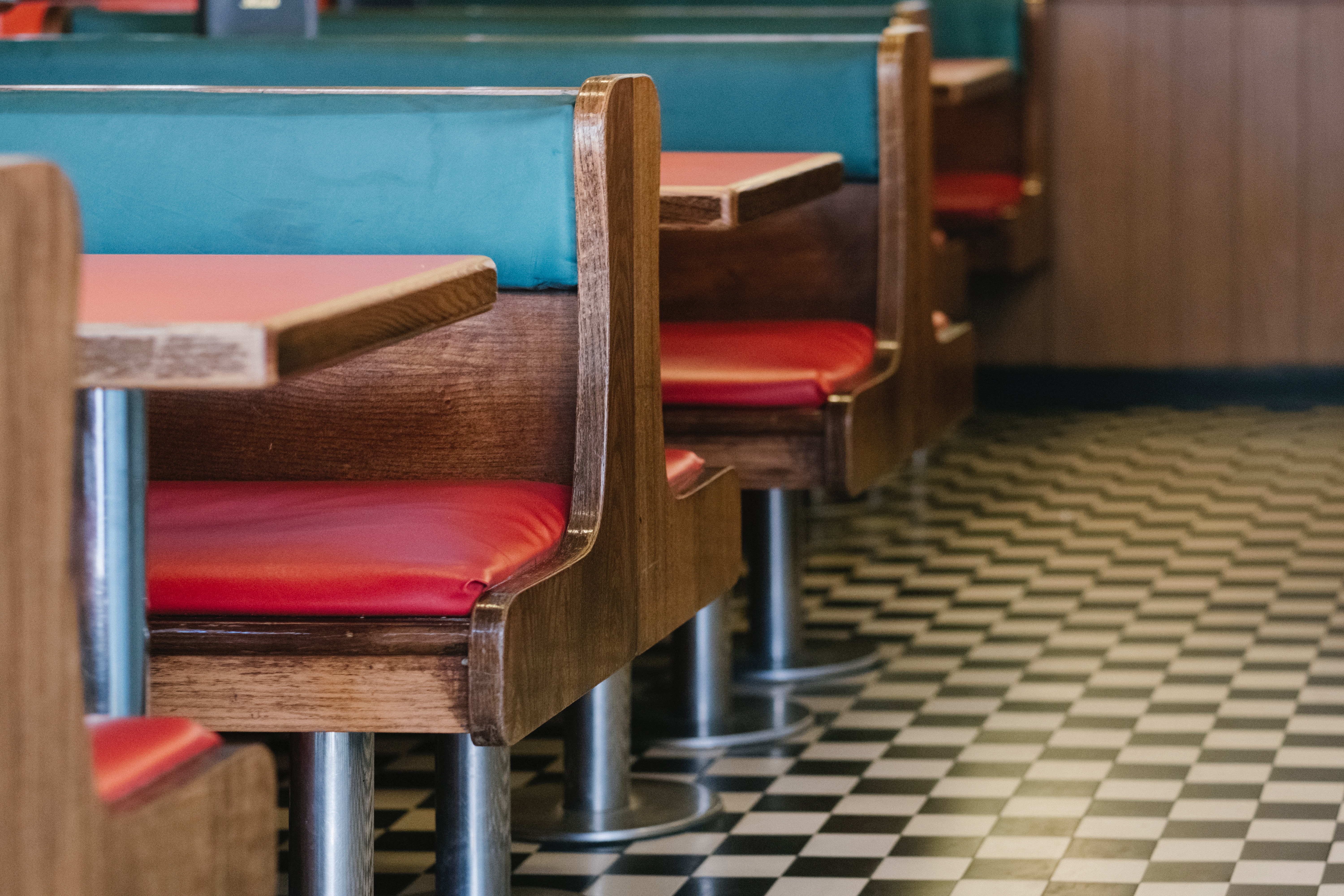
Steve and I met at the old Willamette Diner, a rollicking 1950s-style restaurant on the banks of the Willamette River, where we worked as a busboy and waitress, respectively, with bosses who seemed pretty nice until they fired both of us.
I was fired for two reasons: one, the big boss Joe said if I was late again, I was fired. Well, I was late again, and I was fired. However, the day I was fired, before the final chop, Joe told me to put this giant bag of ketchup in this dispenser on the wall. I thought it was weird. The bag weighed about fifty pounds, I could barely lift it, and I was supposed to heave it up into this ketchup dispenser on the wall? Bizarre.
At every other restaurant I’d worked at, we had ketchup bottles that you “married” at the end of your shift, during side-work, which was the worst part of any restaurant job. (Marrying meant to pour the ketchup from one bottle into another, so you had fewer, fuller bottles. The more accurate word would be “mate.”) Sometimes the girls at this other restaurant I worked at, which shall remain nameless, added water to the ketchup and shook it so it would be thinner and easier to marry/mate, which I now think must have violated all sorts of health codes.
Anyway, I lifted this enormous plastic bag of ketchup, dropped it into the dispenser—the dishwashers shouting instructions, steam billowing from their sprayers—and suddenly the bottom plug pops off, and I’m standing in a tsunami of what seems like ten tons of ketchup, pouring all over my hands, all over my legs, all over my white uniform and white tennis shoes, a bloodbath of ketchup, and the dishwashers are screaming at me to “turn the spigot, turn the spigot,” and I’m thinking, what fucking spigot are you talking about?
I try to cover the spout with my hands, and it’s like trying to plug a hole in a dike when an entire ocean is flooding over you, and suddenly my legs are burning—ketchup is really acidic, and I’d just shaved them, which I remember thinking made the burning worse, although now I’m not sure why I thought that—and finally, the whole thing stops because all fifty pounds of ketchup is all over the floor and all over me.
The big boss comes out of his office, his tomato face steaming red, and I’m fired. As in: Right now. As in: Walk to your car doused in ketchup like the giant hotdog loser you are and drive home.
So this is where Steve and I met. By the time of the great ketchup massacre, he had already been fired—I don’t remember why.
I liked Steve because he looked like Axl Rose in Guns N’ Roses—he even wore the bandana tied around his head. He had long hair and a great sense of humor. My girlfriend was also dating a guy who looked like Axl in a different way, and we liked to talk about how our guys looked exactly like Axl. Mine looked like a younger Axl, circa “Welcome to the Jungle,” and hers looked like a meaner Axl. This was how shallow we were at age twenty-one. It all was all too exciting.
Steve and I had a lot of fun hanging out at his apartment across from the Willamette River. (Fellow Portlanders, he and his cousin paid $350 a month rent.) We both loved rock music. We’d talk for hours about lyrics, songs, was there any band greater than the almighty Led Zeppelin, who was a true rocker, who was a poseur, and what exactly were the Temples of Syrinx?
We listened to music all the time. We both liked to smoke. Steve, a doggie-downer, liked his 40-ouncers of Schlitz, and I, a puppy-upper, liked my Diet Coke Big Gulps. We were into Kingdom Come for a while, and I still think “What Love Can Be” is a great song.
Steve and I also fought. We argued all the time, and it was all about petty shit. Steve would get insecure and depressed and pout, and I’d call him el bebe grande, and then he’d pretend to be a baby and hold his feet and roll around on his back and say “waah, waah,” and we’d laugh hysterically.
Sometimes his cousin, the beautiful Mimi, who worked as a cocktail waitress at Stuart Anderson’s Cattle Company in Milwaukee, would break out the Aqua Net and rat Steve’s long hair so he looked more Poison than G N’ R. She’d put eyeliner on him, tie one of her sparkly scarves around his head, and make him wear a vest with no shirt. It was all so glam and exciting!
Steve and I fought a lot about pizza. I felt that I paid for everything, and I started to get mad about it, so one time after we ordered pizza, we sat in my parents’ dining room (I still lived at home) and had a stand-off, staring first at each other and then at the Pizza Hut box on the table. I’d paid, Steve hadn’t. I didn’t want to give him any because I felt he was being a mooch. He wanted some because he was starving.
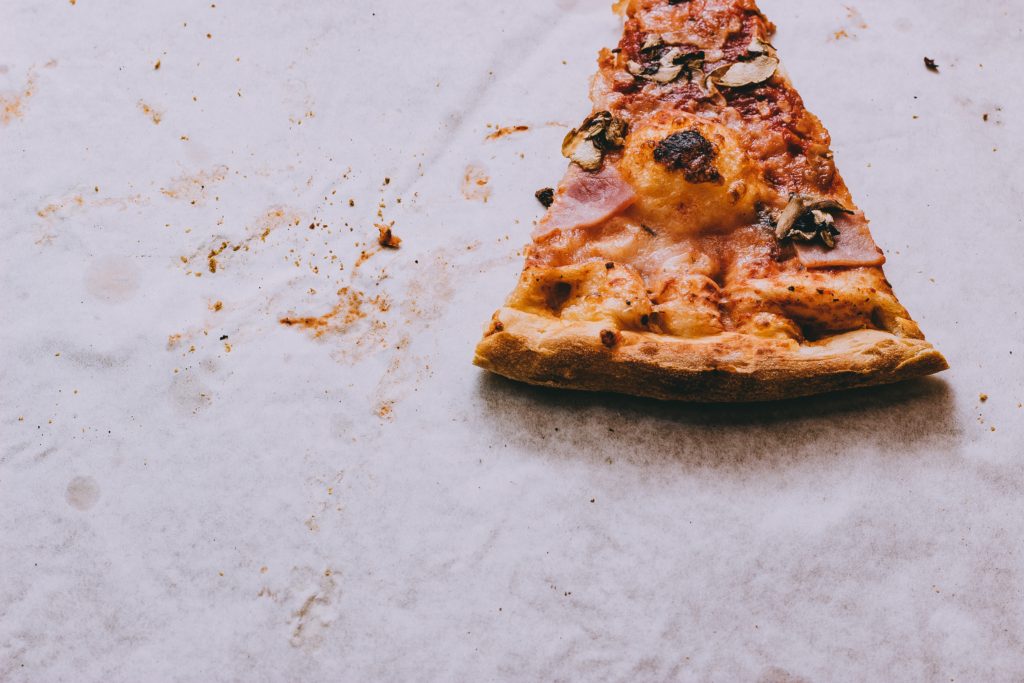
“I have 87 cents,” he said, digging change out of his pocket and dropping it on the table, and I said, “OK, you can have one piece.” Wow. Looking back, I’m so ashamed. I was trying to make a point about how the lady shouldn’t have to pay every single time (I’d gone out with a lot of broke rockers by then) but what a bitch! It’s pizza! What, were you going to eat the entire thing yourself?
One time, though, Steve and I bonded over pizza. We’d ordered it from his apartment, and it was during the time Domino’s had the rule that if it wasn’t there in thirty minutes, it was free. The pizza guy arrived at the thirty-seven minute mark—to his credit, it was New Year’s Eve—and we were so excited. Free pizza!
Steve, who was shy, went out and broke the bad news to the pizza guy. “10:26,” I yelled after him. “It was supposed to be here by 10:26.” Oh my God. What an idiot. First, I made Steve do my dirty work (I was paying), and second, what if the drivers got in trouble if they gave away too many free pizzas? What if they had to pay for them? Decades later, I feel bad.
Another time, Steve and I drove out to the gorge and picked a ton of sage—why, I have no idea. I do know we listened to Jimmy Page’s Outrider on that trip. Driving home that night in my old beater Fiat that went into death throes once you hit 45 mph, I was overcome by the strong smell of sage and had a terrible panic attack. The medicinal smell was overpowering, it was too much, and it scared me (even now, I couldn’t tell you why). Steve laughed as I shouted, “Roll down the windows, roll down the windows,” and he kept saying, incredulously, “A smell can’t hurt you, why are you flipping out?” Good times.
Later that summer, I moved to Las Vegas to dance and go to UNLV. Steve visited. I was working in a nightclub as a cocktail waitress, the Shark Club on the Strip, and bought Steve a pair of M.C. Hammer parachute pants from the club, which he still has.
One afternoon, Steve and I argued, and he disappeared for hours, stomping off into the desert across the street from my apartment. I was so scared. “He’s in the desert,” I cried to my mom on the phone. “What if he’s lost forever?”
Looking back, I see that Steve’s moods, his pouting, were because he battled depression, and I feel bad for the young guy he was. But back then, I hadn’t raised three kids—life hadn’t brought me to my knees—and I had very little patience. It was all about me. Why are you bringing me down? Why can’t we just have fun?
“Calm down,” she said. “He’s in a major city. Someone’s bound to find him.” Which is exactly what she said when my orange cat disappeared for six days.
Steve did return, later that night, and just as the cat had, he hopped the back fence and stood at the sliding door peering in, hands (paws) pressed against the glass, the black desert sky and a spray of stars swirling out behind him.
After I returned from Vegas, before moving to New Mexico for graduate school, Steve and I had one great night. We went to a movie, then hung out at his mom’s house in Vancouver. He showed me a picture he’d drawn. It was me as a mermaid: long blonde hair, better boobs and a smaller waist, a fabulous, iridescent tail.
I told Steve that my kids’ dad was in prison—life without parole—for a murder he committed while out of his mind on drugs. After the obligatory I’m sorry to hear that, Steve blurted, “You always did like losers.” He hesitated. “Like me.”
And yes, I know it sounds ridiculous, but I was thrilled. Steve was (and is) a stunning artist, but more than that, he knewme. Steve knew that if asked what kind of animal I’d like to be, I’d say “a mermaid.” He knew the ridiculous, princess-y, obnoxious mess that I was, and he liked me despite, or maybe even because of it.
During our recent phone call, we talked about our lives. Steve never had kids. In the last few years, his mom, dad and stepdad died. He’s struggled with addiction.
I told Steve that my kids’ dad was in prison—life without parole—for a murder he committed while out of his mind on drugs. After the obligatory I’m sorry to hear that, Steve blurted, “You always did like losers.” He hesitated. “Like me.”
I laughed at his harsh self-assessment, but it made me sad. Steve wasn’t a loser. He was kind and a good friend, and like the rest of us, he’s struggled. I reminded him of that last great night in 1991. After he showed me his artwork, we went out into the foggy, wet night and ended up at the train yards, talking and laughing like old times. Steve pulled me close. His coat smelled like rain. We set a penny on the tracks, then screamed at the top of our lungs as the train rocketed past, our breath billowing in the icy air, just two young dumbasses, the rest of our lives, like the train, hurtling toward us, and we had no clue what was to come.
I like to think that along the way, through the people we meet, we store up kindness to see us through the difficult times. I still have the flattened penny from that night. It sits in my jewelry box along with a lumpy ceramic angel made by my then six-year old son (he’s twenty-one now), and worry beads I’ve had since age five (I’m fifty now).
Like that surprising flood of ketchup so many years ago, life shocks the hell out of us. It rushes past. We rush through it. Goodness, eternal and warm, a sticky penny in our palm, stays put.
Kimberly Knusten is the author of the novel The Lost Journals of Sylvia Plath (Switchgrass Books), named one of the Best Books of 2015 by Chicago Book Review and a finalist for the Midwest Book Award. She is a graduate of the Iowa Writers’ Workshop and teaches English at Concordia University in Portland, Oregon. She has published short stories in Cimarron Review and Hawai’i Review, poetry in Hoot, and a novella, “My Blue World,” in Novella T.
Editor’s note: This essay begins with a moment many of us are familiar with–reconnecting with an old flame online–and comes around in the end to the stunning realization of how far life leads us away from the expectations of our youth. The essay takes such a quiet road to get to that moment, which is relayed unsentimentally, matter-of-factly. The power of the final statement lies in its unadorned directness. M.R.
Image courtesy of Photo by Max Vertsanov via Unsplash