Your cart is currently empty!
Author: Editor
-
I Live in a Triangle
by Stephen MacKinnon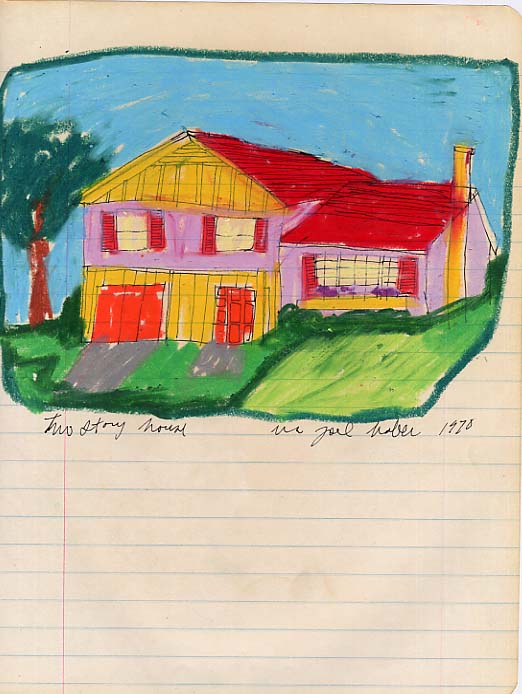
I live in a triangle. It’s exactly 213 square miles. It’s a place of Indian curses, ghostly apparitions, cattle mutilations, gigantic snakes, low-flying UFOs, huge birds, and ape-like creatures, seven feet in height, that leave 18-inch footprints. And I live right in the heart of it.
I work here, too, real estate, the only agent in town, although since I haven’t sold anything in six months that will probably change. Soon. The publicity about the reservoir and the Dark Forest Entry Association is killing me. After next month, when 20/20 and 48 Hours come, I doubt anyone will ever take me seriously again.
The activity centers around a 6,000 acre reservoir. Fear of the reservoir goes back 300 years, when the Wampanoag raiding parties hid among the black spruce during the tribe’s war with English settlers.
This much I was willing to discuss with the software engineers who seemed to like everything they saw: a colonial on Hemlock, the Greek Revival on Chestnut Street, the townhouse overlooking the reservoir. I spent little time on features, focusing instead on eliciting cues that might speak to what we call the magic moment, the exact moment the prospective buyer sees themselves in the house being to shown to them. If neither, especially the wife, has a magic moment, no amount of persuasion is going to save the sale. That would seem to explain his sudden departure, but I’m beginning to think it was all the conversation about the reservoir.
“This is it?” the husband asked, on the balcony, sweeping his arm toward the sun-sketched reservoir.
“Pretty, isn’t it? Can you imagine having your morning coffee here, leafing through the paper?”
He said friends were paddling across one day when they came across what looked like a small orange orangutan sitting on an island. “Have you heard that one?”
“No, that’s a new one.”
“You’ve heard the rest, though, right?”
“The rest?” I must have paused a second too long, because the next thing I knew he’d thrust out his hand, a very business-like hand, and was saying thank you for my time. I shook his hand, fumbled for a card from my breast pocket. By then he was at the door, letting himself outside.
I had no more appointments so I went back to the office and copied beauty sheets. Soon my mind went back to everything I’ve tortuously catalogued under “avoid at all cost.” Stories. Stories that could not stand up as theorems, much less even marginally plausible rumors, but they seem to stick in the local collective memory like tar, stories that seem to grow deeper and wider with every rumor and suspicion.
In December 1971, two UFOs were reported to have landed on Route 77. Less than a year later, another was sighted just a few miles up the highway. In 1973, Officer Dan Sweeney claimed he saw a white bird six feet tall and twelve feet from wing to wing soar over Baker Street.
I began to think of myself as I once was. A simple, stable, ordinary high school geometry teacher. Triangles, I always told the students, contain no mysteries. If you know two angles, you can find the third. Pythagoras did all that work centuries ago.
Yet sometimes on the drive home at the end of the day, the darkness closing in on me, I avoid the back roads and yet still find myself reluctantly gazing up at the sky as if it might, out of pity, yield the exculpatory evidence I am sure is there.
Grace Pelletier insisted for years she’d seen Bigfoot coming out of the reservoir. She had a photo. One photo. It certainly looked seven feet tall. But upon closer inspection, by Bert Clemson at the Chamber, it turned out to be a tree stump; its reflection in the water created the illusion it was walking toward a canoe.
But memory is a funny thing. When I am asked, especially by out-of-staters, relos, why property values are so cheap, I avoid reservoir talk. I point out proximity to major highways, vibrant downtown, better-than-average school system.
Inevitably, the conversation circles back to gigantic snakes, low-flying UFOs, huge birds, and ape-like creatures that leave 18-inch footprints coming out of the reservoir, which I tell them I can neither confirm nor deny, which is true, because I’ve seen none of that with my own eyes.
The Dark Forest Entry Association doesn’t help. They’ve festooned Route 77 with “No Trespassing” signs, which is heart-breaking, considering the quaint beauty of the dense woods and moss-tipped stone walls, pictures of which adorn most of the Chamber of Commerce literature I’m fond of mailing, when I have money and time. Yet I often pause and look at the photo of the reservoir that adorns the front of the tri-fold brochure. I swear at times the clouds say “Go Back.”
Driving home this evening, I passed the Dark Entry Road. I felt a tightening in my limbs, a new feeling. So I stopped, put the gear shift in reverse, and backed into the little entrance by the padlocked gate.
Just as I came to a stop, a pick up truck slowed near the entrance. The driver–a large, mustached man in a tan Carthart iron worker’s jacket and John Deere cap–said, after snapping my picture and license tag, “Can I help you?”
“Yes,” I said, “Can we talk?”
“About?”
I told him. I said this foolishness was beginning to get bad for business. He glanced at the magnetic Century 21 signs on my car, and said, “Put the car in drive, step on the gas, and head straight back to where you came from.” I repeated my request. He cocked a double-barrel. Humiliated, I did as told.
When I got home, Milly asked me how my day went. I told her. She said things will get better. How? I want to say.
“Market’s bad for everyone, Dick. It’ll pick up.”
Tonight, as most nights, I’ll wake in the middle of a dream about a serpent with an Indian head dress, something with a long tail that rolls and plunges in the middle of the reservoir. I’ll walk out into my backyard, glance at the house worth exactly half what I paid in 1965, and stare up at the sky for proof, proof what everybody has been saying cannot be true.
Stephen MacKinnon’s work has appeared in Armageddon’s Buffet, Conte, Fugue, Just A Moment, Marginalia, Ontario Review, Plum Biscuit, The Belletrist Review, The Oregon Literary Review, The Southeast Review, The Talking River Review, Triplopia, and Whistling Shade. In addition, his stories have received award recognition from Carve Magazine, Ontario Review, Rosebud and The Southeast Review.
Image by Ira Joel Haber, featured artist. View more of his work here.
-
The Double
by Laura Schadler She pulled her girls in a carriage behind her bike. Their plastic high heels and necklaces clicked. The river was in the distance. So was the shopping center. It swelled like a blister. She’d been wild when she was younger. Now, she didn’t look like a suburban mom, her tattoo underneath her tank top, her skinny tan legs. She looked like a boy, like a hard insect. Red lips and unpainted fingernails. She had blonde daughters who wore ballerina outfits and said strange things, ages three and four.
Today, in her peripheral vision she saw a woman who looked just like herself. This woman had the same slouch, the same blurred red of an inky flower on her shoulder. This was trouble, she knew. Not a curse, perhaps, not that obvious. Not worth worrying herself over. She needed to get seltzer, paper clips, tortilla chips, wine. She needed things. But this woman was too close to her, right beside her shoulder. This woman was suggesting she just get off the bike, was whispering for her to rest her bike on the ground and take off. Not to drown herself in the river. Not to leap from the cliffs beyond the shopping center. But to really take off. Take off to where the signs said, 300 miles away.
She wasn’t thirty yet. She made sacrifices for her husband and children. She tried to learn practical things, how to sell houses, how to cook different recipes. She’d married her husband on a hill. He was a nice man, not like the ones who came before him, dark haired, cruel, sizzling. Her husband didn’t yell, but he certainly wasn’t kind, he certainly wasn’t the best one for her. She’d never say it, but she missed the men who tried to pull dirty things in bed, held their keys up with their drugs on the end for her. But that wasn’t all of it. Sometimes hard things like marble or cement looked incredibly soft to her.
She wasn’t thirty yet, but she’d had a baby die inside her. Her daughter’s heart had been on the outside of her body and she’d been born dead. She went out to dinner one night and tried to tell this story, but ended up dropping her wedding ring in her water glass to watch how fast it would sink. Dinner had been beautiful and expensive, the pink skull of a fish. There was a poet and both his wives stuck their heads in the oven. She remembers learning this in high school. If she knew for sure that her husband’s second wife would also stick her head in the oven, she would gladly do it first.
The woman who looked just like her was still by her side, also had her hair, her green eyes, her small breasts. This double seemed to want to give her the answers. She thought of crashing her bike, of which parts of her brain affected speech, memory, and knowing the names of things. Which parts of her brain, when stimulated with electricity, might create this image of her double. What damage had she done to herself. What hope did she have for things without explanation. Harbingers.
Later, in her garden, the woman was there again. This time she knew it meant death. It meant climb to the tops of towers and fling yourself onto the spikes. It meant put on your wedding dress and burn down the house. It meant make dinner, set the table, ask how his day was. It meant drink wine in the shower, the glass steaming up, your fingers cold. It is what it is. Everything is like being married, everything is difficult, shitty, hilarious. Everything makes you catch your breath.
She imagined her dead, baby daughter like an awful butterfly in the garden. Pink, moth-like, dangerous.
Perhaps her alive daughters would forgive her, would grow up to realize that this was no kind of life, would understand why she packed her suitcase and left, would even someday leave themselves. She walked out of the house, got in her car and drove past the shopping center, the river, the green signs that marked the miles and towns of the distance. The woman who looked like her, her double, left her side then, disappeared from her. And she knew that this woman had walked into the gleaming white house that she was leaving behind. Had walked in, closed the door and sat down at the kitchen table. Soon, her husband would be home with her daughters. It would get dark outside and be night.
Photo by Steve Shearer.
-
What the Parade is For
by Laura Schadler
She didn’t know what the parade was for. People carried crosses. Flowers pink as bubble gum. The rain was coming in over the capital. She saw sheets of it before the drops got there and soaked through her shoulders, the top of her head. The black rainwater rolled down the street gutters. She had places and parties to go to. She jumped right in the gutter rainwater. Maybe the parade was for something bad that had happened, death, or in protest, perhaps it was a celebration. She joined with a skull made of sugar resting in her palms.As the parade made its way through town, she saw a man standing at the top of a tall building, at least ten stories high. He was a small, shadowed figure against the sky. She saw him take part of the roof and drop it off the edge. The piece of the roof fell and fell towards the ground. She watched it as if it were a human body. Things happened because they had to. When things didn’t work it was because they couldn’t.
The parade made its way towards the water. It blocked traffic and people honked their horns. She looked back towards the building that touched the sky. The sky was full of the outlines of birds, and the avalanche of the clouds. She handed her sugared skull to the woman beside her and turned towards the building where the man was. The doors were locked but she didn’t let them stop her, she took the bobby pin from her hair and picked the lock. She took the stairs, not the elevator. Elevators are like being in the stomach of some creature, something futuristic, a gleaming, golden inside.
From the roof, the city glowed like an ornament. A bird heart. A fist. Around him she immediately spoke in hyperbole. Everything was the fucking best thing ever. One of the fucking best things ever was when the fog came in low and gray near the palm trees, like today. It didn’t look right, didn’t go together. On the roof with this man, she felt that everything was its most superlative version of itself, matchless, incomparable, and without equal. The bay glistened and was dotted with ferries.
She touched his hipbone and felt sure that she’d seen it somewhere before. His eyes were like green marshes, sticky and full and hot. They had things to tell each other.“What are you doing up here?” she asked.
She let her fingers dart out towards him and then back towards her own body as if emphasizing a point. What was her point, exactly? She felt like a teenager, like she wished she had a bedroom door to lock and her whole life ahead of her. He was taking the roof off, the sticky black tar papery part of the roof. It came off in squares and he threw each square off the side. She watched. She saw the parade in the distance. She heard gunshots to the South. Planes flew overhead full of hundreds of people who were safe. She knew that she was never safe, she preferred it that way.
“What are you doing up here?” he asked back.
“I do have other places to be,” she said. It was true. Her red dress was for a cocktail party. She had cocktail umbrellas in her purse and small diamonds in her ears. She knew that the two of them, him and her, would never make it. But when she talked to him she felt her arteries. She wanted him to touch her dress. Her arteries sizzled like they were made of electrical wiring. The cocktail party would be under a tarp on a porch. There would be whiskey and ice cubes. She imagined looking across the party and seeing him there. She didn’t ask him if he was married. She wanted to know a lot of things about him. She didn’t ask if he wanted to go to the party with her. She imagined him fucking her.
“That reminds me,” he said. He kissed her. The first time you kiss someone their mouth seems too hard, not soft like you’d hoped, and you realize that you don’t know them at all, but then it is very very soft and you realize that it’s too late. It’s happened.
“Well, god,” he said.
She wonders if he can see her or if she’s disappeared. There are one thousand futures. They splay out. Each time, it is close. Each time, she’s there. She thinks perhaps she has one thousand decisions to make, and when she runs out, she will look around at what she’s chosen and it will be permanent. Then, like some piece of material, like something inanimate, she throws herself off the roof. She has places to be. Things start off small, but then they press down, they hold weight.
Laura Schadler grew up in the mountains of Virginia. She studied film at Bard College and will have her MFA in Writing from the California College of the Arts in May of this year. She currently lives and writes in San Francisco, and is working on her first collection of short stories, Everyone Who Feels Homesick. She has been published in Fireweed Magazine and Confessions of a Doorknob Queen. She wears high heels even though she is tall, likes mango sorbet, and overuses the word awesome. She has a few ideas for her first novel, which is, at this moment, entirely unwritten.Photo by Steve Shearer
-
Closet of Love
by Dylan Lee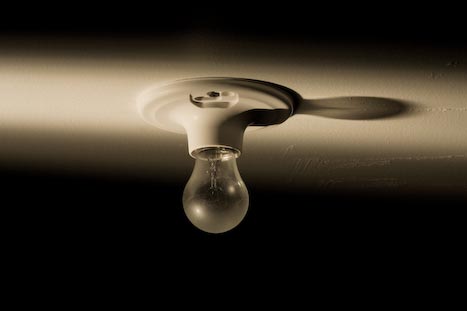
It costs only 50¢ to enter the Closet of Love. The nominal fee covers electricity and the occasional light bulb replacement. The light bulb is never turned on, however, except for the occasional dusting and spritz of air freshener. Because when a couple enters the Closet, all is perfectly dark. You can see only love.
The Closet of Love fits four average-sized adults, or two whose bellies say, “I am the product of beer and always taking the elevator instead of the stairs.” The Closet is open one day a week, and never on the same day or at the same time. (For everyone knows, no one knows when true love is going to come along.)
“Hello,” says the woman who wants to fall in love.
“Hi,” says the man who wishes the same.
Each hands a quarter to the ticket taker. He tears their ticket, and with a smile, hands each of them half. They walk towards the Closet door and step inside. The door shuts and the woman speaks.
“I don’t love you yet. Is the Closet broken?”
“No, but let’s give it time,” the man says, his voice shaking. He has never been good at love. Not since the prom accident 16 years ago. He still has a scar.
“Okay,” she says and stands quietly, waiting.
“What that ticking?” the man asks.
“That’s my biological clock. I hope we fall in love soon.”
“Will you marry me?” the man asks. “I love you so much it hurts.”
“I want to think it over,” the woman says. “Yes, yes, I’ll marry you. I love you, darling.”
A third voice, a man’s, interrupts. “Hello.”
If it weren’t so dark, the engaged couple would have seen each other jump back simultaneously.
“Who are you?” the woman asks, drawn towards the new man’s voice.
“Want to have an affair?” the new voice says.
“Well, I just got engaged, but something about you excites me. And I want one last grasp at freedom and what could be. Just don’t tell my fiancé.”
“Tell me what?”
“Nothing, dear. I have to work late tonight.”
“Oh, okay. I’ll just be over here in the corner.”
The woman places her hands on the large, brawny shoulders of her illicit lover and pushes him away.
“I can’t do this anymore,” she says, turning her head away in the darkness.
“But I have to see you again,” her lover says.
“I can’t. I love–” Tears sprinkle down on the floor of the Closet of Love –“another.” She takes her mistake by the hand and kisses him on the cheek. He is sad, but he will recover. It cost him only 15¢ to be here.
The Closet door opens and the woman and the no-longer-nervous man emerge, hand-in-hand.
“My scar is gone,” the man in love says.
“It will never come back,” the woman in love says.
The Closet of Love’s door closes. The ticket taker writes a note to himself to begin charging 55¢.
Dylan Lee is an advertising copywriter in Portland.Photo copyright 2007, Andy Batt, www.andybatt.com.
-
The Last Record Store
by Corey Mesler
You walk into the last record store on Earth. It was quite a trek to get there. The clerk has complicated hair and a tattoo that says, “John Lives.†You say to him, “I need that music from that film. The one where the guy meets the gal and she and he do things that people in movies mostly don’t do.†The clerk says, “You’re talking about Johnny Dark and the Fictioneers.†It doesn’t sound right but you’ve come a long way. “Ok,†you say, “Give me that and the one where the female singer sounds like a train colliding with a tangerine.†On the walk home you realize that it wasn’t that movie at all. It was the sequel to the one about the dying Stoic, the one with all the midges. Still, Johnny Dark rings a vague bell. He sounds like Quasimodo. He sounds like your mother. In your review you say, “It’s the kind of music you’d walk to the ends of the Earth for.â€
Corey Mesler’s work has appeared in many online and print magazines. With his wife he owns Burke’s Book Store, one of the country’s oldest (1875) and best independent bookstores. He can be found at www.coreymesler.com.
Image, untitled collage 23, by Ira Joel Haber, featured artist. View more of his work here.
-
Ray Bradbury at Home
I just came across this odd and wonderful little collection of video clips, taken at Ray Bradbury’s home in LA in 2001, by the folks who publish raybradbury.com. In it you’ll see the chaotic basement where the exceedingly prolific Bradbury works, and hear him joking about holding the record for rejections from The New Yorker. I didn’t realize until visiting the site that Bradbury had a new book out in 2006, Farewell Summer, a follow-up to Dandelion Wine, first published in 1957. You’ll also see Bradbury talking about linked story collections, something he did way back in the 1940s with The Martian Chronicles, and on how he put together his collection of metaphorical objects from Hollywood and beyond that surround him (according to Bradbury, in the old days all you had to do was ask for something and it could be yours).
-
David Mamet on Hollywood
Mamet was interviewed in Time Out New York by Joshua Rothkopf. The subject: Mamet’s new book about film, Bambi vs. Godzilla.
Hollywood is capitalism at its best: opposing forces working it out, using the tools of the marketplace. As such, it’s vastly messier than totalitarianism, but it kills a lot less people.
On audience:
I write for the audience. The small market or the mass market may be a function of the worth of my script, or of the assiduousness by which it was sold. But, like any other artist, I consider my potential audience everybody alive and half of the people who are dead.
And, by my vote, a Mamet must-read for writers: Writing in Restaurants, circa 1987.
-
the feel of the pen
Empires fall, votes are accorded, but to those people writing in the circular room it is the feel of the pen between their fingers that matters most.
E.M. Forster, Aspects of the Novel -
Write Well. Imagine Deeply.
Today, in the graduate fiction workshop I teach, we’re discussing a story written by a young white woman who grew up somewhere in the middle of the country. The story is told from the point of view of an older black woman in New Orleans. The student told me she’s never been to New Orleans. Still, the story works; in many ways she’s defied the edict “write what you know.” She may not know what it means to be an older black woman in New Orleans, but what this young writer does know is music, and, wisely, she enters the story through music. I always tell my students not to take “write what you know” too literally, not to allow themselves to be constrained by it so much that they confine their writing to the most obvious realms of their knowledge. What we know goes far deeper than details of place or race or age or occupation. Emotional knowledge, or the knowledge of how human beings act and feel, is essential to a good story. Many of the external things that are alien to you can be filled in by research.
For example, I have another student who recently wrote a story about coalminers; the story seemed so true, so detailed, so accurate, that I thought she came from a coal mining family. After we discussed the story, she told me she had never met a coal miner, and had labored for a long time on the internet researching various types of mining, terminology, locations, and so forth.
Miss Snark wrote back in April:
One of the best books of all time is Stewart O’Nan’s The Speed Queen. Stewart O’Nan isn’t a girl, he’s not on Death Row and as far as I know, he’s never worked in a drive in. You’d never know it from reading the book. Stephen Crane’s The Red Badge of Courage was written by a man who did not serve in the Civil War. I’m pretty sure Anne McCaffrey as never seen a dragon, JK Rowling has never seen a wizard…That all of these people can imagine a world completely apart from their everyday haunts and suck me in so far that I not only think their worlds are real, I can’t imagine they AREN’T, is a testimony to their writing and imagination. Write well. Imagine deeply. That’s all you need to do.
The exercise:
Write a story in which the external circumstances are something you don’t know. Use what you do know about human nature to give the story emotional resonance. Use research to lend accuracy to the details. -
Claire Messud on ambition
Here’s a good interview with Claire Messud, author of The Emperor’s Children, on the Kenyon Review blog.
So is ambition ever justified? There’s always something insane about it, there’s something always unjustifiable about it. But what would ever get done without it?
Nanomo Writing Exercise:
Write a story that is propelled in part by a character’s blind ambition.