Your cart is currently empty!
Blog
-

The World Is Ending in Tampa, Florida! by Paige Blackburn
That’s what the news warned. Everyone but the doomsday planners and the resolute old men evacuated long before it happened.
From luxury boats or the local news, the greater population of Tampa watched their city shift, then sink, Atlantis-style, and slide deep into the only darkness we do not know.
Hundreds of Tampa children watched in wonder and asked their mothers if octopuses were going to sleep in their beds. Hundreds of Tampa mothers didn’t know how to answer that question. Only one Tampa child asked her mother where they were going to live now. Her name was Judy. Judy’s mother finished her cigarette, flicked it into the ocean, and replied simply, “Somewhere else.”
And they did live somewhere else. Judy and her mother lived so many places else. They moved around every six months or so, flicking cigarettes into bodies of water all across the country.
A year after the Tampapocalypse, the people built another bridge over the newly-expanded Tampa Bay.
Ten years after the Tampapocalypse, Judy’s mother died, and Judy returned to Tampa Bay to live with her aunt. By this time, she was seventeen, and about to graduate from a school she’d been inside exactly twice.
One night, she asked her aunt if there was a community college she could attend (she’d been saving her money), and her aunt looked away from her black television screen and screeched—the first words Judy had ever heard her speak:
“There’s nothing for you in this world, kid! Stop looking forward! Nothing comes next!” And she crumpled up an empty can and threw it at Judy’s head.
Judy left.
“Nothing comes next?” Judy thought as she walked down the recently-newly-defined coast. Really?
Because as far as Judy could see—and she could see for miles out from here, without Tampa in the way—there was plenty that came next.
And what came next would be plenty.
Paige Blackburn is a young writer, poet, and college student from Illinois. When she is not working or attending class, she is reading a fantasy story, or writing one, or thinking about writing one. Her work has appeared in Unbroken Journal. You can find more of her poetry on Instagram @blackinkburnedpaiges.
photo courtesy of Julie Tupas
Subscribe to get Fiction Attic stories in your inbox every other week.
Submit your flash fiction, memoir, short stories, essays, or sketchbook stories.
-

The Truth Is — by Stephanie Buesinger
1. Ingredients
I try to find solace in the little things. Making bread, for example. The refuge of repetition as I knead the dough, fingers sticky, folding, pressing, then folding again, the enforced patience of setting it aside to rise, damp cloth laid carefully over the top. The letting go when you slide the formed loaf into the oven. Growing up I watched my mother bake sourdough and buttermilk biscuits, blueberry muffins, and apple pie, which she served a la mode with a large scoop of vanilla brought home from Swenson’s. I packed her recipes in my carry-on when I moved to this country.
2. ProcedureThe truth is, I found the recipes in a hinged wooden box in the attic of this cottage by the lake. The recipes are not for blueberry muffins or pie but for kreplach and noodle kugel and kasha varnishkes. The real estate agent that rented me this house told me they were left there by a German Jewish woman who abandoned the house and its contents during the war. The previous owners left the box in the attic. No, that’s not true either. The recipes are for borscht and pelmeniand were handwritten on lilac-colored stationery and given to me by the Russian ballerina who lived in the apartment above me in New York, compensation for her hosting late-night dinner parties. Tanya knew I liked staying in and reading Tolstoy. She preferred Chekhov. I’m sorry, I lied to you again. I found the recipes on the internet and took a screenshot of them on my iPhone.
3. Serving
I don’t like to cook, and I would not make any of those things. I’m confident my mother would have cooked all those things if she had ever lived here, in this cottage by the mountains. I mean house by the lake. If I had a mother who baked warm loaves of apple strudel and told stories as you lay on a blanket under the apple trees and blue sky. If I even had a mother who baked strudel so tender it melted on your tongue. The truth is, I had no mother.
Stephanie Buesinger writes fiction and children’s literature and enjoys illustration and photography. She is Photo and Blog Editor at Literary Mama and her work has appeared in Literary Mama, Women on Writing, and The Bluebird Word. She lives in Florida with her family and pets.
-
Here, from Outer Space–by Mackenzie Singh
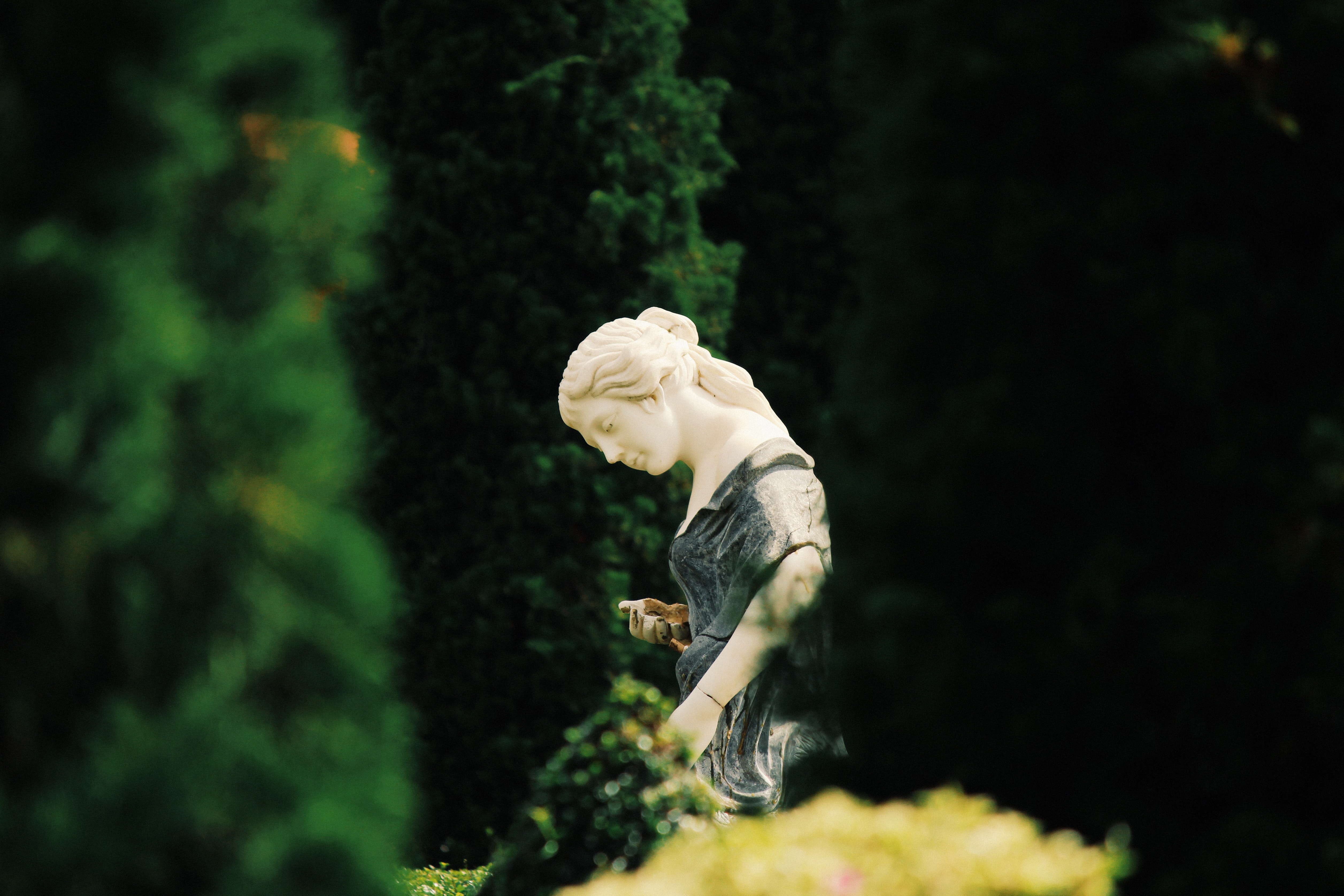
photo by Zeke Whiteout At the sculpture park we fail to connect. By connect, I mean recover. And so, we stack rocks. In silence we balance them without great effort but still, they stay, an allegiance or maybe obedience to an effort we lack. It’s in the fit. I like the precarious ones, she, the uniform. Our creation — it tickles us. We have surpassed the other stacks and, look: we are still stacking. When the leaning begins, we abandon it, this bowed spine, which, hey, call it a benediction.
Above, honey bees. They fly and fly and —
I tell her I envy insects. How capable they are, how sturdy the things they make. Me? I’d be a spider, my home spun in the yawn of a boot, a constellation against the sole of a sky.
We carry on over the dry-stone ramp and toward the garden. In the shade of a tree the teeth of a scar wink white from her calf. The first time I saw it she said the owner claimed the dog just wanted to play. I said it was like that joke about the — but then she kissed me and I managed only to say, “ — off my lawn.”
Prospects are hospitable. It’s a misconception that a happy present makes a future when one has only to imagine a future to want the present. As for the joke? That’s what I mean. Of course she laughed.
And, now.
Now we arrive at the quarry where, supposedly, two can work out whispers from opposite ends. Here, we are on another planet. We are aliens attempting contact. We cup our telescope hands around our mouths. Diligently, we hum: “Hello?” And then we listen, we listen before trying once more: “Can you hear me?”
Mackenzie Singh’s work has appeared in SAND Journal, SHiFT, Maudlin House, Lithub, and The Rumpus. She lives in Brooklyn.
Subscribe to get new flash fictions in twice a month in your inbox.
Submit your flash fiction or personal essays to Fiction Attic (we pay our writers).
-
Single Family Home– by Cathy Cruise
“Everything falls apart eventually.” His words are a car on a hill, climbing gradually, curving at the top, racing down to dismal nothing. “What else is there to say?” The skin along his jaw quivers as he shrugs.
The bearded counselor looks at me as if I should know. But a dome has sealed itself about the room. If I say anything, the words will sound muffled, unable to break through to the outside. I rub the polished arms of the chair as the air conditioning kicks on, blasting cold across my shoulders, and listen to its hum.
Forty-five percent of marriages end in divorce. Men and women remarry, on average, three years later.
Statistics, I suppose, are comforting. Why else would the counselor rattle them off so serenely before we stand and shake his hand a last time?
Silence on the ride home. Because the dome has engulfed us here too in the small car, the once happy car, the Hyundai Sunday Funday car, he called it when it was new, and we took the children out for drives. He always hums when he drives. He hums everywhere. But not on this ride home from the end of our marriage, in this now, as it turns out, piece of shit car with oil leaks and faulty tire pressure sensor.
He turns on the radio, to the oldies station. “Wichita Lineman” is playing. A sappy song, I’d always thought, but now I know I’ve never listened before. A lineman hearing his lost love singing in a phone wire. It is the saddest song I’ve ever heard.
At home, drawers emptied, folded shirts and pants stacked on his half of the bed so there’s no question where he’ll sleep tonight. In the morning, thermos of coffee and a question when he walks into the kitchen. Am I okay? I take thermos and keys outdoors, to my blue Honda with realtor magnets on the sides, hatch already filled with suitcases, enough clothes and shampoo to last a few weeks. One day when he’s at work I’ll gather the rest. Somehow, I know how he’s standing there on the porch, hand raised in a wave, even though I’m staring straight into the rearview mirror as I back onto the street.
At the end of a long drive lined with silver maples, just outside of town, stands the secluded white house with green shutters. My new listing: five-bedroom, four-bath colonial. The owners live up north and won’t return until end of June. I park around back, open the lockbox, and let myself in.
Houses hold on to time. This one has stood vacant only a few weeks, but smells of heat, of dust from the sparse furnishings left by previous renters. I bring my things inside, adjust the AC, pour a glass of wine, and head out back. I ease down to the side of the pool and slide my feet in the cool water, the sun’s warmth gripping my shoulders.
Seventy-five percent of marriages that began as an affair end in divorce.
A parting shot, speared toward us on our way out the door. Yes, we’d both left previous spouses for each other. But we’d lasted these ten years, parented two sets of kids to adulthood. Wasn’t that validation enough that what we’d done was right? True?
But then here we are, ten years of overstepping, resentments, misdirections behind us, so maybe not. Blending is hard—a road trip split in two—his family in one car, mine in the other, cheerfully waving across the dotted line, but struggling to keep pace. Always knowing that once the children were gone, we’d travel together. But once they were gone, it turned out, the journey was over.
Ringing phone again, which I answer finally because my sister has called all last night and today.
“I was about to call the cops,” she says. “Are you okay?”
My jaw needs to loosen before I can respond, and I’m aware that it’s been ages since I’ve spoken. I wet my lips. “I’m fine.”
“Where are you?”
“Mom’s.”
“I just talked to mom. Why are you lying? Are you with a guy?”
I cough out a chuckle. Should I be happy I can laugh? No, because it’s more like a strangled clearing. “I meant I’m heading to mom’s. When I check out.”
I swirl my hand through the blue water, heavy with chlorine smell.
“Come stay with us. There’s the sofa bed in the basement.”
“I’m fine.”
I say it again after we hang up, again while I shower and settle onto the couch for the night (I may lie and trespass, but I won’t occupy a stranger’s bed). “I’m fine,” I whisper to the shadows, to the moonlight falling across the thin blanket.
If yesterday hadn’t happened, if he’d never said how everything falls apart eventually, I’d be hearing him now—showering, brushing his teeth, humming all the while. I used to think his aimless tunes were meant for me, but now I understand it was only habit, something to do while puttering about the house, working in the yard, driving.
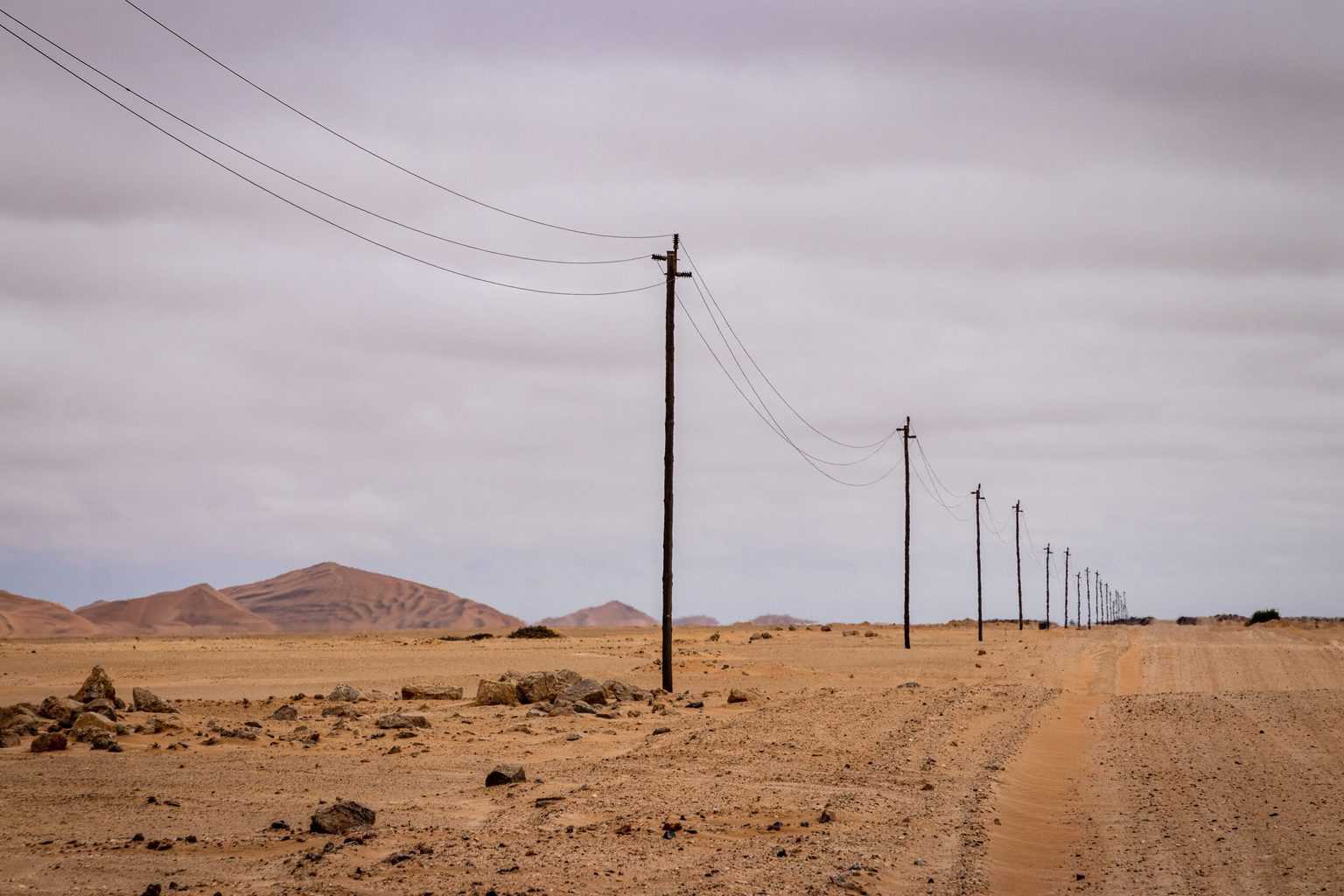
Sleep, then a vivid, barren dream. I’m somewhere out west, high above yellow desert split by gray highway, as far as I can see. I breathe fresh air at last, but it’s like breathing mist, and anyway there’s a job to do, trouble on the line, and I have no clue how to fix it. I stare into a metal box of wires, try to trace a coil from one point to the next, but I lose it in the mass of cords, and everything falls apart eventually anyway. High above rocky slopes, road below framed in phone lines, shimmering with heat, his voice is the only sound. He’s humming, there in the wire. But not to me. To everyone, to no one at all.
Cathy Cruise is the author of the novel A Hundred Weddings, and short stories that have appeared in journals like American Fiction, Appalachian Heritage, Pithead Chapel, Vestal Review, Michigan Quarterly Review, and others. She has a master’s in writing and a bachelor’s in English and has received a few writing awards you’ve likely not heard of. When she’s not busy with freelance writing and editing, working on her second novel, or walking her dogs, she can be found reading, begging her kids to play Rummikub, and watching far too much TikTok. You can visit her online at www.cathycruise.com.
Subscribe to get new flash fictions in twice a month in your inbox.
Submit your flash fiction or personal essays to Fiction Attic.
-

Story in Blank Space #1–by Kris Broughton
(the writer asserts that the empty space above represents all the stories of the known universe. He recommends that you stare at the blank white space for at least five minutes to see this particular story in its entirety.)(If you are having trouble discerning where one story ends and another begins, the writer suggests that instead of trying to interpret this particular story through reading it one word at a time, you should concentrate instead on the physicality of the story, taking the requisite information about plot and characterization and theme from the amount of space this particular body of words displaces.)
(If you are trying to read this while an annoying, undersized dog is barking at you, you have the writer’s sympathies, as he was similarly aggravated by a diminutive, deballed mongrel of mostly Chihuahua origin during the creation of this piece.)
(By the end of the second minute of staring, you should begin to get a picture in your mind’s eye of the main character. You are not surprised to find that he is an anti-hero, inasmuch as this particular story is on the cutting edge of being an anti-narrative. You are also not surprised to find that the protagonist, in a vague way, resembles the you of yesteryear – a slimmer version of you who has more hair and whiter teeth, with a morose disposition you do not recall. The only surprise, if you are not African American, is that this you is black.)
(Just when your eyes begin to tire of focusing on these few square inches of blank screen, the story you have been waiting for appears in your mind. You have chosen to begin in the middle, as you are not overly fond of settings, mood, or tempo. This brown skinned character who resembles you is enmeshed in an imbroglio between his lover, who represents societal propriety, and his secretary, who represents individual desire. After three minutes of staring at a blank screen, this business of your likeness being black is no longer perturbing. In fact, it sparks possibilities in your mind. You wonder if this character’s jump shot is better than the one you have in real life. To be more accurate, the one you used to have – in real life, you haven’t played basketball in ten years.)
(This is not the life you would have imagined for yourself if you were black. The protagonist has a doctorate in appliquéd physics. His lover has a doctorate in voodoo economics. The scene you have entered in progress shows our anti-hero and his paramour standing on the balcony of his loft apartment, eating canapés of fish flavored tofu and sipping white wine spritzers. Dr. Voodoo has convinced herself that our protagonist is involved with his secretary. Dr. Appliqué is stuffing his mouth full of tofu canapés, in hopes that he will not have to talk to Dr.Voodoo about his voluptuous secretary, Pogo Tatuopo.)
(This is not what you expected from characters who look like this. Dr. Appliqué’s eyes, you feel, should hint at a well of violence, at a past filled with pain and suffering and self-loathing instead of radiating the self-satisfied gleam of the intellectually well-endowed. Dr. Voodoo should be angry and aggressive instead of confused and disappointed. Now Pogo’s broad South Pacific Islander cheekbones come into focus. The blouse she is wearing is unbuttoned to her breastbone. When you see the lush curve of Pogo’s hips, there is no question of Dr. Appliqué’s guilt or innocence – only how many times it has happened. As the action within the story begins to rise, you close your eyes, because the protagonist is an anti-hero, and it is pretty obvious to you where this story is headed. You begin to feel faintly ridiculous at having spent so much time staring at a blank space.
Your shift to anger is sudden, swift – you would murder the writer if you could get your hands on him for wasting your time! Then you blink your eyes and all of a sudden the blank space seems larger. The whiteness of it seems to be fluid, as if you are staring into the top of a freshly opened can of Chantilly Lace housepaint. Wait! Is this the same story you have been staring at? The same protagonist you have been watching? He can’t be…you didn’t expect him to…holy shit!)
(Although you have not forgiven the writer, the story has improved immensely – that is to say, the direction in which the story is headed is not what you would have expected. What is utterly amazing, moreover, is that the writer has been able to capture your imagination so vividly with two Black PhD’s, a tray of fish flavored tofu canapés, and a woman named Pogo. The recommended five-minute viewing time is almost upon you, but the tale has become so engrossing, you are tempted to try to go back to the beginning to see how this all started.)
Kris Broughton has had stories published in Carve, Exquisite Corpse, 3AM Magazine and Eclectica. Kris lives in John’s Creek, Georgia, where he toils ceaselessly in the IT industry as a channel sales professional. Kris is at work on a contemporary novel about Black men.
Subscribe to get new flash fictions in twice a month in your inbox.
Submit your flash fiction, personal essays, or illustrations to Fiction Attic.
-
Mel in Her Element–by Phoebe Brueckner
Mel went down to the docks alone and hired a fishing boat, took it out all by herself. She brought with her a plentiful supply of fresh water, not knowing how long she’d be out. Given her track record, she figured it might be a while. She sat on the boat with the fishing pole in hand, staying hydrated, watching the sun dance on the sea’s glassy calm. It was so quiet out there on the water, peace and awe flooding in around her. It would be nice to be able to share it, to turn to her love and say, “Pass me the crackers?”
By late morning she was sweating in the hot, hot sun, but she’d brought a wide-brimmed hat and sunscreen, and she knew to drink water consistently. When she had to pee she went in a bucket, then dumped it into the sea. But by midday she was dangling over the side of the boat to pee in the ocean just like the fish themselves, enjoying the liquid movements all around her. In the late afternoon, Mel cracked open a cold seltzer and cast her line, yet again—and shortly after that felt a sharp tug.
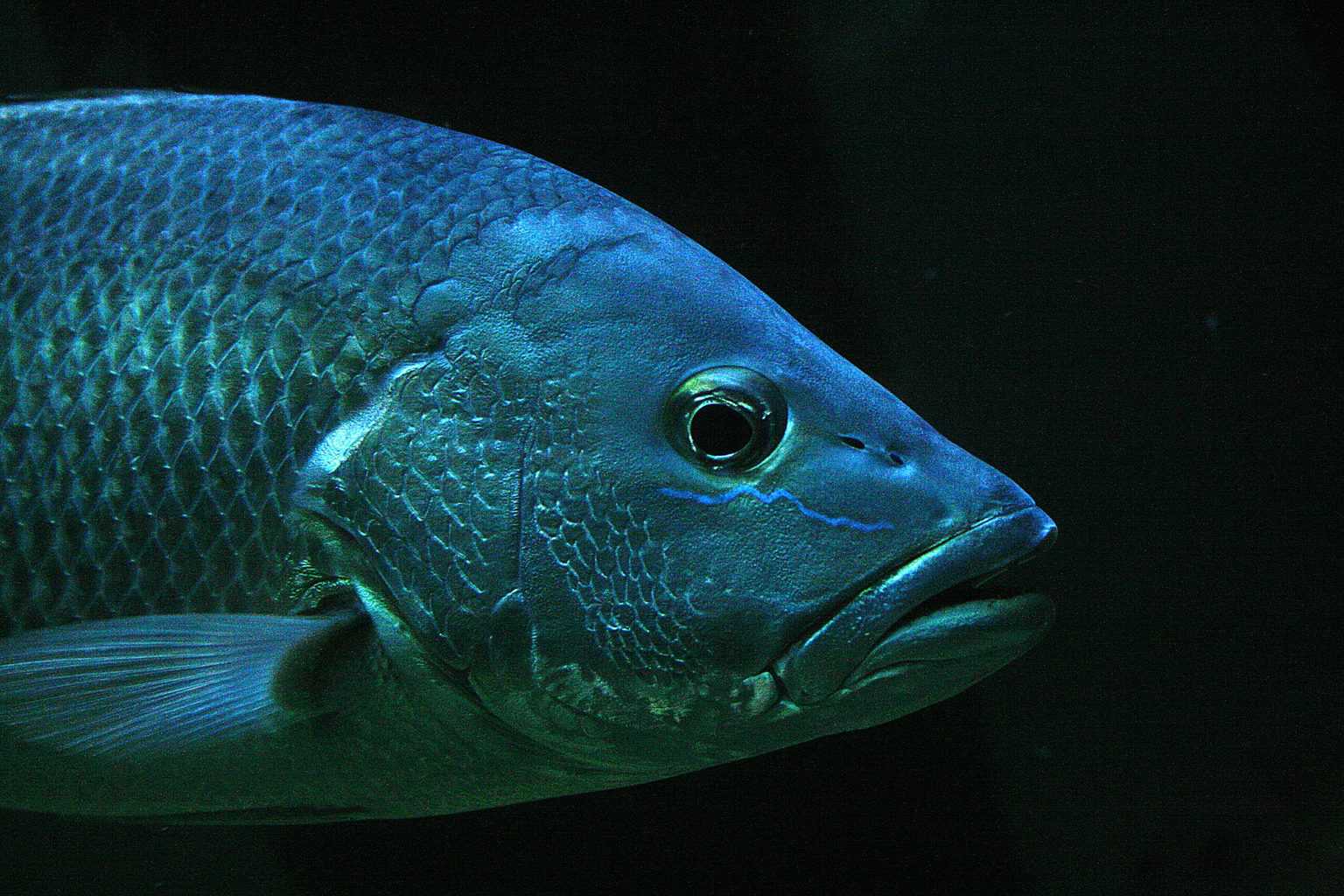
She reeled it in, nearly breathless, heart thumping as the fish hit the floor of the boat. It was a good-sized, good-looking fish, but it was flopping so violently back and forth, desperate for air, and freeing the hook from its lip was a struggle.
“I can’t breathe,” said the fish, “I can’t breathe.” And Mel knew then that he wasn’t the one for her, so she threw him back into the sea. He darted into the depths straight away, and she wiped blood and scales from her hands. She hoped his lip would heal quickly. She felt terrible about having hurt him. It was selfish of her, she saw that now, to reel him in just because she felt ready for love.
She stood looking at the water for a while, hands on hips, her fishing pole kicked into the corner of the boat. Then she lay down on her back, put the wide-brimmed hat across her face, and let the waves rock her so gently. Far below, she could tell what was happening. She could sense schools of fish rushing by, flicking light back and forth with their bodies’ quick movements; she could sense all the sharks getting ready to cruise. She could feel herself swimming with all of them, encased always in liquid and breathing in a magical way. But the thing our dear Mel thought to hope for was rain.
Phoebe Brueckner is based in the San Francisco Bay Area. Her short fiction has been published in Flash Fiction Magazine, Boston Literary Magazine, and Jet Fuel Review.
Subscribe to get new flash fictions in twice a month in your inbox.
Submit your flash fiction or personal essays to Fiction Attic (we pay our writers).
-
The Newcomer–by Kay Smith-Blum
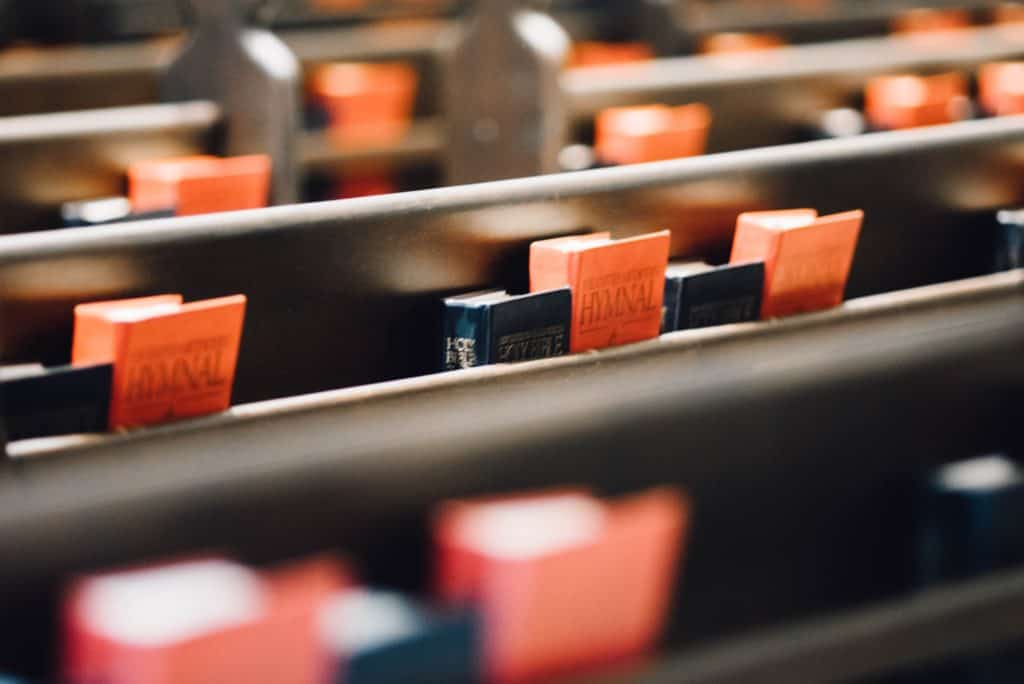
image courtesy of https://unsplash.com/@chuttersnap No one really noticed the newcomer. Mrs. Haggerty arrived during the doxology. She covered her cough with her palm, wishing her bunions would quiet down. She extended a friendly handshake to Mrs. Lane in the foyer, before accompanying the newcomer down the aisle. She bent over to rub her right foot before entering the pew.
Mr. Brown leaned into the last phrase. “Praise Father, Son and Heavenly Ghost.” He breathed in, replenishing his spent air, issuing a hello as he pushed himself a bit closer to the youngest Galanos daughter to make way for Mrs. Haggerty and the newcomer. The youngest Galanos nudged her mom, opening her mouth at the same time as Mr. Brown exhaled. But Mrs. Galanos, somewhat preoccupied with thoughts of the elder son who hadn’t come home last night until well past midnight, didn’t abide chit-chat in church and put her finger to her daughter’s lips and then to her own signaling silence.
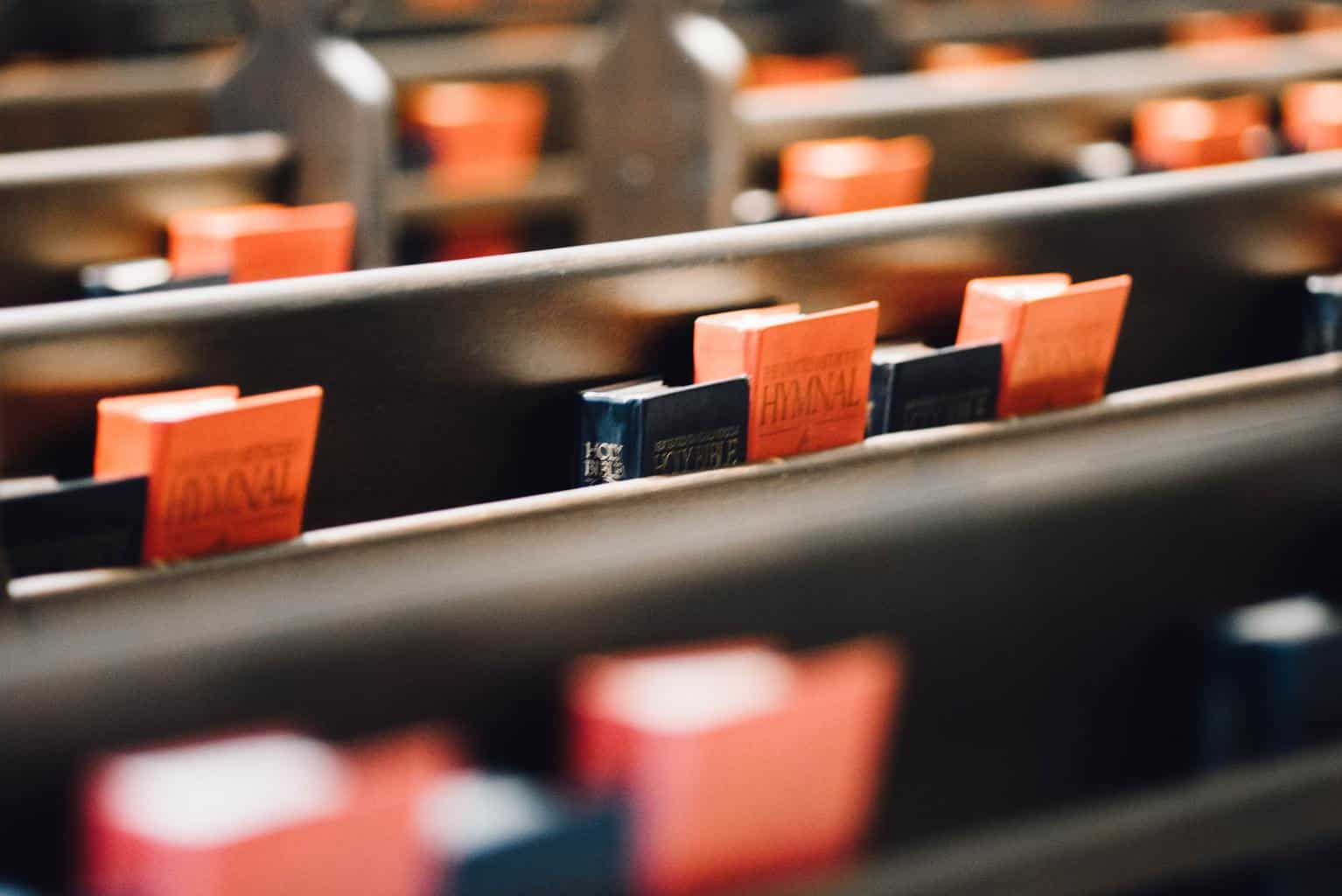
Mrs. Haggerty grasped the hymnal and turned to the worn page for Morning Has Broken, not that she needed it, the words memorized long ago when Cat Stevens covered it in the ’70s and she and Mr. Haggerty used to make love at midday which they never did anymore because he traveled so much or because their lovemaking had become stale. She sang the words and wished they could refresh somehow. Beside her, the newcomer was “springing fresh from the world” and could make change.
The newcomer’s head spiked in red-orange bits, outgrowth from a golden base that shed some. Mrs. Haggerty did not notice the strand that floated her way or the one that landed on Mr. Brown’s lower lip as he pursed it, leaning over the next pew to whisper to his fidgety nephews to settle down. Mr. Brown’s sister had a tendency to sleep in on Sundays and Mr. Brown would stop by to gather the empty liquor bottles for the trash and the boys for church. No one commented on the newcomer’s crown-like appearance but it may have been the source of the giggles from the boys, causing an exasperated exhale from their uncle into their ears that put their revelry to rest.
Mrs. Haggerty turned the hymnal page wondering about a new face cream advertisement she had seen, smoothing the page wide so the newcomer could find the entry along with her into the song. The congregation swelled in unison. Mrs. Haggerty sneezed, wondering if she was catching the same cold that her husband had brought home from his trip to California. His stuffed head kept him away from church this morning or so he said upon recounting how much he preferred west coast weather to the Midwest extremes. The youngest Galanos daughter licked her palm, sticky from morning pancake syrup, until her mother took her hand squelching the action, mashing their palms together. Mrs. Galanos ran her hand along the back of her neck studying her eldest and considering who the girl might be that had kept him out so late if in fact it was a girl. She tapped her fingers on her lips thinking Mr. Galanos might ascertain the truth and at least she didn’t have to worry about her oldest daughter all set for college and leaving home in the fall.
When the offering plate came around, Mr. Galanos made the usual family donation, a crisp one-hundred-dollar bill after which Mrs. Galanos handed the plate, a shallow dish really, to her daughter who popped open her pink patent purse and placed in a quarter before passing it to Mr. Brown who gave the plate to Mrs. Haggerty who handed it to Mr. Lane after the newcomer tossed in a contribution as well. Mr. Lane stepped to the next row, handing the plate off to Mr. Brown’s nephews, who mixed the coins and bills like a salad, before passing it off to Mrs. Young who leaned back, almost cheek to cheek with Mr. Brown, wishing he would say yes to her dinner invitation and to accept his apology for the rambunctious youngsters. The offering plate moved through two more rows before Mr. Lane returned it to the front table to be counted, sans the Galanos hundred which he pocketed in a magician’s flash to pay off his gambling debt in the next county. His losing streak had to end soon.
The youngest Galanos daughter whispered to her mom she couldn’t wait any longer to use the toilet and sifted by Mr. Brown, interrupting his daydream about his time last night with Melvin, who loved Mr. Brown, ran the local hardware and had a remote farmhouse where they could be alone. Mrs. Haggerty sneezed again just above the child’s head as she passed. The sermon, on spreading the gospel, was rich in meaning particularly with the newcomer in their midst who they would all make welcome.
The opportunity to be hosted by a variety of the church’s members was not lost. The newcomer eventually found a way into the hearts of the entire congregation, settling into the tissue of their lives, offering reason if not solace when Mr. Lane’s losing streak did in fact end. He was the first to die, followed by the youngest Galanos daughter and Mrs. Haggerty and shortly thereafter, her husband. The newcomer decided to stay for a while, for at least a year, if not two.
Kay Smith-Blum, a recovering retailer, was named Woman Business Owner (NWWA) of 2013. Smith-Blum co-authored the “Every Man” card series, published by Schurman Fine Papers. An author of historical fiction, she lives in Seattle WA. Her short stories can be found at CommuterLit.com, Minerva Rising (Winter 2021) Fiction Southeast (Winter 2021) and The Stray Branch (Spring 2022). Her humorous essays (nominated for Best of the Net) may be found at Pif Magazine, Heavy Feather Review, The Furious Gazelle (Winter 2021), Quail Bell Magazine, Bewildering Stories and Down in the Dirt Magazine.
Twitter @kaysmithblum Facebook/Linkedin Kay Smith-Blum Instagram @discerningKSB
-

Abuela’s Hammer–by Lucy Rodriguez-Hanley
Fellita is on a mission to kill the man who violated her granddaughter. He put his hand so far up Elena’s nalgas that he managed to grab her holy hole too. Fellita only knows about the ass grab, she’ll take out his whole family if she knew the rest.
Elena is chunky, like me. We hide inside big jogging pants with the waistband rolled up so we can look fatter. We wear long T-shirts, me to cover my boobs and Elena, her bubble butt.
I am used to ignoring the hungry dog looks from men older than Papi. Our uptown Manhattan neighborhood is infested with sinverguenzas who undress young girls with their eyes. Watching my best friend get assaulted in broad daylight, right in front of our building while I was too chicken shit to protect her, trips me up with guilt. It should have been me. The minute he saw us, Nestor started telling his friends what he would do to me if he ever catches me alone. Elena put her arm around me and that’s when he came at her, and called her a fat, ugly dyke. I should have punched him, pulled his hair, kicked him, instead, I froze.
From behind, Fellita looks like a teenager. She bleaches her hair blonde to look like her idol but she is more Celia Cruz than Gwen Stefani. Her copper skin and curvy shape always gets men’s attention but her face always freaks them out. They are expecting Lolita and instead get a fifty-year-old grandma with braces and coke bottle glasses.
She walks slowly, the cowry bells on her silver anklet jingle all the way up the block. She’s in disguise, cat eyes sunglasses and a big floppy sun hat. The men on the corner of 170th and Broadway selling stolen True Religion jeans out of the back of an SUV have already spotted her. Fellita moves slowly like a mermaid luring them to their untimely demise. Elena and I follow her from the other side of the street.
Nestor whistles at Fellita.
She takes a hammer out of the Hello Kitty tote bag and smashes the windshield of the SUV. The crack in the glass spreads like a spider spinning its web at 100 miles an hour.
The men, caught off guard, freeze when she aims the hammer at Nestor’s head.
“Abue nooooo! he didn’t do it!” Elena screams, running across the street to stop her grandma from killing Nestor. I run after her.
“Este es el perverso?” Fellita asks Elena, then me as she crumbles Nestor the molestor’s balls into tiny specs of dust. I nod. One of the men grabs Fellita from the back. She kicks him like a pissed off mare, and bites the arm he tried to grab her with. Nestor’s high pitched screams reverberate, bringing everyone to their windows, their stoops and the corner. She finally lets go when he pees on her hand.
If one of my nosey neighbors tells Mami I am with Fellita and Elena after she told me not to hang out with them because they are chusma, I’ll be grounded for life.
When a police car pulls up to ticket the SUV for blocking the fire hydrant, the men scatter along Broadway like cockroaches running from a can of Raid.
Nestor leaves me alone for the rest of the summer and relocates his business to the corner of 173rd and Amsterdam.
170th and Broadway stays free of sinverguenzas and pervs. Fellita, and the neighborhood’s abuelas, tias and mamis, including mine, patrol the block armed with hammers, rolling pins, and screwdrivers they are not afraid to use.
Lucy Rodriguez-Hanley was born in the Dominican Republic, raised in New York, and has been living in Los Angeles for the past 16 years. In her work as a writer and filmmaker, she strives to make the identity of the bilingual, bicultural, brown girl/woman visible and to dispel some of the stereotypes that marginalize people who grow up immigrant, urban, and poor.
Photo by Jilbert Ebrahimi on Unsplash
-

We’re Sixteen and We’re Stupid, But You’re My Salvation
Memoir by Winnie Grey
We’re sixteen and we’re stupid, but we’re in love.
“I’m sorry,” she tells me. “They shouldn’t say things like that to you.”
We’re lying side by side on her zebra print bedding, the rainbow fairy lights she has strung up along her ceiling suspending us in a sort of dazed dream; I’ve always loved these lights. Over time, they’ve come to mean warmth. Safety. A place where I can be myself, be with her, and scream song lyrics until the latest lecture from my father fades from my mind.
“It’s okay,” I say. “I’m used to it. This is just my life, you know? One day it’ll be over; one day I’ll get to leave. And until then, I have you, and my books, and the hopes of a One Direction reunion, so I’ll be just fine.”
She laughs and leans into me. Her face settles into the crook of my neck, so warm, and I can feel her smile against my skin.
She has the prettiest smile I’ve ever seen.
“What time are they picking you up for church in the morning?” she asks.
I groan at the thought of another stifling service on those scratchy pews. Another two hours of my life lost to being told how awful of a person I am, how if I really was good, I’d beg and cry and fall face-down to the stiff green carpet and beg to be made into a soldier.
“I’ll have to get up at seven,” I say. “To shower.”
She breathes in, sweet and steady, hand sliding into mine and squeezing in a reassuring way. A promise. An affirmation that she isn’t going anywhere until the day she helps me move out of my house and we both fly as far from this town as possible.
But that’s still years away and even as I squeeze her hand back, I can’t help but think about the panic attacks and nightmares that have been seizing me with increasing frequency; images of “hellfire” and “damnation” that flicker like flames behind my eyelids, a voice in the back of my head that sounds exactly like my father’s, telling me that I’m going to rot in hell. That I have dark spirits inside of me. That’s what the last lecture had been about: my depression. Or, as they liked to phrase it, the demons inside of me.
It’s difficult to reconcile the darkness that they claim so often to see in me with the light I feel when I’m around her. It doesn’t make any sense; I only feel dark when I’m around them.
My father is a small man, physically, but his ego could move mountains. He was raised in the faith, his father and grandfather each pastors of the church that he now rules over. He has eyes like black beads and close-cropped hair that always looks as though it would be stiff to the touch. He’s quick to anger, and spends every spare dollar on expensive leather briefcases and special editions of Bibles. When I was just a little girl, before I understood what his religion really stood for, and before I realized that I was being raised to hate myself, I was quite certain that my father hung the moon every night; but then I grew up, grew away, and knew that if he did possess that power, he would sooner snatch it from the sky and force it to do his bidding.
He and my mother had met at a special church conference when she was only 15; they were married before she turned 21. A few years later, I came along: the miracle child. A gift from God himself to my parents, who were forced to adopt after discovering they couldn’t conceive children of their own. My childhood was a whirlwind of overwhelming affection, of church services and prayer meetings and Be Quiet’s and Occupy Yourself’s and Don’t Ask Question’s. I learned how to entertain myself, and how to hide my true emotions, just to keep them off my back. By the time I realized the depression and anxiety these behaviors would lead to, it was too late. So I began to live solely for the future–for my future.
I was 16 when I found myself falling for my best friend, a dark-skinned girl who Sharpied rainbows on her Converse high tops and had the prettiest blue-tipped hair, the warmest smile I’d ever seen.
She draws me out of my thought spiral now by beginning to sing softly. It’s a Spanish song, so I don’t understand the words, but her voice is light as air and smooth as honey. It calms me in a way the church hymns never have.
Every moment of my life is spent in this internal chaos: hacking away at the girl I was raised to be with an axe and building the girl I know I am in her place. It’s climbing uphill, it’s swimming upstream, and some days I am pushed back more than I can push forward. But no matter how dark the skies get, I can’t bring myself to give up. To let go.
“You okay?” she asks.
I miss her singing the moment she stops, but I nod. “Sorry. Just still thinking about last night, I guess.” Another lecture. Another night of Angry Father and Disappointed Mother, of tears and shaking heads and Where did we go wrong?s.
All because I wasn’t the happy hand-raising daughter they’d wanted. I know they’d deny it if I ever said it to their faces, but they don’t have to say anything anyway; I can read the disappointment in their eyes. They hate that I’m quiet, hate that I’m so sad, hate that I have no desire to sing on the praise team or compete in Bible quizzing. And I can’t fix any of that, because I can’t change who I am, and I’m unwilling to pretend any more than is absolutely necessary for my survival.
“They want to break me,” I whisper. “Change me. Force me to be something I’m not. I know who I am, but I’m afraid. I’ve seen the way they get in peoples’ heads. What if that happens to me?”
“It’ll be fine,” she reassures, and pulls me somehow even closer to her. She smells like vanilla and crisp spring air and the earth after the rain is over and the clouds have begun to part. I love her so much in this moment, I can barely breathe.
“You’ll be okay.” A parting of pretty pink lips, a rush of warm breath across my neck. “They can’t take you from me. I won’t let them.”
I nod, my cheek pushing against hers, and she starts to sing to me again. The sun has began to sink below the horizon outside, and golden light slants through the blinds on the window and bathes us both in a warm glow. She raises a hand and brushes a stray piece of long hair behind my ear. Her eyes are a kinder version of the moon.
You’re my salvation, I think. Not the one they’ve forced me into since I was a child, wet words that ached with fear. See, love, you’re salvation like rainfall. You’re salvation like looking up at the sky and connecting a new constellation for the first time.
They think they’re saving me, but you already did.
Winnie Grey is an undergraduate student in the B.A. English program at Indiana State University. Her work has been published in the poetry anthology Life (as it) Happens and is forthcoming in Allusions. She lives in Terre Haute, Indiana with family.Photo by chuttersnap on Unsplash
Photo by Olga DeLawrence on Unsplash
-

Time. Lost Ears. Pain. Three micro-fictions by Sarah Alderfer
Time
Do you think time can disappear without a trace, with no explanation? You’d think it’d be spun on wheels, but I think it has a mind and dance of its own. I approached my seat on the small plane, it didn’t feel right. I wasn’t supposed to be here, not yet. I sat down next to a man with every hair and seam in place. He had a flashy watch, too. As the plane took off, I clung to the view of the old country, determined to watch until she disappeared, swallowed by sky, or sheer grief. It’s strange, leaving a home that’s not your own. Maybe the minutes escaped through my feet, that’s where I feel it first, cold, numb. Maybe it’s through my stomach, sinking like a black hole. It started ticking again when I picked my head up from between my knees. I looked up from my hands. Glancing out the window, I asked the man why we were landing already, we had just taken off. “We’re in Frankfurt” he said, looking at his watch with a flick of his wrist. Time: it takes, taunting you in circles.
Lost Ears
One morning, I woke up and realized that I had lost my ears. I looked under my bed, I couldn’t find them. I waited a day or two, they didn’t come back to me. I looked down often. I’d kick rocks or hide my tears. When I think of that time, I think of the color black, a heavy one. One day, my mom gave me a note. It was a yellow, folded piece of paper. She said to open it on the bus as she rushed me out the door. The red ink told me to keep my head up. So I tried. I looked at lips as they spoke to me. I even saw hands come alive. I saw smiles and I saw heartbreaks. I didn’t lose that morning, I found eyes.
Pain
One night, three years ago, I wrote a poem, almost by accident. I remember the sheer grief, how it took my breath away. Time passed so slowly, each second was painstaking. Each inhale, and then the exhale, was work. So much work. All I did was watch Forensic Files in my bed and occasionally eat cold leftovers. Sometimes, I went to work. Sometimes, I turned around on the way there, unable to see through my tears. Sometimes, I didn’t even get out of bed.
I’m sorry, by the way. Air was so heavy. Blades and fire were release, the grip on my chest, gone. Fix. I came to a point where I refused to be ruled by something so little. I’m not even sure what spurred that resolve, it had still hurt so much. I remember that night, the wave was coming. I lay in my bed, the next episode of Forensic Files was on. The wave crashed, and I laid there, bracing. I made myself feel everything, each sliver of glass. I let myself wash away instead of reaching out. It was then that something happened. Words came swirling. Gasping for air, I wrote them down. It was the first time I felt relief without hurting myself. I was never the same after that. I had something to say, a voice. It was just the beginning that night, basking in the light.
Sarah Alderfer is a 26-year-old nanny and nutrition student. This is her first published fiction.
Why we chose it: Sometimes a voice reaches out to you. It has less to do with story than with feeling, a sense of something rising up from the interior of the writing that transcends subject. When this submission came in, I was intrigued by the cover letter, which stated simply, “This is new to me. Thank you for your time and consideration.” A one-line bio followed the signature: “I am a 26-year-old nanny and nutrition student.“
I opened the file and read “Lost Ears.” It was strange and beguiling. Before I’d had time to wrap my head around it, I was moving on to “Pain.” The sense of intimacy deepened–the raw despair followed by the discovery of writing as a way out of the darkness. And then on to “Time,” the unusual assertion that “you’d think it’d be spun on wheels.” I loved reading “Time” because it places us with a character in a place and time, in motion, contemplating one of the great mysteries in a new way.
I am excited to see what Sarah Alderfer writes next. I expect we’ll be hearing more from her.
Michelle Richmond, Editor / Fiction Attic Press
SUBMIT your flash fiction, micro fiction, short story, or essay to Fiction Attic Press.