Your cart is currently empty!
Tag: flash fiction
-

Sometimes We Choose What We Remember
Flash Fiction by Luke Allis
The old cliché that time heals all wounds is simply complete bullshit. Time dulls the shock, but when you have a hurt that runs deep enough you always feel the sting. I thought this as I stood in front of your coffin, staring at your lifeless face. Your skin looked so fake, like a bad wax figure that had been stored in a garage in Arizona. The inch-thick layer of makeup that was supposed to make you look more masculine was funny in a morbid kind of way. The dead never look like themselves. Death takes the very essence of the person, even the body. You looked like a stranger. The difference in you would not have been so stark if they had not put you a suit and tie and given you a crew cut—you looked all wrong. They put you in that itchy suit you hated, the black one that you were forced to wear to your high school graduation. Your tie was the standard diagonal red and sliver stripes. I was there to mourn my sister, not the brother our parents insisted that I have. I pictured you in your favorite dress: blue with small white daisies littered all over the cotton fabric. I wish I could have given you the funeral you desired, the funeral you deserved.
Your funeral was nothing that you would have wanted. It was in a Catholic Church. I stood and knelt more times than I can remember, and lip-synched the prayers that I never memorized. They called you “he” and “James” instead of she or Lily. It felt all wrong. There were a lot of tears, but little crying out. Everyone was grief stricken; almost no one was able to talk. Those that did speak, talked about you as the brother and son you haven’t been in a long time. Each wrong pronoun brought me to an electric anger. You know me, I never talk in front of others unless I absolutely have to. But at your funeral, I knew that I was the only one that would stick up for you and remember you as you meant and deserved to be remembered. I made sure to address you as: she, Lily, and my sister in front of everyone. After that no one else got up to speak. Our mother yelled at me afterward: “I can’t believe you ruined your brother’s funeral by bringing up his sickness. We should remember him as he should have been not as he was.”
You’d never believe what I told her if you were there: “Fuck you Mom, that is exactly why SHE is dead now. You and your fucking hatred and denial did this to her.” Then I walked away. I haven’t spoken to any of our family since.
I wish your funeral had felt more intimate, more like a celebration of your life—like those old Irish wakes Grandpa would go on and on about. Where you partied, laughed, and told stories of the person’s life; where the only crying was from too much laughter. I am determined to remember you this way.
Luke Allis holds a BA in creative writing from San Francisco State. He is currently an Instructional Designer, aspiring writer, and MFA candidate at San Jose State University.
-
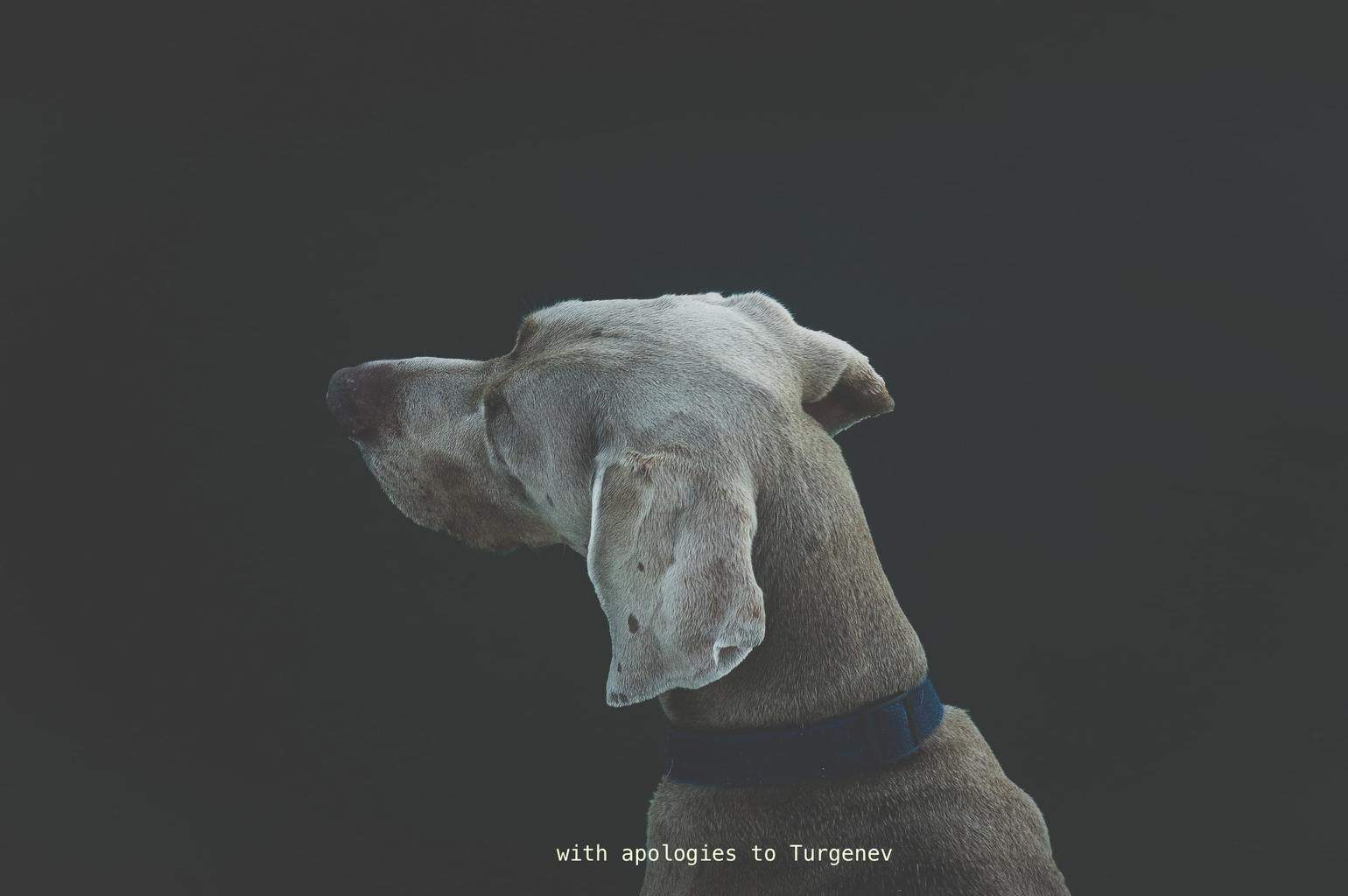
CSI SUV – by Gloria Frym
I was taking a bath when the idea first occurred to me—the phone call which deprived me, forever I believe, of the good opinion of several friends. I have heard it said by others that they laughed so hard they wanted to do it themselves. Since I am not in possession of a great amount of free inventive powers, I always felt the need of some firm ground in the form of idea in my work. The same thing happened with this.
At the basis of it lay a story I had been greatly struck by just as three pit bulls in the dog park happened to rush by me, each yelping at the same pitch. In that remarkable moment I could watch the embodiment of a principle that had scarcely come to life but was just beginning to stir at the time, the principle which later received the name of ***.
Though very powerful, the impression this incident left on me was still rather vague. At first, I could not quite make out what the pits were after except one another.
I kept returning to the park to observe and listen to everything around me as though wishing to check the truth of my own impressions. I was worried by the following fact: not in one work of literature did I ever find as much as a hint at what I seemed to see everywhere. At the dog park, there was a woman who was endowed with an impressive nose for everything—namely, the ideas of our time. I told her what I was thinking of and what interested me so much and was astonished to hear the following remark:
Did you get this from something you saw in the movies? I said nothing.
These words produced such an effect on me that for several days I tried not to think of the idea I had in mind. However, at some point, it matured in my head. In order to sort the curds from the whey I accidentally returned a call from a dear friend. What was I after? An embodiment of the idea.
I pressed Send and when I did not hear her voice, I put the phone aside. Then I turned on the television. Nothing but crime shows on four of the few free channels left. I stretched out from a long day; my dear dog leapt onto the couch to sit beside me in order to be stroked. I was not entirely certain that this creature loved me for who I am or simply loved to be stroked and fed. Is that love? I wondered, further enlarging the sub-idea that was involved in this account. Also, my dog is not particularly affectionate and does not always run with others. Nor does she lick my face unless I should have some leftover meal or the scent of it besmirching my cheeks.
Sirens blared from the flat screen speakers, alerting my bitch’s ears, not to mention my own, and I summarily mistook the sound for 1)the emergency alert system at last in action; 2)medical aid rushing to the scene of a neighbor’s heart attack. The story on TV involved a dead body, a sharp-tongued detective, and a pert sarcastic set of female coroners who compete for excellence in their work as well as the attention of the same man.
She’s toast, the detective says, poking a campfire stick at the victim’s elbow.
She was burned like a marshmallow.
Ok, says one of the coroners, let’s do a work up. You never know the time of death with these sorts of SUVs.
No, you don’t, says the other coroner, removing her 5-inch heels to dump a pebble that had inadvertently crept its way into her arch.
What are you doing? screams the first pert coroner in concert with the detective. You’re occupying the crime scene with your crap.
What are you calling crap? And who is you? Who am I? Why?
A long silence ensued while the medics hoisted the charred body onto a stretcher.
Crispy, ya think? said one of the medics.
Lucky her lips are still intact, said the other.
Just as this pronouncement was made by the television medic, fire trucks pulled up to my house. I certainly had not asked for them. My landline phone rang. It was her, dear friend. Are you there? she yelled over crackling static. Am I where? I said. She seemed to not hear me.
After that it was all a blur. The television medic, the pert coroners, the sirens, the phone calls, the knocks on the door, the boyfriend, the girlfriends, the clerk in the mini-mart with whom I had exchanged ideas about capitalism. All rotating before me like a spinning globe. We heard what the police said, we feared, we rushed over because … .we love you, each said in their own voice, except all the voices became a chorus and the chorus stood by my couch and my dog barked a bark I had never heard before.
How utterly wonderful! I love you too, I said in the ensuing group hug.
Except that instantly the pedestal on which I stood among these dears had been destroyed chiefly by the chief medic combing through my home and discovering my cell phone, which was still blithely speaking to my friend who was standing right in front of me, not hearing it anymore, half-crazed at the thought that someone had put me on a spit and roasted all but my face.
Would they understand or forgive me? Not me, but my idea. The excuse of being an unloved child no longer held any caché among the best of them who had, well, let’s leave it at that. That it might have been an accident lingered in the minds of some of those present, except the boyfriend of my girlfriend who did not believe in accidents. They did not, have never got quite the right idea of what took place in the mind of a person, or of what exactly her joys and sorrows, her aims, successes and failures are. They do not, for instance, even suspect the pleasure that consists of castigating one’s self and one’s faults in the actions one commits. Now they seem quite sure that this was a little prank, even if the reality of life has been correctly and powerfully reproduced, even if this truth does not coincide with my own sympathies. In the words of Goethe, “if these are roses, they will bloom.”
Gloria Frym was born in Brooklyn. Her new collection of prose, THE TRUE PATRIOT, is just out from Spuyten Duyvil. Her recent books of poetry are The Stage Stop Motel and MIND OVER MATTER (BlazeVOX books, 2011). She is also the author of two short story collections—DISTANCE NO OBJECT (City Lights Publishers, 1999) and HOW I LEARNED (Coffee House Press, 1992). She teaches at California College of the Arts in the San Francisco Bay Area.
Photo courtesy of Will Langenberg. Visit the artist at willlangenberg.com.

-
Whose Hand?
Flash Fiction by Preston Gralla
He stood behind her, not daring to touch her shoulder. He took a breath. Reached out. Then stopped himself.
“Can I touch you?” he asked.
“Of course you can. Why would you think you need to ask me that?”
He pushed her hair aside, brassy blonde now so many decades after the soft gold of her youth. He touched her shoulder, felt it not just in the present, but through time: bony and taut as a 12-year-old, pillow-soft at 17 cradling their newborn son, full and firm in the voluptuousness of her thirties and forties, slowly losing muscle each decade beyond. Now the flesh beneath his hand was slack.
Whose hand was it? Whose shoulder?
“You need to get ready, Bob. They’ll be here soon. I told you. It’s nearly two o’clock.”
“That’s right,” he said. “I forgot.”
Who was coming? And why?
“No, Bob, she said gently. “Not in that. Dress in something more comfortable. Maybe sweatpants. And those special sneakers we bought you yesterday so you could walk more easily. You need to be dressed comfortably for them. Remember? I told you that before.”
Before? Had she told him that? When was before?
“That’s right. I forgot.”
He slowly dressed himself, pleased he could still do it. Out of his sight she packed his bags. She put them in the bathroom and would get them when the visitors arrived. She walked with him to the living room and they sat on the couch. He smiled uncertainly.
She’s beautiful. Who is she, again?
They waited together for the doorbell to ring.
Preston Gralla’s work has been awarded a Fiction Fellowship from the Massachusetts Cultural Council, and has won the Yudis Prize for fiction from Union College. Under Gralla’s editorship, PC/Computing was a finalist for General Excellence from the National Magazine Awards. He has published more than 40 books of non-fiction, which have been translated into 20 languages. Gralla’s work has been published in the Los Angeles Times, USA Today, the Dallas Morning News, and the Boston Globe Sunday Magazine, among others.
Did you enjoy this story? Please consider subscribing to Fiction Attic to help up us discover and promote more great writing.
-

A Clear Shot
Flash Fiction by Andrew O’Kelley
Calvin felt an itch arise near his ankle and willed it away. Steady, purposeful movements, his father had insisted. That didn’t include scratching, toe-taping or picking your nose. The dry leaves ticked in the branches around his tree stand, twirling downward in a gentle wind. A tree can’t reach to scratch, so why should he. The sun had risen now above the ridge, the tall grass bending in the breeze. He studied the trail, the clearing, he’d get nothing today it seemed. But he’d wait.
He heard a soft knocking sound, lower, over the crest of the hill. Moving steadily, then faster, much faster. He scanned the grove of pine that hid the trailhead. A flash of blue. Then into the open field; a woman, running. The wooden bucket swinging wildly on its rope handle, her long dress buffeting, catching here and there on the dry brush. Her dark hair twisting across her face as she glanced back. No sound but the rapid draw of her breath. And then a movement. He almost missed it.
He almost missed it. Women will do that to you. His father had a lot to say about women, but Calvin had hoped to learn on his own. The Taylors, preacher Bob and his wife down the ridge, had two daughters just about grown. Probably one of that clan he guessed, but he was more concerned about the movement. Coming low through the tall grass, stalking. He’d only seen it once before, far off, but there was no mistaking the malevolent crawl of a big mountain cat. It moved like the shadow of a cloud; skimming across the valley, the color changing with the terrain, relentless as the wind. He raised the rifle, steady, purposeful, tracking the muscled blur. He had its speed, but it was keeping low in the grass and gaining on the blue flutter at the edge of his view. Closer. Now too close.
He had a clear shot. But only one. She would be caught, screaming. Screaming across the valley in the cool morning air. The big cat doing as big cats do. Or she could drop quietly in a soft gingham heap, the wide spring sky overhead. Peaceful.
Calvin squeezed the trigger. A steady, purposeful movement.
Andrew O’Kelley uses an old laptop to arrange words in the best order he can manage. Having tried similar feats with photography, wood working and guitar, his results may vary. He does all this in Minnesota. His stories have appeared in Emerge Literary Journal and Eastern Iowa Review.
-
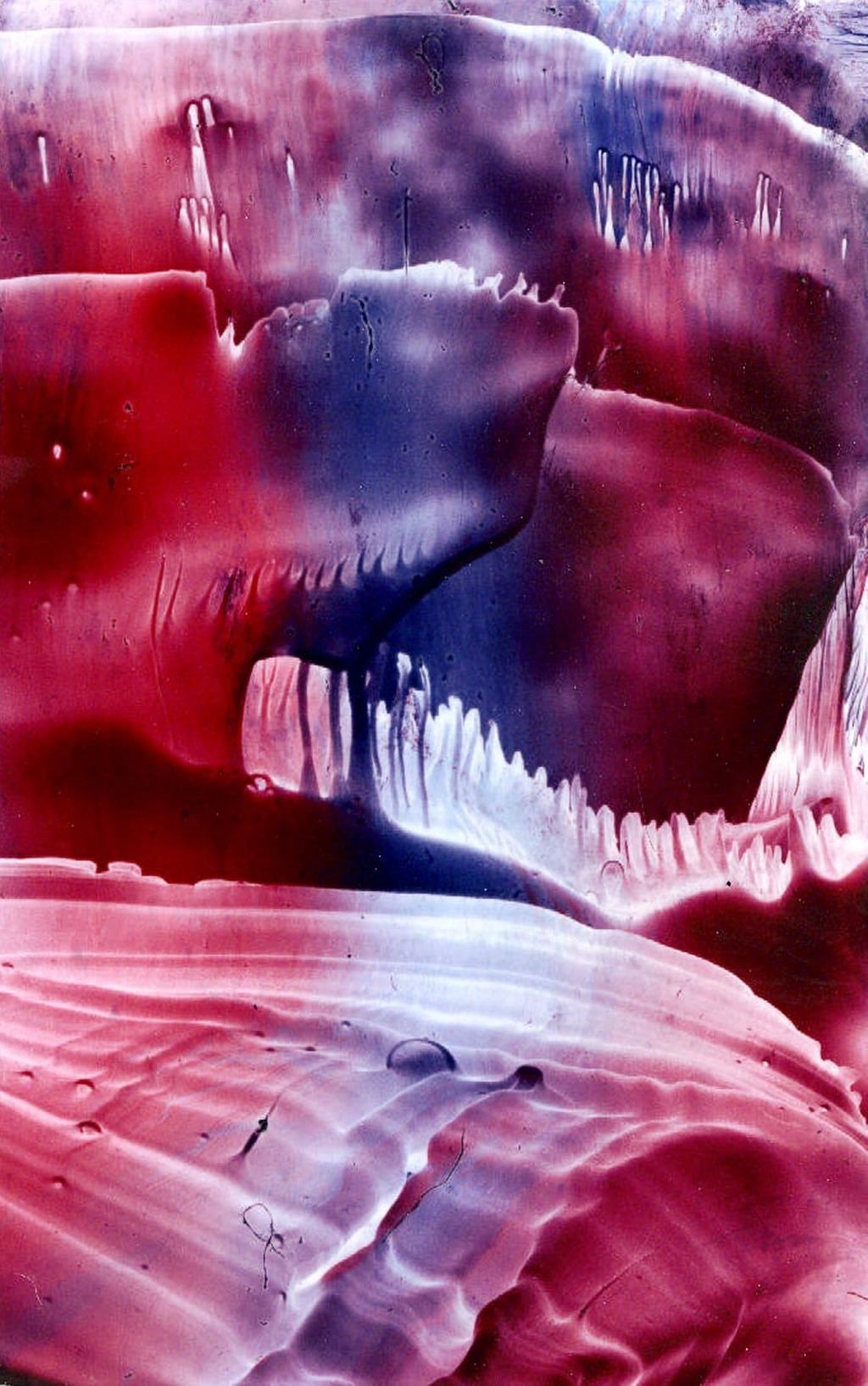
Urban – by Lila Dunlap
Smiling Whalecourtesy of © Carol Trammel | Dreamstime And then Urban plopped down in the seat next to me, filled it up with her rolls and rolls, tight in her tight T-shirt and tight black tights. I couldn’t see much of her then—I only dared to look out the corner of my eye at her rustling figure, and the theater was so dark… a few lights and colors flashed onto the crowd. Some blue sheen slid over her big face, over her cheeks, her wide chin, over her round lips and the head of a drip dripping juicy sucker that went entering, exiting, entering, exiting, glassy red in that strange dimness full of silent people breathing and clapping and eating and all staring.
Out of my left eye, I suddenly glimpsed a thick mahogany whale surface her mouth—and then disappear. Almost instantly, my throat jumped and hardened, closed up, and my hairline got hot hotter and damp. My attentions were now completely absent from the performance. I sweated and sweated and sweated; my eyes darted back and forth from the irrelevant stage to my new neighbor, whence I noticed a squash of a hand with long hard nails clutching a shiny plastic purse, like a dead animal in her lap—its teal waves were spotted with rough studs glittering and rhinestones writhing but Urban paid no mind!—just every once and a while during a squirm, readjusted the bag, but no, never looked down.
By then my throat was very tight indeed, and I was in dire straits to sit still. My legs and arms executed over/under weaving maneuvers but I pretended to not notice and assumed a nonchalant expression. I wanted so badly to appease the restless snakes, to stand up and stretch (I could have run a marathon), or at least stand and touch my toes, but, God, I couldn’t let my new friend notice me.
I closed my eyes (just for a moment; had to remain alert) and took a deep breath. I re-opened, looking straight ahead, limbs still calm, controlled, behaved. I even thought for a moment about the show and was able to catch a whiff of plotline or clever social commentary, but, oh, my thoughts weren’t to be reigned in so easily: had she seen me acting silly? Making such a goddamn dirty fool of myself? No, goodness I must stay still. All at once, one of the performers must have made a joke—she burst a harsh laugh (deep, too!). Wet beads flew; the whale emerged.
-
The Perfect Strawberry – by Tamsin Hopkins
 It’s the late spring when the plants perk up. You clear away the detritus of winter, give them a feed, begin to mulch. They lift up their heads, raise those perfect white and yellow flowers to look at the sky, those tiny heralds of the summer to come. School fetes, a lovers’ picnic, June breakfast on the doorstep, jam and buttered toast.
Soon, speckled green nubs appear, noses that push through pixie hat leaves. They arch over and turn down, swelling, widening at the base. They blush when they get big enough, if they can see the sun. The color enters through the umbilical stem, collects in the cone. That’s when the strawberries start to weigh the plant down, will touch the soil and bruise, soft brown patches spoiling their flesh. That’s when you’d better get some straw down, make a dry pillow to cushion the maturing fruit.
Mice and birds nibble little shallow hollows out, but their spit doesn’t spoil the flavour.
Each berry has its own perfect day, balanced on a fulcrum before tipping over, and it’s too late.
Some people say they don’t taste as good as they used to, that the berries are pampered, bloated, bred to produce a heavy crop. You can get the wild forest strawberries if you think that.
Longer, tighter, sharper colours and definitely sweeter, each berry is a highly charged thrill.
They make good ground cover as well, supressing weeds, doing your work for you. Their slim tendrils supplant anything. A word of warning, however: being essentially wild, unbiddable, they are apt to take over the border. They do not need the gardener.
They do not produce their fruit for you.
Tamsin Hopkins lives and writes in London. Her work has appeared in various anthologies, most recently Fiction Desk Ghost Stories II. Her story collection Sand Tranny and Other River Stories is due out in February of 2016 from Cinnamon Press. She tweets @TamsinHopkins and is working on a poetry collection.
-
The Crush
flash fiction by A.W. Marshall
“Feel it?”
He had his fingers arranged in a circle, pressing against my chest like a little cage.
“Not yet.”
But I felt something. Kevin was my neighbor, and he said he had Telekinetic powers and wanted to touch my heart. Said he touched a girl’s heart from school last week, and she missed three days of class.
“I have to focus,” he said.
He was three years older and just before the bus dropped us off he plopped down beside me. I imagined he asked to touch my heart because he liked me too. I imagined his fingers reaching in, my heart cradled in his hand, my lips parting just as he gave me my first kiss. We decided on Saturday, while my parents were at Safeway.
“Calm down,” he said.
He continued to bear down on my chest, his eyes flared at his hand. He was pressing hard, and I imagined lifting my shirt later that night to see five small purple planets. I would put my fingers on each one and he’d feel it next door.
“Fuck,” he said, and I craned my neck around nervously. Even with my parents miles away, squeezing plums and fondling eggs for cracks, I worried. But the house was still just the house, the words disappeared.
“I can’t do it,” he said. “Kali was easier. Your heart is beating so fast I can’t center my attention on it. Nevermind, okay?”
“No wait,” I said, “I’m just nervous is all.”
I ran to the bathroom, splashed cold water on my face. I told myself, you have to calm your heart or he will not feel it and then what good would your heart beating so much mean anyway?
When I came back, he was sitting on the couch, wiggling his finger through a hole in the knees of his jeans. His blonde bangs hung down, and I could see the small muscles of his back through his Dwarves t-shirt.
“I’m ready.”
“Close your eyes this time,” he ordered.
His five fingers on my chest. My heart started to speed up, and it felt like my lungs suddenly needed more air. Eyes closed, I tried to picture my grandmother in her rocking chair, the most boring thing I could think of.
“Better,” he said.
And then a weird spreading pinch followed by five worms against my chest, wiggling in. His wrist moved to the side to be free of my sternum. One of my ribs ached upwards. Muscles across my chest bruised open. And I gasped as my lungs pushed back and his fingers squirmed around my heart, and now I couldn’t stop it from fluttering. He slowly cupped his hand around, holding it. The muscles of my heart beat against the muscles his hand, and I parted my lips, hoping.
Then he squeezed.
“Did you tell your parents I was coming over?”
I didn’t.
“Did you?”
“No,” I said. My heart flitted, but it could not escape. His fingers held it firm. I opened my eyes and he was staring into them, an indiscernible look across his face.
“Imagine if I can do this now, what I can do later.”
I could not imagine anything. Then this boy pulled me toward him, mashing my heart against my rib cage, my whole body following. I thought about the girl missing three days of school. My eyelashes quivered under his breath. He smelled like sweat and Froot Loops. His lips pressed against mine, harder than I ever imagined.
END
Fiction Attic Press is always looking for thought-provoking flash fiction.
-
On the Nightwalk
by Mark Sheerin
He was on the road when they picked him up and it was night. There he was, large as life, in outsize Day-Glo, a coat like they used working on the motorways, except he worked for a fashion magazine.
The coat was bought second-hand.
“Can I ask you where you’re going?”
The police had the car window down. From all the vehicular markings and the lights he could tell this was a serious business..
“To the station,” he said.
He did not say he was leaving the country. That was surely understood.
“At this time?”
There was no mirth in the car, no flexibility, no grounds for argument.
“I was heading down there on the off-chance.”
“You’ve missed the last train now.”
The police said so with a kind of omniscient clarity.
“There’s always tomorrow’s first train.”
Said with a shrug, but they did not take kindly to him waiting for dawn, even though there had been a lot of that recently, a lot of nights spent vigilant against an enemy. It got so he was happy only on the move, remaining one step ahead of police, doctors, parents, special agents, white slave traders. Which is where this coat might really have helped, a high-visibility anti-kidnap strategy, in theory if not in fact.
“Where d’you live?”
He was not in the habit of fighting or lying. His strain of delinquency wasn’t up to it.
“You’d better get in, son.”
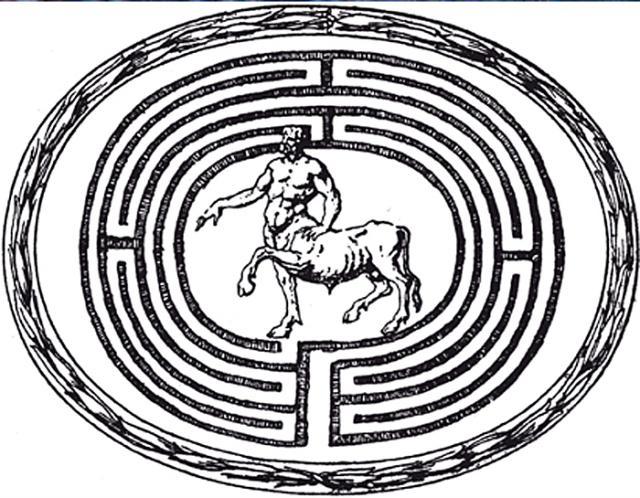
Son, he thought, Sonny Jim, Sunbeam. So let the re-oedipalisation process begin, he thought, then opened the passenger door like a lamb. The rear seat smelled of leather and he thought once again of the minotaur and his labyrinth and the darkness with which he was locked in combat. The radio crackled as the police upfront called in their report.
“Caucasian male. Aged around 20”
By god though, he was alive. While parents and peers slept he was under arrest, the subject of a radio report.
“Inappropriately dressed,” came the voice.
And he could never understand that final comment. There he was, on his way to Europe, where the jacket would make him famous. Tell me officer, he wanted to say, is that really such a crime?
Mark Sheerin is a journalist from Brighton, UK. He covers art for, among others, Culture24, Hyperallergic and his own blog criticismism. His fiction has appeared in Litro, Metazen and Pages Of magazine. He also runs a spoken word event in local gallery CAC.
-
I Live in a Triangle
by Stephen MacKinnon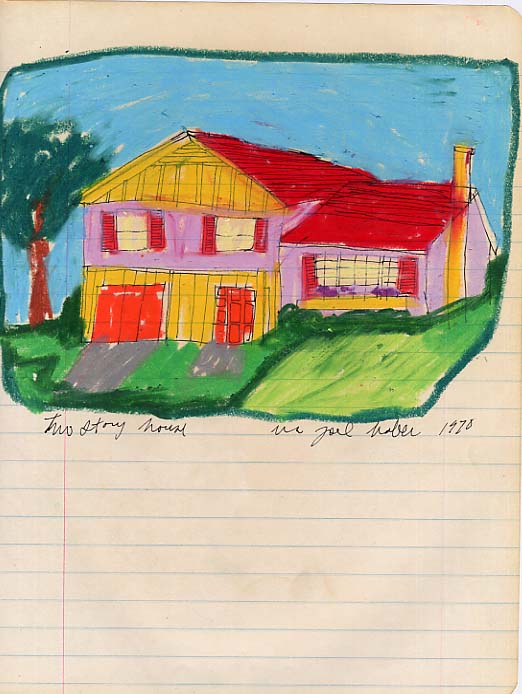
I live in a triangle. It’s exactly 213 square miles. It’s a place of Indian curses, ghostly apparitions, cattle mutilations, gigantic snakes, low-flying UFOs, huge birds, and ape-like creatures, seven feet in height, that leave 18-inch footprints. And I live right in the heart of it.
I work here, too, real estate, the only agent in town, although since I haven’t sold anything in six months that will probably change. Soon. The publicity about the reservoir and the Dark Forest Entry Association is killing me. After next month, when 20/20 and 48 Hours come, I doubt anyone will ever take me seriously again.
The activity centers around a 6,000 acre reservoir. Fear of the reservoir goes back 300 years, when the Wampanoag raiding parties hid among the black spruce during the tribe’s war with English settlers.
This much I was willing to discuss with the software engineers who seemed to like everything they saw: a colonial on Hemlock, the Greek Revival on Chestnut Street, the townhouse overlooking the reservoir. I spent little time on features, focusing instead on eliciting cues that might speak to what we call the magic moment, the exact moment the prospective buyer sees themselves in the house being to shown to them. If neither, especially the wife, has a magic moment, no amount of persuasion is going to save the sale. That would seem to explain his sudden departure, but I’m beginning to think it was all the conversation about the reservoir.
“This is it?” the husband asked, on the balcony, sweeping his arm toward the sun-sketched reservoir.
“Pretty, isn’t it? Can you imagine having your morning coffee here, leafing through the paper?”
He said friends were paddling across one day when they came across what looked like a small orange orangutan sitting on an island. “Have you heard that one?”
“No, that’s a new one.”
“You’ve heard the rest, though, right?”
“The rest?” I must have paused a second too long, because the next thing I knew he’d thrust out his hand, a very business-like hand, and was saying thank you for my time. I shook his hand, fumbled for a card from my breast pocket. By then he was at the door, letting himself outside.
I had no more appointments so I went back to the office and copied beauty sheets. Soon my mind went back to everything I’ve tortuously catalogued under “avoid at all cost.” Stories. Stories that could not stand up as theorems, much less even marginally plausible rumors, but they seem to stick in the local collective memory like tar, stories that seem to grow deeper and wider with every rumor and suspicion.
In December 1971, two UFOs were reported to have landed on Route 77. Less than a year later, another was sighted just a few miles up the highway. In 1973, Officer Dan Sweeney claimed he saw a white bird six feet tall and twelve feet from wing to wing soar over Baker Street.
I began to think of myself as I once was. A simple, stable, ordinary high school geometry teacher. Triangles, I always told the students, contain no mysteries. If you know two angles, you can find the third. Pythagoras did all that work centuries ago.
Yet sometimes on the drive home at the end of the day, the darkness closing in on me, I avoid the back roads and yet still find myself reluctantly gazing up at the sky as if it might, out of pity, yield the exculpatory evidence I am sure is there.
Grace Pelletier insisted for years she’d seen Bigfoot coming out of the reservoir. She had a photo. One photo. It certainly looked seven feet tall. But upon closer inspection, by Bert Clemson at the Chamber, it turned out to be a tree stump; its reflection in the water created the illusion it was walking toward a canoe.
But memory is a funny thing. When I am asked, especially by out-of-staters, relos, why property values are so cheap, I avoid reservoir talk. I point out proximity to major highways, vibrant downtown, better-than-average school system.
Inevitably, the conversation circles back to gigantic snakes, low-flying UFOs, huge birds, and ape-like creatures that leave 18-inch footprints coming out of the reservoir, which I tell them I can neither confirm nor deny, which is true, because I’ve seen none of that with my own eyes.
The Dark Forest Entry Association doesn’t help. They’ve festooned Route 77 with “No Trespassing” signs, which is heart-breaking, considering the quaint beauty of the dense woods and moss-tipped stone walls, pictures of which adorn most of the Chamber of Commerce literature I’m fond of mailing, when I have money and time. Yet I often pause and look at the photo of the reservoir that adorns the front of the tri-fold brochure. I swear at times the clouds say “Go Back.”
Driving home this evening, I passed the Dark Entry Road. I felt a tightening in my limbs, a new feeling. So I stopped, put the gear shift in reverse, and backed into the little entrance by the padlocked gate.
Just as I came to a stop, a pick up truck slowed near the entrance. The driver–a large, mustached man in a tan Carthart iron worker’s jacket and John Deere cap–said, after snapping my picture and license tag, “Can I help you?”
“Yes,” I said, “Can we talk?”
“About?”
I told him. I said this foolishness was beginning to get bad for business. He glanced at the magnetic Century 21 signs on my car, and said, “Put the car in drive, step on the gas, and head straight back to where you came from.” I repeated my request. He cocked a double-barrel. Humiliated, I did as told.
When I got home, Milly asked me how my day went. I told her. She said things will get better. How? I want to say.
“Market’s bad for everyone, Dick. It’ll pick up.”
Tonight, as most nights, I’ll wake in the middle of a dream about a serpent with an Indian head dress, something with a long tail that rolls and plunges in the middle of the reservoir. I’ll walk out into my backyard, glance at the house worth exactly half what I paid in 1965, and stare up at the sky for proof, proof what everybody has been saying cannot be true.
Stephen MacKinnon’s work has appeared in Armageddon’s Buffet, Conte, Fugue, Just A Moment, Marginalia, Ontario Review, Plum Biscuit, The Belletrist Review, The Oregon Literary Review, The Southeast Review, The Talking River Review, Triplopia, and Whistling Shade. In addition, his stories have received award recognition from Carve Magazine, Ontario Review, Rosebud and The Southeast Review.
Image by Ira Joel Haber, featured artist. View more of his work here.
-
Abducted
flash fiction by Stephen Graham Jones
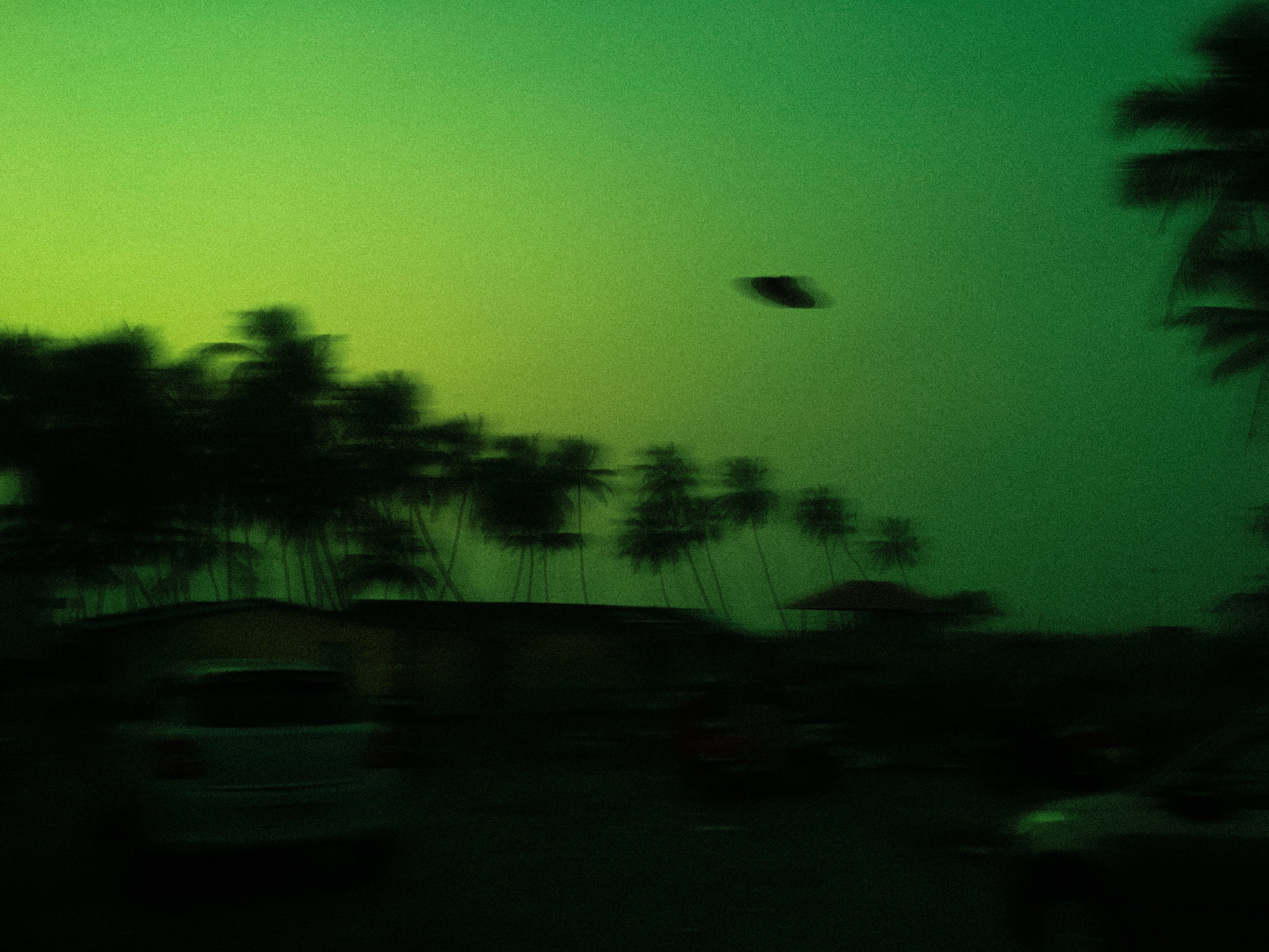
Every time Donald saw a UFO, he got an erection. The problem, of course, was that UFO’s didn’t seem to be quite as common a phenomenon as they’d been in his youth. Dr. Collins smiled politely, in appreciation, and studied the holes in the tops of his loafers.
“So what you need then . . . ” Dr. Collins said, narrowing his eyes to keep up, to record all this for his wife, “what you need is some way of bringing the aliens back, yes?”
Donald didn’t have to look away to answer. There was never any eye contact during the examinations. Dr. Collins had given up on that years ago; it was why he’d had the large window cut into the room – to give his patients trees to study, birds, squirrels, life. Anything but the fourteen thousand dollar chair in the corner, the tile around it splashed with iodine.
“Maybe if they could just do a flyby once a week or something,” Donald said, smiling. “Flash their lights a little for the wife, y’know?”
The wife. Dr. Collins filed that one away too, crossed the floor to the side counter, for the prescription tablet he had to keep locked in the drawer now. The reason for Donald’s visit, according to the chart he’d filled out in the waiting room, was prostate, which he’d spelled prostrate. It meant to throw oneself facedown on the ground in humility.
Without looking up from his tablet, Dr. Collins asked, “Is that all you need, then? Some more, um . . . close encounters?”
“You can arrange them?” Donald said, his voice rising, incredulous, his hands gripping the examination table.
Dr. Collins signed his name with a flourish, letting the s trail out longer than usual – a comet tail, he thought – and shrugged for Donald, said, “You still have to provide the candles, I guess.”
Donald laughed with him, and for a moment they were just two gentlemen from different generations, each raised well enough to know how to discuss delicate subject matter. The way Dr. Collins would tell it to his wife, he knew, would involve some of the things he should have said, about implants, maybe, about how the discs they were both talking about were essentially the same, it was just a matter of scale, of provenance: one came glittering down from the sky, the other across the counter of a pharmacy. But then Donald stepped down, took the prescription Dr. Collins was offering. He looked from it up to Dr. Collins, then out the window again.
“I assure you -” Dr. Collins started, trying not to smile.
Donald didn’t let him finish, interrupted not so much with words but by centering Dr. Collins in his old man eyes, his face still angled slightly away, as if he were embarrassed.
“I think you maybe misunderstand, Doc,” he said, still picking through his words in a way that Dr. Collins could tell there were a lot not being said. “I didn’t get the hard – I didn’t get excited about the UFO’s myself, see. No, no. They never were much but a bother to me, with what they did to the corn and all.”
Now he was handing the prescription back. Dr. Collins looked at it between them like it was from another planet, and from it up to Donald, just as alien now.
“Then . . . what?” he said, not sure if he should be ready to smile or not.
Donald shrugged, rubbed his rough chin with the side of his hand in a way that Dr. Collins couldn’t tell if it was the hand itching or the chin.
“The wife, I mean, y’know?” he said finally, looking outside now, but up, too. Dr Collins looked with him. “Every time they buzzed our house back then, me, I’d go for the barn, to keep the horses from kicking their stall doors out. But the wife, she’d run out after them, see? Then come back – God – come back to the porch an hour or two later, corn silk in her hair, spider web trailing off thesleeves of her dress like a shawl I guess, her chest just rising and . . .”
Dr. Collins studied the sky long after Donald was gone, his new prescription not a prescription at all, but a referral, for his prostate, spelled without the r. That’s what he had really been there for. Dr. Collins didn’t tell his wife about that part of it, though. Instead, the next morning, Saturday, he found himself awake in the house earlier than usual. No coffee in the air, no cars outside. Just dawn, seeping in through the blinds over the kitchen window in beams that, for a moment, seemed to be feeling, scanning.
Dr. Collins – Stan on the weekends – walked through the beams to the front door, and out onto the different world of the porch, the automatic sprinklers flowing up into silvery mushrooms, the whole landscape of the neighborhood suddenly alien, so that, until his wife came gasping up from the street, her morning run complete, he knew he believed.
“Getting too old for this,” his wife said when she could, her hands made into fists around the knees of her sweatpants, her lungs trying to wring all the oxygen they could from Earth’s thin atmosphere, and Dr. Collins shook his head no about that. She wasn’t.
Stephen Graham Jones is the author of The Fast Red Road-A Plainsong, All the Beautiful Sinners, Bleed into Me, The Bird is Gone: A Manifesto, My Heart Is a Chainsaw, and many other books. An Assistant Professor of English at Texas Tech University, Jones is really, really into Elvis.
This story appeared at fictionattic.com in 2005.