Your cart is currently empty!
Tag: flash fiction
-
The Truth Is — by Stephanie Buesinger
1. Ingredients
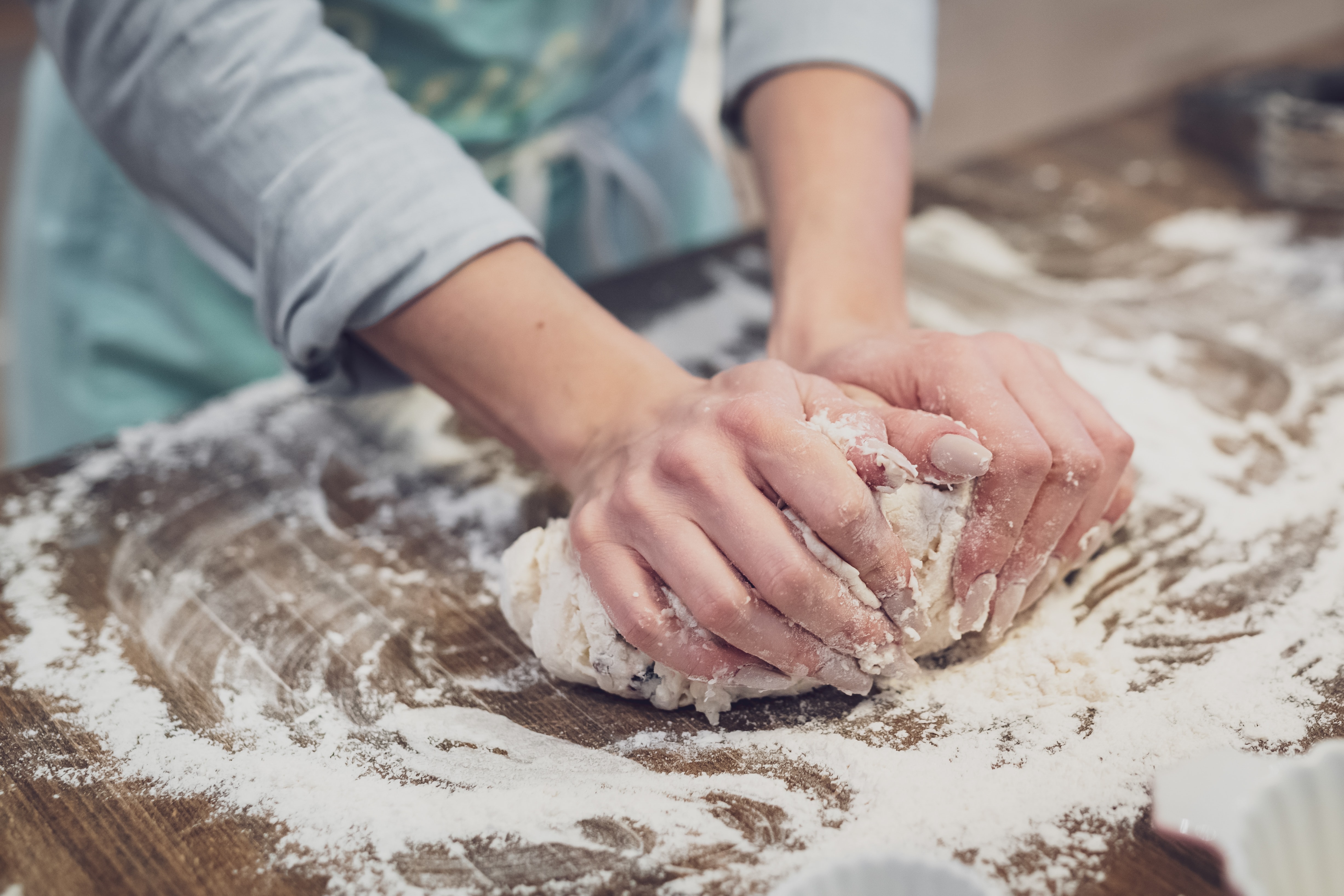
I try to find solace in the little things. Making bread, for example. The refuge of repetition as I knead the dough, fingers sticky, folding, pressing, then folding again, the enforced patience of setting it aside to rise, damp cloth laid carefully over the top. The letting go when you slide the formed loaf into the oven. Growing up I watched my mother bake sourdough and buttermilk biscuits, blueberry muffins, and apple pie, which she served a la mode with a large scoop of vanilla brought home from Swenson’s. I packed her recipes in my carry-on when I moved to this country.
2. ProcedureThe truth is, I found the recipes in a hinged wooden box in the attic of this cottage by the lake. The recipes are not for blueberry muffins or pie but for kreplach and noodle kugel and kasha varnishkes. The real estate agent that rented me this house told me they were left there by a German Jewish woman who abandoned the house and its contents during the war. The previous owners left the box in the attic. No, that’s not true either. The recipes are for borscht and pelmeniand were handwritten on lilac-colored stationery and given to me by the Russian ballerina who lived in the apartment above me in New York, compensation for her hosting late-night dinner parties. Tanya knew I liked staying in and reading Tolstoy. She preferred Chekhov. I’m sorry, I lied to you again. I found the recipes on the internet and took a screenshot of them on my iPhone.
3. Serving
I don’t like to cook, and I would not make any of those things. I’m confident my mother would have cooked all those things if she had ever lived here, in this cottage by the mountains. I mean house by the lake. If I had a mother who baked warm loaves of apple strudel and told stories as you lay on a blanket under the apple trees and blue sky. If I even had a mother who baked strudel so tender it melted on your tongue. The truth is, I had no mother.
Stephanie Buesinger writes fiction and children’s literature and enjoys illustration and photography. She is Photo and Blog Editor at Literary Mama and her work has appeared in Literary Mama, Women on Writing, and The Bluebird Word. She lives in Florida with her family and pets.
-
Here, from Outer Space–by Mackenzie Singh
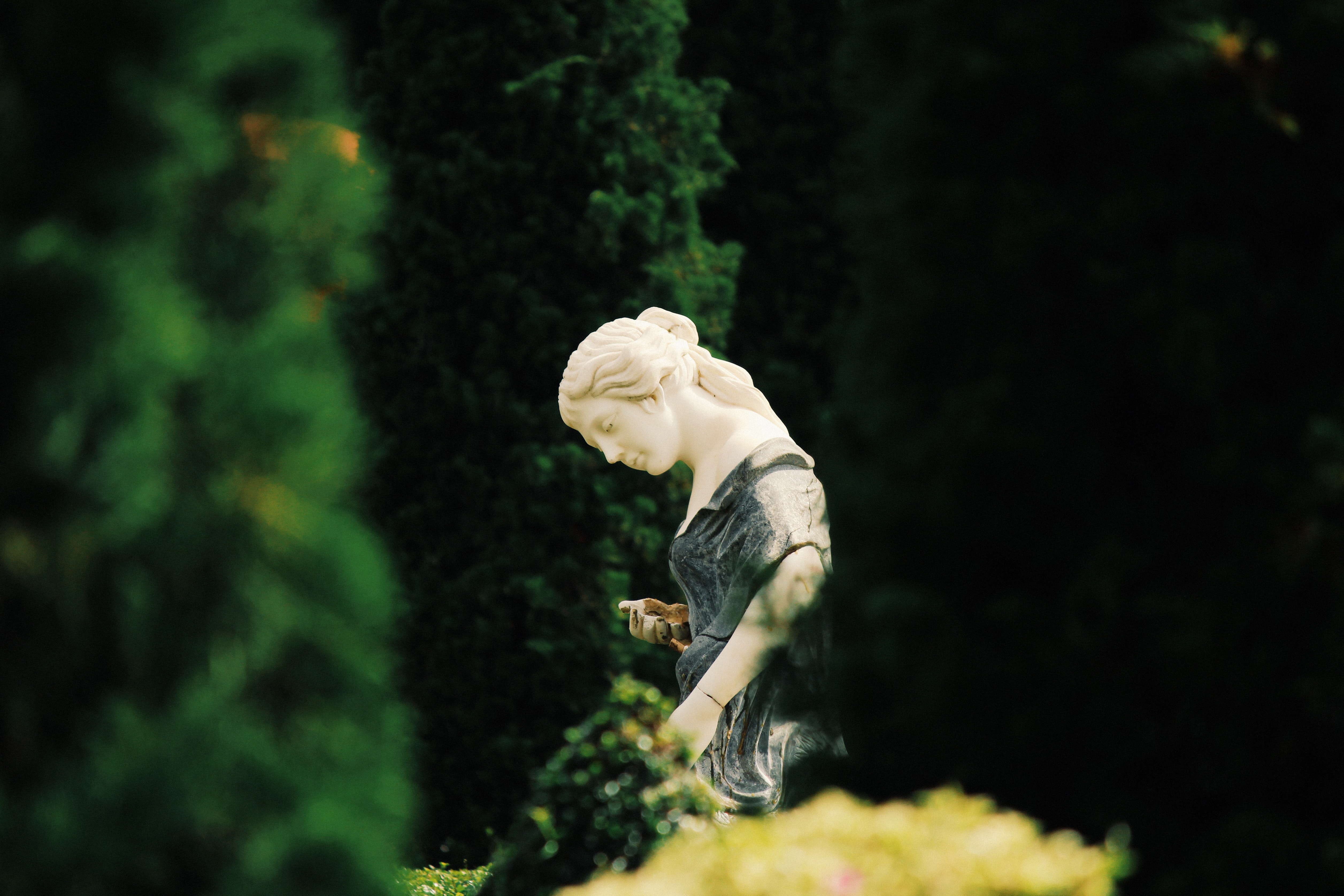
photo by Zeke Whiteout At the sculpture park we fail to connect. By connect, I mean recover. And so, we stack rocks. In silence we balance them without great effort but still, they stay, an allegiance or maybe obedience to an effort we lack. It’s in the fit. I like the precarious ones, she, the uniform. Our creation — it tickles us. We have surpassed the other stacks and, look: we are still stacking. When the leaning begins, we abandon it, this bowed spine, which, hey, call it a benediction.
Above, honey bees. They fly and fly and —
I tell her I envy insects. How capable they are, how sturdy the things they make. Me? I’d be a spider, my home spun in the yawn of a boot, a constellation against the sole of a sky.
We carry on over the dry-stone ramp and toward the garden. In the shade of a tree the teeth of a scar wink white from her calf. The first time I saw it she said the owner claimed the dog just wanted to play. I said it was like that joke about the — but then she kissed me and I managed only to say, “ — off my lawn.”
Prospects are hospitable. It’s a misconception that a happy present makes a future when one has only to imagine a future to want the present. As for the joke? That’s what I mean. Of course she laughed.
And, now.
Now we arrive at the quarry where, supposedly, two can work out whispers from opposite ends. Here, we are on another planet. We are aliens attempting contact. We cup our telescope hands around our mouths. Diligently, we hum: “Hello?” And then we listen, we listen before trying once more: “Can you hear me?”
Mackenzie Singh’s work has appeared in SAND Journal, SHiFT, Maudlin House, Lithub, and The Rumpus. She lives in Brooklyn.
Subscribe to get new flash fictions in twice a month in your inbox.
Submit your flash fiction or personal essays to Fiction Attic (we pay our writers).
-

Story in Blank Space #1–by Kris Broughton
(the writer asserts that the empty space above represents all the stories of the known universe. He recommends that you stare at the blank white space for at least five minutes to see this particular story in its entirety.)(If you are having trouble discerning where one story ends and another begins, the writer suggests that instead of trying to interpret this particular story through reading it one word at a time, you should concentrate instead on the physicality of the story, taking the requisite information about plot and characterization and theme from the amount of space this particular body of words displaces.)
(If you are trying to read this while an annoying, undersized dog is barking at you, you have the writer’s sympathies, as he was similarly aggravated by a diminutive, deballed mongrel of mostly Chihuahua origin during the creation of this piece.)
(By the end of the second minute of staring, you should begin to get a picture in your mind’s eye of the main character. You are not surprised to find that he is an anti-hero, inasmuch as this particular story is on the cutting edge of being an anti-narrative. You are also not surprised to find that the protagonist, in a vague way, resembles the you of yesteryear – a slimmer version of you who has more hair and whiter teeth, with a morose disposition you do not recall. The only surprise, if you are not African American, is that this you is black.)
(Just when your eyes begin to tire of focusing on these few square inches of blank screen, the story you have been waiting for appears in your mind. You have chosen to begin in the middle, as you are not overly fond of settings, mood, or tempo. This brown skinned character who resembles you is enmeshed in an imbroglio between his lover, who represents societal propriety, and his secretary, who represents individual desire. After three minutes of staring at a blank screen, this business of your likeness being black is no longer perturbing. In fact, it sparks possibilities in your mind. You wonder if this character’s jump shot is better than the one you have in real life. To be more accurate, the one you used to have – in real life, you haven’t played basketball in ten years.)
(This is not the life you would have imagined for yourself if you were black. The protagonist has a doctorate in appliquéd physics. His lover has a doctorate in voodoo economics. The scene you have entered in progress shows our anti-hero and his paramour standing on the balcony of his loft apartment, eating canapés of fish flavored tofu and sipping white wine spritzers. Dr. Voodoo has convinced herself that our protagonist is involved with his secretary. Dr. Appliqué is stuffing his mouth full of tofu canapés, in hopes that he will not have to talk to Dr.Voodoo about his voluptuous secretary, Pogo Tatuopo.)
(This is not what you expected from characters who look like this. Dr. Appliqué’s eyes, you feel, should hint at a well of violence, at a past filled with pain and suffering and self-loathing instead of radiating the self-satisfied gleam of the intellectually well-endowed. Dr. Voodoo should be angry and aggressive instead of confused and disappointed. Now Pogo’s broad South Pacific Islander cheekbones come into focus. The blouse she is wearing is unbuttoned to her breastbone. When you see the lush curve of Pogo’s hips, there is no question of Dr. Appliqué’s guilt or innocence – only how many times it has happened. As the action within the story begins to rise, you close your eyes, because the protagonist is an anti-hero, and it is pretty obvious to you where this story is headed. You begin to feel faintly ridiculous at having spent so much time staring at a blank space.
Your shift to anger is sudden, swift – you would murder the writer if you could get your hands on him for wasting your time! Then you blink your eyes and all of a sudden the blank space seems larger. The whiteness of it seems to be fluid, as if you are staring into the top of a freshly opened can of Chantilly Lace housepaint. Wait! Is this the same story you have been staring at? The same protagonist you have been watching? He can’t be…you didn’t expect him to…holy shit!)
(Although you have not forgiven the writer, the story has improved immensely – that is to say, the direction in which the story is headed is not what you would have expected. What is utterly amazing, moreover, is that the writer has been able to capture your imagination so vividly with two Black PhD’s, a tray of fish flavored tofu canapés, and a woman named Pogo. The recommended five-minute viewing time is almost upon you, but the tale has become so engrossing, you are tempted to try to go back to the beginning to see how this all started.)
Kris Broughton has had stories published in Carve, Exquisite Corpse, 3AM Magazine and Eclectica. Kris lives in John’s Creek, Georgia, where he toils ceaselessly in the IT industry as a channel sales professional. Kris is at work on a contemporary novel about Black men.
Subscribe to get new flash fictions in twice a month in your inbox.
Submit your flash fiction, personal essays, or illustrations to Fiction Attic.
-
Mel in Her Element–by Phoebe Brueckner
Mel went down to the docks alone and hired a fishing boat, took it out all by herself. She brought with her a plentiful supply of fresh water, not knowing how long she’d be out. Given her track record, she figured it might be a while. She sat on the boat with the fishing pole in hand, staying hydrated, watching the sun dance on the sea’s glassy calm. It was so quiet out there on the water, peace and awe flooding in around her. It would be nice to be able to share it, to turn to her love and say, “Pass me the crackers?”
By late morning she was sweating in the hot, hot sun, but she’d brought a wide-brimmed hat and sunscreen, and she knew to drink water consistently. When she had to pee she went in a bucket, then dumped it into the sea. But by midday she was dangling over the side of the boat to pee in the ocean just like the fish themselves, enjoying the liquid movements all around her. In the late afternoon, Mel cracked open a cold seltzer and cast her line, yet again—and shortly after that felt a sharp tug.
She reeled it in, nearly breathless, heart thumping as the fish hit the floor of the boat. It was a good-sized, good-looking fish, but it was flopping so violently back and forth, desperate for air, and freeing the hook from its lip was a struggle.
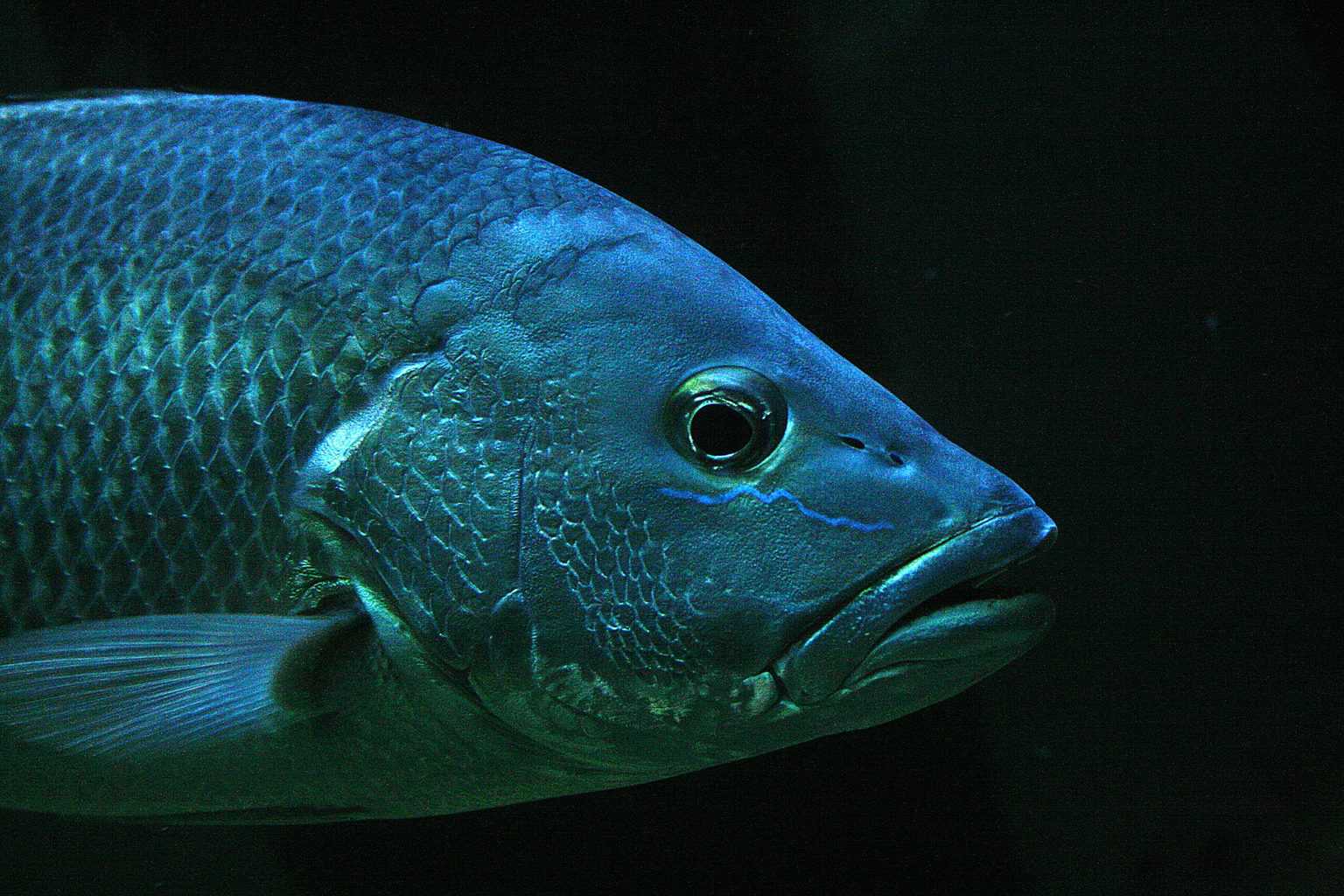
“I can’t breathe,” said the fish, “I can’t breathe.” And Mel knew then that he wasn’t the one for her, so she threw him back into the sea. He darted into the depths straight away, and she wiped blood and scales from her hands. She hoped his lip would heal quickly. She felt terrible about having hurt him. It was selfish of her, she saw that now, to reel him in just because she felt ready for love.
She stood looking at the water for a while, hands on hips, her fishing pole kicked into the corner of the boat. Then she lay down on her back, put the wide-brimmed hat across her face, and let the waves rock her so gently. Far below, she could tell what was happening. She could sense schools of fish rushing by, flicking light back and forth with their bodies’ quick movements; she could sense all the sharks getting ready to cruise. She could feel herself swimming with all of them, encased always in liquid and breathing in a magical way. But the thing our dear Mel thought to hope for was rain.
Phoebe Brueckner is based in the San Francisco Bay Area. Her short fiction has been published in Flash Fiction Magazine, Boston Literary Magazine, and Jet Fuel Review.
Subscribe to get new flash fictions in twice a month in your inbox.
Submit your flash fiction or personal essays to Fiction Attic (we pay our writers).
-
The Newcomer–by Kay Smith-Blum
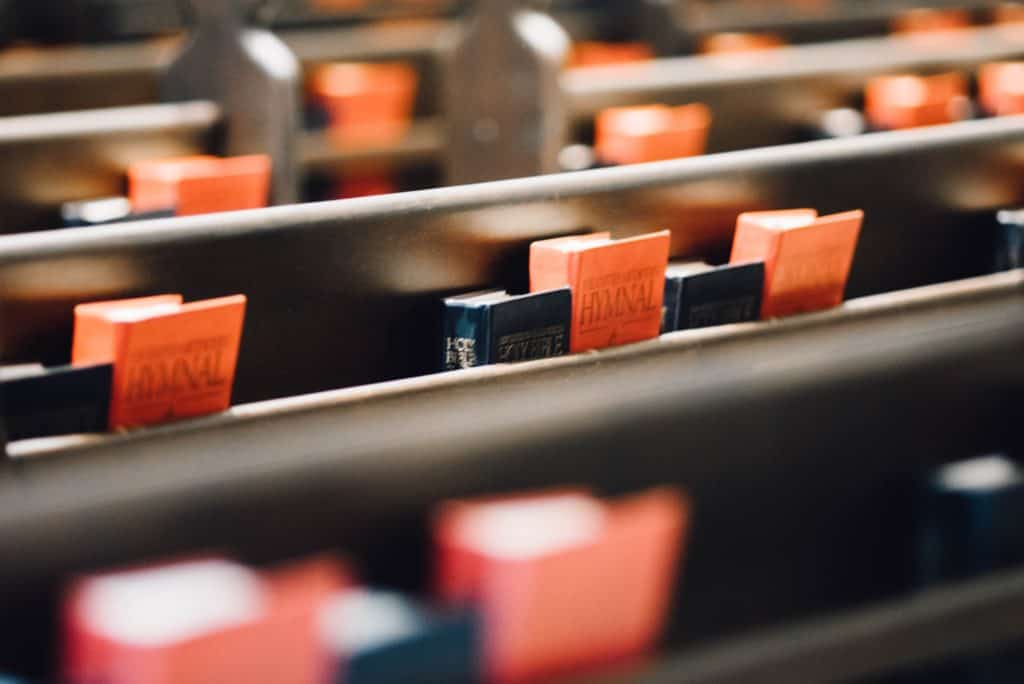
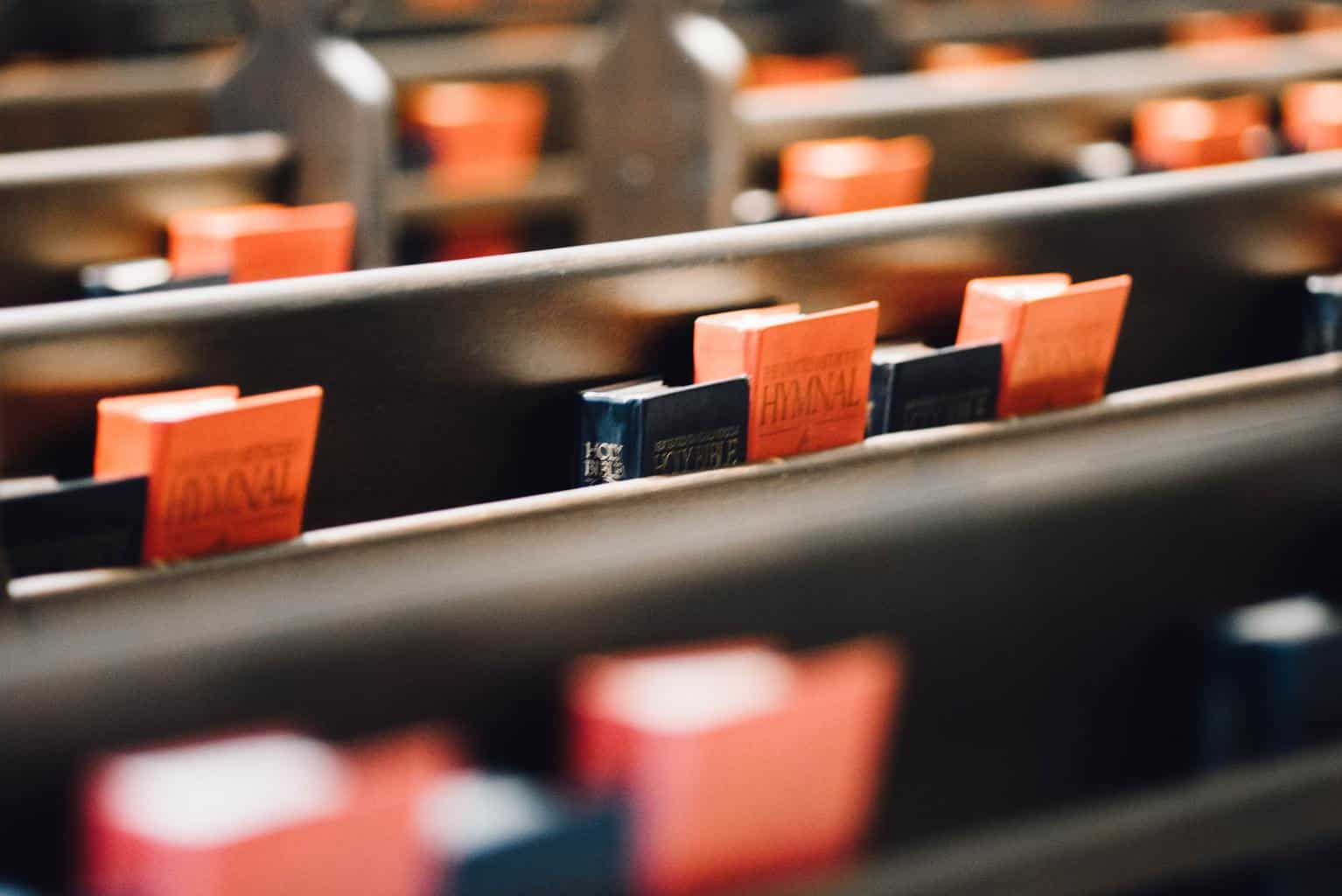
image courtesy of https://unsplash.com/@chuttersnap No one really noticed the newcomer. Mrs. Haggerty arrived during the doxology. She covered her cough with her palm, wishing her bunions would quiet down. She extended a friendly handshake to Mrs. Lane in the foyer, before accompanying the newcomer down the aisle. She bent over to rub her right foot before entering the pew.
Mr. Brown leaned into the last phrase. “Praise Father, Son and Heavenly Ghost.” He breathed in, replenishing his spent air, issuing a hello as he pushed himself a bit closer to the youngest Galanos daughter to make way for Mrs. Haggerty and the newcomer. The youngest Galanos nudged her mom, opening her mouth at the same time as Mr. Brown exhaled. But Mrs. Galanos, somewhat preoccupied with thoughts of the elder son who hadn’t come home last night until well past midnight, didn’t abide chit-chat in church and put her finger to her daughter’s lips and then to her own signaling silence.
Mrs. Haggerty grasped the hymnal and turned to the worn page for Morning Has Broken, not that she needed it, the words memorized long ago when Cat Stevens covered it in the ’70s and she and Mr. Haggerty used to make love at midday which they never did anymore because he traveled so much or because their lovemaking had become stale. She sang the words and wished they could refresh somehow. Beside her, the newcomer was “springing fresh from the world” and could make change.
The newcomer’s head spiked in red-orange bits, outgrowth from a golden base that shed some. Mrs. Haggerty did not notice the strand that floated her way or the one that landed on Mr. Brown’s lower lip as he pursed it, leaning over the next pew to whisper to his fidgety nephews to settle down. Mr. Brown’s sister had a tendency to sleep in on Sundays and Mr. Brown would stop by to gather the empty liquor bottles for the trash and the boys for church. No one commented on the newcomer’s crown-like appearance but it may have been the source of the giggles from the boys, causing an exasperated exhale from their uncle into their ears that put their revelry to rest.
Mrs. Haggerty turned the hymnal page wondering about a new face cream advertisement she had seen, smoothing the page wide so the newcomer could find the entry along with her into the song. The congregation swelled in unison. Mrs. Haggerty sneezed, wondering if she was catching the same cold that her husband had brought home from his trip to California. His stuffed head kept him away from church this morning or so he said upon recounting how much he preferred west coast weather to the Midwest extremes. The youngest Galanos daughter licked her palm, sticky from morning pancake syrup, until her mother took her hand squelching the action, mashing their palms together. Mrs. Galanos ran her hand along the back of her neck studying her eldest and considering who the girl might be that had kept him out so late if in fact it was a girl. She tapped her fingers on her lips thinking Mr. Galanos might ascertain the truth and at least she didn’t have to worry about her oldest daughter all set for college and leaving home in the fall.
When the offering plate came around, Mr. Galanos made the usual family donation, a crisp one-hundred-dollar bill after which Mrs. Galanos handed the plate, a shallow dish really, to her daughter who popped open her pink patent purse and placed in a quarter before passing it to Mr. Brown who gave the plate to Mrs. Haggerty who handed it to Mr. Lane after the newcomer tossed in a contribution as well. Mr. Lane stepped to the next row, handing the plate off to Mr. Brown’s nephews, who mixed the coins and bills like a salad, before passing it off to Mrs. Young who leaned back, almost cheek to cheek with Mr. Brown, wishing he would say yes to her dinner invitation and to accept his apology for the rambunctious youngsters. The offering plate moved through two more rows before Mr. Lane returned it to the front table to be counted, sans the Galanos hundred which he pocketed in a magician’s flash to pay off his gambling debt in the next county. His losing streak had to end soon.
The youngest Galanos daughter whispered to her mom she couldn’t wait any longer to use the toilet and sifted by Mr. Brown, interrupting his daydream about his time last night with Melvin, who loved Mr. Brown, ran the local hardware and had a remote farmhouse where they could be alone. Mrs. Haggerty sneezed again just above the child’s head as she passed. The sermon, on spreading the gospel, was rich in meaning particularly with the newcomer in their midst who they would all make welcome.
The opportunity to be hosted by a variety of the church’s members was not lost. The newcomer eventually found a way into the hearts of the entire congregation, settling into the tissue of their lives, offering reason if not solace when Mr. Lane’s losing streak did in fact end. He was the first to die, followed by the youngest Galanos daughter and Mrs. Haggerty and shortly thereafter, her husband. The newcomer decided to stay for a while, for at least a year, if not two.
Kay Smith-Blum, a recovering retailer, was named Woman Business Owner (NWWA) of 2013. Smith-Blum co-authored the “Every Man” card series, published by Schurman Fine Papers. An author of historical fiction, she lives in Seattle WA. Her short stories can be found at CommuterLit.com, Minerva Rising (Winter 2021) Fiction Southeast (Winter 2021) and The Stray Branch (Spring 2022). Her humorous essays (nominated for Best of the Net) may be found at Pif Magazine, Heavy Feather Review, The Furious Gazelle (Winter 2021), Quail Bell Magazine, Bewildering Stories and Down in the Dirt Magazine.
Twitter @kaysmithblum Facebook/Linkedin Kay Smith-Blum Instagram @discerningKSB
-

Time. Lost Ears. Pain. Three micro-fictions by Sarah Alderfer
Time
Do you think time can disappear without a trace, with no explanation? You’d think it’d be spun on wheels, but I think it has a mind and dance of its own. I approached my seat on the small plane, it didn’t feel right. I wasn’t supposed to be here, not yet. I sat down next to a man with every hair and seam in place. He had a flashy watch, too. As the plane took off, I clung to the view of the old country, determined to watch until she disappeared, swallowed by sky, or sheer grief. It’s strange, leaving a home that’s not your own. Maybe the minutes escaped through my feet, that’s where I feel it first, cold, numb. Maybe it’s through my stomach, sinking like a black hole. It started ticking again when I picked my head up from between my knees. I looked up from my hands. Glancing out the window, I asked the man why we were landing already, we had just taken off. “We’re in Frankfurt” he said, looking at his watch with a flick of his wrist. Time: it takes, taunting you in circles.
Lost Ears
One morning, I woke up and realized that I had lost my ears. I looked under my bed, I couldn’t find them. I waited a day or two, they didn’t come back to me. I looked down often. I’d kick rocks or hide my tears. When I think of that time, I think of the color black, a heavy one. One day, my mom gave me a note. It was a yellow, folded piece of paper. She said to open it on the bus as she rushed me out the door. The red ink told me to keep my head up. So I tried. I looked at lips as they spoke to me. I even saw hands come alive. I saw smiles and I saw heartbreaks. I didn’t lose that morning, I found eyes.
Pain
One night, three years ago, I wrote a poem, almost by accident. I remember the sheer grief, how it took my breath away. Time passed so slowly, each second was painstaking. Each inhale, and then the exhale, was work. So much work. All I did was watch Forensic Files in my bed and occasionally eat cold leftovers. Sometimes, I went to work. Sometimes, I turned around on the way there, unable to see through my tears. Sometimes, I didn’t even get out of bed.
I’m sorry, by the way. Air was so heavy. Blades and fire were release, the grip on my chest, gone. Fix. I came to a point where I refused to be ruled by something so little. I’m not even sure what spurred that resolve, it had still hurt so much. I remember that night, the wave was coming. I lay in my bed, the next episode of Forensic Files was on. The wave crashed, and I laid there, bracing. I made myself feel everything, each sliver of glass. I let myself wash away instead of reaching out. It was then that something happened. Words came swirling. Gasping for air, I wrote them down. It was the first time I felt relief without hurting myself. I was never the same after that. I had something to say, a voice. It was just the beginning that night, basking in the light.
Sarah Alderfer is a 26-year-old nanny and nutrition student. This is her first published fiction.
Why we chose it: Sometimes a voice reaches out to you. It has less to do with story than with feeling, a sense of something rising up from the interior of the writing that transcends subject. When this submission came in, I was intrigued by the cover letter, which stated simply, “This is new to me. Thank you for your time and consideration.” A one-line bio followed the signature: “I am a 26-year-old nanny and nutrition student.“
I opened the file and read “Lost Ears.” It was strange and beguiling. Before I’d had time to wrap my head around it, I was moving on to “Pain.” The sense of intimacy deepened–the raw despair followed by the discovery of writing as a way out of the darkness. And then on to “Time,” the unusual assertion that “you’d think it’d be spun on wheels.” I loved reading “Time” because it places us with a character in a place and time, in motion, contemplating one of the great mysteries in a new way.
I am excited to see what Sarah Alderfer writes next. I expect we’ll be hearing more from her.
Michelle Richmond, Editor / Fiction Attic Press
SUBMIT your flash fiction, micro fiction, short story, or essay to Fiction Attic Press.
-

Bulb-Shaped–by Jeffrey Bakkensen

Photo by Blake Wisz on Unsplash You took a stick and drew a circle in the leaves around us and the fire. “No one comes in or out.” We teased the dog until she learned the rules. When night came, we went inside the trailer.
We weren’t using our phones. That was another rule. There were no outlets, only softly glowing sconces powered by a panel on the roof. There was no shower. These weren’t rules, only facts. The toilet was this eco-friendly Space Age thing lined with something like aluminum foil that closed over your waste and twisted around and made a whirring noise, and opened up again fully clean. There was limited water.
When it was really dark, we switched off the sconces and watched the darkness until we were scared it was watching us back. I went outside and pissed on the fire while the dog pissed on the leaves. We opened a bag of chips and a six pack and played rummy on the fold-out table between the bed and the kitchenette. I said I didn’t remember beer being so sweet, and a few minutes later, you said the same thing. We both laughed because you must not have heard me.
Then we were quiet for a long time staring at our cards. I cracked another beer, cracked one for you even though yours wasn’t done, and waited. Eventually, you got up to use the bathroom. When you came back, you said you thought it had happened.
I’d filled the waiting minutes reading a magazine that was laid on the bed when we arrived. The magazine was about people renting their trailers all over the country. Nadine’s trailer was near Zion National Park. Brent’s was deep in Minnesota.
I’d meant to let myself get caught looking at your cards, but I was too busy reading about trailers, and you surprised me.
The aluminum bag whirred, and the bathroom door opened. The dog and I both looked up. You came outside and washed your hands in the kitchenette sink.
“I think that was it.”
We hugged, me crouching under the trailer’s low ceiling.
“That’s good,” I said, and I didn’t have anything else to say.
Later, I knelt at the toilet and with a finger palpated the eye of the aluminum bag, but I didn’t know what I should be looking for. Maybe a receipt I’d carried crumpled in my wallet for weeks, but couldn’t find when I finally needed it. After all, you said you thought, not that you knew.
I knew that even much later, I would remember the trailer, the toilet, you drawing a circle in the leaves. The trailer air fouled with memory-making.
The dog died. That was how we knew that time was passing. We measured it by the night in the trailer, and whether the dog was still alive or had already died. Frost heaves broke our flower bed into beds, and while I stamped them down, you slipped away. Long after the dog died, you came bulb-shaped with your separate success to tell me what I’d thought but not known to name, how wanting doesn’t stop just because the thing is gone for good.
I wanted to buy a trailer of my own and park it in the street out front. I wanted to fill my trailer with debris in layers so my back stooped and you’d climb to me up a ziggurat of cereal boxes and out-modeled phone chargers. I wanted to lock myself in the bathroom and push through the toilet’s aluminum eye and curl myself around the receipt I couldn’t find.
“You feel okay?” I asked.
“Just cramped.”
We played solitaire and then war. When the beer ran out, I took the dog on a long walk through the trees, lighting our way with my phone’s flashlight. By the time we got back, you were asleep.
For you, I thought, it was already morning. We were packing up and driving home.
Jeff Bakkensen lives in Boston. Recent work has appeared in A-Minor Magazine, Oblong Magazine, Smokelong Quarterly, and The Antigonish Review
Did you enjoy this story? Submit your flash fiction or personal essay.
Read more flash fictions in Flash in the Attic: 44 Very Short Stories.
-

Backroad
flash fiction by Brigid Ives
I remember when I thought that racing down backroads was dangerous. Maybe it was my years living in the city that made the winds and curves seem like a rollercoaster ride—your heart racing at the ever-present possibility of going off the tracks. It took years for me to glance down at my speedometer and notice that I was going above the speed limit, expecting the next move before it came.
Familiarity came gradually, over time. The same way you learn a person’s body, where one day, when you’re both comfortable with total nudity, you find yourself not staring, not feeling surprised by their physiology.
Sometimes, when I lay in the bathtub, I feel unmanageable. It takes a while of marinating in what has surely become dirty water to really look and see your body. My earliest memories consist of the intimate relationship I had with my parents’ physical forms. I could tell you where their freckles landed on the back of their thighs, how their ears fit into their heads. I remember thinking that they were too much—too big, too much skin, too many pieces and parts that they couldn’t even see. I enjoyed the feeling of being compact, of knowing where everything was. When’s the last time I’ve really looked at my pinky toe, anyway?
I find it hard not to think about him. And then I think about myself thinking about him. “Cut yourself a break,” my Mom used to say, “your brain is too busy.” Isn’t everyone’s brain busy? Can anyone’s head really stay silent? These are the kind of things I’ve find myself spewing to my therapist. They’re all collected in a bucket like rainwater for her to reply with just one seemingly thoughtful response—“I think you’re asking the wrong questions.” Which, as it turns out, isn’t an answer.
Forgiving myself. That’s what I’m trying to do. Forgive myself. It’s no one’s fault. There’s no one to blame. But we all know there’s always someone to blame. I genuinely believe that all feelings need a target. Anger, love, loss, blame, dreams don’t just dry up like a raisin in the sun (they all definitely explode).
The same way you learn a person’s body, where one day, when you’re both comfortable with total nudity, you find yourself not staring, not feeling surprised by their physiology.
What I want to know is, when you pass people on the street, or have a brief interaction with a person in some commonplace location, do you fill in the blanks? I always do. I’m not sure if it’s because that helps me treat them like a person. Susan at the Deli married her high school sweetheart and he’s never cheated but she has, just once, ten years ago. They worked through it for the sake of their son. Jon, the mailman, has a passion for sci fi novels and ramen noodles, which is why he named his most recent cat Ishiguro, which he mispronounces purposefully when repeating it to women—their eligibility ultimately hanging on a correction.
Maybe this is why I work at the National Park. As people drive in, I can put down my book and take a peak into their lives. Otherwise, it’s peaceful (read: solitary). I’m alone with my thoughts on the drive back. “Just turn on the radio,” my mom advised. She’s excellent at minimizing.
“I don’t think it’s good for your psyche to drive that road every day.” Au contraire, it’s the only way for me to maintain any psyche at all, I tell my therapist. “You must feel forced to relive it. I think you’ve done your penance.”

Photo by Zach Miles on Unsplash The memory is like a cheap piece of gum you’ve put in your mouth five hours ago. It’s disgusting and falling apart and been stretched and pulled every which way. Worn. It’s worn. You’ve tried a million different ways—a million different combinations. It always ends up the same way. You never make any progress.
Was I looking down at my phone? Or was that the moment before? Would I feel better or worse had I been responding to a text message? Does the truth even matter at this point? It was a summer job, and I remember the playlist I’d selected for my evening drive home: “Summer 2k17 Jamz.” They say that, during incidents of trauma, you recall the tiniest of details. And once we’d made contact, everything seemed to go in slow motion.
Jon, the mailman, has a passion for sci fi novels and ramen noodles, which is why he named his most recent cat Ishiguro, which he mispronounces purposefully when repeating it to women—their eligibility ultimately hanging on a correction.
I never saw him—inside the car, I mean. I didn’t see what his face looked in his last moments, I couldn’t discern whether he knew what was about to befall him. I didn’t see the car flip, and it took a few minutes after we made contact for me to come to. It’s a weird combination of feeling frantic and calm. It’s as if there’s so much that you need to do but nothing that can be done. The still of the night matched by the cacophony of bugs, frogs, owls.
In my most dramatic moments, I want to cry and take responsibility—take the blame—for the life I took. A life that I had the inability to mourn. It seemed uncouth to attend the funeral. His family wouldn’t feel appeased by an apology. I wasn’t drunk, I wasn’t asleep. It was an accident. That’s what everyone says—it was an accident.
The English language—no, all language—is so painfully imprecise. In those most profound moments of feeling, words are so inadequate to express what’s going on behind the scenes. Take the word accident, for instance. Accident provokes images of spilled milk, a skinned knee, coloring outside of the lines, a fender bender, a wet bed. You don’t think ambulance, police investigation, body bag, shouts of rage, flares lighting the night.
When I meet new people, I want to confess. I’m a murderer. It was me. And then here I am, back at the start of the circle, angry that I’m still thinking and worrying about me. How this whole incident reflects on me. What about them? What about him? How can I ever possibly fix this?
I imagine myself laying in bed one night, beside a new lover, staring at the ceiling and sharing this story again. Re-telling, reliving. Feeling the person beside me soaking up the details, formulating questions, processing, processing. I can hear it underneath my words. They’re probably wondering if this is something they can live with—living with me like this. They’re lucky that they have a choice.
How many bodies have you really known—including your own? Roommates’, maybe. Siblings. There’s a comfort that comes with knowing the shape of someone’s fingernails, how the hair runs down the back of their neck, their ankle bone. You can press the gas pedal a bit harder.
-

Hungry – flash fiction by Molly Marks
That sad bicentennial summer, fried pig skin hardened in Grandmother’s throat. Her face plumped as airways clogged with pork rind. A white plate dropped from her fingers. They were in Boston’s Chinatown, at a buffet, standing next to heat-lamped beef tongue, and snake beans. Her son, Patrick, patted her back, as if she simply needed encouragement.
“There, there, mother. Swallow gently,” he said.
Her grand-daughter, Sylvia, continued stuffing fish balls, and tiny plastic cups of pickled ginger in her swim-bag. Her deflating floaties dripped water over steamed buns as she troweled through a gelatinous stew of fruit juice and mutton. The dried ends of her long ponytail dipped into garlic paste.
Writhing in fear, Grandmother a squeezed a simmering metal bowl, searing the tips of her wrinkled fingers, than began hawking on a board of charcuterie.
“Mom?” Patrick asked, “Are you all right?”
His brain swelled with memories of elementary health class, when his portly teacher busted the head off a simulaid choking manikin. Patrick imagined the head of his mother gliding across the restaurant, falling into a crock of blood sausages. Despite his fear of decapitation, he attempted the Heimlich Maneuver. He stood behind her, supporting her chest with his left hand, and leaning her forward with his right. Similar to burping a baby, he roughly slapped her back in quick succession.
“There, there Mom. It’s going to be alright.”
Aware that her father was distracted, Sylvia squished a Belgian waffle down the front of her bathing-suit, and hastily reached for the syrup. The sap came out quicker than anticipated, glazing her middle. Horrified at the prospect of being stuck to the ugliest one-piece ever made, Sylvia turned towards her father. He was humming Sarah McLachlan, In the Arms of an Angel, cradling Grandmother like a baby. After he finished singing, he rolled Grandmother under the desert table, and suggested to Sylvia, they leave immediately.
Hand in hand, they dashed through the public gardens, swerving through iPhone flashes and George Washington aficionados. Floppy hats shading gabby ladies, floated through a lagoon on Swan Boats. A bored horse gazed longingly at a street vender who was drizzling caramel over peanuts. A strung-out summer-camp leader wearing knickerbockers and tube socks, encouraged children to swim under the Ether Monument. Tiny sandals and yoyo’s flung on grass patches, as kids climbed over the concrete wall, into a tub of green water. Patrick stormed his way through the crowd, pushing through a cluster of children who were afraid to swim.
“Dad,” Sylvia pouted, suddenly stopping, “you’re walking so fast.”
Patrick slung his daughter over his shoulder. Udon noodles, and egg tarts fell from the unzipped pocket of Sylvia’s bag. One of the camp boys, who felt like nothing ever good happened to him, watched as a perfect slice of Chongyang cake crumbled on the pavement.
“Cake!” He yelled, diving towards the crumbs like a bird on stale bread.
The campers, trained to do anything for snacks, leapt from the fountain, and charged after Patrick. Patrick assumed the children knew somehow, that he’d abandoned his dead mother at a buffet. They know, he thought, they’re on to me. He wanted to tell them the good things, that he sprinkled flakes into an empty aquarium, mashed Aricept, Lisinopril, Remeron into hot oats, left a tiny saucer of tuna outside for feral cats, knitted his mother’s housecoat, and explained daily to his mother who he and Sylvia were. But he’d forgotten to learn the Heimlich Maneuver. He should have been taking lessons on air, and preparing for dangers of Manchurian cuisine. His brain flipped through a manifestation of should-haves. Sylvia strained his biceps. He could no longer carry her.
Patrick set Sylvia in a bed of tulips. Green goggles wound tight around her forehead, cutting off brain circulation; something he should have realized as a caretaker. There were other things: syrup was everywhere, her flip-flops were on the wrong feet, and he should have put Neosporin on the blisters. It appeared as if a turkey’s snood was growing between her big and long toe.
“Darling, I absolutely love you but it’s time for you to find a new home,” Patrick said, noticing for the first time, that Sylvia and his mother do the same thing when their alarmed: place two fingers on their bottom lip and faintly hum.
He kissed her sunburnt cheeks and squeezed her pudgy body, which smelt like the public pool and poorly salted ganache. Sylvia watched as he disappeared underneath a curtain of willows. Usually she liked hide-and-seek, but her arms were tired from doggy-paddling, and a swarm of ravenous kids were about to attack. She threw her bag at the wolfish kids and screamed for her father. A whistle blew and everyone’s head looked towards the teacher.
“Doodle-bugs!” She screamed, “Get into line, right now! Just because we have a little fun does not mean we act like animals!”
At one point Alison might have been the type of teacher who handed out extra pieces of bubblegum and believed in a child-centered approach. Now she held her whistle like whip, pinching the ear of a squirming boy—making it clear that she’d choose termination if it meant momentary control.
A neat line formed at her feet. Only one child stood to the side. A gnarled ugly duckling. A misfit. A girl unfit for Outdoor Adventure Intensives.
“If you don’t get into line, right now I will…”
Sylvia imagined being shoved through a deli slicer and abided. The whistle blew and the children marched. What could Sylvia say? Father was hiding. Grandmother was eating. There weren’t any grownups to convince this lady she wasn’t a camper. It pained her, the way her bathing suit straps cut into her shoulders. There was no choice but to follow.
Molly Marks is a graduate student in the MFA program at Chatham University. Her work has been published in Lime Hawk Literary Press and SLAB. She lives in Pittsburgh, where she is writing her second novel and building art installations.
image courtesy of Raphael Biscaldi via unsplash
Submit your flash fiction to Fiction Attic Press.
Buy our latest flash fiction athology: Flash in the Attic: 44 Very Short Stories
-
The Way Home – flash fiction by Mark Russell Gelade
It is Easter Sunday and I am standing at the sink washing dishes as I tell you this. For me, doing the dishes often induces a natural state of reverie, like staring into a fire. But Candi, my wife, she has a more pragmatic reason for asking me to do the dishes. At least I have a theory about that.
I am doing the dishes because it’s what she instinctively asks me to do whenever she feels threatened by the distance that has opened up between us.
She’s no fool. She believes these domestic chores will reconnect me to our house, our family life, and our marriage. It’s the kind of intuitive, female knowledge that no “how-to” book would dare to explain.
I have a method for doing the dishes. I begin with the largest plates, wash them, rinse them under the hot water, let them drip for a moment, and then stack them like toy soldiers, one behind the other in the metal dish rack. Next come the smaller plates, then the bowls, then the cups, and lastly, the knives and forks.
Right now, I’m recalling an old picture-book I read and re-read as a child that attempted to teach the laws of gravity to ten-year-olds. I can clearly remember the image of a slim man standing in an open elevator, with the shaft exposed for the viewer, above which, a giant pair of scissors loomed, ready to flex.
“And…,” the book read, “…if we should cut the cord, dot-dot-dot.”
The next page showed the hapless man falling through air, his white shirt billowing, and his black tie pointing straight up as the elevator plummeted downwards to certain destruction. Such are the immutable laws of physics.
But the laws of faith offer far more latitude, though their stakes may be equally uncompromising. One can lose faith, come to faith, or even lack faith, but you can be sure the heavenly lawgiver will be far more flexible and forgiving than the authority that presides over falling elevators.
Like my wife and daughter, I, too, went to church this morning—though I didn’t tell them I was going. I sat six or seven pews behind them, just watching the back of my daughter’s head.
Her chestnut hair was shiny and freshly brushed. A red barrette gathered a small ponytail that swayed a little as she moved; and I saw that like me, she too, was in an in-between place. I just wished I could spare her the pain that I knew was coming her way.
I never thought I would arrive here, at this sad and grown-up place. I recall asking a friend of mine who is also in the process of divorcing his wife: ‘Why…what is it about her that’s so bad?’
He looked me in the eye and said, “It’s not about her, Vic, it’s about me. It’s about who I’m becoming that I don’t like.”
When it comes to the ties that bind us, I know of no roadmaps to follow. They say the Magi journeyed to Bethlehem by following a star. All I know is that when you cannot get happy, when you do not know the right road to take, and when you’ve lost all sense of direction, there is nothing left to do but navigate by stars.
Perhaps, if you’re lucky, you’ll pass through your darkest night and come out the other side, shedding the tattered cloth of your old self and singing the notes of a new song.
Or, you may just end up like me, doing the dishes and watching shapes of another world that you can see but cannot touch, reflecting back at you from the gleaming dish or shimmering glass that you hold in your hand.
Someday soon, something is going to come along and cut the cord that is holding me in place tonight. After that, nothing I know will be the same. Nothing I know will offer the reassurance of these dishes, stacking up one after the other, drying in the familiar warmth of the kitchen light.
Mark Russell Gelade is past winner of the World’s Best Short-Short Story Contest, judged by Robert Olen Butler. His short-short stories have appeared in Narrative Magazine and Synchronized Chaos. He lives in San Francisco with his wife. More about Mark: http://markrussellgelade.com/fiction/
image courtesy of Brooke Lark via unsplash
Submit your flash fiction to Fiction Attic Press.
Buy our flash fiction anthology: Flash in the Attic: 44 Very Short Stories