Your cart is currently empty!
Blog
-
How to End a Story
 Stories are like relationships: the beginning is always so much fun, and the ending is fraught with turmoil.
When I sit down to start a story, the first sentence just sort of comes to me. The second sentence too. If I’m lucky, the third swiftly follows. The inimitable short story writer Kate Braverman once told a group of enraptured graduate students (they happened to be my students, and she was wowing them with her general exuberance and wonderful strangeness) that she channels her characters. A bit like spirits, some linguistically gifted version of the returning dead. They speak throughher and onto the page, as if she isn’t even there.
I, unfortunately, channel nothing. It is all rough work after sentence three. By the time I’m in the middle of the story, I’m feeling more than a little uncomfortable. Where am I going? Where have I been? Have I gotten lost in the labyrinth? Probably, yes.
Somehow, I find my way through. The characters do things. They meet with hardship and grief, or maybe they just meet some swanky fellow in a bar or a Laundromat. They get into trouble, maybe out of it. Probably not. I find myself feeling that they have done all they can do. Not much more can be said. The action has fallen. We have all had our dénouement (which, by the way, is a French term meaning untying, from Middle French desnouement, from desnouer – to untie – from Old French desnoer, from des- de- + noer meaning to tie, from Latin nodare, from nodus knot.) And here we are in the labyrinth again, attempting to untie the knot, unwind the rope, escape the not-so-fun funhouse.
It’s time to write our way out.
One wants to resolve things, after all.One feels a deeply human need toconclude. After the falling action, there is often something more. Something unexpected. And here we come to what I have been meaning to say all along: a good ending is layered. The reader thinks she has discovered everything she can possibly discover about a story, but then: another image appears, another paragraph hums along, another question begs to be answered. One is left with the feeling of having walked out of the dark theatre into the light, only to realize there was something else playing after the credits, some secret part of the film, some final moment. You can hear it through the door, vaguely, but you can’t get back in. You’re not sure what you’ve missed, but you’re certain that you’ve missed something, that the reel kept on playing, the story kept on going, after your departure. You were only an observer, a brief malingerer, there but not there. The lives within the story carry on.
Michelle Richmond is the author of four books of fiction, including the New York Times bestseller The Year of Fog. She is the creator of the Guided Workbooks for Writers series.
Sign up for Michelle’s weekly tips on writing and publishing.
-
Editor in Chief: How Obama Fine-tunes His Speeches
GalleyCat brought my attention to this terrific photograph by Pete Souza on Newsweek’s Tumblr. It’s a photograph of President Obama editing his Inaugural Address.
I love the way the President’s hand is positioned on the page, as if he’s moving text around. I think this is a really fascinating glimpse into the way his mind works.
I also love the copious but clear handwriting all over the page (his–or the work of his writer?)
This photo serves as a terrific visual reminder of how a piece of writing comes together. A good revision requires you to take the paragraphs and sentences apart and put the puzzle pieces back together, which is what appears to be happening here.
-
I am the Common Reader: Virginia Woolf on pleasure, reading, & the survival of literature
Despite her knowledge of Greek and her voracious reading of the classics, Virginia Woolf considered herself a self-taught reader. As a woman, she had been denied the illustrious Oxford education that the men in her family enjoyed. As it turns out, her lack of affectation, her insistence on taking pleasure in reading, is what makes her essays on literature so lucid, smart, and delicious to read.
Reviewing The Essays of Virginia Woolf, Volume 6: 1933-1941, for the December issue of The Atlantic Monthly, Benjamin Schwarz notes that, despite Woolf’s place in “the highest stratum of the English intellectual aristocracy,” her essays were written not for the academic but for the common reader, the category in which she rather modestly placed herself. The common reader, she posited, “reads for his own pleasure rather than to impart knowledge or correct the opinions of others.”
Here, Schwarz excerpts Woolf’s essay “Hours in a Library”:A reader must check the desire for learning at the outset; if knowledge sticks to him well and good, but to go in pursuit of it, to read on a system, to become a specialist or an authority, is very apt to kill…the more humane passion for pure and disinterested reading. The true reader is a man of intense curiosity; of ideas; open-minded and communicative, to whom eating is more the nature of brisk exercise in the open wire than of a sheltered study.
For all of her wealth and status–the very condition that allowed her the coveted room of one’s own–Woolf also believed passionatelym Schwarz notes, in the democracy of reading, as evidenced in her essay “The Leaning Tower.”
Literature is no one’s private ground; literature is common ground.
Woolf’s prescription for the survival of literature, which might have ruffled feathers in her time, is no less meaningful today. Literature will survive, she wrote,
if commoners and outsiders like ourselves make that country our own country…teach ourselves how to read and how to write, how to preserve and how to create. (more…)
-
Writers on Writing: Thaisa Frank
This week, Yuvi Zalkow interviewed Thaisa Frank for The Rumpus. They met at the bar of the Hotel Rex, where Frank, author most recently of Enchantment, talked about where stories come from, among other things. I’ve long admired Frank, beginning with her story collection A Brief History of Camouflage, have often taught her work in creative writing classes, and in recent years have been honored to get to know her.
In the intro, Zalkow says that the interview itself felt a bit like being inside a Thaisa Frank story. If you’ve read her work, you’ll have a vague and disturbing sense of what that means. When stepping into a Thaisa Frank story, it’s almost impossible not to feel displaced, as if you’ve walked into a dark, empty bar and have brought none of the right equipment, not to mention the right frame of mind, to encounter whatever it is you’re about to encounter. When I first came across her stories in a San Francisco bookshop fifteen years ago, I felt as though I’d fallen through the rabbit hole. The stories in Enchantment, magical in every way, unexpected at every turn, seem to come from a different universe.
Read on for some of the highlights from the interview, which you’ll find in its entirety on The Rumpus.
On where stories come from:
I often feel there’s a triggering event that makes me want to start a story. There is a title often, but the title contains the stuff of the story. The title is like a packed piñata, even if it’s made of iron and I have to beat it and beat it for the stuff to come out.
On what happens when the story turns out not to be anything like the story you intended to write:
And it’s the failure of the intended story that usually guarantees, if not success, then the forward motion of the final story.
On surrealism:
Old-fashioned surrealism is where you take one or two extraordinary things and have them in a world that obeys all the laws of reality…I’m also very interested in classic surrealism, where you take one thing that really couldn’t happen —like how Kafka took a guy and turned him into a bug—but after that, everything proceeds pretty logically.
On what’s missing from the teaching of fiction
…one of the things we don’t have in teaching fiction is a true poetics of fiction—a way of talking about fiction without getting tangled up in the content.
Read the Rumpus interview with Thaisa Frank. Visit Thaisa Frank’s website. Visit Yuvi Zalkow’s website.
Writers: Submit your work to the Fiction Attic Press First Novel Contest.
-
Novella Writing – a Map for Getting Started
The first thing you need to know about writing a novel is that there are no easy answers. There’s no magic formula for novel-writing. Every novel demands its own structure, its own pace, its own way of looking at the world.
Still with me? Good. Because, as it turns out, novel writing isn’t just a head-banging exercise in utter frustration and despair (although, trust me, sometimes it is just that). It’s also a deep swim into your own head space, a really fun adventure, and one of the most thrillingly creative things a person can do. It’s your world; you get to make it, populate it, cultivate it, and bring all of the pieces together.
If you’re ready to take on the challenge of writing a novel, continue reading for 10 steps to get your started.
1. Consider the setting.
Setting encompasses not only place, but also time. Where does your novel happen, and when?2. Consider the point of view.
Who is telling the story, from what distance? Do you have a first-person narrator who is at the center of the action, an omniscient narrator who is able to go into the thoughts of any character at any time, a limited third person narration that sticks closely to one character? (more…) -
Staking Claim. flash fiction by Vanessa Hua
from the archives (originally published in Issue 5, June 2012)
image courtesy of Jessica Gale Years before my mother died, my sister was prepared.
Ilana arrived home one weekend, clutching two packs of Post-Its. “It’s time,” she said, handing me a yellow stack. She unpeeled a bright orange sticky note, and slapped it onto a pint-sized terracotta warrior that guarded the living room, a gift from our great-grandmother.
The industrious chemists at 3M invented the sticky notes to free people from the tyranny of paper clips and staples. The jaunty curl of paper wound up on all kinds of never-before-possible surfaces: in a choir book to mark various hymns, on an eyes-only memo from your department head, and on the kitchen counter, as a Dear John note. Or on your inheritance.
“Let’s not worry when Mom goes,” she said. “You hear about those families fighting over nothing at funerals, because there’s no will. It’s easier to divide it up now, when we’re not so emotional.”
She slapped another Post-It onto a wooden radio, the big heavy kind they made copies of at Restoration Hardware. I looked over at my mother, who curled up on the couch with a mug of green tea. The vulturing of her property did not perturb her.
“It’s okay with me,” she said. “Whatever you kids want to do.”
Her attitude was typical. My father was killed when I was a baby. A pizza delivery truck in on-coming traffic hit a deer, flinging the buck into the windshield of my father’s Buick. After that, my mother saw no use in getting in the way of what was supposed to happen. Fate interrupted the mundane.
I flicked the Post-Its like a cartoon flip-book under my thumb. It would be different if Mom were hooked up to life support, or fading away in a rest home. But she’d had us young, sometimes mistaken for a big sister when she dropped Ilana and I off at elementary school.
Now she ran her own country antiques store in Sutter Creek. She wore sleeveless tops that showed off her strong and tanned arms. When I helped her with pick-up and deliveries, she had no problems holding up her end of the oak dressers and teak armoires.
Five years earlier, I had moved from New York back to the foothills of the Sierra Nevada to finish my dissertation on Civil War folk songs. I had never been comfortable in the city, with its endless squirming crowds and heaps of garbage left for pick-up each night.
Despite the change in habitat, I had trouble writing. The chunk of fool’s gold, the poster of constellations that glowed in the dark, and the wrinkled 1987 Sports Illustrated swimsuit issue in my bedroom placed me in childhood, the wrong century.
“Go ahead,” I said. Ilana, three years older, had always used her head start over her little brother to her advantage. She laid down the rules, and I would hold back, trying to figure out how to catch up.She plopped Post-Its on more than she’d be able to fit in her tiny condo, and even on items that clashed with her sleek decor. She didn’t have a husband, or a house, or kids, but was already staking claim to the accessories of her future life.
Ilana was a San Francisco attorney who specialized in lawsuits to prevent what could happen. She came home rare enough to make her visits a production–ones that justified my mother cooking my sister’s favorite biscuits, each time–but often enough to avoid guilt.
Soon, the living room looked as if a flock of monarch butterflies had touched down, the orange notes fluttering at times in the hot breeze. I held off. There wasn’t much I wanted, wasn’t much I could see in my future. But that afternoon, I hid what mattered in the crawl space of the garage, under a crate of encyclopedias and a pile of wooden tennis racquets.
The next morning, the camera I’d stashed was sitting in the coffee table, tagged with an orange Post-It. I cradled the Rollieflex in my right hand. I’d found my grandfather’s camera when I was a teenager.
Its twin lenses looked liked an odd pair of spectacles mounted on the rectangular case, which rested on the small end. The camera had a large square viewfinder on top. People couldn’t tell when you were taking a picture.
She’s done it again, I thought. Taken what I wanted, without even knowing, without spite. Ilana had the present and the future all wrapped up. I only had the past.
“I was looking for my old cheerleading uniform in the garage, and found this,” Ilana said, sweeping the Rollie away from me.
“Don’t you think it will make a cool decoration, for when I get a guest bedroom? I wonder if it works.”
“It does,” I said, tugging it away.
“You’ll have to show me how. Maybe I’ll take it now, instead of waiting,” she trailed off, even she unable to say “when Mom dies.”
I considered Solomon’s choice, and let the camera slip out of my fingers.
The lenses shattered against the tile floor, and a large crack shot through the case, over-exposing the photos I’d taken of bleary newlyweds stumbling out of a B&B, of my unsuspecting mother, beautiful, at the shop counter, of a gold mine tower silhouetted at sunset.
We stared down at the smashed pieces.
“Ouch,” Ilana said. Then again, I just got a digital camera, so maybe I didn’t need more junk to clutter up my place.
I picked up the Rollie and looked through the viewfinder: nothing. Nothing plus me.
Vanessa Hua is an award-winning journalist and the author of the novels Forbidden City and A River of Stars. Her fiction has appeared in the Atlantic Monthly, ZYZZVA, Calyx, American Literary Review, River Styx, and elsewhere. She received first place in the 2008 Atlantic Monthly student fiction contest. She received scholarships from the Bread Loaf Writers’ Conference. Visit her at vanessahua.com.
Subscribe to get new flash fictions in twice a month in your inbox.
Submit your flash fiction or personal essays to Fiction Attic.
-
Writers on Writing: Elizabeth Black (or Why You Need an Agent)
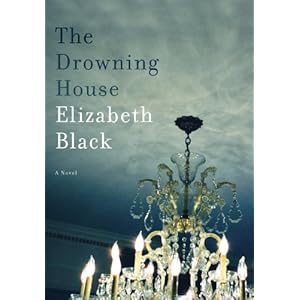
I’m currently reading a wonderful novel, Elizabeth Black’s The Drowning House. It’s a debut novel that will be published by Nan A. Talese/Doubleday in January. I received the book from the publisher a few days ago and, since the moment I opened it, I’ve had a difficult time putting it down.
The novel is set in Galveston, Texas. I’ve never been to Galveston, but the setting nevertheless feels eerily familiar. I’m from Alabama’s Gulf Coast, and Black skillfully evokes the heat, humidity, and the languid desire to do nothing that pervades Gulf Coast life. The Drowning House is a mystery that works on several levels, and it’s also a beautifully realized story about grief. The narrator, a photographer, has returned home to Galveston after the death of her young daughter to do research for an exhibition. She finds herself drawn into the circle of an old family friend who is also the town’s wealthiest citizen, and is compelled to ask questions that no one in this closed-off community wants to answer.
Elizabeth Black’s post about her own road to publication, which began at the Writers League of Texas Agents Conference, serves as a great primer on how to meet an agent, and why it’s so important to have one. It’s also a very realistic account of the long slog to publication.
We spent almost two years making revisions to The Drowning House, beginning with some larger changes (like eliminating a plot line to allow other key elements to emerge) and proceeding through two line edits. I’m a single mother with a full-time job, and my older daughter was married last fall, so it was a busy time for me.
A good agent doesn’t just act as a middleman between writer and publisher. A good agent helps you make the book the best it can be before putting it in the right hands. A good agent knows what editor might be on the lookout for a book like yours, and her relationships with publishers are invaluable. A good agent will help you get through the tough times when it seems as though the book might never be published. Without my agent, whom I trust implicitly and who has been a tremendously savvy advocate for my work, I’d be utterly adrift in the publishing world.
 Of course, anyone can forgo the agent and publishing house these days and upload a book to Smashwords, Kindle, Nook, or iTunes. But the reality is that a self-published book simply doesn’t have the same level of editorial vetting as a book that goes the traditional route; nor does it have the all-important marketing that, in many cases, can make a book.
 One crucial element of marketing is the distribution of the ARC (advanced reading copies) not only to reviewers and booksellers, but also to other authors, with a request that they read the book and, if they like it, offer a cover quote. Self-published books rarely, if ever, get reviewed in The New York Times or the San Francisco Chronicle, and very few will ever have the advantage of the booksellers’ interest pre-publication. The Drowning House came to me unsolicited, and I’ve never met the author; but because it came from an imprint I respect, and because it came in paperback (not as lines of text on an e-reader), I opened it and began reading. And I kept reading, and I imagine I’ll finish it tonight. It’s a terrific novel, and I suspect there are a number of other potential supporters feeling the same way I’m feeling about this book right now. The fact that the book will likely hit the stands with rave reviews, and that it will be available in brick-and-mortar bookstores, where huge numbers of readers still go to browse and buy the booksellers’ recommended reads, will give it a far better chance of success than most self-published novels ever have.
So, if you’re really serious about your novel, before you slap it up on Amazon and leave it to swim with the sharks, consider what you might be missing. Consider the readers you might lose by not giving your book a chance it deserves.

-
First Novel Contest
First Novel Contest: We are now accepting submissions of novels for our first novel contest. To be eligible, you must never have published a novel with a national press.
Prize: $500 advance against royalties, publication in ebook and POD, and a standard publishing contract.
Entry fee: $10.
Deadline: September 30, 2012. Submit here.
-
How to Start Writing a Novella
Novellas are a time-honored literary form, and they’re making a comeback. Longer than a story, shorter than a novel, the novella allows for a complete narrative arc but is also a perfect form for narrative experimentation. If you want to write a novella but aren’t sure how to begin, open a notebook and quickly sketch out these ten elements of your story:
1. When and where does your novella take place?
2. Who is the most important character in your story?
3. What are a few scenes you’d like to include?
4. What problem does your protagonist face?
5. Why should a reader care about this protagonist and this problem? What is your protagonist risking?
6. Who is telling the story? How far removed in time are they from the events that took/are taking place?
7. Write one paragraph. Add a few white spaces. Write another little paragraph. You don’t have to write in order.
8. Give yourself a soft deadline. When will you finish writing 20,000 words? Work toward that deadline every week.
If you liked this quick post, get a deeper dive on writing a novel or novella at The Caffeinated Writer: How to Write a Novel
-
How to Submit a Story for Publication
So you’ve written a story, revised it, and are ready to send it out. Here are a few tips for submitting your stories for publication to literary journals and other magazines.
• Until recently, submitting to literary journals meant buying loads of stamps, weighing your manila envelopes at the post office, and including self-addressed, stamped envelopes. Fortunately, this is no longer the case. Most literary magazines have an online submission form, and most prefer online submissions to hard copies.
• If the literary magazine asks for a cover letter with your submission, make it brief. Your letter should mention where you’ve published in the past, and should include a very short bio. Your cover letter should NOT explain or praise the story. That is very bad form, and will likely result in your story being deleted before it is even read.
• Do submit to more than one place at once. Five is a good number to start with.
• Never send a publication a second story before the editors have responded to the first.
• Never call to check on the progress of your submission.
• Shorter stories (8-15 pages) are more likely to be accepted than very long stories.
• Always double-space your story, use one-inch margins, and indent every paragraph!
Here are some of the best online resources for anyone looking to submit fiction:
Newpages.com—litmags, publishers, and book reviewswww.webdelsol.com–Contains many useful links to literary magazines and resources for writers.
Mid-American Review–Contains useful links under “Writer’s Tools” link.
www.zuzu.com–Same concept as Webdelsol, but with even more links to literary magazines and e-zines
More great resources to check out before you submit:
• Novel and Short Story Writer’s Market (Writer’s Digest Books)–This is probably the best; it covers many of the better publications with detailed descriptions of tastes, editorial guidelines, payment, and rights.• Pushcart Prize Anthology (Pushcart Press)–Annual anthology of the best of literary magazines and presses selected by editors themselves; you’ll not only find fiction in here, but a list addresses of prize-winning magazines and presses.
For current publishing opportunities, check out the Writer’s Chronicle, published by the Associated Writing Programs (www.awpwriter.org) and Poets and Writers Magazine (my personal favorite), which has upcoming deadlines for literary contests, as well as calls for submissions. Go to www.pw.org
Some of my favorite literary magazines:
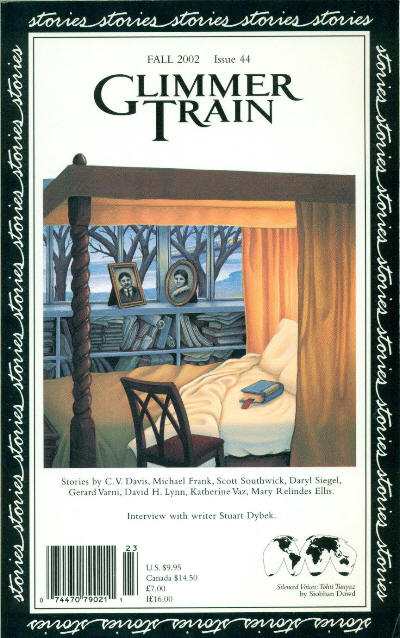
Glimmer Train Fourteen Hills The Sun
Other Voices Alaska Quarterly Review Mid-American Review
Ploughshares Granta Boulevard
Story Quarterly Quick Fiction Online:
CutBank South Carolina Review Nerve (sexy stuff only)
Missouri Review Bellevue Literary Review Blackbird
Mississippi Review Gulf Coast Identity Theory
North Dakota Quarterly Sycamore Review Exquisite CorpseAny publication is a big boon and a definite validation of your talent, but here are the magazines that can really jump-start a career: The Atlantic Monthly, Harper’s, The New Yorker, Zoetrope, McSweeney’s, The Paris Review. It never hurts to send to these guys as long as you’re sending out a bulk submission. All of them except McSweeney’s & The Paris Review publish mainly agented material, but occasionally a non-agented submissions will make it into the magazine..
[box]Sometimes the hardest part about being a writer is getting the first words on the page. Where Stories Begin: A Workbook for Writers, will banish writer’s block, spark your imagination, and provide endless opportunities to make stories out of thin air.[/box]
[box]Online Flash Fiction Class: 5 Very Short Stories in 5 Weeks
Begins April 14. Duration: 5 weeks. Tuition: $210.
[button link=”http://www.bayareabookdoctor.com/online-creative-writing-course/”]Learn more[/button] [/box]


