Your cart is currently empty!
Category: Uncategorized
-
Announcing the winners of the creative nonfiction contest
We’re delighted to announce the winners of our first creative nonfiction contest.
First place:
Anne-Marie Yerks for “The Electric Discharge Corona.” Yerks will receive $150 and publication.Second place:
Brett Garcia Rose for “The Spoken World.” Rose will receive $50 and publication.Third place:
Sarah Elizabeth Schantz for “A List That Never Ends.” Schantz will receive $25 and publication.Thanks very much to everyone who entered the contest. We were honored to read your work.
Did you miss the deadline? Our second creative nonfiction contest is now in progress. Go here to submit your short memoir or personal essay.
-
Little Big Death
a short story by Mark Pritchard
When the doctors ask me what I remember, I close my eyes and repeat my story: Tired of life in the ruins of Western society, of living in a cramped dormitory with hundreds of other sad, middle-aged men, I signed up for Superdeath. I went expecting that, like nearly everyone else who takes the drug Shiny, I would experience ecstasy, super strength, complete transcendence and freedom from guilt and the past, and death, all within 48 hours.
That is the purpose of attending Superdeath: a final, superhuman blowout of dancing and sex, ending in blissful slumber from which the attendees never wake up. Because Shiny kills 99.999 percent of those who take it.
It wasn’t hard to decide to join them. After the pandemic of the early 21st century, the economic collapse that accompanied it, and the ecological catastrophes that followed that, I had been unemployed for years. Me and hundreds of millions of others. Great legions of us were in prison, legions more were dead. Most of the remainder were, like me, housed in cheap dormitories that had been constructed in dead malls and superstores. There they fed us cheap, disgusting food, permitted us one hour of exercise per week, and prevented us from reading, writing or consuming any media other than a single television channel. Blaring in every room, wall-mounted televisions showed a supposedly calming montage of nature scenes taped during the late 20th century, set to music from the 19th. The montage lasted exactly 18 hours without repeating. When it flicked off, you went to bed. When it flicked on, you got up and ate. That was life.
If that seems bad, consider: someone has to cook that food. Someone has to clean the toilets and do the laundry. These tasks are not done by residents, as we were called. They are done by workers, government workers. These workers have their own restrictions; they are forbidden to interact with the residents. In any case, they don’t–or pretend they don’t–understand English.
Getting one of those jobs was not possible, because the workers were foreign. Going to work for anyone else was not possible, because there were no other jobs. Wandering the streets had become less and less possible, as police tended to pick people up and take them to the dormitories, or to jail. If they didn’t detain you, you were sure to be attacked by roving gangs before you made it out of the city. And if you made it out of the city, there was nowhere to go. It was said there were groups in the mountains, living outside the system and surviving. But I knew this was not true, because in my final job I had worked for a mining concern, and I learned something that was hidden from everyone: Thanks to the mining concern, the mountains no longer existed.
So, despair. And among the many ways of killing yourself–suicide by wall, by self-strangulation, by cop–the alternative of Superdeath is immensely preferable. Not only is it pleasurable, and certain. It’s free. The authorities support it, even though it costs money to stage Superdeath once a week. Because it’s cheaper to kill people by the thousands and incinerate their bodies than it is to feed and house them. There’s nothing sinister about it, it’s not like they turn us into pet food or something. It’s just economics.
After going through the month-long intake process, during which I signed countless forms acknowledging I wanted to kill myself, and being shriven from my few possessions and my legal existence, I received a message giving a time and place: The Astrodome, Thursday, April 5, at 4:00 pm. A bus took me there, from the WalMart I lived in. No one said goodbye.
end of excerpt
Read this story in its entirety, along with other exclusive fiction by emerging and established writers, when you subscribe to Fiction Attic Press.
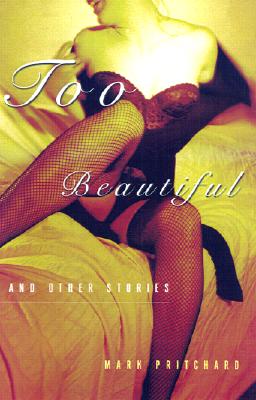 Mark Pritchard is the author of two novels, Make Nice and How They Scored, and two books of short stories, How I Adore You and Too Beautiful and Other Stories, both from San Francisco’s Cleis Press. His story “Instrument” recently appeared in New Lit Salon Press’s “Southern Gothic” anthology, and his story “Woebegone” in Crony. He is the former co-editor and publisher of Frighten the Horses, a sex-and-politics zine that came out from 1990 to 1994, and has lived in San Francisco since 1979.
 -
Winners & Finalists – First Novel Contest
Winner
Congratulations to Karen Guzman, whose novel Homing Instincts was selected as the winner of the Fiction Attic Press First Novel Contest.
Karen will receive $500 and publication.
First runner up
Congratulations to Rena Rossner, whose novel Framing the Sea was the first runner up.
Finally, congratulations to our finalists:
Giano Cromley, for The Last Good Halloween
Avital Gad-Cykman, for Desert Symphony
Jennifer Pieroni, for Danceland -
How to Start Writing a Novella
Novellas are a time-honored literary form, and they’re making a comeback. Longer than a story, shorter than a novel, the novella allows for a complete narrative arc but is also a perfect form for narrative experimentation. If you want to write a novella but aren’t sure how to begin, open a notebook and quickly sketch out these ten elements of your story:
1. When and where does your novella take place?
2. Who is the most important character in your story?
3. What are a few scenes you’d like to include?
4. What problem does your protagonist face?
5. Why should a reader care about this protagonist and this problem? What is your protagonist risking?
6. Who is telling the story? How far removed in time are they from the events that took/are taking place?
7. Write one paragraph. Add a few white spaces. Write another little paragraph. You don’t have to write in order.
8. Give yourself a soft deadline. When will you finish writing 20,000 words? Work toward that deadline every week.
If you liked this quick post, get a deeper dive on writing a novel or novella at The Caffeinated Writer: How to Write a Novel