Your cart is currently empty!
Category: Memoir
-
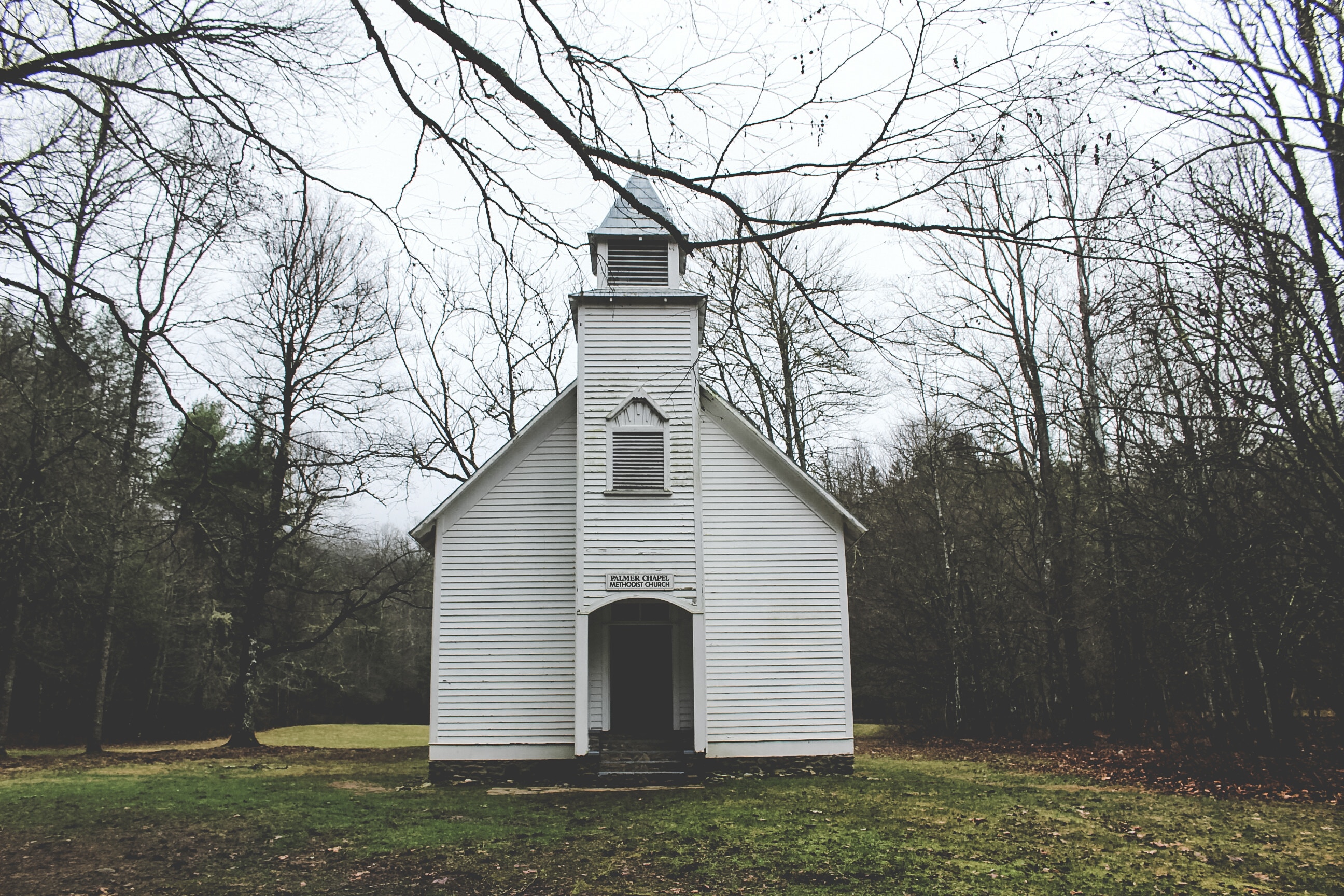
We’re Sixteen and We’re Stupid, But You’re My Salvation
Memoir by Winnie Grey
We’re sixteen and we’re stupid, but we’re in love.
“I’m sorry,” she tells me. “They shouldn’t say things like that to you.”
We’re lying side by side on her zebra print bedding, the rainbow fairy lights she has strung up along her ceiling suspending us in a sort of dazed dream; I’ve always loved these lights. Over time, they’ve come to mean warmth. Safety. A place where I can be myself, be with her, and scream song lyrics until the latest lecture from my father fades from my mind.
“It’s okay,” I say. “I’m used to it. This is just my life, you know? One day it’ll be over; one day I’ll get to leave. And until then, I have you, and my books, and the hopes of a One Direction reunion, so I’ll be just fine.”
She laughs and leans into me. Her face settles into the crook of my neck, so warm, and I can feel her smile against my skin.
She has the prettiest smile I’ve ever seen.
“What time are they picking you up for church in the morning?” she asks.
I groan at the thought of another stifling service on those scratchy pews. Another two hours of my life lost to being told how awful of a person I am, how if I really was good, I’d beg and cry and fall face-down to the stiff green carpet and beg to be made into a soldier.
“I’ll have to get up at seven,” I say. “To shower.”
She breathes in, sweet and steady, hand sliding into mine and squeezing in a reassuring way. A promise. An affirmation that she isn’t going anywhere until the day she helps me move out of my house and we both fly as far from this town as possible.
But that’s still years away and even as I squeeze her hand back, I can’t help but think about the panic attacks and nightmares that have been seizing me with increasing frequency; images of “hellfire” and “damnation” that flicker like flames behind my eyelids, a voice in the back of my head that sounds exactly like my father’s, telling me that I’m going to rot in hell. That I have dark spirits inside of me. That’s what the last lecture had been about: my depression. Or, as they liked to phrase it, the demons inside of me.
It’s difficult to reconcile the darkness that they claim so often to see in me with the light I feel when I’m around her. It doesn’t make any sense; I only feel dark when I’m around them.
My father is a small man, physically, but his ego could move mountains. He was raised in the faith, his father and grandfather each pastors of the church that he now rules over. He has eyes like black beads and close-cropped hair that always looks as though it would be stiff to the touch. He’s quick to anger, and spends every spare dollar on expensive leather briefcases and special editions of Bibles. When I was just a little girl, before I understood what his religion really stood for, and before I realized that I was being raised to hate myself, I was quite certain that my father hung the moon every night; but then I grew up, grew away, and knew that if he did possess that power, he would sooner snatch it from the sky and force it to do his bidding.
He and my mother had met at a special church conference when she was only 15; they were married before she turned 21. A few years later, I came along: the miracle child. A gift from God himself to my parents, who were forced to adopt after discovering they couldn’t conceive children of their own. My childhood was a whirlwind of overwhelming affection, of church services and prayer meetings and Be Quiet’s and Occupy Yourself’s and Don’t Ask Question’s. I learned how to entertain myself, and how to hide my true emotions, just to keep them off my back. By the time I realized the depression and anxiety these behaviors would lead to, it was too late. So I began to live solely for the future–for my future.
I was 16 when I found myself falling for my best friend, a dark-skinned girl who Sharpied rainbows on her Converse high tops and had the prettiest blue-tipped hair, the warmest smile I’d ever seen.
She draws me out of my thought spiral now by beginning to sing softly. It’s a Spanish song, so I don’t understand the words, but her voice is light as air and smooth as honey. It calms me in a way the church hymns never have.
Every moment of my life is spent in this internal chaos: hacking away at the girl I was raised to be with an axe and building the girl I know I am in her place. It’s climbing uphill, it’s swimming upstream, and some days I am pushed back more than I can push forward. But no matter how dark the skies get, I can’t bring myself to give up. To let go.
“You okay?” she asks.
I miss her singing the moment she stops, but I nod. “Sorry. Just still thinking about last night, I guess.” Another lecture. Another night of Angry Father and Disappointed Mother, of tears and shaking heads and Where did we go wrong?s.
All because I wasn’t the happy hand-raising daughter they’d wanted. I know they’d deny it if I ever said it to their faces, but they don’t have to say anything anyway; I can read the disappointment in their eyes. They hate that I’m quiet, hate that I’m so sad, hate that I have no desire to sing on the praise team or compete in Bible quizzing. And I can’t fix any of that, because I can’t change who I am, and I’m unwilling to pretend any more than is absolutely necessary for my survival.
“They want to break me,” I whisper. “Change me. Force me to be something I’m not. I know who I am, but I’m afraid. I’ve seen the way they get in peoples’ heads. What if that happens to me?”
“It’ll be fine,” she reassures, and pulls me somehow even closer to her. She smells like vanilla and crisp spring air and the earth after the rain is over and the clouds have begun to part. I love her so much in this moment, I can barely breathe.
“You’ll be okay.” A parting of pretty pink lips, a rush of warm breath across my neck. “They can’t take you from me. I won’t let them.”
I nod, my cheek pushing against hers, and she starts to sing to me again. The sun has began to sink below the horizon outside, and golden light slants through the blinds on the window and bathes us both in a warm glow. She raises a hand and brushes a stray piece of long hair behind my ear. Her eyes are a kinder version of the moon.
You’re my salvation, I think. Not the one they’ve forced me into since I was a child, wet words that ached with fear. See, love, you’re salvation like rainfall. You’re salvation like looking up at the sky and connecting a new constellation for the first time.
They think they’re saving me, but you already did.
Winnie Grey is an undergraduate student in the B.A. English program at Indiana State University. Her work has been published in the poetry anthology Life (as it) Happens and is forthcoming in Allusions. She lives in Terre Haute, Indiana with family.Photo by chuttersnap on Unsplash
Photo by Olga DeLawrence on Unsplash
-
Google My Address
Essay by Amy McCullough
There are two things I won’t do in our (relatively) new house. I won’t bring in the previous tenants’ mail, and I won’t lie in bed a certain way.
There’s another thing: I won’t write about it from within it—or anywhere near it, for that matter. I’m in the Las Vegas airport right now; it’s just after midnight, Austin time (10 p.m. here). I’m on a layover en route to Chicago, where I’ll be helping my dad with his homecoming from rehab after a stroke (an unexpected, sobering implication of his elderliness for both him and me). It’s an alienating thing to be on an airplane with young couples and groups of friends and a mariachi band, all excited to arrive in Sin City, when I’m just a tired 38-year-old on a decidedly less celebratory errand.
I’m writing about the house now because I am far from it. I do not consider myself a superstitious person, but I have been reluctant to “go there” from there, as it were. My main concern is nightmares. I haven’t had any yet, and we’ve lived there going on a year (11 months almost to the date, actually).
When I first heard what happened there, on Cordell Lane, I thought it was a deal-breaker. I was in the midst of writing Jimmie a message that said, “I don’t think I can live there; those are just too bad of vibes” (or something to that effect), when a new message appeared in my inbox. It was Jimmie, reaching me before I sent my own email, saying he was down. Well, he wasn’t “down” as in cool with what had happened. He may have found it interesting or fascinating, if you had to choose a couple slightly positive adjectives. He might have seen it as a novelty that meant we could be right for the house—just the kind of couple who could “take it,” so to speak (I had a similar thought). But he was not discouraged. He was still “down” with submitting our rental applications. His one caveat was that the killer had to be dead.
“I mean, as long as the guy who did it isn’t still out there,” he explained, it doesn’t really bother me.
Okay. I got that. But did it bother me? I thought the vibes were so bad I was ready to let it go, to surrender that bright, sunny living room and open kitchen area with its bay window and white brick chimney, its exposed rafters and high, angled ceiling. I was about to stop imagining myself living in a home with closets and floors that didn’t give you splinters if you walked barefoot. I was “cool,” actually, with looking around a bit more. Mostly because I was afraid I’d have brutal nightmares.
You have likely surmised by now that a murder took place at our house. The previous tenants were an estranged married couple; I believe they were separated but still living together…I think he even had a girlfriend, and that topic caused a pot-boiler fight that alerted the neighbors to some potential violence before the final blows. I would check the details, but I prefer not to Google our address. I don’t want to see the headline, “Two bodies found in East Austin home,” because I don’t want to think about those bodies. I don’t want to start imagining where they were in the house, what room it happened in. I don’t want to think about their three dogs and if they tracked bloody paw prints all around the house afterward, before the police arrived. I can’t remember if he did it with a knife and a gun or just a gun; I recall reading of both weapons, but I might be confused. As I said, I don’t look it up. I don’t want to be reminded of the details. I don’t want to make it too real.

But it is real. Two people died in the house we’ve been living in for (almost) a year. A man and a woman not far from our ages, I don’t think, probably in their thirties (Jimmie just turned forty, but close enough). Shay, the ambitious young real estate agent that was helping the out-of-the-country owner rent her home, told us she had to disclose that someone had died in the house. You know, “just FYI.”
“Someone,” as indicated by the headline I prefer to avoid, was actually some two. The man apparently killed his wife and then killed himself. Murder-suicide. A compound noun that surely no one wants associated with themselves or their dwelling.
When Shay first mentioned the death in the house, I assumed it was probably an elderly person, perhaps a parent that was being cared for in their home by a hospice nurse or family member. Then I Googled our address. We moved in in September. The incident happened that June. The house had been “completely remodeled” since, Shay assured us. We were the very next tenants.
Jimmie says he loves making up stories, thinking about stories, and he does. For some stupid reason, I get upset or competitive when he says things like that. Like, “Oh, do you? Are you the creative one?” We are both creative, and we very often (almost always) work as a creative team (we make independent movies together as a hobby). So it’s pretty stupid to get defensive about such statements, but I sometimes do. I occasionally get a little pick-a-fighty, especially after a drink or two. That may be getting worse as I get older.
Jimmie and I don’t fight much, but we’ve actually had a few doozies in this new house. I honestly don’t think it’s the “bad vibes.” I think it’s because we wrapped up a two-year project there (a full-length movie titled Gary and the Underworld), and tensions and emotions always run high when we’re finalizing a movie. We want it to be perfect, and there are usually small discrepancies between how each of us thinks perfection will be attained, which leads to some disagreements. It makes sense, and we’re both used to and sort of expect the process to some extent. We feel bad for overreacting to criticisms or ideas we’re not into, but we work on it until we’re both happy with the end result.
But a few of those Gary-related arguments got me thinking, as we sat on our back patio, drinking rye whiskey and beer and getting more and more worked up, as we misunderstood each other and overreacted with each back-and-forth, about how things could escalate to such a horrible end. It has crossed my mind: What if this house is cursed? What if a bad enough fight leads us to dark, evil places we never would have expected?
I don’t worry about that often or even realistically. Jimmie and love each other very much. We truly want nothing more than to live together as long as possible. The envisioned possibility of a homicidal scenario is not a rational fear, but it’s one of those things that crosses your mind if you live in a murder house.
It’s also the kind of running-away-with-things imaginations Jimmie and I have. We can’t help but imagine horror movie plotlines, even if it’s wrong to have those thoughts about a real thing. Clearly, we realize this event did not happen to be our creative muse, but it happened, and we became a part of that story by being the next people to live there, and it is a muse.
It also, in a strange way, is an inspiration to be good to one another, to be the most confidence-inspiring couple. Can you imagine, for instance, what the owner must have been thinking when reviewing applications? How solid of a couple is this? Lucky for her, pretty solid. At the time of applying, we had 8 consecutive years of rental history in Austin and 11 years together. We’d even lived (enjoyably) on a 27-foot sailboat for a year; that’s compatibility.
But the storylines arise. I was doing some yard work not long after we moved in, and I found a bone in what seemed like the remains of a raised garden bed. There were no wooden borders anymore, but there were mounded areas of fresher-seeming soil, where the grass grew more lushly, as if someone had amended it with compost and fertilizer…or, you know, like a fucking grave.
So, of course, it crossed my mind that, if I continued digging and poking around, maybe I’d find more bones, human bones—and lots of them. Maybe the wife wasn’t the husband’s first victim? Maybe she was one of many.
It was probably from a past barbecue…or maybe some incident involving wildlife. Our dog, Dexter, has already killed two possums in our backyard—a skill we did not realize he had until about a month after we moved in, when he made my jaw drop in all earnestness as I watched him pluck a white-faced victim off the top of our rather high wooden fence and drag it down into an area of Tradescantia plants we call the “Secret Garden” (it’s sort of hidden around a corner). In the Secret Garden, Dexter took Springsteen’s advice and did not think twice; he promptly broke his victim’s neck—Jimmie heard the crack. Jimmie disposed of the body and I cleaned up our bloody hound dog, who did not have a single scratch on him. I do realize the faux pas when I let him out and say, “Try not to murder anything tonight” or when I refer to the yard as a crime scene (but it never occurs to me until after it comes out).
Jimmie actually just confessed to me last night that he has had a dream about the house—not a terrifying, gore-filled re-creation of the crime, but a story about a song and a cassette tape (which, incidentally, also involves digging). It’s interesting to me that it came up last night, because I was already planning on writing about this during my Las Vegas layover, while I had “the chance”; it’s also notable because we never talk about it. We agreed at some point not to, to avoid giving the event “energy” (this is an idea we got from Yoko Ono; she says something in an old interview about giving more energy to peace than to war).
Jimmie is a musician, even if he wouldn’t call himself that. He has played trumpet his entire life and has added bass guitar, keyboards, and tenor saxophone over the years. He’s added sax with especial vigor. The instrument he plays belonged to my paternal (favorite/only known) grandpa; Jimmie took it up to give it life outside of a dusty storage space on the second floor of my hermitic uncle’s house (and because he wanted to learn). And playing it has become a new passion for him. I (and Jimmie) believe this has something to do with the saxophone liberating him from the anxiety intrinsically linked to his trumpet playing (which developed from years of self-imposed pressure as a young man).
All that considered, I wasn’t surprised that Jimmie’s story related to “the horror” is also about a song. In his dream, he is working on a song and has something he really likes, a start, but he doesn’t know where to go with it. It feels like it has an ending, a direction, but he can’t find it. He has songwriter’s block. Then, one night, he is drawn via a strange impulse, an instinctual attraction, toward the backyard. He begins to dig and eventually finds a tape—and it has his song on it. His whole, completed song.
Jimmie interpreted this to mean that the guy, the murderer, had the same experience, wrote the same beginning of the same song in our house. That eventually he filled it out, realized where it needed to go, and recorded it. Then, presumably, he lost his mind and killed his wife and himself. I’m not sure where in that sequence he buried the tape, but you know how dreams are spotty and weird. This is all speculative, but the gist is that the song goes with the house, and the tenant becomes victim to the crazy-making songwriting experience. Jimmie’s character in this story is probably supposed to add to the composition and bury the tape again, then kill his whole family or what have you.
Initially, I wondered if a neighbor would say something, mosey over nonchalantly and ask, “You know what happened in this house, right?” But no one has been that classless, luckily. But there are kids around, and you know kids will say anything. Mariah, the grade-school-age daughter of our across-the-street neighbor, basically interrogated us the day we arrived with our moving truck; her little brother rolled his eyes as if to say, “She always does this.” She asked us what we were doing, formulated specific questions about items we were carrying out of the truck, asked if we had jobs and what and where they were. She is a natural journalist. So, she might have said something. Hopefully she doesn’t know.
You never know how people are going to take it, so you don’t tell anyone—or that’s what you agree to do before having your first houseguests. Along with agreeing that we would generally let the topic, um, die, Jimmie and I also agreed we probably shouldn’t tell anyone, especially anyone atthe house. (For instance, Jimmie told Richard, a coworker who he very much likes and respects but who is quite unlikely to come over, about the murder-suicide and about his dream; that seems more acceptable because Richard won’t ever have to think about that while in the space where it happened.)
The November after we moved, two of our closest friends came to visit from Portland. They are siblings (brother and sister), and the sister was bringing her newish boyfriend. We had met him briefly once before in Portland and liked him, but we did not know him well. Ashley, the sister, and I are best friends, and our birthdays are three days apart. So we make a point of getting together every year for “Scorpio Fest.” This was Scorp Fest 2017, and it would be everyone involved’s first time at our new house.
We now had two extra bedrooms, so that was exciting. Ashley and Shane could have the room we intended to convert into a guest room. It is normally my “boudoir,” a spare room that I’ve converted into an indulgent, early-‘90s-themed mega-closet and dressing room in a reactionary move against our old house, which we loved but which had, well, “nominal” closet space is putting it nicely.
Chris, the brother, could have the “Devil’s Office,” another extra bedroom that is basically a juvenile space for playing video games while seated in vinyl bean bags. (We don’t smoke pot often, but let’s just say that whenever we have some nearly all of it gets smoked in there.) It’s also, weirdly, a slightly smaller-scale replica of our old living room. We went a little bonkers and bought all new living room furniture for our new house—which, if I haven’t made clear, is a pretty beautiful, spacious, and stylish place in which to live (less the upsetting history). So we put our worn-out previous couch, as well as a lamp and a large piece of art from our old living room, in the Devil’s Office. It has this name because, for a few months after we moved in, we had every intention of turning that extra space into a set for a scene in Gary and the Underworld that, not surprisingly, takes place in Beelzebub’s place of business. (We ended up shooting the scene elsewhere, but the name stuck.)
We decided before this Oregonian threesome arrived that we would not, under any circumstances, bring up the incident at the house. We felt fairly sure that the Bonds (the siblings) wouldn’t care, meaning we didn’t think they’d be bothered, personally. We do not believe in ghosts—an important factor in our ability to live where we do—and we didn’t think they did, either. But we didn’t know about Shane.
As their visit went on, Jimmie and I both became more and more tempted to bring it up. We felt this temptation separately, we came to find out later; we were both effectively keeping our mouths shut about it, even to each other. The Bonds, as I have said, are some of our dearest friends in the world, and if we were going to share with anyone, it would be them. Also, that is just “one spicy meatball,” as an ex of mine would have put it. With the right (read: best friends who don’t believe in ghosts) company, it was hard not to want to spill the beans about the spilled blood.
I had resolved that we should tell them the day they were leaving. I thought, just in case they did find it upsetting, it would be courteous not to make them sleep in the house after planting that seed, a gruesome acorn from which to sprout (as I myself was certainly terrified) a horrible nightmare. I was going to tell Jimmie that I thought this was a good course of action the night before they left (in case he was feeling tempted, as well).
But he beat me to it.
In a moment of attempted male bonding during which Ashley and I were picking up a pizza, he told Chris and Shane. Chris was enthralled, in the ways a decent person could be. Shane Googled it…because the Internet makes things true. Having seen that Jimmie (who, admittedly, he did not know well) was not shitting him, and—unfortunately—being someone who does believe in ghosts, he got a bit too loaded and then freaked the fuck out.
I won’t go into the gory (social, not corporeal) details, as I would like to remain friends with these people. But a knock-down, drag-out fight between Shane and Ashley was the end result, fueled by simmering tension between boyfriend and brother (and not helped by some previous dickish behavior of Jimmie’s and a bit of OCD new-house uptightness on my part). Take booze and ghosts, add any amount of fodder for conflict—and drama is going to ensue.
Curbside crying took place, as did screaming in the house and on our front lawn. The front door was definitely slammed. During and after, I couldn’t help but wonder what the neighbors must have been thinking: hearing escalated, shriek-pitched fighting from the house where the worst kind of domestic dispute had played out just six months prior.
Speaking of the front door, if you Google our address (which is, apparently, the thing to do), you’ll see older photos of it with a cherry red door. It is now cobalt blue. I can only imagine that’s because the owner didn’t want to leave the door of the “murder house” red when going ahead with an overhaul remodeling effort.
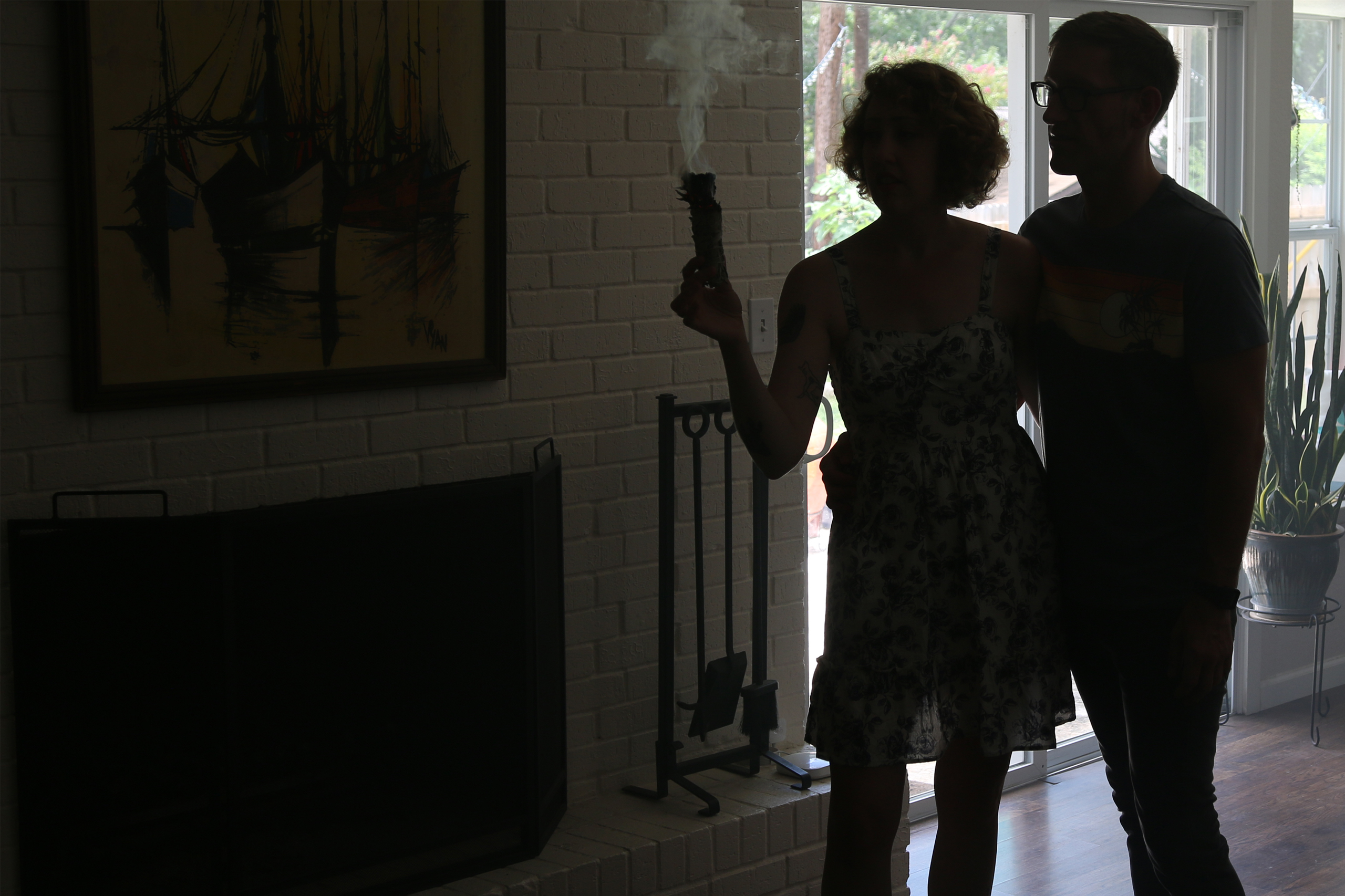
The first thing Jimmie and I did when we entered through that door as actual tenants was light a sage “smudge stick” and walk through the house, cleansing each room of “bad vibes” while listening to “At Dawn” by My Morning Jacket (you’re supposed to repeat something positive or important to you or listen to some sweet jams; we chose the latter). Neither of us necessarily subscribe to the idea that a sage smudge stick actually does anything, but Jimmie is from Oregon and I lived there for a while (in Eugene, even), so we are both part hippie (native and honorary); as such, we have soft spots for such metaphysical leanings, and the ritualistic/ceremonial aspect of it appealed to both of us.
When we were debating about living there after discovering the details about “the “death in the house,” as Shay put it, I arrived at the smudge stick idea as a way I could make myself feel okay with living there. Often, for me, just deciding something will work for me is enough to make it true. So we did that, and the sage is still in our fireplace, a totem to our good vibes. (Truth be told, we broke it out again after Scorp Fest 2017 just for good measure.)
The other superstitions I have mentioned. I won’t bring mail with names of the victim or the murderer into the house. I suppose I don’t want their presence there, in any form or suggestion. We don’t get things for them very often, but pieces do come. And I take them directly from the mailbox to the recycling bin. I have never mentioned this to Jimmie. The one or two times I’ve seen a piece of mail for one of them in the house or in the indoor recycling bin (because he beat me to the mail), I promptly take it outside without a word.
And I won’t lie in bed, in our bedroom, on my back with my arms crossed over my body. It reminds me too much of what I imagine is done when you die, how you’re put into a body bag. I remember (or was it my imagination?) seeing an image in one of the news stories about our house of a body bag being carried out. I suspect my psyche might have made that up afterward…but I think I saw it. I’m not going to check. Regardless, I don’t feel at all comfortable mimicking what I picture as that position: the position of death.
Like I said, I don’t know what room it happened in, and I don’t (ever) want to. When it came up briefly with Chris—after he confessed to me that Jimmie had served that spicy meatball (and that he was still okay with being our houseguest)—he flippantly said that it probably happened in the Devil’s Office. I have no idea why he’d say that other than to be nice: He might have realized it would help me sleep at night, forestall my nightmares—which, clearly, has been my fear all along. Good friends can read your mind like that.
I’m about to get on the plane to Chicago, where I will (hopefully) sleep. This might be the nightmare’s best chance to get me, actually—I just gave it quite a bit of energy, here at Ruby’s Diner in Concourse D of McCarran International Airport. At least I will be far away from the source as I sleep; flying through the air, uncomfortable in the small, non-reclining seat of a cheap, necessary flight; but unattached and not lying in an undesirable, corpselike position.
Amy McCullough is author of The Box Wine Sailors: Misadventures of a Broke Young Couple at Sea (2015, Chicago Review Press). She is the former music editor of Willamette Week, Portland, Oregon’s Pulitzer Prize-winning alt-weekly newspaper; has written for Eugene Weekly, SAIL Magazine, Loyola Magazine, Finder, and Edible Austin; and is currently editor of Wildflower, the magazine of the Lady Bird Johnson Wildflower Center. In addition to writing, she makes super-low-budget movies with her partner and former shipmate, Jimmie. They live in Austin, Texas, with a singing hound dog named Dexter. Read more about Amy on her website, theboxwinesailors.com.
Images by Jimmie Buchanan Jr.
Editor’s note:
I was trying to figure out how the writer was going to wrap this essay up. Endings are difficult, and sometimes the wrong ending can derail an otherwise great piece. I love the way she comes back to the airport terminal at the end. I love the immediacy she creates by bringing us there with her as she is about to board a flight, writing this essay that has been nagging at her.
I also love the idea of horror-as-muse, and the guilt that comes along with understanding the impropriety of murder as a muse. As writers we all have our creative springboards, our muses that lead us into the creative work. Because of choices McCullough makes in terms of how much she will reveal, and when, “Google My Address” becomes an essay about creativity more than an essay about murder, serving as a kind of confession of how creative people use other people’s pain as a jumping-off point for art. M.R. June 2019
-

On Being a Crappy Girlfriend
Essay by Kimberly Knutsen
Yesterday, I talked to Steve, an old boyfriend circa 1988. He’d found me on Facebook, and we talked on the phone. I’d always wondered how Steve was doing, and I also felt kind of guilty because I was kind of a jerk in a petty, princess-y way. We argued a lot, and I wasn’t super nice, and things faded away after I moved to Las Vegas. Steve and I hadn’t spoken since 1991.
Steve and I met at the old Willamette Diner, a rollicking 1950s-style restaurant on the banks of the Willamette River, where we worked as a busboy and waitress, respectively, with bosses who seemed pretty nice until they fired both of us.
I was fired for two reasons: one, the big boss Joe said if I was late again, I was fired. Well, I was late again, and I was fired. However, the day I was fired, before the final chop, Joe told me to put this giant bag of ketchup in this dispenser on the wall. I thought it was weird. The bag weighed about fifty pounds, I could barely lift it, and I was supposed to heave it up into this ketchup dispenser on the wall? Bizarre.
At every other restaurant I’d worked at, we had ketchup bottles that you “married” at the end of your shift, during side-work, which was the worst part of any restaurant job. (Marrying meant to pour the ketchup from one bottle into another, so you had fewer, fuller bottles. The more accurate word would be “mate.”) Sometimes the girls at this other restaurant I worked at, which shall remain nameless, added water to the ketchup and shook it so it would be thinner and easier to marry/mate, which I now think must have violated all sorts of health codes.
Anyway, I lifted this enormous plastic bag of ketchup, dropped it into the dispenser—the dishwashers shouting instructions, steam billowing from their sprayers—and suddenly the bottom plug pops off, and I’m standing in a tsunami of what seems like ten tons of ketchup, pouring all over my hands, all over my legs, all over my white uniform and white tennis shoes, a bloodbath of ketchup, and the dishwashers are screaming at me to “turn the spigot, turn the spigot,” and I’m thinking, what fucking spigot are you talking about?
I try to cover the spout with my hands, and it’s like trying to plug a hole in a dike when an entire ocean is flooding over you, and suddenly my legs are burning—ketchup is really acidic, and I’d just shaved them, which I remember thinking made the burning worse, although now I’m not sure why I thought that—and finally, the whole thing stops because all fifty pounds of ketchup is all over the floor and all over me.
The big boss comes out of his office, his tomato face steaming red, and I’m fired. As in: Right now. As in: Walk to your car doused in ketchup like the giant hotdog loser you are and drive home.
So this is where Steve and I met. By the time of the great ketchup massacre, he had already been fired—I don’t remember why.
I liked Steve because he looked like Axl Rose in Guns N’ Roses—he even wore the bandana tied around his head. He had long hair and a great sense of humor. My girlfriend was also dating a guy who looked like Axl in a different way, and we liked to talk about how our guys looked exactly like Axl. Mine looked like a younger Axl, circa “Welcome to the Jungle,” and hers looked like a meaner Axl. This was how shallow we were at age twenty-one. It all was all too exciting.
Steve and I had a lot of fun hanging out at his apartment across from the Willamette River. (Fellow Portlanders, he and his cousin paid $350 a month rent.) We both loved rock music. We’d talk for hours about lyrics, songs, was there any band greater than the almighty Led Zeppelin, who was a true rocker, who was a poseur, and what exactly were the Temples of Syrinx?
We listened to music all the time. We both liked to smoke. Steve, a doggie-downer, liked his 40-ouncers of Schlitz, and I, a puppy-upper, liked my Diet Coke Big Gulps. We were into Kingdom Come for a while, and I still think “What Love Can Be” is a great song.
Steve and I also fought. We argued all the time, and it was all about petty shit. Steve would get insecure and depressed and pout, and I’d call him el bebe grande, and then he’d pretend to be a baby and hold his feet and roll around on his back and say “waah, waah,” and we’d laugh hysterically.
Sometimes his cousin, the beautiful Mimi, who worked as a cocktail waitress at Stuart Anderson’s Cattle Company in Milwaukee, would break out the Aqua Net and rat Steve’s long hair so he looked more Poison than G N’ R. She’d put eyeliner on him, tie one of her sparkly scarves around his head, and make him wear a vest with no shirt. It was all so glam and exciting!
Steve and I fought a lot about pizza. I felt that I paid for everything, and I started to get mad about it, so one time after we ordered pizza, we sat in my parents’ dining room (I still lived at home) and had a stand-off, staring first at each other and then at the Pizza Hut box on the table. I’d paid, Steve hadn’t. I didn’t want to give him any because I felt he was being a mooch. He wanted some because he was starving.

“I have 87 cents,” he said, digging change out of his pocket and dropping it on the table, and I said, “OK, you can have one piece.” Wow. Looking back, I’m so ashamed. I was trying to make a point about how the lady shouldn’t have to pay every single time (I’d gone out with a lot of broke rockers by then) but what a bitch! It’s pizza! What, were you going to eat the entire thing yourself?
One time, though, Steve and I bonded over pizza. We’d ordered it from his apartment, and it was during the time Domino’s had the rule that if it wasn’t there in thirty minutes, it was free. The pizza guy arrived at the thirty-seven minute mark—to his credit, it was New Year’s Eve—and we were so excited. Free pizza!
Steve, who was shy, went out and broke the bad news to the pizza guy. “10:26,” I yelled after him. “It was supposed to be here by 10:26.” Oh my God. What an idiot. First, I made Steve do my dirty work (I was paying), and second, what if the drivers got in trouble if they gave away too many free pizzas? What if they had to pay for them? Decades later, I feel bad.
Another time, Steve and I drove out to the gorge and picked a ton of sage—why, I have no idea. I do know we listened to Jimmy Page’s Outrider on that trip. Driving home that night in my old beater Fiat that went into death throes once you hit 45 mph, I was overcome by the strong smell of sage and had a terrible panic attack. The medicinal smell was overpowering, it was too much, and it scared me (even now, I couldn’t tell you why). Steve laughed as I shouted, “Roll down the windows, roll down the windows,” and he kept saying, incredulously, “A smell can’t hurt you, why are you flipping out?” Good times.
Later that summer, I moved to Las Vegas to dance and go to UNLV. Steve visited. I was working in a nightclub as a cocktail waitress, the Shark Club on the Strip, and bought Steve a pair of M.C. Hammer parachute pants from the club, which he still has.
One afternoon, Steve and I argued, and he disappeared for hours, stomping off into the desert across the street from my apartment. I was so scared. “He’s in the desert,” I cried to my mom on the phone. “What if he’s lost forever?”
Looking back, I see that Steve’s moods, his pouting, were because he battled depression, and I feel bad for the young guy he was. But back then, I hadn’t raised three kids—life hadn’t brought me to my knees—and I had very little patience. It was all about me. Why are you bringing me down? Why can’t we just have fun?
“Calm down,” she said. “He’s in a major city. Someone’s bound to find him.” Which is exactly what she said when my orange cat disappeared for six days.
Steve did return, later that night, and just as the cat had, he hopped the back fence and stood at the sliding door peering in, hands (paws) pressed against the glass, the black desert sky and a spray of stars swirling out behind him.
After I returned from Vegas, before moving to New Mexico for graduate school, Steve and I had one great night. We went to a movie, then hung out at his mom’s house in Vancouver. He showed me a picture he’d drawn. It was me as a mermaid: long blonde hair, better boobs and a smaller waist, a fabulous, iridescent tail.
I told Steve that my kids’ dad was in prison—life without parole—for a murder he committed while out of his mind on drugs. After the obligatory I’m sorry to hear that, Steve blurted, “You always did like losers.” He hesitated. “Like me.”
And yes, I know it sounds ridiculous, but I was thrilled. Steve was (and is) a stunning artist, but more than that, he knewme. Steve knew that if asked what kind of animal I’d like to be, I’d say “a mermaid.” He knew the ridiculous, princess-y, obnoxious mess that I was, and he liked me despite, or maybe even because of it.
During our recent phone call, we talked about our lives. Steve never had kids. In the last few years, his mom, dad and stepdad died. He’s struggled with addiction.
I told Steve that my kids’ dad was in prison—life without parole—for a murder he committed while out of his mind on drugs. After the obligatory I’m sorry to hear that, Steve blurted, “You always did like losers.” He hesitated. “Like me.”
I laughed at his harsh self-assessment, but it made me sad. Steve wasn’t a loser. He was kind and a good friend, and like the rest of us, he’s struggled. I reminded him of that last great night in 1991. After he showed me his artwork, we went out into the foggy, wet night and ended up at the train yards, talking and laughing like old times. Steve pulled me close. His coat smelled like rain. We set a penny on the tracks, then screamed at the top of our lungs as the train rocketed past, our breath billowing in the icy air, just two young dumbasses, the rest of our lives, like the train, hurtling toward us, and we had no clue what was to come.
I like to think that along the way, through the people we meet, we store up kindness to see us through the difficult times. I still have the flattened penny from that night. It sits in my jewelry box along with a lumpy ceramic angel made by my then six-year old son (he’s twenty-one now), and worry beads I’ve had since age five (I’m fifty now).
Like that surprising flood of ketchup so many years ago, life shocks the hell out of us. It rushes past. We rush through it. Goodness, eternal and warm, a sticky penny in our palm, stays put.
Kimberly Knusten is the author of the novel The Lost Journals of Sylvia Plath (Switchgrass Books), named one of the Best Books of 2015 by Chicago Book Review and a finalist for the Midwest Book Award. She is a graduate of the Iowa Writers’ Workshop and teaches English at Concordia University in Portland, Oregon. She has published short stories in Cimarron Review and Hawai’i Review, poetry in Hoot, and a novella, “My Blue World,” in Novella T.
Editor’s note: This essay begins with a moment many of us are familiar with–reconnecting with an old flame online–and comes around in the end to the stunning realization of how far life leads us away from the expectations of our youth. The essay takes such a quiet road to get to that moment, which is relayed unsentimentally, matter-of-factly. The power of the final statement lies in its unadorned directness. M.R.
Image courtesy of Photo by Max Vertsanov via Unsplash
-

Finding Kate – Essay by Barbara de la Cuesta
I first met Kate at a senior center where we both worked, she as an addiction counselor and I teaching English to Haitians. This was Dorchester, Massachusetts, after the busing experiments. When I brought my Haitians up for the government lunch, all the empty seats would be reserved by pocketbooks.
We talked about poetry. I read some of her poems. Then I was fired. We saw each other occasionally. I remember one evening we drove to Bridgewater to visit two poet friends and watch a Bill Moyers special, a “Poetry” Celebration. We drove home under an uncannily bright moon, high on “poitry” as Bill Moyers pronounces it.
Her poems stayed with me. The latest time I wondered where she was, I was sitting on a Puerto Rican beach resort bored with the manicured grounds when I saw, standing quite close, the slimmest blue heron, and thought of her wry poem about giving up the poetry business, actually selling it off at a roadside stand… Then she sees a heron herself and must take up the business again to
…pin his thin blue slate…
I called her in Weymouth shortly after, needing a place to stay while visiting my niece in Boston. She was gone to Arizona her housemates told me.
Gone again. Let me tell you first about her first absence.
I had moved to New Jersey, and she had followed my advice and started sending out her poems and also applied for an an MFA, receiving a full fellowship at Washington University in Missouri. I received a great surprise when she next found me: not that she’d graduated and begun publishing, but that she was now the pastor of a rural church in Missouri, having taken a divinity degree at a Midwestern UCC seminary. “I miss the ocean,” she wrote.
An Irish Catholic from Dorchester. I thought of her rangy swimmer’s body, her spare irish face, the severe set of her mouth that turns her face to beauty when she smiles. I was astounded. I imagined her probably attending one of those small Congregational colleges founded by my father’s clergyman ancestor Ruben Gaylord whose horseback journeys from New Haven to Nebraska had been chronicled by my great aunt, the volume occupying a shelf our parlor that I tried to read as a child. It was by far the most boring on the shelf.
Then she came to visit. At the time I lived by the Toms River at the Jersey shore. She swam in my river, loved my cat Lola. I followed her panting over the dunes in Seaside Park to the surf.
During her visit she gave a reading in Island Heights at the Ocean County Artists Guild and gave a writing workshop for a poets coffee house we had started there A friend, to her amazement wrote her first poem there.
She returned to her flock. We wrote. What did Lola think about her badly behaved dog. I consulted my cat whose stern look told me she thought a good military school…
The sea called, she wrote, The sea was calling. And finally I heard she was packing up.
In the meantime, our coffee house poets had started publishing a yearly anthology and inviting a series of poets to visit and give readings, and for two of them we published full length collections. We called ourselves Carpenter Gothic after the gingerbread houses of Island Heights. Kate was next.
By the time Roof Gone to Sky came out, she was back in Weymouth, teaching poetry at a small college south of Boston.
She visited again, meeting Donna Sharp, our local poet of the pinelands, whose book was our next publication, offering Donna such genuine praise. Another workshop. We loved her so much.
Then three of us traveled to the Quincy, Massachusetts Library, where she had her book launch. It was packed. They loved her here too.
Then we wrote occasionally. We weren’t either of us great correspondents. And the next time I needed a bed in Boston to visit my niece’s tiny apartment, she was gone. Gone to Arizona, said her housemates.
Two years passed. It was a bad time for me. My son died. It took me a year to begin to grieve his lonely death. I should have been with him. I might have saved him. I felt a deep guilt. A mental health counselor could only touch surfaces. I shouldn’t feel guilt. She found me completely forgivable. My churchgoing didn’t help, even though I thought I needed to stand before God and declare my failure. His death was so ugly I couldn’t talk to friends. His body wasn’t found for a month. His closed in dogs were found alive. Did they eat his body?
I finally I found myself looking online for a spiritual director.
I needed someone who had explored like me the depths of addiction, the close to streets jobs like that one in Dorchester, where people were brought in with stab wounds. Someone, like me, who had been fired.
Kate.
None of the emails or phone numbers worked. People Search online only traced her as far as Missouri,. To go further looked like it might cost money.
Then came a forwarded postcard with a poem on it, plus a letter. She was looking for me.
We exchanged emails. I learned she had been fired from her teaching position. She had gone to Arizona for a course in chaplaincy. She is now an interim pastor in a small church I rural New Hampshire.
I must see her in the flesh, I tell her. We are neither of us any good at phones or letters.
A train trip, on the Vermonter, what fun, New York to White River Junction, will get me most of the way there. All will be explained.
The old mill towns of Massachusetts, then Vermont. The mountains closing in. Brattleboro, where I’d stayed long ago, the river the rail bed and the highway all crowded between the narrow passage, the old trestle bridges. Fewer of the old mills boarded up in Vermont than in Massachusetts. Some have new businesses. Back and forth across the Connecticut River. Tall pines, birches. New England.
I wonder again what the proportion of Irish Catholicism and New England Puritanism is in Kate.
She picks me up wearing a baseball cap that says “Poop Happens.” A bad haircut, she says. “I’ve come to study you,” I say.
All the long way to the parsonage I keep looking out the window, soaking up the mountains, the pines, the glimpses of the Connecticut River, now on one side, now the other. “Can you learn to love mountains?” I ask.
“Oh yes,” she says,
“And that river.”
Oh it’s lovely, she tells me. She’s swum in it.
But it’s still…?
The ocean.

Photo by Li Yang on Unsplash I also look at the many classic farmhouse buildings, most derelict, many vinyl sided and spoiled by metal awnings, only a few, white painted carefully restored. classical and pristine, built without benefit of architect, amid their ugly ranch house and split level neighbors.
I tell Kate how when I lived in South America I looked out for the unspoiled classic hut of bejarequet, he thick white washed walls constructed of mud, cow dung, and straw, capped by red clay tiles the deep shuttered doors and windows, found so few of them unspoiled.
We pass through a valley of dairy farms. This is the upper tier of the state, Kate tells me, very different from the lower. We pass a large reservoir. I point out that she could swim there. She’s swum all over, she tells me. Her flock invites her to their summer camps. Not the same as the ocean, though.
I ask her about the training she took in Arizona.
After she was fired she tells me she was at loose ends. Then she heard about the program and just loaded up her car and took off. In July, to Arizona. You’re crazy, her housemates, a married couple, told her.
It was a chaplaincy course. We interned in hospitals, in drug programs, in a clinic for eating disorders. She loved it. She learned so much.
But now you’re…
I know. She laughs. Nothing came up in that field. Then this came up. I was on some kind of list.
And does it feel right?
It some ways it does. She struggles to explain. I just go from one thing to another, she says. It’s always been my way.
I’ve never understood how you went to a UCC seminary. We had never talked religion beyond sharing AA salvation stories, of which we must have heard tens of thousands between us.
I kept passing the school on my way to some course I was taking in Missouri after graduate school. One day I decided to inquire.
We pass through a great number of small towns.
Is this it?
Not yet. A few more.
Finally Colebrook.
She shows me her church, the pure white temple at the center of every New England town. Then we arrive at the Paah-son-age. Already I am teasing her about her Boston accent. Sometimes it is a real barrier to understanding, like the time she was telling me how she loves mashes.
Maashes?
Sedge grass, where the herons nest…
Ahh…
The parsonage is a classic farmhouse, formal door with sidelights and a classic pediment. Peaked roof with dentils. Long series of smaller buildings behind. The last, probably where animals were kept, is the big kitchen and a smaller room for the vestry meetings.
I feel the tippy floors under my feet. Most of the old board floors are covered with modern flooring or shaggy rugs. Some are painted. The embossed tin ceiling in the big diningroom is sadly neglected. There are many rooms, some with hardly any furniture. It’s furnished with other peoples’ castoff furniture and ornaments. Only two items speak of Kate: a wall plaque with DOG’S RULES, in the dining room and a large utensil holder in the kitchen with the same:
Be brave
Be loyal
Make your own fun
Make new friends
Learn new tricks
Forgive quickly
Kate’s rules.
You could live quite nicely by these rules.
The dogs that moved with her from Missouri have died. Her housemates in Weymouth have two new dogs she cares for when they travel. Their mauled chew toys are in a basket in the front parlor.
Next day, I get up early, curious. The three rooms she showed me that she had used as studies, little nests in an upper room, a small room with a bookcase downstairs, and the grand dining room to which she recently moved her laptop, are empty. The parson is sleeping late. Across the street is the Bull Moose Café. I go out the classic front door, down some tippy granite steps and over there for coffee. The owner is a basket maker who gives classes in a back room.
I bring back bagels and we have breakfast at the kitchen table. Nothing special to do today. The women’s retreat starts at five this evening. I won’t bother her for a while, I say, she probably has a sermon to prepare.
Not really, she says. She’ll probably do it after the retreat, to include her experience there.
So, we stay in the kitchen and talk poetry. There isn’t much here to reassure a poet between books that she is still a poet, and she tells me she’s only written one poem so far. Inspired by watching the logging trucks rumble by her front parlor with the great felled trunks bearing stenciled numbers on their cut ends, like holocaust victims.
She is between books, as I said. After the now defunct Carpenter Gothic published Roof Gone to Sky, she published Barn Sour with a small press. Won’t you have them publish your next book. Don’t they have an interest in nurturing you?
Far from it, she tells me. They’d rather bother her about sales. This has been my experience too with fiction. After winning a fiction prize and publication with one indie publisher, I find this publisher totally uninterested in any further novels, and now have books at two other indie publishers. Only the big houses wait anxiously for an author’s next book.
I have read Barn Sour in manuscript. What does the title mean, I ask, telling her I assume it means an animal who has been too long in a barn and has started to smell…
No, no, she says. It’s about going home. I wrote it in Missouri when I was starting to want to come back here. My mother was ill, I missed the ocean so badly.
You mean like those horses you hire and they amble away from the stable, slowly, slowly, you feel they hate you on their back; but once you’ve had your ride and turn toward home, they break into this terrifying eager canter back to their barn?
Yes, yes.
I loved one poem, I tell her, about a lonely New Year’s eve celebration, Two women, opening their front door to a bitter black New England night and banging on the “spuds pan”.
The retreat starts at five in the evening. We are to bring a flashlight and an empty jar (for a craft project) Kate hates crafts. She always makes a mess. I remember when she was meeting some of my painting and potting friends in Island Heights, she told me she had “aat envy. With a look of distaste she rummages for some empty bottles.
We drive back through the little towns we came through on the way here, then onto a country road that turns to a well maintained dirt track. The Bed and Breakfast reserved for the retreat is a rustic building hung off a mountainside.
There are thirty or so women inside in the kitchen warming up some savory looking casseroles. Kate and I share a suite with antlers and hunting scenes on the pine walls, a bed and pull out sofa, and kitchen, which is off the main sitting room.
There we gather first for a short program. The theme is walking, and we look up and read aloud passages from the bible about foot journeys, starting with Abraham and his son setting out for Isaac’s sacrifice. There are mostly women from Kate’s church, who have planned the program, as well as some from a Baptist Church. Like me, Kate is a follower, not a leader here, eager to see what evolves. This is their first retreat. A woman named Monda leads; she is soft-spoken and very prepared. An anthem is passed out by the young choir director who is attending, and we practice it for presentation on Sunday. There are a couple of strong altos who provide the harmony.
We eat. Soups, casseroles, good bread. Afterward is a talk by a young woman missionary who had been working in a sanctuary for Rohingya refugees. Another walk on the western balcony, to look at the tops of the pines down the mountain we perch on, a fading view of pines and pure slender birches climbing a far slope. How I’ve missed New England.
Saturday’s study turns from foot journeys to roads: The road to Damascus, the Road to Emmaus. We look up verses and read them aloud. Afterward we try to find a road to walk on that doesn’t lead to a precipice. The road we came on is the only alternative. I’m invited to walk with the mother of the young missionary. She is an attractive woman, presently bald from recent chemo. She tells me how difficult it was for her daughter not to rush home to her after her diagnosis. She’s glad they waited. They are a very close family, and she is blissful having her now.
An afternoon exercise is explained: We are to be paired off, and alternately blindfolded and led by the other. Communication is to be attempted, avoiding words. I blindfold her and lead her to the corner of the long balcony overlooking the mountains, and help her sit in a chair. She is one of the natural altos in the ad hoc choir. That’s all I know about her. Kate must have told her I was a writer, so, ignoring the orders not to talk, she asks me to recite a poem.
“I’m going out to fetch the little calf
that’s standing by the mother,”
I begin, one of the poems I memorized to recite to my children.
“It’s so young, it totters when she licks it
with her tongue…”
We stand up again, to walk to the other end. Did you write that, she asks me.
Robert Frost, I tell her. A New Hampshire poet.
She blindfolds me and leads me back inside somewhere. Continuing to ignore the ban, she goes on to tell me how her husband wanted to retire and farm here at a time she had a high position in social services. She agreed, quit her job, and went back to school for a doctorate, then worked for the state. They live in a town of less than a hundred people. There are only forty people in her church.
I tell her I noticed her alto improvisation. My Grandmother could do that, and I can only do it when I’m by myself. Does her church have a choir? No, too small.
You must come sing with us Sunday, I say.
She’ll try.
We reconvene. Only two pairs managed to communicate non verbally.
The dreaded craft. Kate decorates her jar. What do you think? She asks me.
Well, it’s rather you, I say, rather slatternly. Ha, ha.
I’ve become friends with the bed and breakfast owner, an aspiring artist. She wants to sell the business and just paint. She shows me some of her work hanging on the walls among the antlers. Looking at one of her still lifes I tell her about living for a year in a bed and breakfast run by the granddaughter of John Frederick Peto, and falling in love with his work and the studio the family had preserved. Now it’s a museum, I tell her, she must visit.
Oh, she will, she exclaims. She is so isolated here and longs to travel.
I go on to tell her of his tragic death before he was discovered. How children in Island Heights peddled his work in the streets… There is Kate in the background, we notice, listening.
I love to hear aatists talking, she says.
Then the final talk on the path, the road, becoming The Way.
And a short poem of Kate’s the committee made up into a little card with a ribbon is passed around. I wrote it for a friend in distress, Kate says, and reads it.
Only light can recognize light.
The dark calls beyond the window.
Inside, under the breastbone’s brawn,
So much remains to unfasten.
Oh, but the spirit knows.
She has listened to us, one by one. Sometimes off in corners. Now we hear from her. But she’s not easy.
The parson, profiled in a rocker, is silhouetted in a large window of the study at the end of the upstairs hall. I leave her alone, but she’s soon down in the kitchen grinding coffee.
Does she wear a gown I ask. No, we’re very informal she says. She only wears clericals at conferences. She is wearing a sheer shawl given to her by one of the women in the addiction program, Thalia, a favorite.
The sanctuary is beautiful, bright tall windows, white walls, the embossed tin ceiling freshly painted. Plain and pure as Pilgrims. And full of busy women and bantering men. They tease as the choir rehearses, right up to the moment Kate ascents the pulpit in her lovely shawl.
What happened to your hair? Someone calls out..
Oh, the bad haircut. She covers her face, shakes back the docked ravenwing.
Tell us who did it to you…
As an Episcopalian I am a little shocked.
She asks about concerns, and a man in front begins a complaint about a wheeled suitcase he ordered that arrived with only three…
Can’t let this go on too long. Kate waves her arms around. Enthuses about her vacation, her visitor, the retreat.
After the readings, following the lectionary, The sermon is all about the Road to Emmaeus. No notes. It flows right from her experience of the retreat. No one recognized their companion of the road, she says of the stunned disciples. Until they invited him to supper! That’s what I thought about before I went to bed last night, she told me this morning at breakfast. And tells us now, amply praising Munda—who isn’t here due to a christening in another town—and all the others. You must do it again, and invite others. She encourages them.
Coffee and cake in a big hall afterward. We all meet at one big table and plan a spring cleanup. Walking over to get more coffee, I meet a woman who wasn’t at the retread. I worry about her, she tells me when she learns I am visiting the pastor. I think she’s lonely.
On the way home, I tell her about the woman…Janet…
Oh, Janet Jackson, Kate says. She’s the one who took me swimming. She gets me, yes.
Commenting on the sermon, I say: It’s what I like best about Jesus; he likes to eat with other people.
Oh, wow, yes.
The sun comes out finally and we take a walk over to the new culture center. A substantial building next to a rushing river. I didn’t know interims tried to instigate new things, I tell Kate, thinking about her encouragement of the retreaters. Oh, yes, she says, we were advised about it in our training
Dogs Rules, I think
Dogs rules and deep dives.
Where does this river go, I wonder as we stand by it.
Into the Connecticut.
And where does the Connecticut go? Surely to the sea, I say, but get no rise out of her.
We talk a little about liturgy. It’s her business and I’m determined to peer into her thoughts. She tells me she went to a couple of Episcopal services, and liked the Prayer Book.
It was written by Thomas Cranmer, Probably a Benedictine monk, I tell her. Beautiful words. Words are important to me; maybe too important.
Too cold to get out of bed, next morning, and more rain.
THIS IS THE BRONTE PARSONAGE,
I yell on the stairway.
I just turned the heat up.
The vestry comes to plan the week ahead, at nine this morning. An early comer is out in the drive while the parson is still in her moose printed pajamas. She runs upstairs while I offer tea. They meet for two hours. Then we go to the Bull Moose for lunch. I’d like to order some hot soup, but they stopped making it in May. No one imagined April could be this cold.
One of the waitresses in the café is a young Smith graduate who wants to be a writer. Kate introduces her to me and repeats an invitation to come over after work.
This Kirsten, comes at four thirty. She is Swedish, she tells us, pale and blond with large blue eyes. We sit at the kitchen table and ask her questions. She tells us she majored in anthropology and then went to Mongolia to study customs around death and dying.
And all the time my own grandmother here in New Hampshire is dying. She says.
So she came home. I think of that other young girl, the missionary, who stayed. Kirsten, a native of New Hampshire came back to her family and took a job with a local chamber of Commerce. They fired her.
We laugh.
But she will stay. I try to think of places she might make an impact, but she wants a job that leaves her free to write. Kate approves of this. Why would the Chamber of Commerce fire her, I ask. They give each other knowing looks. I know these people, Kate says.
That evening is the little meeting Kate started for heroin addicts. It is in a little parlor off the sanctuary. Only two women attend. I Identify myself as Barbara, an alcoholic and they gradually warm up ot me. Thalia, though very lame from two auto accidents, is a success story. She is well into a course for becoming a substance abuse counselor. Her two boys are devils, but she has custody now. She lives with them over her family’s Greek restaurant here downtown.
The other woman is also a young mother. Her mother is also a member of the group but is caring for the grandchildren. This young woman is also doing well, but in the midst of a family problem over her cousin who is waiting to get into a detox and meanwhile threatening suicide.
I’m the only one who understands him, she says. He’s coming to stay with me on Friday. I get him, but his family doesn’t.
A small beginning.
Last day. We head north in Kate’s Element. Almost to the Canadian border. I see the lake where Janet Jackson took her to swim. Also, the modern way of tapping maple sugar. Thin blue tubes connect thousands of trees and lead to a central site where it is concentrated. We pull up to the large facility, but it’s closed today.
An upsetting thing: About one in a hundred evergreens seems to be covered in a gray green blight. I hear that, in the NJ pinelands where I live, similarly blighted trees are being culled so the disease doesn’t spread. That doesn’t seem to be happening here.
What would it be like here without trees, I wonder. Thinking of the young waitress, Kirsten. Is she another small beginning?
We don’t talk much, this last day.
I continue looking out for classic farmhouses, notice the mountains flattening out. Do any Muslims flee this way, I wonder, marveling at this turn of events in our country.
And, finally, I try to answer the question I came with. Where is Kate’s loneliness healed? The difficulties and hurts of her youth? From all I have been able to gather it’s at her old AA meeting in Weymouth where she returns once a month. It’s in her contract, strictly observed. The long trip through these endless little towns, back to the Ocean.
Barbara de la Cuesta has been past recipient of fellowships in fiction from the Massachusetts Artists’ Foundation, and the New Jersey Council on the Arts, as well as residencies at the Ragdale Foundation, The Virginia Center, and the Millay Colony. Her poetry collection, Rosamundo, was published in 2017 by Finishing Line Press. Her novel, The Spanish Teacher, was winner of the Gival Press Novel Prize in 2007, and a more recent novel, Rosa, was winner of the Driftless Novella Prize from BrainMill Press, in 2017. This novel has recently won gold in the Human Relations Indie Book Award. Her book of Short Stories, The Place Where Judas Lost his Boots, has just won the Brighthorse Prize. Running Wild Press will be publishing a novella, The Twenty and One Nights in an anthology this year.
Editor’s note: I love the way this essay meanders, and in meandering creates its own logic. I love the way it touches on the most difficult truths, yet comes around to love, faith, and friendship without denying life’s trauma. It is artfully and thoughtfully done. M.R.
Header image courtesy of Levi Clancy via unsplash
-

Rich Houses – memoir by Samantha Krause
I don’t remember how it started. It would be a summer night, or weekend winter morning, or Sunday afternoon anytime of year. The house would be in its usual quiet state, my mother napping upstairs and the dogs asleep on the couch. My dad would find me, reading in my room or in some other idle activity. He would ask, “Feel like going for a drive?” And always, I would.
While there was rarely an explicit destination, we always seemed to end up going to see the rich houses. There weren’t any in our little town of a thousand, but the closer you got to Madison the easier they were to find. We had a few go-to neighborhoods we liked best, with names like Glenwood or Eldenbrook or Goldenberry Acres. Most were suburb developments that had been tacked onto the edges of the city as afterthoughts, made up of houses that looked clean and cold. If we grew tired of these there were always more, further back into the hills, up larger smoother winding roads.
It was a funny thing to do, especially considering we weren’t poor at all—the house we lived in was big and white and sat at the edge of our small town, looking out at fields of corn that lit up in the sun; my parents had steady, well-paying jobs. Yet there was still a clear distinction between my pretty white home and these orderly neighborhoods, these extravagant mansions with driveways so long we had to admire most from afar.
My dad would inch along the pavement so we could both take in the grand, three-story or more estates, some with marble pillars, gargoyles, elaborate fountains, five-car garages. We would point out these details to each other, saying what we liked and didn’t, laughing at the stone baby statues or the strangely coiffed shrubs. “Look at how silly the big things are,” we would seem to say with our gestures; “We would never be so silly as that.”
Though we laughed, I never thought of this activity as malicious or sad. In my head that’s why my mother never came along—not because she would have necessarily been these things, but because it would be more painful than fun for her; she would become unhappy at seeing something without being able to hold it for her own. I tried not to blame her for this longing that sprung up in her fairly often—we couldn’t go swimming without her mentioning her desire for our own pool, or hear of a relative’s vacation without her expressing her kind-hearted envy. These desires bothered me more than they probably should have; after all, it’s not a crime to want. I only thought that she should be happier with all that we had, or at least pretend to be. Things weren’t going to drastically change, and we had plenty, so what was the use in lusting for more?
This is what I asked myself as we ambled through the quiet neighborhoods. My father and I didn’t want these houses–or so I thought—we only wanted to imagine being the people who lived in them, or the kind of people who lived in them, who had maids and landscapers and chandeliers and pools; people who were doctors or dentists or lawyers, who were just like us but somehow very different. In my mind these people wore suits regularly; they bought their cars from lots, shiny and unused. They took family vacations to Europe and filled their homes with the memories of the trips, smiling in Paris and smiling in Florence. When bills came in the mail they didn’t worry, because there was nothing to worry about.
Okay, yes, my father and I wanted these things. The real difference between us and my mother was that we knew we weren’t meant for that sort of life. This was a simple rule of the universe and I had learned it from my father on these drives early on. We could look, even touch, but there was an impassable sort of space between those buildings and us, a kind of life we could pretend to know but would never live inside of ourselves.
Neither of my parents finished college. Through their twenties they lived in shitty apartments and worked shitty jobs, in bars and bakeries and taking graveyard shifts. Eventually they fell into their careers as office people doing office things and met in a copy room. There was marriage, then me, then a tiny house in a tiny town and then my brother. Then, by some stroke of luck, a job for my father that paid him more than he ever thought he could earn with only a high school diploma. This allowed us to have mostly everything that we needed, including a bigger, prettier house on the edge of town.
And yet the rich houses called to us still. The ones that sat on the edge of Lake Mendota were my favorite; they were a little older, built into the hill of the shoreline, some with windows so huge you could see right through the first floor and out to the water. A few of these my father had been in many years ago, when he went to the big city high school and got invited to parties by star athletes and other rich kids. He never went into great detail about them, but I imagined the parties from movies—parents out of town, kegs tapped by football players, stereos blasting in low-lit rooms. And my dad, young and unaware of all his life to come, maybe sitting out by the water with some friends.
I loved to imagine twirling on those hardwood floors all alone, looking out at the blue, the sun coming in. From inside the car I wondered if the people who lived there ever got used to their view, if it ever seemed to them less spectacular than it seemed to me as we rode by and glanced briefly in. That was the only animosity I felt, if any—the worry that the residents couldn’t appreciate what they had as much as I would if it were mine.
The ritual continued all through my high school years. Often we would be on the way back from somewhere else, the grocery store or my grandma’s house, and decide to take the long way home. I knew most all of the neighborhoods by then, and had seen the houses in them many times. Still, we would inch along in the same slow way, inspecting the landscaping and catching glimpses of people in the windows. At one of the more extravagant houses he would sometimes stop the car completely for a moment.
“There’s where you’ll live after your best-selling novel makes millions,” he’d say, half joking, half not. The first time he said this it took me by surprise; out of nowhere he had broken his own rule of allowing himself to really believe in these houses as places for us. Now I see that he had only meant the rule for himself, and that, without knowing it, I had always been exempt. He saw a lifetime of potential waiting for me, a life in which I would belong in all the places he never did. All his stories of washing dishes in fancy hotel kitchens, of serving people with club memberships and endless bar tabs, came back to me at a new angle. From his angle.
But all I could do was laugh: at the stone lions guarding the driveway, at the likelihood of making any real money as a writer, and at the thought that I’d ever live in such a uselessly big house. I didn’t know a lot, yet, about what I wanted out of life. But I couldn’t imagine any scenario in which I ended up that close to where I started, alone or with some sort of family, looking out the window at the cars driving slowly by.
When I was old enough, I would go alone and look at them sometimes. I’d go when I wanted to escape my own life and imagine others for myself, lives in which I wasn’t me, but someone else entirely. I would drive in the same slow way, peering into the windows of lavish possibility. I would pass people walking with their dogs, or children, or alone, and imagine myself in their bodies, with their thoughts and worries and desires instead of mine, which were getting old and tedious.
I can still hear the radio playing in the background, still smell the coffee in my dad’s metal thermos and hear the stories he told me about the impressive adventures of his twenties. Going to see the rich houses was a normal tradition to us; it was treasured time spent together; it was once every month or every few. Then, after we had finally seen enough, he would turn the car around and we would go home.
Samantha Krause graduated in 2017 from Bennington College, where she studied creative writing and French. She is originally from near Madison, Wisconsin.
Image courtesy of Matt Jones via unsplash
-

Above Lyman’s Riffle
Memoir by James Ross Kelly
The old man’s house was falling down ten years after his death; twenty-years after, the whole south face of Lyman Mountain and Ernie’s place by the Rogue River, was divided up and there were expensive homes built at various river viewpoints and no notion of Ernest Lyman, who had lived there for almost a century—was in anyone’s mind. However, one year after he’d passed, on a hot August, dusk evening that was beginning to cool, I waited for the red glow down river and Vaux’s swifts darted through warm air and willows along the river. Swifts in the red day glow off in the west and evening light.
That evening I could see to my right, the hundred year old black walnut and cherry orchard across the road, and up the hill the road that would take you to Ernie’s hard rock mine, and below the mountain as it turned north, Sam’s Creek was trickling in through the willows upstream from, where I was standing.
Once I had seen a specimen nugget come out of Sam’s Creek, which was as big as your thumb and weighed over an ounce. The nugget had come from a small inner tube dredge, sucking gravel off the bottom of the creek for gold fines that settled after the gravel rattled across a shaker board. The dredger came up with a frogman mask and then showed Jack and I the nugget of that day’s find. Ernie let the guy, Jack’s friend, dredge the creek. The man had tried to offer Ernie half of what gold he dredged. Ernie waved him off, despite living in the old falling down house; he’d invested well and had no need for money.
This evening I’m watching the brick chimney, from Ernie’s house, that juts upward from its tin roof at the bottom of Lyman Mountain. Ernie’s parents built the house when he was two, in 1898— when the mine began to pay. He was born across the road not far from where Ernie let me tear an old apple packing shed down two years before his death. The apple orchard had been gone since shortly after the Second World War. The shed was full of nineteenth and early twentieth century artifacts, a “Coolerator,” with only three bullet holes in it—I took the old upright icebox home and kept food in it on the porch in the winter, and would throw in a block of ice in the summer and it would cool beer for three days, despite the bullet holes. As the packing house deconstructed, behind the siding on the inside wall, written in penciled-in childlike scrawl, a scribe from 100 years ago had written, “Amen, Brother Ben, Shot at a Rooster and hit a hen!”
Later, from a ladder, I sided my house with those old Douglas fir lap boards, which were brown and richly weathered with reds, and gray and gold hues— while my own children, my real wealth, squealed and ran across my own side hill seven miles away.
This years ago evening, the Table Rock Black-tail deer were waiting for the near darkness of after dusk for a drink of river. Now the swifts begin to draw close. For one minute they come together in ever tightening circles, closer and closer together. Then as one— they swirl into a whirling black-funnel-down-cloud fifty feet in height above the house; and they are into-the-chimney—in one second, or two.
If I could take you back there I’d want you to make you fly with the Vaux’s swifts that had been up and down the river feeding on flying insects. You’d come together when they began to draw close. You’d come to the high, rapid twittering, high whistled chipping, and in ever tightening circles, swirling and swirling you’d spin collectively together in a great pinwheel-like circle. A gyre coming more and more altogether directly above the chimney—then suddenly, in one morphic resonant being with them you’d come down and into a whirling black-funnel-down tornado-like cloud; fifty feet in height, above the house and then into-the-chimney, full of this day’s hatch settling and chittering for a brick gripped sleep. When you came back I’d tell you a lot of things are like that.
The old man said the little birds used the chimney every summer as long as he could remember. Yet this was the last time I saw this. An hour before, casting and mending my line that evening, I had taken a ten pound hen summer steelhead in the riffle above the falls; on wet fly, a Teeter’s weighted-woolly-worm. Ernie had told me ten years before— it was an evening riffle.
James Ross Kelly lives in Northern California. He has been a journalist for Gannet, a travel book editor, and had a score of labor jobs — the in-between, jobs you get from being an English major. Most recently, he retired as a writer-editor for the Forest Service, where he spent the better part of the last decade in Alaska. He started writing poetry in college, and after college continued and gave occasional readings in the Pacific Northwest during the 1980s. His poems have appeared in Westwind Review, Open Sky, Siskiyou Journal, Don’t Read This, Table Rock Sentinel, and other journals and anthologies.
-
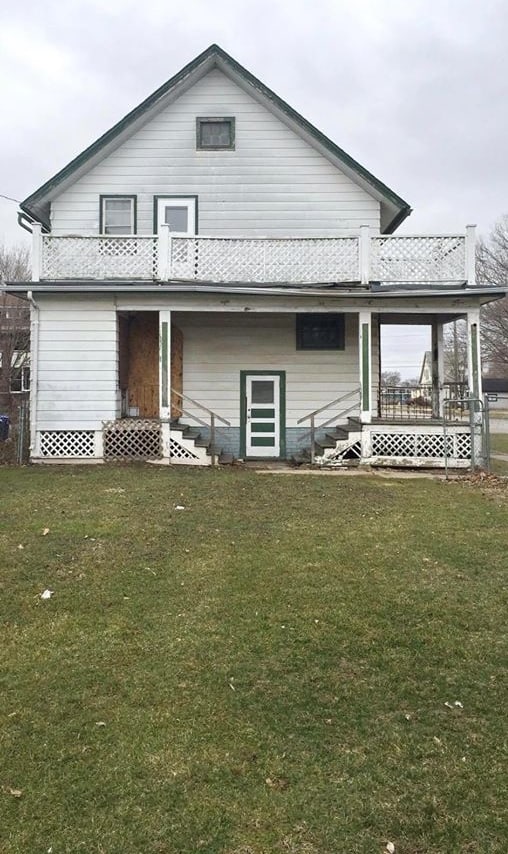
Over the River and Stabbed to Death – Essay by Randy Osborne
My childhood home is for sale – bank property, cheap – because of the murder in the backyard. I might buy it.
Not murder by the standard of law, the jury decided, but a violent and fatal act just the same. And not in the yard but in the main room of the house, the room where my grandmother Madeline worked her sewing-machine treadle decades ago. See how she pushes the fabric through and the needle jumps and cloth cascades off the table. The Singer whirrs, its clackety chatter like celluloid flapping loose on a full reel when the movie’s done. The curtain can never lift on that screen again, of course. Ridiculous to think. And yet.
Here’s what happened at 1802 S. Fourth St. in Rockford, Ill., about a week before Christmas 2011, according to trial testimony. Terry Johnson, 47, visits resident Raymond Gitchel, 59, for the purpose of smoking cocaine. They smoke cocaine. Johnson tries to steal a bag of heroin from another guest. He and Gitchel argue. Gitchel tells Johnson to get out. Johnson refuses. The dispute grows noisy, and someone appears from the second floor of the house with a baseball bat. But Gitchel acts first. He plunges a knife deep into Johnson’s thigh. Johnson cries out to all present, “He just stuck me!” Then to Gitchel, “I can’t believe you just cut me! I can’t believe you just stuck me!” Finally Johnson limps away – trouser leg no doubt soaked already – complaining that he will need stitches. He doesn’t get them. The knife has sheared his femoral artery. Johnson is bleeding to death.
Later, one of Gitchel’s housemates reports Johnson begging for help outside. Everybody ignores this. “Oh well, he should have left,” Gitchel remarks. The temperature sinks to 21 degrees that night. Next morning Johnson lies face up in the grass beside the chain-link fence.
What should we do, somebody asks. “I don’t know,” Gitchel says. “I’m going to make a sandwich.”
My grandmother Mad would love this story. I love this story. She raised me.
On pulpy detective magazines Mad raised me. On Poe and Hawthorne and the Bible (Old Testament only, please). On mythology, too, which is why Johnson’s thigh injury makes me think of the Grail King, his grievous wound, his barren land.
Mad raised me alone, her husband having jolted the family by leaving for some strumpet he met at work. An old man. They could hardly believe the sap still flowed. But when does it ever not?
In news video the day after the crime, trench-coated cops tromp the plank steps of Mad’s yellow-taped front porch. The same steps where I once sat, chin in hands, and waited for my life to start. I would grow up a writer or doctor – if the latter, a surgeon, specifically. I would incise people. The blade, like words, can harm or heal. Or I would be a radio star.
Gitchel paid $40,000 for the house in 1999, the year of my second marriage; today the bank asks $8,365. But the roof leaks, the wiring’s shot, and the furnace is stripped. “I don’t even go inside,” the real-estate agent tells me. Floors are falling through. The place is condemned.
Many scholars of the Grail legend believe that the word “thigh” is a euphemism for genitals, the king’s injury “a dolorous stroke.” Dolorous. Delores.
***
On a night in 1986, Ronald Ower became another man knifed and left to die in Delores Park, my favorite patch of San Francisco green. Teenagers wanting to “rob a faggot” attacked him as he made his way home. I learned about Ower while researching morel mushrooms.
A delicacy prized by chefs all over the world, the morel belongs to the genus Morchella.
Species names roll out like a magical chant: esculenta, rufobrunnea, augusticeps. Ower, a university student and aspiring biologist, was the first to cultivate morels. The New Scientist took notice. “Morel enthusiasts rejoice!” The day was near when they’d no longer need to “grovel through the woods” for “a few of these delectable fungi.” Ranging tan to black, morels are unmistakably phallic, as an author hints in the journal Mushroom. “I step back, circle and, for a moment, admire the spectacle. Stooping, I run my fingers gently along the surface of the cap, in and out of the grooves and hollows, down the long rubbery stem.” In the Midwest, the 1960s witnessed a morel bonanza thanks to Dutch elm disease’s massive kill-off. All those rotting stumps.
Ower grew morels on his kitchen table. He filed for a patent, outlined his methods in Mycologia, and signed a development contract with an agricultural biotech outfit in Michigan. But by the time his patent cleared, Ower no longer dwelt among the quick.
His killing happened, coincidentally, on the night of my birthday. Because I scan the world non-stop for such discoveries, I can’t help but notice also that Ower’s initials match my own. It makes sense to me that his last name, spelled as if to suggest a debt, is pronounced like a unit of time.
***
In 1967, my mother clinched her own second husband and retrieved me from Mad. Our time felt less deep than I expected. I had her at last, yet I didn’t. He had her, in that bedroom down the hall. This my mother and I shared: During the damp seasons, we foraged in the woods for morels. “Delicious because they are wild,” she told me, herself now less wild than ever.
Super-domestic, in fact. Free of the workplace and happily kitchen-bound, she refined her cooking skills to the delight of my retired stepfather. A few years passed. They decided to scale it up. They bought a restaurant.
Here I washed dishes, and swept floors, and met Cheryl. Doe-eyed, full-lipped Cheryl, 16, with a pageboy haircut and springy step, at her first job, waiting tables. The sexual draw was almost immediate, and mutual.
I was 21, and I was the son of her boss. She wasn’t even legal. I didn’t care. Did, but didn’t.
Also I was the obvious choice, wasn’t I, when Cheryl’s parents told her that she could only attend the outdoor concert at Sinnissippi Park if accompanied by someone older, someone responsible?
The music is nearly over. Cheryl sits between me and her friends. I am behaving. But then, I can … feel her. I turn and meet her stare. Reader, I lean into that jailbait. Her lips first a pliant mash, then breathily open. Noses to cheeks. Tongues teaching each other, being taught. It goes on for about a half-minute.
We pull away and cast our eyes at anything elsewhere, dizzy.
The rest is hardly worth telling. Cheryl’s friends take her home. At work Monday we’re both shy. I speak to her in a distant way, almost cordially after that, certain that I’ll be taken into custody any day.
My parents sell the restaurant, and it’s years later when I see Cheryl’s wedding notice. The last name of her fiancé is peculiar and sticks with me – might have anyway – and his first name is the same as mine. Naturally, I attach meaning to this, take points. She wanted me.
***
2013: Jurors acquitted Gitchel of murder but convicted him of involuntary manslaughter and sentenced him to five years in prison, with credit for 508 days served. At the Rockford newspaper’s website, where I went to comb the archives for details, the current front page blasted news of a major drug bust. “Nearly 30 people have been taken off the streets along with around two million dollars’ worth of cocaine, marijuana, and prescription drugs. Among those arrested [are] a dentist, a high school football coach, and other area professionals.” Out of curiosity, since I knew a few people in town, I scanned the names – and there he was. The other Randy.
Had their marriage lasted? I Googled. Located him, but no Cheryl. Here’s a Facebook photo. Paunchy fellow in hotel pool with blonde babe, definitely not Cheryl. Rings on their pertinent fingers.
More legwork brought me Cheryl’s address. The Google street view shows a single-level house, solid white, set back from the road under a grove of trees that dapple the sunlight. In the driveway a small car, also white. Maybe it’s the weekend, she’s home. By herself?
I would contact her. Not online – that’s too impersonal. Phone call? Potentially awkward.
A letter, I’ll compose a letter. Everyone appreciates real mail with handwriting, ink.
No, I will do none of this. Nor will I buy Mad’s old place in some sorry attempt to grow again what can sprout one time only, and best existed wild. A torn, scattered-to-the-winds patchwork impossible to stitch back together.
But I hope Cheryl has replaced him, replaced the Randy that I foolishly imagine “replaced” me. Gendered humankind roams the earth with lonely holes and then each of us ends up in one. Nomads. Monads.
How can I, this bag of meat, dream ideas from nothing but air, make sparks in mud? How can I begin to know myself, before the credits roll? As with poor Johnson when he staggered from the Gitchel house, nobody wants to hear our shocked complaints. The wound is worse than we know. It finishes us.
Randy Osborne’s essays are listed in the Notable sections of Best American Essays 2015 and 2016. His writing has appeared in Salon, The Rumpus, Full Grown People, The Lascaux Review, Flyleaf Journal, Empty Mirror, Identity Theory, 3Elements Review, Bodega, SLAB, Loose Change, Green Mountains Review, Spry Literary Journal, Scene Missing, Thread, and other small magazines, as well as the Chicago Tribune, Atlanta Journal Constitution, San Francisco Bay Guardian, and St. Louis Post-Dispatch. His work has been published in four print anthologies and nominated three times for the Pushcart Prize, as well as Best of the Net. This essay originally appeared in SunStruck Magazine.
-
Everything I Know About My Great Grandfather – Memoir by Walburga Appleseed
My great-grandfather had a Bavarian accent, a German passport, and an eye made of glass as a souvenir from fighting in the First World War. He played the zither. My great-grandfather married a woman from Basel-Land, a local beauty who obsessed about tidyness and created stunning embroideries which she displayed on their dark-red sofa and which my mother, the grandchild, wasn’t allowed to touch. He played the zither for my mother. She played the concertina. Later, they played together. My great-grandfather knew the ouvertures to all the operas and operettes ever played at Zürich’s theatres during his lifetime, his favourite being Rossini’s “Wilhelm Tell,” and whenever he went to the opera, he’d take my grandmother, his daughter, with him.
My great-grandfather with surname Gammel, blond hair and blue eyes, mysteriously turned into a Swedish citizen when the Second World War broke out and my grandmother and her German passport lived too close to the border and needed to invent neutral origins to keep her going through life in a hostile Swiss village. He brewed beer for a living. My great-grandfather brewed beer for a living and lived in an apartment in the middle of Zürich, with the river Limmat flowing on one side, the railway track running along another, and a large road along a third side, and my great-grandfather took great pleasure in all three of these features, because he said he never got bored at home–sittting out on the balcony, waiting for the 15:20 train up north, or the 17:30 train down south, watching the boats along the river, or the trams, cars and horses on the road. He brewed beer and played the zither. My great-grandfather had to leave his beloved apartment when he couldn’t live on his own anymore, and he eventually died in an old people’s home somewhere in Zürich, of neglect, or abuse, nobody knows which exactly, and my grandmother was too busy running a farm, bringing up four children and dealing with abject poverty to be able to investigate. I’ve still got the zither.
Walburga Appleseed likes her chocolate dark, her wine rich and her fiction short. Her flash fiction has appeared online and in print. She recently won the Winchester Prize for flash fiction. In a parallel existence, she also writes for children. Visit her online at https://walburgaappleseed.com.
-

Some Realizations after Ten Months in Texas
Memoir by Alyssa Sinclair
1.
My apartment door opens to a hallway lined with three other brown metal doors. An oversized patchwork owl hangs on my neighbor’s door, and a plastic waterfall—four tiers of fake rocks cascading down—has sat empty for weeks next to their welcome mat. Otherwise the hallway is a beige blur—cement floor, off-white walls, white light fixtures filled with dead bugs. The landing of the wide cement stairs affords a view to the outside. Standing at the railing, painted the same brown as my door, I can see the tall fence with its attenuated ribs separating the parking lot from the road, and the expanse of dusty, sparsely vegetated desert. Beyond that the highway loops around the limits of the town. The edges of the highway overpass are lined with birds nests, packed in wing to wing, like a Japanese hotel.
The stairs lead down to the lower hallway. The cement floor bleeds into the sidewalk and then the parking lot. The manager of the apartment complex refers to this whole hallway-and-staircase area together as “The Breezeway”. There is a brown film clinging to everything: the floor, the stair railing, the faux-wood paneling covering the walls, the bottoms of my shoes. I moved here in January. It is now October and the film of dirt has had four seasons in which to accumulate.
In the lower hallway there are belly-up cockroaches scattered across the cement floor. The numbers have grown since January. They are a red-brown color, their legs curled in “S” shapes, a trail of breadcrumbs to the stairs. Whenever I step on one a shiver of disgust runs from my flip-flopped feet up to my throat. Sometimes, at the base of the stairs, there will be one or two stuck between life and death for hours on end. Suspended on their rounded backs, their tiny, grasping legs pedal all day long. The movement rocks them back and forth, but it is not enough to fully flip upright. When they die it then takes a few days for them to disappear. Once, at midnight, I saw other cockroaches lingering around a dead one, and in the morning there was just a crumbly black substance left behind. More than once I have seen two ants dragging a dead cockroach down the sidewalk.
Upstairs, outside my door, spider webs dangle from the cream-colored paneling. Balls of lint and fuzz are caught in the silky threads. Occasionally I’ll spot a black spider curled in its web. It is either hibernating from the heat or dead from the heat. The bend of its legs is shiny and sharp, forming a basket around its underbelly. If I spray it with Raid it will die and fall to the ground, and I can check for the fatal red mark on its underbelly in the shape of an hourglass.
This summer the bugs began to enter the apartment. Since then I am often bitten in my sleep. I wake up to scabs pulled tight across itchy lumps on my ankles and nail marks up my thighs. For a few weeks in August there were small beetles buried in the beige carpet, and at least twenty tiny black bugs on the windowsill each morning.
The pest control man told me it’s all because I sleep by a northern facing window. “All that open land and the wind blowing in,” he said, “I’ll tell the manager to put a dimmer bulb in the light outside your window.”
The next night I walked my dog past that bulb at the corner of the building, and tried to tell if it was dimmer. Moth wings fluttered against the light and other, earth-ridden bugs twitched on the pavement. All of the movement made me jumpy. I didn’t think they had changed the bulb. A white truck, its tires lifted up high and a crane in the bed, pulled in and parked behind me. A young man got out wearing a fireproof jumpsuit. There were black smears down the fronts of his thighs. It was about ten o’clock. He was getting in from the oil field. He said hello and entered the Breezeway. The heavy knocking of his steel-toed boots echoed out into the parking lot. I could hear the gap between his steps as he climbed two at a time. I thought about taking two stairs at a time at my parent’s house, the thick runner beneath my feet. The darkness to the north suddenly seemed like a dream pulling me away from here. I heard the slam of his door come from the top floor. My dog tried to catch a giant sand-colored cricket in her mouth. It bounced away suddenly, sharply, almost as high as my hipbones. It seemed it could jump as high as my face if it really tried. I stepped away, pulling on the leash.
Alyssa Sinclair graduated from the University of St. Andrews in Scotland with an M.Litt in Creative Writing. Her thesis, a collection of short stories entitled This House of Bones, was based on stories of her father’s life. She is the recipient of the Dan Hemingway Short Story prize for her story “The Deposition.” Her nonfiction has been published in Salon.com and TheDailyBeast.com and has been short-listed for the New Writing section of Mslexia Magazine. She lives in Midland, Texas, the far-west center of the Oil and Gas industry, where she writes and teaches yoga.
-

A List That Never Ends
Short Memoir by Sarah Elizabeth Schantz
When it was time to burn my mother she wept two red tears. I drove her to the crematory and watched my place of origin turn to white ash and silver mica.
Adderley was my first death—my best-friend’s little sister, I was only seven and Addie was only one: Sudden Infant Death Syndrome: Suddenly. Infinitely. Disappearing. Then came my grandparents, one after another, they were gone by the time I was fourteen. The same year my paternal grandmother died, so did another baby that I knew—she too suddenly disappeared forever; she was buried in a tiny pink casket and her mother, Mindy, cried during the entire service. Yet Mindy survived, somehow, and had another daughter—but life is never fair, and Mindy was killed in a car accident around the time I moved back to Colorado.
Little Bob had a hernia and it frightened me the one and only time we had sex. That night, I slept in his bed, and while I slept, he drew my portrait. After he showed it to me, he buried it in the backyard and refused to tell me where it was, although he did give it to me later once we knew I’d never love him like he loved me. Rendered in pencil on watercolor paper, this sketch remains taped to the inside cover of my journal, dated: 1995. Little Bob was not an artist, and yet, he captured me. And he is the only person I have ever kissed at the very top of a Ferris wheel. A decade later, Little Bob died from a hotshot of heroin, eleven days before I was married. Friends came from his funeral in Minneapolis to my wedding in Colorado, and Little Bob hitched a ride—in all the pictures taken, I am a bride surrounded by a swirl of light. His ghost still visits me from time to time, usually when I’m alone and driving a back road late at night.
After J.P. died from pancreatitis, I almost hit a coyote driving home on Valmont—it was the middle of the day. Three mornings later, I stepped into my yard and saw a coyote standing in the field. It was dawn and the pasture still a harvest gold beneath the veil of a cold white frost. The coyote stood and stared at me before he turned to walk away. His back leg was broken and he limped as he headed east to be reborn.
Everyone thought my mother was going to die on my thirty-fifth birthday. Pancreatic cancer spreads to the brain but the doctors forgot to tell us this. After a period of extreme psychosis, she fell still and silent and she hadn’t stirred in days. Because she was starting to swell, I was forced to remove her wedding band. I was prepared. It seemed fitting that she would die on my birthday, but she didn’t—Jamie died instead. Jamie was J.P.’s little brother and the last time I’d seen him was at my wedding; J.P. died on Jamie’s birthday just the year before. When they were kids, they were in the skate punk band called, Old Skull—airtime on MTV, talk show interviews, media buzz. Jamie hung himself from a tree in Lynchburg, Virginia and April had to cut him down.
April lost her leg hopping a train out of Dinky Town when she was nineteen. I used to massage her phantom leg, but only when we were stoned. April was in love with Cabbie back when we were young. One day, Cabbie bought a pair of Gingher sewing shears; expensive stainless steel, the shine was dangerous when he cut off his ear—he need to make room for the wingspan of a hawk tattooed across his face. Cabbie stored his ear in my freezer for a year; he wanted to get it bronzed like people do with baby shoes, but I think Little Bob sewed it to a dead chicken-rat instead.
Later, April and I ended up living in King Salmon, California. The “beach house” had been built on a fault line less than half a mile away from a nuclear power plant. This house is where Cabbie carved out his tongue because he didn’t want to tell lies anymore. In my bedroom, I had a futon on the floor, and not much else, and this is where he sat as he cut it out. I was at the bar but he bled all over my travelling doll, Anangka. Cabbie bled all over the house and up and down the front walk. When I came home, the house was like the aftermath of a massacre. When I went to see him in the hospital, he could still talk. Eating ice cream, Cabbie had a lisp when he explained: “To stop talking, the vocal chords must be removed.” When I was fifteen, there was a bearded homeless man in Boulder who wandered the streets at night in a long gray trench coat. He was towering tall and I swear he had a music box inside his chest by the way he sometimes would break into song. His name was Tom and I’m sure he’s dead by now.
April has a tattoo on her face like a game of connect-the-dots; a constellation of stars, sporadic lines. I wish this was the map to find Cabbie who disappeared in 1998 the year I almost died. $15,000 continues to sit in his bank account unaccounted for and April refuses to make the withdrawal. Cabbie made this money on the fishing boats in Alaska; he wanted to buy utopia. April thinks he went into the woods to castrate himself. He was only trying to be whole again. Maybe Cabbie bled out. After all, he was the closest thing we had to Christ.
There were others too: Marcus on his motorcycle, fragments of bone left on the asphalt like stars. Jeremy, whose middle name was Rainbow, died shooting up in the Denver bus depot bathroom. Marcel had an asthma attack doing speed and Micah, waltzing with a train. These four were all fathers when they died, their children young—J.P. was a dad too, and his son looks just like him.
Sobriety and Patch chose the shotgun tunnel into the afterlife, and Liz owed me $30.00 when she died from dope. Couch took angel dust and jumped off the roof of 5005, and it was the worst kind of luck when he didn’t die. Casey died from AIDS-related complications and Uri died like Marcel and Oakle, my stepdaughter’s uncle, left this world one November night via Oxycontin, also known as Hillbilly Heroin.
There was Kendra who I knew growing up; a few years older than me, she was her parent’s youngest, and our families were friends. Little Bob might have been the first person to ever serve me tuna mac, but Kendra was the first to ever make me mac and cheese from a box. Kendra was living in Canada in 1994 when she purchased a one-way plane ticket back to Colorado without telling anyone. She just left a rent check for her roommate, and when she landed in Denver, she didn’t go home. Every time I drive into the city, I see the tall round hotel where she went instead, and I have to wonder which window was the window from which she jumped. Kendra, who was so determined not to let her suicide be an inconvenience to anyone, did not leave a note and while others long for an explanation, I always thought her actions said enough.
Thorn was only three when his parents had to pull the plug. When Donovan came home from the hospital, I made salmon, and after we had eaten, I watched him carve a turtle urn for his son while Fish walked up and down the Mississippi, crying. And now Donovan’s the one in the hospital—intensive care—over a decade later, some wounds never heal. Caitlyn died from cancer with Shelley by her side and Meghan, who I used to babysit, died in her sleep—something to do with the spina bifida; her split spine. Jenny, who was always so much fun, used to say she was a member of the Die Young Club on account of having Hep C, yet she was nearly forty when she died, and her death was due to heroin. She’d been clean for years, Eddie wrote to me, instant-message, Facebook. But what kills me, he said, Is that her daughter was the one who found her. Jenny’s daughter was thirteen, same age as mine, same age as Little Bob’s little girl.
All I have of Bob is the drawing he drew of me and a dirty scrap of his Chicken Shack T-shirt. Anangka sits in the cup holder of my car to keep me safe; made from a sock she still wears Cabbie’s DNA. I have a letter Micah wrote to me, postmark Nova Scotia. Blue ballpoint pen, careful capital letters, he wrote: The other day I went to Eagle’s Cave where it’s all white sandstone inside and I drew some pictures to remind myself what I am. Eddie and Leona named their son after him. Micah like the mica in my mother’s ashes, her mountain mermaid scales. From Marcel, I have a letter he wrote to me from jail. I need to get out of here, he said, and on the envelope seal, he drew a grinning skull. Fish has Marcus’s old backgammon board and scrawled across the case, J.P. wrote: Go play your little games.
Cremated on a bed of quartz, wearing a pair of rock star leather pants, Jamie’s ashes came out green and course like crumbled jade whereas J.P. was naked when he turned into something soft. Something pure and terrible, his remains are like the China White we once injected along the banks of the River Styx. Rationed out to friends and family, I have a little of each brother. Side by side, they sit on my dresser and I can see them from my wrought iron bed. They sit on a black pool of Scrying glass with my mother’s death mask—the one I made with my daughter using plaster, gauze, and water. There they all watch over me, and speak to me through dreams, a list that never ends.
Sarah Elizabeth Schnoz lives on the outskirts of Boulder, Colorado in an old farmhouse surrounded by open sky, cattle, century-old cottonwoods and owls. Her short fiction and essays have appeared in Third Coast, The Los Angeles Review, Bombay Gin, Hunger Mountain, Alligator Juniper, and many others. In 2012, she won the Fall Orlando Prize in Short Fiction. She holds an MFA in Writing & Poetics, and her first novel, Fig, was published in 2015 by Simon & Schuster.
Image courtesy of Len de la Cruz, via unsplash.com