Your cart is currently empty!
Category: Flash Fiction
Flash Fiction from Fiction Attic Press, featuring stories under 1,000 words
-

Bulb-Shaped–by Jeffrey Bakkensen

Photo by Blake Wisz on Unsplash You took a stick and drew a circle in the leaves around us and the fire. “No one comes in or out.” We teased the dog until she learned the rules. When night came, we went inside the trailer.
We weren’t using our phones. That was another rule. There were no outlets, only softly glowing sconces powered by a panel on the roof. There was no shower. These weren’t rules, only facts. The toilet was this eco-friendly Space Age thing lined with something like aluminum foil that closed over your waste and twisted around and made a whirring noise, and opened up again fully clean. There was limited water.
When it was really dark, we switched off the sconces and watched the darkness until we were scared it was watching us back. I went outside and pissed on the fire while the dog pissed on the leaves. We opened a bag of chips and a six pack and played rummy on the fold-out table between the bed and the kitchenette. I said I didn’t remember beer being so sweet, and a few minutes later, you said the same thing. We both laughed because you must not have heard me.
Then we were quiet for a long time staring at our cards. I cracked another beer, cracked one for you even though yours wasn’t done, and waited. Eventually, you got up to use the bathroom. When you came back, you said you thought it had happened.
I’d filled the waiting minutes reading a magazine that was laid on the bed when we arrived. The magazine was about people renting their trailers all over the country. Nadine’s trailer was near Zion National Park. Brent’s was deep in Minnesota.
I’d meant to let myself get caught looking at your cards, but I was too busy reading about trailers, and you surprised me.
The aluminum bag whirred, and the bathroom door opened. The dog and I both looked up. You came outside and washed your hands in the kitchenette sink.
“I think that was it.”
We hugged, me crouching under the trailer’s low ceiling.
“That’s good,” I said, and I didn’t have anything else to say.
Later, I knelt at the toilet and with a finger palpated the eye of the aluminum bag, but I didn’t know what I should be looking for. Maybe a receipt I’d carried crumpled in my wallet for weeks, but couldn’t find when I finally needed it. After all, you said you thought, not that you knew.
I knew that even much later, I would remember the trailer, the toilet, you drawing a circle in the leaves. The trailer air fouled with memory-making.
The dog died. That was how we knew that time was passing. We measured it by the night in the trailer, and whether the dog was still alive or had already died. Frost heaves broke our flower bed into beds, and while I stamped them down, you slipped away. Long after the dog died, you came bulb-shaped with your separate success to tell me what I’d thought but not known to name, how wanting doesn’t stop just because the thing is gone for good.
I wanted to buy a trailer of my own and park it in the street out front. I wanted to fill my trailer with debris in layers so my back stooped and you’d climb to me up a ziggurat of cereal boxes and out-modeled phone chargers. I wanted to lock myself in the bathroom and push through the toilet’s aluminum eye and curl myself around the receipt I couldn’t find.
“You feel okay?” I asked.
“Just cramped.”
We played solitaire and then war. When the beer ran out, I took the dog on a long walk through the trees, lighting our way with my phone’s flashlight. By the time we got back, you were asleep.
For you, I thought, it was already morning. We were packing up and driving home.
Jeff Bakkensen lives in Boston. Recent work has appeared in A-Minor Magazine, Oblong Magazine, Smokelong Quarterly, and The Antigonish Review
Did you enjoy this story? Submit your flash fiction or personal essay.
Read more flash fictions in Flash in the Attic: 44 Very Short Stories.
-
Bra
flash fiction by Vanessa Chan
I recently injured my arm, so I cannot reach around my back. That means I have to put my bra on the wrong way around. I start with clasping the bra in the front, under my breasts, then pulling the band in a circle along my skin until the clasps reach my back, before I can pull the straps and cups in place. It chafes.
My friend Shauna used to never wear a bra. She told me that bras are symbols of the patriarchy, that they have no purpose, that the underwire served only to point and lift our breasts closer to boys’ vision. I told her she was lucky because her breasts were small, perky. She told me I was too self-conscious and needed to be more confident; she said that’s why Tommy Patrice had picked her to go the prom with, even though he had asked me out first, and I had the bigger, rounder breasts.
The other thing about Shauna was that she died a week before high school graduation. She was found face down in a monsoon drain floating in shallow brown water that smelled like trash. One of her arms had been dislocated; it twisted behind her like it was waving goodbye. Everyone knew Tommy did it, but they never charged him. Only some people blamed him. She was easy, they said. She didn’t wear bras, they said.
It’s true that breasts have no muscle mass. Except for the nipple, they don’t react stimuli; they can’t be reshaped, they can’t point at things, they can’t protect themselves. Not like arms – arms can hold you up, turn you around, beat things away, get bigger and stronger.
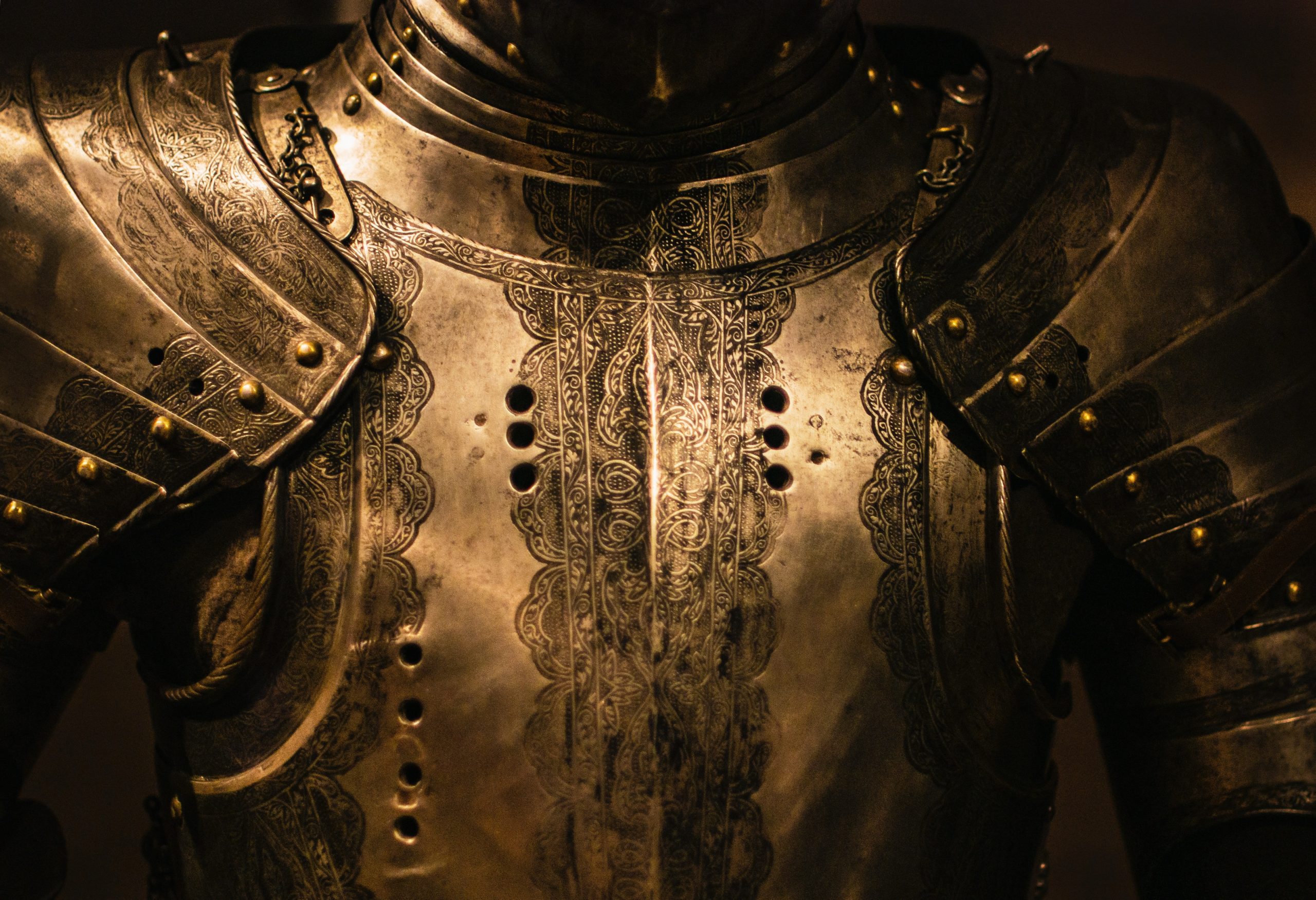
But lately my twisted arm means I can’t do the things I usually do to keep myself safe. I can’t grip the keys between my fingers as I walk down the street. I fumble longer trying to get myself into my door. I don’t have the strength to push away unwanted advances. I am unstable, off-center, easy prey. I tell myself that Shauna was wrong. Bras aren’t just to mold our breasts and give them a sense of direction. No, bras are like armor, the underwire protecting against the elements, the cups keeping out unwanted intruders, the clasps making it just a little harder to break in. And so, I twist myself around every day to buckle my breastplate.
I will not be hunted.
Vanessa Chan is a Malaysian writer based in New York. Her work is published or forthcoming in Atticus Review, Jezebel, and Mekong Teahouse, and she recently won the Fiction Factory Flash Fiction contest. She is an MFA candidate at The New School and writes about race, colonization, and women who don’t toe the line. Vanessa can be found at vanessajchan.com or on twitter at @vanjchan.
Armor photo by Nik Shuliahin on Unsplash
-
Exo and Endo
flash fiction by Patrick W. Gibson
A substance may exist as a solid, a liquid, or gas–each state governed by the laws of chemistry. But rules have exceptions, are temperature dependent, and may not cooperate, allowing form B to revert to form A without notice. Heat or cold applied chemically or electrically alter motion, powerful tools for stopping and resuming life.
The 10 oz. form lies motionless, its regular and animated motion halted via electrical current in the form of heat. Quickly the prostrate form is uprooted from its long-term lodging and placed into a refrigerated plastic container. Immediately, cold envelopes the mass, and exothermic cooling begins. Gases within the grey ovoid shape become liquid, and existing fluids slow, viscosity rising as ambient temperatures fall. Soon all flow stops and molecular structure changes, liquid transitioning into solid. A digital readout counts down, minus one, minus two, minus three. Each glowing LED monitored with care. The cooling rate slows and the plastic container is sealed. Engines rumble to life, rotors turn, and actions commence.
Two hours later, the mass is reseated in a new but foreign housing, and endothermic heating is initiated to reverse the cold.
The following day I open my eyes for the first time in twenty-six hours. The mass, no longer motionless, beats in my chest, its rhythm regular and strong. Once, it had resided with a twenty-one-year-old nursing student with good grades and a steady boyfriend, who’d made the mistake of riding home from a party with an impaired friend. Now her gift has settled in a middle-aged dentist with a small but loyal practice, me. Although we never met, the two of us have become one. Chemistry halts life, preserves being, and awards living.
Patrick W. Gibson is a Metro Detroit based writer. His short stories and flash fiction pieces favor an urban and working class feel. His work has been published online and in print by The Flexible Persona, Medusa’s Laugh Press, Wraparound South, and Dark Ink Press. Patrick is currently at work on his first novel.
Photo by Zoltan Tasi on Unsplash
-

Your Things – flash fiction by Michelle Matthews
The things you carried, Batman sunglasses, a Pokemon lunchbox, a handful of Legos, and a broken fidget spinner that you refused to throw away. A note passed to you on your last day of school, “Get better soon, we miss you.”
The sun is up. I look down at the pad in my hand and review the list of names. I go over the speech again in my head. “Hi. I have some bad news. He’s gone. Last night. No pain. No, I don’t need anything. I have more calls to make. Goodbye.” Stick to the script,and I’ll get through it. I got through it. I showered out of necessity,but I did not have the energy.
Down the hall, up the staircase, one foot in front of the other I climbed. The house was still dark, it was the day after,and still,it felt as if nothing had changed. I walked into your room. The scent of you still lingered in the air; youcould have just passed by me. I imagine you, rushing around forever late, grabbing shoes, going back again for a jacket, then again for your lunch. The routine of mundane experiences left now to historyprayed for now.
The things you left behind, an empty bed, a dog that sits at the top of the stairs at 3 o’clock waiting for a master that will never come home. A crate of Legos, slowly gathering dust. Three green crayons, brokenfrom overuse. Your presents, unopened from under the tree and me.
My notepad sits on the kitchen counter. Milk, shampoo, toothpaste, hamburger buns, peanut butter, and Pokemon cards, added by you. The shopping list for a trip I never got to make. I tore it off and put it in my pocket. Then I wrote shoes, size 12 to the list. The last list of things you’ll ever need. Black suit size 8. I would need a dress. I thought about wearing a hat, wrote it down with a question mark and then scribbled it out again. I wrote down flowers and a reminder to get the certificatelike you accomplished something by dying. All you accomplished was breaking my heart.
I walked past your room again. I never noticed how much stuff you had until I had to pack it all up. I made a mental note to get boxes but not today. I sit on the bed careful not to disturb anything. I stare atnothing until my eyes are so heavy that holding them open becomes a chore I am unable to bear. I startle awake to a sound I think I hear,but the house is silent.
The things you took with you, one gold and white Pokemon card and a letter I wrote the night you died. There are cardsfrom your friends some still damp with tiny tears. A bright red Hot Wheels sports car that your best friend Sam would never let you play with until now. Half of the baby blanket I took from you before you were ready to part with it and me.
Michelle E. Matthews is a George Washington University and Yale Writer’s Conference Alum. She is currently working on completing her M.F.A. in Creative Writing. Her essays have been featured online via Huffington Post, Mamapedia, Scary Mommy, and The Mighty. You can also find her on Amazon in two anthologies, Motherhood: May Cause Drowsiness and Surviving Mental Illness Through Humor. Michelle resides in Northern Virginia with her family
Image courtesy of Iker Urteaga via unsplash
-

Hungry – flash fiction by Molly Marks
That sad bicentennial summer, fried pig skin hardened in Grandmother’s throat. Her face plumped as airways clogged with pork rind. A white plate dropped from her fingers. They were in Boston’s Chinatown, at a buffet, standing next to heat-lamped beef tongue, and snake beans. Her son, Patrick, patted her back, as if she simply needed encouragement.
“There, there, mother. Swallow gently,” he said.
Her grand-daughter, Sylvia, continued stuffing fish balls, and tiny plastic cups of pickled ginger in her swim-bag. Her deflating floaties dripped water over steamed buns as she troweled through a gelatinous stew of fruit juice and mutton. The dried ends of her long ponytail dipped into garlic paste.
Writhing in fear, Grandmother a squeezed a simmering metal bowl, searing the tips of her wrinkled fingers, than began hawking on a board of charcuterie.
“Mom?” Patrick asked, “Are you all right?”
His brain swelled with memories of elementary health class, when his portly teacher busted the head off a simulaid choking manikin. Patrick imagined the head of his mother gliding across the restaurant, falling into a crock of blood sausages. Despite his fear of decapitation, he attempted the Heimlich Maneuver. He stood behind her, supporting her chest with his left hand, and leaning her forward with his right. Similar to burping a baby, he roughly slapped her back in quick succession.
“There, there Mom. It’s going to be alright.”
Aware that her father was distracted, Sylvia squished a Belgian waffle down the front of her bathing-suit, and hastily reached for the syrup. The sap came out quicker than anticipated, glazing her middle. Horrified at the prospect of being stuck to the ugliest one-piece ever made, Sylvia turned towards her father. He was humming Sarah McLachlan, In the Arms of an Angel, cradling Grandmother like a baby. After he finished singing, he rolled Grandmother under the desert table, and suggested to Sylvia, they leave immediately.
Hand in hand, they dashed through the public gardens, swerving through iPhone flashes and George Washington aficionados. Floppy hats shading gabby ladies, floated through a lagoon on Swan Boats. A bored horse gazed longingly at a street vender who was drizzling caramel over peanuts. A strung-out summer-camp leader wearing knickerbockers and tube socks, encouraged children to swim under the Ether Monument. Tiny sandals and yoyo’s flung on grass patches, as kids climbed over the concrete wall, into a tub of green water. Patrick stormed his way through the crowd, pushing through a cluster of children who were afraid to swim.
“Dad,” Sylvia pouted, suddenly stopping, “you’re walking so fast.”
Patrick slung his daughter over his shoulder. Udon noodles, and egg tarts fell from the unzipped pocket of Sylvia’s bag. One of the camp boys, who felt like nothing ever good happened to him, watched as a perfect slice of Chongyang cake crumbled on the pavement.
“Cake!” He yelled, diving towards the crumbs like a bird on stale bread.
The campers, trained to do anything for snacks, leapt from the fountain, and charged after Patrick. Patrick assumed the children knew somehow, that he’d abandoned his dead mother at a buffet. They know, he thought, they’re on to me. He wanted to tell them the good things, that he sprinkled flakes into an empty aquarium, mashed Aricept, Lisinopril, Remeron into hot oats, left a tiny saucer of tuna outside for feral cats, knitted his mother’s housecoat, and explained daily to his mother who he and Sylvia were. But he’d forgotten to learn the Heimlich Maneuver. He should have been taking lessons on air, and preparing for dangers of Manchurian cuisine. His brain flipped through a manifestation of should-haves. Sylvia strained his biceps. He could no longer carry her.
Patrick set Sylvia in a bed of tulips. Green goggles wound tight around her forehead, cutting off brain circulation; something he should have realized as a caretaker. There were other things: syrup was everywhere, her flip-flops were on the wrong feet, and he should have put Neosporin on the blisters. It appeared as if a turkey’s snood was growing between her big and long toe.
“Darling, I absolutely love you but it’s time for you to find a new home,” Patrick said, noticing for the first time, that Sylvia and his mother do the same thing when their alarmed: place two fingers on their bottom lip and faintly hum.
He kissed her sunburnt cheeks and squeezed her pudgy body, which smelt like the public pool and poorly salted ganache. Sylvia watched as he disappeared underneath a curtain of willows. Usually she liked hide-and-seek, but her arms were tired from doggy-paddling, and a swarm of ravenous kids were about to attack. She threw her bag at the wolfish kids and screamed for her father. A whistle blew and everyone’s head looked towards the teacher.
“Doodle-bugs!” She screamed, “Get into line, right now! Just because we have a little fun does not mean we act like animals!”
At one point Alison might have been the type of teacher who handed out extra pieces of bubblegum and believed in a child-centered approach. Now she held her whistle like whip, pinching the ear of a squirming boy—making it clear that she’d choose termination if it meant momentary control.
A neat line formed at her feet. Only one child stood to the side. A gnarled ugly duckling. A misfit. A girl unfit for Outdoor Adventure Intensives.
“If you don’t get into line, right now I will…”
Sylvia imagined being shoved through a deli slicer and abided. The whistle blew and the children marched. What could Sylvia say? Father was hiding. Grandmother was eating. There weren’t any grownups to convince this lady she wasn’t a camper. It pained her, the way her bathing suit straps cut into her shoulders. There was no choice but to follow.
Molly Marks is a graduate student in the MFA program at Chatham University. Her work has been published in Lime Hawk Literary Press and SLAB. She lives in Pittsburgh, where she is writing her second novel and building art installations.
image courtesy of Raphael Biscaldi via unsplash
Submit your flash fiction to Fiction Attic Press.
Buy our latest flash fiction athology: Flash in the Attic: 44 Very Short Stories
-

The Way Home – flash fiction by Mark Russell Gelade
It is Easter Sunday and I am standing at the sink washing dishes as I tell you this. For me, doing the dishes often induces a natural state of reverie, like staring into a fire. But Candi, my wife, she has a more pragmatic reason for asking me to do the dishes. At least I have a theory about that.
I am doing the dishes because it’s what she instinctively asks me to do whenever she feels threatened by the distance that has opened up between us.
She’s no fool. She believes these domestic chores will reconnect me to our house, our family life, and our marriage. It’s the kind of intuitive, female knowledge that no “how-to” book would dare to explain.
I have a method for doing the dishes. I begin with the largest plates, wash them, rinse them under the hot water, let them drip for a moment, and then stack them like toy soldiers, one behind the other in the metal dish rack. Next come the smaller plates, then the bowls, then the cups, and lastly, the knives and forks.
Right now, I’m recalling an old picture-book I read and re-read as a child that attempted to teach the laws of gravity to ten-year-olds. I can clearly remember the image of a slim man standing in an open elevator, with the shaft exposed for the viewer, above which, a giant pair of scissors loomed, ready to flex.
“And…,” the book read, “…if we should cut the cord, dot-dot-dot.”
The next page showed the hapless man falling through air, his white shirt billowing, and his black tie pointing straight up as the elevator plummeted downwards to certain destruction. Such are the immutable laws of physics.
But the laws of faith offer far more latitude, though their stakes may be equally uncompromising. One can lose faith, come to faith, or even lack faith, but you can be sure the heavenly lawgiver will be far more flexible and forgiving than the authority that presides over falling elevators.
Like my wife and daughter, I, too, went to church this morning—though I didn’t tell them I was going. I sat six or seven pews behind them, just watching the back of my daughter’s head.
Her chestnut hair was shiny and freshly brushed. A red barrette gathered a small ponytail that swayed a little as she moved; and I saw that like me, she too, was in an in-between place. I just wished I could spare her the pain that I knew was coming her way.
I never thought I would arrive here, at this sad and grown-up place. I recall asking a friend of mine who is also in the process of divorcing his wife: ‘Why…what is it about her that’s so bad?’
He looked me in the eye and said, “It’s not about her, Vic, it’s about me. It’s about who I’m becoming that I don’t like.”
When it comes to the ties that bind us, I know of no roadmaps to follow. They say the Magi journeyed to Bethlehem by following a star. All I know is that when you cannot get happy, when you do not know the right road to take, and when you’ve lost all sense of direction, there is nothing left to do but navigate by stars.
Perhaps, if you’re lucky, you’ll pass through your darkest night and come out the other side, shedding the tattered cloth of your old self and singing the notes of a new song.
Or, you may just end up like me, doing the dishes and watching shapes of another world that you can see but cannot touch, reflecting back at you from the gleaming dish or shimmering glass that you hold in your hand.
Someday soon, something is going to come along and cut the cord that is holding me in place tonight. After that, nothing I know will be the same. Nothing I know will offer the reassurance of these dishes, stacking up one after the other, drying in the familiar warmth of the kitchen light.
Mark Russell Gelade is past winner of the World’s Best Short-Short Story Contest, judged by Robert Olen Butler. His short-short stories have appeared in Narrative Magazine and Synchronized Chaos. He lives in San Francisco with his wife. More about Mark: http://markrussellgelade.com/fiction/
image courtesy of Brooke Lark via unsplash
Submit your flash fiction to Fiction Attic Press.
Buy our flash fiction anthology: Flash in the Attic: 44 Very Short Stories
-
Appeal – flash fiction by Dan DeMarco
Avoid asking questions that begin with why. These questions sound like, Why did you have to die? Why did you have to die like this? Why did you have to die before me? You aren’t really looking for an answer when you ask this kind of question. You’re looking for an assurance that your wife’s death was not simply a cruel accident, that these things are maintained by a higher order, that the death of your wife was a necessary part of some incomprehensible divine plan. You must completely expel these thoughts from your mind if you are to have any success in your encounter with your dead wife. Since she entered the afterlife your wife is no doubt in some sort of metaphysical state, transcending the limitations of the physical, and so from this vantage point it is likely that she can see well into your past and understand every thought and feeling you experienced toward her while she was alive: every white lie you ever told her, every girl you may have fantasized about replacing her with, every time you secretly wished she was dead. Do not dwell on the fact that she knows all of these things. You will only have time to ask your wife a single question. Depending on how fast you’re able to transcribe her messages, her reply could go on for several seconds. And so with this extremely reduced time window to work with, you would be well advised not to entertain open-ended cosmic notions, such as the possibility that your wife was taken from you as some sort of divine punishment. Everything has been cast in a different light now; small, formerly inconsequential memories have taken on a new, horrible significance—like the time all the way back in high school, when you told your friend you would sell your soul just to get a girlfriend, and you met her the week after. Like the night you and she first made love, the sticky summer air floating in through the screen in her open window, enveloping your bodies on the floor as she moved on top of you, whispering “Damn you, damn you, damn you” in your ear. All of this is to say, you must, under no circumstances, have your predestined place in the afterlife become a topic of this otherworldly interrogation. If it is revealed that you two are destined to remain eternally apart from one another, you would most likely lose emotional grip. Likewise, if you greet the ghost of your dead wife with silence or uncertainty, you risk undermining everything. Your wife may answer your silence with silence of her own, and by the time you manage to splutter out a greeting, or a half-hearted question, she will have already faded back into the ether. Or, your wife may commandeer the silence to ask questions of her own. She may choose to interrogate you about the fantasies of infidelity you entertained that she can now see quite clearly. She may ask you why you shied away from the thought of having a child with her. She would ask you these questions, even though she already knew the answers, to see what you would say. But it would still be preferable to be asked this way than to be asked a question that begins with why. These questions sound like, Why don’t you pray for me anymore, like you used to? Why did you take down that framed picture in the living room, of us smiling and holding each other under what used to be our tree in the park? Why do you avoid bringing me up in conversation, or even bringing up things related to me, like that movie that I always quoted, or the song that I would sing every morning? Why are you trying to forget me? You are already quite drunk and the letters on the board you bought from the mall are swimming in front of you. There is a possibility that nothing will happen at all. There is a possibility that your wife just doesn’t exist anymore, anywhere. When you are left alone, sitting on the floor in front of the toy-store Ouija board, drunk and red-eyed, plastic planchette unmoving in your hands, there’s no telling what you might do. You’re so old now. Take a deep breath. Think of her. This is your window. Ask.
Dan DeMarco‘s work has previously been published in Hobart Literary Journal. Find him on Twitter @itsdandemarco.
Image courtesy of Teddy Kelley via unsplash.
-

An Instance of Emotion – flash fiction by Bianca Radulescu-Banu
You’re dying. Of a sickness, to be exact. It doesn’t matter which; all that matters is that soon, your life will cease to exist.
No one knows exactly when. It could be months, it could be tomorrow. You wish it’ll happen sometime after Sunday, because you were planning on going to a party your friend is throwing. You’ve already RSVP’d yes–it would be a shame to have to cancel.
No matter how many sympathetic glances people have thrown you, you are convinced you’ve made your peace with the end. And then suddenly, the moment comes.
Of all things to be doing just before losing consciousness, you’re standing in a lunch line with your friend. With a jolt, you see two of her, and then three.
You find it hard to breathe, and hear a distant voice asking if you’re okay. All you can manage to focus on is the pounding in your skull, and your blurred vision.
Did you just murmur something? It’s getting hard to make out. You’re probably just groaning–you can’t find the energy to speak coherently anymore.
But none of this is what’s going through your mind right now. What you’re thinking is something along the lines of, “Holy fuck, it’s actually happening right fucking now, holy fuck holy fuck holy fuck…”
The boys to the right of your crumpled body probably think you’re just dehydrated. The girls behind you are concerned. However, they’re more focused on your skirt, which was, during the process of falling on the ground, hiked up over your underwear. You pay no attention. You are unconscious.
Although, if you were still able to think, you would probably be disappointed that you will, after all, miss the party on Sunday. It’s all right. It will have been dull anyway.
Bianca Radulescu-Banu is sixteen years old and lives in Lexington, MA with her family.
Image courtesy of Roland Larson via unsplash
-

River Bottom – flash fiction by Misty Urban
She sat on the deep wooden porch in the chair her grandfather had made, and she rocked. The evening clouds, dark in their underbellies, clumped and hurried toward the line of beech trees lining the creek. The insects hummed and the birds chittered and the frogs croaked nervously, and once in a while the big garrulous ga-THUMP of the bullfrog belched through the other noise.
From the bedroom inside the house she heard the same sporadic hacking, the guttural expulsion and then the dry wretched scratching for air. Behind it was the rattle she’d heard before, when the grandfather who’d shaped this chair had lain, years ago, in that very bed, choking up lungs tarred black by a life in the coal mines. When she heard that rattle, she came out on the porch to wait.
No one worked in the coal mines anymore; now they blew up mountains and scraped the top flat as an angel cake, pushed the blasted rubble and the twisted roots of the great oaks and spruces into the valleys, suffocating rivers, towns, a whole way of life. Fast, maybe. But not clean. Death never was.
Some time ago, before the belly of the sun had reached the far blue hill, he’d stopped calling her name, ceased the faint, desperate cackle for “Ell – Ell—Ell.” Soon it would all cease, all of it. The spitting up of his saliva and the stomach lining poisoned by lead, nicotine, the many strange compounds with their haunting names that he had breathed by choice and by lack of choice all his life. The querulous “Nell! Get in here, you good-for-nothin!” The curses, the hand flat and hot against her ass or the back of her head, or pointed, as it had once or twice, toward the shotgun leaning behind the door. The hands that had been so eager and fumbling in their cold meaty softness on her wedding night, when she was bought and unwrapped like a slab of meat. All the times that heavy imprint had come with a “Dammit, it’s for your own good!” or “Why you make me do these things?” or “Wipe that look off your face, or you’ll get it agin.” You could hardly blame a man for doing what he’d seen other men do all his life, for doing what he was driven to do. But you could hardly blame a woman, could you, if the bruises went deep and lodged there, waiting.
She wasn’t unchristian; she’d left a glass of water by the bed. He couldn’t reach it. It wouldn’t help. Tomorrow she would look on a new sunrise, a new land, the land that had belonged to her family for a hundred years and would now belong only to her, the fields, the creek bottom, the ancient trees that had not yet been gutted by disease or rot or bulldozers dowsing for coal. She listened to the dry scratching voice and the way it blended with the frogs, like a chorus of nature, no sentient thought behind it but the desperate wish to survive. She listened the bullfrog bellow and stop. She rocked. In a little while the faint, damp, muddy river smell would come drifting up on the fog.
Misty Urban’s work has appeared in Karawane, Talking River, New Letters, Indiana Review, and Quarterly West, among other places. Her short story collection A LESSON IN MANNERS won the Serena McDonald Kennedy Award and was published by Snake Nation Press. I teach writing and coordinate the Writing Center at Muscatine Community College in Muscatine, IA. Visit the author online at MistyUrban.net.
Image courtesy of Giles Lambert
-
Bloodwork at 341
Flash Fiction by Ric HoebenHere, it reeked something sulphurous of an election day, and none of the big political names meant anything of significance to me. All I craved after was getting back to the resort and out of the steamy haze of summer sidewalk.
My wife, she’d had me call down to the liquor store to see if they were open—she wanted that blueberry vodka stuff again, we’d been tearing through the bottles going on four day straight, we’d been put up for her week’s vacation at the Pampas Inn, and all of it smacked of something she and I were not greatly accustomed to in our normal days of bluejean living. I’d been laid off from General Electric for a thinking problem, wifey had slaved as a paralegal back home in Sellars, slaved so damn hard her boss gave her this fat relax week at his condo. And so, we had lobster, we had impolite sex, we had jacuzzi, we had the sticky linger of blueberry in the mouth each morning, waiting to greet us with its great, morning punish.
I got myself down to the familiar brick store, sniffed it, licked its walls. Inside, they knew my name now, they smiled at my face now, they said hello to my liquor eyes now—I was their boy, the new daddy on the streets. They probably thought I’d become a regular, a man they’d see on and on for years, a man from just over on the South Causeway. But I was far, far from home. I paid for the Smirnoff half gallon and nodded and left out the ever-bell-clanking door.
It had occurred to me that I was a dying animal. I’d been living it, day in/day out, dehydrated, depressed, head in a fog, and testosterone at a record low, had given up smoking, even did a few push-ups here and there, none of it built me back up. I thought the present resort trip would help. It had not.
Cloudy, cloudy, cloudy, I ran square into a bum. A Mexican one, and the precious vodka shattered as he whistled tunes unknown.
“What the hell?” I screamed. “As if I am not feeling bad enough, as if I am not thinking about suicide some nights!”
He scooped down to pick up the shards of glass. Why, I wondered, did a bum pass by these affluent paths anyhow, who was he in his Latino skin and why here?
“Go to church?” he said from his kneel. He had no sweat about him, even in flannels and beard.
“Look, daddy, you really shat on my parade here, and I’m thinking you better give ‘em to me.”
“Give what?” he fired back.
“Whatever money you’ve cadged for today, you give it all on over to me. You rained on it, you rained on my parade. My wife’s, too, daddy.”
“For years I’ve come down this way. For years I’ve been looking for a cross. Plenty of churches, but not a damn cross on any one of ‘em.”
He put out his hand as if he wanted to shake mine, as if he were a gentleman golfer, as if his Jaguar were parked just in earshot.
I snarled and walked back in the direction of the high throne of the wife, empty, desolate. I’d have to conjure up some story, get another Andrew Jackson out of her mauve purse and march right back down the same, stupid street. My ears rang and the haze of my head pounded—I would have done sloppy murder for a thick cheeseburger and a Mountain Dew, but nothing like that existed in the Gehenna as I knew it.
Each step hurt, and I wanted to vomit all of the anxieties of my life out across the glimmer of the flagstones underneath me. What had bitten me, what had come up in me? My tongue tried to escape my body, my fingers did not move as commanded, my brain could not control even my bladder, and I gave over to peeing, draining it all down my Walmart khakis. I’d done this before, but it had been a while. Now here it had happened again, here in public with cars passing and crisp mailmen walking, and four irons a-hitting. Here I stood drenched in my dying.
He was right. He was damned right.
I saw a church, something straight out of a Clint Eastwood, and then another one, taller, like a standard out of South Beach, and a small pink one, immaculate was its garden, its awning, its arbor, but it had no cross to speak of—none of them churches had a cross. And this fact, for reasons unknown, was one enormous, hard pill to swallow.
I began to run, my piss-wet, sloshing legs somehow finding an energy, past the identical condos and mailboxes and seashell prints and oyster decorations and garden gnomes, but never a cross, never a cross, never a cross. The very word got stuck in my higher functioning: cross, cross, cross. Shitless, I could not stop running and looking as quick as my eyeballs would work for me. I flew down Addison Avenue and saw flamingoes and highschoolers tanning their round buns, but no old ruggeds thereat. Sprinted up Victory Lane and saw the Import Cars place and a woman and her dalmatian and her husband pumping iron as he walked alongside her, but what I wanted to find would not come out and be shown.
I ran myself ragged, as they say. Ran myself to the point of thick exhaustion, sat down on a corner and tried to summon something new. My wife? Could I call her? Could she come get me? Could she leave that damn king size and that damn watermelon and that damn ocean breeze smacking her pale thighs and come straight down to real life and fetch me? But I did not even know where to tell her I was. The streets had become something unfamiliar. The election signs were long gone, that eternal striking of Titleists, absent.
***
Looking to my port and then to my starboard, I found the drizzle. I knew the storm would press on, I’d seen the weatherman dance and ramble on about it, back in the morning, when she and I were sharing cantaloupes and coffees and working off the vise of the hangover and there being nothing much more to do than fish-stare at the goofy weatherman and the soaps, like our parents always did, like our grandparents always did, like some things never change. But under the graying drip of rain, I hunkered down and realized that all nature of things did change, that cells die and nations war and people get fired in America and babies are born with or without you and leaders fall and money not only talks but shouts sometimes and, and, churches and yards and businesses exist in motion without Jesus crosses to them. My testosterone was low, and I had no job, and my only friend anymore was my wife and her big thighs and her lackadaisicalness. The tranquil drizzle turned into regular and, then, after that, supreme. The drops came on with a mean sting to them, and I caught sight of a fine canopy of live oaks to sit myself under and wait out things. I crawled after that spot, my nails in the soft earth, my useless body going along with their small gains, and finally, painstakingly, I reached the shelter of love, that abode of power, the endless castle of home.
Ric Hoeben, M.F.A. from The University of Florida, lives in Georgetown, South Carolina, by the coast. His most recent work has been found in Tampa Review, storySouth, Glimmer Train, James Dickey Review, Clapboard House, The Monarch Review, Spork, Atticus Review, Hobart, Connotation Press, Burrow Press Review, Pithead Chapel, Umbrella Factory, the Newer York, and Waccamaw.
image courtesy of Tomo Sodoge via unsplash