Your cart is currently empty!
Tag: short story
-

The English Translation of the Story of the Hero Who Named Many Places
A short story by Will Kaufman
He named this place the Apple Grove of Hope for Love, because it was in this apple grove, as a youth, that he came upon a horse, a dappled grey, and befriended it. In that time the people of our land lived far apart, and often wandered. How else to find love than on a horse?
This hill the hero named Horse-Thrown Hill, because he could not ride over it without his horse throwing him. Sixteen times in the course of the hero’s many travels he was thrown. Sixteen times as he crossed our land, looking for his love. Perhaps he should have named it Stubborn Hero Hill, for he could have ridden around it. It is not a very large hill. But he always thought, maybe this time. He would be thrown still had his horse not died.
I have never owned a horse, though I have seen several. Wild horses, even. A small herd, chestnut and white in a stretch of grassy valley too far from the city to be worth developing, and too narrow to farm. Its name on the map is Narrow Valley. I witnessed the wild horses of Narrow Valley grazing by the freeway, the E-244. Such are the names given now.
Professor Padarak drove me down that road, in her rusted Lada, to interview a retired truck driver whose father had a reputation as a great storyteller. We brought tape recorders and notebooks and maps, and meant to recover old stories and old names. Professor Padarak and Aydas the Research Assistant, seeing in each landmark that presented itself outside the streaked windows of the Lada a space for an old name to be scrived.
The truck driver told us the stories his father told him, of the great hero who gave many names to the places in our land, and other stories, too. He spoke a patois of the old dialect and the new—though not like the kind taught in classrooms—and trucker-words. In English he knew “distance” and he knew “horse” from “horsepower.” Then he offered us the use of a cot next to his iron stove.
I considered the shack’s concrete floor. “I’ll sleep in the car,” I said.
“Don’t be daft,” said Professor Padarak. “You’ll freeze.”
And this is the Best Tree for Sitting Under, with its twisted roots that make beds and chairs, and its dense leaves that shelter and shade. The hero sat here many times on his travels, stopping even if he was not tired, just because it is so good a place to sit. While he sat he thought about finding his love, about finding a woman with whom he could name a place Home, and how they would have many children, and he would ask her to name each one, then he would name a place for each one. This was a sad thought, too, because he would not need his horse any longer, having found love, but he loved his horse. He had spent so long with his horse, and needed his horse, and his horse held all his hopes in the thunderous chambers of her heart. Would his hopes still be thunderous once he found love?
He could have named the tree Where Happy Thoughts Become Sad Thoughts, or Where Joy and Sadness Forget Why They Are Different, but that was not necessary. Sit for long enough and all things come and go, so being a place one could sit for a long time was a much better recommendation for the tree than any such nonsense.
So why didn’t the hero sit and wait for his love, if all things would come and go? When he thought that, he knew he had sat too long, and he leapt onto his horse, and after leaping one such day he meant to tell his horse how, even though she was a means to love, he loved her for herself, but he could not speak to the horse for he did not know the horse’s name.
So he said aloud that he would find someone to name his horse, and hoped his horse heard him, and understood.
And the University library was a kind and warm place, gentle in spite of the efforts of its builders to harden it with linoleum and fluorescent tubes and steel shelves. We surrounded ourselves with reference books and set about making all the truck driver’s words English words so we could publish in English…
(EXCERPT) Continue reading this story on Beacon.
Will Kaufman’s work has previously appeared in The Collagist, PANK, Unstuck, Lightspeed Magazine, McSweeney’s Internet Tendency, and a number of other journals. He received an MFA in Creative Writing from the University of Utah in 2010.
Image courtesy of Patrick Tomasso via unsplash
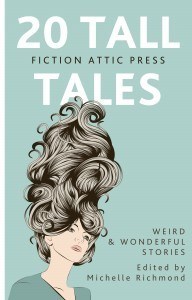 This story will appear in the anthology 20 Tall Tales: Weird and Wonderful Stories. Go here to pre-order the ebook.
 -
CSI SUV – by Gloria Frym
I was taking a bath when the idea first occurred to me—the phone call which deprived me, forever I believe, of the good opinion of several friends. I have heard it said by others that they laughed so hard they wanted to do it themselves. Since I am not in possession of a great amount of free inventive powers, I always felt the need of some firm ground in the form of idea in my work. The same thing happened with this.
At the basis of it lay a story I had been greatly struck by just as three pit bulls in the dog park happened to rush by me, each yelping at the same pitch. In that remarkable moment I could watch the embodiment of a principle that had scarcely come to life but was just beginning to stir at the time, the principle which later received the name of ***.
Though very powerful, the impression this incident left on me was still rather vague. At first, I could not quite make out what the pits were after except one another.
I kept returning to the park to observe and listen to everything around me as though wishing to check the truth of my own impressions. I was worried by the following fact: not in one work of literature did I ever find as much as a hint at what I seemed to see everywhere. At the dog park, there was a woman who was endowed with an impressive nose for everything—namely, the ideas of our time. I told her what I was thinking of and what interested me so much and was astonished to hear the following remark:
Did you get this from something you saw in the movies? I said nothing.
These words produced such an effect on me that for several days I tried not to think of the idea I had in mind. However, at some point, it matured in my head. In order to sort the curds from the whey I accidentally returned a call from a dear friend. What was I after? An embodiment of the idea.
I pressed Send and when I did not hear her voice, I put the phone aside. Then I turned on the television. Nothing but crime shows on four of the few free channels left. I stretched out from a long day; my dear dog leapt onto the couch to sit beside me in order to be stroked. I was not entirely certain that this creature loved me for who I am or simply loved to be stroked and fed. Is that love? I wondered, further enlarging the sub-idea that was involved in this account. Also, my dog is not particularly affectionate and does not always run with others. Nor does she lick my face unless I should have some leftover meal or the scent of it besmirching my cheeks.
Sirens blared from the flat screen speakers, alerting my bitch’s ears, not to mention my own, and I summarily mistook the sound for 1)the emergency alert system at last in action; 2)medical aid rushing to the scene of a neighbor’s heart attack. The story on TV involved a dead body, a sharp-tongued detective, and a pert sarcastic set of female coroners who compete for excellence in their work as well as the attention of the same man.
She’s toast, the detective says, poking a campfire stick at the victim’s elbow.
She was burned like a marshmallow.
Ok, says one of the coroners, let’s do a work up. You never know the time of death with these sorts of SUVs.
No, you don’t, says the other coroner, removing her 5-inch heels to dump a pebble that had inadvertently crept its way into her arch.
What are you doing? screams the first pert coroner in concert with the detective. You’re occupying the crime scene with your crap.
What are you calling crap? And who is you? Who am I? Why?
A long silence ensued while the medics hoisted the charred body onto a stretcher.
Crispy, ya think? said one of the medics.
Lucky her lips are still intact, said the other.
Just as this pronouncement was made by the television medic, fire trucks pulled up to my house. I certainly had not asked for them. My landline phone rang. It was her, dear friend. Are you there? she yelled over crackling static. Am I where? I said. She seemed to not hear me.
After that it was all a blur. The television medic, the pert coroners, the sirens, the phone calls, the knocks on the door, the boyfriend, the girlfriends, the clerk in the mini-mart with whom I had exchanged ideas about capitalism. All rotating before me like a spinning globe. We heard what the police said, we feared, we rushed over because … .we love you, each said in their own voice, except all the voices became a chorus and the chorus stood by my couch and my dog barked a bark I had never heard before.
How utterly wonderful! I love you too, I said in the ensuing group hug.
Except that instantly the pedestal on which I stood among these dears had been destroyed chiefly by the chief medic combing through my home and discovering my cell phone, which was still blithely speaking to my friend who was standing right in front of me, not hearing it anymore, half-crazed at the thought that someone had put me on a spit and roasted all but my face.
Would they understand or forgive me? Not me, but my idea. The excuse of being an unloved child no longer held any caché among the best of them who had, well, let’s leave it at that. That it might have been an accident lingered in the minds of some of those present, except the boyfriend of my girlfriend who did not believe in accidents. They did not, have never got quite the right idea of what took place in the mind of a person, or of what exactly her joys and sorrows, her aims, successes and failures are. They do not, for instance, even suspect the pleasure that consists of castigating one’s self and one’s faults in the actions one commits. Now they seem quite sure that this was a little prank, even if the reality of life has been correctly and powerfully reproduced, even if this truth does not coincide with my own sympathies. In the words of Goethe, “if these are roses, they will bloom.”
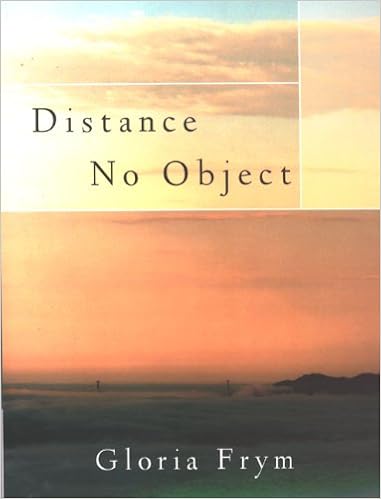
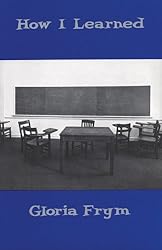
Gloria Frym was born in Brooklyn. Her new collection of prose, THE TRUE PATRIOT, is just out from Spuyten Duyvil. Her recent books of poetry are The Stage Stop Motel and MIND OVER MATTER (BlazeVOX books, 2011). She is also the author of two short story collections—DISTANCE NO OBJECT (City Lights Publishers, 1999) and HOW I LEARNED (Coffee House Press, 1992). She teaches at California College of the Arts in the San Francisco Bay Area.
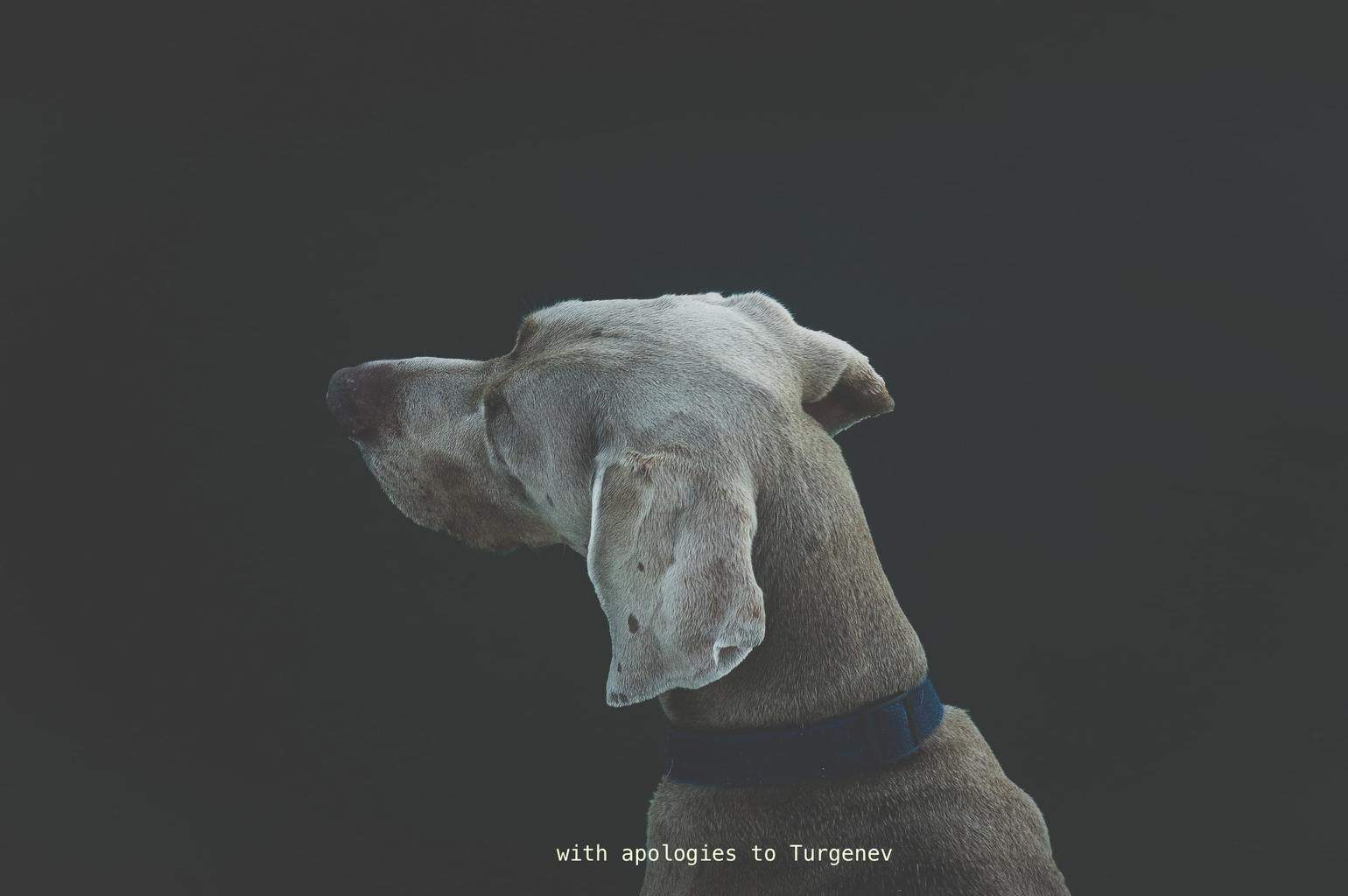
Photo courtesy of Will Langenberg. Visit the artist at willlangenberg.com.