Your cart is currently empty!
Category: tall tales
-

The English Translation of the Story of the Hero Who Named Many Places
A short story by Will Kaufman
He named this place the Apple Grove of Hope for Love, because it was in this apple grove, as a youth, that he came upon a horse, a dappled grey, and befriended it. In that time the people of our land lived far apart, and often wandered. How else to find love than on a horse?
This hill the hero named Horse-Thrown Hill, because he could not ride over it without his horse throwing him. Sixteen times in the course of the hero’s many travels he was thrown. Sixteen times as he crossed our land, looking for his love. Perhaps he should have named it Stubborn Hero Hill, for he could have ridden around it. It is not a very large hill. But he always thought, maybe this time. He would be thrown still had his horse not died.
I have never owned a horse, though I have seen several. Wild horses, even. A small herd, chestnut and white in a stretch of grassy valley too far from the city to be worth developing, and too narrow to farm. Its name on the map is Narrow Valley. I witnessed the wild horses of Narrow Valley grazing by the freeway, the E-244. Such are the names given now.
Professor Padarak drove me down that road, in her rusted Lada, to interview a retired truck driver whose father had a reputation as a great storyteller. We brought tape recorders and notebooks and maps, and meant to recover old stories and old names. Professor Padarak and Aydas the Research Assistant, seeing in each landmark that presented itself outside the streaked windows of the Lada a space for an old name to be scrived.
The truck driver told us the stories his father told him, of the great hero who gave many names to the places in our land, and other stories, too. He spoke a patois of the old dialect and the new—though not like the kind taught in classrooms—and trucker-words. In English he knew “distance” and he knew “horse” from “horsepower.” Then he offered us the use of a cot next to his iron stove.
I considered the shack’s concrete floor. “I’ll sleep in the car,” I said.
“Don’t be daft,” said Professor Padarak. “You’ll freeze.”
And this is the Best Tree for Sitting Under, with its twisted roots that make beds and chairs, and its dense leaves that shelter and shade. The hero sat here many times on his travels, stopping even if he was not tired, just because it is so good a place to sit. While he sat he thought about finding his love, about finding a woman with whom he could name a place Home, and how they would have many children, and he would ask her to name each one, then he would name a place for each one. This was a sad thought, too, because he would not need his horse any longer, having found love, but he loved his horse. He had spent so long with his horse, and needed his horse, and his horse held all his hopes in the thunderous chambers of her heart. Would his hopes still be thunderous once he found love?
He could have named the tree Where Happy Thoughts Become Sad Thoughts, or Where Joy and Sadness Forget Why They Are Different, but that was not necessary. Sit for long enough and all things come and go, so being a place one could sit for a long time was a much better recommendation for the tree than any such nonsense.
So why didn’t the hero sit and wait for his love, if all things would come and go? When he thought that, he knew he had sat too long, and he leapt onto his horse, and after leaping one such day he meant to tell his horse how, even though she was a means to love, he loved her for herself, but he could not speak to the horse for he did not know the horse’s name.
So he said aloud that he would find someone to name his horse, and hoped his horse heard him, and understood.
And the University library was a kind and warm place, gentle in spite of the efforts of its builders to harden it with linoleum and fluorescent tubes and steel shelves. We surrounded ourselves with reference books and set about making all the truck driver’s words English words so we could publish in English…
(EXCERPT) Continue reading this story on Beacon.
Will Kaufman’s work has previously appeared in The Collagist, PANK, Unstuck, Lightspeed Magazine, McSweeney’s Internet Tendency, and a number of other journals. He received an MFA in Creative Writing from the University of Utah in 2010.
Image courtesy of Patrick Tomasso via unsplash
 This story will appear in the anthology 20 Tall Tales: Weird and Wonderful Stories. Go here to pre-order the ebook.
 -
How to Handle Winter
A Short Story by Melissa Gutierrez
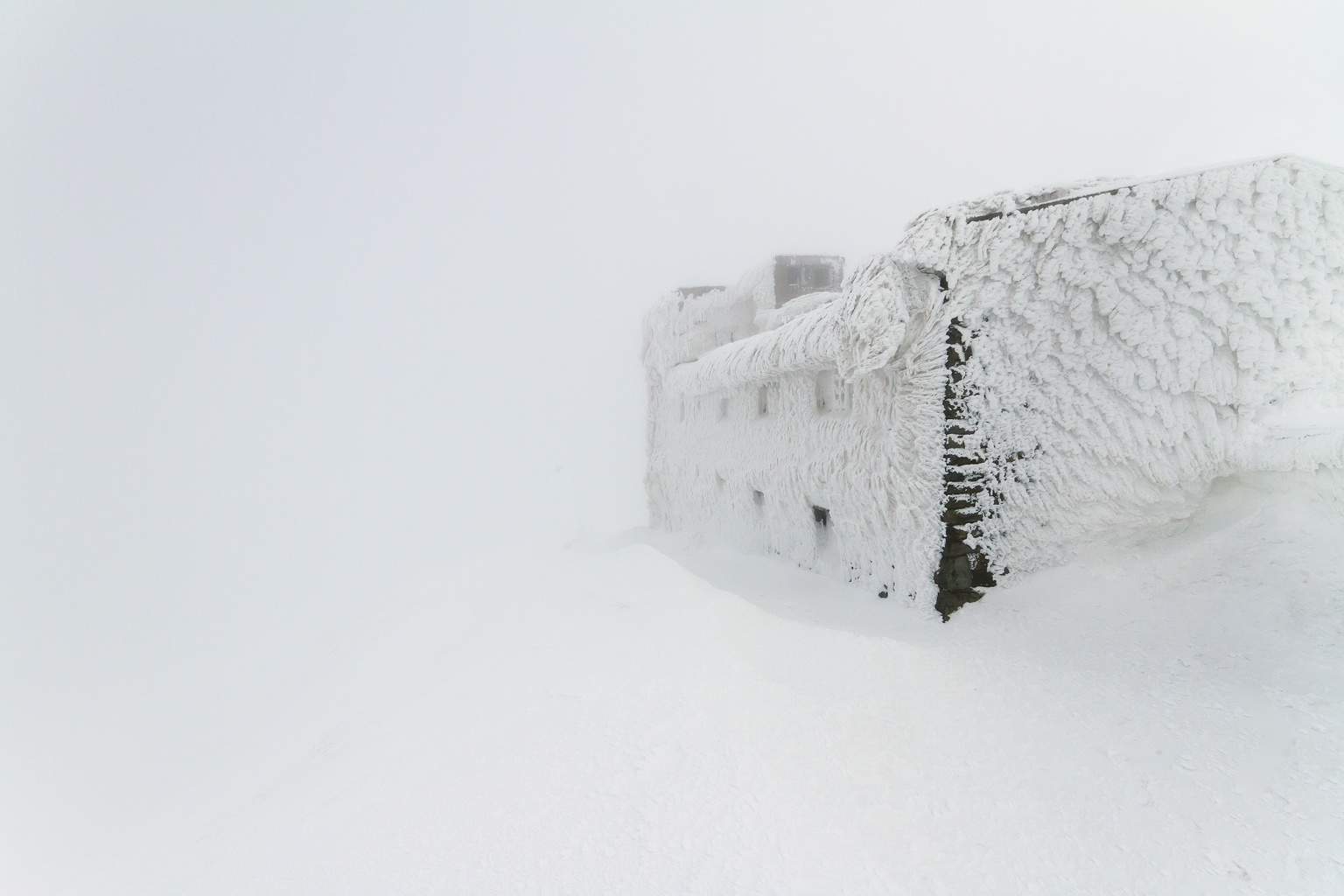
The snowman was more that than anything else—a man who lived in the snow. He had a pelt like other yeti, certainly, but it wasn’t anything abhorrent in the least; soft, in fact, were one to get close enough to brush arms with him and feel the fine hairs graze across so light and thrill like marabou. He was a beast of course, but had the good fortune of being a northern one. The cold, and nightly grooming sessions, kept his hunting-sweat from building up and stinking. And lying on a bed of furs each night looking upwards for the ribboned polar glow kept his heart always at peace—with so many swirling colors overhead, bright even through the plastic ceiling skylight, how would one ever feel alone?
The snowman couldn’t really bear to hunt. He could stand the sight of blood but couldn’t find a way to really do the deed without getting any on his whitely-padded hands. He might have been a vegetarian were he any longer left of center, but he had a sense of order in things and kept on eating meat. He made a trek down from his snow-packed mountain pass to the little village general store once every couple weeks, picking up a crate of Kobe steaks and a couple whole king salmon that the owner set aside. The snowman kept a hothouse for the slew of vegetables and herbs he grew himself. He had built it off the cabin-cave like a giant sunroom, and spent the early mornings tending to the rows of home-grown produce, and the evenings sometimes doing canning or other kinds of preservation prep. When the sun came up, he skied.
“I see him, Dad, I see him!”
“See what?” the father asked, and hunkered down at the windowsill, his elbows up on it and folded like a bedtime prayer. The daughter held her posture similarly, but with binoculars between her hands. Her eyes were hidden, her face attached to the lenses, and the other lenses pressed right up against the windowpane, where frost had started gathering low near the sill below.
“The snowman,” she said, saying it like a secret.
“The snowman?” the father asked.
“The snowman,” she said, and set the binoculars down on the wooden ledge. She turned to face her father. “He is tall and white and furry, and he rides a set of skis.” Her lips were like two berries, olallie-b or huckle, and her eyelids blinked in mark of fact.
“One time,” the father said, and stroked her curly hair, “before we moved, your mother and I lived in the hills of a golden valley. Growing up we watched cattle and deer and boars and goats and kept a sharp eye out for mountain lions. One time when we were little—we grew up friends and neighbors—your mother said to me, ‘Look, there, a giraffe.’ She pointed towards a little bunch of trees, and I couldn’t see a giraffe. And she said, ‘No, the next patch, inside that little shadow.’ And I looked inside that little shadow on the hill and sure enough, there was a giraffe. She said to me, ‘It comes out every night.’ So every night we watched the shadow on the hill and every night the giraffe came out again. Then one day, your mother said, ‘Let’s go see where the giraffe lives.’ We put our best boots on and climbed all the way to the top of that hill, to the patch of trees where we saw the giraffe come every night. It was summertime and the grass was dry like straw, and our climbing up through it was so noisy, like rustling through plastic grocery bags.”
The little girl put her hands together and rubbed them to make noise. Her father smiled.
“Yes,” he said. “Almost like that. But not as soft.” He smiled, then continued on. “We had scissorweeds and thistles sticking all throughout our socks. Halfway up we had to stop and pull a tick out from behind her knee. I was a Boy Scout then and had brought a first aid kit with us just in case, so I was armed with tweezers.”
The daughter wrinkled up her nose.
“We got it out okay. Your mom was brave. Anyways, as we were trudging upwards towards the giraffe lair, the sun was almost setting. We could see him come out from just a little down the hill. He stood calmly, looking at us. He was going to wait for us to meet him—we were going to see the giraffe up close.”
The daughter gasped. Her eyes were big. She pulled the binoculars down into her lap and leaned in forward.
“When we got to the giraffe,” the father said, “it was just a log. A giraffe-shaped log.”
The snowman’s cave was built along a low cliff of an upper mountain range that overlooked a valley. The whole area was so high up in the world that everything stayed white with snow year-round, except the very middle of the valley where a river ran and green grass grew in late June through July. Cold pats of snow remained underneath the trees around the valley’s fringes, even then. The trees grew all the way up to the bottoms of the rock cliffs, where there was no dirt to grow—a couple branches here and there, so a cardinal or owl could nest, so even birdsong met the alp-y mountain peaks sometimes. Above the cliffs were the mountaintops, almost ridge-like. The valley was like God had punched the earth, not round enough to be a crater really but imprinted in the earthface all the same. The only way out, besides scaling mountain cliffs and walls and peaks, was a little pass near the west end of the valley, like where maybe God’s right thumb had been when he threw that big hard punch. It wasn’t dangerous or blocked or controlled by anyone in any way, though mainly the only people who came in and out were food and fuel suppliers, and the occasional tourist who rented out a village cabin that they’d found online.
The snowman circled all of this on skis each and every day. On Mondays he’d make a half-moon from the right of his front door to the north side of the pass, and on Tuesdays he’d make the arc around the south. On Wednesdays he rode the treeline and on Thursdays he snaked through, in and out of the pines around the upper elevations. On Fridays he did downhill at a private slope he’d built a half a mile from his digs. On weekends he waxed and cleaned his skis, gave them and his legs a break, put his body in an ice bath in the snow and then caught up on any hothouse work he’d missed, or did an extra run down to the village store.
Continue reading the story on Beacon…
Melissa Gutierrez is an artist and writer living and working in Northern California. She holds an MFA from the University of Arizona. Follow her on twitter @mmgutz.
This short story will appear in the anthology Tall Tales: 20 Strange and Wonderful Stories from Fiction Attic Press.Image courtesy of Paul Itkin, via unsplash.com