Your cart is currently empty!
Category: short stories
-
Food for the People
a short story by Jiri Kajane
Fiction Attic Press is pleased to present the first new Jiri Kajane story in a quarter century, “Food for the People.” If you enjoy this story, you may also enjoy Winter in Tirana: The Stories of Jiri Kajane (Volume 1), and Some Pleasant Daydream: The Stories of Jiri Kajane (Volume 2), both published by Fiction Attic Press.
It’s early March, snow still on the ground, wind coming through the broken windows of the empty, disused ball bearing factory. Leni and I are sitting on crates, waiting, and the metal door dividing us from the loading docks rattles each time the wind sweeps through. We’ve been here long enough that I have noticed a rhythm to it.
“New beginnings,” Leni says.
“Indeed.”
“Sevasti guaranteed that he will have the first truck here by two o’clock.”
I check my watch; it’s 2:15.
Leni has purchased something called the New Hanjin Automat. An antique dealer in Tokyo, or maybe Sri Lanka, sold it to him in late August, and since then they have been working together to get the unwieldy shipment to Tirana. Finally, after some delays in Malta due to an underpaid crew and an unpaid fuel bill, the automat arrived at the port in Durres late last night. We’ve been waiting for Sevasti and his crew to transport it the last twenty-three miles.
-
The Heart
a short story by C. Wrenn Ball
They gathered in the center of the cabin, away from the world, the four of them talking about their family’s heart. She would drive her son South on 321 to Charlotte, early on a Saturday morning. By the time they reached the highway, her husband and daughter would have offered excuses around town. A trip across the country. Some time together, before her son’s wedding. They’d return like nothing had changed, if they were lucky.
The discussion had been short and to the point, her husband and daughter had not argued, despite the danger, the illegality. Her husband was too old to receive the organ, her daughter too young and was, of course, without a lover. The organ was naturally tender, already pressed to its limit, so they were resolved to tradition. Her daughter had not betrayed jealousy, and over the course of the night, her son had not uttered a word.
She had a doctor’s number, passed between pages in a book that was three generations old. Stored in a bedside drawer, a key to her cardiovascular system. She’d been staring at the faded ink for months. Borrowed time, borrowed, borrow. Then freely given, while fear reigned in her body.

Before they cut open her chest cavity, she had to know that her son would not waste the heart. She cornered him on the couch, the night before their drive down the mountain. They sat together, discussing the secrets of the universe and their family’s illicit organ, while she searched his eyes for doubt.
-

Abuela’s Hammer–by Lucy Rodriguez-Hanley
Fellita is on a mission to kill the man who violated her granddaughter. He put his hand so far up Elena’s nalgas that he managed to grab her holy hole too. Fellita only knows about the ass grab, she’ll take out his whole family if she knew the rest.
Elena is chunky, like me. We hide inside big jogging pants with the waistband rolled up so we can look fatter. We wear long T-shirts, me to cover my boobs and Elena, her bubble butt.
I am used to ignoring the hungry dog looks from men older than Papi. Our uptown Manhattan neighborhood is infested with sinverguenzas who undress young girls with their eyes. Watching my best friend get assaulted in broad daylight, right in front of our building while I was too chicken shit to protect her, trips me up with guilt. It should have been me. The minute he saw us, Nestor started telling his friends what he would do to me if he ever catches me alone. Elena put her arm around me and that’s when he came at her, and called her a fat, ugly dyke. I should have punched him, pulled his hair, kicked him, instead, I froze.
From behind, Fellita looks like a teenager. She bleaches her hair blonde to look like her idol but she is more Celia Cruz than Gwen Stefani. Her copper skin and curvy shape always gets men’s attention but her face always freaks them out. They are expecting Lolita and instead get a fifty-year-old grandma with braces and coke bottle glasses.
She walks slowly, the cowry bells on her silver anklet jingle all the way up the block. She’s in disguise, cat eyes sunglasses and a big floppy sun hat. The men on the corner of 170th and Broadway selling stolen True Religion jeans out of the back of an SUV have already spotted her. Fellita moves slowly like a mermaid luring them to their untimely demise. Elena and I follow her from the other side of the street.
Nestor whistles at Fellita.
She takes a hammer out of the Hello Kitty tote bag and smashes the windshield of the SUV. The crack in the glass spreads like a spider spinning its web at 100 miles an hour.
The men, caught off guard, freeze when she aims the hammer at Nestor’s head.
“Abue nooooo! he didn’t do it!” Elena screams, running across the street to stop her grandma from killing Nestor. I run after her.
“Este es el perverso?” Fellita asks Elena, then me as she crumbles Nestor the molestor’s balls into tiny specs of dust. I nod. One of the men grabs Fellita from the back. She kicks him like a pissed off mare, and bites the arm he tried to grab her with. Nestor’s high pitched screams reverberate, bringing everyone to their windows, their stoops and the corner. She finally lets go when he pees on her hand.
If one of my nosey neighbors tells Mami I am with Fellita and Elena after she told me not to hang out with them because they are chusma, I’ll be grounded for life.
When a police car pulls up to ticket the SUV for blocking the fire hydrant, the men scatter along Broadway like cockroaches running from a can of Raid.
Nestor leaves me alone for the rest of the summer and relocates his business to the corner of 173rd and Amsterdam.
170th and Broadway stays free of sinverguenzas and pervs. Fellita, and the neighborhood’s abuelas, tias and mamis, including mine, patrol the block armed with hammers, rolling pins, and screwdrivers they are not afraid to use.
Lucy Rodriguez-Hanley was born in the Dominican Republic, raised in New York, and has been living in Los Angeles for the past 16 years. In her work as a writer and filmmaker, she strives to make the identity of the bilingual, bicultural, brown girl/woman visible and to dispel some of the stereotypes that marginalize people who grow up immigrant, urban, and poor.
Photo by Jilbert Ebrahimi on Unsplash
-

Conspirators – Fiction by Judith Serin
When Clive broke up with Clara, who worries if she is intelligent, he told her that their relationship was only sexual. When he left me, always unhappy with my body, he said I didn’t really turn him on. Our common hurt was what brought us together. We felt he’d negated us, body and soul.
We met at a party in my cousin’s backyard. Bonnie steered me past her overpoweringly fragrant jasmine vine to a small woman sitting on the shaded bench.
“Celia, my dear, you must cheer Clara up. She’s feeling rotten about a man.”
“Really?” I stared at the beautiful, flower-like woman. “Me too,” I added after Bonnie strode away. My cousin was too close to my our family for me to let her know about the failures in my personal life.
“Aren’t they fuckers?” Clara’s voice was low and slightly guttural.
The obscenity put me at ease. “Christ, yes, and this one you wouldn’t believe.”
“Mine was worse.”
“Don’t be so sure.”
We compared notes. Clara’s story of a blissful beginning, uneasy middle, and final betrayal was familiar, similar to my story, to the stories which many of my friends tell about their one or two disasters. Then she mentioned the name Clive. The dates of our relationships overlapped. We discovered the depths of his treachery.
We became friends. There was an immediate intimacy between us. We could talk endlessly about Clive with a degree of obsession we hid from others. Clara didn’t say, annoyance tingeing her voice, “Why don’t you just forget him?” She knew the answer.
We did things together to distract ourselves. We discovered that we liked the same movies, the same parks, the same cafes. We spent much of our days together, since we both worked part-time. I taught art classes to small children and their mothers. She was a secretary to a psychologist who once a week good-naturedly tried to seduce her, while she good-naturedly refused. Jerry was remarkably easygoing. She told me that he didn’t protest when she pulled the filing cabinet down on herself by opening the two top drawers at the same time, the day after Clive broke up with her. She sat sobbing, surrounded by papers, until her employer returned from a long lunch and helped her straighten up.
Events take on significance later. Once Clara appeared in the doorway of my classroom, her face streaming with tears. The mothers shifted in their low childs’ chairs.
“Clar,” I ran to shield her from them, “are you O.K.?”
“Yes. Get back to work; I’ll wait in the hall.” She slid her back down the wall and landed sitting, her knees drawn up, as though she were pulling into a shell.
I returned to the classroom and busied myself mixing paint, my back to the mothers. God damn their eyes, I thought, for the first time understanding the phrase. I didn’t want our sorrow to be observed.
“Hope your friend feels better,” Mrs. Gruber remarked at the end of class as she pushed Johnny out the door.
“I’m sure she’ll be all right,” I answered brusquely. Clara huddled in the hall, staring through the passing procession of knees. “Did you notice the figure Johnny drew today?” I continued. “He’s really developing fast. The blue painting…” My eyes were drawn to some movement or change. Had Clara left? I didn’t see her. Then she was there again, crouching motionless.
Mrs. Gruber coughed delicately. “The blue painting,” I responded, “is very, ah, thoughtful, sophisticated.”
I watched Mrs. Gruber click down the stairs, her firm hand on Johnny’s wrist as he thumped from step to step. “Come in,” I called to Clara. “I’ve got to clean up. What happened?”
“I just needed to see you.”
I put my arm over her shoulder, holding my paint-crusted hand away from her mauve flowered blouse. “We clash,” I said, fingering my red apron.
“It’s a disguise. So people won’t know how close we are.”
“Conspirators.”
She smiled slowly. “Yeah, it’s us against Clive and the world.”
Another time she lost me for a moment. We were at an art opening I felt obliged to attend. I edged the crowd with Clara, trying to seem absorbed in Billy Sagan’s slick, expensive paintings. “So this is how he does it,” I gestured at a large canvas of geometric shapes. “The colors this year; it’ll go with any room your decorator designs.” I glared at the genial drunk in the center of the crowd. He saw me, flopped his hand, and smiled lopsidedly. “Nice work,” I shouted.
I turned back to the wall. There were too many people there that I recognized and might have to speak to, and they were dressed too flamboyantly. What had I been thinking of, coming to an opening without jewelry, a hat, or a period costume? I felt conspicuous. I hated the crowd for their successes, for the way they chatted and laughed, the way they slid, plastic wine glass in hand, from one conversation to another. There was Laura Rogers moving toward us like a ship. I knew what our exchange would be like. I would admire her ponderous ceramic necklace, which, of course, she had made herself. She’d ask me what I was doing and I’d answer that I was still teaching kids and finding time for a few drawings. I’d ask her what she was doing: another grant, a new show opening soon, a choice teaching job.
“Celia?” Clara turned slowly, peering through the crowd.
“I’m right here.” I put a hand on her shoulder.
“Huh?” She whirled around. “That’s funny. I didn’t see…”
“Oh Celia, and who is your gorgeous friend?” Laura bore down upon us.
A few days later we sat in a cafe. I played with the sugar in the bowl. I wanted to relate last night’s dream: Clive chasing me into a public bathroom, my terror as I waited in the gray stall, knowing he would enter when the other women left, knowing he had a knife in the pocket of his pale blue jacket.
I wanted to hear how Clara would interpret this, what sexual connotations she would catch. I wanted to spill the frightening dream onto the white tablecloth between us, letting her rearrange it into a daylight phrase.
But a man was watching us. I was angry at the intrusion, angry at his arrogant expression, angry because I was sure it was beautiful Clara who interested him.
“What’s wrong?” Clara asked me.
I leaned toward her. “That man’s looking at us.”
She turned. Her eyes met his. “Are you looking at us?”
He half rose. “Yes, you look too good to ignore.”
“Well please stop. We want to talk. You’re making us uncomfortable.”
He slumped back into his chair.
“Clara, that was fantastic. I never know what to say to them.” The man gulped his coffee and left. “I just get so flustered.”
“It’s O.K. Men looking at us has been bothering me lately too.” Her shoulders drooped.
I poked the spoon into the sugar. “I wish we were invisible.” I looked up. Clara was gone.
“Clar!”
“Celia?” I felt a hand grope for mine.
“Clara, are you there?” The table where our hands were clasped was empty.
People looked in our direction. What would they do to invisible women? I heaved Clara’s weight toward the back door. A small strip of grass behind the building. I crumpled, panting.
“Clara, what should we do?”
A gasp or stifled giggle.
I lay back on the grass. I held up my hand and looked through it at an alligator shaped cloud. My breathing slowed, sank. The sky darkened. I saw the flesh of my solid hand.
Clara sat nearby, her legs crossed tailor-fashion. She had lost her air of exhaustion; she looked alert, interested.
“Celia,” a smile of greeting, “you’re back. What do you think?”
“I don’t know. It just happened. I didn’t feel anything. It just sort of happened.”
“Let’s try it again.”
I stared at her.
“Come on. Think about something you want to get away from. I know, that dinner party I told you about, the one when Clive talked to that woman photographer all night and I didn’t know anybody.” Her shoulders sagged; her image wavered. She was gone.
“Clara, come back!”
“It worked.” Her voice was exultant. “Come on, Celia, try.”
“I don’t want to. Please come back.”
“In a minute.”
I felt scared, lonely. I thought that there had been plenty of times when I would have loved to be invisible. The high school dances, before I knew better and stopped going. Oh God, trying not to stare at Walter Griffin as he sauntered in my direction, but also not looking away in case he did want to ask me to dance.
I started. I couldn’t see myself. I reached for Clara’s hand.
We went in and out of being invisible. Our lives didn’t change much. Lighter and more pliant than most people, we floated in this new element, entering museums and movies for free, watching others unobserved, though it was hard to remember not to talk, and more than once our voices puzzled or scared some passerby.
Before, we had avoided going anywhere near Clive’s house, though we were drawn to it, imagining the blue shutters, the brick stairs, the one pine tree in front. Now, invisible, we walked past it often, gorging ourselves on pain and the freedom to feel it. Once, we peered in the kitchen window.
“Wonder If he still keeps a jar of caviar in the fridge,” I said.
“And green olives.”
“Ugh,” I responded. Clara liked to eat bitter things. I loved everything fattening, sweet or salty.
“You know, he keeps the back door key under the third geranium.”
“I know.” I thought ruefully of Clive’s luck; I had never let myself in while Clara was waiting for him in the bedroom room with a book.
“Let’s go in.”
“Clar!”
“Why not? I’m hungry.”
The key clicked, scaring me. We entered cautiously. The house reeked of his presence and I wanted him. I also wanted to smash the antique porcelain fu dog in the hall, to kick the Oriental rugs into a heap, scrawl on the etchings, and, most of all, to batter the shiny, inscrutable suit of armor that stood on the landing of the stairs. His perfection, his horrible self-sufficiency.
“Clara,” I whispered. I had gone into the living room without her. I called into the doorway of each room except the bedroom. If I didn’t find her soon, I knew I would wait, visible, on Clive’s bed for his appearance, probably with a startled woman holding his hand.
“Hi,” she answered in the kitchen. “I’m eating.” An enormous sandwich, several layers of cheese and meat, lifted into the air.
A few evenings later we felt restless. There were no movies we wanted to see and Clara’s television bored us. The summer air settled on my shoulders. I stretched my arm; it was like moving through soup. “I wonder what he’s doing.”
“Fucking.”
“Yeah, probably.”
“We could go see.”
“Okay,” I surprised myself by agreeing.
He was alone. He lay among his colored pillows, the sheets crumpled around him. His body was thin, long. He looked vulnerable, yet closed. We stood several feet from the bed, holding hands, trying to be angry. Clara sobbed once and he stirred, an uneasy sleeper.
“Should we go?” I whispered.
“Yes. Oh, he looks so innocent.”
I pulled her toward the door, my stomach furry. She reached out as we passed him and laid her fingers on his thigh. He sprang up.
We clattered down the stairs and fumbled with the front door lock. In the uproar of our escape, I can’t be sure I heard his voice, higher than usual, shouting behind us.
At my apartment we fell into the two fat chairs. Clara finally spoke, “I bet he was really scared.”
Her face twisted between a smile and a sob. My mouth twitched and we laughed.
“Oh God, can you imagine? He must be petrified.”
“Good.”
“Celia,” Clara looked at me eagerly, her full-lipped mouth half open, “Let’s go back; let’s really scare him.”
“Yes.” My tongue lay in my mouth like a pastel lozenge. Evil had a delicious taste.
For a week we didn’t talk about that night. We stayed visible and saw several movies. On Friday we went to a department store. The number of customers surprised us until we realized it was lunch hour. I felt uneasy among the crowd. Clara gasped. “Look.” She pointed and vanished.
Clive stood by a table, examining a bolt of blue cotton printed with enormous red roses. The blue matched his eyes and, possibly, his living room curtains. In the daylight, I saw he had gotten very tan.
His head turned, and I disappeared, reaching for Clara’s hand. We stood still. I was afraid the shoppers would bump into seemingly empty space, more afraid to try to push through them. Clive bought several yards of the fabric and left with the parcel under his arm. The store began to empty; lunch hour was over. “Let’s get out of here.” I pulled Clara into visibility.
That evening we went to his room. It was sunset, the sky a tender pink-tinged blue. Colors fluoresced in that light–the geraniums by the door, the roses on the new cloth draped over the living room sofa. We climbed the stairs quietly. Clive lay against his pillows, his right hand resting on an open book by his side. He was looking at some treachery, his eyes reflective, inward. He wasn’t thinking about us.
Clara gripped his arms. I sat on his legs and unbuttoned his shirt.
His mouth, like an O, floated above us, the screams issuing from the cream colored ceiling, the round moon scaling the window.
Judith Serin has taught Literature at CCA for many years. Her books include the poetry collection, “Hiding in the World” (Eidelon Editions), and an artist’s book featuring Serin’s poetry in collaboration with book artist Nikki Thompson, “Days Without (Sky)” (Deconstructed Artichoke Press). She has published numerous short stories and poems in journals and anthologies.
-

The English Translation of the Story of the Hero Who Named Many Places
A short story by Will Kaufman
He named this place the Apple Grove of Hope for Love, because it was in this apple grove, as a youth, that he came upon a horse, a dappled grey, and befriended it. In that time the people of our land lived far apart, and often wandered. How else to find love than on a horse?
This hill the hero named Horse-Thrown Hill, because he could not ride over it without his horse throwing him. Sixteen times in the course of the hero’s many travels he was thrown. Sixteen times as he crossed our land, looking for his love. Perhaps he should have named it Stubborn Hero Hill, for he could have ridden around it. It is not a very large hill. But he always thought, maybe this time. He would be thrown still had his horse not died.
I have never owned a horse, though I have seen several. Wild horses, even. A small herd, chestnut and white in a stretch of grassy valley too far from the city to be worth developing, and too narrow to farm. Its name on the map is Narrow Valley. I witnessed the wild horses of Narrow Valley grazing by the freeway, the E-244. Such are the names given now.
Professor Padarak drove me down that road, in her rusted Lada, to interview a retired truck driver whose father had a reputation as a great storyteller. We brought tape recorders and notebooks and maps, and meant to recover old stories and old names. Professor Padarak and Aydas the Research Assistant, seeing in each landmark that presented itself outside the streaked windows of the Lada a space for an old name to be scrived.
The truck driver told us the stories his father told him, of the great hero who gave many names to the places in our land, and other stories, too. He spoke a patois of the old dialect and the new—though not like the kind taught in classrooms—and trucker-words. In English he knew “distance” and he knew “horse” from “horsepower.” Then he offered us the use of a cot next to his iron stove.
I considered the shack’s concrete floor. “I’ll sleep in the car,” I said.
“Don’t be daft,” said Professor Padarak. “You’ll freeze.”
And this is the Best Tree for Sitting Under, with its twisted roots that make beds and chairs, and its dense leaves that shelter and shade. The hero sat here many times on his travels, stopping even if he was not tired, just because it is so good a place to sit. While he sat he thought about finding his love, about finding a woman with whom he could name a place Home, and how they would have many children, and he would ask her to name each one, then he would name a place for each one. This was a sad thought, too, because he would not need his horse any longer, having found love, but he loved his horse. He had spent so long with his horse, and needed his horse, and his horse held all his hopes in the thunderous chambers of her heart. Would his hopes still be thunderous once he found love?
He could have named the tree Where Happy Thoughts Become Sad Thoughts, or Where Joy and Sadness Forget Why They Are Different, but that was not necessary. Sit for long enough and all things come and go, so being a place one could sit for a long time was a much better recommendation for the tree than any such nonsense.
So why didn’t the hero sit and wait for his love, if all things would come and go? When he thought that, he knew he had sat too long, and he leapt onto his horse, and after leaping one such day he meant to tell his horse how, even though she was a means to love, he loved her for herself, but he could not speak to the horse for he did not know the horse’s name.
So he said aloud that he would find someone to name his horse, and hoped his horse heard him, and understood.
And the University library was a kind and warm place, gentle in spite of the efforts of its builders to harden it with linoleum and fluorescent tubes and steel shelves. We surrounded ourselves with reference books and set about making all the truck driver’s words English words so we could publish in English…
(EXCERPT) Continue reading this story on Beacon.
Will Kaufman’s work has previously appeared in The Collagist, PANK, Unstuck, Lightspeed Magazine, McSweeney’s Internet Tendency, and a number of other journals. He received an MFA in Creative Writing from the University of Utah in 2010.
Image courtesy of Patrick Tomasso via unsplash
 This story will appear in the anthology 20 Tall Tales: Weird and Wonderful Stories. Go here to pre-order the ebook.
 -
How to Handle Winter
A Short Story by Melissa Gutierrez
The snowman was more that than anything else—a man who lived in the snow. He had a pelt like other yeti, certainly, but it wasn’t anything abhorrent in the least; soft, in fact, were one to get close enough to brush arms with him and feel the fine hairs graze across so light and thrill like marabou. He was a beast of course, but had the good fortune of being a northern one. The cold, and nightly grooming sessions, kept his hunting-sweat from building up and stinking. And lying on a bed of furs each night looking upwards for the ribboned polar glow kept his heart always at peace—with so many swirling colors overhead, bright even through the plastic ceiling skylight, how would one ever feel alone?
The snowman couldn’t really bear to hunt. He could stand the sight of blood but couldn’t find a way to really do the deed without getting any on his whitely-padded hands. He might have been a vegetarian were he any longer left of center, but he had a sense of order in things and kept on eating meat. He made a trek down from his snow-packed mountain pass to the little village general store once every couple weeks, picking up a crate of Kobe steaks and a couple whole king salmon that the owner set aside. The snowman kept a hothouse for the slew of vegetables and herbs he grew himself. He had built it off the cabin-cave like a giant sunroom, and spent the early mornings tending to the rows of home-grown produce, and the evenings sometimes doing canning or other kinds of preservation prep. When the sun came up, he skied.
“I see him, Dad, I see him!”
“See what?” the father asked, and hunkered down at the windowsill, his elbows up on it and folded like a bedtime prayer. The daughter held her posture similarly, but with binoculars between her hands. Her eyes were hidden, her face attached to the lenses, and the other lenses pressed right up against the windowpane, where frost had started gathering low near the sill below.
“The snowman,” she said, saying it like a secret.
“The snowman?” the father asked.
“The snowman,” she said, and set the binoculars down on the wooden ledge. She turned to face her father. “He is tall and white and furry, and he rides a set of skis.” Her lips were like two berries, olallie-b or huckle, and her eyelids blinked in mark of fact.
“One time,” the father said, and stroked her curly hair, “before we moved, your mother and I lived in the hills of a golden valley. Growing up we watched cattle and deer and boars and goats and kept a sharp eye out for mountain lions. One time when we were little—we grew up friends and neighbors—your mother said to me, ‘Look, there, a giraffe.’ She pointed towards a little bunch of trees, and I couldn’t see a giraffe. And she said, ‘No, the next patch, inside that little shadow.’ And I looked inside that little shadow on the hill and sure enough, there was a giraffe. She said to me, ‘It comes out every night.’ So every night we watched the shadow on the hill and every night the giraffe came out again. Then one day, your mother said, ‘Let’s go see where the giraffe lives.’ We put our best boots on and climbed all the way to the top of that hill, to the patch of trees where we saw the giraffe come every night. It was summertime and the grass was dry like straw, and our climbing up through it was so noisy, like rustling through plastic grocery bags.”
The little girl put her hands together and rubbed them to make noise. Her father smiled.
“Yes,” he said. “Almost like that. But not as soft.” He smiled, then continued on. “We had scissorweeds and thistles sticking all throughout our socks. Halfway up we had to stop and pull a tick out from behind her knee. I was a Boy Scout then and had brought a first aid kit with us just in case, so I was armed with tweezers.”
The daughter wrinkled up her nose.
“We got it out okay. Your mom was brave. Anyways, as we were trudging upwards towards the giraffe lair, the sun was almost setting. We could see him come out from just a little down the hill. He stood calmly, looking at us. He was going to wait for us to meet him—we were going to see the giraffe up close.”
The daughter gasped. Her eyes were big. She pulled the binoculars down into her lap and leaned in forward.
“When we got to the giraffe,” the father said, “it was just a log. A giraffe-shaped log.”
The snowman’s cave was built along a low cliff of an upper mountain range that overlooked a valley. The whole area was so high up in the world that everything stayed white with snow year-round, except the very middle of the valley where a river ran and green grass grew in late June through July. Cold pats of snow remained underneath the trees around the valley’s fringes, even then. The trees grew all the way up to the bottoms of the rock cliffs, where there was no dirt to grow—a couple branches here and there, so a cardinal or owl could nest, so even birdsong met the alp-y mountain peaks sometimes. Above the cliffs were the mountaintops, almost ridge-like. The valley was like God had punched the earth, not round enough to be a crater really but imprinted in the earthface all the same. The only way out, besides scaling mountain cliffs and walls and peaks, was a little pass near the west end of the valley, like where maybe God’s right thumb had been when he threw that big hard punch. It wasn’t dangerous or blocked or controlled by anyone in any way, though mainly the only people who came in and out were food and fuel suppliers, and the occasional tourist who rented out a village cabin that they’d found online.
The snowman circled all of this on skis each and every day. On Mondays he’d make a half-moon from the right of his front door to the north side of the pass, and on Tuesdays he’d make the arc around the south. On Wednesdays he rode the treeline and on Thursdays he snaked through, in and out of the pines around the upper elevations. On Fridays he did downhill at a private slope he’d built a half a mile from his digs. On weekends he waxed and cleaned his skis, gave them and his legs a break, put his body in an ice bath in the snow and then caught up on any hothouse work he’d missed, or did an extra run down to the village store.
Continue reading the story on Beacon…
Melissa Gutierrez is an artist and writer living and working in Northern California. She holds an MFA from the University of Arizona. Follow her on twitter @mmgutz.
This short story will appear in the anthology Tall Tales: 20 Strange and Wonderful Stories from Fiction Attic Press.Image courtesy of Paul Itkin, via unsplash.com
-

The Place I Belong
Short Fiction by Kevin Sharp
My life changed when I turned seven.
It seems so long ago now, and I guess it was–especially with everything that’s happened to me since.
In 1976, my mom and I lived at the Starbrite Mobile Home Park outside Flagstaff, Arizona. I divided most of my free time there between reading in my room and playing in our yard (really a square of rocks occupied by some faded plastic flamingoes). I could stay in my fictional worlds for hours, until Mom called me for dinner or bed or because the approaching siren meant that something was going down (again) at one of the other trailers.
My mom’s name is Cinderella. Really. She hates it, always going by Cindy or Cin. She told me over and over not to name my future kids anything weird, that to parents it may be a spur of the moment thing but the kids had to live with it.
“For instance, I wouldn’t have named you Galahad,” she said.
I didn’t tell her that I wished she had, because Galahad is a way better name than Herman.
I knew my dad only as a faded image of blonde hair and sideburns. The card he sent for my seventh birthday showed an astronaut, untethered to any rocket, floating alone against a blue-black galaxy. Inside: Have An Out Of This World Birthday! Printed below that: Love, Your Pop.
Mom cried as she watched me sound the words out.
She took me to celebrate on January 1, 1977 – I’d been a New Year’s baby – and to give us both a break from our usual Rice-A-Roni or plain pasta dinners. The restaurant was called the Squat & Gobble, which doesn’t sound too fancy, but to me anyplace with cloth napkins and hardcover menus was like dining as a king. After I blew out the candle on my slice of chocolate cake (chosen off the silver dessert tray), the waitress, Dot, leaned down and whispered in my ear, “My mama poisoned my stepdad and made it look like an accident. He was a terrible man.” Then she gave a big smile; she had a smear of lipstick on her front tooth.
I lay in bed that night playing with my new Aquaman doll, wondering if Dot had told me something from a movie or a grown-up book.
The next day, my friend Richie and I waded in the creek behind his house, looking for crawfish or tadpoles. “Guess what, Herman.” His eyes were wide behind the giant lenses of his glasses. “I peeked through my parents’ keyhole and saw my mom tied up to the bed with my dad’s neckties. She shouted at him to…” Here Richie listed phrases whose meanings neither of us were sure of, exactly, nor did we know who to ask.
The school bus driver, Ms. Brenda, held me back Monday morning after all the other kids. She told me about the time she and her friends stole the principal’s car in high school. Only they didn’t know the principal needed his car to drive his sick wife to chemotherapy. There was a big mess – that’s how Ms. Brenda said it: “a big mess.”
“Not a day goes by I don’t think about that poor woman,” she told me. She wiped her eyes with a wadded Kleenex from her jacket sleeve.
After Ms. Brenda came Mrs. Nelson, my first grade teacher. The yard duty supervisor at recess. The assistant principal. The kids I talked to, on the playground, in the lunch line, in the bathroom. Even kids from the other classes, whose names I didn’t know. People who probably never even knew I existed.
They would all lean in and whisper to me, even if nobody else was around. Like what they were about to tell me was the biggest, most important thing ever.
Pug-nosed Tommy Gregson, who I guess would’ve been categorized as the class bully, told me his mom put a wad of toilet paper in his underwear every day so she wouldn’t have to wash brown stains out of it. Do you know what I could’ve done to Tommy with that information, especially as his reign of terror expanded in later grades?
What had happened when I blew out that candle? Since when was seven a magical age? In case you’re wondering, hearing all this stuff wasn’t my wish; I’d asked for the same things as every year: a life-size Batmobile, and for my dad to come home.
#
But whether I wished for them or not, my collection of secrets grew day by day, with every person I encountered.
My dentist said he ate chocolate at every meal, which I thought was a pretty cool secret for someone with that job. But then he added, “I fantasize about your mother every time you come in here. I hope you get lots and lots of cavities, young man.” (I didn’t know what fantasize meant; I pictured my mom with fairy wings, riding a unicorn.)
Mrs. Hooper from the trailer next door told me she’d once secretly dated a black boy even though her parents were super-racist. (I pictured checkered flags as her mom and dad drove fast around a track.)
Richie’s mom, when I was playing over at his house, told me she was pregnant. I thought from TV that this was good news, but she kept saying, “What was I thinking?”
Mom’s hairstylist. The gas station attendant. The red-haired girl who scooped at 31 flavors. The mailman with the cowboy mustache.
#
After a couple of weeks I felt all those stories dragging after me wherever I went, like the ghost’s chains in a Christmas movie I’d once seen. Mom and I were watching a show called Charlie’s Angels on our itchy green couch one night, when I told her what had been happening.
She ground out her cigarette in the abalone shell ashtray. “What do they say?” she asked.
I paused, wondering what the etiquette was in such a situation.
“No, you’re right. Always respect a secret.” She lit up a new one. “So what’s mine?”
I thought this over while one of the TV ladies karate-chopped a guy. I knew everything about Mom already, like that her hair wasn’t really black and she never wore underwear. But, no, it would have to be something she’d told me since my birthday.
“Um, that you didn’t pay for your new scarf. The purple shiny one.”
She stared at me while smoke swirled around us in the blue light of the TV; every other light was off to save power. “Hell, I’m just taking that thing for a test drive. Stealing is wrong and you shouldn’t ever do it. Okay?”
When she shook me awake however long later, Godzilla roared on TV and half my face was numb from the couch. Mom said, “I have an idea.”
I never saw any of the men she dated, because she’d never let them pick her up; instead, she’d put on her finger-length eyelashes and her one fancy dress to go meet them in our old blue station wagon. “It’s not as glamorous as a pumpkin coach,” was how she described the car. It used to crack me up, picturing the poor guy seeing that thing driving up and wondering what he’d gotten himself into. Then Mom would get out, all beautiful.
I’d stay up late reading comic books with a flashlight so she wouldn’t see my lamp on through the window shade and worry that I wasn’t sleeping again. Only when she was home, when I’d heard her kick off her high heels and the click-click of her lighter, could I relax. The walls of our trailer were thin as cardboard; it felt like we were right next to each other even when we weren’t.
She always said her dream man was “a young Elvis Presley with the soul of John Denver.”
Anyway, Mom’s idea…
She reached out to the TV knob with her bare foot, turned down Godzilla’s volume. “Baby, you’re gonna help me find Prince Charming.”
#
The pretty nurse at my doctor’s office led me into the exam room and told me she was head over heels in love with the doctor. Then Dr. Schwartz tapped my knees with his little hammer and told me he was gay.
A girl named Winnie Munson joined our class well into the school year; Mrs. Nelson put her in the only empty desk, which happened to be right next to mine. And so, five minutes into her time there, while everyone else focused on their subtraction problems, Winnie told me that her father locked himself into her older sister’s room every night. I didn’t respond; whatever weird games her family played were none of my business, and it wouldn’t be good for me to be seen whispering with a girl.
#
Mom stopped going out on dates – now she invited men to dinner at our trailer. If he was supposed to be there at 7:00, she’d start preparing around 6:50; the guy would show up and Mom would say she got stuck at work or had car trouble (both lies). Then I’d be in charge of entertaining him – except it was more like a job interview he didn’t know he was on.
Roger, who seemed like a giant in my tiny room, looked around and asked what sports I liked to play. “None, really,” I said. “I can’t run very good.”
His voice dropped to a familiar whisper. “You’re looking at a former college wide receiver. I was plenty fast enough, but I missed a lot of practice because I was boinking my coach’s wife the whole time.” He illustrated the concept using his finger and a closed fist.
Oh, Roger. It was nice meeting you. Sort of.
I signaled to Mom when we came out of my room – blink twice slowly – and she pretended she was getting a migraine, clutching her head with good authenticity. Then the two of us ate the nice dinner on the checkered tablecloth.
I had to open my window because of Tom’s cologne. He looked at my bookcase and my pile of comics while I looked at the curly carpet of chest hair he showed off. Tom seemed nice, and he knew about the Hardy Boys. If the worst problem had been his grooming we might’ve been ok. But then he had to kneel in front of me. “I took money from some bad people. Real bad. Now I sleep with a gun under my pillow.”
Bye, Tom.
Bye, Nate, with the night terrors you brought back from Vietnam.
Bye, Frank, with your five ex-wives and the reason why all of them left you.
Bye, Anthony, with your glass slipper jokes after seeing Mom’s name on the electric bill. (He didn’t even make it to my room.)
#
As the weather got warmer on its way to brutal, Mom took me to the public pool each weekend. I usually spent my time there lathered in Coppertone, watching the lucky kids whose dads played with them in the shallow end. Now it was all whispers in my wet ears: swimmers, parents, lifeguards, the lady at the snack bar. I got pretty good at holding my breath – and ignoring the blinding sting of chlorine – because I tried to stay underwater as much as possible. Finally I told Mom I didn’t want to go anymore; instead I’d sit three inches from the squeaky fan at home and mist myself with a spray bottle.
I didn’t want to go with her on her usual errands, either. People who had confessed once left me alone, but strangers were too risky – the man in the grocery store who was planning his suicide gave me actual nightmares. The only places I felt safe were at the movies (where I could sit way down in front by myself) and the public library (where I could hide in one of the carrels).
#
I thought Clay might be the winner of the Prince Charming sweepstakes when he offered me half a Kit-Kat bar outside the trailer while we waited for dinner. I’d been trying to avoid chocolate (and thus more cavities) but my seven-year-old will was weak.
Clay looked both ways before lighting what I knew was a joint. “I spend every day stoned – it’s the only way I can get through my shitty life. You’ll understand someday, kid.” When I was in bed later I heard him and Mom giggling; the smoke smell rolled in under my door. But I never saw him again after that.
Yale the draft dodger got to stay for dinner. So did Ben, who hadn’t been on a date in nine years. And Leroy.
But none of them were Mom’s guy. I wanted her to be happy. I wanted her not to be lonely.
“Oh, baby,” she said as she tucked me in one stuffy night. “There’s a world of difference between alone and lonely.”
This went on through the spring and summer. Richie’s mom had a baby. I lost a front tooth. Two girls vanished from my life: Winnie Munson, who stopped showing up to school, and the red-haired girl from 31 flavors (probably because the boss found out what she was doing in there after hours). Star Wars came out. Elvis died; Mom drank beers and sang along to his records all day.
#
The phone rang during Saturday morning cartoons. I held the receiver in one hand, my bowl of Cocoa Pebbles in the other. “Herman?” the man said. He spoke loudly over music and chatter in the background.
I didn’t know the voice, but I knew the voice. “Dad?”
“Yes, son.” A song played about blue eyes crying. “Say, is your mom there?”
“No, she said she’s splurging on a new haircut.”
I heard a sound like ice cubes. When he spoke again, he was much quieter, as if the phone was stuffed inside his mouth. “My folks had a terrible marriage. Fought all the time, cursed, hit each other – like they weren’t in love and never had been. I didn’t want me and your mom to end up like that. I didn’t want me to end up like that. Like maybe being a violent asshole was something my dad passed down, and then I’d pass it down to you. So I made myself leave.”
The operator asked him to deposit more money. Coins clinked.
He said, “The last time I saw you and Cin was the last happy day of my life.” A new song started: something-something country roads. “I don’t know why I’m telling you all this.”
And there in our tiny kitchen, for the first time when someone had finished whispering to me, I smiled.
Kevin Sharp teaches high school creative writing in Northern California. He is the author of the YA novel After Dakota; his work has also appeared on The Weeklings and in Bookmarks magazine. While he has technically grown up, Kevin has yet to outgrow Looney Tunes, The Price is Right, fantasy novels, or comic books. This story makes him want to confess his secret celebrity crush on Kate Winslet. Visit him online at www.kevin-sharp.com.
Image courtesy of Pawel Kadysz at unsplash.com
-
Magic Man
A Short Story by Enid Harlow
“Goodbye,” she said. “I have to go now.”
He didn’t answer but watched with steady eyes.
Meeting his eyes, she had a sense of herself reduced in size and given wings and flown out of herself toward him like a moth. She took a step closer as if to shake his hand, but he hadn’t extended his hand so she fluttered there, her purpose lost, around his head as if it were a flame.
Come back here, she called under her breath, and obediently the moth flew back inside her skin.
He took a step closer and made an expansive gesture with his arm, sweeping it out and quickly back. Instantly, she saw the flap of his greatcoat pulled open, revealing dozens of pockets neatly sewn inside. Each pocket held a tiny, flaming candle. As she stood entranced by the blazing spectacle, dozens of moths escaped her person. Each was drawn out of her toward a pocket inside the man’s greatcoat. They fluttered there above the flames.
“You’re full of tricks,” she said.
He smiled a magician’s smile.
Once more she recalled the fluttering creatures. Once more they returned obediently and folded themselves back inside their accustomed places where they lay still.
“Well, goodbye,” she said and walked away.
The moment she left him she felt better. Her breathing came easier, then tension in her shoulders relaxed. By the time she had reached the end of the block she had nearly forgotten him.
It was March before Joyce heard from him again. A tricky month. She didn’t quite know how to dress. Misled by a bright sky and dazzling sun, she’d underestimated the chill in the air and had worn only a light jacket over her sweater and skirt. Shivering and jamming her hands into her pockets, she waited at the entrance to the park where they had arranged to meet.
A park as familiar to her as her own childhood. She knew the turns of each of its paths, the exquisite danger of its large, climbing rocks, the limits of every swing in its playground. From where she stood she could see over the wall to where a few young children were being pushed on the swings. A heavy rubber mat had been laid on the ground beneath them for protection, but other than that nothing in the playground had changed since she had played there as a child.
Continue reading “Magic Man”
Enid Harlow is the author of three novels: GOOD TO HER, CRASHING, and A BETTER MAN. Her short stories have appeared in numerous literary journals, including Boulevard, Nimrod, TriQuarterly, The Ontario Review, Northeast Review, Southern Review, and Southwest Review, among others. “Magic Man” originally appeared in Southwest Review.
Image courtesy of New Old Stock
-
CSI SUV – by Gloria Frym
I was taking a bath when the idea first occurred to me—the phone call which deprived me, forever I believe, of the good opinion of several friends. I have heard it said by others that they laughed so hard they wanted to do it themselves. Since I am not in possession of a great amount of free inventive powers, I always felt the need of some firm ground in the form of idea in my work. The same thing happened with this.
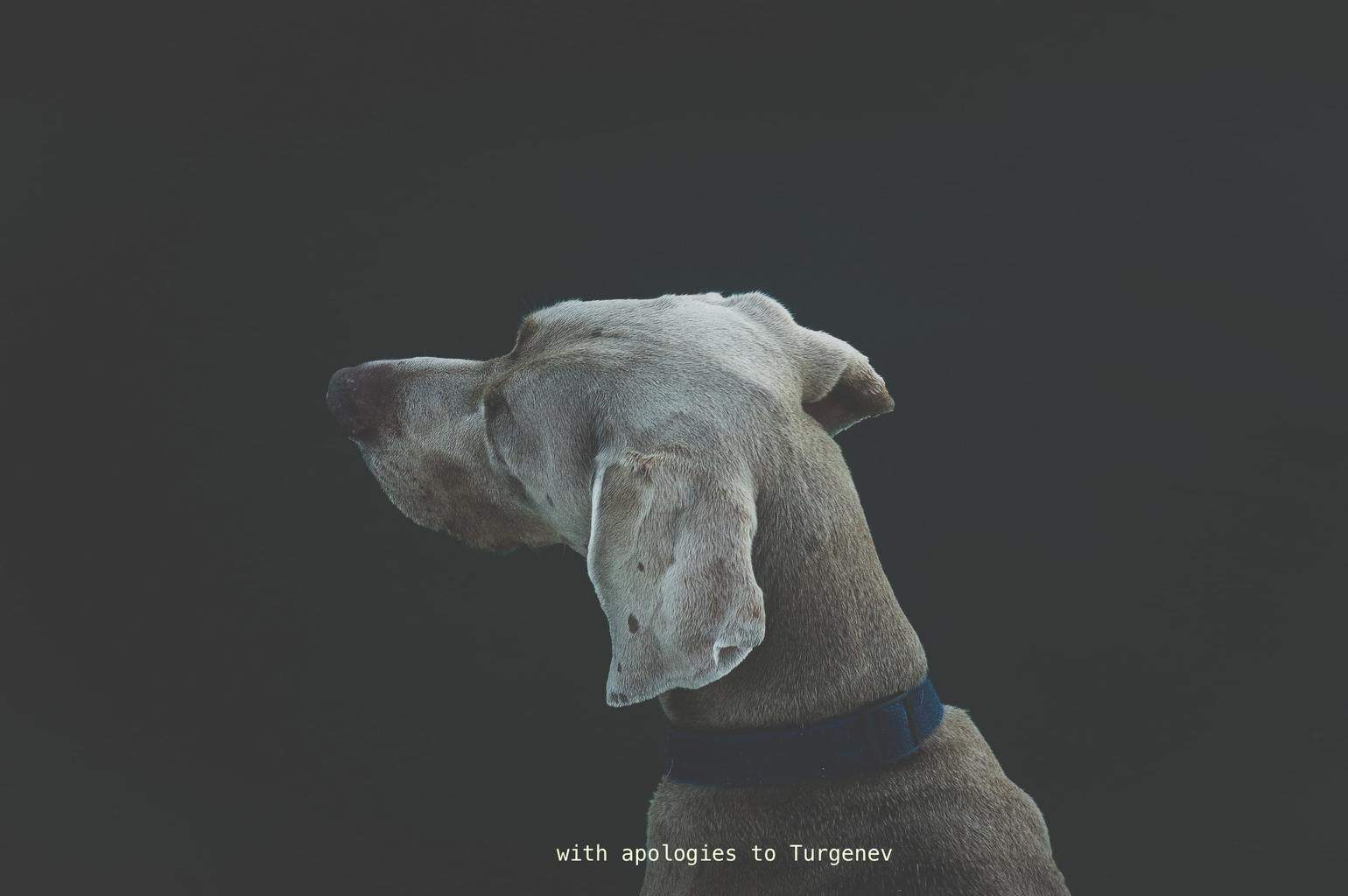
At the basis of it lay a story I had been greatly struck by just as three pit bulls in the dog park happened to rush by me, each yelping at the same pitch. In that remarkable moment I could watch the embodiment of a principle that had scarcely come to life but was just beginning to stir at the time, the principle which later received the name of ***.
Though very powerful, the impression this incident left on me was still rather vague. At first, I could not quite make out what the pits were after except one another.
I kept returning to the park to observe and listen to everything around me as though wishing to check the truth of my own impressions. I was worried by the following fact: not in one work of literature did I ever find as much as a hint at what I seemed to see everywhere. At the dog park, there was a woman who was endowed with an impressive nose for everything—namely, the ideas of our time. I told her what I was thinking of and what interested me so much and was astonished to hear the following remark:
Did you get this from something you saw in the movies? I said nothing.
These words produced such an effect on me that for several days I tried not to think of the idea I had in mind. However, at some point, it matured in my head. In order to sort the curds from the whey I accidentally returned a call from a dear friend. What was I after? An embodiment of the idea.
I pressed Send and when I did not hear her voice, I put the phone aside. Then I turned on the television. Nothing but crime shows on four of the few free channels left. I stretched out from a long day; my dear dog leapt onto the couch to sit beside me in order to be stroked. I was not entirely certain that this creature loved me for who I am or simply loved to be stroked and fed. Is that love? I wondered, further enlarging the sub-idea that was involved in this account. Also, my dog is not particularly affectionate and does not always run with others. Nor does she lick my face unless I should have some leftover meal or the scent of it besmirching my cheeks.
Sirens blared from the flat screen speakers, alerting my bitch’s ears, not to mention my own, and I summarily mistook the sound for 1)the emergency alert system at last in action; 2)medical aid rushing to the scene of a neighbor’s heart attack. The story on TV involved a dead body, a sharp-tongued detective, and a pert sarcastic set of female coroners who compete for excellence in their work as well as the attention of the same man.
She’s toast, the detective says, poking a campfire stick at the victim’s elbow.
She was burned like a marshmallow.
Ok, says one of the coroners, let’s do a work up. You never know the time of death with these sorts of SUVs.
No, you don’t, says the other coroner, removing her 5-inch heels to dump a pebble that had inadvertently crept its way into her arch.
What are you doing? screams the first pert coroner in concert with the detective. You’re occupying the crime scene with your crap.
What are you calling crap? And who is you? Who am I? Why?
A long silence ensued while the medics hoisted the charred body onto a stretcher.
Crispy, ya think? said one of the medics.
Lucky her lips are still intact, said the other.
Just as this pronouncement was made by the television medic, fire trucks pulled up to my house. I certainly had not asked for them. My landline phone rang. It was her, dear friend. Are you there? she yelled over crackling static. Am I where? I said. She seemed to not hear me.
After that it was all a blur. The television medic, the pert coroners, the sirens, the phone calls, the knocks on the door, the boyfriend, the girlfriends, the clerk in the mini-mart with whom I had exchanged ideas about capitalism. All rotating before me like a spinning globe. We heard what the police said, we feared, we rushed over because … .we love you, each said in their own voice, except all the voices became a chorus and the chorus stood by my couch and my dog barked a bark I had never heard before.
How utterly wonderful! I love you too, I said in the ensuing group hug.
Except that instantly the pedestal on which I stood among these dears had been destroyed chiefly by the chief medic combing through my home and discovering my cell phone, which was still blithely speaking to my friend who was standing right in front of me, not hearing it anymore, half-crazed at the thought that someone had put me on a spit and roasted all but my face.
Would they understand or forgive me? Not me, but my idea. The excuse of being an unloved child no longer held any caché among the best of them who had, well, let’s leave it at that. That it might have been an accident lingered in the minds of some of those present, except the boyfriend of my girlfriend who did not believe in accidents. They did not, have never got quite the right idea of what took place in the mind of a person, or of what exactly her joys and sorrows, her aims, successes and failures are. They do not, for instance, even suspect the pleasure that consists of castigating one’s self and one’s faults in the actions one commits. Now they seem quite sure that this was a little prank, even if the reality of life has been correctly and powerfully reproduced, even if this truth does not coincide with my own sympathies. In the words of Goethe, “if these are roses, they will bloom.”
Gloria Frym was born in Brooklyn. Her new collection of prose, THE TRUE PATRIOT, is just out from Spuyten Duyvil. Her recent books of poetry are The Stage Stop Motel and MIND OVER MATTER (BlazeVOX books, 2011). She is also the author of two short story collections—DISTANCE NO OBJECT (City Lights Publishers, 1999) and HOW I LEARNED (Coffee House Press, 1992). She teaches at California College of the Arts in the San Francisco Bay Area.
Photo courtesy of Will Langenberg. Visit the artist at willlangenberg.com.

-
Playing the Game
a short story by John Timm
The actuarial office is exactly 6.1 miles from the house via the 405 Freeway. When the 405 is backed up (it often is), the distance is 7.2 miles on surface streets. Travel time using either option is difficult to calculate with the same exactitude, given such random variables as traffic accidents and weather. Still, a pattern has developed over the past eighteen years that allows me to predict closely (within 45 seconds) where I will be at any given time once I leave my driveway at precisely 7:30 a.m. There are certain markers along the freeway that permit this: mile posts, billboards. exit ramps. Likewise, on the surface streets there are intersections and traffic signals, a Target, a Ross, a Michel’s, a Von’s, seventeen strip malls, nine fast food restaurants (including one that is presently closed) three car washes, a railroad crossing (which introduces a random variable into the equation) and a fire department (another random variable).
Today at 7:35 a.m., I am stopped at the corner of Sawtelle and Sepulveda, in the left driving lane, second car back from the stop light. At this hour, the light remains red for 25 seconds. It is .8 miles to the freeway entrance ramp. It requires a left turn, and experience has taught me to be prepared, hence my left lane position. The radio is tuned to its customary place on the dial, and I’m listening to Traffic and Weather on the Fives. Regularity and consistency have their comforts.
The car in front of me is familiar. California 6DMW935, a 2007 grey Honda Civic, purchased in Tulsa, Oklahoma. The lone occupant has a husband (or male companion), three children and two dogs. (This assumes that the family decals on the rear window belong to the driver, and if so, have been updated regularly). While I admit I’ve not done an actual calculation on paper, there is a high degree of probability I will follow this same vehicle three out of every eleven travel days.
To my right in the curb lane is the green and white Peerless Laundry Company van (PLC 1706). It’s slightly ahead of its usual daily pace, normally parked until 7:37 a.m. in the Pep Boys lot back at Sepulveda and Franklin.
At Sepulveda and Barman, I see Marvin in the curb lane, awaiting his opportunity (Marv would never call it his “chance”) to move into the left lane in order to make the same left turn as I onto the freeway. We exchange our ritual morning greeting, a quick flourish of the hand (my right, his left) as we focus intently on the road ahead. I am ninety-five percent confident that Marv and I will enter the freeway ramp in tandem at 7:39 a.m., exiting together, at 7:51 a.m. onto San Vicente Boulevard. With only one long block to go (.2 miles), we’ll be parked in our designated places (Row 3, stalls 15 and 16) two minutes thereafter and will enter the building at 7:53 a.m., as duly recorded by the Simplex Time Recorder. If the 7:35 a.m. radio traffic report demands an all-street routing, we will arrive at the lot with at 7:59 a.m. with just one minute to spare. Neither of us has ever arrived late.
Marv has been my co-worker for seventeen of the last eighteen years. We both joined the firm on our birthdays, a coincidence we often discuss, and since his birthday is exactly thirty days after mine, it’s easy to remember.
We take our daily lunch together in the cafeteria, as we have over these seventeen years, and it’s there we play the game, seated at our regular table. Marv and I agree in advance on the same entree in order to finish eating by the appointed starting time, 12:20 p.m.
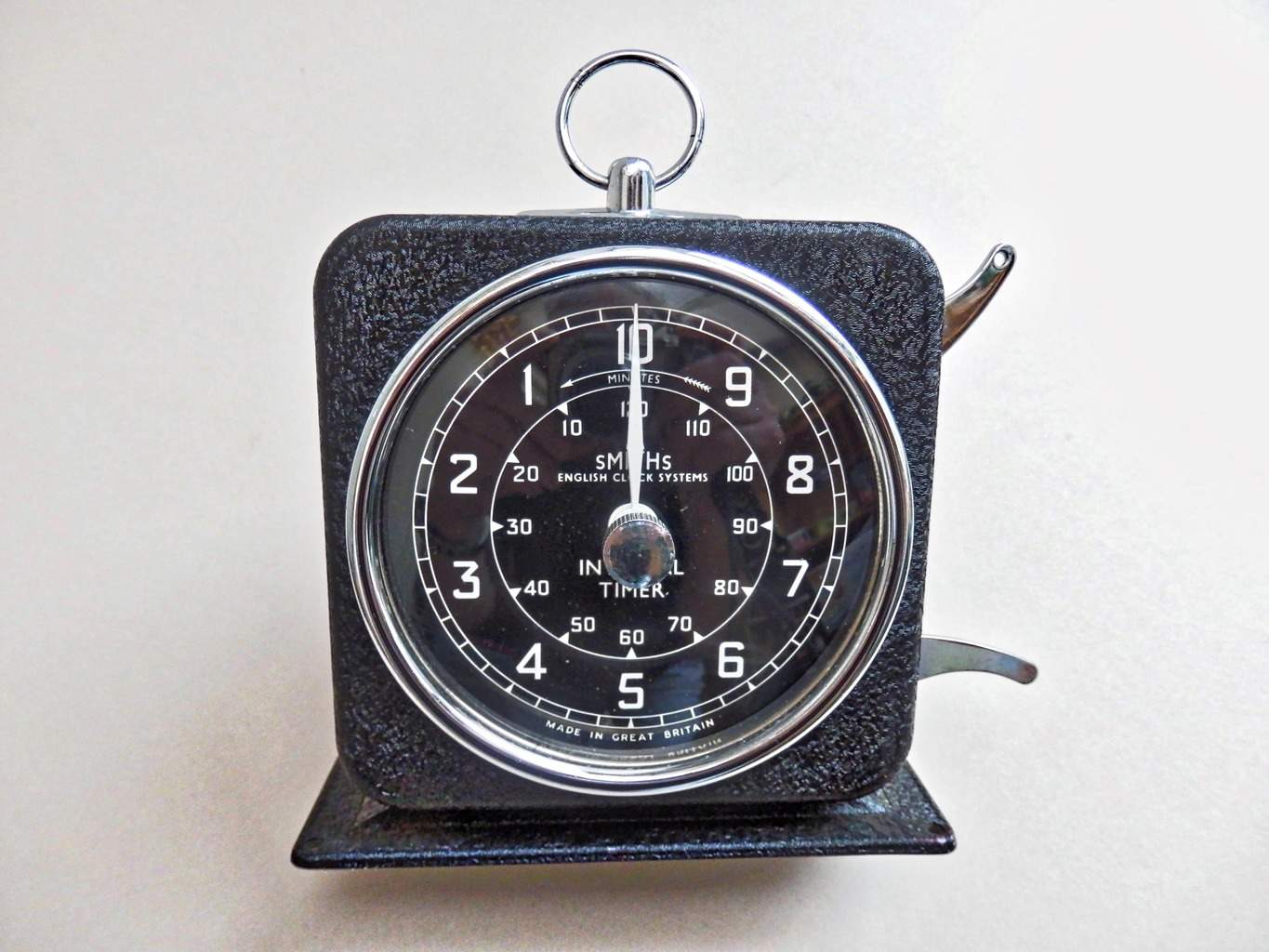
It’s a game of our own invention. We didn’t know what to call it at first, but on Marv’s second anniversary at the office (March 17, 1997) we gave it the name What If? I remember that moment as if it were yesterday. Here’s how we play. On alternate days, one of us is the guessmaster (the title was my idea). As guessmaster, we have to bring with us the name of an occupation, along with a job description, education and skill requirements, tools or devices employed and any licenses, if required. The guesser (I’ll give Marv credit for that one) has three minutes, no more, no less (we employ a digital timer), to come up with the exact name of the position. If he does, the guessmaster must buy lunch the following day. If not, the guesser must buy lunch the following day for the guessmaster. Simple game, simple rules. Over time, Marv and I stand virtually even, the tally swinging back and forth day to day, week to week, month to month. We often joke it’s the law of averages at work more than any special talent on the part ofeither of us.
But the game doesn’t end there. Officially it does, yes, but Marv and I spend the balance of the lunch hour (until 12:59 p.m.) discussing the relative merits and disadvantages of the position of the day.
Continue reading this story at Beacon.
John Timm teaches communications and foreign languages at a university in the Phoenix area. His work has appeared in Bartleby Snopes, Perspective Literary Magazine, Story Shack, 300 Days of Sun, Romance Notes, Luso-Brazilian Review and elsewhere.
Image courtesy of quicksandala, via morguefile.com.
