Your cart is currently empty!
Category: Long Reads
-
Food for the People
a short story by Jiri Kajane
Fiction Attic Press is pleased to present the first new Jiri Kajane story in a quarter century, “Food for the People.” If you enjoy this story, you may also enjoy Winter in Tirana: The Stories of Jiri Kajane (Volume 1), and Some Pleasant Daydream: The Stories of Jiri Kajane (Volume 2), both published by Fiction Attic Press.
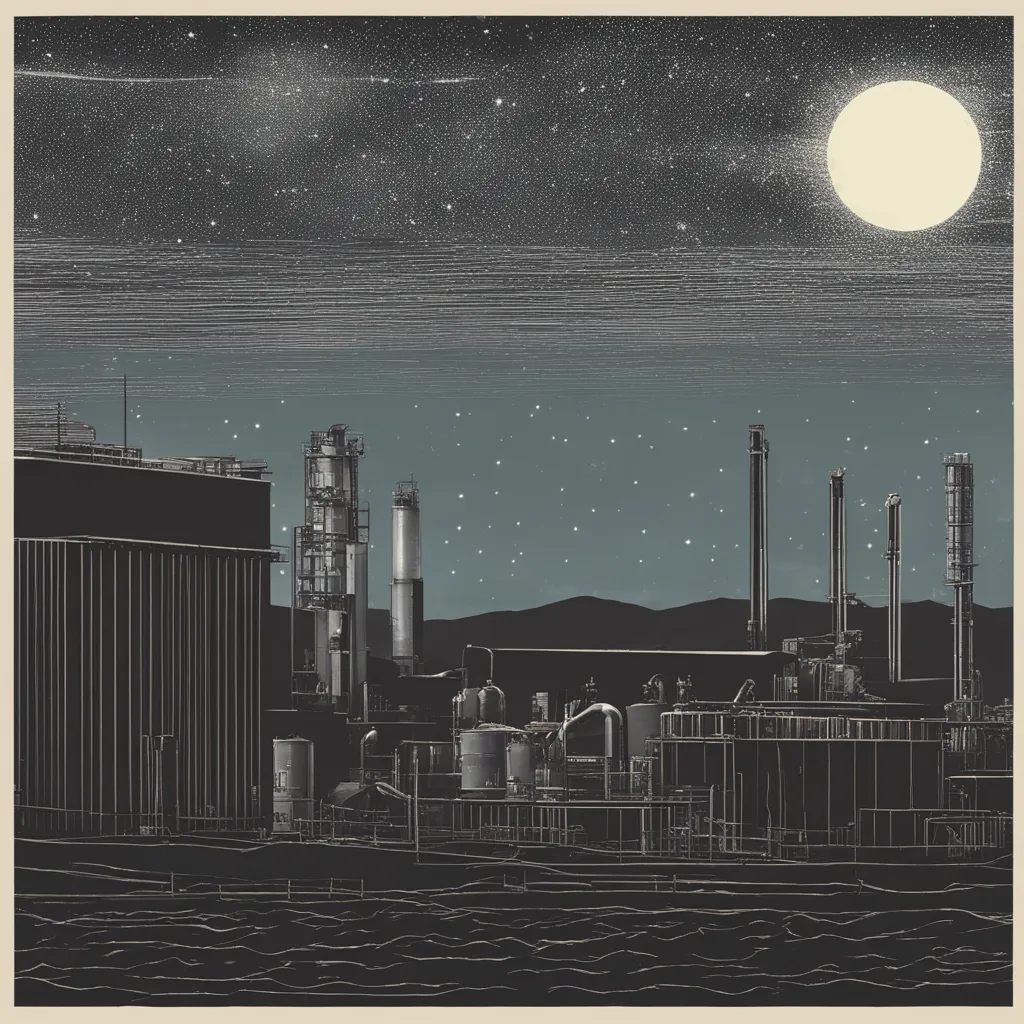
It’s early March, snow still on the ground, wind coming through the broken windows of the empty, disused ball bearing factory. Leni and I are sitting on crates, waiting, and the metal door dividing us from the loading docks rattles each time the wind sweeps through. We’ve been here long enough that I have noticed a rhythm to it.
“New beginnings,” Leni says.
“Indeed.”
“Sevasti guaranteed that he will have the first truck here by two o’clock.”
I check my watch; it’s 2:15.
Leni has purchased something called the New Hanjin Automat. An antique dealer in Tokyo, or maybe Sri Lanka, sold it to him in late August, and since then they have been working together to get the unwieldy shipment to Tirana. Finally, after some delays in Malta due to an underpaid crew and an unpaid fuel bill, the automat arrived at the port in Durres late last night. We’ve been waiting for Sevasti and his crew to transport it the last twenty-three miles.
-
How to Handle Winter
A Short Story by Melissa Gutierrez
The snowman was more that than anything else—a man who lived in the snow. He had a pelt like other yeti, certainly, but it wasn’t anything abhorrent in the least; soft, in fact, were one to get close enough to brush arms with him and feel the fine hairs graze across so light and thrill like marabou. He was a beast of course, but had the good fortune of being a northern one. The cold, and nightly grooming sessions, kept his hunting-sweat from building up and stinking. And lying on a bed of furs each night looking upwards for the ribboned polar glow kept his heart always at peace—with so many swirling colors overhead, bright even through the plastic ceiling skylight, how would one ever feel alone?
The snowman couldn’t really bear to hunt. He could stand the sight of blood but couldn’t find a way to really do the deed without getting any on his whitely-padded hands. He might have been a vegetarian were he any longer left of center, but he had a sense of order in things and kept on eating meat. He made a trek down from his snow-packed mountain pass to the little village general store once every couple weeks, picking up a crate of Kobe steaks and a couple whole king salmon that the owner set aside. The snowman kept a hothouse for the slew of vegetables and herbs he grew himself. He had built it off the cabin-cave like a giant sunroom, and spent the early mornings tending to the rows of home-grown produce, and the evenings sometimes doing canning or other kinds of preservation prep. When the sun came up, he skied.
“I see him, Dad, I see him!”
“See what?” the father asked, and hunkered down at the windowsill, his elbows up on it and folded like a bedtime prayer. The daughter held her posture similarly, but with binoculars between her hands. Her eyes were hidden, her face attached to the lenses, and the other lenses pressed right up against the windowpane, where frost had started gathering low near the sill below.
“The snowman,” she said, saying it like a secret.
“The snowman?” the father asked.
“The snowman,” she said, and set the binoculars down on the wooden ledge. She turned to face her father. “He is tall and white and furry, and he rides a set of skis.” Her lips were like two berries, olallie-b or huckle, and her eyelids blinked in mark of fact.
“One time,” the father said, and stroked her curly hair, “before we moved, your mother and I lived in the hills of a golden valley. Growing up we watched cattle and deer and boars and goats and kept a sharp eye out for mountain lions. One time when we were little—we grew up friends and neighbors—your mother said to me, ‘Look, there, a giraffe.’ She pointed towards a little bunch of trees, and I couldn’t see a giraffe. And she said, ‘No, the next patch, inside that little shadow.’ And I looked inside that little shadow on the hill and sure enough, there was a giraffe. She said to me, ‘It comes out every night.’ So every night we watched the shadow on the hill and every night the giraffe came out again. Then one day, your mother said, ‘Let’s go see where the giraffe lives.’ We put our best boots on and climbed all the way to the top of that hill, to the patch of trees where we saw the giraffe come every night. It was summertime and the grass was dry like straw, and our climbing up through it was so noisy, like rustling through plastic grocery bags.”
The little girl put her hands together and rubbed them to make noise. Her father smiled.
“Yes,” he said. “Almost like that. But not as soft.” He smiled, then continued on. “We had scissorweeds and thistles sticking all throughout our socks. Halfway up we had to stop and pull a tick out from behind her knee. I was a Boy Scout then and had brought a first aid kit with us just in case, so I was armed with tweezers.”
The daughter wrinkled up her nose.
“We got it out okay. Your mom was brave. Anyways, as we were trudging upwards towards the giraffe lair, the sun was almost setting. We could see him come out from just a little down the hill. He stood calmly, looking at us. He was going to wait for us to meet him—we were going to see the giraffe up close.”
The daughter gasped. Her eyes were big. She pulled the binoculars down into her lap and leaned in forward.
“When we got to the giraffe,” the father said, “it was just a log. A giraffe-shaped log.”
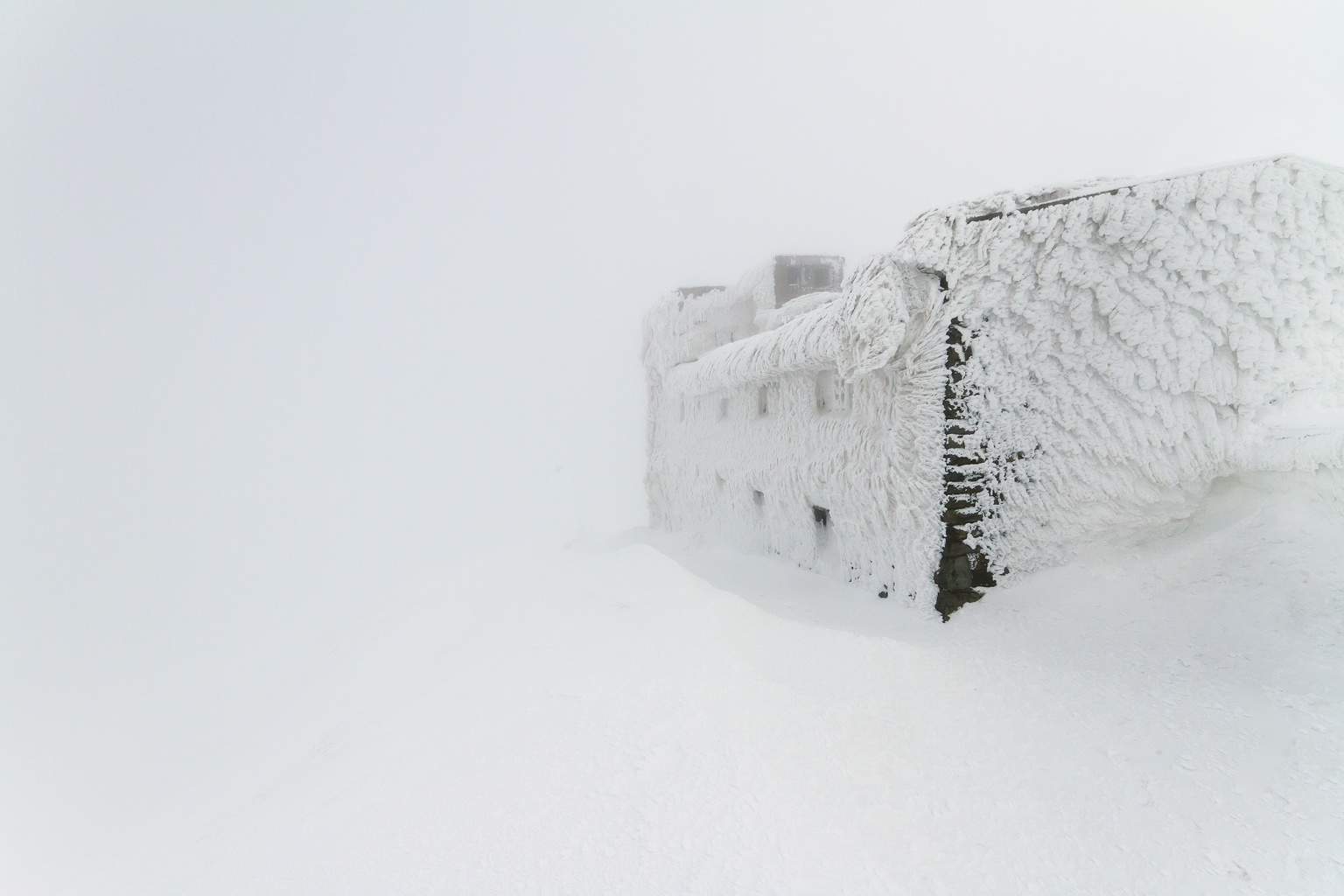
The snowman’s cave was built along a low cliff of an upper mountain range that overlooked a valley. The whole area was so high up in the world that everything stayed white with snow year-round, except the very middle of the valley where a river ran and green grass grew in late June through July. Cold pats of snow remained underneath the trees around the valley’s fringes, even then. The trees grew all the way up to the bottoms of the rock cliffs, where there was no dirt to grow—a couple branches here and there, so a cardinal or owl could nest, so even birdsong met the alp-y mountain peaks sometimes. Above the cliffs were the mountaintops, almost ridge-like. The valley was like God had punched the earth, not round enough to be a crater really but imprinted in the earthface all the same. The only way out, besides scaling mountain cliffs and walls and peaks, was a little pass near the west end of the valley, like where maybe God’s right thumb had been when he threw that big hard punch. It wasn’t dangerous or blocked or controlled by anyone in any way, though mainly the only people who came in and out were food and fuel suppliers, and the occasional tourist who rented out a village cabin that they’d found online.
The snowman circled all of this on skis each and every day. On Mondays he’d make a half-moon from the right of his front door to the north side of the pass, and on Tuesdays he’d make the arc around the south. On Wednesdays he rode the treeline and on Thursdays he snaked through, in and out of the pines around the upper elevations. On Fridays he did downhill at a private slope he’d built a half a mile from his digs. On weekends he waxed and cleaned his skis, gave them and his legs a break, put his body in an ice bath in the snow and then caught up on any hothouse work he’d missed, or did an extra run down to the village store.
Continue reading the story on Beacon…
Melissa Gutierrez is an artist and writer living and working in Northern California. She holds an MFA from the University of Arizona. Follow her on twitter @mmgutz.
This short story will appear in the anthology Tall Tales: 20 Strange and Wonderful Stories from Fiction Attic Press.Image courtesy of Paul Itkin, via unsplash.com
-
Commuter
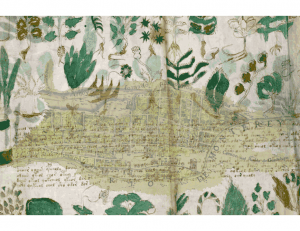
by Edward Wells & Nicolas Diaz
novella excerpt
[1]
Stuff you can do in the commuter bus: fall asleep in your seat; pretend to fall asleep in your seat so that you don’t have to give it up; pretend to fall asleep in your seat to avoid conversation; read in your seat; pretend to read so you don’t have to give up your seat; pretend to read to avoid conversation; listen to music through your headphones; pretend to listen to music through your headphones to avoid conversation; make small talk with someone you know.
Stuff you can’t do in the commuter bus: look strangers in the eye.
So, students and employees use headphones and magazines. Some play music, some listen to it. Some look at their magazines, some read them. Those who don’t want to carry on just nod off to sleep or watch through the windows. Without moving, they are all going home. From downtown to the old districts, to the not-so-old districts, to the industrial park, to the old commuter town and the new commuter town. It takes an hour to go from downtown to the new commuter town. The buses that do not take the industrial park road take an hour-and-a-half to get to the commuter town.
As they were in the Middle Ages, old people are strange creatures here. They dwell on their porches and sidewalks, in their armchairs, in their beds. They only move in twos, the way girls do in elementary school. They ride the commuter bus in twos. They don’t have headphones or magazines, they talk to each other, or to whoever they want. Rules don’t apply to old people.
“He doesn’t understand, not until things happen to him.”
“You know the saying, ‘they cover the well once the child is drowned’.”
Hands holding evening newspapers, gossip magazines. Eduardo is not wearing headphones; he is not reading a magazine, and he’s not old. So, he pretends to sleep with his head against the window.
“They cover the well once the child is drowned.”
Eduardo toys with ideas, imagining himself as an old man, or as a young kid watching this present self of his.
“And he wants me to throw away all my stuff, he says it’s all useless—” “Because it’s not his stuff.”
“It all will be his one day, when I’m gone.”
Eduardo pretends, so well he actually falls asleep. Wakes up when the commuter bus reaches his district, white houses. There is almost no one on the bus when he steps down the stairs, only two elderly women talking.

(2)
[The End]
Joe rests on the edge of a well. He is leaning over with his ear turned to the well’s center. After a few minutes he reaches down and pulls a rusted 19th century iron from his hiking pack. He holds it over the well’s center and hesitates for a moment looking back down at his hiking pack, nudging the contents with his foot. He bends down, putting the iron on the ground. He rummages through the bag picking up several of the items, bouncing them in his hand, before replacing them in the pack. He again stands with the iron and centers it above the well. He drops it and leans over with his right ear turned to the well’s center. He covers his left ear with his left hand and waits.
No sound returns.
Erika turns to the clothes line hanging a sheet in front of the lemon tree in the far corner and speaks to the woman sitting behind her. “You know that I won’t take that ring from you–I mean you know when I will take the ring, Mira.”
Erika continues to hang sheets forming a curtain between the older woman and the circular formation of stones which takes center place in the courtyard. “I do not need to be dead to see you happy, child,” the older responds flatly, then sighs before beginning to slip away, as Erika struggles with a clothespin on the next sheet. Lifting the empty basket from the compacted dirt floor, Erika swings around as the curtain rises.
“Now, what is this talk about visions of a boy–” She breaks off as she realizes she is talking to the wind.
At home Eduardo drops his backpack and lays on the sofa without turning on the light. Rummaging through his pockets, he makes sure parts of a newspaper are still there. He places them quickly onto the short table that sits in front of the worn sofa. He looks around at the three objects in the room: the sofa, the table, and a tall lamp. There is no well here or kids that could fall inside a well.
He looks toward the kitchen and places a hand over his stomach. He pushes his shoes off using his feet and straightens his legs on the sofa. In the dark room, it is sleep which ultimately holds his attention.
End of excerpt. Stay tuned for more.
 Edward Wells II studied Creative Writing: Fiction at Colorado State University. He is currently finalizing details for divergent future paths. He is currently working on a new collection of poetry & short fiction under the working title “I Am Not Sam: Scribblings from American Samoa” while teaching English at Leone High School on Tutuila.
His work can be found online at Gone Lawn, Eunoia Review, and many other places. His most recent collection, CO (2013) was released by The Pedestrian Press. You can contact him through his facebook artist page https://www.facebook.com/EdwardWellsII.
 Nicolás Díaz was the author of Trouble Every Day, a blog on pop culture for Milenio newspaper, between 2007 and 2013. Previously he coedited Sonitus Noctis ezine. His personal blog is called Murmujú.