Your cart is currently empty!
Category: 2019
-
Bra
flash fiction by Vanessa Chan
I recently injured my arm, so I cannot reach around my back. That means I have to put my bra on the wrong way around. I start with clasping the bra in the front, under my breasts, then pulling the band in a circle along my skin until the clasps reach my back, before I can pull the straps and cups in place. It chafes.
My friend Shauna used to never wear a bra. She told me that bras are symbols of the patriarchy, that they have no purpose, that the underwire served only to point and lift our breasts closer to boys’ vision. I told her she was lucky because her breasts were small, perky. She told me I was too self-conscious and needed to be more confident; she said that’s why Tommy Patrice had picked her to go the prom with, even though he had asked me out first, and I had the bigger, rounder breasts.
The other thing about Shauna was that she died a week before high school graduation. She was found face down in a monsoon drain floating in shallow brown water that smelled like trash. One of her arms had been dislocated; it twisted behind her like it was waving goodbye. Everyone knew Tommy did it, but they never charged him. Only some people blamed him. She was easy, they said. She didn’t wear bras, they said.
It’s true that breasts have no muscle mass. Except for the nipple, they don’t react stimuli; they can’t be reshaped, they can’t point at things, they can’t protect themselves. Not like arms – arms can hold you up, turn you around, beat things away, get bigger and stronger.
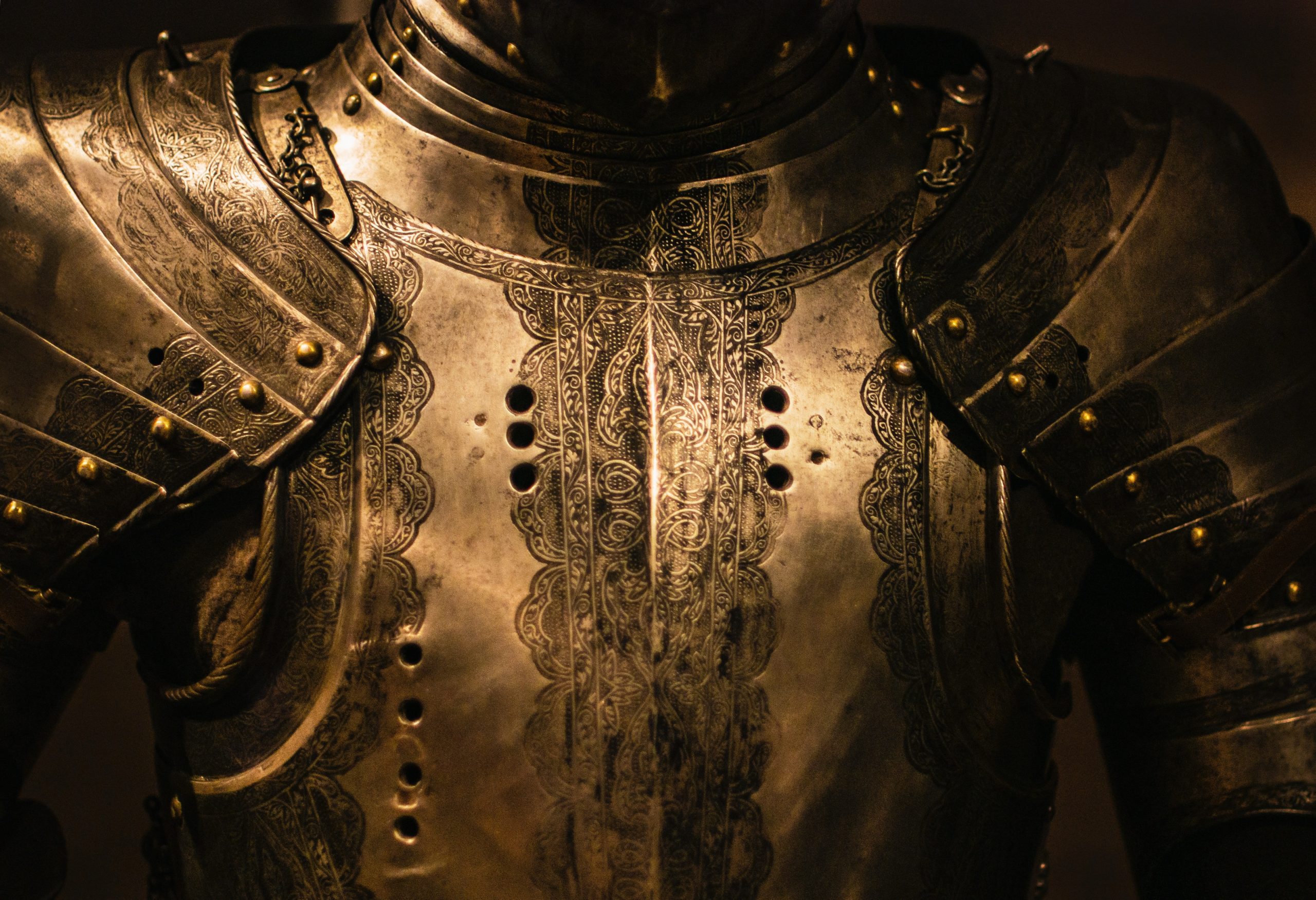
But lately my twisted arm means I can’t do the things I usually do to keep myself safe. I can’t grip the keys between my fingers as I walk down the street. I fumble longer trying to get myself into my door. I don’t have the strength to push away unwanted advances. I am unstable, off-center, easy prey. I tell myself that Shauna was wrong. Bras aren’t just to mold our breasts and give them a sense of direction. No, bras are like armor, the underwire protecting against the elements, the cups keeping out unwanted intruders, the clasps making it just a little harder to break in. And so, I twist myself around every day to buckle my breastplate.
I will not be hunted.
Vanessa Chan is a Malaysian writer based in New York. Her work is published or forthcoming in Atticus Review, Jezebel, and Mekong Teahouse, and she recently won the Fiction Factory Flash Fiction contest. She is an MFA candidate at The New School and writes about race, colonization, and women who don’t toe the line. Vanessa can be found at vanessajchan.com or on twitter at @vanjchan.
Armor photo by Nik Shuliahin on Unsplash
-

On Being a Crappy Girlfriend
Essay by Kimberly Knutsen
Yesterday, I talked to Steve, an old boyfriend circa 1988. He’d found me on Facebook, and we talked on the phone. I’d always wondered how Steve was doing, and I also felt kind of guilty because I was kind of a jerk in a petty, princess-y way. We argued a lot, and I wasn’t super nice, and things faded away after I moved to Las Vegas. Steve and I hadn’t spoken since 1991.
Steve and I met at the old Willamette Diner, a rollicking 1950s-style restaurant on the banks of the Willamette River, where we worked as a busboy and waitress, respectively, with bosses who seemed pretty nice until they fired both of us.
I was fired for two reasons: one, the big boss Joe said if I was late again, I was fired. Well, I was late again, and I was fired. However, the day I was fired, before the final chop, Joe told me to put this giant bag of ketchup in this dispenser on the wall. I thought it was weird. The bag weighed about fifty pounds, I could barely lift it, and I was supposed to heave it up into this ketchup dispenser on the wall? Bizarre.
At every other restaurant I’d worked at, we had ketchup bottles that you “married” at the end of your shift, during side-work, which was the worst part of any restaurant job. (Marrying meant to pour the ketchup from one bottle into another, so you had fewer, fuller bottles. The more accurate word would be “mate.”) Sometimes the girls at this other restaurant I worked at, which shall remain nameless, added water to the ketchup and shook it so it would be thinner and easier to marry/mate, which I now think must have violated all sorts of health codes.
Anyway, I lifted this enormous plastic bag of ketchup, dropped it into the dispenser—the dishwashers shouting instructions, steam billowing from their sprayers—and suddenly the bottom plug pops off, and I’m standing in a tsunami of what seems like ten tons of ketchup, pouring all over my hands, all over my legs, all over my white uniform and white tennis shoes, a bloodbath of ketchup, and the dishwashers are screaming at me to “turn the spigot, turn the spigot,” and I’m thinking, what fucking spigot are you talking about?
I try to cover the spout with my hands, and it’s like trying to plug a hole in a dike when an entire ocean is flooding over you, and suddenly my legs are burning—ketchup is really acidic, and I’d just shaved them, which I remember thinking made the burning worse, although now I’m not sure why I thought that—and finally, the whole thing stops because all fifty pounds of ketchup is all over the floor and all over me.
The big boss comes out of his office, his tomato face steaming red, and I’m fired. As in: Right now. As in: Walk to your car doused in ketchup like the giant hotdog loser you are and drive home.
So this is where Steve and I met. By the time of the great ketchup massacre, he had already been fired—I don’t remember why.
I liked Steve because he looked like Axl Rose in Guns N’ Roses—he even wore the bandana tied around his head. He had long hair and a great sense of humor. My girlfriend was also dating a guy who looked like Axl in a different way, and we liked to talk about how our guys looked exactly like Axl. Mine looked like a younger Axl, circa “Welcome to the Jungle,” and hers looked like a meaner Axl. This was how shallow we were at age twenty-one. It all was all too exciting.
Steve and I had a lot of fun hanging out at his apartment across from the Willamette River. (Fellow Portlanders, he and his cousin paid $350 a month rent.) We both loved rock music. We’d talk for hours about lyrics, songs, was there any band greater than the almighty Led Zeppelin, who was a true rocker, who was a poseur, and what exactly were the Temples of Syrinx?
We listened to music all the time. We both liked to smoke. Steve, a doggie-downer, liked his 40-ouncers of Schlitz, and I, a puppy-upper, liked my Diet Coke Big Gulps. We were into Kingdom Come for a while, and I still think “What Love Can Be” is a great song.
Steve and I also fought. We argued all the time, and it was all about petty shit. Steve would get insecure and depressed and pout, and I’d call him el bebe grande, and then he’d pretend to be a baby and hold his feet and roll around on his back and say “waah, waah,” and we’d laugh hysterically.
Sometimes his cousin, the beautiful Mimi, who worked as a cocktail waitress at Stuart Anderson’s Cattle Company in Milwaukee, would break out the Aqua Net and rat Steve’s long hair so he looked more Poison than G N’ R. She’d put eyeliner on him, tie one of her sparkly scarves around his head, and make him wear a vest with no shirt. It was all so glam and exciting!
Steve and I fought a lot about pizza. I felt that I paid for everything, and I started to get mad about it, so one time after we ordered pizza, we sat in my parents’ dining room (I still lived at home) and had a stand-off, staring first at each other and then at the Pizza Hut box on the table. I’d paid, Steve hadn’t. I didn’t want to give him any because I felt he was being a mooch. He wanted some because he was starving.

“I have 87 cents,” he said, digging change out of his pocket and dropping it on the table, and I said, “OK, you can have one piece.” Wow. Looking back, I’m so ashamed. I was trying to make a point about how the lady shouldn’t have to pay every single time (I’d gone out with a lot of broke rockers by then) but what a bitch! It’s pizza! What, were you going to eat the entire thing yourself?
One time, though, Steve and I bonded over pizza. We’d ordered it from his apartment, and it was during the time Domino’s had the rule that if it wasn’t there in thirty minutes, it was free. The pizza guy arrived at the thirty-seven minute mark—to his credit, it was New Year’s Eve—and we were so excited. Free pizza!
Steve, who was shy, went out and broke the bad news to the pizza guy. “10:26,” I yelled after him. “It was supposed to be here by 10:26.” Oh my God. What an idiot. First, I made Steve do my dirty work (I was paying), and second, what if the drivers got in trouble if they gave away too many free pizzas? What if they had to pay for them? Decades later, I feel bad.
Another time, Steve and I drove out to the gorge and picked a ton of sage—why, I have no idea. I do know we listened to Jimmy Page’s Outrider on that trip. Driving home that night in my old beater Fiat that went into death throes once you hit 45 mph, I was overcome by the strong smell of sage and had a terrible panic attack. The medicinal smell was overpowering, it was too much, and it scared me (even now, I couldn’t tell you why). Steve laughed as I shouted, “Roll down the windows, roll down the windows,” and he kept saying, incredulously, “A smell can’t hurt you, why are you flipping out?” Good times.
Later that summer, I moved to Las Vegas to dance and go to UNLV. Steve visited. I was working in a nightclub as a cocktail waitress, the Shark Club on the Strip, and bought Steve a pair of M.C. Hammer parachute pants from the club, which he still has.
One afternoon, Steve and I argued, and he disappeared for hours, stomping off into the desert across the street from my apartment. I was so scared. “He’s in the desert,” I cried to my mom on the phone. “What if he’s lost forever?”
Looking back, I see that Steve’s moods, his pouting, were because he battled depression, and I feel bad for the young guy he was. But back then, I hadn’t raised three kids—life hadn’t brought me to my knees—and I had very little patience. It was all about me. Why are you bringing me down? Why can’t we just have fun?
“Calm down,” she said. “He’s in a major city. Someone’s bound to find him.” Which is exactly what she said when my orange cat disappeared for six days.
Steve did return, later that night, and just as the cat had, he hopped the back fence and stood at the sliding door peering in, hands (paws) pressed against the glass, the black desert sky and a spray of stars swirling out behind him.
After I returned from Vegas, before moving to New Mexico for graduate school, Steve and I had one great night. We went to a movie, then hung out at his mom’s house in Vancouver. He showed me a picture he’d drawn. It was me as a mermaid: long blonde hair, better boobs and a smaller waist, a fabulous, iridescent tail.
I told Steve that my kids’ dad was in prison—life without parole—for a murder he committed while out of his mind on drugs. After the obligatory I’m sorry to hear that, Steve blurted, “You always did like losers.” He hesitated. “Like me.”
And yes, I know it sounds ridiculous, but I was thrilled. Steve was (and is) a stunning artist, but more than that, he knewme. Steve knew that if asked what kind of animal I’d like to be, I’d say “a mermaid.” He knew the ridiculous, princess-y, obnoxious mess that I was, and he liked me despite, or maybe even because of it.
During our recent phone call, we talked about our lives. Steve never had kids. In the last few years, his mom, dad and stepdad died. He’s struggled with addiction.
I told Steve that my kids’ dad was in prison—life without parole—for a murder he committed while out of his mind on drugs. After the obligatory I’m sorry to hear that, Steve blurted, “You always did like losers.” He hesitated. “Like me.”
I laughed at his harsh self-assessment, but it made me sad. Steve wasn’t a loser. He was kind and a good friend, and like the rest of us, he’s struggled. I reminded him of that last great night in 1991. After he showed me his artwork, we went out into the foggy, wet night and ended up at the train yards, talking and laughing like old times. Steve pulled me close. His coat smelled like rain. We set a penny on the tracks, then screamed at the top of our lungs as the train rocketed past, our breath billowing in the icy air, just two young dumbasses, the rest of our lives, like the train, hurtling toward us, and we had no clue what was to come.
I like to think that along the way, through the people we meet, we store up kindness to see us through the difficult times. I still have the flattened penny from that night. It sits in my jewelry box along with a lumpy ceramic angel made by my then six-year old son (he’s twenty-one now), and worry beads I’ve had since age five (I’m fifty now).
Like that surprising flood of ketchup so many years ago, life shocks the hell out of us. It rushes past. We rush through it. Goodness, eternal and warm, a sticky penny in our palm, stays put.
Kimberly Knusten is the author of the novel The Lost Journals of Sylvia Plath (Switchgrass Books), named one of the Best Books of 2015 by Chicago Book Review and a finalist for the Midwest Book Award. She is a graduate of the Iowa Writers’ Workshop and teaches English at Concordia University in Portland, Oregon. She has published short stories in Cimarron Review and Hawai’i Review, poetry in Hoot, and a novella, “My Blue World,” in Novella T.
Editor’s note: This essay begins with a moment many of us are familiar with–reconnecting with an old flame online–and comes around in the end to the stunning realization of how far life leads us away from the expectations of our youth. The essay takes such a quiet road to get to that moment, which is relayed unsentimentally, matter-of-factly. The power of the final statement lies in its unadorned directness. M.R.
Image courtesy of Photo by Max Vertsanov via Unsplash
-

Finding Kate – Essay by Barbara de la Cuesta
I first met Kate at a senior center where we both worked, she as an addiction counselor and I teaching English to Haitians. This was Dorchester, Massachusetts, after the busing experiments. When I brought my Haitians up for the government lunch, all the empty seats would be reserved by pocketbooks.
We talked about poetry. I read some of her poems. Then I was fired. We saw each other occasionally. I remember one evening we drove to Bridgewater to visit two poet friends and watch a Bill Moyers special, a “Poetry” Celebration. We drove home under an uncannily bright moon, high on “poitry” as Bill Moyers pronounces it.
Her poems stayed with me. The latest time I wondered where she was, I was sitting on a Puerto Rican beach resort bored with the manicured grounds when I saw, standing quite close, the slimmest blue heron, and thought of her wry poem about giving up the poetry business, actually selling it off at a roadside stand… Then she sees a heron herself and must take up the business again to
…pin his thin blue slate…
I called her in Weymouth shortly after, needing a place to stay while visiting my niece in Boston. She was gone to Arizona her housemates told me.
Gone again. Let me tell you first about her first absence.
I had moved to New Jersey, and she had followed my advice and started sending out her poems and also applied for an an MFA, receiving a full fellowship at Washington University in Missouri. I received a great surprise when she next found me: not that she’d graduated and begun publishing, but that she was now the pastor of a rural church in Missouri, having taken a divinity degree at a Midwestern UCC seminary. “I miss the ocean,” she wrote.
An Irish Catholic from Dorchester. I thought of her rangy swimmer’s body, her spare irish face, the severe set of her mouth that turns her face to beauty when she smiles. I was astounded. I imagined her probably attending one of those small Congregational colleges founded by my father’s clergyman ancestor Ruben Gaylord whose horseback journeys from New Haven to Nebraska had been chronicled by my great aunt, the volume occupying a shelf our parlor that I tried to read as a child. It was by far the most boring on the shelf.
Then she came to visit. At the time I lived by the Toms River at the Jersey shore. She swam in my river, loved my cat Lola. I followed her panting over the dunes in Seaside Park to the surf.
During her visit she gave a reading in Island Heights at the Ocean County Artists Guild and gave a writing workshop for a poets coffee house we had started there A friend, to her amazement wrote her first poem there.
She returned to her flock. We wrote. What did Lola think about her badly behaved dog. I consulted my cat whose stern look told me she thought a good military school…
The sea called, she wrote, The sea was calling. And finally I heard she was packing up.
In the meantime, our coffee house poets had started publishing a yearly anthology and inviting a series of poets to visit and give readings, and for two of them we published full length collections. We called ourselves Carpenter Gothic after the gingerbread houses of Island Heights. Kate was next.
By the time Roof Gone to Sky came out, she was back in Weymouth, teaching poetry at a small college south of Boston.
She visited again, meeting Donna Sharp, our local poet of the pinelands, whose book was our next publication, offering Donna such genuine praise. Another workshop. We loved her so much.
Then three of us traveled to the Quincy, Massachusetts Library, where she had her book launch. It was packed. They loved her here too.
Then we wrote occasionally. We weren’t either of us great correspondents. And the next time I needed a bed in Boston to visit my niece’s tiny apartment, she was gone. Gone to Arizona, said her housemates.
Two years passed. It was a bad time for me. My son died. It took me a year to begin to grieve his lonely death. I should have been with him. I might have saved him. I felt a deep guilt. A mental health counselor could only touch surfaces. I shouldn’t feel guilt. She found me completely forgivable. My churchgoing didn’t help, even though I thought I needed to stand before God and declare my failure. His death was so ugly I couldn’t talk to friends. His body wasn’t found for a month. His closed in dogs were found alive. Did they eat his body?
I finally I found myself looking online for a spiritual director.
I needed someone who had explored like me the depths of addiction, the close to streets jobs like that one in Dorchester, where people were brought in with stab wounds. Someone, like me, who had been fired.
Kate.
None of the emails or phone numbers worked. People Search online only traced her as far as Missouri,. To go further looked like it might cost money.
Then came a forwarded postcard with a poem on it, plus a letter. She was looking for me.
We exchanged emails. I learned she had been fired from her teaching position. She had gone to Arizona for a course in chaplaincy. She is now an interim pastor in a small church I rural New Hampshire.

I must see her in the flesh, I tell her. We are neither of us any good at phones or letters.
A train trip, on the Vermonter, what fun, New York to White River Junction, will get me most of the way there. All will be explained.
The old mill towns of Massachusetts, then Vermont. The mountains closing in. Brattleboro, where I’d stayed long ago, the river the rail bed and the highway all crowded between the narrow passage, the old trestle bridges. Fewer of the old mills boarded up in Vermont than in Massachusetts. Some have new businesses. Back and forth across the Connecticut River. Tall pines, birches. New England.
I wonder again what the proportion of Irish Catholicism and New England Puritanism is in Kate.
She picks me up wearing a baseball cap that says “Poop Happens.” A bad haircut, she says. “I’ve come to study you,” I say.
All the long way to the parsonage I keep looking out the window, soaking up the mountains, the pines, the glimpses of the Connecticut River, now on one side, now the other. “Can you learn to love mountains?” I ask.
“Oh yes,” she says,
“And that river.”
Oh it’s lovely, she tells me. She’s swum in it.
But it’s still…?
The ocean.

Photo by Li Yang on Unsplash I also look at the many classic farmhouse buildings, most derelict, many vinyl sided and spoiled by metal awnings, only a few, white painted carefully restored. classical and pristine, built without benefit of architect, amid their ugly ranch house and split level neighbors.
I tell Kate how when I lived in South America I looked out for the unspoiled classic hut of bejarequet, he thick white washed walls constructed of mud, cow dung, and straw, capped by red clay tiles the deep shuttered doors and windows, found so few of them unspoiled.
We pass through a valley of dairy farms. This is the upper tier of the state, Kate tells me, very different from the lower. We pass a large reservoir. I point out that she could swim there. She’s swum all over, she tells me. Her flock invites her to their summer camps. Not the same as the ocean, though.
I ask her about the training she took in Arizona.
After she was fired she tells me she was at loose ends. Then she heard about the program and just loaded up her car and took off. In July, to Arizona. You’re crazy, her housemates, a married couple, told her.
It was a chaplaincy course. We interned in hospitals, in drug programs, in a clinic for eating disorders. She loved it. She learned so much.
But now you’re…
I know. She laughs. Nothing came up in that field. Then this came up. I was on some kind of list.
And does it feel right?
It some ways it does. She struggles to explain. I just go from one thing to another, she says. It’s always been my way.
I’ve never understood how you went to a UCC seminary. We had never talked religion beyond sharing AA salvation stories, of which we must have heard tens of thousands between us.
I kept passing the school on my way to some course I was taking in Missouri after graduate school. One day I decided to inquire.
We pass through a great number of small towns.
Is this it?
Not yet. A few more.
Finally Colebrook.
She shows me her church, the pure white temple at the center of every New England town. Then we arrive at the Paah-son-age. Already I am teasing her about her Boston accent. Sometimes it is a real barrier to understanding, like the time she was telling me how she loves mashes.
Maashes?
Sedge grass, where the herons nest…
Ahh…
The parsonage is a classic farmhouse, formal door with sidelights and a classic pediment. Peaked roof with dentils. Long series of smaller buildings behind. The last, probably where animals were kept, is the big kitchen and a smaller room for the vestry meetings.
I feel the tippy floors under my feet. Most of the old board floors are covered with modern flooring or shaggy rugs. Some are painted. The embossed tin ceiling in the big diningroom is sadly neglected. There are many rooms, some with hardly any furniture. It’s furnished with other peoples’ castoff furniture and ornaments. Only two items speak of Kate: a wall plaque with DOG’S RULES, in the dining room and a large utensil holder in the kitchen with the same:
Be brave
Be loyal
Make your own fun
Make new friends
Learn new tricks
Forgive quickly
Kate’s rules.
You could live quite nicely by these rules.
The dogs that moved with her from Missouri have died. Her housemates in Weymouth have two new dogs she cares for when they travel. Their mauled chew toys are in a basket in the front parlor.
Next day, I get up early, curious. The three rooms she showed me that she had used as studies, little nests in an upper room, a small room with a bookcase downstairs, and the grand dining room to which she recently moved her laptop, are empty. The parson is sleeping late. Across the street is the Bull Moose Café. I go out the classic front door, down some tippy granite steps and over there for coffee. The owner is a basket maker who gives classes in a back room.
I bring back bagels and we have breakfast at the kitchen table. Nothing special to do today. The women’s retreat starts at five this evening. I won’t bother her for a while, I say, she probably has a sermon to prepare.
Not really, she says. She’ll probably do it after the retreat, to include her experience there.
So, we stay in the kitchen and talk poetry. There isn’t much here to reassure a poet between books that she is still a poet, and she tells me she’s only written one poem so far. Inspired by watching the logging trucks rumble by her front parlor with the great felled trunks bearing stenciled numbers on their cut ends, like holocaust victims.
She is between books, as I said. After the now defunct Carpenter Gothic published Roof Gone to Sky, she published Barn Sour with a small press. Won’t you have them publish your next book. Don’t they have an interest in nurturing you?
Far from it, she tells me. They’d rather bother her about sales. This has been my experience too with fiction. After winning a fiction prize and publication with one indie publisher, I find this publisher totally uninterested in any further novels, and now have books at two other indie publishers. Only the big houses wait anxiously for an author’s next book.
I have read Barn Sour in manuscript. What does the title mean, I ask, telling her I assume it means an animal who has been too long in a barn and has started to smell…
No, no, she says. It’s about going home. I wrote it in Missouri when I was starting to want to come back here. My mother was ill, I missed the ocean so badly.
You mean like those horses you hire and they amble away from the stable, slowly, slowly, you feel they hate you on their back; but once you’ve had your ride and turn toward home, they break into this terrifying eager canter back to their barn?
Yes, yes.
I loved one poem, I tell her, about a lonely New Year’s eve celebration, Two women, opening their front door to a bitter black New England night and banging on the “spuds pan”.
The retreat starts at five in the evening. We are to bring a flashlight and an empty jar (for a craft project) Kate hates crafts. She always makes a mess. I remember when she was meeting some of my painting and potting friends in Island Heights, she told me she had “aat envy. With a look of distaste she rummages for some empty bottles.
We drive back through the little towns we came through on the way here, then onto a country road that turns to a well maintained dirt track. The Bed and Breakfast reserved for the retreat is a rustic building hung off a mountainside.
There are thirty or so women inside in the kitchen warming up some savory looking casseroles. Kate and I share a suite with antlers and hunting scenes on the pine walls, a bed and pull out sofa, and kitchen, which is off the main sitting room.
There we gather first for a short program. The theme is walking, and we look up and read aloud passages from the bible about foot journeys, starting with Abraham and his son setting out for Isaac’s sacrifice. There are mostly women from Kate’s church, who have planned the program, as well as some from a Baptist Church. Like me, Kate is a follower, not a leader here, eager to see what evolves. This is their first retreat. A woman named Monda leads; she is soft-spoken and very prepared. An anthem is passed out by the young choir director who is attending, and we practice it for presentation on Sunday. There are a couple of strong altos who provide the harmony.
We eat. Soups, casseroles, good bread. Afterward is a talk by a young woman missionary who had been working in a sanctuary for Rohingya refugees. Another walk on the western balcony, to look at the tops of the pines down the mountain we perch on, a fading view of pines and pure slender birches climbing a far slope. How I’ve missed New England.
Saturday’s study turns from foot journeys to roads: The road to Damascus, the Road to Emmaus. We look up verses and read them aloud. Afterward we try to find a road to walk on that doesn’t lead to a precipice. The road we came on is the only alternative. I’m invited to walk with the mother of the young missionary. She is an attractive woman, presently bald from recent chemo. She tells me how difficult it was for her daughter not to rush home to her after her diagnosis. She’s glad they waited. They are a very close family, and she is blissful having her now.
An afternoon exercise is explained: We are to be paired off, and alternately blindfolded and led by the other. Communication is to be attempted, avoiding words. I blindfold her and lead her to the corner of the long balcony overlooking the mountains, and help her sit in a chair. She is one of the natural altos in the ad hoc choir. That’s all I know about her. Kate must have told her I was a writer, so, ignoring the orders not to talk, she asks me to recite a poem.
“I’m going out to fetch the little calf
that’s standing by the mother,”
I begin, one of the poems I memorized to recite to my children.
“It’s so young, it totters when she licks it
with her tongue…”
We stand up again, to walk to the other end. Did you write that, she asks me.
Robert Frost, I tell her. A New Hampshire poet.
She blindfolds me and leads me back inside somewhere. Continuing to ignore the ban, she goes on to tell me how her husband wanted to retire and farm here at a time she had a high position in social services. She agreed, quit her job, and went back to school for a doctorate, then worked for the state. They live in a town of less than a hundred people. There are only forty people in her church.
I tell her I noticed her alto improvisation. My Grandmother could do that, and I can only do it when I’m by myself. Does her church have a choir? No, too small.
You must come sing with us Sunday, I say.
She’ll try.
We reconvene. Only two pairs managed to communicate non verbally.
The dreaded craft. Kate decorates her jar. What do you think? She asks me.
Well, it’s rather you, I say, rather slatternly. Ha, ha.
I’ve become friends with the bed and breakfast owner, an aspiring artist. She wants to sell the business and just paint. She shows me some of her work hanging on the walls among the antlers. Looking at one of her still lifes I tell her about living for a year in a bed and breakfast run by the granddaughter of John Frederick Peto, and falling in love with his work and the studio the family had preserved. Now it’s a museum, I tell her, she must visit.
Oh, she will, she exclaims. She is so isolated here and longs to travel.
I go on to tell her of his tragic death before he was discovered. How children in Island Heights peddled his work in the streets… There is Kate in the background, we notice, listening.
I love to hear aatists talking, she says.
Then the final talk on the path, the road, becoming The Way.
And a short poem of Kate’s the committee made up into a little card with a ribbon is passed around. I wrote it for a friend in distress, Kate says, and reads it.
Only light can recognize light.
The dark calls beyond the window.
Inside, under the breastbone’s brawn,
So much remains to unfasten.
Oh, but the spirit knows.
She has listened to us, one by one. Sometimes off in corners. Now we hear from her. But she’s not easy.
The parson, profiled in a rocker, is silhouetted in a large window of the study at the end of the upstairs hall. I leave her alone, but she’s soon down in the kitchen grinding coffee.
Does she wear a gown I ask. No, we’re very informal she says. She only wears clericals at conferences. She is wearing a sheer shawl given to her by one of the women in the addiction program, Thalia, a favorite.
The sanctuary is beautiful, bright tall windows, white walls, the embossed tin ceiling freshly painted. Plain and pure as Pilgrims. And full of busy women and bantering men. They tease as the choir rehearses, right up to the moment Kate ascents the pulpit in her lovely shawl.
What happened to your hair? Someone calls out..
Oh, the bad haircut. She covers her face, shakes back the docked ravenwing.
Tell us who did it to you…
As an Episcopalian I am a little shocked.
She asks about concerns, and a man in front begins a complaint about a wheeled suitcase he ordered that arrived with only three…
Can’t let this go on too long. Kate waves her arms around. Enthuses about her vacation, her visitor, the retreat.
After the readings, following the lectionary, The sermon is all about the Road to Emmaeus. No notes. It flows right from her experience of the retreat. No one recognized their companion of the road, she says of the stunned disciples. Until they invited him to supper! That’s what I thought about before I went to bed last night, she told me this morning at breakfast. And tells us now, amply praising Munda—who isn’t here due to a christening in another town—and all the others. You must do it again, and invite others. She encourages them.
Coffee and cake in a big hall afterward. We all meet at one big table and plan a spring cleanup. Walking over to get more coffee, I meet a woman who wasn’t at the retread. I worry about her, she tells me when she learns I am visiting the pastor. I think she’s lonely.
On the way home, I tell her about the woman…Janet…
Oh, Janet Jackson, Kate says. She’s the one who took me swimming. She gets me, yes.
Commenting on the sermon, I say: It’s what I like best about Jesus; he likes to eat with other people.
Oh, wow, yes.
The sun comes out finally and we take a walk over to the new culture center. A substantial building next to a rushing river. I didn’t know interims tried to instigate new things, I tell Kate, thinking about her encouragement of the retreaters. Oh, yes, she says, we were advised about it in our training
Dogs Rules, I think
Dogs rules and deep dives.
Where does this river go, I wonder as we stand by it.
Into the Connecticut.
And where does the Connecticut go? Surely to the sea, I say, but get no rise out of her.
We talk a little about liturgy. It’s her business and I’m determined to peer into her thoughts. She tells me she went to a couple of Episcopal services, and liked the Prayer Book.
It was written by Thomas Cranmer, Probably a Benedictine monk, I tell her. Beautiful words. Words are important to me; maybe too important.
Too cold to get out of bed, next morning, and more rain.
THIS IS THE BRONTE PARSONAGE,
I yell on the stairway.
I just turned the heat up.
The vestry comes to plan the week ahead, at nine this morning. An early comer is out in the drive while the parson is still in her moose printed pajamas. She runs upstairs while I offer tea. They meet for two hours. Then we go to the Bull Moose for lunch. I’d like to order some hot soup, but they stopped making it in May. No one imagined April could be this cold.
One of the waitresses in the café is a young Smith graduate who wants to be a writer. Kate introduces her to me and repeats an invitation to come over after work.
This Kirsten, comes at four thirty. She is Swedish, she tells us, pale and blond with large blue eyes. We sit at the kitchen table and ask her questions. She tells us she majored in anthropology and then went to Mongolia to study customs around death and dying.
And all the time my own grandmother here in New Hampshire is dying. She says.
So she came home. I think of that other young girl, the missionary, who stayed. Kirsten, a native of New Hampshire came back to her family and took a job with a local chamber of Commerce. They fired her.
We laugh.
But she will stay. I try to think of places she might make an impact, but she wants a job that leaves her free to write. Kate approves of this. Why would the Chamber of Commerce fire her, I ask. They give each other knowing looks. I know these people, Kate says.
That evening is the little meeting Kate started for heroin addicts. It is in a little parlor off the sanctuary. Only two women attend. I Identify myself as Barbara, an alcoholic and they gradually warm up ot me. Thalia, though very lame from two auto accidents, is a success story. She is well into a course for becoming a substance abuse counselor. Her two boys are devils, but she has custody now. She lives with them over her family’s Greek restaurant here downtown.
The other woman is also a young mother. Her mother is also a member of the group but is caring for the grandchildren. This young woman is also doing well, but in the midst of a family problem over her cousin who is waiting to get into a detox and meanwhile threatening suicide.
I’m the only one who understands him, she says. He’s coming to stay with me on Friday. I get him, but his family doesn’t.
A small beginning.
Last day. We head north in Kate’s Element. Almost to the Canadian border. I see the lake where Janet Jackson took her to swim. Also, the modern way of tapping maple sugar. Thin blue tubes connect thousands of trees and lead to a central site where it is concentrated. We pull up to the large facility, but it’s closed today.
An upsetting thing: About one in a hundred evergreens seems to be covered in a gray green blight. I hear that, in the NJ pinelands where I live, similarly blighted trees are being culled so the disease doesn’t spread. That doesn’t seem to be happening here.
What would it be like here without trees, I wonder. Thinking of the young waitress, Kirsten. Is she another small beginning?
We don’t talk much, this last day.
I continue looking out for classic farmhouses, notice the mountains flattening out. Do any Muslims flee this way, I wonder, marveling at this turn of events in our country.
And, finally, I try to answer the question I came with. Where is Kate’s loneliness healed? The difficulties and hurts of her youth? From all I have been able to gather it’s at her old AA meeting in Weymouth where she returns once a month. It’s in her contract, strictly observed. The long trip through these endless little towns, back to the Ocean.
Barbara de la Cuesta has been past recipient of fellowships in fiction from the Massachusetts Artists’ Foundation, and the New Jersey Council on the Arts, as well as residencies at the Ragdale Foundation, The Virginia Center, and the Millay Colony. Her poetry collection, Rosamundo, was published in 2017 by Finishing Line Press. Her novel, The Spanish Teacher, was winner of the Gival Press Novel Prize in 2007, and a more recent novel, Rosa, was winner of the Driftless Novella Prize from BrainMill Press, in 2017. This novel has recently won gold in the Human Relations Indie Book Award. Her book of Short Stories, The Place Where Judas Lost his Boots, has just won the Brighthorse Prize. Running Wild Press will be publishing a novella, The Twenty and One Nights in an anthology this year.
Editor’s note: I love the way this essay meanders, and in meandering creates its own logic. I love the way it touches on the most difficult truths, yet comes around to love, faith, and friendship without denying life’s trauma. It is artfully and thoughtfully done. M.R.
Header image courtesy of Levi Clancy via unsplash
-
Exo and Endo
flash fiction by Patrick W. Gibson

A substance may exist as a solid, a liquid, or gas–each state governed by the laws of chemistry. But rules have exceptions, are temperature dependent, and may not cooperate, allowing form B to revert to form A without notice. Heat or cold applied chemically or electrically alter motion, powerful tools for stopping and resuming life.
The 10 oz. form lies motionless, its regular and animated motion halted via electrical current in the form of heat. Quickly the prostrate form is uprooted from its long-term lodging and placed into a refrigerated plastic container. Immediately, cold envelopes the mass, and exothermic cooling begins. Gases within the grey ovoid shape become liquid, and existing fluids slow, viscosity rising as ambient temperatures fall. Soon all flow stops and molecular structure changes, liquid transitioning into solid. A digital readout counts down, minus one, minus two, minus three. Each glowing LED monitored with care. The cooling rate slows and the plastic container is sealed. Engines rumble to life, rotors turn, and actions commence.
Two hours later, the mass is reseated in a new but foreign housing, and endothermic heating is initiated to reverse the cold.
The following day I open my eyes for the first time in twenty-six hours. The mass, no longer motionless, beats in my chest, its rhythm regular and strong. Once, it had resided with a twenty-one-year-old nursing student with good grades and a steady boyfriend, who’d made the mistake of riding home from a party with an impaired friend. Now her gift has settled in a middle-aged dentist with a small but loyal practice, me. Although we never met, the two of us have become one. Chemistry halts life, preserves being, and awards living.
Patrick W. Gibson is a Metro Detroit based writer. His short stories and flash fiction pieces favor an urban and working class feel. His work has been published online and in print by The Flexible Persona, Medusa’s Laugh Press, Wraparound South, and Dark Ink Press. Patrick is currently at work on his first novel.
Photo by Zoltan Tasi on Unsplash