Your cart is currently empty!
Category: 2018
-

Your Things – flash fiction by Michelle Matthews
The things you carried, Batman sunglasses, a Pokemon lunchbox, a handful of Legos, and a broken fidget spinner that you refused to throw away. A note passed to you on your last day of school, “Get better soon, we miss you.”
The sun is up. I look down at the pad in my hand and review the list of names. I go over the speech again in my head. “Hi. I have some bad news. He’s gone. Last night. No pain. No, I don’t need anything. I have more calls to make. Goodbye.” Stick to the script,and I’ll get through it. I got through it. I showered out of necessity,but I did not have the energy.
Down the hall, up the staircase, one foot in front of the other I climbed. The house was still dark, it was the day after,and still,it felt as if nothing had changed. I walked into your room. The scent of you still lingered in the air; youcould have just passed by me. I imagine you, rushing around forever late, grabbing shoes, going back again for a jacket, then again for your lunch. The routine of mundane experiences left now to historyprayed for now.
The things you left behind, an empty bed, a dog that sits at the top of the stairs at 3 o’clock waiting for a master that will never come home. A crate of Legos, slowly gathering dust. Three green crayons, brokenfrom overuse. Your presents, unopened from under the tree and me.
My notepad sits on the kitchen counter. Milk, shampoo, toothpaste, hamburger buns, peanut butter, and Pokemon cards, added by you. The shopping list for a trip I never got to make. I tore it off and put it in my pocket. Then I wrote shoes, size 12 to the list. The last list of things you’ll ever need. Black suit size 8. I would need a dress. I thought about wearing a hat, wrote it down with a question mark and then scribbled it out again. I wrote down flowers and a reminder to get the certificatelike you accomplished something by dying. All you accomplished was breaking my heart.
I walked past your room again. I never noticed how much stuff you had until I had to pack it all up. I made a mental note to get boxes but not today. I sit on the bed careful not to disturb anything. I stare atnothing until my eyes are so heavy that holding them open becomes a chore I am unable to bear. I startle awake to a sound I think I hear,but the house is silent.
The things you took with you, one gold and white Pokemon card and a letter I wrote the night you died. There are cardsfrom your friends some still damp with tiny tears. A bright red Hot Wheels sports car that your best friend Sam would never let you play with until now. Half of the baby blanket I took from you before you were ready to part with it and me.
Michelle E. Matthews is a George Washington University and Yale Writer’s Conference Alum. She is currently working on completing her M.F.A. in Creative Writing. Her essays have been featured online via Huffington Post, Mamapedia, Scary Mommy, and The Mighty. You can also find her on Amazon in two anthologies, Motherhood: May Cause Drowsiness and Surviving Mental Illness Through Humor. Michelle resides in Northern Virginia with her family
Image courtesy of Iker Urteaga via unsplash
-

Hungry – flash fiction by Molly Marks
That sad bicentennial summer, fried pig skin hardened in Grandmother’s throat. Her face plumped as airways clogged with pork rind. A white plate dropped from her fingers. They were in Boston’s Chinatown, at a buffet, standing next to heat-lamped beef tongue, and snake beans. Her son, Patrick, patted her back, as if she simply needed encouragement.
“There, there, mother. Swallow gently,” he said.
Her grand-daughter, Sylvia, continued stuffing fish balls, and tiny plastic cups of pickled ginger in her swim-bag. Her deflating floaties dripped water over steamed buns as she troweled through a gelatinous stew of fruit juice and mutton. The dried ends of her long ponytail dipped into garlic paste.
Writhing in fear, Grandmother a squeezed a simmering metal bowl, searing the tips of her wrinkled fingers, than began hawking on a board of charcuterie.
“Mom?” Patrick asked, “Are you all right?”
His brain swelled with memories of elementary health class, when his portly teacher busted the head off a simulaid choking manikin. Patrick imagined the head of his mother gliding across the restaurant, falling into a crock of blood sausages. Despite his fear of decapitation, he attempted the Heimlich Maneuver. He stood behind her, supporting her chest with his left hand, and leaning her forward with his right. Similar to burping a baby, he roughly slapped her back in quick succession.
“There, there Mom. It’s going to be alright.”
Aware that her father was distracted, Sylvia squished a Belgian waffle down the front of her bathing-suit, and hastily reached for the syrup. The sap came out quicker than anticipated, glazing her middle. Horrified at the prospect of being stuck to the ugliest one-piece ever made, Sylvia turned towards her father. He was humming Sarah McLachlan, In the Arms of an Angel, cradling Grandmother like a baby. After he finished singing, he rolled Grandmother under the desert table, and suggested to Sylvia, they leave immediately.
Hand in hand, they dashed through the public gardens, swerving through iPhone flashes and George Washington aficionados. Floppy hats shading gabby ladies, floated through a lagoon on Swan Boats. A bored horse gazed longingly at a street vender who was drizzling caramel over peanuts. A strung-out summer-camp leader wearing knickerbockers and tube socks, encouraged children to swim under the Ether Monument. Tiny sandals and yoyo’s flung on grass patches, as kids climbed over the concrete wall, into a tub of green water. Patrick stormed his way through the crowd, pushing through a cluster of children who were afraid to swim.
“Dad,” Sylvia pouted, suddenly stopping, “you’re walking so fast.”
Patrick slung his daughter over his shoulder. Udon noodles, and egg tarts fell from the unzipped pocket of Sylvia’s bag. One of the camp boys, who felt like nothing ever good happened to him, watched as a perfect slice of Chongyang cake crumbled on the pavement.
“Cake!” He yelled, diving towards the crumbs like a bird on stale bread.
The campers, trained to do anything for snacks, leapt from the fountain, and charged after Patrick. Patrick assumed the children knew somehow, that he’d abandoned his dead mother at a buffet. They know, he thought, they’re on to me. He wanted to tell them the good things, that he sprinkled flakes into an empty aquarium, mashed Aricept, Lisinopril, Remeron into hot oats, left a tiny saucer of tuna outside for feral cats, knitted his mother’s housecoat, and explained daily to his mother who he and Sylvia were. But he’d forgotten to learn the Heimlich Maneuver. He should have been taking lessons on air, and preparing for dangers of Manchurian cuisine. His brain flipped through a manifestation of should-haves. Sylvia strained his biceps. He could no longer carry her.
Patrick set Sylvia in a bed of tulips. Green goggles wound tight around her forehead, cutting off brain circulation; something he should have realized as a caretaker. There were other things: syrup was everywhere, her flip-flops were on the wrong feet, and he should have put Neosporin on the blisters. It appeared as if a turkey’s snood was growing between her big and long toe.
“Darling, I absolutely love you but it’s time for you to find a new home,” Patrick said, noticing for the first time, that Sylvia and his mother do the same thing when their alarmed: place two fingers on their bottom lip and faintly hum.
He kissed her sunburnt cheeks and squeezed her pudgy body, which smelt like the public pool and poorly salted ganache. Sylvia watched as he disappeared underneath a curtain of willows. Usually she liked hide-and-seek, but her arms were tired from doggy-paddling, and a swarm of ravenous kids were about to attack. She threw her bag at the wolfish kids and screamed for her father. A whistle blew and everyone’s head looked towards the teacher.
“Doodle-bugs!” She screamed, “Get into line, right now! Just because we have a little fun does not mean we act like animals!”
At one point Alison might have been the type of teacher who handed out extra pieces of bubblegum and believed in a child-centered approach. Now she held her whistle like whip, pinching the ear of a squirming boy—making it clear that she’d choose termination if it meant momentary control.
A neat line formed at her feet. Only one child stood to the side. A gnarled ugly duckling. A misfit. A girl unfit for Outdoor Adventure Intensives.
“If you don’t get into line, right now I will…”
Sylvia imagined being shoved through a deli slicer and abided. The whistle blew and the children marched. What could Sylvia say? Father was hiding. Grandmother was eating. There weren’t any grownups to convince this lady she wasn’t a camper. It pained her, the way her bathing suit straps cut into her shoulders. There was no choice but to follow.
Molly Marks is a graduate student in the MFA program at Chatham University. Her work has been published in Lime Hawk Literary Press and SLAB. She lives in Pittsburgh, where she is writing her second novel and building art installations.
image courtesy of Raphael Biscaldi via unsplash
Submit your flash fiction to Fiction Attic Press.
Buy our latest flash fiction athology: Flash in the Attic: 44 Very Short Stories
-
The Way Home – flash fiction by Mark Russell Gelade
It is Easter Sunday and I am standing at the sink washing dishes as I tell you this. For me, doing the dishes often induces a natural state of reverie, like staring into a fire. But Candi, my wife, she has a more pragmatic reason for asking me to do the dishes. At least I have a theory about that.
I am doing the dishes because it’s what she instinctively asks me to do whenever she feels threatened by the distance that has opened up between us.
She’s no fool. She believes these domestic chores will reconnect me to our house, our family life, and our marriage. It’s the kind of intuitive, female knowledge that no “how-to” book would dare to explain.
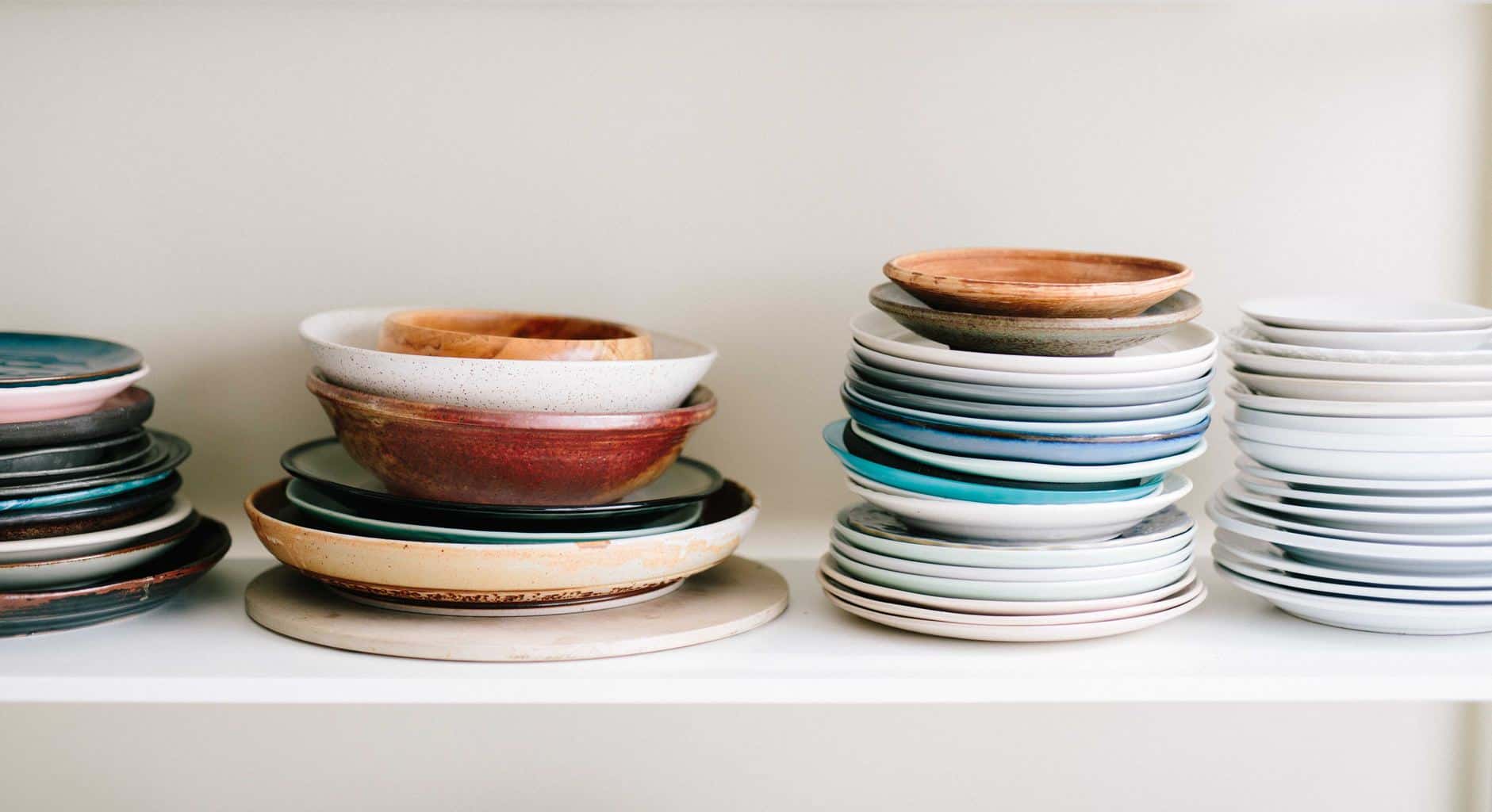
I have a method for doing the dishes. I begin with the largest plates, wash them, rinse them under the hot water, let them drip for a moment, and then stack them like toy soldiers, one behind the other in the metal dish rack. Next come the smaller plates, then the bowls, then the cups, and lastly, the knives and forks.
Right now, I’m recalling an old picture-book I read and re-read as a child that attempted to teach the laws of gravity to ten-year-olds. I can clearly remember the image of a slim man standing in an open elevator, with the shaft exposed for the viewer, above which, a giant pair of scissors loomed, ready to flex.
“And…,” the book read, “…if we should cut the cord, dot-dot-dot.”
The next page showed the hapless man falling through air, his white shirt billowing, and his black tie pointing straight up as the elevator plummeted downwards to certain destruction. Such are the immutable laws of physics.
But the laws of faith offer far more latitude, though their stakes may be equally uncompromising. One can lose faith, come to faith, or even lack faith, but you can be sure the heavenly lawgiver will be far more flexible and forgiving than the authority that presides over falling elevators.
Like my wife and daughter, I, too, went to church this morning—though I didn’t tell them I was going. I sat six or seven pews behind them, just watching the back of my daughter’s head.
Her chestnut hair was shiny and freshly brushed. A red barrette gathered a small ponytail that swayed a little as she moved; and I saw that like me, she too, was in an in-between place. I just wished I could spare her the pain that I knew was coming her way.
I never thought I would arrive here, at this sad and grown-up place. I recall asking a friend of mine who is also in the process of divorcing his wife: ‘Why…what is it about her that’s so bad?’
He looked me in the eye and said, “It’s not about her, Vic, it’s about me. It’s about who I’m becoming that I don’t like.”
When it comes to the ties that bind us, I know of no roadmaps to follow. They say the Magi journeyed to Bethlehem by following a star. All I know is that when you cannot get happy, when you do not know the right road to take, and when you’ve lost all sense of direction, there is nothing left to do but navigate by stars.
Perhaps, if you’re lucky, you’ll pass through your darkest night and come out the other side, shedding the tattered cloth of your old self and singing the notes of a new song.
Or, you may just end up like me, doing the dishes and watching shapes of another world that you can see but cannot touch, reflecting back at you from the gleaming dish or shimmering glass that you hold in your hand.
Someday soon, something is going to come along and cut the cord that is holding me in place tonight. After that, nothing I know will be the same. Nothing I know will offer the reassurance of these dishes, stacking up one after the other, drying in the familiar warmth of the kitchen light.
Mark Russell Gelade is past winner of the World’s Best Short-Short Story Contest, judged by Robert Olen Butler. His short-short stories have appeared in Narrative Magazine and Synchronized Chaos. He lives in San Francisco with his wife. More about Mark: http://markrussellgelade.com/fiction/
image courtesy of Brooke Lark via unsplash
Submit your flash fiction to Fiction Attic Press.
Buy our flash fiction anthology: Flash in the Attic: 44 Very Short Stories